Retail News CRM

Tag: FamilyMart

  • FamilyMart Revolutionizes Retail with Innovative Flagship Store Concept in Tokyo

    FamilyMart Revolutionizes Retail with Innovative Flagship Store Concept in Tokyo

    FamilyMart, Japan’s widely recognized retailer, has launched its first Famima flagship store in Tokyo, marking a significant reimagining of the conventional convenience store as the company gears up for its 45th anniversary.

    FamilyMart’s Next Generation Retail

    Located in Tokyo’s upscale Azabudai district, the 217sqm store is a striking deviation from the traditional convenience store model. It features a unique blend of convenience, lifestyle products, and fashion; an official unveiling of a fresh retail concept. The new store boasts a ‘Convenience Wear’ apparel section, interactive styling tools, and exclusive merchandise. It also provides multilingual support to cater to a diverse customer base.

    The store design goes beyond the indoors, featuring outdoor seating areas, a rooftop garden, and even a takeaway counter.

    This innovative venture is part of FamilyMart’s ‘Next FamilyMart Project,’ an initiative aimed at experimenting with novel store formats, merchandising approaches, and customer experiences, with the potential for successful concepts to be implemented more broadly in the market.

    FamilyMart’s Collaboration and Expansion Strategy

    The store’s concept was conceived in partnership with renowned Japanese creative director Nigo. This collaboration underscores FamilyMart’s growing emphasis on delivering an experience-focused retail model that expertly melds lifestyle products, fashion, and design with the retailer’s staple convenience offerings.

    FamilyMart is expanding its intellectual property strategy with the introduction of a new Famima brand character. Merchandise featuring the new character is making its debut at the flagship store, with plans for a wider rollout across Japan in the future.

    Insights gleaned from the flagship store in Tokyo will influence future store expansions, with the expectation of gradually introducing selected concepts to FamilyMart’s nationwide network.

    FamilyMart’s representative director and president, Tatsuo Odani, stated, “Our new Famima initiative aims to unlock the full potential of convenience stores and bring it to life. Transformation and evolution, with a view to the future, will be necessary for sustained growth. Through collaboration with creators, we aim to infuse even more creativity, enjoyment, and excitement into the convenience store experience.”

    This initiative represents FamilyMart’s broader strategy to redefine the convenience store model in response to evolving customer expectations that extend beyond speed and accessibility to more distinct and unique retail experiences.

    Questions & Answers

    What is the Next FamilyMart Project?
    This is FamilyMart’s initiative to test new store formats, merchandising approaches, and customer experiences that could later be implemented across the market.

    What does the new Famima flagship store offer?
    The store offers a unique blend of lifestyle products, fashion, and convenience, featuring a ‘Convenience Wear’ apparel section, interactive styling tools, exclusive merchandise, outdoor seating, a rooftop garden, and a takeaway counter.

    What’s new about FamilyMart’s intellectual property strategy?
    FamilyMart has introduced a new Famima brand character as part of an expanded intellectual property strategy. Character-themed merchandise has debuted at the flagship store with plans for a broader rollout across Japan in the future.
  • Familymart Accelerates Taiwan Expansion: 100 New Stores And Revamped Food Section Planned For 2022

    Familymart Accelerates Taiwan Expansion: 100 New Stores And Revamped Food Section Planned For 2022

    FamilyMart, a renowned convenience store chain, is stepping up its growth strategy in Taiwan. The company has announced plans to inaugurate 100 new outlets this year, a significant step towards their long-term objective of establishing 5000 stores by 2029.

    Currently, FamilyMart operates around 4400 stores across the nation. Last year, the company added 80 new stores to its portfolio, and it now anticipates increasing the pace of expansion to approximately 150 stores annually in the forthcoming years.

    Reinventing Food Offerings

    In alignment with its comprehensive growth plan, FamilyMart is revitalizing its food section to keep pace with evolving consumer preferences. The company plans to introduce a wider range of customizable bento meals and increase its array of microwave-friendly dishes. The new offerings are aimed at catering to busy urban customers and to make the store an appealing destination beyond traditional meal times.

    Customer Experience Strategy

    In another strategy to enhance the customer experience, FamilyMart Taiwan will continue to keep dining spaces in their stores. The company views these areas as a crucial element of the customer journey, fostering longer stays, facilitating informal gatherings, and promoting additional purchases.

    FamilyMart ventured into the Taiwan market in 1988 with its first store in Taipei Station’s shopping district. Operated by Taiwan FamilyMart Co, the brand has now become one of the top convenience store chains in the country, competing with the likes of 7-Eleven and Carrefour.

    Questions & Answers

    What is FamilyMart’s expansion goal in Taiwan by 2029?
    FamilyMart aims to operate 5000 outlets in Taiwan by 2029.

    How is FamilyMart planning to modify its food offerings?
    FamilyMart plans to roll out more customizable bento meals and expand its selection of microwave-ready dishes, targeting urban consumers and beyond traditional meal times.

    What is FamilyMart’s strategy to enhance customer experience?
    FamilyMart Taiwan will continue to maintain dining areas in their stores as they see them as a key aspect of the customer experience, encouraging longer stays, informal meetings, and additional purchases.

  • Familymart Targets Asia: Ambitious Expansion Plans Aim To Transform Retail Landscape

    Familymart Targets Asia: Ambitious Expansion Plans Aim To Transform Retail Landscape

    In a remarkable twist for the retail landscape, Japan’s convenience store giant FamilyMart is making waves with its ambitious expansion plans across Asia. Aiming to capture the growing consumer market in the region, the company has set its sights on a significant increase in its store count in China and other key markets.

    FamilyMart Expands Its Footprint

    This year, FamilyMart aims to open approximately 1,000 new stores in China alone, underscoring its commitment to penetrating the world’s second-largest economy. The company is not just restocking shelves; it’s reimagining the convenience store experience by integrating local tastes and preferences into its product offerings. With trend-driven items such as ready-to-eat meals and fresh produce, FamilyMart is on a mission to cater to the increasingly diverse palate of Chinese consumers.

    The Race for Convenience

    The competition is steep, with rivals like 7-Eleven and Lawson continuously enhancing their services and product ranges. However, FamilyMart thrives on its ability to innovate swiftly. Their latest strategy? Expanding into niche markets such as specialty beverages and gourmet snacks, which are tailor-made for urban dwellers eager for quality convenience. You could even say they’re attempting to make fast food gourmet—proof that in retail, there’s always room for a delicious twist!

    Feedback-Driven Innovation

    FamilyMart also places a strong emphasis on customer feedback, pivoting quickly in response to what shoppers are asking for. This agility gives them a unique edge in an ever-evolving retail environment. According to company spokespersons, the store designs and product choices are now more reflective of community preferences, making each outlet feel personalized and relevant.

    Future Plans on the Horizon

    Looking ahead, FamilyMart is determined to bolster its existing presence in Southeast Asia, with expansion plans across markets like Vietnam and Thailand. This initiative is fueled by a demographic trend of increasing urbanization and consumer spending power in these regions. By establishing a strong retail presence, FamilyMart aims not only to thrive but to set benchmarks in convenience retail across Asia.

    Questions & Answers

    How many new stores does FamilyMart plan to open in China?
    FamilyMart aims to open approximately 1,000 new stores in China this year.

    What unique strategies is FamilyMart employing to cater to local tastes?
    FamilyMart is integrating local preferences into its product offerings, including ready-to-eat meals and specialty beverages to appeal to diverse consumer palates.

    Which markets is FamilyMart looking to expand into next?
    FamilyMart plans to strengthen its presence in Southeast Asia, particularly in countries like Vietnam and Thailand, where urbanization and consumer spending are on the rise.

  • FamilyMart Malaysia to open 300 halal-certified stores

    FamilyMart Malaysia to open 300 halal-certified stores

    In a statement shared today (May 10) by FamilyMart Malaysia, the convenience store chain announced that its FamiCafé in Menara U, Shah Alam, has obtained halal certification from Jabatan Kemajuan Islam Malaysia (JAKIM).

    This makes it the first convenience store café in Malaysia to receive this certification. Based on a check on the Halal Malaysia Official Portal, other convenience store cafés such as 7 Café and emart24, are not halal-certified by JAKIM.

    According to the statement, the halal certification aligns with FamilyMart Malaysia’s ongoing effort to ensure that its customers have total peace of mind while shopping and dining at its premises.

    It also added that other FamilyMart Malaysia stores will undergo halal audits in stages as guided by JAKIM, and that the process has already begun at two other stores.

    Subsequently, as a result of the certification, it stated that all new FamiCafés will automatically adopt the layout guided by JAKIM while existing ones will be converted to incorporate the changes required.

    The company aims to have the FamiCafés in 300 stores halal-certified by 2025 with the halal-certified concept serving café beverages and ready-to-eat food prepared in-store.

    There are currently 16 FamiCafés in Malaysia, with an overall target of 50 planned by the end of 2023.

    “We are very excited to be the first convenience store café in Malaysia to be halal-certified as part of our continuous improvement to enhance customer experience and provide value to them.”

    “Our journey to obtain halal certification in our stores is the next step in providing greater assurance and confidence for customers to shop and dine with us,” it shared.

    FamilyMart Malaysia’s central kitchen, operated by QL Kitchen, has been certified halal by JAKIM since 2019. As of April 30, 2023, 172 FamilyMart branded food products have been registered halal on JAKIM’s official halal portal.

    Meanwhile, in alignment with the announcement, FamilyMart Malaysia has also shared that it has stopped the sale of alcohol from all stores to provide an added assurance for all Muslim customers.

    In addition to the halal certification, FamilyMart stated that the team is expanding to the east coast of Peninsular Malaysia and that the company is currently securing identified locations to meet the demands of its fans in the region.

    It plans to open 20 stores by the end of 2023 and expansion is already underway in various parts of Kuantan, Pahang.

  • FamilyMart Malaysia launches ‘Food Superstores’ format

    FamilyMart Malaysia launches ‘Food Superstores’ format

    Japan’s FamilyMart is making strong inroads into Malaysia, offering a new concept in retail with the focus on fresh food, ruffling the convenience store sector which has been largely dominated by 7-Eleven and MyNews.

    The world’s second-largest convenience store chain after 7-Eleven has redefined the concept and has gained more foot traffic to its Japanese-style konbini since it opened its first outlet in Malaysia in 2016.

    QL Resources Bhd — the franchise holder of the FamilyMart chain in Malaysia — has been expanding the footprint of the stores which offer fresh foods, snack bars, meal stations and various products from Japan.

    “FamilyMart has changed the convenience store landscape in Malaysia. It has created a need for fast and fresh food in a convenience store where consumers previously go to these stores for, perhaps, fast-moving consumer goods,” TA Securities Holdings Bhd analyst Jeff Lye Zhen Xiong told The Malaysian Reserve.

    Lye said FamilyMart’s business model has taken off quite well and has enabled the company to record a higher gross margin.

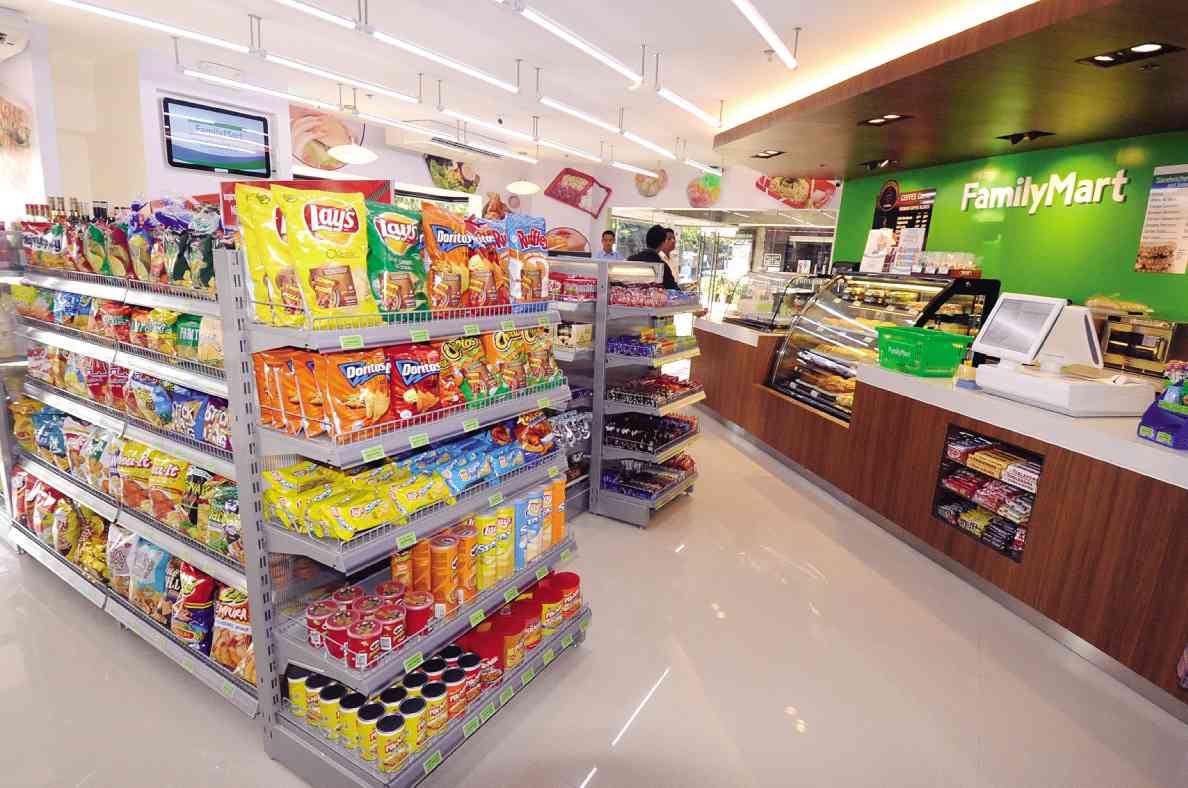
    FamilyMart delivers an authentic Japanese konbini experience by integrating fresh food, services and daily goods in one brightly-lit outlet.

    The Japanese convenience stores offer a wide variety of ready-to-eat (RTE) and microwavable meals from sandwiches, coffee and softserve ice-cream to steamed snacks, oden, onigiri and bento.

    FamilyMart’s central kitchen operator QL Kitchen Sdn Bhd received halal certification from the Department of Islamic Development Malaysia in May.

    In-store services include FamiPay for paying bills; FamiLoad for phone top-ups and gaming needs; FamiCashless and FamiLounge, a sit-in area that is equipped with WiFi, USB charging docks and toilet amenities.

    “In terms of trend, there are more convenience stores in the likes of 7-Eleven and MyNews popping up and going for more fresh food,” Lye said.

    In early October, MyNews Holdings Bhd and partners, Ryoyu Baking Co Ltd and Gourmet Kineya Co Ltd, launched their Japanese-inspired food production centre (FPC) in Kota Damansara, Selangor.

    The RM100 million facility, which operates under its subsidiaries, MyNews Ryoyupan Sdn Bhd and MyNews Kineya Sdn Bhd, will supply MyNews outlets across the Klang Valley with a wide array of RTE food.

    7-Eleven Malaysia Holdings Bhd, which is owned by Berjaya Retail Bhd, has been rolling out the latest generation store format in the past few years. It has expanded its services to defend its leading position in the convenience store space.

    Petronas Dagangan Bhd’s Kedai Mesra has also upped its game with more staple fresh food offerings while having more Tealive outlets in its stores following collaboration with Loob Holding Sdn Bhd.

    7-Eleven remains the largest convenience store chain in Malaysia with more than 2,300 stores nationwide, far ahead of MyNews at over 400 stores and FamilyMart at about 150.

    Last year, 7-Eleven has lowered its target of new store opening to 100 from 200.

    MyNews is expected to open at least 90 new outlets in the financial year 2019, while FamilyMart has targeted to have 300 stores by March 2022.

    Lye said 7-Eleven has embarked on new strategies to boost footfall including weekly or monthly promotional campaigns on cheapest items.

    Overall, he said locations and rental prices are contributing factors to the performance of a convenience store, on top of product offering.

    “FamilyMart stores are located in a very strategic place. The stores are new and consumers can expect a certain standard of quality,” he added.

    The convenience store market is worth billions of ringgit in transactions value and FamilyMart is taking the fight for a bigger slice of the pie.

  • FamilyMart launches ‘convenience wear’ clothing range

    FamilyMart launches ‘convenience wear’ clothing range

    Family Mart, one of Japan’s most common convenience store chains, will now be offering apparel. Dubbed “Convenience Wear,” Family Mart will be launching 68 different articles of clothing, designed by FACETASM designer Hiromichi Ochiai.

    Spanning essentials like T-shirts, long-sleeves, tank tops, shorts and socks, each piece is neatly folded in transparent zip-lock packaging labeled with detailed information about the piece’s size, color, material and measurements. Most of the colors are kept minimal, too — navy, white, black and grey. Jointly developed with Asahi Kasei Co., many of the silhouettes also come with “Paircool” fabrication for optimal breathability. Beyond clothing, other pieces in the collection like towels round off the expansive assemblage.

    Family Mart’s “Convenience Wear” range is currently available on Family Mart’s website, ranging from ¥390 – ¥990 JPY (approximately $3 – $9 USD).

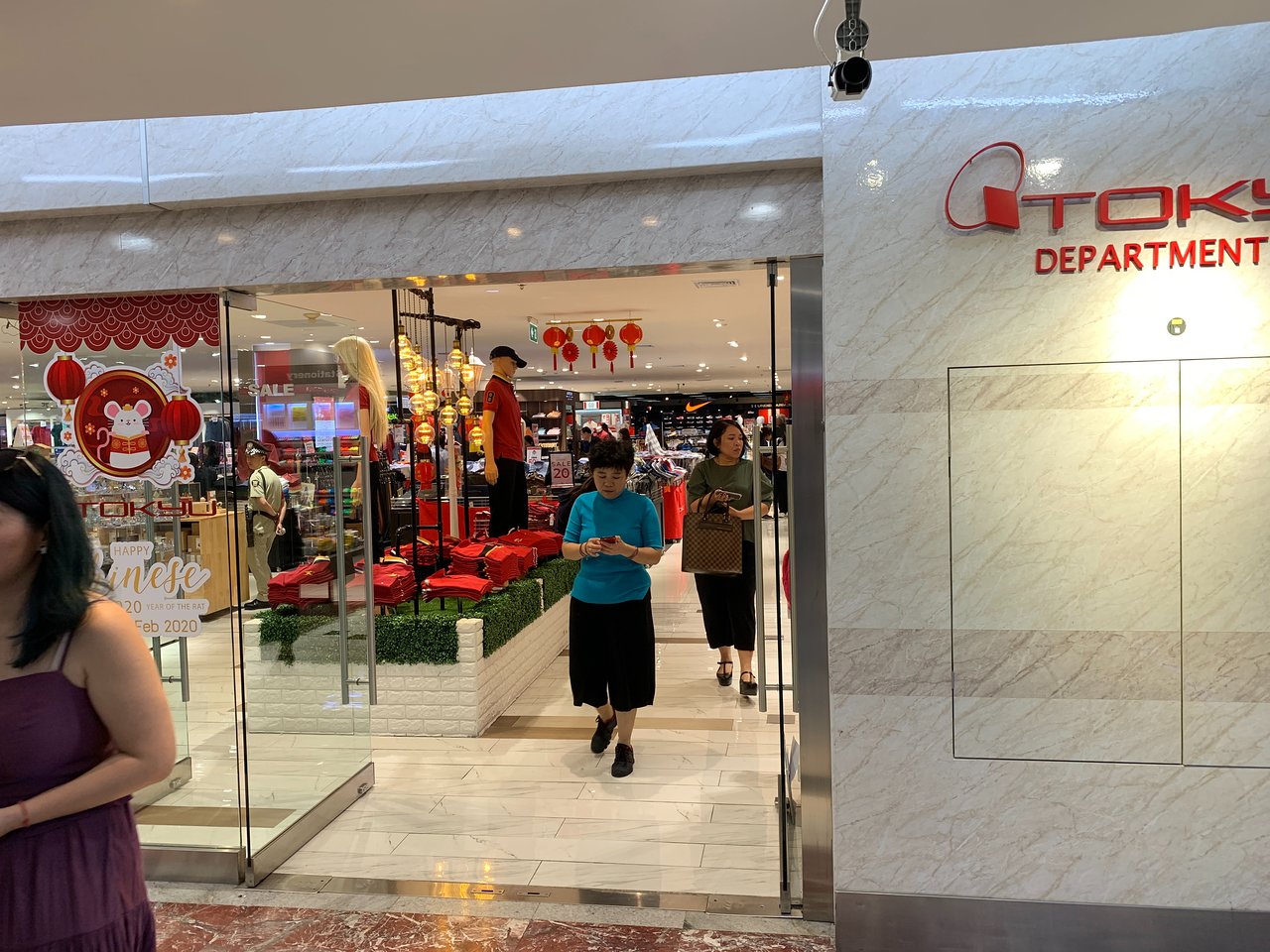
  • Tokyu department store leaves Thailand

    Tokyu department store leaves Thailand

    Japanese department-store chain Tokyu is to exit Thailand, the third Japanese retailer to withdraw from the country this year.

    Tokyu aims to close its last store at Bangkok’s MBK shopping center next January, ending 35 years of trading in the city. The retailer closed its second, newer store at Paradise Park last year.

    The department store has been struggling in the shopping center competition due to the launch of a series of new developments in Bangkok. However, the tourism depression resulting from Covid-19 proved a fatal blow to the company, forcing it to retreat home.

    The closure came suddenly, with the management of MBK saying just two weeks ago that the store would undergo a renovation after the lease agreement was extended for another nine years.

    Tokyu’s withdrawal follows the departure of Japan’s upmarket department store Isetan in September. That company pulled out of Thailand after 28 years of trading there, saying it was unable to continue to compete with other retailers.

    With Tokyu leaving Thailand, Takashimaya will become the only Japanese department-store chain left in the country.

    Another Japanese retailer, FamilyMart effectively withdrew this year after selling its stake to local partner Central Retail, effectively becoming a franchisor.

  • FamilyMart set to test robotic c-store staff

    FamilyMart set to test robotic c-store staff

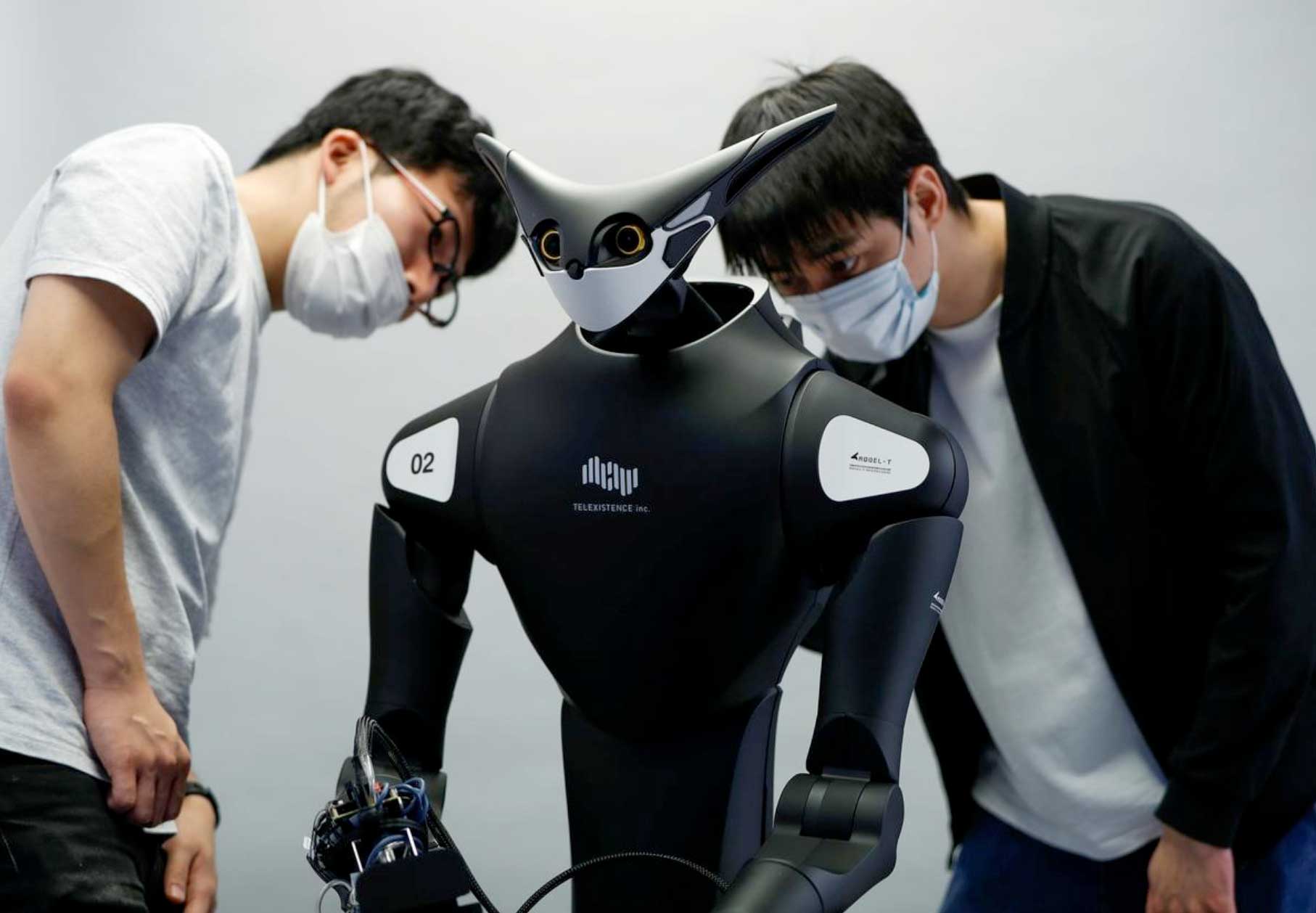
    FamilyMart will this month deploy a robot that vaguely resembles a kangaroo to stack sandwiches, drinks and ready meals on shelves at a Japanese convenience store. The robot’s maker, Telexistence, hopes the trial will help trigger a wave of retail automation.

    Following the trial, FamilyMart says it plans to use robot workers at 20 stores around Tokyo by 2022. At first, people will operate them remotely – until the machines’ artificial intelligence (AI) can learn to mimic human movements. Rival convenience store chain Lawson is deploying its first robot in September, according to Telexistence.

    “It advances the scope and scale of human existence,” the robot maker’s chief executive, Jin Tomioka, said as he explained how its technology lets people sense and experience places other than where they are.

    The idea, dubbed the existence, was first proposed by the start up’s co-founder, University of Tokyo professor Susumu Tachi, four decades ago.

    Their company has received funding from technology investment company SoftBank Group and cell phone service operator KDDI in Japan, with overseas investors including Airbus Ventures, the venture capital arm of European aircraft maker Airbus SE.

    It dubbed its robot the Model T, a nod to the Ford Motor car that began the era of mass motoring a century ago.

    Its quirky design is meant to help shoppers feel at ease because people can feel uncomfortable around robots that look too human.

    Robots are still a rare sight in public. Although they can outperform humans in manufacturing plants built around them, they struggle with simple tasks in more unpredictable urban settings.

    Solving that performance problem could help businesses in industrialized nations, particularly those in rapidly aging Japan, cope with fewer workers. Firms hit by the coronavirus outbreak may also need to operate with fewer people.

    Since the outbreak started, hotels, restaurants, and even gas and oil companies have contacted Telexistence, Tomioka said.

    “It’s difficult to tell now what impact robots might have in restaurants – it could mean fewer people, but it could also create new jobs,” said Niki Harada, an official at Japan’s Restaurant Workers Union.

    Using human operators with virtual reality goggles and motion-sensor controls to train its machines slashes the cost of retail robotics compared with complex programming that can cost 10 times more than as the hardware and take months to complete, Telexistence says.

    Although FamilyMart will still need humans to control its robots, operators can be anywhere and include people who would not normally work in stores, said Tomohiro Kano, a general manager in charge of franchise development.

    “There are about 1.6 million people in Japan, who for various reasons are not active in the workforce,” he said.

    Future te existence robots could also be used in hospitals so doctors could perform operations from remote locations, predicted Professor Takeo Kanade, an AI and robotics scientist at Carnegie Mellon University in the United States, who joined Telexistence in February as an adviser.

    It might take another 20 years before robots can work in people’s homes, however, he said.

    “In order for robots to be really usable at home, we really have to be able to communicate. The fundamental thing that is lacking is knowing how humans behave.”

  • FamilyMart Japan subject of US$5 billion takeover bid

    FamilyMart Japan subject of US$5 billion takeover bid

    Japanese convenience-store chain FamilyMart will be sold outright to local trading company Itochu, according to reports.

    The buyer, which currently holds 50 percent of FamilyMart business, made the decision to fully purchase the chain last Wednesday in a transaction that is expected to cost between US$4.6 billion and $5.5 billion.

    The business media say the joining of the two businesses will result in a deeper level of cooperation in food procurement, consumer-goods retailing, customer-data analysis, and digital payments, among other areas.

    In Thailand, the FamilyMart business was completely bought out last May by local operator Central Retail as a precursor to expanding the network in the territory.

    The brand has shown signs of instability that date back before the advent of the coronavirus pandemic. Last November, FamilyMart Japan reduced its operational costs by letting go 800 employees, about one in 10 of its total staff count, and made moves to allow franchisees to operate shorter opening hours.

  • Central Retail takes full control of FamilyMart Thailand

    Central Retail takes full control of FamilyMart Thailand

    Central Retail has taken full control of the FamilyMart Thailand business, a precursor to expanding the network in the country.  Currently, FamilyMart has just 1000 convenience stores, largely centered in the capital city of Bangkok. That’s a fraction of the 14,000-odd stores under CP All-owned rival 7-Eleven.

    “The acquisition of all the shares of FamilyMart is in line with Central Retail’s strategy to strengthen our Central Retail & Service Platform, reaffirming our leading position in the retail business, as well as to increase our potential in offering full-scale services through customer-centric omnichannel,” said Central Retail CEO Yol Phokasub.

    He said the company plans to continue expanding the FamilyMart Thailand store network but did not provide any further details.

    Central Retail has run the FamilyMart Thailand business in partnership with Japan FamilyMart Co since 2012, through a company called SFM Holdings. Central held 50.65 percent of the shares in SFM and its Robinsons department store division 0.35 percent. Yesterday, Central bought the remaining 49 percent from the Japanese company.

    Phokasub says the deal strengthens the power of Central’s food and convenience-store businesses at a time when Thailand’s food market is thriving.

    “Over the past eight years of operating FamilyMart convenience stores, CRC has always been committed to improving the business model and expanding stores to offer convenience to consumers through products and services, with unique selling points to meet the needs of consumers in all areas. It has become a lifestyle & food destination with ready-to-eat meals, beverages, Arigato fresh coffee, and open spaces for everyone to come mix and mingle 24 hours a day,” he said.

    Under Central Retail’s leadership, the FamilyMart Thailand concept has expanded into other areas of convenience, including installing 24/7 coin-operated washing machines in some stores.

    During the Covid-19 crisis the chain launched vending machines both inside and outside stores, serving ready-to-eat meals, beverages, and snacks.

    The company also recently partnered with delivery-service Grab to allow customers to purchase products from FamilyMart remotely

  • FamilyMart Taiwan starting delivery service with Foodpanda

    FamilyMart Taiwan starting delivery service with Foodpanda

    FamilyMart Taiwan is partnering with the food-delivery platform Foodpanda to launch a delivery service.

    Starting Wednesday next week, the firm plans to offer delivery services from its 1000 outlets nationwide by June, with initial services commencing out of Familymart Taiwan’s 146 locations within Taipei and New Taipei. The service will be rolled out to the remaining outlets in two further phases.

    Deliveries will be made between the hours of 5.30 pm to 2 am on the day following the purchase, and will serve almost 200 of its food items including snacks, beverages, groceries and pre-packed meals.

    FamilyMart Taiwan partnered with Uber Eats last year to start a food delivery service before the advent of the Covid-19 pandemic. That partnership ended in March.

    The new partnership is expected to address the sharp rise in e-commerce trading in response to the coronavirus outbreak as consumers are staying home. The firm has seen demand for delivery of its products rise 15 percent since February, according to senior executive Lee Ching-hsien.

  • FamilyMart Thailand launches vending concept store FamilyMart Corner

    FamilyMart Thailand launches vending concept store FamilyMart Corner

    FamilyMart Thailand has opened its first ‘FamilyMart Corner’ stores where beverages, snacks and convenience foods are sold from automatic vending machines.

    Central Food Retail, which operates FamilyMart Thailand and the Tops supermarket chain, created the FamilyMart Corner, the first concept of its type in the nation, to provide increased convenience to consumers on the go.

    “Convenience stores must always adapt,” says Stephane Coum, CEO of Central Food Retail Group. “In every crisis lies endless opportunities. The Covid-19 outbreak has prompted us to adapt ourselves and changed the way we work.”

    Coum says the container-style convenience stores can be built quickly and take up limited space, enabling them to be opened rapidly in areas where consumers in lockdown need to access food and beverages quickly and close to their homes.

    “We focus on locations in front of shopping malls, condominiums, universities, communities, and factories,” says Coum. “The design of the containers is attractive, with graffiti and street art to attract people and invite them to come buy our products.”

    The first FamilyMart Corners opened at Robinson Lifestyle Srisaman and Saraburi on April 10 and the next is scheduled for Robinson Bangrak on April 22.

    The Family Mart Corners are open daily from 7am to 9pm, and after Thailand’s Covid-19 curfew is canceled, the opening hours will be extended. Entry will be restricted to five customers at any one time to meet social-distancing requirements.

    Meanwhile, in a second initiative, FamilyMart and Tops Daily have introduced automatic vending machines under the concept of “Hungry? Get it Now”. The machines offer food and beverages for consumers for people in a rush and who want to maintain a safe social distancing.

    With convenience stores unable to trade 24-seven as usual in Thailand, the paired vending machines – one selling snacks and chilled food, the other cold beverages – will also serve people exempted from the curfew.

    The product mix sold in the machines will be adjusted to each location based on sales data from FamilyMart or Tops convenience stores, so as to best serve the local population. The machines will only accept cash payments initially, with other payment methods in planning.

    The first Hungry? Get it Now machines have opened outside FamilyMart stores at Muang Thong Popular 3, Rangsit University, Pracharatbamphen 11, Soi Ramintra 34, Bang Bon 5-Soi 8 and Tops Daily Thammasat University Rangsit Campus.

  • FamilyMart Taiwan plans rolling out 200 new stores

    FamilyMart Taiwan plans rolling out 200 new stores

    Familymart Taiwan is aiming to open 220–230 new stores in the territory this year, as the Japanese convenience-store chain franchise, emerges unaffected by the coronavirus turmoil.

    The firm’s takings in this year’s first financial quarter are anticipated to rise 8.4 percent year -on year to NT$19.71 billion (US$652.3 million). FamilyMart Taiwan reported net earnings of NT$1.83 billion ($60.56 million) last year.

    The franchise has suffered minimal fallout from the coronavirus pandemic, with only a low percentage of its earnings derived from operations in Mainland China.

    The firm is the second-largest convenience-store chain in Taiwan, operating 3606 locations nationwide and more than 1200 stores in nine cities on the mainland. The number of closed stores in China dropped from 600 to 100 last month as the Covid-19 pandemic eased. The firm expects operations in China to normalize in July.

  • FamilyMart Japan reveals results of shorter trading-hours test

    FamilyMart Japan reveals results of shorter trading-hours test

    A trial to reduce business hours has resulted in a 59 percent drop in operating profits for FamilyMart Japan.The trial by the traditionally 24-hour convenience-store chain operator was conducted from October to December at around 600 FamilyMart outlets to assess the effect of cutting late-night hours of business.

    While average labor costs fell 11 percent at participating stores, the average drop in sales of 6.7 percent led to the operating profit declines, according to a Jiji Press report. 41 percent of the outlets recorded growth in profits.

    FamilyMart Japan has now announced that it will allow its franchises to apply to reduce their hours permanently beginning in June.

    “From now, we will ask franchise store owners to decide whether to shorten service hours,” said FamilyMart VP Toshio Kato.

    Stores will be allowed to close late-night and early-morning operations daily or on Sundays only.

  • FamilyMart Japan culls staff as store network shrinks

    FamilyMart Japan culls staff as store network shrinks

    FamilyMart Japan is reducing its operational costs by letting go 800 employees.

    The redundancies equate to about one in 10 of the convenience-store operator’s total staff count, and will be offered with severance packages for volunteers who opt to leave the firm. Moves will also be made to allow the brand’s franchisees to operate shorter opening hours.

    “We got bigger after the repeated consolidations, but we have yet to streamline,” said FamilyMart Japan president Takashi Sawada in a Nikkei report. “Even if there isn’t an agreement with the home office, we will respond in accordance with the intent of what member stores decide.”

    The staff cuts follow a gradual reduction in outlets from 18,000 in 2016 to 16,500 this year.