Retail News CRM

Tag: FamilyMart

  • World’s largest FamilyMart opening in Manila

    World’s largest FamilyMart opening in Manila

    The world’s largest FamilyMart is to open in Manila.

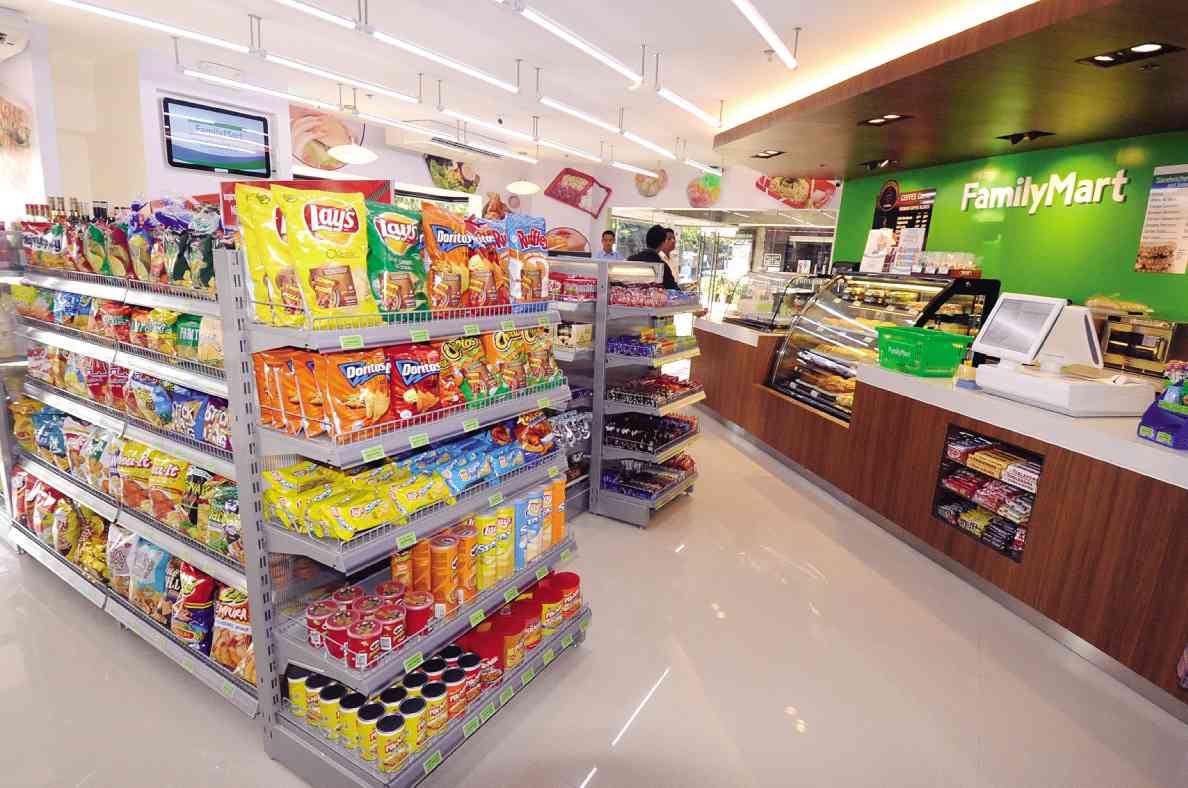
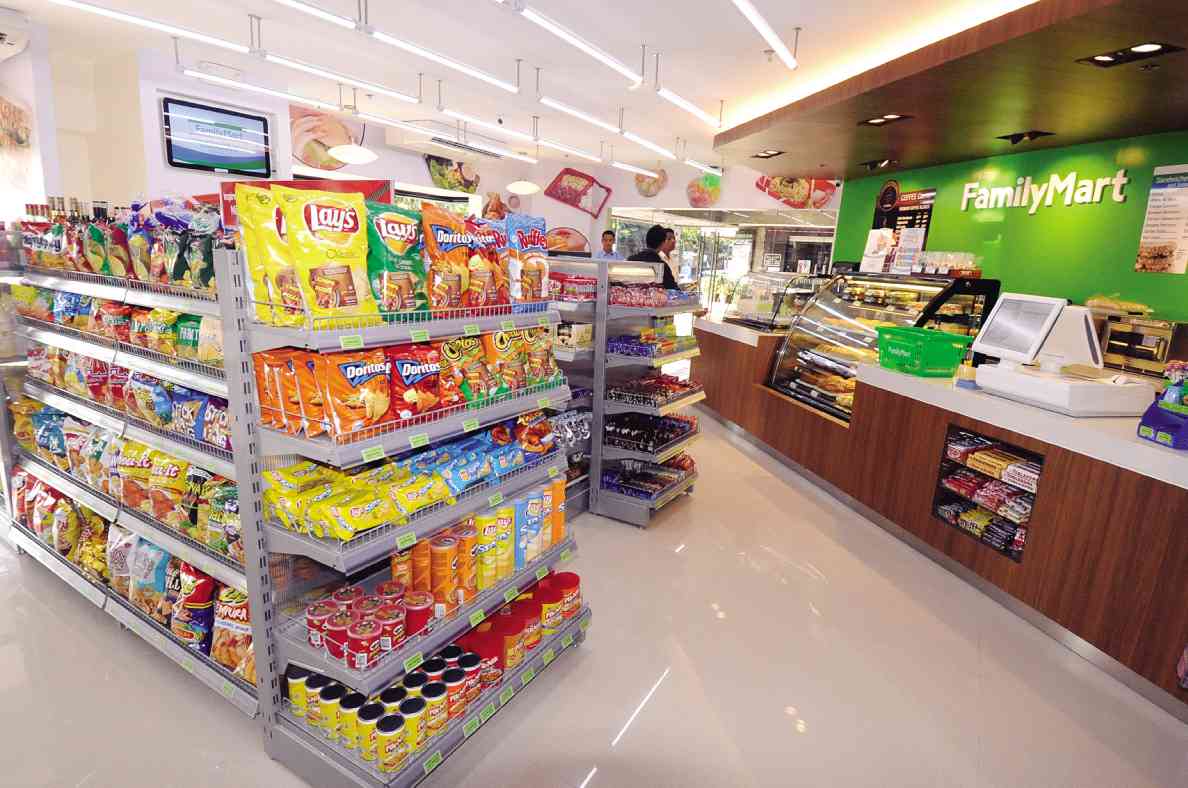
    The 400sqm outlet will launch in Bonifacio Global City, Taguig, on the ground floor of the Udenna Towers, operated by Philippine FamilyMart CVS. The store will be designed to appeal to “a youthful and vibrant market,” with a food counter as the store’s centrepiece.

    “We are aiming to be more relevant to the market we believe needs to be served,” said Philippine FamilyMart GM Bernard Suiza. “This is the pivot to food that we are embarking on here in the Philippines – going back to the essence of what konbini is, which is hearty, home-cooked meals”.

    The food-focused strategy will see the firm focusing on key, densely populated urban areas in the Philippines, and will be supported by PFM owner Udenna’s F&B holdings and supply chains.

    FamilyMart will also launch its own signature coffee brand with Japanese firm UCC in the near future.
  • FamilyMart Taiwan rolls out small railway-station stores

    FamilyMart Taiwan rolls out small railway-station stores

    Convenience-store operator FamilyMart Taiwan plans nearly 40 new stores in railway stations this year.

    The Japanese-headquartered company has just opened three new outlets in Taiwanese stations at Badu, Wanhua, and Luodong. Two more are about to open at the main Taipei station, with another 32 planned for 23 stations within two months. Once complete, the network will serve 20 million rail travelers per year.

    FamilyMart Taiwan is also catering to local tastes by selling snacks in partnership with various Taiwanese firms, such as bakery shop Master Fang, which will sell desserts at Kaohsiung Railway Station.

  • Half of FamilyMart owners want shorter hours

    Half of FamilyMart owners want shorter hours

    FamilyMart Japan says almost half of its franchisees want to drop its signature 24-hour trading hours.

    The firm conducted a recent survey among its around 14,000 franchises in Japan, of which 48.3 percent said they want to operate shorter hours, citing the cost of late-night operations and labor shortages. Of those, 73.3 percent wanted reduced hours every day, while 26.3 percent said that reduced hours one day a week would be sufficient.

    The remaining stores indicated a wish to retain 24-hour operations to avoid a drop in sales.

    Given the unexpectedly high interest in reducing store hours, FamilyMart Japan president Takashi Sawada announced: “We’ll build a system to ensure profits at franchisees.”

    FamilyMart Japan currently has 24 stores experimenting with shorter daily operational hours and will increase that number to 700 from October. It will review its 24-hour policy next year.

  • FamilyMart is suing its Chinese partner

    FamilyMart is suing its Chinese partner

    FamilyMart is suing its Chinese partner in a dispute over royalties which could spell the end of the joint venture.

    With 2500 stores across China, FamilyMart has the second-largest network of foreign players, but the highest market share at around 8.4 per cent, according to Euromonitor data. The Chinese business, owned by Taiwan-based Ting Hsin International Group, is considered a mainland entity having had a presence there since the late 1980s.

    Japan’s FamilyMart UNY has lodged a suit in the Cayman Islands, where both companies are registered, seeking to force Ting Hsin to relinquish its 60 per cent stake in the venture, according to documents sighted by Bloomberg. It claims the Chinese company has not been fairly sharing the profits from the chain’s expansion in China.

    But Ting Hsin counters that familyMart is seeking royalty fees three times higher than rival chains such as 7-Eleven, which is also Japanese owned.

    A FamilyMart spokesperson says the company cannot comment on matters of litigation. Ting Hsin cited confidentiality agreements for not commenting.

    However FamilyMart UNY is alleging that Ting Hsin sought to reduce the royalty fee it pays for using the brand from 1 per cent of sales to 0.3 per cent or less. At one point, it allegedly withheld royalty payments for seven months.

    Ting Hsin has also been accused of failing to adequately disclose transaction data which would allow familyMart UNY to gain an accurate picture of the business’ performance in China.

  • FamilyMart Japan investing in New Labour Technology

    FamilyMart Japan investing in New Labour Technology

    Japanese convenience store FamilyMart Holdings is preparing to invest ¥25 billion (US$223 million) on labour-saving technologies.

    The firm will partner with tech firm Panasonic to introduce self check-out, digital displays and other similar devices which automate procedures traditionally undertaken by staff.

    The investment is intended to serve the brand’s franchisees who have been burdened with high labour costs in order to keep stores open around the clock.

    Both FamilyMart and its larger competitor 7-Eleven have felt pressured to let go of their 24-hour store policies in the face of a tightening labour market.

    They are also looking at other ways to ease the financial burden on franchisees.

  • FamilyMart Malaysia to open 300 more stores by 2022

    FamilyMart Malaysia to open 300 more stores by 2022

    QL Resources, the Malaysian operator of Japanese convenience store chain FamilyMart, is going ahead with plans to open 300 stores by March 2022, despite a slump in the economy. The firm opened 30 FamilyMart Malaysia outlets within the last financial year and plans to reach 90 new stores for the year ending March 31, 2019.

    “We still stick to our plan to open 300 stores in five years”, said QL chairman Chia Song Kun.

    Market leadership in the territory is currently controlled by 7-Eleven Malaysia, which operates more than 2000 stores in Malaysia. A major shareholder in the firm recently announced plans to open another 200 outlets this year.

    Malaysian spending is increasingly focused on domestic trade as exports continue to be affected by the US-China trade war.

  • FamilyMart expands Bangkok delivery service with Kerry

    FamilyMart expands Bangkok delivery service with Kerry

    Convenience store chain FamilyMart has partnered with logistics operator Kerry Express to expand its Bangkok delivery service. “Today, the e-commerce market has grown continuously for more than 20 per cent annually, and individual consumers have also had a greater demand for express delivery over the past three to five years,” said Central FamilyMart president Chiranun Poopat.

    “We have introduced Kerry Express, an express delivery service, available 24 hours a day at our FamilyMart stores in Bangkok and surrounding locations. The door-to-door express delivery will be provided to our individual customers so that they will be able to send their parcels to any locations throughout the Kingdom with fast and high-standard delivery process.”

    The new service is being promoted with a free limited-edition parcel delivery box available to customers during the Christmas period. The box will be provided to customer spending more than THB79 (US$2.42) via its express delivery service.

  • Uny to make discount operator Don Quijote its affiliate

    Uny to make discount operator Don Quijote its affiliate

    Japanese discount store operator Don Quijote is approaching an agreement to take over 100 per cent of the Uny general merchandise store business, making it the country’s fourth-largest retailer. The firm already controls 40 per cent of the Uny business, and the acquisition of the remaining 60 per cent would add 190 locations to its network, most likely converting the existing stores into discount outlets.

    Don Quijote took sales revenue of ¥941.5 billion (US$8.35 billion) in the last financial year. Uny’s sales reached ¥712.8 billion ($6.35 billion).

  • Japanese convenience store ready to fight new challenge

    Japanese convenience store ready to fight new challenge

    Healthcare is becoming a staple category for Japanese convenience store chains as they seek to counter the encroachment of pharmacies on their traditional product ranges.

    According reports, while Japanese drugstores are increasingly offering snacks and quick meals, convenience stores are now selling medicines and even setting up health consultation stations in stores.

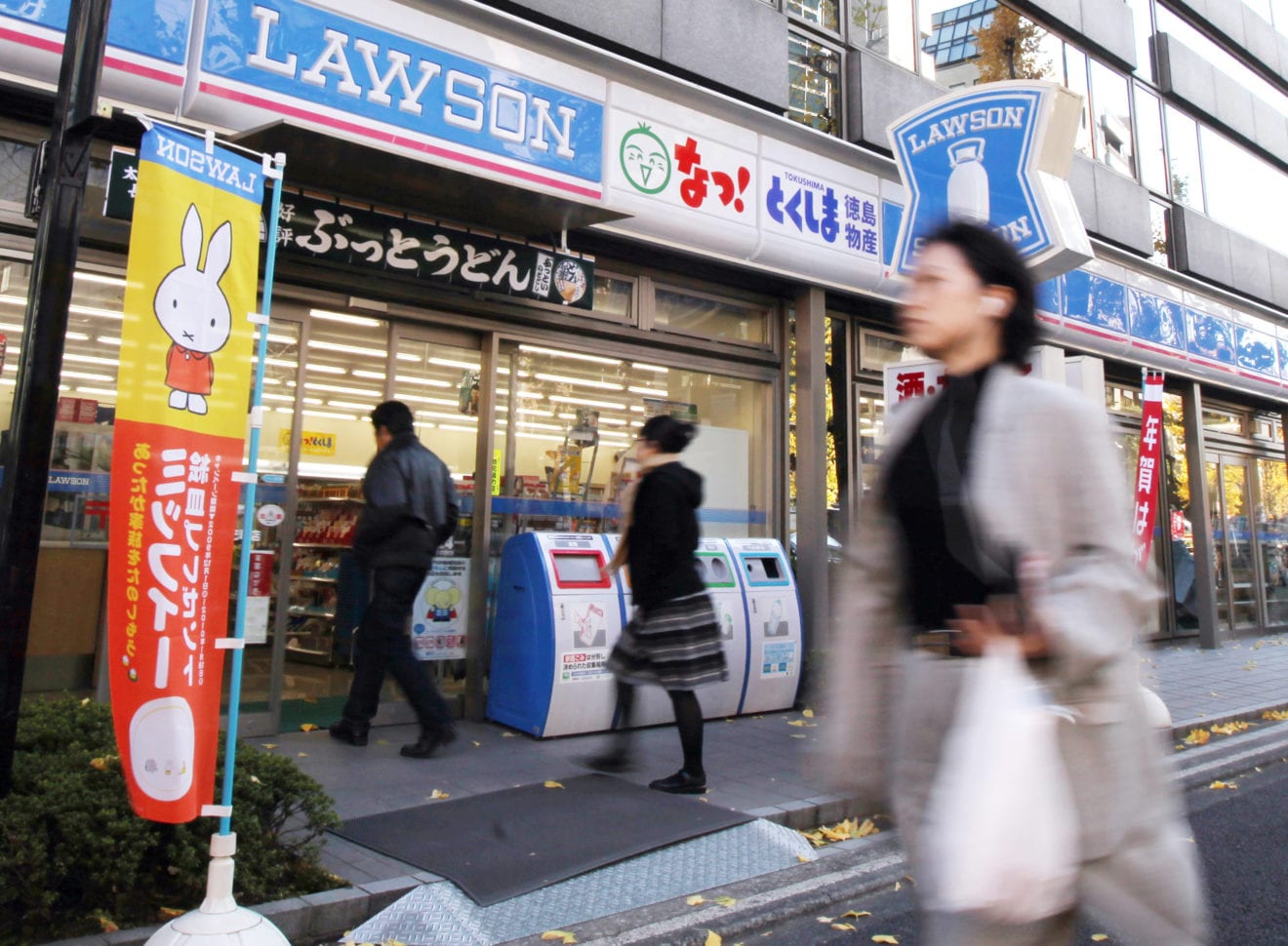
    Lawson-branded stores have launched 17 in-store consultation corners and plans to expand this number to 100 locations.

    Lawson president Sadanobu Takemasu said the company wants to resolve the community issues that arise “in an age where many people live to be 100”. The service is intended to attract more families and elderly people.

    FamilyMart and Seven-Eleven convenience chains in Japan have also been found to be selling medicines, with some also offering pharmacy-style advice.

    Japanese drugstores have been increasingly expanding beyond medical products in recent years, which has paid off. The value of pharmacy industry sales has gone up five per cent in the past two years, as opposed to two per cent on convenience store sales over the same period.

    The number of pharmaceutical outlets increased 11 per cent since 2015, during which time convenience store expansion was limited to just three per cent.

  • FamilyMart marks its 100th store in Indonesia

    FamilyMart marks its 100th store in Indonesia

    FamilyMart Indonesia has opened its 100th store with plans to continue to expand the network.

    The Japanese-founded convenience-store chain opened its first store in Indonesia in October 2012 and has so far focused on growth in the capital, Jakarta, with a small presence in areas including Depok, Tangerang, Karawang and Bekasi.

    “Our target is to have 120 stores by the end of this year,” FamilyMart Indonesia CEO Wirry Tjandra said at the opening ceremony of the 100th store, which is located at Gran Rubina in South Jakarta.

    Some of the growth has come from taking over stores previously operated by other brands.

    “We have taken over 49 stores from Starmart and 13 stores from 7-Eleven,” Tjandra said.

    FamilyMart has more than 20,000 stores across Japan, China, Taiwan, Thailand, the Philippines, Vietnam, Malaysia and Indonesia.

  • FamilyMart Taiwan launches digital prototype, including VR

    FamilyMart Taiwan launches digital prototype, including VR

    FamilyMart Taiwan has launched a pilot convenience store concept that incorporates a range of digital technology including robots, VR interfaces, interactive projection screens, smart shelves and blockchain applications.

    A Fujitsu Robopin communication robot is stationed at the entrance to highlight offers and in-store events, while video content about products is projected on to the doors of freezer units.

    Electronic price tags interact with POS registers to update automatically, and product information is available through QR codes and NFC(5) technology built into the price tags.

    FamilyMart says it will study the results of the prototype store with a view to rolling out the technology to other stores.

    FamilyMart Taiwan chairman Yeh Jung-ting says convenience stores need to be modernised according to the world around them, as well in preparation for workforce shortages.

    He says Family Mart still wants locations to be personable, and while there will be fewer staff, the new stores will not be devoid of staff like some 7-Eleven outlets. The idea is to add efficiency to shopping for both customers and staff.

    One of the greatest advantages will be eliminating the time spent ordering stock. Previously ordering goods took around two hours, whereas smart shelves whittle down that time to seconds.

    Ultimately, there will be 17 technological upgrades made by possible by 15 new partnerships.

  • JD.COM signs delivery deal with FamilyMart China

    JD.COM signs delivery deal with FamilyMart China

    JD.com has signed a deal with Japanese convenience-store chain FamilyMart.

    This will enable users to order goods through JD.com’s 24-hour O2O service Jing Dong Dao Jia (“Door-to-Door JD”) and have them delivered from FamilyMart’s 212 core locations in Beijing, Shanghai, Shenzhen and Chengdu within 30 minutes.

    Early this year JD.com launched 7Fresh, its offline fresh-food supermarket, in Beijing. Before that, it invested in Yonghui supermarkets and formed a strategic partnership with Walmart through Jing Dong Daojia. JD.com has also invested in fresh-food delivery app Fruit Day and created a business unit dedicated to fresh food, JD Fresh.

    The e-commerce company has also established co-operations with two other Japanese convenience store chains, 7-Eleven and Lawson, as well as international brands. The company now covers nearly 1000 convenience stores.

    JD.com says that during January, all convenience stores working with it recorded three times higher sales volume than at the same time last year. For 7-Eleven stores, which joined Jing Dong Dao Jia in 2016, there was a 400 per cent increase in sales.

  • FamilyMart Japan to sell its Interests

    FamilyMart Japan to sell its Interests

    Japanese convenience store company FamilyMart Uny Holdings may sell its Hong Kong retail interests.

    Working with a financial adviser, the company is seeking about US$100 million for its three stores, insiders say.

    In Hong Kong, FamilyMart Uny runs department stores under the Apita, Piago and Uny brand names. They sell stationery, clothing and food ranging from local produce to imported chocolate, wine and wagyu beef.

    Government statistics show that sales in Hong Kong’s supermarket industry fell 0.1 per cent in the first 10 months of this year, compared with overall retail industry sales rising 1.2 per cent.

    A spokesman told the company had no plans to sell the stores at the moment.

  • FamilyMart expands to 24hrs gym

    FamilyMart expands to 24hrs gym

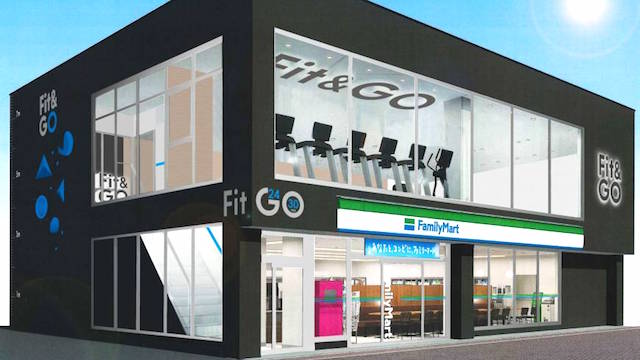
    Japan’s FamilyMart is about to launch a fitness club chain, Fit & Go.

    Like its convenience stores, the gyms will be open 24 hours a day.

    Around-the-clock gyms have been growing in popularity in Japan, mainly supported by the age range of FamilyMart’s primary customer demographic, as reported. While equipment may vary, all locations will offer treadmills and weight machines, as well as personal trainers, says FamilyMart. There will also be showers.

    A certain amount of synergy is expected by the company as customers can buy workout-related items such as towels, soap and dietary supplements in the neighbouring convenience store.

    Attached to FamilyMart in Tokyo’s Ota ward, the first Fit & Go is expected to open in February.

    “While the gyms won’t have as much floor space as larger fitness centres, the aim is to provide a convenient place for people to get in a quick 30-minute workout at the start or end of their daily commute,” says Sora News 24. “It could be a great way to stay in shape, provided you don’t make a habit of rewarding yourself with a piece of FamilyMart’s fried chicken after you’re done.”

  • Japan’s FamilyMart to go to Outer Space

    Japan’s FamilyMart to go to Outer Space

    Japan’s FamilyMart is going to great heights for promotion – in fact, as far as space.

    The Japanese convenience store franchise is joining airline JAL as a sponsor for an artificial “shooting star” project that involves a satellite dropping pellets that will make a display as they burn up on re-entering the atmosphere.

    It will be a world first produced by Ale, a company founded and run by former investment banker and mother-of-two Lena Okajima, who has a PhD in astronomy. A trial run of its satellite will likely be held in 2019 over the Setouchi (Seto Inland Sea) area of Hiroshima prefecture.

    Its pellets will be designed to burn brighter and longer than natural shooting stars in a colour of the client’s choosing. The display, lasting between five and 10 seconds, will be visible within a 100km radius.

    For its “Shooting Star Challenge”, a satellite will be placed in orbit about 500km above Australia. From there it will release pellets toward Japan. These will take about 15 minutes to fall to a height of 60km above Setouchi and begin to burn. This part of Hiroshima was chosen as the test site for its popularity, scenery and clear skies.

    A single 60cm satellite is expected to hold up to 400 pellets, which it is hoped will last until the end of the craft’s year in orbit. As well as providing a pyrotechnic display, the project will also gather data on upper-atmosphere physics.