Retail News CRM

Tag: FamilyMart

  • Takeover bid for FamilyMart in Philippines

    Takeover bid for FamilyMart in Philippines

    Philippine FamilyMart (PFM) may be taken over by Phoenix Petroleum as part of diversification move.

    In a disclosure to the stock exchange, Phoenix says it has signed a memorandum of understanding with SIAL CVS Retailers and its Japanese partners for a planned 100 per cent acquisition of PFM, which runs convenience stores under the FamilyMart trademark in the Philippines. The sale is subject to the approval of the Philippine Competition Commission.

    A joint venture of Ali Capital of Ayala Land and SSI Group, SIAL owns 60 per cent of PFM while Japanese companies FamilyMart and Itochu own 37.6 and 2.4 per cent respectively.

    FamilyMart Philippines went up for auction early this month, attracting potential buyers such as businessman Jerry Liu who owns Angel’s Pizza and Figaro Coffee, businessman Lowell Yu who owns Kuya J Restaurant and Landers membership shopping.

    Phoenix Petroleum says the potential acquisition will complement its retail fuel business, with 518 stations nationwide, and marks its entry into the domestic convenience retail market. The value of the transaction has not been disclosed.

    President/CEO Dennis Uy this year finalised a deal to acquire a 177ha logistics hub, Global Gateway Logistics City, in Clark City.

    Ayala Land and SSI Group teamed up with two Japanese firms in 2012 to bring FamilyMart to the Philippines. With 67 stores in Luzon, PFM offers ready-to-eat and fast-food items, convenience products, auto-loading, bills payment and ATM services.

  • FamilyMart Taiwan deploys e-wallet

    FamilyMart Taiwan deploys e-wallet

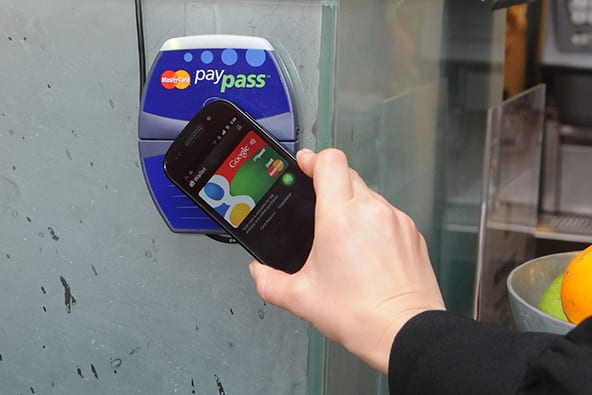
    FamilyMart Taiwan has launched an e-wallet known as “My FamiPay”.

    The application, launched in collaboration with Cathay United Bank (CUB) and Soft Space, integrates debit/prepaid/credit cards and other various stored value cards to facilitate in-store purchases and utility bill payments.

    Loyalty points can be seamlessly collected and used to redeem or make payments at the counter. Furthermore, the application accepts transactions from over 21 non-cash payment providers via barcode scanning.

    The application will also support pre- order purchases offered exclusively to FamilyMart customers.

    According to eMarketer, Taiwan is the most mobile country in the world with 73.4% of Taiwan’s population using smartphones.

    By using Soft Space’s e-wallet, CUB aims to offer tailored financial and digital services, while FamilyMart Taiwan’s members can benefit from CUB’s extensive client list.

    Soft Space also plans to offer analysis services for FamilyMart Taiwan and CUB to embark on big data analytics.

    Further plans include making the “MyFamiPay” app available to a third party payment processor that allows business owners to accept money online seamlessly.

  • FamilyMart Philippines chain up for auction

    FamilyMart Philippines chain up for auction

    FamilyMart Philippines convenience-store chain, partly owned by the Ayala and Tantoco groups, is up for auction.

    With about 70 stores, the Japanese chain has been offered to prospective investors in the past few months.

    Ayala Land and the Rustan’s group, via their equally owned JV firm Sial CVS Retailers, in 2012 signed a deal with FamilyMart and Itochu Corporation to develop and run FamilyMart convenience stores in the Philippines.
    FamilyMart has been closing unprofitable stores over the past 12 months.

    In the convenience store market in past six years, new brands have been challenging 7-Eleven and MiniStop, respectively run by Philippine Seven Corporation (PSC) and Robinsons Retail Holdings.

    Aside from FamilyMart, the Puregold group also brought Japan’s Lawson into the market while the SM group introduced Indonesian brand Alfamart. Meanwhile, real-estate magnate Manuel Villar has also built his own convenience-store network, All Day.

    To date, the two original brands still lead the market, with 7-Eleven surpassing 2000 outlets while Mini-Stop has at least 500 stores.

  • Thailand, China tie-up for Japan’s FamilyMart UNY?

    Thailand, China tie-up for Japan’s FamilyMart UNY?

    FamilyMart UNY Holdings, Japan’s second-largest convenience store chain, is considering partnering with China’s Citic and Thailand’s Charoen Pokphand Group.

    The companies are looking at opportunities beyond convenience stores, says FamilyMart UNY president Koji Takayanagi.

    FamilyMart UNY has forecast it will more than double its profit to ¥100 billion (US$901 million) in four years from ¥41.2 billion in the current fiscal year. This will be driven by converting its Circle K and Sunkus stores into more profitable FamilyMart outlets, says Takayanagi.

    “There is plenty of room for growth,” he says of the company, which also runs supermarkets and general stores. While FamilyMart is profitable in China and Taiwan, it is reviewing its loss-making businesses in Indonesia, Thailand and Vietnam. “If we can get them to rally we will, but we cannot continue to pour in resources,” Takayanagi says.

    While rival Seven & I Holdings, which owns Japan’s largest convenience store chain 7-Eleven, expands overseas, FamilyMart will stay focussed on the domestic market. “It is easier to achieve results domestically and we know what we need to do,” says Takayanagi.

    Japan’s worsening labour shortage, which is leaving convenience stores scrambling to find workers, will force companies to adapt and innovate, he says. Even the country’s declining birthrate and aging population does not phase him. “Even if the amount an individual eats declines, if we offer items with added value people will buy them.”

  • Japan’s FamilyMart may limit investment in Vietnam following losses

    Japan’s FamilyMart may limit investment in Vietnam following losses

    ‘We cannot continue to pour in resources,’ its president says of business in the Southeast Asian market. Japan’s second largest convenience store chain FamilyMart plans to stay focused on domestic market as it reported losses in several Southeast Asian economies including Vietnam.

    Koji Takayanagi, the chain president, said the firm is reviewing loss-making businesses in Indonesia, Thailand and Vietnam. “If we can get them to rally we will, but we cannot continue to pour in resources,” as saying Tuesday.

    The Japanese franchise has forecast operating profit to grow by more than twice to 1,000 billion yen ($8.79 billion) in four years from 412 billion yen in the current fiscal year. But as the business is profitable in China and Taiwan, it is not doing well elsewhere.

    FamilyMart came to Vietnam in 2010 and had expected to open 300 stores in collaboration with local distributor Phu Thai Group.

    But the partnership ended in 2013, with the distributor taking over 42 FamilyMart stores and turning them into B’s Mart in collaboration with Thailand’s Beri Jucker Plc.

    The brand made a comeback in July 2013 and is now operating 130 stores in Ho Chi Minh City, the nearby resort town of Vung Tau and in Binh Duong Province, aiming to expand to 150 by the end of this year.

    Takayanagi said he finds it easier to achieve results at home, where worsening labor shortage is leaving convenience stores scrambling to find workers. “We know what to do,” he told, adding that the chain is ready to offer items with added value to serve its aging population.

    He also said his company is considering starting a new business with Hong Kong-based investment holding company CITIC Ltd. and Thailand’s largest private conglomerate Charoen Pokphand.

    Details are not revealed, but he said the companies are looking at a range of opportunities beyond convenience stores.

    The chain’s diversion comes as its rival Seven & i Holdings, which owns Japan’s largest convenience store chain 7-Eleven, keeps expanding overseas, most recently in the U.S.

    The first 7-Eleven store will open in Vietnam in February 2018, adding heat to the convenience store boom with entry and expansion from many local and foreign retailers in recent years.

    Vietnam’s retail market is listed in the top five in Southeast Asia and ranked 11th globally in terms of growth rate, based on the A.T. Kearny 2016 Global Retail Development Index.

    Vietnam’s trade ministry has projected the country’s retail market to hit $179 billion by 2020, a jump of 52 percent from last year, with foreign convenience store operators already holding a 70-percent market share.

    The sector has a lot room to grow in Vietnam, where more than half of a population of nearly 92 million are young and the annual average income expected to increase very fast, the ministry said.

  • Vietnam convenience store growth to lead Asia

    Vietnam convenience store growth to lead Asia

    Vietnam will be the fastest-growing convenience market in Asia by 2021, predicts international grocery research organisation IGD.

    According to the researcher, Asia’s grocery market will be the largest in the world with predicted 6.3 per cent of compound annual growth rate, up to US$4.8 trillion by 2021.

    Of that, the convenience store sector will see double-digit compound annual growth in the next four years.

    IGD predicts the Vietnam convenience store market will grow by 37.4 per cent in that time, followed by the Philippines at 24.2 per cent and Indonesia at 15.8 per cent. Those figures are based on assessments of the performance of the leading convenience store operators in each market.

    Cstores IGD

    During the past couple years, Vietnam convenience stores have become popular destinations, especially for young consumers. Savvy operators, like Circle K and FamilyMart have recognised local demand for c-stores as a place to not only shop but to hang out as well, providing an air-conditioned area to consume freshly-served convenience foods and snacks, up-to-date merchandising systems, a mix of imported and local goods and –  in some stores – even free Wi-Fi.

    It is also easier for businesses to get licences for stores with footprints under 500 sqm.

    According to IGD, Vietnam, the Philippines and Indonesia share similar characteristics that make their convenience markets particularly ripe for growth, including:

    • Store expansion: In all three markets, major players are speeding up store roll-outs in a battle for marketshare. For example, the number of c-stores operated by the top five retailers in the Philippines has more than doubled during the last five years and retailers are gradually shifting their focus from the capital to more provincial areas for greater opportunities.
    • Local players are gaining a stronger foothold: Asia’s convenience market has traditionally been dominated by Japanese retailers, such as 7-Eleven (which has yet to debut in Vietnam), FamilyMart and Aeon. However, there have been more market consolidations and partnerships and most noticeably, domestic players such as VinMart in Vietnam and SM Retail in the Philippines have been scaling up their operations and establishing leadership in their local markets.
    • Neighbourhood mini-supermarkets are becoming more popular: Apart from the modern convenience store format, local operators such as Indonesia’s Indomaret and Dairy Farm’s Wellcome format in the Philippines have developed a successful neighbourhood mini-supermarkets model, which better cater to local needs. These mini-supermarkets are typically between 150 and 300 sqm in size and are located in residential areas, with a focus on fresh food, top-up grocery and food-for-tonight.

    Thanks to the positive economic outlooks of all three countries, consumers are shifting from traditional wet-markets to the so-called modern trade, like convenience stores and supermarkets.

    Increased GDP per capita and foreign investment have also encouraged the market growth.

    “Among all the brick-and-mortar grocery channels, convenience shows the strongest growth prospects in Asia, thanks to rapid urbanisation, a growing young population and greater levels of disposable income,” says Nick Miles, head of Asia-Pacific at IGD.

  • Expansion plan for FamilyMart Malaysia

    Expansion plan for FamilyMart Malaysia

    Convenience store chain FamilyMart Malaysia is aiming to open up to 1000 stores by 2020.

    Out of Japan, the group is using a franchise business model in its newest market in partnership with agro-food company QL Resources, with which it has signed a 20-year agreement. As master franchisee, QL plans to have four stores open by year-end.

    “The offer of fresh food is our main differentiation,” says QL executive director Chia Li Khai. Its first FamilyMart launched in Wisma Lim Foo Yong in Kuala Lumpur through its wholly owned subsidiary Maxincome Resources, with a second just opened in the Mid Valley Megamall south of Kuala Lumpur.

    These will be followed this month by stores at the Taman Tun Dr Ismail (TTDI) station of the Sungai Buloh-Kajang MRT line and KLIA2.

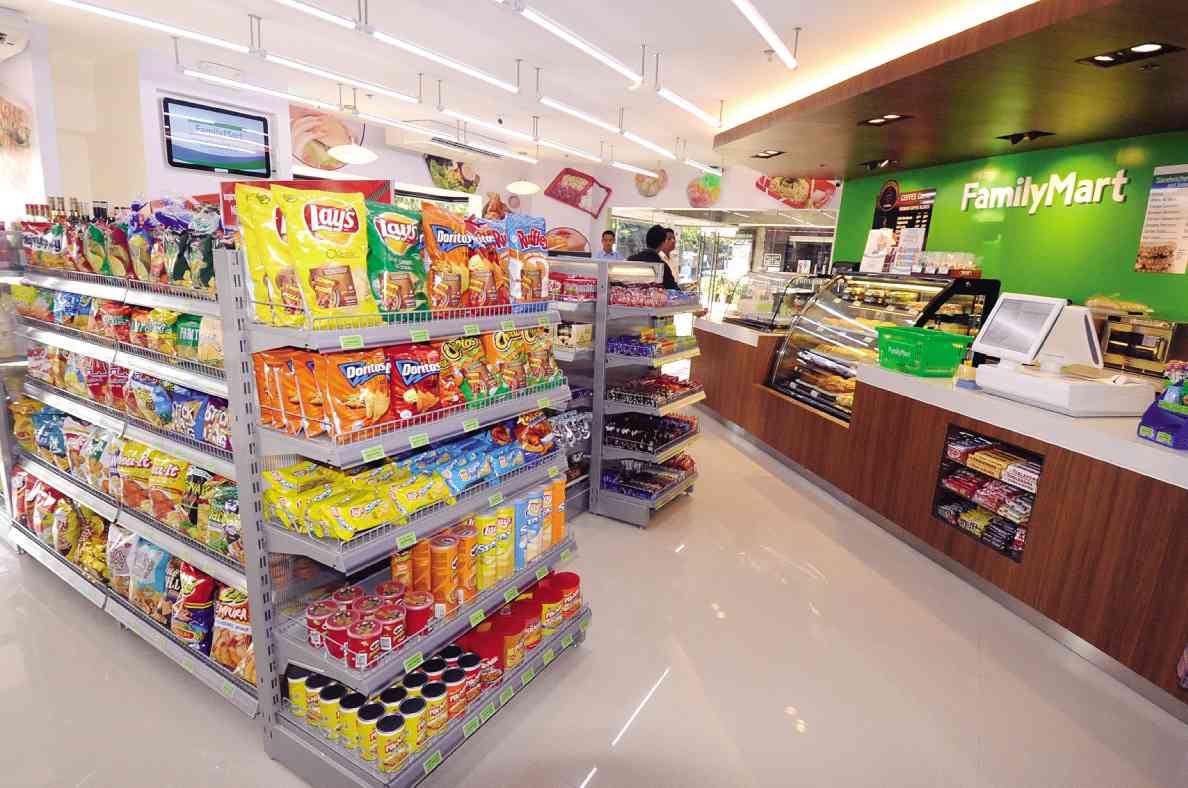
    It is setting itself apart from competitors with its “konbini” convenience-store concept from Japan. Of the nearly 2000 items on sale in each store, about 5 per cent are developed by the company using ingredients sourced by QL.
    Health, beauty and personal-care products are part of konbini offerings.

    Malaysia’s stores will have a counter offering oden steamed fishcakes served on a stick in broth. Other hot snacks available include fried karaage chicken, frankfurters and bento lunchboxes, as well as onigiri rice balls in seaweed plus puddings, mousses and ice cream.

    Its ready-to-eat food range also includes Malay favourites such as nasi biryani and mee siam, plus salads and sandwiches and fresh coffee.

    “Partnering with QL in developing halal products will be our biggest advantage,” says FamilyMart president Takashi Sawada.

    He says the group is constantly studying emerging markets in the region, including Cambodia and Myanmar. The chain also has a presence in China, Indonesia, the Philippines, Taiwan, Thailand and Vietnam.

    “We want to learn from Japan by offering amenities such as recycle bins and toilets equipped with bidet,” says Chia, who is the son of QL founder and group MD Chia Song Kun.

    Malaysia’s outlets will also offer courier services and bill-payment services, says Chia, noting the group has earmarked up to 20 million ringgit (US$4.5 million) annually for store expansion.

    Competitor 7-Eleven has about 2000 outlets in Malaysia, adding 113 this year.

  • Central FamilyMart set to expand

    Central FamilyMart set to expand

    Central FamilyMart plans to double the number of its convenience stores in Thailand from 1116 to more than 2000 within five years.

    President Chiranun Poopat says the company will continuously expand the number of FamilyMarts to cater to a growing market and increase access to consumers in specific locations. The expansion will be achieved by capital investment as well as franchising.

    “We are still confident in the high growth potential of convenience stores in the Thai market as shoppers appreciate convenience and diversity as well as product quality.

    “We will focus on opening more FamilyMart stores in Bangkok and the surrounding areas, as well as cities and destinations visited by foreign tourists,” says Chiranun.

    She says the company will add more than 60 stores this year, and also has a focus on improving existing outlets.

    There are also plans to collaborate with local entrepreneurs and suppliers so the stores can offer products for specific areas, especially tourist destinations.

    FamilyMart’s latest branch opened in Bangkok’s MBK shopping centre last week, offering ready-to-eat foods and beverages.

    For the current Vegetarian Festival, Chiranun says FamilyMart has increased its vegetarian options to 400 items. New offerings include vegetarian onigiri (Japanese rice balls), baked Riceberry with taro, stirfried mixed mushrooms with rice, stirfried soy protein with black pepper, a coleslaw sandwich and a vegetarian bento set.

  • Lawson Japan eyes US for expansion

    Lawson Japan eyes US for expansion

    Convenience store owner Lawson Japan is seeking to buy chains in the US with the aim of boosting its number of overseas outlets by about a quarter within a year.

    “In the US, where the market is mature, mergers and acquisitions are a simple and straightforward way for us to expand, which would also allow us to buy time to boost the number of shops,” says Sadanobu Takemasu, who became Lawson president and COO this week.

    He says the group will also focus on expanding in Southeast Asia.

    Lawson has about 12,500 stores in Japan and 793 outside the country, and is targeting a 26 per cent increase to 1000 overseas outlets by February.

    Lawson joins other chains such as Seven & I Holdings’ 7-Eleven and FamilyMart in seeking overseas expansion while competing to displace conventional grocery shops and restaurants domestically amid Japan’s economic malaise and falling population.

    Lawson has a 5.3 per cent market share of Japan’s grocery retail sales, second only to 7-Eleven’s 12.2 per cent share, according to data from Euromonitor International. The situation is the same in the fast-food market, with 7-Eleven holding a  33.8 per cent share followed by Lawson with 12.4 per cent.

    Prime Minister Shinzo Abe says he is postponing an increase in sales tax until October 2019 as the government seeks to avoid depressing private consumption.

    But Takemasu says any changes in sales tax timing would have had only a temporary impact on Lawson’s business.

    “In Japan, I want to focus resources on the existing businesses to strengthen them, so I’m not considering adding new businesses through mergers and acquisitions for now.”

    Trading conglomerate Mitsubishi Corporation, where Takemasu was an aide to the president before joining Lawson, is Lawson’s top shareholder with a 33 per cent stake.

    Lawson bought the Seijo Ishii supermarket group in 2014, and the United Cinema chain the same year.

    While Lawson has outlets in China, Indonesia and the Philippines, Seven & I has about 40,000 shops outside Japan while FamilyMart has about 6000.

  • FamilyMart Malaysia rollout confirmed

    FamilyMart Malaysia rollout confirmed

    QL Resources, which produces chicken eggs and seafood surimi, is set to launch a MalaysiaFamilyMart network.

    The company says it plans to open 300 outlets within five years, with the first to be up and running by the end of this year. That will trigger a battle with fellow Japanese convenience store chain 7-Eleven and local startup Bison Incorporated which plans to use the funds from an upcoming IPO to open 150 new stores by 2017.

    QL Resources says its wholly owned subsidiary Maxincome Resources has signed the area master franchise agreement for the development and running of FamilyMart convenience stores in Malaysia. The 20-year agreement is renewable for subsequent periods of 20 years, each at Maxincome’s option, and becomes conditional once the company has registered as a franchisee with Ministry of Domestic Trade, Co-operatives and Consumerism.

    FamilyMart sees the move into Malaysia as an “exciting opportunity” given the country’s growing economy and consumer spending.

    Both parties seem to agree the launch will have a long gestation period, understandable given the current state of the convenience store industry in Malaysia.

    7-Eleven Malaysia dominates the market, with a share of around 82 per cent, through  more than 1900 stores nationwide and with an expansion rate of about 200 annually at present..

    Smaller rival Bison has about 240 newsstands and convenience stores under its brands, which include myNews, Newsplus, MagBit and The Front Page. It also runs WHSmith outlets in Malaysia, in a joint venture with UK’s WH Smith Plc.

    QL Resources says the launch of FamilyMart will open up bigger growth opportunities in the consumer market for the whole group. “It fits into our strategy of strengthening and expanding integration of the group’s value chain.”

    It cites such favourable factors as Malaysia’s increasing urbanisation and per-capita consumption, young population demographic, and a growing trend of proximity and convenience retail.

    Globally, FamilyMart had 17,540 stores in seven countries as at March 31, and is known for its range of ready-to-eat food and beverage offerings as well as convenience items.

    “FamilyMart’s philosophy and values resonate with QL Resources’ mission of providing nourishing agro-based products,” QL Resources says in a statement. “Their emphasis of delivering quality food is also a value that QL Resources, as a food company, values and sees synergy in.”

  • Dairy Farm exits Starmart Indonesia

    Dairy Farm exits Starmart Indonesia


    Convenience store and grocery retailer Hero Supermarket is to exit the troubled Starmart Indonesia business.

    Hero, a subsidiary of Hong Kong-headquartered Dairy Farm International, has announced the sale of 80 stores to Fajar Mitra Indah, a subsidiary of Wings Group, an Indonesian food conglomerate which owns the FamilyMart franchise in the country. The networks will be merged by the year’s end under the FamilyMart banner, taking that network to 80.

    The sale follows the closure of 50 poorly performing stores in the network last September after a long-running strategic review. The balance of the stores – the number of which is undisclosed – will be shuttered.

    The Starmart business had effectively been kneecapped by rapidly implemented Indonesian government policies, most significantly a ban on convenience stores selling alcohol which took effect last April. A general economic slowdown has not helped sales of other goods.

    In a statement, Hero said it would withdraw entirely from the convenience stores business in Indonesia. No transactional details were revealed but the company said the closure would have no material impact on its trading figures this year.

    Both Starmart and FamilyMart are relative minnows in the Indonesian convenience store sector – local chains Alfamart and Indomart – each about 10,000 outlets strong – dominate.

    According to a report in the Nikkei Asian Review, Hero’s profit fell 90 per cent in 2014 and slipped into the red in 2015. Its supermarket business is under pressure from discounters and the company has also shuttered a number of unprofitable Guardian drugstores.

  • Why are many Thai buyers in the Vietnam retail market?

    Why are many Thai buyers in the Vietnam retail market?

    Berli Jucker Plc (BJC), has taken over the Japanese chain of 42 FamilyMarts and renamed it as B’mart. The Vietnamese retail market recently witnessed a series of mergers and acquisitions (M&A) in which the buyers were businessmen from Thailand.

    In mid-2014, BJC made a deal on buying Metro Cash & Carry Vietnam at $880 million, the biggest affair in the retail sector in Vietnam so far. The deal wrapped up 1.5 years later, in January 2016.

    In early 2015, Central Group successfully acquired a 49 percent stake of the Nguyen Kim home appliance distribution chain.

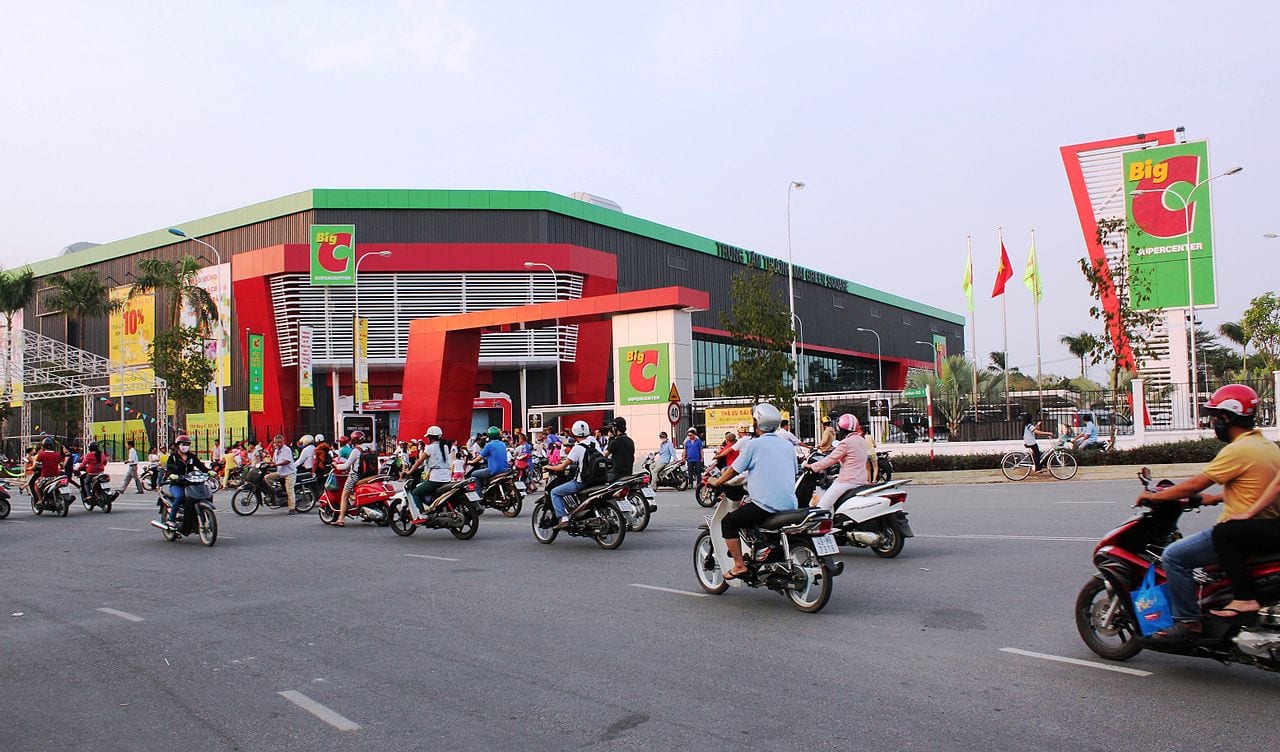
    Right after French Casino Group announced the plan to sell Big C Vietnam, analysts predicted that Big C chain in Vietnam was likely to fall into Thai hands. Later, BJC stated it was vying for Big C Vietnam.

    This is because, according to Phu, the Vietnamese market promises great potential: while other countries in the world focus on developing the home market, Vietnam has been gathering strength on boosting export, while paying less attention to the domestic market.Vu Vinh Phu, chair of the Hanoi Supermarket Association, who was deputy director of the Hanoi Trade Department, noted that only a few foreign retailers came to Vietnam in the past, but things are quite different now. Nearly all big retailers in the world are present in Vietnam, especially Thais.

    This explains why foreign investors have to spend several months only to find retail premises and penetrate the home market. Meanwhile, a domestic retailer told Phu that it took him three years to do this.

    “Business opportunities will be missed after such a long time,” Phu said, adding that domestic and foreign retailers are in an unequal competition.

    An analyst commented that many Thai businessmen eye Vietnam because Thailand is near Vietnam in geographical position. Thai businesspeople understand Vietnamese consumers’ taste and hobbies.

    “Thai businessmen kicked off plans to penetrate the Vietnamese market a long time ago. And they have been doing this in a methodical way and they have been step by step expanding both production and distribution in Vietnam,” he commented.

    At first, Thai businesses usually organize trade fairs in Vietnam to familiarize Vietnamese with Thai products.

    “I believe that 100 percent of families in Hanoi and HCMC use Thai products, from washing liquid to knives,” he said, adding that Thai products are present in every Vietnamese family.

    Phu commented that though Thai is less strong than Japanese and South Korean; therefore, they have been ‘waging guerilla warfare’ when attacking the Vietnamese market.

  • Jetro helping convenience stores

    Jetro helping convenience stores

    Four major convenience store chains in Japan are teaming up with a government-related body to work on expanding their businesses overseas.

    FamilyMart, Lawson, Ministop and 7-Eleven Japan have formed a council with the Japan External Trade Organization (Jetro) to accelerate their establishment of branches overseas after the Trans-Pacific Partnership (TPP) goes into effect, reports the Sankei Shimbun.

    With the TPP easing restrictions on foreign distributors entering into the markets of partner countries such as Vietnam and Malaysia, the convenience stores hope to devise a system that will enable them to sell Japanese processed food products and commodities in overseas markets.

    Jetro’s task will be to work with foreign governments to resolve problems and collect relevant retail information. It will also help the convenience store chains find partner companies in Asian countries.

  • Indonesia retail Japanese convenience stores think small to survive

    Indonesia retail Japanese convenience stores think small to survive

    Japanese convenience store operators are shrinking the size of their outlets in Indonesia amid growing competition from local rivals. But the strategy of pursuing profitability over scale runs the risk of downsizing the companies out of the market.

    In Jakarta, the two leading local operators — Indomaret and Alfamart — have over 10,000 outlets each. Japanese rivals are finding it difficult to stay competitive with their traditional focus on larger shops, which often include cafes. To fight back, Lawson and Seven-Eleven Japan plan to increase the number of smaller stores in office and commercial buildings.

    During lunchtime in an office building in Jakarta, people form long lines to buy bento box lunches, bread products and other items at a Lawson outlet. A karaage, or deep-fried chicken, bento sells for 45,000 rupiah ($3.20). “It’s my turn to pick up lunch today,” said a female office worker as she carried a shopping bag full of food from the store.

    The outlet, which opened in August, is Lawson’s first small store in an office building. It is less than half the size of a typical Lawson shop in Indonesia and has only one row of shelves. Midi Utama Indonesia, the local retailer that runs the stores, has been considering such new locations as shopping malls and train stations, one official said.

    Lawson entered Indonesia in 2011 after granting Midi a license to operate its stores. The Japanese company was ambitious, with plans to open 10,000 outlets in the first 10 years. But in mid-2013, after having opened just 80 shops in the country, sluggish profits forced it to withdraw from Bali. Lawson cut the number from 60 to 50 in 2014. Today, there are only some 40 Lawsons in Indonesia.

    In the meantime, Indomaret and Alfamart have been steadily increasing their store networks. They have adopted some of the techniques brought in by Japanese rivals, such as in-store cooking and in-store cafes. Duskin, a Japanese housekeeping equipment company, chose Indomaret over Japanese players as its local partner to run Mister Donut when it entered the market this year.

    Following the money  

    With their limited number of stores, Japanese operators are finding it hard to continue offering the level of product and service quality associated with Japan while still turning a profit. As a result, they are betting on small outlets in commercial buildings to drive earnings. In explaining the shift, a FamilyMart official cited “the high income level of customers and the easy-to-predict demand structure.”

    FamilyMart plans to start opening stores in office buildings and upscale condominiums in 2016. Its existing 25 outlets are in stand-alone buildings or buildings shared with Japan’s Yoshinoya chain of gyudon beef bowl restaurants.

    Seven-Eleven Japan, the largest Japanese convenience store operator in Indonesia, is considering opening more small stores in train stations, commercial buildings and other busy locations, according to Modern Internasional, the operator of 7-Eleven stores there.

    Ministop, which has six Indonesian outlets, the fewest among Japanese companies, plans to cut costs by operating smaller stores and revamping its product lineup. For example, the matcha green tea-flavored soft ice cream it is promoting is selling three times as well as the chocolate flavor, the company said.

    According to Alfamart, Indonesia’s convenience store market grew about 13% by sales in the first nine months of this year. Though that is down from 19% in the same period last year, the growth is still significant compared with midsize retailers such as supermarkets, which saw 3.6% growth.

    Japanese players are not alone in their “go small” approach. Local operators are also increasing the number of smaller outlets in train stations and other facilities amid a shortage of space to build stand-alone stores, and also because of the difficulty in obtaining approval from authorities in the metropolitan area.

    With local rivals not only adding more stores to their already-large networks but also adopting strategies similar to those used by their foreign counterparts, the pressure on Japanese operators to find new ways to remain competitive will likely increase.
  • FamilyMart Taiwan accepts bitcoins

    FamilyMart Taiwan accepts bitcoins

    FamilyMart Taiwan says a growing number of customers are paying by bitcoin since it struck a deal with local wallet provider BitoEX.

    The convenience retailer started accepting the cryptocurrency at its 3000 stores across Taiwan on October 24 and has recorded more than 500 transactions since then.

    Most customers are using bitcoin to buy coupons dispensed by FamiPort terminals which Taiwanese use to pay for a variety of things including utility bills, cinema tickets, parking fines or train tickets.

    FamilyMart PR manager Chen Chia-Chi told the Taiwanese news agency United Daily News that the bitcoin acceptance is aimed at travellers to Taiwan and a growing domestic bitcoin userbase.

    BitoEX, meanwhile, claims to have more than 40,000 web wallet users, a customer base growing 30 per cent annually.

    “There are more and more users of our bitcoin wallet now, but the market in Taiwan is still small, and it’s still growing,” said Rica Chiang, deputy GM of BitoEX.

    Last year, BitoEX struck a deal with FamilyMart to sell bitcoins. That relationship raised the retailer’s awareness of the currency’s acceptance and consumer interest, leading to October’s payment introduction.

    “Since last year [FamilyMart] saw a growing number of bitcoin sales. That’s why they were cautiously thinking about accepting bitcoin to see if it there’s a bigger market out there,” said Chiang.

    Among the local users of the service are gamers who take a break to grab a refreshment at a familyMart store – and pick up some bitcoins on the way to use online.

    “We noticed a lot of transactions taking place in the middle of the night, so we were curious. We found out they were gamers,” said Chiang.

    “Sometimes they say, ‘Please give me bitcoin, I’m in a hurry – I’m in the middle of a game!’.”

    BitoEX says people using bitcoin for remittances, investors and speculators are its next largest customer groups.