Tag: Fashion

  • JD.Com, Online Fashion Retailer Meili Ally to Develop ‘No Boundary Retail’

    JD.Com, Online Fashion Retailer Meili Ally to Develop ‘No Boundary Retail’

    JD.com plans to form a JV with online fashion retailer Meili to build and run a commerce platform on Chinese voice-messaging service Weixin.

    Merchants who sell through the new platform, expected to launch before the Lunar New Year next month, will gain access to JD’s logistics network.

    The move follows the joint introduction of “no-boundary” retail by JD.com and Tencent in October, a concept that aims to create online communities of consumers with similar buying preferences, fusing e-commerce with social life.

    Meili founder/CEO Chen Qi, who will also be the JV’s chairman, says the platform will draw on Meili’s ability to reach female shoppers, particularly in lower-tier cities in China.

    Established in 2016, Meili has several platforms including Meilishuo and Mogu Street, and more than 15 million active daily users. It not only provides online retail, but also society and fashion information.

  • Da Milano eyes an increased revenue with adding 150 new stores

    Da Milano eyes an increased revenue with adding 150 new stores

    High-end leather products retailer Da Milano is eyeing Rs 300 crore turnover and plans to open 150 new outlets across the country for its three brands in three years.

    “We are looking at a turnover of Rs 300 crore by fiscal 2020-21. We will grow our business through our network of retail stores and focus on customer loyalty and satisfaction,” Da Milano Managing Director Sahil Malik told.

    Da Milano expects to close the current fiscal year with a turnover of Rs 200 crore.

    The company currently operates 70 stores in India and six abroad. It is also looking at expanding its overseas operations and plans to open stores in Singapore and London by next fiscal.

    Da Milano recently opened its new store in Dubai.

    “We expect overseas operations to contribute to our turnover in a big way. We are an affordable luxury leather brand and the price points at which offer our products makes the brand attractive,” Malik said.

    Da Milano sells three brands — Da Milano, Rosso Brunello and Wooba.

    “We plan to open 150 stores across our three brands in three years time,” he added.

  • Louis Vuitton Singapore makes splash in airport

    Louis Vuitton Singapore makes splash in airport

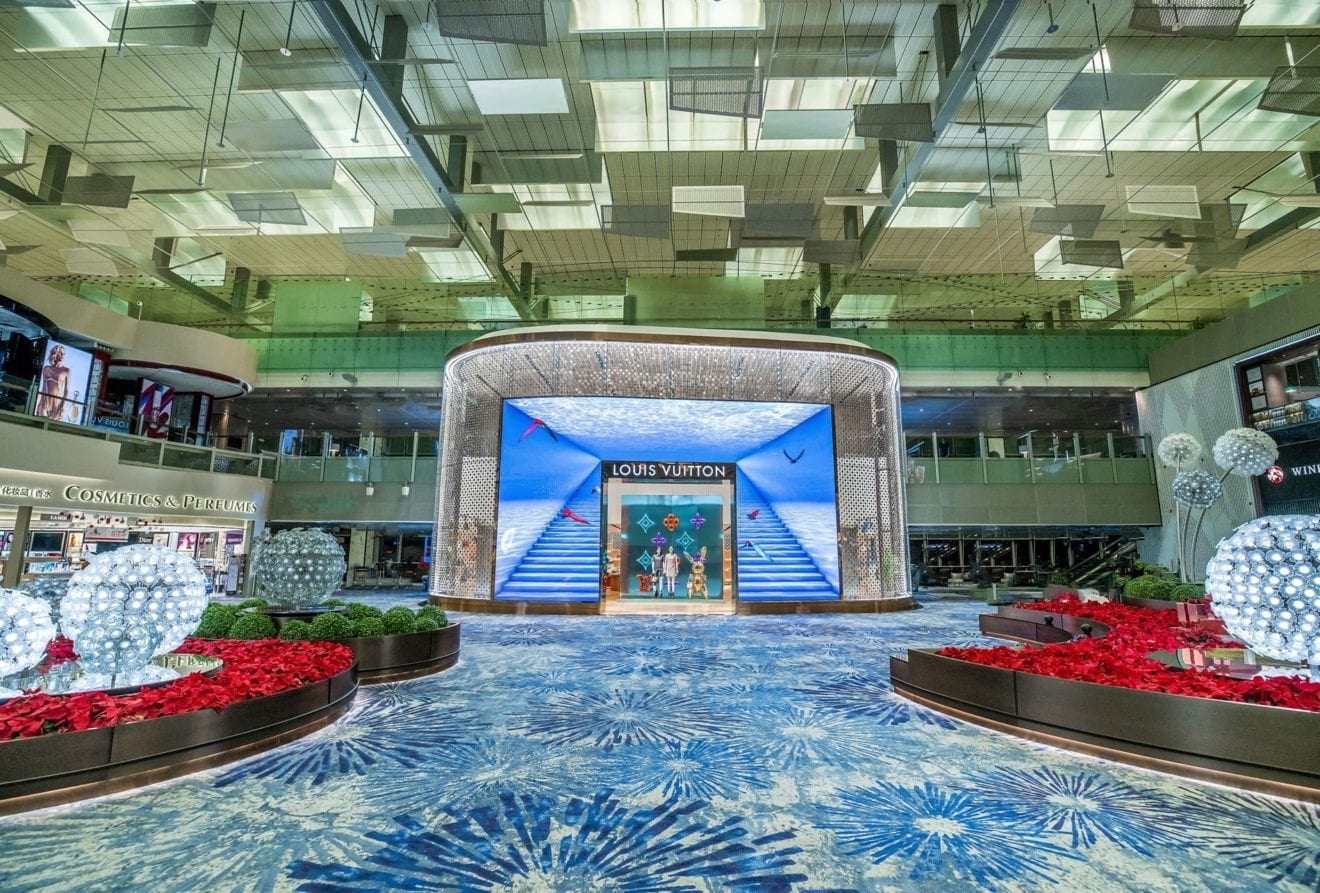
    Louis Vuitton Singapore has opened a spectacular duplex store taking centre stage in the new Crystal Garden in the Terminal 3 departure transit hall at Changi Airport.

    The first-ever airport store of its type in south Asia, the store has a theme of travel and features a full-size model of a 1930s French plane suspended from the ceiling, plus “flying machines” carrying the French luxury brand’s signature trunks and suitcases.

    A giant digital display surrounds the entrance, and the store has a translucent facade of glass and copper-diamond mesh. Inside, tiered garden beds feature a flowers and spheres containing glass sculptures.

    For the opening, an exhibition space on the second floor features antique objects from the Louis Vuitton archives displayed alongside more contemporary pieces.

    On the ground floor there is a range of travel-related offerings including men’s and women’s leather goods, ready-to-wear, accessories, shoes, watches and fragrances.

    Covering 530sqm, it is the first airport store in Asia Pacific to be directly managed by Louis Vuitton, which has had a 37-year presence in Singapore.

  • Prada Silver rolls out a new line in Macau

    Prada Silver rolls out a new line in Macau

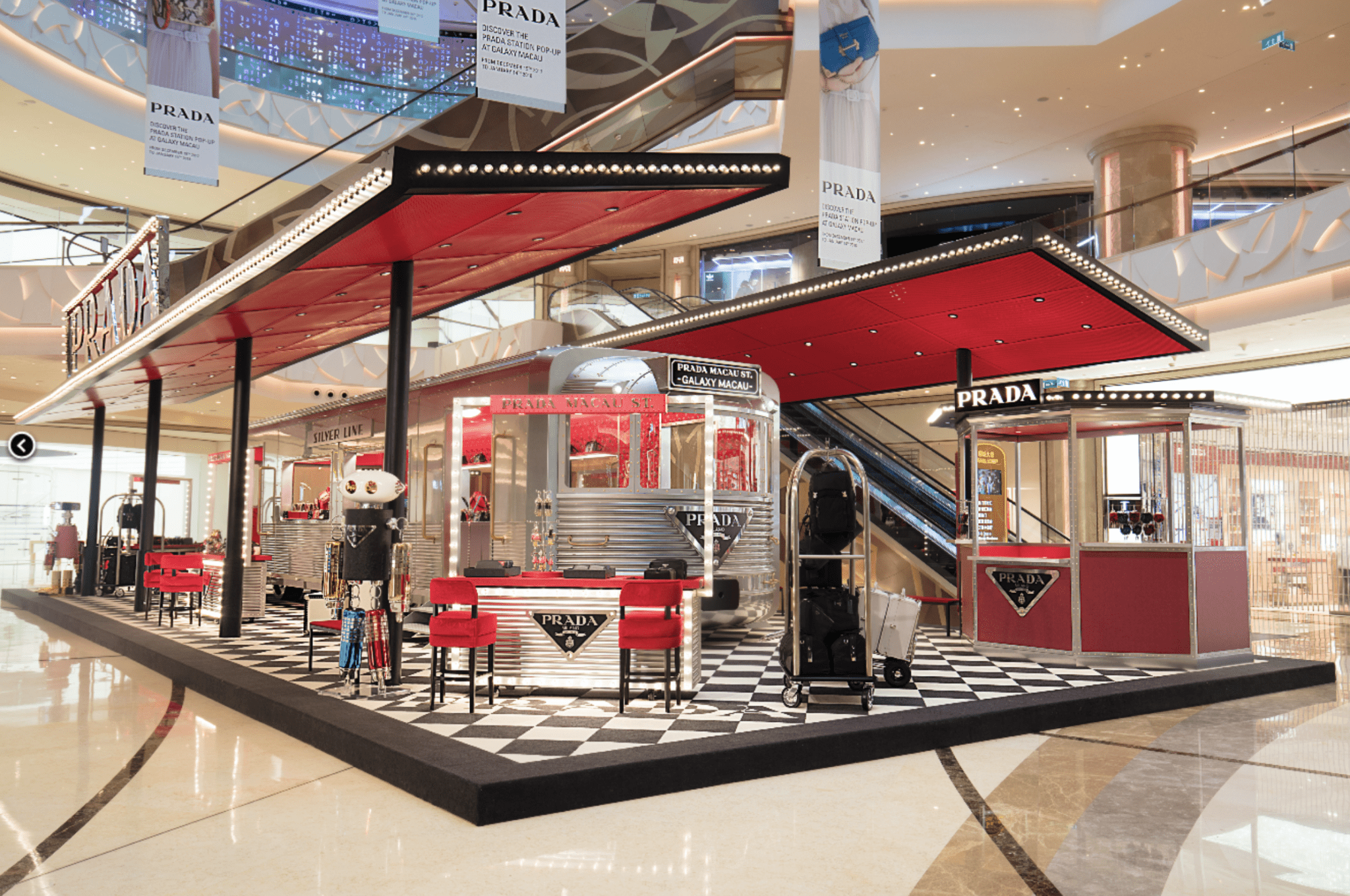
    Adopting a rail theme, Prada has unveiled an itinerant retail project, “Prada Silver Line”, at Galaxy Macau.

    It runs until January 4, then will steam off to other destinations around the world. Different items will be developed for each city the Silver Line visits.

    With an illuminated platform, the pop-up draws inspiration from American train sets of the ’30s to ’50s. The imaginary railway station includes a train coach with metal outer shell that houses the main product display space. Floral-patterned red silk brocade tapestry and black-and-white checkered marble flooring, as appears in all the brand’s boutiques, embellish the space.

    Around and outside the coach are rail-inspired installations including life-size Prada robots and a ticket booth, which serves as a concierge service where customers can arrange delivery of purchases to their homes.

    A “Macau St” sign marks the retail space, a reference to the first stop for the train on its international journey. Throughout next year the retail project will travel throughout Asia, Europe and the US, starting with Dubai late next month.

    To mark the project, the brand presents a range of exclusive products including women’s bags and accessories. In particular, the Prada Cahier bag is reinterpreted in three new styles using exotic leathers.

  • Levi Strauss merges with MENA markets

    Levi Strauss merges with MENA markets

    US denim giant Levi Strauss has merged its South Asia market business with the Middle East and North Africa.

    And the company has appointed its India head Sanjeev Mohanty to spearhead the consolidated Levi Strauss Asia-MENA business.

    The company cites common consumer preferences and synergies across the three regions as the reason for the restructure.

    Mohanty joined Levi’s India little more than 12 months ago after about nine months at troubled fashion e-tailer Jabong, and previously ran Benetton India.

    The Middle East, North Africa  and South Asia account for around US$200 million in wholesale turnover for Levi’s. Based in Bengaluru, Levi’s India reported revenue of more than Rs 842 crore (US$130 million) at the end of March, with a net profit of almost Rs 58 crore.

  • Louis Vuitton adopts a new strategy in Korea

    Louis Vuitton adopts a new strategy in Korea

    Louis Vuitton has recently begun separating its men’s stores from women’s at major department stores in Korea.

    According to the French luxury brand on 11 December 2017, a Louis Vuitton store specializing in men’s fashion items was opened on the sixth floor of Shinsegae Department Store‘s main branch in Seoul last week. The department store will accommodate a renovated store featuring women’s collections as well on the ground floor next week.

    The international fashion house will also open a brand new store focusing on men’s collections at Galleria Department Store’s East Wing and a renewed women’s store in the store’s West Wing this month.

    Its Korean subsidiary said it divided the stores to offer clients a unique and personalized shopping experience.

    According to the company, separated Louis Vuitton stores can only be found at Saks Fifth Avenue in New York, Harrods in London, and Shin Kong Place in Beijing, as well as Shinsegae Department Store’s Gangnam branch having stores for women’s collections on its second floor, women’s shoes collections on the fourth floor and men’s collections on the sixth floor.

    Some observers regarded the company’s recent decision as a strategy to recover from its declining sales here by attracting male customers, who have emerged as big players in the nation’s luxury market.

    According to Reebonz Korea, a local subsidiary of the Singaporean-based online platform for luxury products, sales of men’s items rose 96 percent year-on-year in the first half. Sales of men’s luxury products have also increased in other online market places, such as Auction, Gmarket and 11st.

    Louis Vuitton and other global luxury brands are therefore making every effort to satisfy demand, so as to overcome slumps in sales. According to industry officials, Louis Vuitton’s sales growth has been decreasing at major department stores in Korea for years.

    Fendi, an Italian luxury fashion brand, also opened a store specializing in men’s items for the first time in Korea in September at Men’s Salon on the sixth floor of Shinsegae’s Gangnam store. Christian Louboutin, an international luxury brand known for high heels, revamped the first basement of a flagship store in Cheongdam-dong to sell men’s products.

    Given that Louis Vuitton has not unveiled its business performance in Korea, it is unknown exactly what its sales growth was after the latest renewal.

    However, sales of men’s items at Shinsegae’s Gangnam branch doubled after the renewal of Men’s Salon consisting of several luxury brands, such as Louis Vuitton, Berluti and Lardini. Among the brands, Louis Vuitton has maintained the top spot in terms of sales, according to industry officials.

    Thierry Marty, the CEO of Louis Vuitton Korea, said the luxury brand will push ahead with renewals at its nationwide stores to provide personalized services for customers, so the number of separated Louis Vuitton stores is expected to increase.

  • Ermenegildo Zegna presents a multisensory experience

    Ermenegildo Zegna presents a multisensory experience

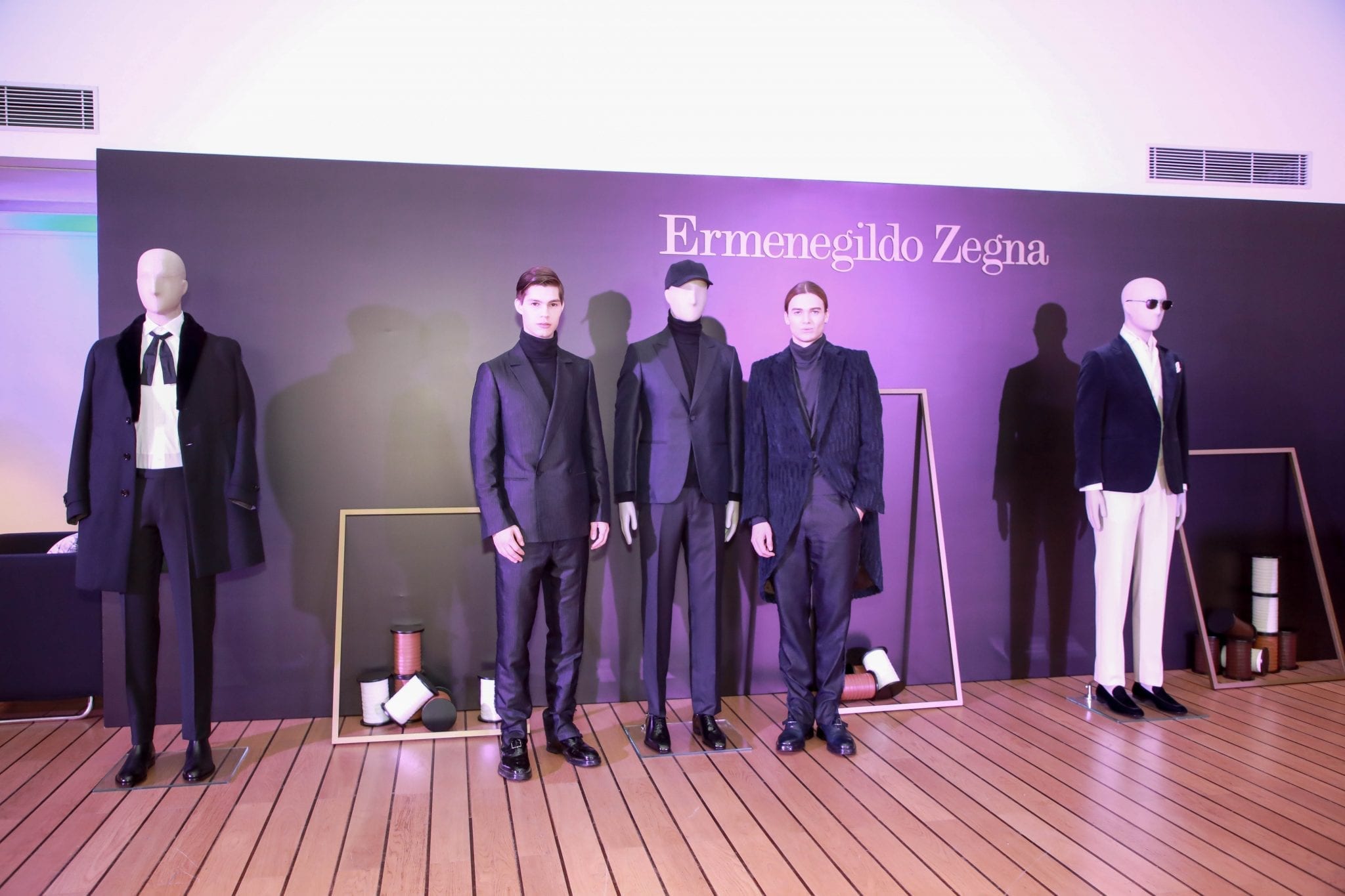
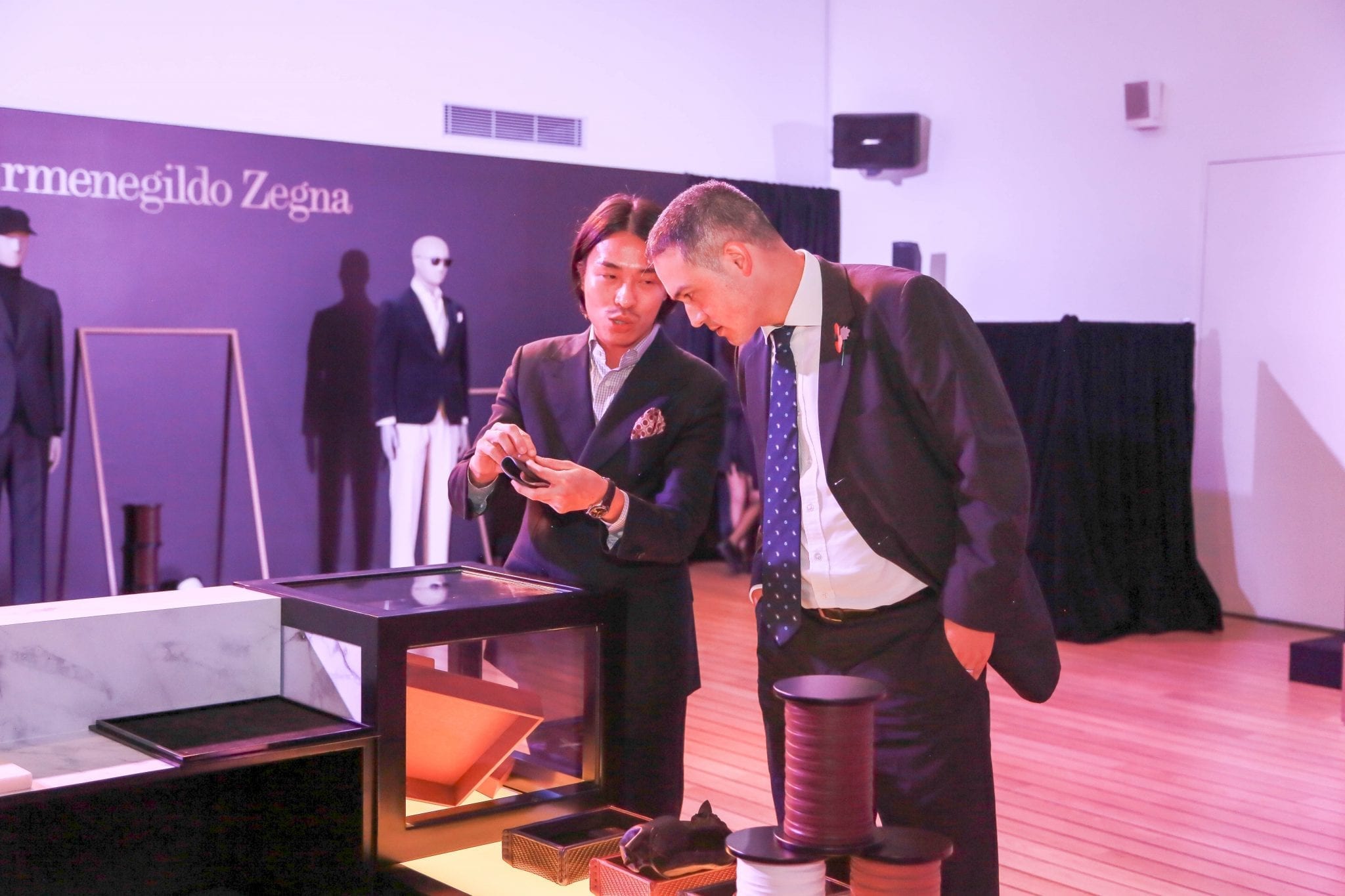
    Ermenegildo Zegna, one of the most luxurious  Italian fashion houses for modern gentlemen, hosted an experiential cocktail event “Crafting Modernity” at the Hong Kong  Maritime Museum.

    The event was an interactive, multisensory celebration where guests were guided through an intimate look into Ermenegildo Zegna’s creativity and artisanship, as well as their latest offerings – from the iconic PELLE TESSUTA Leather Collection, to the new arrivals of Zegna Toyz Collection which is also exclusively made in PELLE TESSUTATM.

    Renowned actors Sean Lau and Moses Chan joined the evening to share some of the key defining moments in their life that have made them who they are today. Both embody the mature elegance of the sophisticated gentleman, their successes mirror Ermenegildo Zegna’s continuous pursuit of excellence and innovation.

    Up and coming singers Tim Wong and Alfred Hui also joined the event to provide a dynamic equation to the evening, as their contemporary music reflects the spirit of modern young men today.

    Undoubtedly though, the star of the show was the brand’s PELLE TESSUTA collection. Famous for its premium fabrics, Ermenegildo Zegna has taken leather to a new level, and the PELLE TESSUTA collection is the latest innovation, replicating the traditional method of weaving cloth to recreate precious fabric using extremely thin strips of select nappa leather.

    The Zegna Toyz Collection, which was officially launched in Hong Kong at the event, features a wide range of home, travel and gaming products all made in PELLE TESSUTATM. The items are dedicated to the modern man for three different moments of his life: “Essential” is a collection of small leather goods for the gentleman’s business life and includes, among other things, a coin case, a business card case and a sunglasses case. “Toys” is a selection of leisure and entertainment travel games, which includes a domino set, a playing card set and a game cube. The “Technological” offer consists of a series of multimedia accessories, such as headphones and turntable, created in collaboration with Master & Dynamic, the premium audio brand known for its sophisticated sound tools.

    At the event multisensory experience was created to stimulate the senses and guide each guest to connect with the brand on a deeper level and to truly experience and appreciate the innovation of the PELLE TESSUTA and the Zegna Toyz collection. Guests were invited to record a personalised audio message that can be immediately stored and also realized in a soundwave art on a plastic card, and when given to a loved one, can be played back by scanning the QR Code on the card face.

    Another highlight of the evening was  the headphone and vinyl record player created through a special collaboration with Master & Dynamic, resulting in a beautiful set of  top-of-the-line music gear that stands out with its timeless design that is both elegant in its lines and sophisticated in its bearing.

    To celebrate the collections, award winning bartender James Barker tailor –made 3 different signature cocktails inspired by Ermenegildo Zegna and its latest collections.

  • Lululemon sales skyrocket sales

    Lululemon sales skyrocket sales

    Canadian activewear retailer and manufacturer Lululemon has posted a 14 per cent uplift in total sales in the third quarter; same-store sales rose 8 per cent.

    Kevin Wathey, a consultant with GlobalData Retail, says that while other players in the sports and athleisure market struggle, Lululemon sales continue to go from strength to strength.

    While income dropped by 14 per cent, the increase in sales by either measure underlines that Lululemon is still attracting new customers – and getting existing shoppers to spend more both online and offline, he said. The drop in profit was the result of asset impairments and restructuring costs associated with the Ivivva closedown, rather than symptomatic of any fundamental issues with the business. Excluding the exceptional $21 million of fees, net income rose by a healthy 17 per cent year on year.

    “Exceptional items notwithstanding, the strength of Lululemon’s bottom line is mostly thanks to its ability to resist the temptation of excessive discounting – even in a market that has become steadily more promotional. In our view, this is made possible by the fact that Lululemon, unlike so many of its rivals, has a line-up of products that people want and for which they are prepared to pay full price. Constant innovation and a laser-like focus on functionality and quality are central to this,” said Wathey.

    International growth – including in Asia – and product innovation should continue to fuel sales.

    “The former is particularly helpful in driving revenue, and we remain excited about Lululemon’s prospects in both Asia and Europe. The latter gives the numbers a softer boost but also plays a critical role in keeping existing shoppers coming back for more. On the product side, we feel that Lululemon has some potentially significant wins ahead, especially in categories like footwear where it has just launched its first range of sneakers in collaboration with California-based Athletic Propulsion Labs.”

    Wathey said he remained optimistic about Lululemon.

    “It is true that the company has had a good run of growth and it is also the case that overall market conditions will continue to be challenging. However, Lululemon’s careful control of its brand, along with its efforts to position itself as a company that helps people achieve their lifestyle ambitions, will help it to speed through prevailing negative headwinds.”

  • Grana Group bulks up with venture debt

    Grana Group bulks up with venture debt

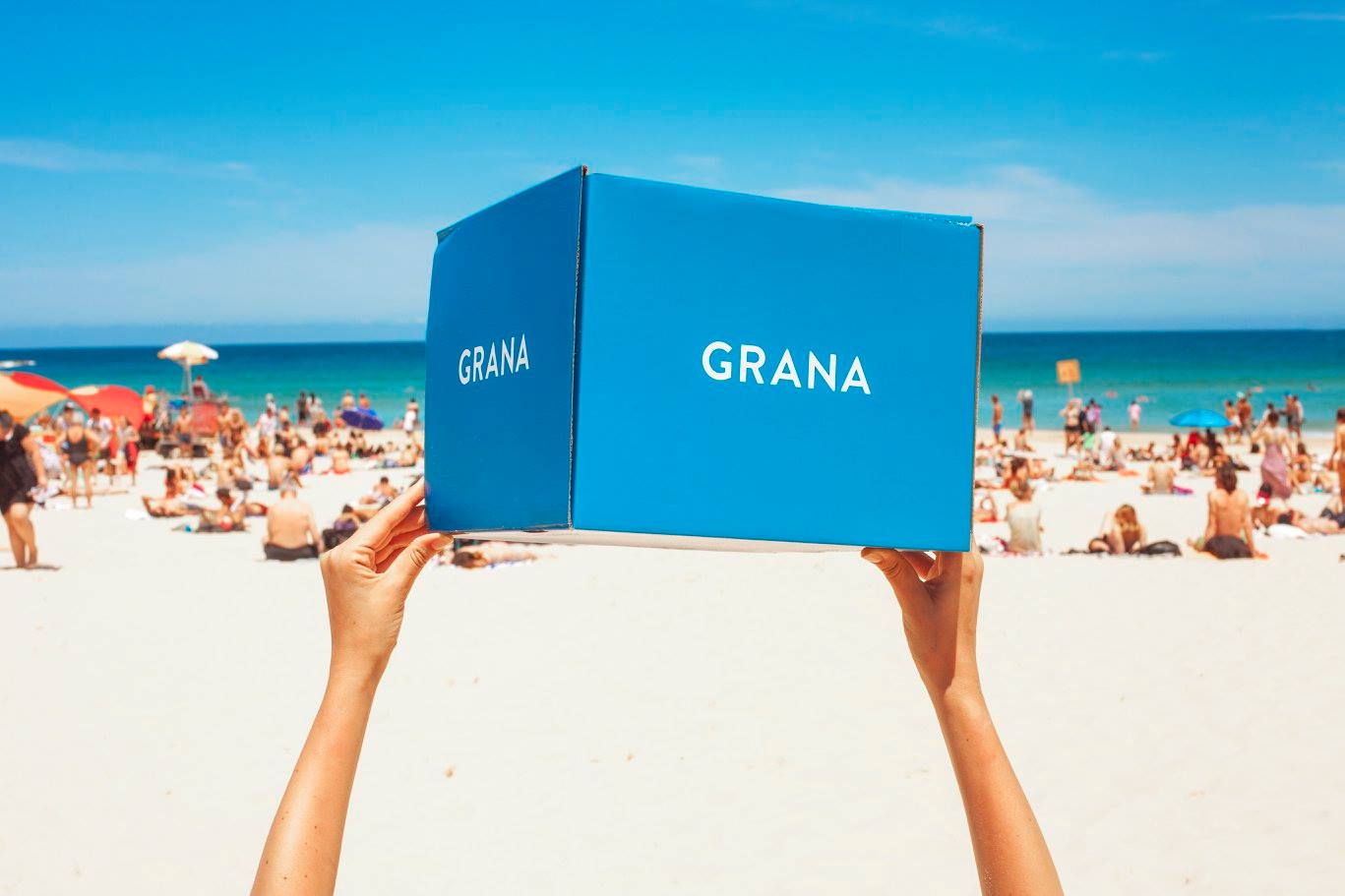
    After raising US$16 million in venture funding from backers including Alibaba, online apparel brand Grana Group has boosted its coffers with an undisclosed amount in venture debt.

    The three-year-old online fashion startup will use the funds, from Hong Kong asset manager STI Financial Group, to improve its cash-flow management and advance its use of artificial intelligence for customer engagement. Using venture debt means the company can grow its business without having to dilute its share capital while working toward series-B funding at the end of next year, reports Deal Street Asia.

    Based in Hong Kong, the startup was founded by Australian entrepreneur Luke Grana. Its earlier funding included $6 million in seed money and $10 million as a series-A round.

    The company has an 18,000sqft (1700sqm) global distribution centre that ships to 67 markets. It has also opened 15 pop-up showroom-experience centres across Hong Kong, Singapore, the US and Australia.

  • Michael Kors Asia sales down with 30 per cent

    Michael Kors Asia sales down with 30 per cent

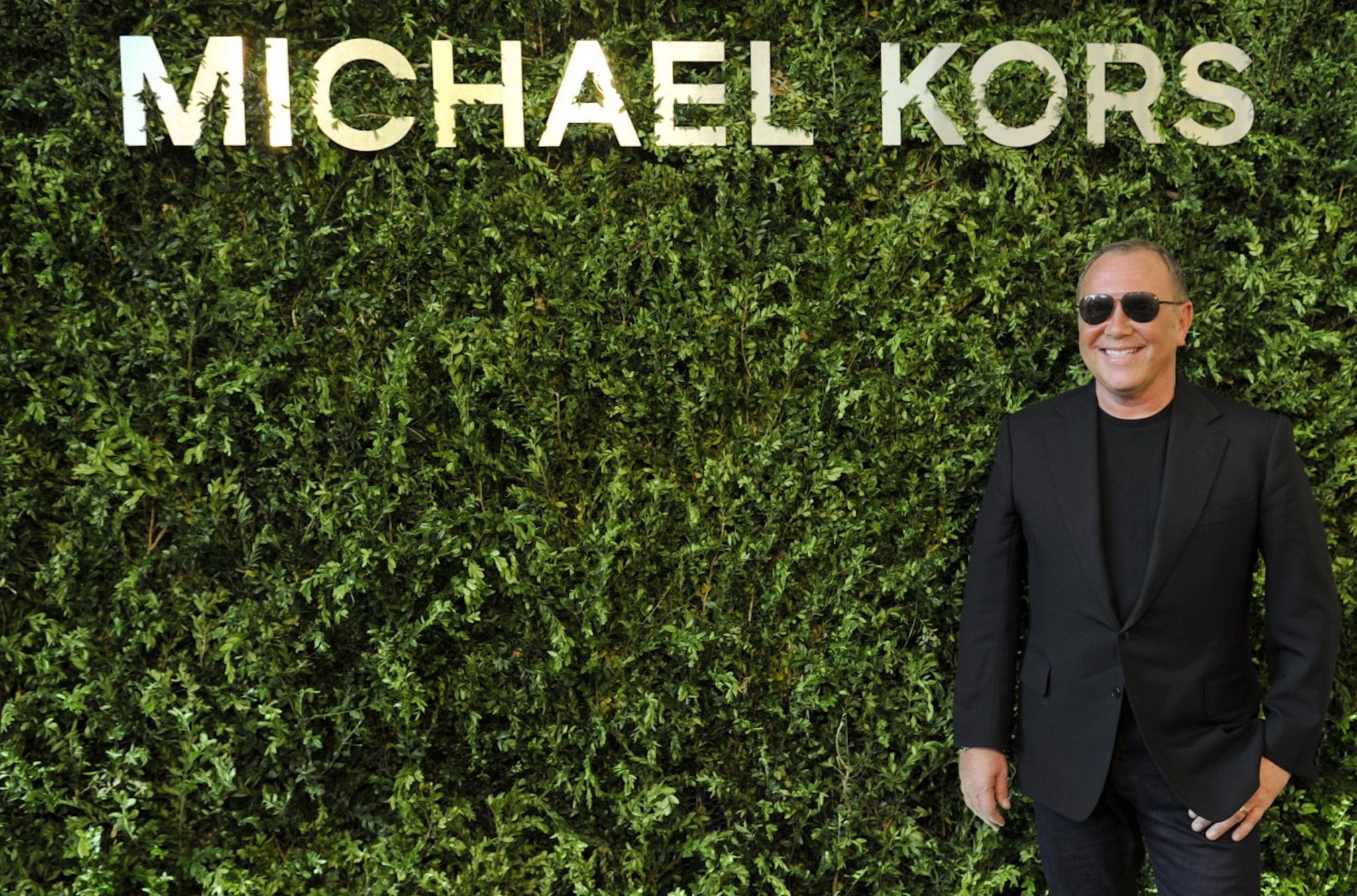
    Michael Kors Asia sales soared 30.4 per cent in the second quarter as the US luxury fashion company continued to progress its Runway 2020 strategic growth plan.

    Sales in Asia – the group’s fastest-growing market, totalled US$124 million, up 33.5 per cent when measured on a constant currency basis.

    Globally, sales rose a more modest 5.4 per cent to $1.15 billion and earnings rose 37 per cent in the quarter to September 30.

    “This is a transformative time for Michael Kors Holdings Limited as we established our global fashion luxury group with the recently completed acquisition of Jimmy Choo,” observed John D Idol, the company’s chairman and CEO, said.

    “We believe that bringing together these two iconic brands further strengthens our growth opportunities, increases our product and geographic diversification, and importantly, creates a platform for future acquisitions. We look forward to capitalising on the great opportunities that lay ahead for our brands and believe that we are well positioned to drive long term growth as we expand our global fashion luxury group.”

    Idol said the results were better than expected, crediting the Runway 2020 strategy aimed at being more innovative in product, brand engagement and customer experience.

    Analysts seemed to agree: “Michael Kors has been on a long journey of reinvention, but these latest numbers suggest the brand is starting to reach its destination of re-establishing itself as a well-regarded premium player,” said Neil Saunders, MD of GlobalData Retail.

    “The sales line bears witness to this, with revenue in most regions and divisions up over the prior year. Perhaps this isn’t surprising given the very soft comparatives from 2016, but this is the first time in over a year that sales in the Americas, for example, have grown – proof the company is clawing back some of the ground it has lost.”

    Michael Kors’ turnaround has been in part spurred by an expanded product offer, with the new autumn season offer up by 40 per cent. The company says it delivered higher average unit retail sales across multiple categories through innovative fashion and reduced discounting and promotional activity.

    Footwear sales rose in double-digit figures. Social media engagement grew to more than 38 million followers and e-commerce sales improved, especially in Asia, North America and Europe. During the quarter, the brand opened a net 56 new stores, driving its direct retail sales up by 8 per cent.

    In China, Michael Kors’ image was boosted by the appointment of actress Yang Mi as its first brand ambassador. She is considered one of the most influential trendsetters in China.

    Not catching Coach just yet

    While impressed with the improvement, Saunders believes the process of rebuilding is gradual, and Michael Kors is not yet achieving the kind of momentum from which Coach is benefitting.

    “The same-store sales numbers hint at this, as while the -1.8 per cent decline is better than in previous quarters, it underlines the fact that Michael Kors still fails to pull in custom.

    “One of the reasons for this is that Michael Kors is much more directional than a brand like Coach and, as such, its appeal is not as wide. The latest fall and winter collections are a case in point. While these contain some staple items like the Mercer handbag with its classic silhouette, they also feature edgy products like floral lace dresses and studded bomber jackets aimed at a more particular type of customer,” said Saunders.

    “This targeting is not wrong. Indeed, it is what a good brand needs to do. However, it limits growth and means that Michael Kors likely has more difficulty in connecting with customers across the US in a way that more middle-of-the-road Coach does not. That said, as Michael Kors widens its product range and becomes more of a lifestyle brand, we expect it to pick up more custom from consumers who will shop around the edges of the offer. This will help trade as the firm moves into 2018.”

    Saunders said the addition of Jimmy Choo to the Michael Kors empire should add around $105 million of incremental revenue to the next quarter’s sales line.

    “As useful as this near-term benefit is, it is the longer-term objectives for the iconic shoe brand that are most interesting. Michael Kors has a difficult balancing act between trying to expand its new addition and retain the exclusivity that is at the heart of its success. The aim of moving to $1 billion of revenue suggests an aggressive push to open new stores and expand e-commerce.”

    He said that strategically, the decision to buy Jimmy Choo and its latest Michael Kors collections suggest the company is looking to move into a more exclusive and distinct part of the luxury market.

    “As much as we support this tactic, we caution that it means progress will remain slower than at other brands and that it will ultimately limit the size of the business.”

  • Hugo Boss sales improve on its brand divergence

    Hugo Boss sales improve on its brand divergence

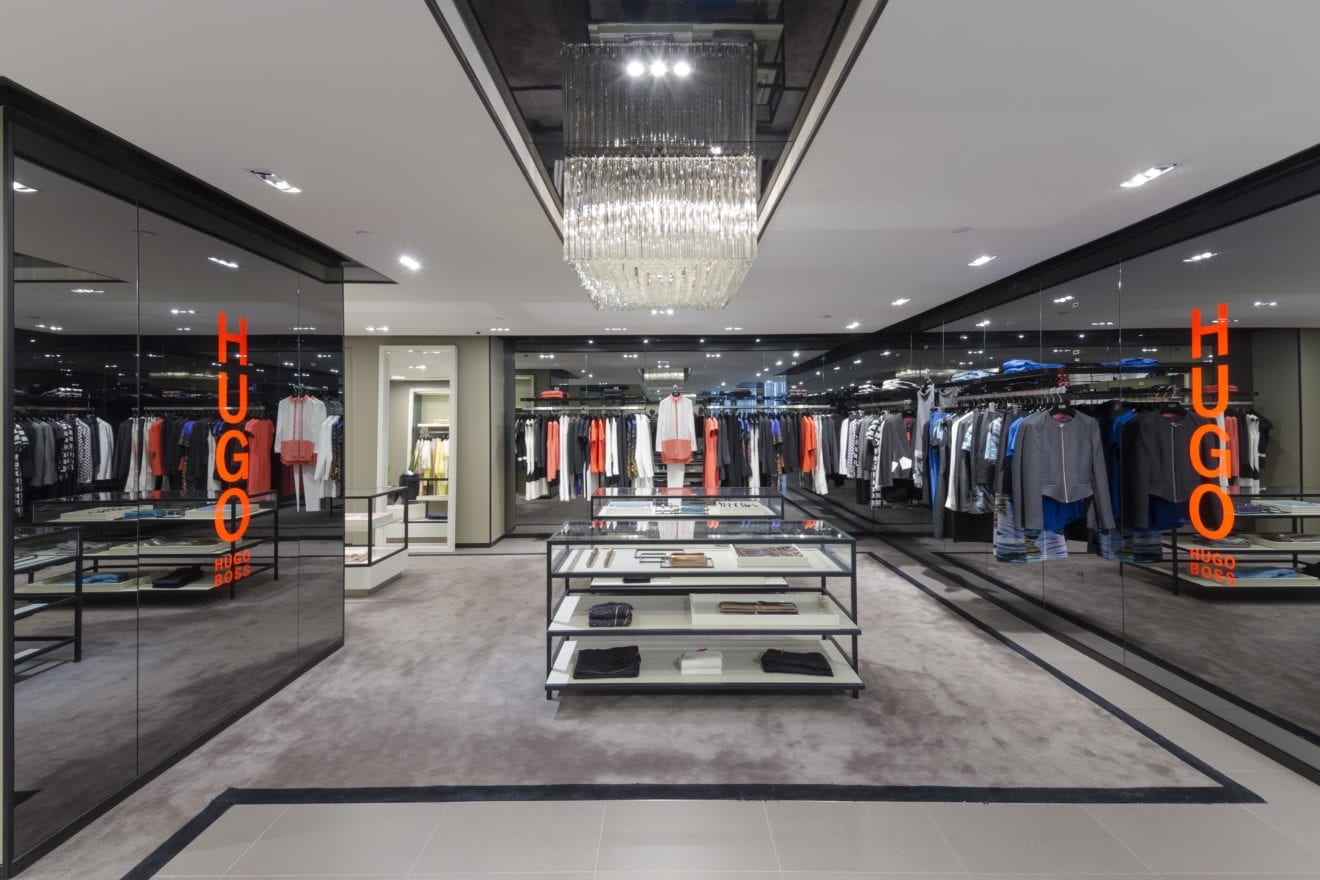
    Hugo Boss has achieved solid sales growth thanks to its policy of focusing on its own retail store network.

    Retail same-store Hugo Boss sales rose 5 per cent in the third quarter, to September 30, and currency-adjusted sales were up 3 per cent.

    “We are well on track to achieving our goals for 2017 or even exceeding some of them,” said Mark Langer, Hugo Boss CEO. “In particular, the performance of our own retail business is highly satisfying. We are making good progress in repositioning Boss and Hugo.”

    In its own retail business, the momentum of comp-store sales growth accelerated.

    “This performance was again underpinned by Great Britain, China and, for the first time in two years, by the own-retail business in the US,” said Langer.

    “The group’s own online business also grew in the quarter. On the other hand, sales in the wholesale channel declined slightly as expected. Operating profit fell slightly short of the prior year’s figure due to intensive marketing activities for the Boss and Hugo brands, spending on the digital transformation of the business model as well as negative currency effects.”

    The group now expects Asia-Pacific and Europe to drive “low single-digit percentage rate” sales growth for the remainder of this year.

    From the end of the year, first parts of the Spring/Summer 2018 collection, which reflects the focus on splitting Boss and Hugo for the first time, will be available in stores.

    “The repositioning of the two brands has been accompanied by numerous online and offline events and campaigns over the past few months. Formula 1 world champion Lewis Hamilton and Hollywood actor James Marsden presented their personal favorites from the Boss Menswear collection in the global “Own Your Journey” social media campaign. Consumer response to the advertised styles has been extremely positive.”

    In July, Boss Womenswear unveiled its “Gallery Collection” in a presentation at the Berlin Fashion Week. Future capsule collections of both brands will be used to generate heightened attention.

  • The Garnered comes to ground at Landmark Hong Kong

    The Garnered comes to ground at Landmark Hong Kong

    Online retailer The Garnered, which offers mainly handmade fashion, craft and design products, is showcasing its wares at a pop-up in Landmark in Central.

    In a first for Hong Kong, the London-based venture will have its creations on show until November 12.

    Former Selfridges head of fashion Anna Gardner launched the e-commerce site last year to offer designers a more flexible, supportive platform through which to express their vision and highlight their creative processes.

    Garner started in the fashion industry at the Paris office of American Vogue and Vanity Fair, as an assistant to André Leon Talley. It was the springboard for an international career that has encompassed being head of communications for London retailer Joseph Ettedgui, and fashion director for Henri Bendel.

  • Under Armour sales numbers hit the wall

    Under Armour sales numbers hit the wall

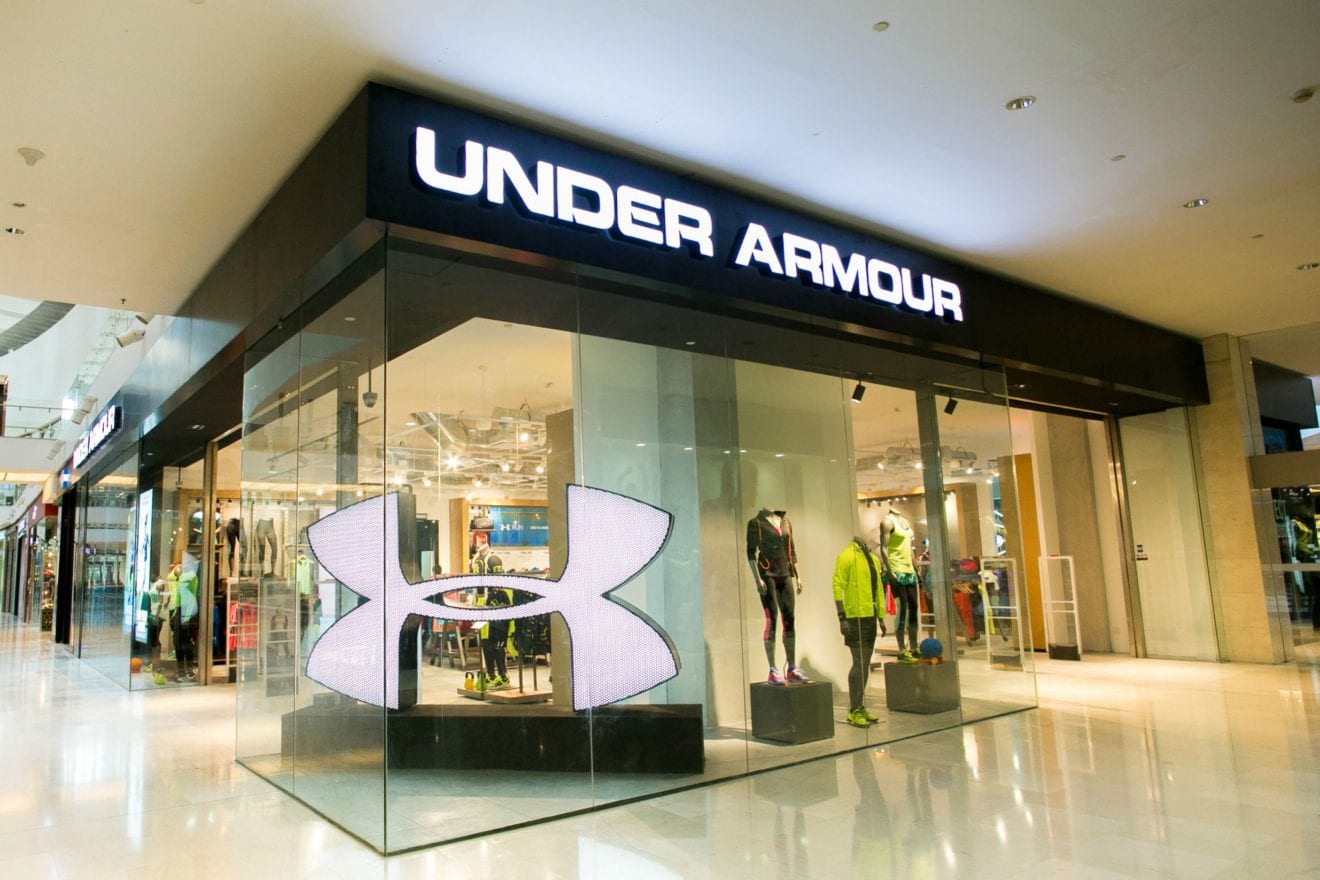
    Sportswear brand Under Armour sales have dropped by 12.1 per cent in North America, part of a worldwide trend to hit the once powerhouse brand of sports retail. In its third quarter update, Under Armour said revenue was down 5 per cent to $1.4 billion while revenue to wholesale customers declined 13 percent to $880 million and direct-to-consumer revenue was up 15 percent to $468 million.

    Profit has slumped nearly 60 per cent.

    Apparel revenue decreased 8 percent to $939 million, as growth in golf and sportstyle was more than offset by declines in outdoor, women’s training and youth. Footwear revenue was up 2 percent to $285 million, driven by strength in running and outdoor, offset by basketball and youth. Accessories revenue increased 1 percent to $123 million led by golf and men’s training, tempered by a decline in outdoor.

    “While our international business continues to deliver against our ambition of building a global brand, operational challenges and lower demand in North America resulted in third quarter revenue that was below our expectations,” said Under Armour Chairman and CEO Kevin Plank.

    “Based on these issues in our largest market, we believe it is prudent to reduce our sales and earnings outlook for the remainder of 2017.”

    “Against this difficult backdrop, our management team is working aggressively to evolve our strategy and level of execution to proactively address these challenges.

    “We understand that success in our next chapter requires managing with focused financial discipline and driving excellence into every area of our business while we amplify innovation, deliver fresh product and connect even more deeply with our consumers.”

    “The question arising from the latest set of results is: how did the one-time powerhouse of sports retail lose so much traction so quickly?”, asked Neil Saunders, managing director of GlobalData Retail, who added that with revenue growth moderating for the past couple of quarters, and with North American sales down across the first half of the year, the signs of a slowdown have been present for some time for the retailer.

    “Given the gentleness of these previous shifts, it has been easy to pin the blame on external factors such as a tapering down of demand for athleisure apparel, or the bankruptcy of leading sports retailers,” he said.

    “The third quarter numbers represent a marked deterioration from those previously modest declines.”

    “In our view, this is now about more than external factors; it demonstrates issues with the brand and its proposition. Especially so since other brands and retailers, including Lululemon, have not posted such calamitous figures.”

    “This is an abrupt about-turn for a company that, until recently, was on a mission to challenge the might of Nike and other major brands. In our view, there are several reasons for this fall from grace.”

    The first of these, said Saunders, is that Under Armour has put down very shallow roots.

    “While awareness has soared over recent years and customer numbers have risen, loyalty to the brand is not deep-rooted in the same way that it is at Lululemon and Nike. What this means is that as demand moderated, Under Armour has been quick to drop off the radar of many consumers.”

    The second reason relates to Under Armour’s focus with Saunders pointing to Lululemon and Nike possessing “a unifying purpose” to its brand.

    “As it has expanded, Under Armour appears to have lost some of its brand essence, and its proposition and purpose have become confused. Admittedly, communication in its own stores and online is better, but in third-party shops the focus is completely lost and, in some instances, Under Armour has become just another brand in a sea of brands.”

    Saunders added that a “failure to connect with women” despite attempts to increase its appeal to female shoppers – its brand remains “very masculine” and has limited appeal outside the professional sports market.

    “Under Armour is not so broken that it cannot be fixed. But the days of glory, when it would post double-digit uplifts in sales, are over,” said Saunders.

  • Fast fashion competition bursting at the seams in Vietnam

    Fast fashion competition bursting at the seams in Vietnam

    An increasingly wealthy population has global designer brands looking to stitch up the market. Nguyen Minh Ngoc jostles for space in a Mango store as she rummages through a dizzying array of marked-down clothes in search of a perfect blue sweater for the upcoming winter.

    It’s a routine shopping excursion for Ngoc, who admits to spending at least VND4 million (some $180) per month in Mango, Ninewest, Zara, Forever21 and H&M, while ignoring home-grown labels like Nem, Blue and PT2000.

    “I’m more inclined to foreign brands because of their quality. I don’t mind spending more if the quality is better,” the 28-year-old PR worker said.

    In the past, Ngoc either bought clothes on overseas trips or ordered them online. This obsession with foreign brands among young customers like Ngoc has emboldened global brands to open outlets in Vietnam.

    Last month, the opening of Swedish giant H&M’s first store in Saigon attracted around 4,000 shoppers. The firm will open its second outlet in Hanoi on November 11.

    By setting prices for selected items at 15-20 percent less than its stores in Malaysia and Singapore, Zara has triggered a craving for fashion in Vietnam.

    Its cousins, Stradivarius, Pull & Bear and Massimo Dutti, have also dipped into the market of over 90 million potential Vietnamese customers. Other brands like Mango (Spain), and Nine West and Old Navy (U.S.) have also stepped foot into the country.

    Japanese giant Uniqlo and American brand Forever 21 are also expected to arive soon. Fast Retailing, the operator of Uniqlo, began recruiting staff in Hanoi and Saigon in May to launch stores in several cities.

    There are some 200 international fashion brands in Vietnam, accounting for more than 60 percent of the market share.

    Lucrative market

    An increasing middle-class population has made Vietnam a magnet for international fast fashion brands.

    Vietnam’s economy has experienced rapid growth in recent years, and average annual income reached $2,200 last year, according to the World Bank.

    The so-called “middle and affluent class” earning $714 a month or more in Vietnam will double to 33 million people, about a third of the population, by 2020, citing the Boston Consulting Group.

    Customers are well aware of the latest fashion trends and have a desire to buy fast fashion brands, which refer to those that mass-produce and sell inexpensive clothing by rapidly copying the latest trends.

    “The from brands like Mango, H&M and Zara suit me because their designs are simple and modern, and their prices are reasonable,” Le Thu Trang, a student from Hanoi University, said.

    Trang, 22, also likes to wear Zara and H&M clothes. “The two brands occupy nearly half of my wardrobe. When they open outlets in Hanoi, I will definitely visit them,” she said.

    Le Viet Thanh, CEO of local brand K&K Fashion, said some local retailers are worried about international brands penetrating the domestic market. “They are big enterprises with strong financial backing. They have the ability to launch promotions that could stitch up local rivals.”

    Change to survive

    Pham Thai Binh, head of retail at consulting firm Savills, said competition in the local fast fashion industry is heating up, and most of the key players are foreigners. Domestic fashion retailers need to be more sensitive to changes in consumer behavior in order to stay in the game, he said.

    Le Quoc An, former chairman of the Vietnam Textile and Apparel Association, said the entry of foreign brands could be a big challenge to local fashion retailers such as Ninomax, Blue, Foci and PT 2000.

    But in the long term, local brands should be able to hold their own as long as they adopt business strategies with cheaper production costs.

    Echoing him, an industry insider said: “Competition is good for everyone. Local brands just need to step up.”

    The story of how coffee chains Highlands and Trung Nguyen have stood their ground despite Starbucks’ attempted invasion has proved there is room for everyone, he said. Homegrown coffee chains like Highlands and Trung Nguyen have beaten foreign rivals by being more attuned to local tastes and limited budgets.

    Serial shopper Ngoc said that better value would make her rethink her opinion of Vietnamese products.

    “If Vietnamese brands could improve their quality, I would think about shopping at local shops again,” she said.

  • Lumine Singapore features fashion plus food

    Lumine Singapore features fashion plus food

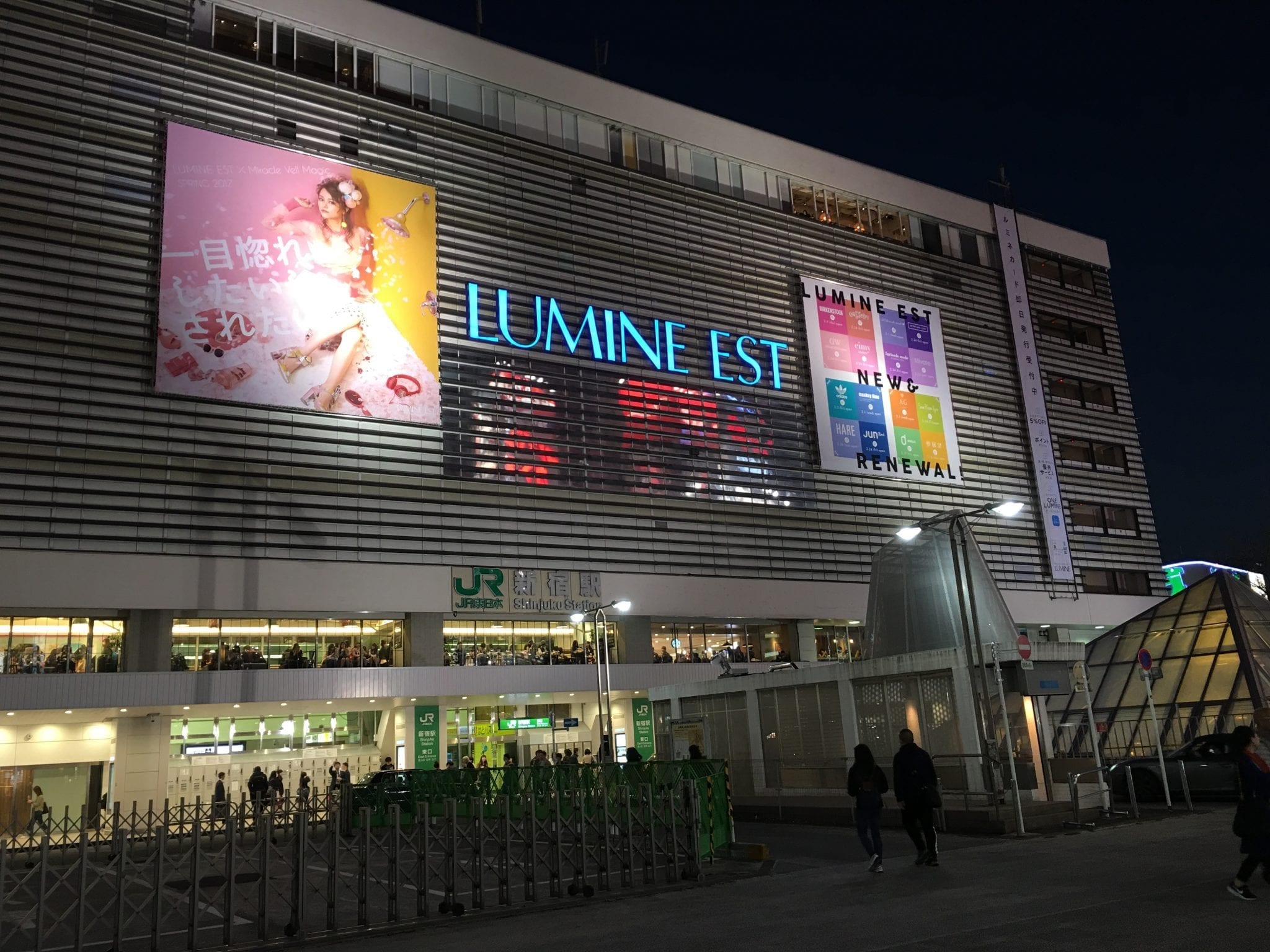
    Japanese fashion and food both feature in the new Lumine Singapore fashion mall in Clarke Quay Central.

    For its launch, in line with its philosophy “I am who I am”, the mall invited Japanese and Singapore personalities known for their individuality.

    “Singapore is an important milestone in our business plan because it is an important gateway to the Asian market and pivotal in positioning the brand on the world map,” says Lumine Singapore MD Naokazu Kozakai.

    With expertise in direct management and subleasing, plus access to more than 2200 tenants in its malls, Lumine intends its Singapore mall to be a platform for Japanese brands to jumpstart their entry in the city and other markets in the region.

    As tipped in July, the 10,000sqft (930sqm) specialty lifestyle store targets independent, sophisticated women, offering the same shopping experience as its 15 malls in Japan. Included is Lumine cafe, which will be run by Create Restaurants Asia.

    Lumine Singapore offers a collective of 20 fashion brands that are iconic in Japan including Fray ID, Ien, Lagunamoon, Lily Brown, Mila Owen, Moussy, Sly, Snidel, Spick & Span, Tomorrowland and Ungrid. There are also shoes and accessories from Drama HP France, Le Talon and RoomsShop, plus exclusive Zoff eyewear.

    A brand incubation program is part of Lumine’s business strategy. “We have created a space as a testbed for Japanese brands in the new store called Lumine Lab,” says Kozakai. “It aims to share and explore the diversity in Japanese fashion and craftsmanship.”

    Featuring first in the space are influencer-based Japanese brands including And Couture, Emoda, MercuryDuo, Murua and Rienda.

    Among women attending the official opening were musician/entrepreneur Aarika Lee, entrepreneur Savina Chai, food artist Suwa Ayako, model/DJ Una and musician Yuuki (YJY).