Retail News CRM

Tag: Fastfood

  • McDonald’s near deal to sell China stores

    McDonald’s near deal to sell China stores

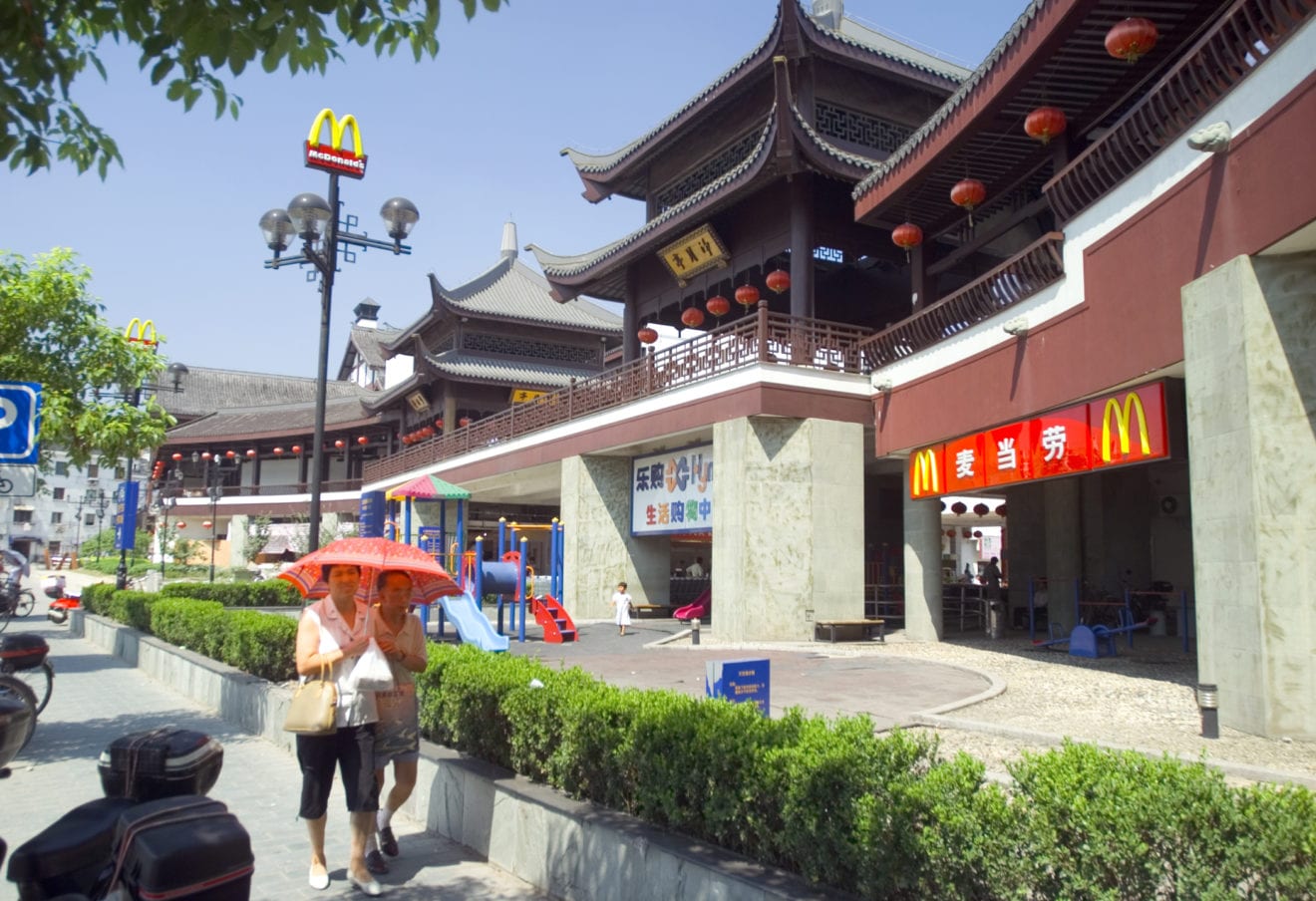
    A consortium led by private-equity firm Carlyle Group and Chinese conglomerate Citic Group Corp has neared a deal to buy McDonald’s stores in China and Hong Kong for up to $3 billion, a source with direct knowledge of the matter said.

    The deal is likely to be signed before Christmas, the source said.

    Reuters had reported in October that U.S. buyout firms Carlyle and Bain Capital LLC had been the front runners among the bidders for the fast-food giant’s China assets.

    McDonald’s in March said it was reorganizing operations in Asia, bringing in partners as it switches to a less capital-intensive franchise model.

    The company hired Morgan Stanley to run the sale of about 2,400 restaurants in China and Hong Kong.

    Financial Times reported earlier on Wednesday that Bain Capital had dropped out of the race, and that a group led by Citic Group and Carlyle were the front runners to the deal.

    Carlyle declined to comment, while McDonald’s was not immediately available for a comment.

  • McDonald’s bares plans to explore growth opportunity in Asia

    McDonald’s bares plans to explore growth opportunity in Asia

    McDonald’s Corporation said it is keen to explore growth potential in Asia and is currently seeking partners who would enhance its competitive advantages in the region.

    “Asia represents a significant area of opportunity for McDonald’s to blend our global quality standards with local insights and expertise from partners who share our vision and values,” said Steve Easterbrook, McDonald’s President and CEO, in a statement.

    This move is expected to allow the fast-food chain to accelerate our growth and scale faster across diverse markets.

    “We’re in the midst of transforming our business and taking a strategic and thoughtful approach to enhance our ability to grow around the world,” Easterbrook said.

    The McDonald’s chief said China, Hong Kong, and Korea collectively represent more than 2,800 of its restaurant locations, the majority of which are currently company-owned. The three countries are considered high-growth markets, which means they have relatively higher restaurant expansion and franchising potential.

    Over the next five years, McDonald’s said it intends to add more than 1,500 restaurants in these three territories.

    The company also recently announced its intent to identify strategic partners in Taiwan and Japan. Last year, McDonald’s committed to strategically evaluate ownership structures in markets around the world with the overall goal of reducing the number of restaurants that the company owns and operates. More restaurants will be placed under local ownership.

  • McDonald’s to set up 1500 new restaurants in China, Hong Kong and Korea

    McDonald’s to set up 1500 new restaurants in China, Hong Kong and Korea

    McDonald’s Corporation, the world’s largest hamburger chain, said on Thursday that it was adding more than 1,500 new restaurants in China, Hong Kong and South Korea over the next five years and was on the lookout for suitable investment partners.

    The US company said the new outlets are in addition to the more than 2,800 restaurant locations it has in these markets, most of which are company-owned.

    “We’re committed to Hong Kong for the long term and intend to combine our global brand with local insights and expertise. This gives us the ability to enable faster decision-making, achieve restaurant growth and deliver a great restaurant experience for our customers in Hong Kong,” said Steve Easterbrook, President and Chief Executive of McDonald’s.

    The company has 230 McDonald’s restaurants in Hong Kong and employs more than 15,000 people. On average, it serves about 1 million customers every day.

    McDonald’s Hong Kong said: “We have continued our great success in the past 40 years and we know that we would require continued capital expenditure in the future – to open new locations, rebrand our restaurants, accelerate McCafe penetration, and invest in the digital experience so as to take advantage of the opportunities in Hong Kong.”

    “We have not approached any potential strategic partner(s) at this point in time and we are still exploring what the right ownership structure will be for the new McDonald’s outlets in Hong Kong,” it said.

    Jeannette Chan, regional director of retail department at JLL said McDonald’s ambitious expansion plan showed its confidence on market prospects in Asia.

    “Most of the fast food retailers are contemplating expansion or relocation after seeing a sharp fall in Hong Kong retail rentals for street level shops,” she said.

    However, some industry experts said the expansion would be largely focused on the mainland, where there is still huge growth potential. “The Hong Kong market is already saturated” sources said.

    It would be better for McDonald’s to team up with local partners who have well established retail networks for its expansion in the mainland,” they said.

  • McDonald’s China rebounds

    McDonald’s China rebounds

    After a long running series of quarterly sales declines, McDonald’s says it global sales rose four per cent in the last three months.

    And McDonald’s China has played a key role in the recovery.

    President and CEO Steve Easterbrook said the company was encouraged by its operating performance for the quarter, with positive comparable sales across all segments, including the US, “as well as sales recovery in China following the prior year supplier issue”.

    “In the High Growth Markets segment, third quarter comparable sales increased 8.9 per cent, reflecting very strong comparable sales performance in China and positive performance in most other markets. Operating income increased 39 per cent (68 per cent in constant currencies). Emphasis on value and breakfast during the quarter contributed to China’s sales recovery.”

    The company suffered a major setback in China a year ago after some of its stores were found using expired products.

    Elsewhere in the world, McDonald’s has also seen recovery in the UK, Australia and German markets.

    Easterbrook said the latest figures underline the “fundamental strength of the McDonald’s System”, perhaps a reference to recent media commentary questioning the concept and estimating as many as 30 per cent of McDonald’s franchisees in the US are technically insolvent.

    Unfortunately, the company did not releases specific breakdowns on sales by country market within its ‘High Growth Markets’ business unit which comprises countries like China and Vietnam.

    In its home market, initiatives like extending the breakfast menu to all day and new product lines were helping lure customers back in store.

    In tandem with its results announcement, the fast food company made a commitment to phasing out chicken fed antibiotics.

  • Horror quarter for McDonald’s Japan

    Horror quarter for McDonald’s Japan

    McDonald’s Japan had already warned investors it would be a nightmare year.

    Earlier this month it announced the closure of 131 stores, a menu revamp and refurbishment of 500 stores in a bid to stem a projected US$319 million loss.

    This week, McDonald’s Holdings Company (Japan) released its first quarter trading results: same-store sales plunged 32.3 per cent due largely to a 24.3 per cent drop in customers and total sales fell 39.9 billion yen (US$332 million) to 83 billion ($691 million).

    Sales were hampered by ongoing food safety issues relating to suppliers, and even a widely reported shortage of fries, which led to unprecedented rationing to customers.

    The result was an ordinary trading loss of 11.1 billion yen ($92.4 million) which after the first round of one-off restructuring costs grew to a total 14.5 billion ($121 million) loss for the three months to March 31.

    But the fast food company said same store sales are trending upwards – with expectation they will turn positive in the third quarter. Provisional figures for April show a drop of 21.5 per cent, nearly a third less than the first quarter.

    For now, the company says its focus is on executing the Business Revitalization plan in order to accelerate the business recovery, lay the foundations for future growth, and achieve mid- and long-term goals.

    “Going forward, regaining customer confidence will remain our number one priority. In addition, we aim to accelerate the pace of business recovery and lay the foundations for future growth through the flawless execution of our Four-pillar Business Revitalization Plan: “Customer Focused Initiatives”, “Accelerate Restaurant Revitalization”, “Localize Our Business Structure”, and “Improve Cost and Resource Efficiency”,” McDonald’s Japan said in its earnings statement.

    “Through these structural changes along with customer and community focused activities, we will strive to achieve our vision of becoming a Modern Burger Restaurant that Connects with Customers.”

  • Jollibee, partner to operate Dunkin’ Donuts stores in China

    Jollibee, partner to operate Dunkin’ Donuts stores in China

    Philippine fastfood giant Jollibee Foods Corporation (JFC) and its partner, Asian investment firm RRJ Capital Master Fund II LP, have sealed the deal with Dunkin Donuts Franchising LLC to operate Dunkin’ Donut stores in China.

    In a disclosure to the Philippine Stock Exchange (PSE) on Tuesday, JFC said the franchise agreement grants the newly formed joint venture firm Golden Cup Pte. Ltd. the exclusive right to develop Dunkin’ Donuts in Hong Kong, Macau, Fujian, Hunan, Jianxi, Guangdong, Hainan, Guanxi, Beijing, Tianjin, Hebei, Shangxi, Chongqing, Guizhou, Sichuan, Yunnan, Heilongjiang and Jilin.

    Golden Cup Pte. Ltd. is the joint venture company formed by Jollibee Worldwide Pte. Ltd. (a wholly owned subsidiary of JFC) and Jasmine Asset Holding Ltd. (a wholly owned subsidiary of RRJ Capital Master Fund II, L.P.).

    In an earlier disclosure to the PSE on 19 December, JFC said “the Dunkin’ Donuts deal provides the JV with an excellent opportunity to operate and expand one of the leading global coffee chain brands in the 2nd largest economy in the world.”

    JFC said it will invest USD300 million in the venture, USD180 million of which will be contributed by JPWL. In the first 12 months of operations, JPWL’s initial investment would be about USD18 million.

    As of December 2014, Jollibee operates 811 stores in the Philippines and 101 stores overseas. Dunkin’ Donuts, on the other hand, has nearly 11,000 restaurants in 33 countries worldwide.