Retail News CRM

Tag: Finance

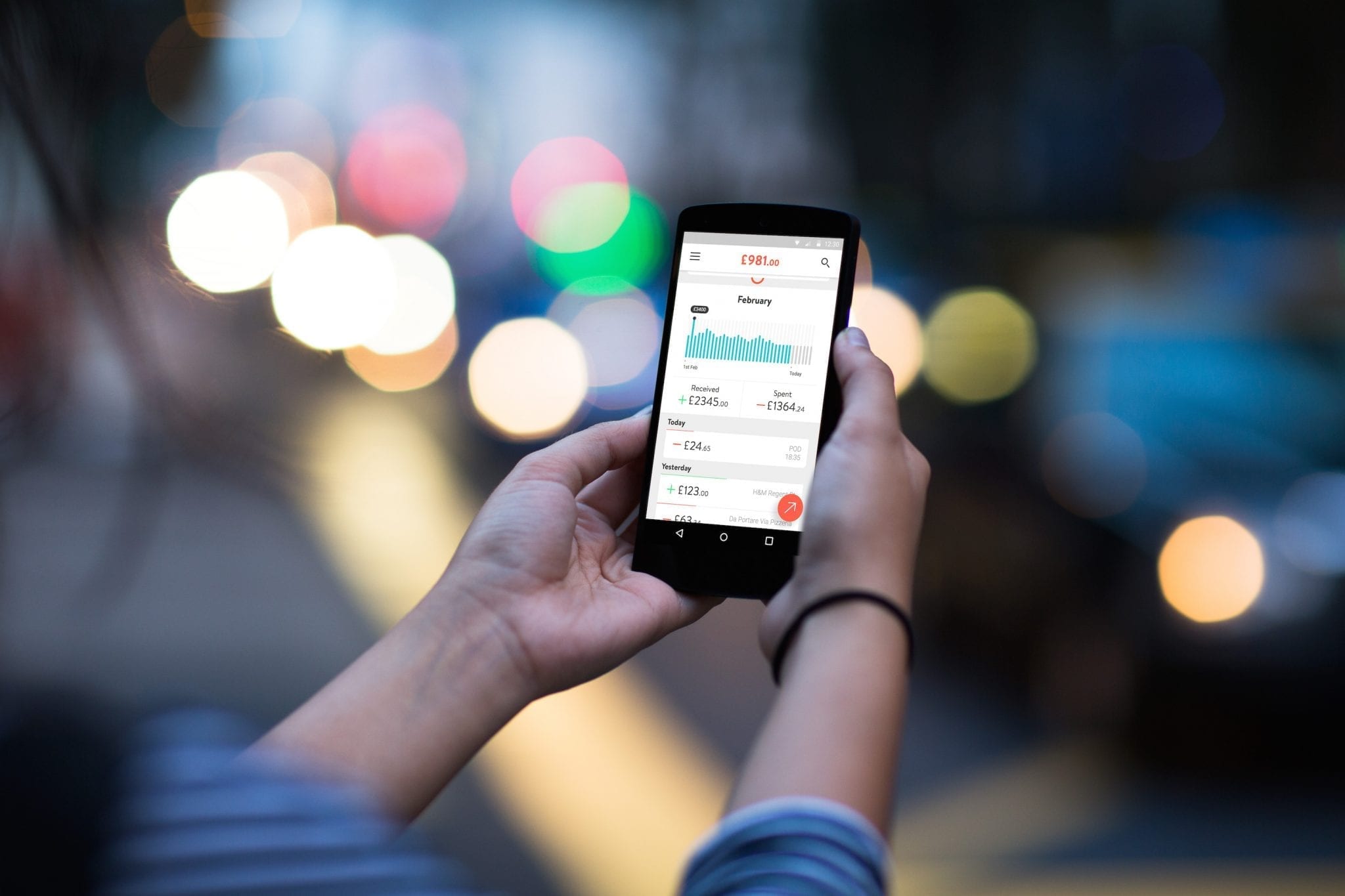
  • Mobile Banking Users in Indonesia Remains Low

    Mobile Banking Users in Indonesia Remains Low

    Research institute Microsave reported that only 0.73 percent of cellphone users in Indonesia have utilized online financial services.

    “The figure is lower than those of Malaysia with 5.79 percent and Cambodia with 2.73 percent,” Microsave Country Development Senior Manager Grace Retnowati said on Wednesday, October 12, 2016.

    Grace revealed that the number of SIM card users in Indonesia stands at almost 200 million. At least 20 percent of them are cellphone users.

    “Mobile device utilization for financial services remains low, although the Internet network coverage has reached 90 percent,” Grace added.

    In addition, Grace pointed out that only 36 percent of Indonesian people own bank accounts.

    “The awareness level for mobile banking services is only 0.3 percent,” Grace went on.

    According to Grace, the digital financial literacy is important for middle-class and low-income people.

    “The digital financial services are expected to boost the annual GDP by US$3.7 trillion in 2025 or six percent when compared to the conventional financial services,” Grace said.

    Grace suggested that payments made via smartphone would reduce the cost of financial services by 80 to 90 percent.

    “The cost efficiency will allow financial institutions to provide low-cost services,” Grace said.

  • BRI Syariah plans to conduct IPO

    BRI Syariah plans to conduct IPO

    PT Bank BRI Syariah, a sharia compliant subsidiary of state lender Bank Rakyat Indonesia, plans to conduct an initial public offering (IPO) of its shares in 2018 to boost alternative funding sources.

    “During the IPO we will float our shares worth Rp1 trillion to the stock exchange,” BRI Syariah President Director Moch. hadi Santoso said after a press conference here on Wednesday.

    The decision to turn the bank into a publicly listed company was taken to strengthen capital structure particularly at “Tier 1”, he said.

    The bank wants to strengthen its capital through various funding sources to expand its financing business. Moreover, the bank wants to expand its financing portfolio from retail and business segments to infrastructure financing, he said.

    “After the IPO, we will continue to expand our business. This year we have been engaged in infrastructure financing,” he said.

    Also this year, the bank has explored several commitments for infrastructure financing. But its amount is not yet significant to boost the business growth of PT Bank Rakyat Indonesia Ybks subsidiary,” he said.

    The BRI Syariah has set itself the target of boosting its financing growth at 13 percent year on year from to Rp18.8 trillion from Rp16.5 trillion at the end of this year.

  • Assets of sharia banks increase to Rp305.5 trillion

    Assets of sharia banks increase to Rp305.5 trillion

    The assets of sharia banks rose 18.49 percent year-on-year to Rp305.5 trillion by July, 2016 on growing third party funds.

    Third party funds held by sharia banks rose 12.54 percent to Rp243 trillion in the same period, Chairman of the Board of Commissioners of the Financial Service Authority (OJK) Muliaman Hadad said in a news release received here on Sunday.

    “The rise in third party fund resulted in an increase of 7.47 percent in sharia financing to Rp220.1 trillion from Rp204.8 trillion,” Muliaman Hadad said at a seminar on sharia financing in Washington, the United States, organized by the World Bank and the Islamic Financial Services Board.

    The rise in sharia financing contributed to increase sharia share of the banking market to 4.81 percent in July, 2016 from 4.6 percent in July 2015. The market share rose to 5.13 percent if conversion of the Aseh Development Bank to Sharia bank was taken into account.

    Muliaman said sharia finance could be an instrument to achieve Sustainable Development Goals (SDGs) as called for by the United Nations.

    “The typical principles of sharia finance which give emphasis on equitable income and is oriented to environmental social activities, make development of sharia financial system very relevant with the SDGS goals,” he said.

    Sharia finance covers not only poverty aspect but also health care, education, gender equal treatment, infrastructure development, economic development, anticipation of climate change, etc, he said.

    He said sharia banking industry has grown in Indonesia as indicated by the decline in Non-Performing Financing (NPF) ratio to 4.81 percent by July 2016.

    Return on Assets (ROA) rose to 1.06 percent by July, 2016 from 0.91 percent by July 2015. As for the ratio of operating cost to operating income has improved to 92.78 percent from 94.19 percent.

    In addition, there was an increase in capital adequacy of sharia banks as reflected in the Capital Adequacy Ratio (CAR) to 14.86 percent in July 2016 from 14.47 percent last year.

    The assets of sharia non bank finance industry rose 23.18 percent to Rp80.1 trillion by July 2016.

    Global sharia bonds contributed 23.3 percent or US$10.15 billion to the total value of international sovereign bonds.

    Indonesia is the first country to issue sharia retail bonds.

    Muliaman said sharia capital market could also play a significant role in financing the governments infrastructure projects.

    Separately a member of the OJK board of commissioner Firdaus Djaelani said in Semarang, the country had sharia banks, 22 conventional banks having sharia units and 165 sharia people financing banks.

    Firdaus said based on data in September, 2016, there were 36 investment managers issuing sharia mutual fund (Reksadana), 12 securities companies issuing sharia on line trading system, 326 issuers and public companies with sharia shares and 51 series of corporate sharia bonds and 53 series of state sharia bonds have been issued.

    Assets in sharia products in the stock exchange were valued at Rp3,272.84 trillion consisting of market capitalization of sharia shares, sharia mutual funds and corporate sharia bonds.

  • Susi Promises Banking Access for Fishermen

    Susi Promises Banking Access for Fishermen

    Marine and Fisheries Affairs Minister Susi Pudjiastuti will facilitate fishermen or ship owners who owns ships with a capacity of less than 10 gross tonnage to have access to banking services. Minister Susi said that ship owners would only need came to the Marine and Fisheries Affairs Ministry office.

    “I will establish an outpost at the Ministry’s licensing office. We will meet [fishermen] with banking institutions,” Susi said on Wednesday, October 5, 2016.

    Susi promised to help fishermen to be able to access credit facilities to get funds to replace their trawls. Susi targeted fishermen to be able to get at least Rp 200 million loan. The Minister also offered to provide a debt restructuring program for fishermen.

    Susi hoped that ship owners will take the opportunity to replace their trawls and fish with more environmentally friendly method. The Minister added that she had recently managed to help a fisherman to get a fresh loan from the bank.

    Susi said that she had contacted two state-owned banks, Bank Rakyat Indonesia, and Bank BNI, to help with the program. The Minister also expected other banks to take part in the program, which is supported by the Financial Services Authority.

    In addition, the Marine and Fisheries Affairs Ministry had asked fishermen to re-measure their ships, while Minister Susi guaranteed that there will be no illegal levy in the process.

  • Vedder Price expands into Singapore

    Vedder Price expands into Singapore

    Vedder Price announced the opening of a new office in Singapore, continuing the growth of the firm’s global footprint. The Singapore office will initially tap existing members of Vedder Price’s prominent Global Transportation Finance (GTF) practice, with plans to further develop this new office through additional lateral hires. The office will practice U.S. and UK law.

    The Singapore location gives Vedder Price a foothold in a key region that is critical to the firm’s clients and where the firm’s GTF practice is already thriving. The Asian global transportation finance market is expected to undergo explosive growth in the next 20 years, particularly in aircraft finance, as the region’s population grows and air travel surges. Growth in maritime finance is also expected.

    Vedder Price enjoys a strong worldwide reputation for legal services related to global transportation finance. The firm serves a broad base of clients across all transportation sectors, including the aviation, aerospace, railroad and marine industries, and serves both U.S.-based and international clients who execute deals worldwide under U.S. and UK law. The firm was named the “Law Firm of the Year” at the 2015 Aviation 100 Awards and recognized for “Overall Deal of the Year.

    “This is an exciting time for our firm and practice as we expand our capabilities into Asia,” said Dean N. Gerber, Vedder Price Board of Directors member, Executive Committee Vice Chair and Chair of the firm’s Global Transportation Finance team. “Singapore continues to be a key focal point for global transportation finance and leasing, and we expect this to continue for years to come given market conditions. We look forward to establishing new relationships and to strengthening our ability to serve our many clients already doing business or domiciled in Asia.”

    The office will be established by Shareholder Ji Woon Kim who recently relocated from the firm’s New York office. Mr. Kim will manage the business development and strategic growth of the office, including lateral hires. Mr. Kim, who has spent his entire career at Vedder Price, has helped build the GTF practice for more than a decade. In 2013, he was recognized as a Rising Star by Airfinance Journal, and in 2014, he was listed as a Rising Star by New York Super Lawyers in the practice of aviation and aerospace. He will be joined by solicitor Lev Gantly who relocates from the firm’s London office.

  • Jakarta tax amnesty has little impact on banks here

    Jakarta tax amnesty has little impact on banks here

    The tax amnesty scheme in Indonesia has had a much smaller impact on funds flowing out of Singapore’s private banking industry than feared, an RHB report suggested on Tuesday.

    The funds flowing out of Singapore likely made up only 1-2 per cent of assets under management (AUM) of the private banking industry. Some 79 trillion rupiah (S$8.3 billion) was repatriated in the first nine-month phase of Jakarta’s tax amnesty programme.

    The scheme allows Indonesians to declare assets that were previously undeclared to tax authorities. In return, they paid a sharply reduced tax rate on those assets – just 2 per cent – in the first phase, which ended on Sept 30.

    The 79 trillion rupiah was 12 per cent of the assets of wealthy Indonesian clients that were declared to be kept in Singapore, according to data from the Indonesian government. Singapore has been a big draw for rich Indonesians. All in, the assets held here and declared to the Indonesian authorities made up 70 per cent of all overseas funds that had been declared.

    RHB calculated that the total assets of the three Singapore banks’ private banking segment stood at about S$321 billion. This means the amount repatriated to Indonesia from Singapore accounts for only 2.6 per cent of the three banks’ total AUM. These already exclude the asset base of the top private banks in Singapore, such as UBS, Citi, and Credit Suisse. So, all in, the impact on Singapore’s private banking industry should be about 1-2 per cent of all assets held here, RHB noted.

    “There is likely to be more repatriation of funds from Singapore to Indonesia going forward, but the experience of Phase 1 suggests that the amount repatriated is unlikely to be a large percentage of Singapore banks’ assets under management,” it said.

    This comes as the tax rate for those who repatriate their assets in Phase 2 rises to 3 per cent, one percentage point more than in Phase 1. The tax rate will be increased yet again in the third phase, Jakarta has said.

    Indonesian taxpayers had declared more than 3,600 trillion rupiahs in assets both domestically and overseas. An Indonesian tax authority quoted by The Straits Times said the country had set a 4,000 trillion rupiah target for the first phase.

    The tax amnesty scheme comes amid heightened scrutiny of tax evasion. Banks here had to file a suspicious transaction report on clients taking part in the programme, with the Singapore authorities later having to state publicly that participation in a tax amnesty scheme alone would not attract criminal investigation in Singapore. The Monetary Authority of Singapore (MAS) said that the use of suspicious transaction reports is a practice across other jurisdictions when handling tax amnesty cases.

  • Mandiri prepares syndicated loans of Rp4 trillion

    Mandiri prepares syndicated loans of Rp4 trillion

    State lender Bank Mandiri is preparing a syndicated loan of Rp4 trillion to build five airports in Indonesia in the fourth quarter of 2016, the banks corporate banking director, Royke Tumilaar, said.

    Bank Mandiri will lead the syndication of loans to state airport operator PT Angkasapura I which will develop the five airports, Royke stated here on Monday.

    “Syndicated loans worth Rp4 trillion will be extended for the purpose. The Kulonprogo airport in Yogyakarta will be among these five airports,” he added.

    The loans will be used to build new airports and expand the existing ones. The five airports include Ahmad Yani in Semarang, Syamsudin Noor in Banjarmasin and Kulonprogo in Yogyakarta. Also, the Terminal 3 at the Juanda Airport in Surabaya and Sultan Hasanuddin Airport in Makassar are to be developed with these loans.

    Other debtors that will be involved include Sarana Multi Infrastruktur (SMI), PT Bank Central Asia Tbk (BCA), PT Indonesia Infrastructure Finance (IIF) and PT Bank Rakyat Indonesia Tbk (BRI).

    Royke further syndicated loans will also be given in the fourth quarter of 2016 for the construction of toll roads in and around Jakarta.

    “We hope the process can be started in the fourth quarter of 2016, the construction of a new airport in Kulonprogo also begins by then,” he noted.

    Overall, the demand for loans to finance infrastructure development in the second semester of 2016 continued to increase, he noted.

    The state bank has also prepared loans worth Rs 20 trillion for the construction of power plants in the fourth quarter, he disclosed.

    As per the bank’s target, the credit extended to infrastructure development will grow 20 percent year on year by the end of this year.

  • Sharia Finance Sees Promising Future

    Sharia Finance Sees Promising Future

    The Financial Services Authority (OJK) says that the sharia finance still sees promising future despite the slowing down of global economic growth.

    “I’m optimistic on the promising future of the sharia finance industry. However, there will be many challenges and uncertainty,” said Sarjito, OJK Deputy Commissioner for Capital Market Supervision, Thursday, September 29, 2016.

    The challenges and uncertainty include the difficulty in expanding the business in a different jurisdiction that gets hit by local regulations and also the interpretation of sharia itself.

    Sarjito continued, the other challenge is the weak of the sharia finance management and its governance. “The last one is the lack of human resources that are competent enough and having the adequate capacity in sharia finance,” he said.

    The sharia finance industry in Indonesia has shown an unbelievable progress. Based on the report of the Indonesian Islamic Finance, the asset of the sharia finance industry has a 10% growth, and reached Rp617 billion in 2015.

    The number has exceeded the conventional finance asset’s growth. The same trend is also seen in other countries that are also developing the sharia finance.

  • SCB Easy Application on the Fritz Pending Upgrade

    SCB Easy Application on the Fritz Pending Upgrade

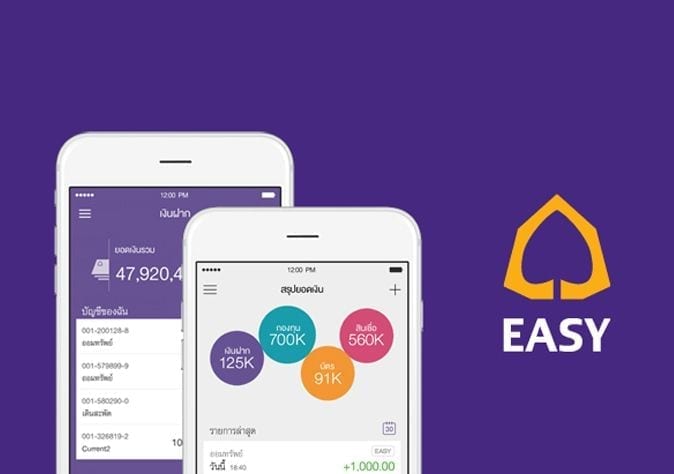
    Customers of Siam Commercial Bank (SCB) might have recently found out the hard way that the SCB Easy App is on the fritz and hasn’t been working as properly as it should’ve been.

    SCB has already suspended the service of the app yesterday, in order to be able to properly update the system.

    According to SCB, the disruption of service was due to the increased use of system for financial transactions. However, the app will hopefully be up and running again by Sept. 10 after the system upgrade.

    Customers, fortunately, are still able to use the bank’s services through other channels, including their website: www.scbeasy.com

  • Combo card will be tested in 40 cities

    Combo card will be tested in 40 cities

    The combo card that promotes non-cash social assistance will be tested in 40 cities until the end of 2016, Bank Indonesia (BI) has stated.

    If the trial goes off well, on January 1, 2017, the entire social assistance from the government can be channeled through the Family Welfare Card (KKS) Red and White combo device, Director of Elektronifikasi Program and Financial Inclusion of Bank Indonesia Pungky Purnomo Wibowo said Friday (September 2) night.

    “January 1, 2017, we apply all of the Family Hope Programs and the rice prosperous social assistance (Rastra). Further, the student aid program and the School Operational Assistance (BOS) will be around that time as well,” he said.

    The combo card can be used to avail the Rastra, and family expectations (PKH) aid, Pungky explained in the demonstration project or the pilot project.

    The combo card used in the “e-waroeng” (electronic shop and gotong royong/mutual help) are also agents of Financial Services Digital (LKD).

    The beneficiaries of social grants (bansos) bring the Cards Family Welfare (KKS) issued by the Bank to the new joint four, namely Bank Mandiri, Bank Rakyat Indonesia, Bank Negara, and Bank Tabungan Negara, and exchange it at “e-waroeng”.

    With the KKS, the public can receive Rastra basic foodstuffs such as rice, sugar, flour, and oil at subsidized prices.

    Furthermore, the combo cards can not only be used to get help in the LKD functions, but can also be used for transactions such as cash withdrawals or transfers, as well as saving money, such as bank function nirkantor (branchless banking), Pungky said.

    This combo card can make the distribution of social aid meet the rules of 6T – the right target, the right amount, the right price, right time, right quality, and right administration, Deputy Governor of BI Ronald Waas said on the occasion.

    The government budget for social protection in 2017 reached Rp158 trillion, the BI recorded. With that budget, social protection assistance would be effective and appropriate.

  • Bank Indonesia still has chance to slacken its monetary policy

    Bank Indonesia still has chance to slacken its monetary policy

    Bank Indonesia (BI) Governor Agus Martowardojo said the central bank still likely has a chance to relax its monetary policy in the second half of this year.

    “Seeing the condition in August, we can say that there is still a chance to slacken monetary policy but whether it will be carried out next September or October will depend on the data” the central bank governor said in Jakarta on Wednesday.

    BIs board of governors meeting on August 18-19 decided to maintain its 7-Day Reverse Repo Rate (BI 7-day RR Rate) at 5.25 percent with a deposit facility (DF) interest rate of 4.5 percent and lending facility (LF) being lowered by 100 basis points from 7.0 percent to 6.0 percent.

    BI began introducing the 7-Day RR Rate last April. At the BIs board of governors meeting on April 21, 2016, the BI Rate was fixed at 6.75 percent and the BI Repo Rate at 5.50

    Besides this, the BI also maintained a symmetrical and narrow interest rate corridor where the lower limit of DF Rate is set 75 basis points below the 7-Day RR rate and the upper limit of LF Rate is set 75 basis points above the 7-Day RR Rate.

    The decision is in line with the efforts to maintain the macroeconomic stability by continuously preserving the momentum of domestic economic growth amid weakening global economic performance.

    With macroeconomic stability, controlled inflation at targeted range, good current transaction deficit and stable currency rate, room for monetary relaxation is still open.

    The BI also continues to take abreast of short-term domestic global economic development, particularly the possibility for the Fed to raise its Fund Rate. “We wilL see it in September there will be flight to quality with regard to reports on the improvement of the United States economy.”

  • Many foreign banks have not complied with SMEs credit policy

    Many foreign banks have not complied with SMEs credit policy

    Bank Indonesia said many banks mainly branches of foreign banks have not complied with the call for setting aside at least 10 percent of their credits for micro, small and medium enterprises (SMEs) .

    Head of Bank Indonesias division for development of SMEs Yunita Resmi Sari in Jakarta said despite facility such linkage branches of foreign banks are still in difficulty in extending credits for SMEs as asked by the central bank.

    “We are aware that foreign banks have limited networks of branches and their capacity is not for SMEs,” Yunita said here on Thursday.

    In 2015, the central bank asked banks to increase the portion of their credits for SMEs by 5 percentage points a year to 20 percent in 2018.

    Yunita , the central bank is preparing a policy on SMEs credits from foreign bank branches.

    Until August, this year, more than 100 of the 119 banks in the country already set aside 10 percent of their credits for SMEs.

    Yunita said the SMEs credit market is still wide open , pointing out only 22 percent of 57.8 million units of SMEs have access to bank credits.

    SMEs account only 19.7 percent or Rp827.3 trillion of the total outstanding credits of banks in the country by the end of the second quarter of 2016.

    The SMEs credits grew 8.3 percent year-on-year in the second quarter of 2016.

  • RHB Bank to assess opportunities in Indonesia

    RHB Bank to assess opportunities in Indonesia

    RHB Bank Bhd, which saw its bid to acquire a stake in Indonesia’s PT Bank Mestika Dharma Tbk fall through, is optimistic about the prospects in that country and and will assess the opportunities.

    Group Managing Director, Datuk Khairussaleh Ramli, said the Indonesian market was good with banks recording stronger credit growth and higher return on equity compared to Malaysia’s.

    It has been reported that, on average, an Indonesian bank’s return on investment was between 15% and 20% compared with Malaysia’s 9) and 11%.

    “(However) at this point there is nothing on the table for us to look at and when it does we will have to evaluate the opportunity,” he said after announcing RHB Bank’s first-half 2016 financial results here on Wednesday.

    He said the recent bilateral agreement signed between Indonesia Financial Services Authority (IFSA) and Bank Negara Malaysia would pave the way for banks to have greater access in both countries.

    In 2009, RHB Bank, which was then the banking unit of RHB Capital Bhd had, proposed to acquire 80 per cent of PT. Bank Mestika Dharma Tbk for RM1.16 billion but IFSA’s move to limit the foreign ownership to 40 per cent emerged as a stumbling block for the deal to be signed.

    The second bid to acquire a 40% stake, also fell through after RHB Capital did not get the Indonesian authorities’ approval before the deadline of the sales and purchase agreement on June 30, 2014.

    Also under its own corporate exercise, on April 14, 2016, RHB Bank emerged as the new group’s holding company and it was listed on Bursa Securities on June 28, 2016.

    For the first half-year ended June 30, 2016, its pre-tax profit fell by 12.7% to RM1.22bil due to a one-off impairment on a corporate bond in Singapore. For the first-half of 2015, it reported a pre-tax profit of RM1.40bil.

    Revenue for the six months of 2016, however, rose to RM5.42bil from RM5.37bil.

    Khairussaleh said the financial market would remain challenging due to the macro-economic uncertainties in most parts of the world.

    “The risks of external demands and softer consumer sentiments are expected to moderate Malaysias gross domestic product growth in 2016 to 4% from 5% last year.

    “The banking sector growth too is expected to remain modest, attributable to a deceleration in corporate loans market and ongoing consolidation of household loans sector,” he said.

    He said although the bank’s performance in the second quarter was affected by one large impairment on securities, RHB was on track to achieve its long-term objectives set under the reframed strategy of focusing on performance.

    For the second quarter ended June 30, 2016, pre-tax profit stood at RM469.33mil, down from RM724.9mil a year ago. Revenue increased to RM2.68bil from RM2.65bil previously.

    “The group will stay on course in executing the various initiatives under its transformation programme, while continuing to be vigilant amid a challenging macro environment and volatility in the market place,” he said.
  • Indonesia launches master plan to breathe new life into Islamic finance sector

    Indonesia launches master plan to breathe new life into Islamic finance sector

    The Indonesian government has launched a national master plan to develop its Islamic finance industry, the latest effort aimed at awakening what is still a niche sector in the world’s most populous Muslim country, Reuters news service reported.

    Islamic finance was introduced in Southeast Asia’s largest economy more than two decades ago but it has managed only modest gains in the country of 250 million, despite multiple regulatory efforts and grassroots initiatives.

    Indonesian Islamic banks hold roughly 5 percent of total banking assets, compared with more than 20 percent in neighbouring Malaysia and about a third of total banking assets in several Gulf countries. The government aims to drive its planned breakthrough via a range of initiatives, from mobilising Islamic charitable funds to modernising investments made by Indonesia’s pilgrims’ fund.

    “This could finally awaken Islamic finance in Indonesia to allow the country to claim its true potential,” managing director of IFAAS Farrukh Raza said, an Islamic finance consultancy which designed the 10-year master plan. “We found that government efforts are very comprehensive but also very scattered. Regulations are there but there is no coordination, promotion is fragmented and those expenses are not always bearing fruit.”

    The initiatives include a government policy to increase use of Islamic bonds, or sukuk, by issuing debt instruments related to infrastructure development, agriculture and education. Under the policy, the government would increase its use of Islamic debt instruments to as much as 50 per cent of total issuance in 10 years time, Raza said.

    Currently, Islamic instruments represent around 13 percent of total outstanding government debt, according to Thomson Reuters data. Indonesia’s pilgrims’ fund would also see the establishment of a dedicated asset management arm to implement a more rigorous investment policy and attract external fund managers.

    The fund receives an estimated $800 million every year from Indonesians wishing to make the Hajj pilgrimage to Saudi Arabia, with new applicants facing a quota backlog of around 15 years, Raza said. “The industry is overconcentrated in retail but there is little in terms of wholesale banking. That is one of the big show-stoppers,” said Raza.

    The establishment of a national coordination committee, possibly chaired by Indonesia’s President Jokowi, Raza said, would help ensure implementation of longer-term objectives, potentially seeing Islamic finance take as much as a 20 per cent share of the financial sector in 10 years time. An additional layer of more complex measures, such as the merger of several state-owned Islamic banks, could help raise that figure to 30 per cent, Raza added.

  • UOB Indonesia and ITB join up to train SME bankers

    UOB Indonesia and ITB join up to train SME bankers

    UOB Indonesia and Bandung Institute of Technology (ITB) have joined forces to educate bankers with small and medium-sized enterprises (SMEs), a banker from UOB Indonesia has said.

    “A lot of these SMEs don’t have the right networks for distributors and suppliers and bookkeeping is essential,” UOB Indonesia business banking head Lawrence Loh said in Jakarta on Friday.

    The program, called the SME Bankers’ Executive Certification Program, was launched in March and already has 23 graduates, Loh said.

    The collaboration between the two institutions will inaugurate five new SME business centers in several cities across Indonesia such as Jakarta, Semarang and Surabaya next year, ITB school of business and management consultancy director Leo Aldianto said.

    “We have to help small businesses upgrade their level to medium,” Leo said.