Tag: Finance

  • Bright prospects seen for digital banking

    Bright prospects seen for digital banking

    Nguyễn Thanh Trúc in District 1 has just paid her monthly electricity bills via internet banking.

    “I have used the service for more than one year. This is a very convenient service and helps me save time from going to electricity bill collection points,” she said.

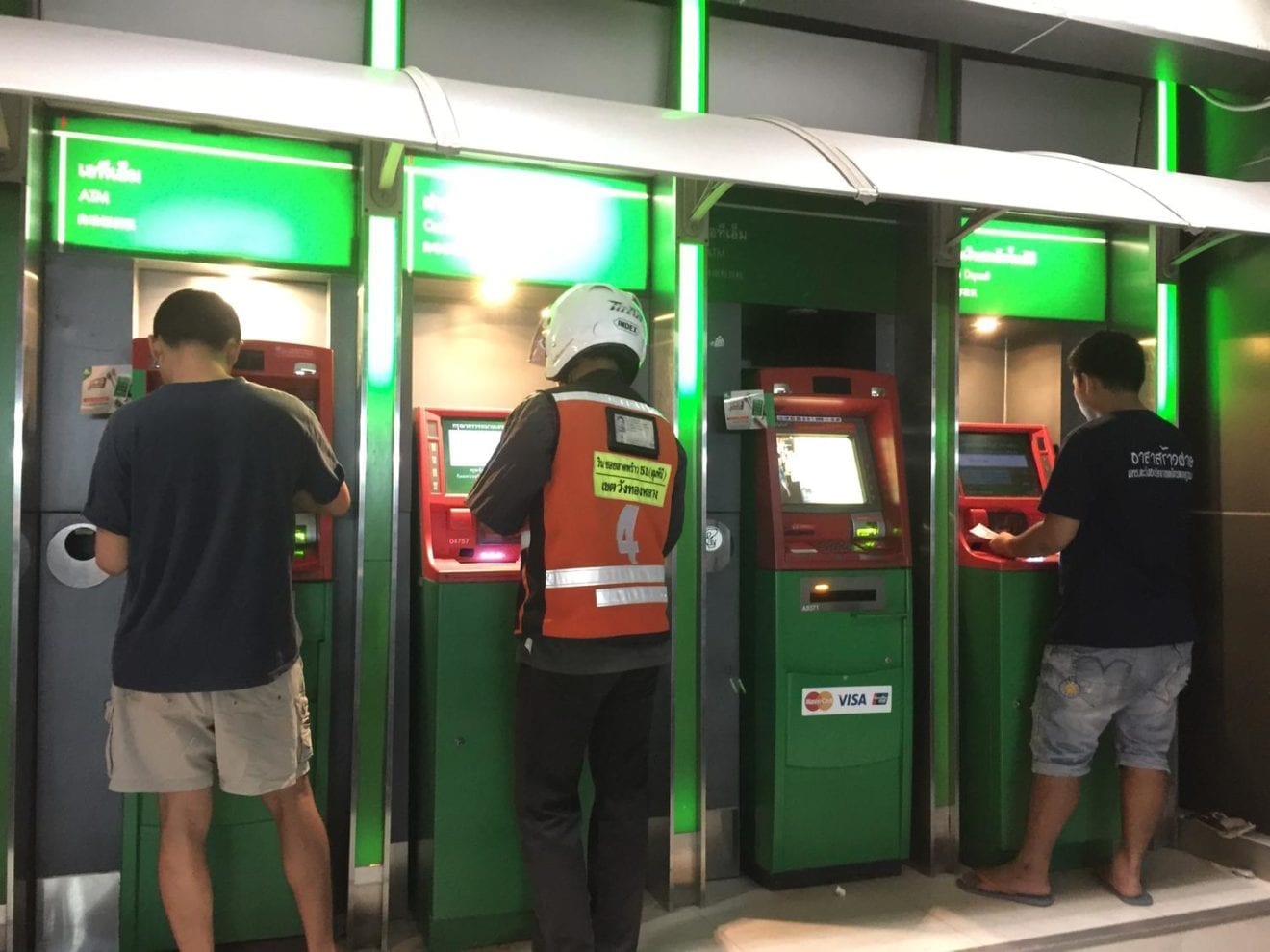
    In fact, more and more Vietnamese consumers are turning to computers, smartphones and tablets to do business with their banks. They have opted to make deposits online or online payments of electricity and water bills and even buy gold on their smartphones, according to experts.

    There is huge potential to develop digital banking in Việt Nam.

    According to a report discussed at a workshop held recently in HCM City, Việt Nam posts an internet growth rate of 9 per cent a year, ranking 15th in the world. The number of internet users accounts for 52 per cent of the country’s population.

    About 44 per cent of customers at commercial banks have used digital services.

    The fourth industrial revolution and Government policy to encourage credit card payment instead of cash have enlarged digital banking potential in the country.

    In the past, along with growth in internet and mobile device use, commercial banks in Việt Nam have been expanding and developing internet banking on mobile devices to offer better services to customers.

    To attract customers to use the Internet and mobile banking services, banks have launched promotions.

    LienVietPostBank, for instance, discounts 30 per cent of the transaction value to customers who pay bills for TV services or discounts VNĐ20,000 to customers who pay electricity or water bills using Ví Việt app until January 31.

    Similarity, at Viet Capital Bank, customers using the Payoo app to pay their TV bills of HanoiCab and MyTV Cần Thơ will be given back 30 per cent of the transaction value until January 31.

    Many banks, including VietinBank and VPBank, are offering bonus interest rates to customers who make online deposits.

    Banking finance expert Cấn Văn Lực said technology is the key to shorten the distance between banks and customers as well as help save big costs compared to traditional transaction methods.

    “Banks themselves also understand that if they do not invest in digital technology, they will be left behind. Customers today can actively perform transactions anytime, anywhere, via computer or smartphone with all types of products and services that they can conduct at a traditional banking branch,” Lực said.

    A general director of a joint stock bank, who did not want to be named, said: “A digital banking project can cost some millions of US dollars, but in the long-term, this investment is still cheaper than expanding branch networks.”

    Faster, more convenient and more secure electronic payment transactions were the targets that commercial banks were aiming for in the digital banking competition, he said.

    Lực said digital banking was certainly going to be a new way of banking for all banks.

    Transactions using digital technology would contribute 40 per cent of banking revenue in 2018, up 32 per cent compared to 2014, he said.

    “One of the factors in developing digital banking is to build trust and confidence among consumers about the security of online transactions,” he added.

    Online shopping boom

    Online shopping has been popular worldwide and Việt Nam is keeping up with the trend thanks to its active Internet use, according to a recent KPMG International’s survey.

    Chong Kwang Puay, managing partner and consumer markets lead of KPMG in Việt Nam and Cambodia, said with its high Internet penetration rate, Việt Nam would see online shopping surge soon.

    According to the survey, 18 per cent of consumers in Việt Nam and Cambodia purchased goods from an online-only retailer, such as Amazon, Lazada and Nhommua. Some 10 per cent purchased from the website of a retail shop, and only 3 per cent purchased directly from a manufacturer or brand’s website.

    The number one reason consumers gave for shopping online is the convenience of shopping. This is followed by having the ability to compare prices, or to find online sales or better deals.

    To gain consumer trust, companies and brands are recommended to improve online security and privacy protection. Most respondents (26.5 per cent) consider customer data and information protection to be of utmost importance, and 20.4 per cent consider food and product safety as the most important attributes.
  • BSP Approves New Bank Service Channels

    BSP Approves New Bank Service Channels

    The Bangko Sentral ng Pilipinas (BSP) has relaxed rules governing service channels for banks and deposit taking activities outside bank premises.

    BSP Deputy Governor Nestor Espenilla Jr. said in a chance interview the changes would allow banks to expand their reach and serve clients more efficiently.

    Under the newly approved regulations, banks are now allowed to serve clients through cash agents. Cash agents will accept and disburse cash on behalf of the banks, facilitating online self-service deposits, withdrawals and fund transfers, as well as bills payment.

    Furthermore, cash agents can also perform Know-Your-Customer procedures as well as collect and forward application documents for loan and account opening.

    They may also sell and service insurance products as authorized by the Insurance Commission.

    Cash agents are typically cash-rich third-party entities with many outlets that conduct regular business in fixed locations anywhere in the country, such as convenience stores, pharmacies and other highly accessible retail outlets.

    The BSP said the cash agents enable banks to leverage on innovative digital solutions to serve a wider client base, particularly in the low-income and rural areas where the commercial incentives to set up a full branch or even a micro-banking office are limited.

    The new regulations are seen to help serve the large base of unbanked and low-income segments.

    Data from the BSP shows more than 36 percent of all the municipalities in the country have no banking presence although most of these are served by a variety of non-bank financial institutions like pawnshops, cooperatives and lending investors.

    Likewise, the BSP also relaxed existing regulations on offsite deposit servicing. This was done by removing highly prescriptive operational requirements and conditions for banks.

    With the new rules, banks have more flexibility in designing appropriate and cost-efficient ways to render deposit pick-up and delivery services and as a result, enhance client experience.

    However, despite the relaxed rules, the BSP said banks must ensure the safety and soundness of the banking system as well as uphold consumer protection.

    It said the recently approved guidelines emphasize banks’ responsibility for ensuring the adequacy of risk management and internal control systems for the liberalized deposit servicing activities.

    As such, the BSP would evaluate the quality and sufficiency of the risk management

  • Bank Indonesia Keeps Benchmark Rate

    Bank Indonesia Keeps Benchmark Rate

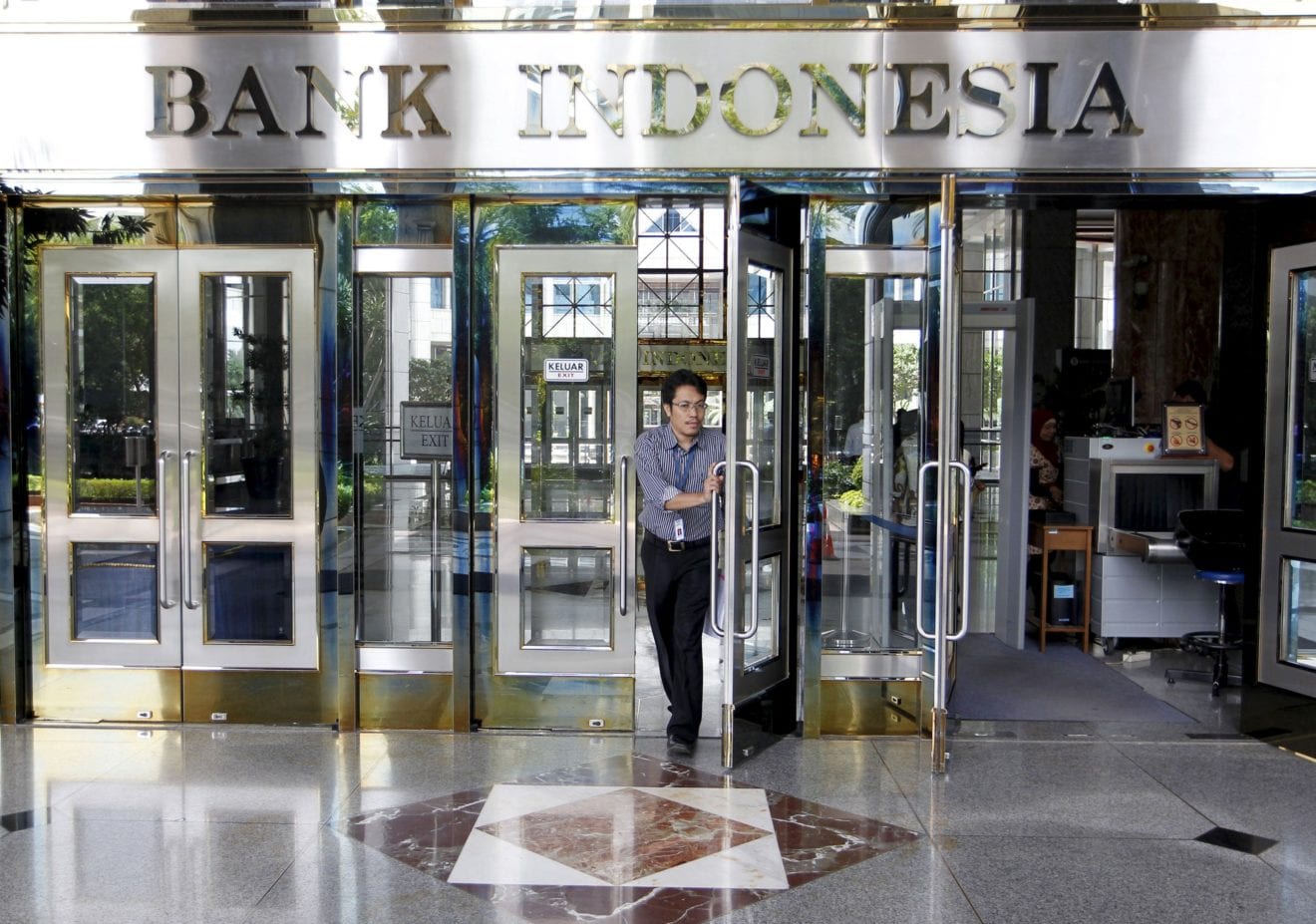
    Bank Indonesia (BI) has kept its 7-days reverse repo rate at 4.75 percent. Other monetary benchmark rates such as deposit facility rate and lending facility rate have also been kept at 4 and 5.5 percent. “The decision was made by BI to preserve domestic macroeconomic stability,” Bank Indonesia spokesman Tirta Segara said yesterday.

    As such, the BI has maintained its benchmark rate since October 2016. Tirta did not deny that economic policy uncertainty in the United States future following Donald Trump’s victory in the US presidential election in November have also come into play. However, he said that domestic inflation rate is positive at around 3.02 percent.

    Indonesian economy will also be affected by China’s economy. The United States and China are Indonesia’s major trade partner. “BI and the government will continue to collaborate to monitor every development,” Tirta said.

    Finance Minister Sri Mulyani Indarwati said global economic outlook may not improve this year. “Economic growth in developed countries, such as the United States, Japan and European countries, may not be as rapid as expected,” Minister Sri said.

    Sri said the United States is the only developed country that may recover from the economic downturn. However, at the same time, the US economic recovery may pose new problems to the global economy. The Fed, according to Sri, may increase interest rates should the US manages to achieve economic growth.

    The Fed itself had said that it plans to increase interest rates. However, it would await Trump’s policy on tax cuts and increased infrastructure and defense spending that may lead to increase in inflation.

  • Greenpeace Claims HSBC Helped Financing Deforestation

    Greenpeace Claims HSBC Helped Financing Deforestation

    Greenpeace International launched a new report on Tuesday, January 17, 2017, accusing British HSBC of supporting deforestation. The report stated that British HSBC provided financial services to palm oil companies that are causing rainforest destruction and human rights abuses in Indonesia.

    The report titled “Dirty Bankers: How HSBC is financing forest destruction for palm oil“, claimed that HSBC has been involved in arranging US$16.3 billion of loans and credit facilities to six palm oil firms. In addition, the is also said to have raised US$2 billion bonds for these firms.

    The palm oil companies listed in the report are Malaysian firm IOI; Indonesian Bumitama Agri and Salim Group; Singapore incorporated Goodhope Asia; Hong Kong-based and Singapore-listed Noble Group; and Korea’s Posco Daewoo Corporation.

    Greenpeace argued that HSBC has violated its policies of responsible lending by helping to finance the above-mentioned companies.

    Annisa Rahmawati, Greenpeace Southeast Asia senior campaigner said that although HSBC claimed to be a respectable bank with responsible policies on deforestation, “somehow these fine words get forgotten when it’s time to sign the contracts.”

    Not only HSBC, the report also listed several other banks claimed to be related to case studies in the report, including Japan’s Sumitomo and Tokyo Mitsubishi banks; Singaporean bank DBS; and the Australia and New Zealand Banking Group (ANZ).

    Despite the heavy criticism, the report did acknowledge HSBC as a “relatively progressive” bank that has shown a willingness to engage with criticism, and noted that the bank has a responsibility to set high standards for the rest of the sector.

  • KBank keen to buy Indonesian banks

    KBank keen to buy Indonesian banks

    The regulations require foreign banks to buy more than one bank, and that the targets must not be strong institutions.

    KBank president Pipit Aneaknithi said yesterday that the bank currently had partnerships with two banks in Indonesia, and was prepared in terms of facilities and capital to establish its own footprint in the Indonesian market.

    While Indonesia has very high potential for KBank and the takeover of local banks is an option, the requirement that foreign banks have to purchase more than one bank is something that it might not be particularly comfortable with, he said.

    The Bank of Thailand acknowledges this concern, he said, adding that market entry via the Qualified Asean Banks (QAB) scheme is another potential solution for KBank.

    The bank is therefore interested in applying for QAB status if the scheme’s framework is implemented.

    Meanwhile, the establishment of a physical branch in Indonesia is likely to be more difficult than doing so in Vietnam, which is another focus country for KBank, the president said.

    The best solution right now for KBank is therefore seen as the continued partnership with two local banks in Indonesia, he explained.

    Elsewhere in Asean, KBank currently has physical branches in two markets, one each in Cambodia and Laos.

    The Cambodian branch will be officially opened on February 8, with the Vientiane branch in Laos due to be opened later this year.

    With the presence of a physical branch in a foreign market not always the best solution, and the cost of establishing such an operation today a major matter, partnering with local banks is a tangible way to conduct business, he said.

    However, the difficulty is whether the bank and its partners have the same policy direction and share a similar interest in accommodating clients, he added.

    KBank, meanwhile, has been active in terms of international banking business in the past seven years by focusing on China, where it is upgrading to local banking this year.

    The market share of KBank in trade finance between Thailand and China has risen from 5 per cent to 15 per cent in seven years, Pipit said.

    He said the next step for KBank in tapping a regionalised trade-finance market dominated by China would be for the bank to facilitate financial services to Thai clients for business between one foreign country and another. “We should open a letter-of-credit service to our clients in China who want to run a business in Myanmar,” he said by way of example.

    Furthermore, KBank must embrace the digital platform in order to integrate its regional operating model.

    Under its banking-platform plan for 2016-2017, KBank must be able to service cross-border mobile transfers, multicurrency transactions and cross-border direct settlement, he stressed.

    KBank yesterday reported a 2016 net profit of Bt40.17 billion, some 1.77 per cent higher than the previous year’s level.

    The bank and its subsidiaries set aside a loan-loss reserve of Bt33.75 billion at the year’s end, up 28 per cent from Bt26.37 billion the year before.

    The higher reserve reflects the rise in non-performing loans last year, from 2.7 per cent to 3.32 per cent.

    Lending growth, meanwhile, supported net interest income, for which KBank recorded year-on-year growth of 5.5 per cent to Bt89.67 billion.

  • Banks post higher performance for 2016

    Banks post higher performance for 2016

    Several commercial banks have in the early days of 2017 posted positive business performance for 2016, with profits much higher than the previous year.

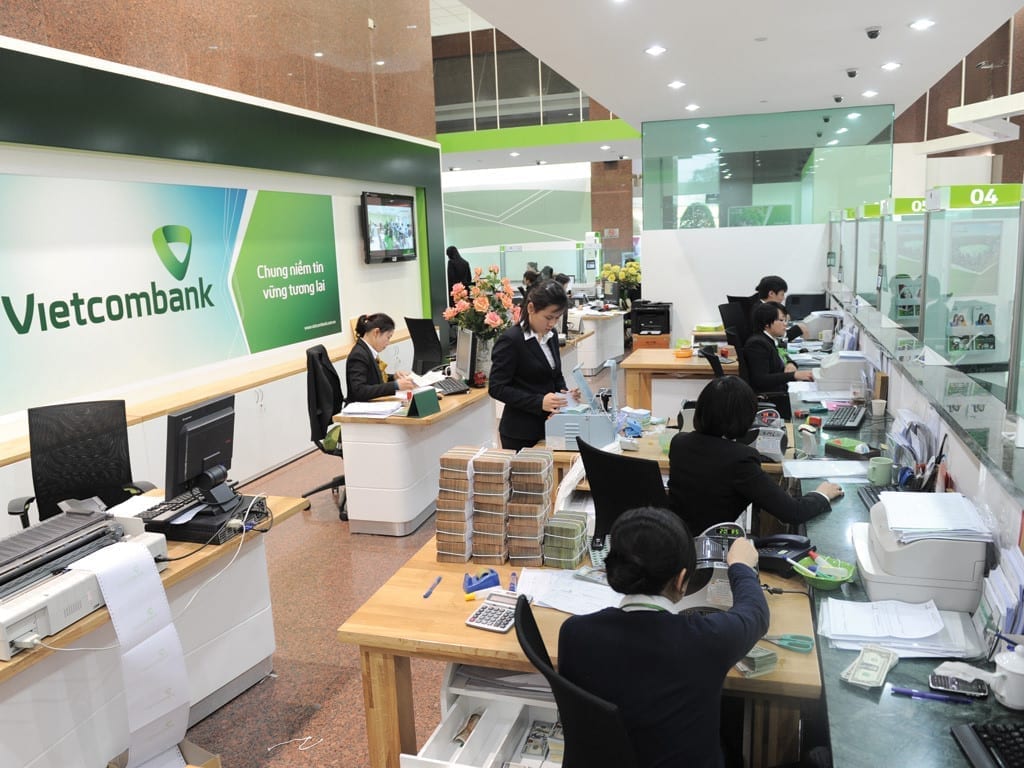
    The Bank for Foreign Trade of Vietnam (Vietcombank) was the first bank to report pre-tax profit in 2016, which hit a record high of 8.2 trillion VND (362 million USD). Its profit surged by 23.4 percent against 2015 and also exceeded the bank’s target for the year by 2.7 percent.

    In 2016, Vietcombank mobilised nearly 600 trillion VND from its depositors, up 19.4 percent from the previous year, while lending an estimated 470 trillion VND, up 18.9 percent.

    Vietcombank Chairman Nghiem Xuan Thanh said in 2016 the bank brought its rate of non-performing loans (NPLs) to 1.44 percent, down four basis points compared with the end of 2015.

    The bank’s capital adequacy ratio, which measures its capital to its risk, was 10.29 percent, higher than the minimum of 9 percent set by the State Bank of Vietnam.

    On solid ground in 2016, Vietcombank has targeted a pre-profit figure of 9.2 trillion VND in 2017, 12 percent higher than last year.

    The bank also expects its total assets to rise by 11 percent in 2017, while it has forecast that its credit growth and capital mobilisation will be 18 percent and 15 percent, respectively. The bank aims to keep its NPLs under 1.5 percent.

    The Vietnam Joint Stock Commercial Bank for Industry and Trade (Vietinbank) also reported a high profit of 8.25 trillion VND in 2016, 4 percent higher than the plan set by the bank’s general meeting of shareholders.

    Nguyen Van Thang, Vietinbank Chairman, said that as of December 31, 2016, the bank’s total merged assets were estimated at 947 trillion VND, up 22 percent from the previous year; while total mobilised capital reached 862 trillion VND, up 21 percent.

    Also in 2016, the bank’s total outstanding loans posted 720 trillion VND, a year-on-year rise of 18 percent, fulfilling the set target. Credit structure witnessed positive transfer with credit for prioritised industries growing 22.4 percent, higher than the common credit growth of the whole system.

    By the end of 2016, the bank continued to effectively manage the quality of assets with bad debt ratio of less than 1 percent.

    Le Duc Tho, General Director of Vietinbank, said in 2017, the bank set a target of a 15-17 percent rise in total assets and an 18 percent increase in outstanding credit.

    In addition, it strives to control the quality of debts, manage the bad debt ratio and ensure profit growth to achieve or exceed the year’s plan set by the general meeting of shareholders.

    The Bank for Investment and Development of Vietnam (BIDV) also estimated a pre-tax profit of 7.5 trillion VND in 2016, a rise of 7 percent against the previous year despite its deduction for the risk provision fund being quite high. In the first nine months of 2016, BIDV spared nearly 7 trillion VND for the fund, jumping 80 percent year-on-year.

    Positive results of BIDV in 2016 came from optimistic credit growth. Its total loans reached over 935 trillion VND, in which 758 trillion VND was offered to economic institutions and individuals, up 17.85 percent compared with 2015, while its deposits totalled 939 trillion VND, up 20.45 percent. The bank could control its bad debt ratio to 1.47 percent of total outstanding loans over the past year.

    Meanwhile, many other banks also surpassed their 2016 pre-tax profit targets, such as ACB, VPBank, Techcombank and VIB.

  • Axis Bank enters blockchain alliance with Ripple

    Axis Bank enters blockchain alliance with Ripple

    Axis Bank, India’s third largest private sector bank, has entered a collaboration with distributed FinTech company Ripple to offer cross-border payments solution through Blockchain technology.

    Ripple is a blockchain-based financial settlements solution that aims to reduce the time and cost of transactions. Axis is the first bank in India to partner with Ripple.

    The technology can enable instant international money transfers, compared to the 3 – 5 day norm for international remittances, and improve efficiency of payments for Axis Bank through instant and automated reconciliation with partner banks.

    “We are committed to using innovation in technology to make banking simple and convenient for our customers,” said V Srinivasan, Deputy Managing Director, Axis Bank.

    “Remittances have been a key strategic area for us, we at Axis are excited with the tie-up and the potential that the use of Blockchain technology could deliver in enabling real-time affordable money transfers.”

    “Given its status as the fastest-growing major economy in the world and the top market for remittances, India is a very important market that is ripe for payments innovation,” said Brad Garlinghouse, CEO of Ripple. “As an early adopter of Ripple, Axis Bank will set a new standard for cross-border payments services and help us continue to grow our global network in a key region of the world.”

  • As Vietnamese banks digitise, customer service key

    As Vietnamese banks digitise, customer service key

    Customers must be at the centre of banks’ attention as they make a move towards digital transformation in an effort to adapt to a changing landscape of financial innovation and disruptive technologies.

    This was said by head of Retail Banking at VP Bank, Sandeep Deobhakta, at a conference held in Hà Nội on Thursday, titled, ‘The Future of Finance in Việt Nam 2017.’

    Deobhakta, who has been holding this position since May 2015, said customers in Việt Nam are very open to new technologies and the nascent retail banking industry in Việt Nam can also adopt these technologies faster than other markets if they put customers first.

    In the future, traditional banks might lose business to companies that employ disruptive innovations if they failed to deliver better, simpler and faster solutions to customers, Deobhakta cautioned.

    VP Bank has been working with Timo, Việt Nam’s first mobile-only bank, giving customers better solutions to manage their money, bills and the ability to top up their mobile cards through the Timo app. At Timo Hangouts, one can forget about a typical bank branch and instead enjoy a coffee as one opens an account and uses bank services.

    Timo has about 4,000 customers in the HCM City and opened a Timo Hangout in Hà Nội last October, looking to attract more than 100,000 users by next year.

    Việt Nam has a huge untapped market for financial innovation, with only 20 per cent of the population having bank accounts and 3 per cent owning credit cards, Foo Boon Ping, managing editor of The Asian Banker, said at the conference.

    “The stable GDP growth of around 6 to 7 per cent, low wages, a large population with a high savings and strong innovative approach are crucial factors that will accelerate the financial and industrial development in the Vietnamese market,” he said.

    “Digital transformation is driven by real business needs to transform to become more cost efficient and to serve your customers as their behavior and preferences change,” he added.

    There are only about 36 fin-tech companies in Việt Nam, with most focusing on providing consumers and merchants with online and digital payment solutions.

  • Maybank Indonesia sells stake in WOM Finance to Reliance Capital Management

    Maybank Indonesia sells stake in WOM Finance to Reliance Capital Management

    Private lender Maybank Indonesia has sold all stakes in motorcycle financing firm Wahana Ottomitra Multiartha (WOM Finance) to Indonesian financial services provider Reliance Capital Management in a deal worth Rp 673.8 billion (US$50.71 million).

    Maybank announced on Thursday that it had signed a conditional share purchase agreement with Reliance Capital Management on Jan. 11 to sell 2.39 billion shares—equal to 68.55 percent stake—in WOM Finance.

    “The transfer of shares is one of the company’s strategic initiatives to maximize the company’s capital allocation and to streamline customer segmentation, so they can contribute to the optimization of the company’s resources,” Maybank wrote in a statement submitted to the Indonesia Stock Exchange (IDX).

    The share transfer is expected to be completed in the first quarter of 2017, after both companies fulfill all terms listed in the agreement.

    Data from Maybank said the automotive slowdown in the past few years had dragged down its own financial performance, as WOM posted poor results.

  • Kasikornbank expands in China with local incorporation

    Kasikornbank expands in China with local incorporation

    Kasikornbank will soon be Thailand’s second bank to be locally incorporated in China, with hopes of cashing in further on the growing trade between the two countries.

    Thailand’s fourth largest bank by assets is currently going through the final procedures with the Chinese authorities, with official approval to be completed by mid-2017, Chairman Banthoon Lamsam told reporters on Thursday. Incorporation in China will enable Kasikornbank to operate on the same conditions as a local bank, including offering full-scale renminbi services to local clients. It would become the second Thai bank to incorporate in the country after Bangkok Bank.

     Also in 2017, the bank will open a new branch in Shanghai, its fourth in Chinese territory after those in Chengdu and Shenzhen on the mainland, and one in Hong Kong.

    “China is a super power country, especially at a time when so much change is going on in the global political landscape,” Banthoon said. He added: “The trading power of the West will be more difficult to rely on. We must lead on the East in which China stands as an important country.”

    Neither the economic slowdown nor the massive shadow banking industry in the country seems to bother Banthoon. “China does have its own problems but they have the system to adjust and control so the situation will remain manageable and can go on,” he said.

    Currency settlement

    Additionally, Kasikornbank on Thursday signed an agreement with Chinese fintech firm International Business Settlement to develop a baht-yuan cross-currency settlement system using blockchain technology.

    It will be based on an IBS platform which the Chinese company claims will be a cheaper, quicker and safer alternative to the dominant SWIFT settlement system. IBS Chairman Luo Feng said that his company is working with central banks in Europe and other regions in the world to develop the new settlement and clearing network.

    “IBS has the technology and network to facilitate international settlement that is not based just on the U.S. dollar, at a time when the yuan’s international presence is increasing,” Banthoon said.

    The system IBS is developing will enable direct settlement of transfers between baht and yuan, without the need to use U.S. dollar conversions at any point in the procedure.

  • Baiduri receives ‘Bank of The Year’ award

    Baiduri receives ‘Bank of The Year’ award

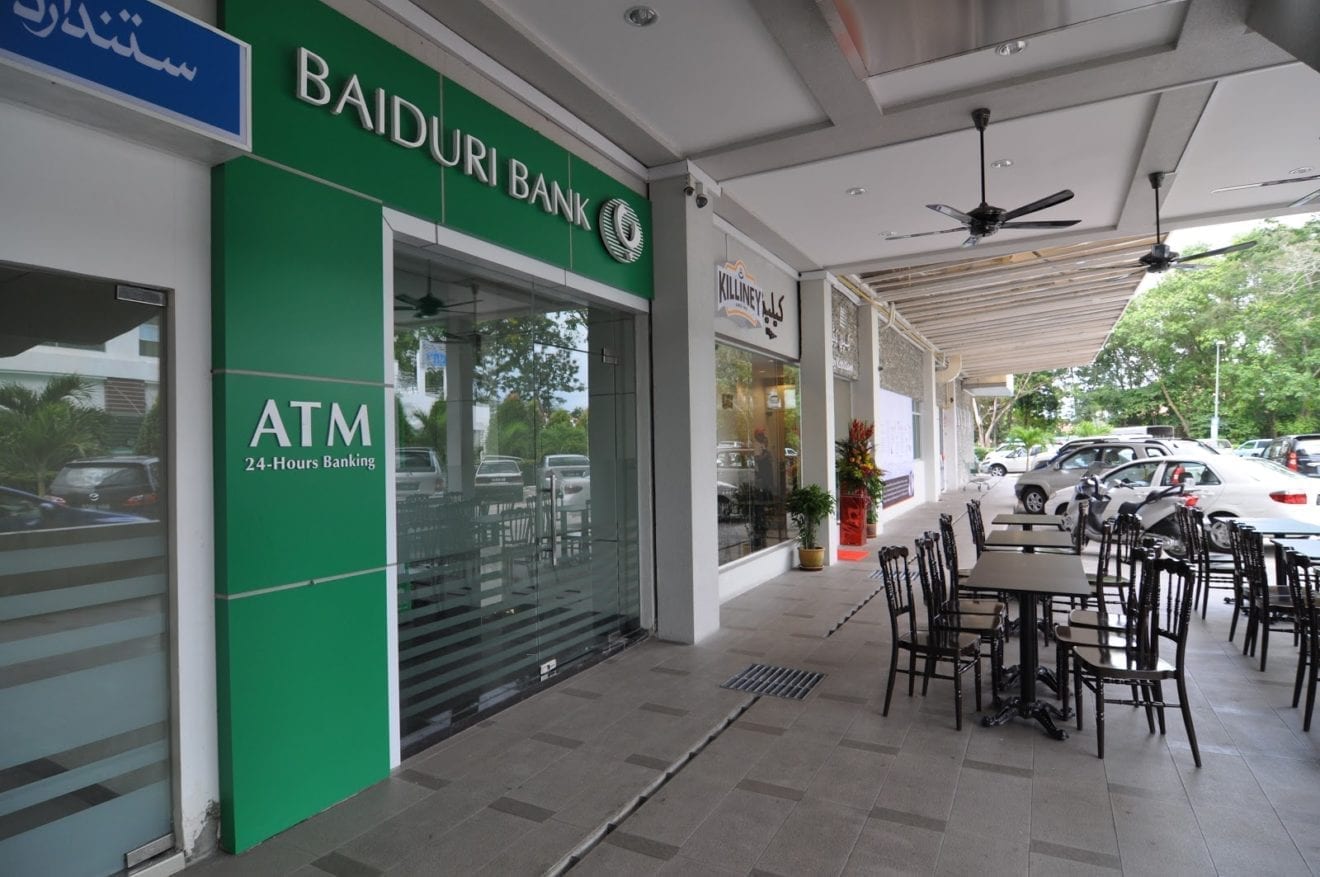
    Baiduri Bank received the coveted Bank of The Year award from The Banker magazine, during an award ceremony in London.

    This achievement marks the fourth international banking award this year for Baiduri Bank. This is also the eleventh time that the bank has received this particular award. The Banker’s 17th annual Bank of The Year awards were presented at a gala black-tie dinner at the Hilton London Bankside, London on Wednesday, December 7. On hand to receive the award was Ti Eng Hui, Deputy CEO of Baiduri Bank.

    This year, The Banker Awards took on a special meaning as it celebrated it’s 90th anniversary, making The Banker the longest running international banking title in the world.

    The Bank of The Year awards goes beyond data and figures as it looks for evidence of banks setting new standards for their local industries.

    The recognition of being named Bank of the Year in the country by The Banker is testament to the strong management, sound business model and prudent risk approach of the bank.

    Speaking on receiving the accolade, Ti Eng Hui said, “We are proud to be recognised as the Bank of the Year for Brunei from The Banker for the 11th time.

    Ti Eng Hui (centre), Deputy CEO of Baiduri Bank, after receiving the ‘Bank of The Year 2016’ award. - BAIDURI BANK

    Ti Eng Hui (centre), Deputy CEO of Baiduri Bank, after receiving the ‘Bank of The Year 2016’ award. –

    “We are delighted to conclude 2016 with this wonderful achievement. This year, we have made strides in the banking industry through our innovation and strong commitment, but it is because of our faithful employees as well as our loyal customers and partners that we are able to be the bank we are today.”

    The Banker Awards was attended by representatives from 149 countries, a reflection on the importance and significance banks put on winning The Banker’s Bank of The Year awards.

    In 2016, Baiduri Bank received three other international awards, the ‘Domestic Retail Bank Brunei 2016’ from the Asian Banking and Finance magazine, the ‘Best Banking Group 2016’ from World Finance magazine and the ‘World’s Best Emerging Markets Bank in Asia-Pacific for Brunei 2016’ from Global Finance.

    Baiduri Bank is proud to be associated with these leading international banking awards, the bank said in a statement.

  • Standard Chartered to Exit Thai Retail Banking Next Year

    Standard Chartered to Exit Thai Retail Banking Next Year

    Standard Chartered Plc plans to transfer its Thai retail-banking business to Thailand’s Tisco Financial Group Pcl next year, exiting an operation that the U.K. lender said lacked the scale to generate adequate returns.

    The net asset value is about 5.5 billion baht ($153 million), according to a stock exchange filing by Tisco on Thursday, which didn’t disclose a price for the deal. Tisco shares climbed to a record.

    Standard Chartered will continue to operate corporate, institutional and commercial banking businesses in Thailand, but the small size of the retail operation made it “increasingly difficult to achieve the returns that we aspire to,” the lender’s Thai head, Plakorn Wanglee, said in a press release.

    “It’s very tough to survive in Thailand’s retail-banking business for small players with very fierce competition,” Isara Ordeedolchest, an analyst at SCB Securities in Bangkok, said by phone. “The outlook for banks should improve significantly in 2017 as a consumption recovery and higher government spending will spur economic growth.”

    The Asia-focused Standard Chartered is targeting a turnaround after last year posting its first annual pretax loss since 1989. In a sign that the Thai operations were not a bright spot, the bank in February recorded a $126 million goodwill impairment on its business in the country.

    One unit of Tisco Financial, Tisco Bank Pcl, will take over operations including personal lending, mortgages and deposits, while another, All-Ways Co., will take over the credit-card business, the exchange filing said. The deal is subject to approvals.

  • ANZ share rating still retained

    ANZ share rating still retained

    The divestment was consistent with the bank’s strategy of simplifying its business and narrowing the focus of its Asian operations on institutional business, analyst David Ellis said in a research note released yesterday.

    The sale followed those of five Asian retail and wealth businesses in Singapore, Hong Kong, China, Taiwan and Indonesia at the end of October last year.

    Mr Ellis expected ANZ’s four remaining retail and wealth businesses in the Philippines, Vietnam, Cambodia and Laos, which were under review, to eventually be sold.

    Following the sale of Shanghai Rural, ANZ would have minority stakes in three Asian financial services groups in Malaysia, Indonesia and China with a combined book value of about $A3billion ($NZ3.13billion).

    ”We would not be surprised if these investments were also divested,” Mr Ellis said.

    ANZ deputy chief executive Graham Hodges said the bank had sold its 20% share in Shanghai Rural to China Cosco Shipping and Shanghai Sino-Poland Enterprise Management Development Corporation for $A1.84billion.

    ANZ had invested a total of $A568billion in Shanghai Rural. Since 2007, ANZ had recognised $A1.3 billion of equity-accounted earnings and received $A178 million in dividends.

    ”This partnership has been beneficial for both ANZ and for Shanghai Rural. Shanghai Rural is now a strong, successful bank with a prosperous future.”

    Mr Ellis assigned a wide commercial advantage (economic moat) rating to ANZ, mainly because of its sustainable structural advantages of the Australian and New Zealand banking sectors.

    The wide moat rating recognised the structural and superior competitive advantages Australia’s four banks possessed.

    ”The four major banks dominate a regulated and rational oligopoly, bestowing structural advantages that are strong and durable.”

    New Zealander Shayne Elliot started as ANZ chief executive on January 1, 2016 and wasted no time making changes to strategy, organisational structure and the senior leadership team, Mr Ellis said.

    Mr Elliot was an ”excellent choice” to lead the group through the next stage of its growth phase.

  • Indonesian Bitcoin Market Rises, Rapid Increase in User Base Reported

    Indonesian Bitcoin Market Rises, Rapid Increase in User Base Reported

    Bitcoin Indonesia, a prominent online Bitcoin marketplace for Indonesian traders and investors, revealed a rapid development in its user base after adding over 170,000 members within 12 months.

    At the beginning of 2016, Bitcoin Indonesia served 80,000 active users on its marketplace. Tens of thousands of members purchased and sold Bitcoin through Bitcoin Indonesia through simplistic deposit and withdrawal methods such as bank over-the-counter cash settlement and online transfer.

    Over the past year, Bitcoin Indonesia’s user base grew from 80,000 to more than 250,000 active members. In January of 2015, Bitcoin Indonesia operated a platform with less than 50,000 members, thus, in essence, throughout the entire year of 2015 the platform only added 30,000 consumers.

    In comparison, this year’s growth is equivalent to nearly 6x of the average user base growth of last year, which can be considered to be an optimistic sign for the long-term development of Bitcoin Indonesia and the Indonesian Bitcoin market in general.

    Massive increase in daily trading volume

    Bitcoin Indonesia revealed a massive increase in its daily transaction volume, which currently stands at $1.48 mln. While the platform’s trading volume is only a fraction of other major Bitcoin exchanges, it is substantially larger than other markets such as the Philippines and Thailand.

    Suasti Atmastuti Astaman, the business development manager at Bitcoin Indonesia, attributed the growth of the platform’s user base and trading volume to the legalization of Bitcoin in various countries including China, the US and Russia.

    The clear regulatory framework and policies on Bitcoin are allowing local Indonesian users to better understand the benefits and advantages of using Bitcoin instead of fiat or other banking services.

    Astaman said in an interview with a local publication:

    “Bitcoin’s value completely depends on supply and demand in the market. At present, as more and more countries have relaxed their stances on the digital currency, including the United States, China and Russia, more and more people are putting their trust in it. That’s why Bitcoin’s value has been rapidly surging.”

    However, the operators of Bitcoin Indonesia and other startups in the region must attempt to educate users on the basic concepts of Bitcoin to prepare for the inevitable legal conflicts that will arise in the future.

    If certain governments such as China attempt to ban Bitcoin and the entire motivation of using Bitcoin relies on the current regulatory frameworks, it may significantly affect the long-term survivability of the company.

  • Finance minister urges to improve the nation’s securities market

    Finance minister urges to improve the nation’s securities market

    Minister of Finance Đinh Tiến Dũng yesterday struck the gong to open the first trading session of 2017 on the Hà Nội Stock Exchange.

    Dũng urged Government agencies and market members to improve the current conditions of the securities market to promote it as a channel to raise funds for socio-economic development and increase the competitiveness of the economy.

    “The securities regulators need to improve the policies to meet the country’s economic conditions and match international standards,” Dũng said.

    “We should keep restructuring the securities market and regulatory agencies, including the merger of the two local exchanges, increase the scale and quality of the market, diversify the products and make sure the market runs efficiently and sustainably.”

    “We have to be well-prepared to launch the derivatives market in the second quarter of 2017, study and develop derivative products to meet the demand of investors and improve risk management for the derivatives market,” Dũng said, urging Government agencies to complete the legal and technical system so that corporate bond market can operate in 2018.

    “Market regulators and relevant agencies need to improve the quality of Government bond issuance to raise more capital for the country’s development, seek for more investors to buy Government bonds and diversify bond products, tighten the policies to monitor local authorities in using the money raised from bond issuance and encourage them to actively call for the participation of private investors in the local areas.”

    “We also need to push State-owned enterprises (SOEs) to sell the State’s capital and get listings on the securities market, work with large-cap corporations and Government agencies to implement more effectively the policies on equitisation and restructuring of the SOEs.”