Tag: Finance

  • India, Indonesia key areas of focus for DBS in 2017

    India, Indonesia key areas of focus for DBS in 2017

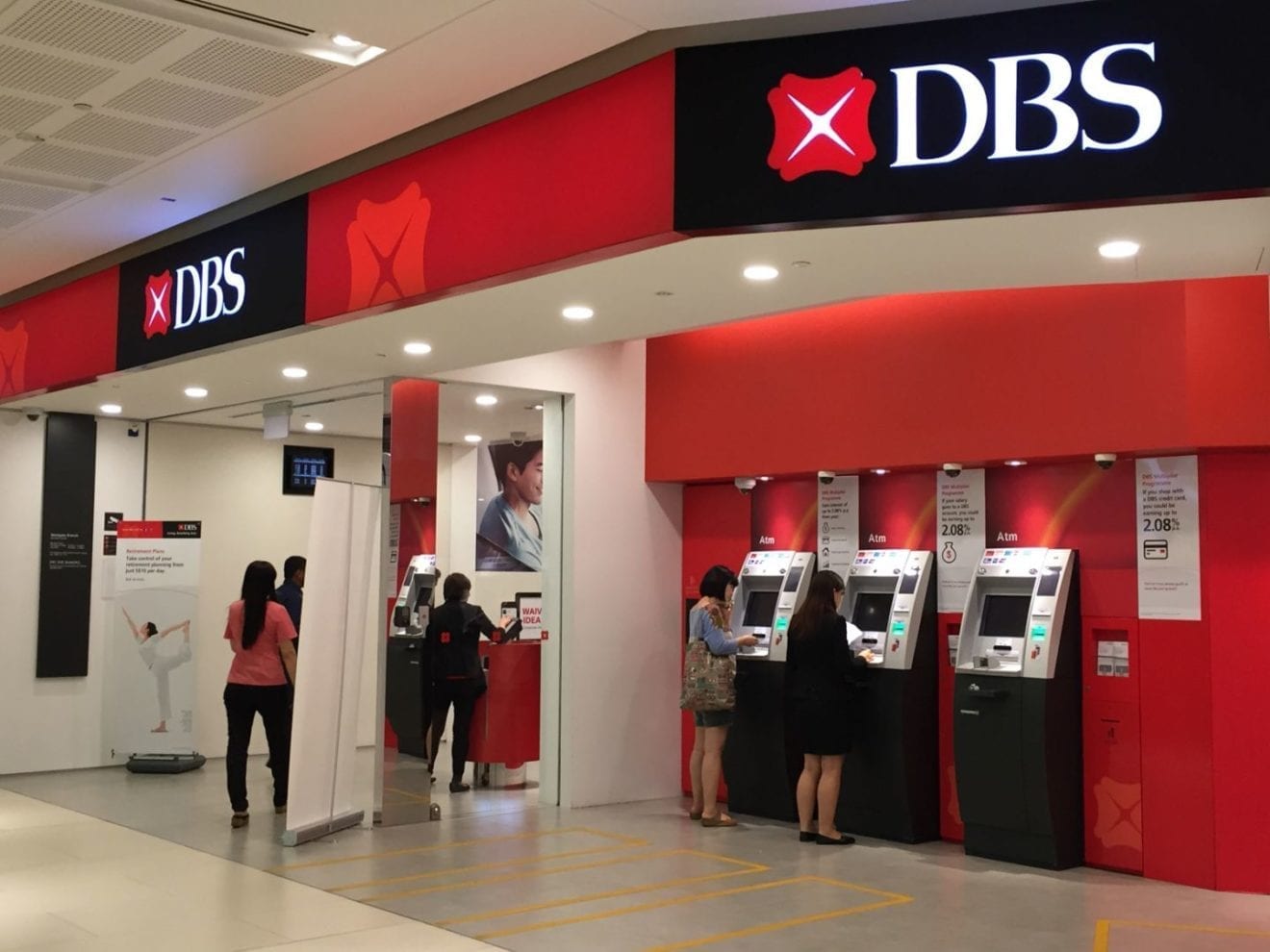
    India and Indonesia will be the Development Bank of Singapore’s “big” areas of focus for this year, its chief executive officer Piyush Gupta has said. “We also remain focused on building leading regional cash management, foreign exchange, debt markets and wealth management franchises,” Gupta said here.

    “So India and Indonesia will be our big areas of focus in 2017,” Gupta was quoted. DBS leads foreign banks with expansion plans in India.

    DBS’ wealth management business has quadrupled over the past six years, and now accounts for to 13 to 14 per cent of group revenue.

    “Over the next five years, we think it could get up to 20 per cent,” he said in a report on Singapore banks’ prospects during this year.

    “The world will have to grapple with massive consequences behind technological disruption on jobs displacement, both blue-collar and white-collar workers. My own bet is that you will find a lot more entrepreneurship, or what people call the gig economy,” he said.

    “It is likely that there will be a new wave of redistributive economics. Governments may prove inadequate to do this entirely under their own steam, and the private sector will have to play a meaningful role,” said Gupta.

    DBS’s top priorities for this year is to be prepared for volatility as markets will continue to be choppy.

    An increase in US dollar rates could also create negative impact, he added.”Step up the pace on transformation of the bank that is re-imagine banking, and be a 22,000-person start-up,” stressed Gupta. “The third priority is to continue our steady business expansion,” he said.

    But he also cautioned that uncertainties over US President-elect Donald Trump’s policies will be a headache for Asian strategies and could result in heightened market volatility in the short-term. At the same time, global growth is expected to remain subdued, said Gupta.

    “To navigate these uncertain times, we need to remain watchful and vigilant, as well as disciplined about costs and the risks we take,” he advises.

  • PPCBank set for more digital and retail growth in 2017

    PPCBank set for more digital and retail growth in 2017

    When new Korean shareholders boosted Phnom Penh Commercial Bank (PPCBank) with a $20 million capital increase this year, they had placed the commercial bank, then already among Cambodia’s largest, on a path primed for further growth and pioneering developments.

    As a result of Korean banking know-how and increased capital, PPCBank has been able to further its ambitions in the Cambodian market. Shin Chang Moo, President of PPCBank and an industry veteran with more than 30 years of finance experience in Korea and other countries, said, “The Korean financial industry has come a long way, from emerging to being developed. This gives us the honour of knowing what developments the Cambodian banking industry is facing now and in the future.”

    Understanding banking market evolutions, PPCBank, headed by Shin, has defined priorities for the bank’s business operations in Cambodia’s developing financial industry.To become a leading retail bank in Cambodia and Southeast Asia, PPCB will boost its retail business and focus on promoting digital banking and building up human resources, according to Shin.

    In a first step, the $20 million capital increase has enabled the bank to expand and diversify their loan portfolio with a strong focus on small and medium enterprises (SMEs) – the economic backbone of the economy, Shin said.

    To effectively reach retail customers with their new loan products, Shin said PPCBank was set to open more branches where clients were met with “strong consultations and more financing options through combined and customized products and services.”

    Other than increasing clientele and improving services for Cambodian customers face-to-face in new branches, PPCBank aims to put a strong focus on mobile and digital banking; adding convenience for customers through social network, providing top-up through mobile and transfers to non account holders.

    Lining out their digital and mobile payment strategy, the president explained PPCBank was promoting its “Open Banking System”.“To promote synergies and nationwide networks for the benefit of our customers we aim for collaborations with financial technology companies and utilize third party payment providers to expand banking services to even more people,” Shin explained, adding that he also plans to adapt to customers’ data analytics and integrate services with the third party to serve customers even better.

    Shin said speed, convenience and quality of service and attractive overseas remittance options, especially from Korea to Cambodia, were among other customer benefits.

    Looking to continue the path of success from 2016 into 2017, president Shin said that he and PPCBank’s staff are excited to further the mobile growth, offer even more products and services and improve business efficiency – all for the benefit of the customers.

    “The energy we put in won’t be to generate greater business profits but to give our banking service the love, confidence and trust from all customers we serve,” Shin said.

  • Bank Mandiri disburses Rp1.2 trillion for double-track railway

    Bank Mandiri disburses Rp1.2 trillion for double-track railway

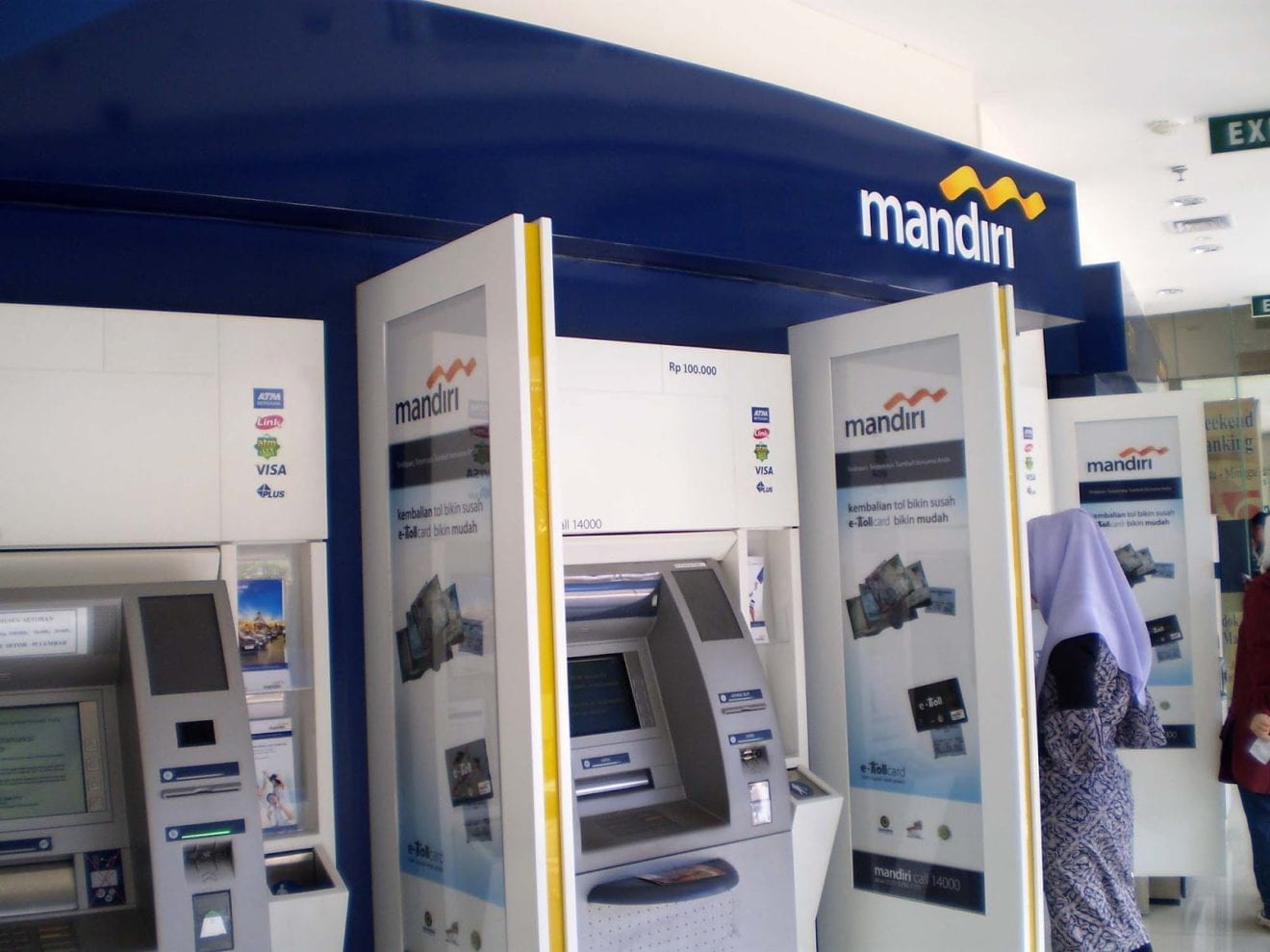
    State-owned Bank Mandiri has disbursed Rp1.2 trillion to state-owned railway firm PT KAI for the development of a double-track railway in South Sumatra.

    Senior Executive Vice President of Bank Mandiri Alexandra Askandar in the signing of the agreement with KAI on Tuesday said the special transaction loan has a term of 10 years.

    “The development of a double-track railway in South Sumatra will accelerate the delivery of coal to the coal-fired power plant in Suralaya,” he noted.

    The double-track railway line links the mining area of Bukit Asam in Tanjungenim Baru to Tarahan, Lampung.

    The special loan transaction agreement was signed by Askandar and KAI Finance Director Didiek Hartantyo.

    Askandar said the disbursement of the loan was a form of support for the development of strategic infrastructure projects nationwide, one of which is the transport sector.

    By October 2016, Bank Mandiri had provided Rp37.1 trillion to the transport sector. This is the largest financial commitment in the infrastructure segment which totalled Rp96.9 trillion, or an increase of 53 percent on an annual basis.

    Besides the railway sector, Mandiri has also provided financing for power plants amounting to Rp32.1 trillion.

    Infrastructure financing is included in the corporate loan segment. Mandiri disbursed corporate loans until the third quarter of 2016, amounting to Rp212.4 trillion, up 14.3 percent year on year.

  • Banks expand networks to attract more customers

    Banks expand networks to attract more customers

    Along with promotion programmes, banks have been expanding their networks in an aim to reach their annual targets.

    In recent months, more bank transaction offices and branches have opened to welcome both individuals and enterprises as customers.

    For instance, the An Bình Commercial Joint-Stock Bank has opened 11 branches and transaction offices in Đà Nẵng and the provinces of Lạng Sơn, Nghệ An, Bình Dương and Gia Lai.

    Bắc Á Bank, by the end of last quarter, had expanded to include 100 transaction offices in 20 province and cities. TP Bank also plans to open more offices in provinces and cities nationwide.

    A leader from An Bình was quoted as saying in Người Lao Động (The Labourer) newspaper that expansion was one of the most important steps in becoming a leading bank in the retail market.

    An expert told the newspaper that estimated growth of the national credit market this year would be 17-18 per cent against last year, if growth increases by 3 per cent per month in the last few months.

    He said this was a good time for banks to expand and introduce promotions to reach their year-end targets.

    As the banking system is too small to fully meet demand, expansion would improve service quality at banks, he added.

    The representative from An Bình Bank said there was strong demand for bank expansion, as this is a traditional channel to approach customers in all regions of the country.

    Morever, demand for lending at the end of a year is very high, prompting banks to expand to serve more customers.

    However, with the opening of more branches and transaction offices, risks can increase as customers worry that service quality and technology will be inadequate. Human resources and management skills may not be ensured as well.

    Experts, however, said there was no need for concern as regulations on controlling expansion in the banking sector, in which banks must show profits and have no more than a 3 per cent bad-debt ratio, would lower the risks.

    Bank expansion will help improve quality and competitiveness as well as increase each bank’s market share, according to experts.

  • Hong Kong retail banks’ profits up 4.5 per cent in first three quarters

    Hong Kong retail banks’ profits up 4.5 per cent in first three quarters

    Hong Kong’s retail banks saw a modest rise in profits in the first three quarters of the year thanks to improved income from foreign exchange activities.

    According to figures from the Hong Kong Monetary Authority, retail banks in the city saw their pre-tax operating profits rise by 4.5 per cent in the first nine months of the year in comparison with the same period of 2015.

    The HKMA said that the growth could be attributed to increases in both income from foreign exchange and derivatives operations and from dividends received from subsidiaries, while a decline in operating expenses also contributed to the improvement.

    The three elements provided increases of 4.5, 3.5 and 4.1 percentage points respectively to the banks’ profitability.

    These increases were offset, however, by a fall in fee and commission income, which led to a 7.8 percentage point reduction.

    The profit improvement over the first three quarters marks a turnaround in performance after banks had a troubling early part of this year. In the first quarter of 2016, retail banks’ profits fell by 4.8 per cent, albeit in comparison to a strong first quarter in 2015, in which incomes were boosted by large trading volumes in stock markets in both Hong Kong and mainland China.

    Last summer’s turbulence in the Shanghai stock exchange, as well as the hit to sentiment from the sudden devaluation of the yuan in August meant that Hong Kong banks had a difficult third quarter in 2015, making it easier to post good figures for the third quarter of this year, as well as the first nine months of the year as a whole.

    Banks in Hong Kong received a further boost last week when interest rates rose in the city, following the Federal Reserve’s decision to raise the rate in the US.

    The rise in interest rates should enable the banks to gain greater returns on cash that has been deposited with them, which they are unable, or have chosen not, to lend out.

    In Hong Kong, this is a sizeable amount, and according to the HKMA’s figures, in the first three quarters, retail banks’ total deposits increased at a faster pace than total loans. This meant that their loan-to-deposit ratio declined to 55.2 per cent at the end of September from 57.0 per cent at the end of June.

  • Bank Mandiri eyes more disabled employees

    Bank Mandiri eyes more disabled employees

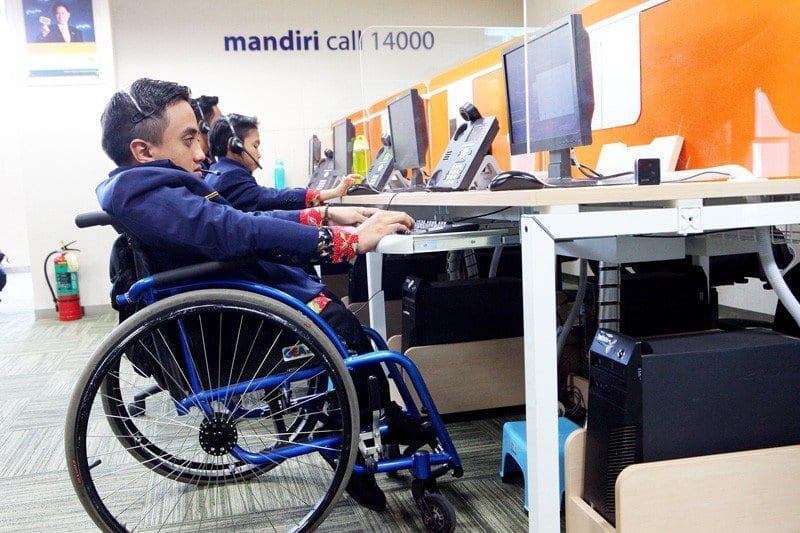
    The family of Rezky Yami Putri, 27, born with an imperfect three-fingered left hand half the size of a normal hand, was skeptical when she landed a job at Indonesia’s largest lender Bank Mandiri.

    They thought she was deceived, because such an achievement would be too good to be true for someone with “my condition”, said Rezky, now a call center officer at the state-owned lender. Her family finally believed her job was legit when she received her first salary last year.

    “Even though it has been a year, it is still like a dream for me, a lengthy dream, which occurs while I am awake,” said the Jakarta resident, who has a bachelor’s degree in public health but has never worked in her field of study.

    “As someone with a disability, we are always underestimated but it turns out that we also can make money for ourselves and for our parents, even though it is not that much,” she added.

    Rezky is among 41 disabled workers employed by Bank Mandiri, which is among over 100 state-owned enterprises in Indonesia, which, following a 2016 law on people with disabilities, are required to have disabled people account for at least 2 percent of their staff.

    “Our target is to hire 120 people and we’ll keep recruiting depending on the availability of the applicants,” Bank Mandiri human capital engagement senior vice president Aminarti Widiati said. The lender started recruiting disabled employees last year.

    Bank Mandiri, which has five branch offices in Jakarta and Semarang, Central Java, employing disabled people currently has a total of 38,376 employees nationwide with 2,505 branch offices spread across the country.

    Disabled people in the lender work on three-year contracts and are reviewed each year. They also have the chance to become permanent employees, Aminarti said.

    Tri Handayani, diagnosed mute when she was only 10 months old, was eager to advance at Bank Mandiri. The back-office worker used to work at a supermarket, checking and replacing price tags on products.

    “This new job makes me feel more enthusiastic about working and being more successful in the future,” said Tri, who graduated
    with a computerized accounting degree.

    To communicate, the 27-year-old tries to speak as much as she can or writes the sentences down if they are too complicated. She is able to understand her interlocutors by reading their lips.

    Her colleague Kuntum Mukminin, 24, who is also deaf-mute, works at the same division at Bank Mandiri in the back office.

    “I might be deaf but I work hard and keep improving myself. I have to do my best to be a success,” said Kuntum, a high school graduate who used to work at a supermarket bakery.

    The Social Affairs Ministry has pledged to oversee the implementation of the 2016 law that requires disabled people account for at least 2 percent of state firms’ staff. There are around 6 million disabled people in Indonesia, according to 2012 ministry data.

    “However, we won’t impose sanctions on companies that cannot meet the minimum requirement because we know that sometimes it cannot be fulfilled because of a lack of competency,” the ministry’s director of social rehabilitation Bambang Sugeng said.

  • Myanmar opens talks with Thailand on reciprocal banking access

    Myanmar opens talks with Thailand on reciprocal banking access

    The central banks of Thailand and Myanmar agreed Sunday to start talks on granting access to designated banks in each other’s markets, marking a small step forward in the financial integration of the Association of Southeast Asian Nations.

    For Thailand, Myanmar is the third country to enter bilateral discussions on bank access, following Malaysia and Indonesia; for Myanmar it is a first.

    Under the ASEAN Banking Integration Framework, countries can enter into bilateral deals allowing banks that meet certain criteria to become “Qualified ASEAN Banks” that operate in each other’s markets on the same terms as local banks.

    “The expansion of a banking presence through QAB will enable greater efficiency and reduce costs for bankers and customers alike,” Bank of Thailand Gov. Veerathai Santiprabhob told bankers who were in Bangkok for the 21st ASEAN Banking Conference on Monday.

    With Myanmar opening up its economy after nearly 50 years of isolation and the ASEAN Economic Community kicking off last year, banks in  Thailand and Myanmar have been growing more active in each other’s markets.

    Myanmar’s largest lender, Kanbawza Bank, opened a representative office in Bangkok in August, becoming the first Myanmar bank to venture abroad.

    Last year, Thailand’s Bangkok Bank was among the first of nine banks to be granted a foreign banking license in Myanmar. Other big Thai banks were not granted licenses in the first round, but have opened representative offices in Myanmar in anticipation of the next opportunity.

    “It’s good that the Bank of Thailand signed the QAB agreement with Myanmar,” said Predee Daochai, president of Kasikornbank, which now has a representative office in Myanmar. “We would like to open a bank there,” he said.

    The time frame for the negotiations and details such as the number of banks to be designated QABs have yet to be decided.

    While trade and investment have been increasing in the region in the wake of deregulation and elimination of tariffs, “much work remains with regards to financial connectivity” in the region, Veerathai said.

  • Barclays raises less than expected from Asia wealth unit sale

    Barclays raises less than expected from Asia wealth unit sale

    Barclays has raised almost a third less than expected from the $225m sale of its wealth and investment management business in Singapore and Hong Kong to Singapore’s Oversea-Chinese Banking Corp (OCBC).

    When the deal was announced in April, Barclays had indicated it could fetch $320m from selling the business, which had $18.3bn of assets under management at the end of last year and was initially valued at about $500m.

    However, when its Asian wealth management clients were given the choice of whether to join OCBC, some of them decided to either stay at Barclays or to join another bank, reducing the overall price of the deal, which was fixed at 1.75 per cent of assets under management.

    Jes Staley, Barclays chief executive, said: “This is another example of the great progress we have made this year in Barclays non-core, as we aim to reduce risk weighted assets to £23bn in 2017 and reintegrate the remainder of the unit back into the group.”

    The bank said it remained committed to Asia, where it still has offices in Singapore, Hong Kong, China, India and Japan after cutting jobs and pulling out of several smaller markets in the region.

    Barclays said the deal would reduce its risk-weighted assets by about £800m. It follows the sale of the bank’s US wealth management business and of several retail banking and credit card operations in Spain, Portugal and Italy.

    Last month, the British bank called time on 150 years in Egypt by selling operations in the north African country in a $500m deal, and it is in the process of selling down its 50 per cent stake in its larger South African-listed operation.

    Singapore-based banks have been busy acquiring several of the Asian wealth management businesses that have been sold in recent years by foreign banks that decided to sell up having struggled to achieve sufficient scale.

    ANZ Banking Group said earlier this year it was selling its wealth management and retail business in Singapore, Hong Kong and three other Asian markets to DBS, the Singapore-based bank that also bought Société Générale’s Asian private bank in 2014.

    But some big western banks, such as UBS, Credit Suisse, HSBC and Standard Chartered, are still seeking to expand in Asian private banking and wealth management, betting on continued rapid growth in the number of millionaires and billionaires in the region.

    DBS last year became the fifth largest private bank in the Asia-Pacific region, after UBS, Citi, Credit Suisse and HSBC, according to a ranking of assets under management for rich clients published by Private Banker International. It is the first time a Singapore bank has broken into the top five in Asian wealth management.

  • Thai Kasikornbank, IBM join forces on blockchain network

    Thai Kasikornbank, IBM join forces on blockchain network

    Thailand’s Kasikornbank Pcl has joined with the Thai unit of International Business Machines Corp to develop blockchain services in a bid to save costs and speed up transaction process, the companies said on Thursday.

    Kasikornbank will be the first Thai bank to apply the blockchain technology and aims to start the services in the first half of 2017, Somkid Jiranuntarat, vice chairman of Kasikornbank’s technology group, told reporters.

    Kasikornbank is also in talks with other Thai banks to share the blockchain network, he said.

    Blockchain is a web-based transaction-processing and settlement system whose efficiency banks say could slash costs. It creates a “golden record” of any given set of data that is automatically replicated for all parties in a secure network, eliminating any need for third-party verification.

    Financial services companies around the world have been focusing on developing blockchain technology, with advocates saying it has the potential to save billions of dollars in costs and speed up transaction times.

    The technology will be used to certify original documents by using IBM’s Hyperledger infrastructure. At the initial stage, a system called OriginCert API is used to certify letters of guarantee (LG), which helps simplify and speed up the LG issuance process for customers, according to a joint statement.

    Kasikornbank, Thailand’s fourth-largest lender by assets, is the leader in digital banking with a market share of almost 40 percent. It aimed to spend 5 billion baht ($143 million) to develop information technology, it said in April.

  • China tapping 10 Philippine’s banks

    China tapping 10 Philippine’s banks

    State-owned Bank of China is in talks with ten Philippines banks including  Banco de Oro Unibank Inc. and Land Bank of the Philippines to retail the $3-billion fund committed by the Chinese lender to the Philippines.

    A team of high ranking officials from Bank of China’s main office in Beijing attended the first of a series of roadshows in the Philippines to link with local financing institutions including banks and microfinance lenders.

    Bank of China president Jun Deng said more financing institutions and legitimate lenders would be announced soon.

    “This is just the initial phase. We will be having discussions with the banks we invited. Maybe later on, we’ll disclose these banks and the development of our discussions,” he said during the Manila leg of the roadshow held Thursday at Fairmont Hotel in Makati City.

    The roadshow is a pre-event exercise in preparation for the Bank of China’s global SME cross-border trade and investment conference that will take place in Davao City in 2017.

    Bank of China will provide details on how it will disperse financing to Philippine SMEs during the Davao conference.

    The bank said it would also bring in 100 Chinese SMEs interested in the Philippine agro-industrial industry.

    “Agribusiness is one of the key areas important to China. Other interests include technology, renewable energy which is heavy on solar-based power production and the furniture industry,” said International Chamber of Commerce of the Philippines president Jesus Varela.

    Initial talks between the Chinese bankers and Filipino businessmen pointed to Mindanao as the priority area.

    The conference will also serve as a matchmaking event for SMES to have access to financing from credited financing retailers of Bank of China.

    Bank of China said while the $3-billion financing commitment would not be for the sole benefit of SMEs, the bigger portion of the fund will help SMEs grow and build a global enterprise.

    Deng said a portion of the financing would also support important infrastructure and energy projects and programs that would promote industrialization.

    Bank of China held 26 cross-border trade and investment conferences across the world that attracted over 30,000 people from political and business circles and  more than 15,000 enterprises from 60 countries over the past two years.

  • Private banks lacking scale exit Singapore

    Private banks lacking scale exit Singapore

    Just like real estate is about location, location and location, private banking is about scale, scale and scale – it is what’s needed to cope with the high cost of the business, say industry players.

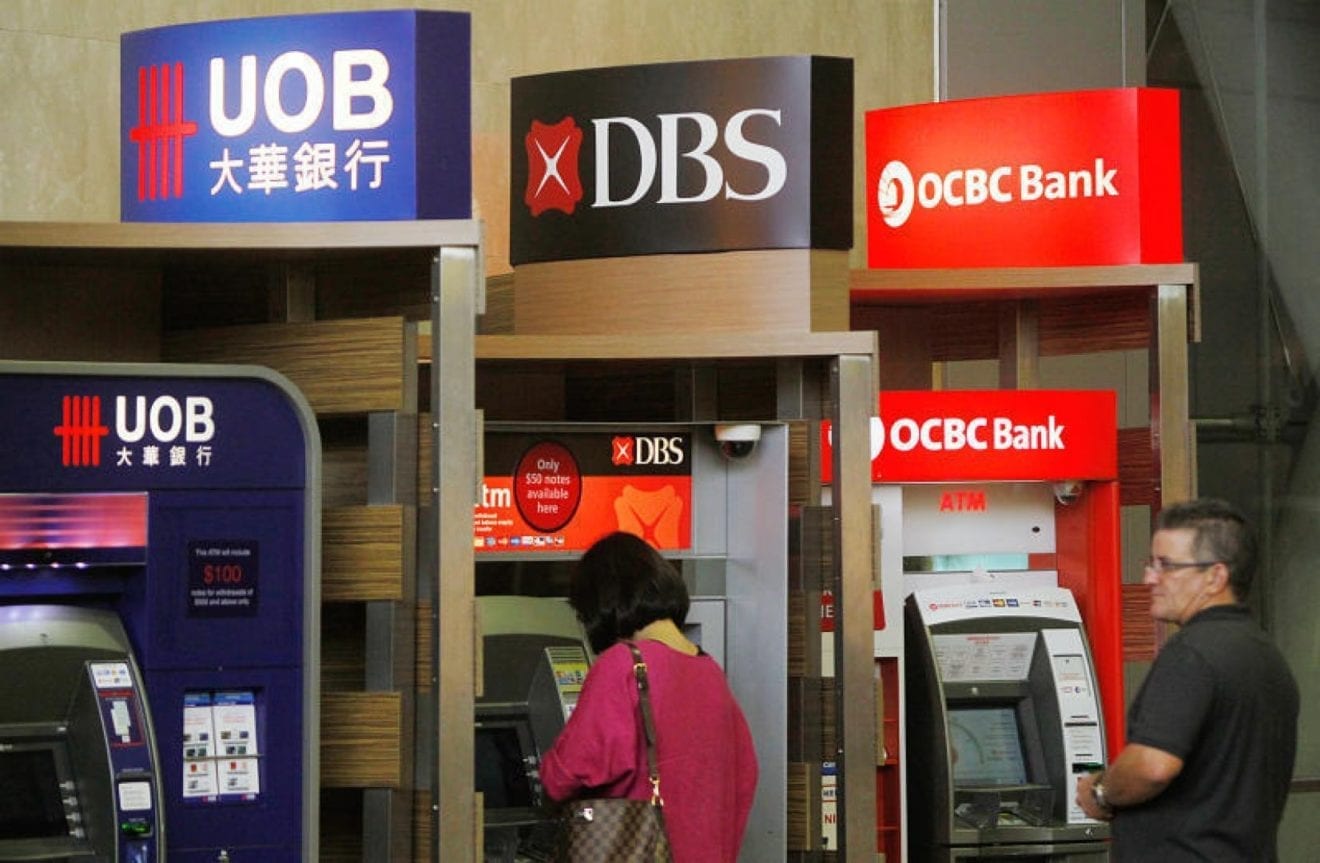
    Monday’s surprise move by DBS Bank to snap up most of ANZ’s wealth and retail business in Asia for a bargain-basement price of S$110 million, or 0.5 per cent of the S$23 billion of assets under management, once again hammered home the point that scale is needed to run a private bank.

    Over the past two years, eight foreign private banks (ANZ included) have exited or will soon exit Singapore. Of the eight, two were closed by the Monetary Authority of Singapore for anti-money laundering violations. ABN Amro is reportedly the eighth departure, with the Dutch lender soon to sell its Asian private bank.

    Both DBS and ANZ, Australia’s fourth largest bank, mentioned scale as the reason for the sale. It wasn’t that the business didn’t turn a profit. It did; for FY16, it turned in a cash profit of A$50 million.

    ANZ is not a small player in Asia, and this sale does not signal its retreat from the region, it said. In fact, ANZ regards Asia as core to its strategy of banking large corporate and institutional clients, driven by trade and capital flows, particularly with Australia and New Zealand.

    ANZ Institutional Asia employs 1,490 people across 15 markets in the region.

    But, as ANZ chief executive Shayne Elliott said of the sale to DBS: “In retail and wealth, although we have grown a profitable business in Asia, without greater scale, ANZ’s competitive position is not as compelling.”

    Tan Su Shan, DBS’s group head of consumer banking and wealth management, said Asia continues to clock decent growth rates, so the organic growth outlook for the wealth-management business remains intrinsically intact, despite cyclical volatility.

    She said: “For banks looking to create a sustainable wealth-management business here, there are a few things to consider. Firstly, it is the bank’s ability to build scale, be sustainable and invest for the future.

    “Secondly, banks must be able to serve the local and global needs of Asian clients.”

    DBS has been aggressively building up its private bank business, timing it nicely with Asia’s explosive wealth growth. A joint survey by PwC and UBS last month said that, in Asia last year, a new billionaire was minted every three days.

    DBS chief executive Piyush Gupta said that, with Asia growing at 6 per cent, Europe at 1 and the US, 2, “you’d all give a left arm to be in Asia under the current economic conditions”.

    As Asia is tipped to be the richest region in the near future, private banks in the region need to adapt their business models to meet the growing demand.

    Bahren Shaari, Bank of Singapore’s chief executive, said: “For instance, with the rising cost of doing business, banks need to achieve scale, so further consolidation is inevitable. In the case of Bank of Singapore, we have enough scale to aspire to be among the top three private banks in our core markets.”

    But while Asia has the right conditions to attract private banks, it has to be borne in mind that the bulk of the rich are self-made or entrepreneurial; the joint PwC-UBS survey said about 85 per cent of Asian billionaires are first-generation.

    This means banks need to offer investment-banking services and access to debt and equity markets for clients looking to expand their businesses. They should not just sell wealth-management products or throw rare-whisky parties, which have become fashionable in some quarters.

    A private banker who turned down an offer from a major distiller to host a rare-whisky party said: “My clients are too busy making money to come for the whisky.”

    Credit Suisse, the third-largest private bank in Asia, decided in a strategic review last year to combine investment banking with private banking.

    Francesco de Ferrari, the bank’s head of private banking for the Asia-Pacific, said earlier this year: “The business model that is best suited to Asian clients’ needs is the integrated bank with private banking as a core business and its DNA, but also strong investment banking and asset-management capabilities.”

    So if some foreign banks have decided to exit Singapore, it doesn’t point to foreign banks beating a retreat from Asia.

    DBS’ Ms Tan noted that the largest private banks in Asia are, in fact, Swiss or American: “While some foreign players have left the scene, there are several who are still fairly dominant here.

    “These are primarily the large Swiss and US and banks who have managed to build scale in their private-banking businesses, either through long-term organic growth or through combining their wealth management business with a retail, corporate/investment banking or asset management business.”

    UBS, Citi, Credit Suisse, HSBC and DBS are Asia’s top five private banks. Julius Baer, Morgan Stanley, JP Morgan, BNP Paribas and Deutsche Bank round up the top 10.

    Ms Tan said: “That said, there remains more scope and opportunities for dominant local or regional players like DBS to gain market share as clients here look for customised solutions with a safe and steady name who remains committed to the region and the business.”
  • HSBC Amanah Malaysia appoints new CEO

    HSBC Amanah Malaysia appoints new CEO

    Arsalaan (Oz) Ahmed has been appointed as the Chief Executive Officer for HSBC Amanah Malaysia Berhad. As the CEO of HSBC Amanah Malaysia Berhad, Oz Ahmed will be leading the Islamic banking businesses for Retail, Commercial and Wholesale Banking, and reporting to the CEO of HSBC Bank Malaysia Berhad, Mukhtar Hussain.

    Before joining HSBC Amanah, Oz was appointed as the Head of Capital Financing & Financial Institutions for Barwa Bank in Doha, Qatar, where he led the development of Islamic debt capital market and wholesale banking platform.

    With 15 years of experience, Oz has distinguished himself as a thought leader in Islamic  and ethical finance and an expert in Shariah-compliant retail, corporate and investment banking. He has held a number of senior management roles with international exposure in the United Kingdom, Middle East and Malaysia.

    Commenting on his appointment, Mukhtar Hussain, CEO of HSBC Bank Malaysia Berhad, said, “Oz brings a wealth of experience vital for the growth of our Amanah business in Malaysia. As Malaysia strengthens its role as the Islamic Finance hub of Asia, it is crucial that we aid the progress with the right leadership, innovation and world class Shariah compliant products and services.”

  • Thailand’s Bank of Ayudhya books 11% Q3 profit rise

    Thailand’s Bank of Ayudhya books 11% Q3 profit rise

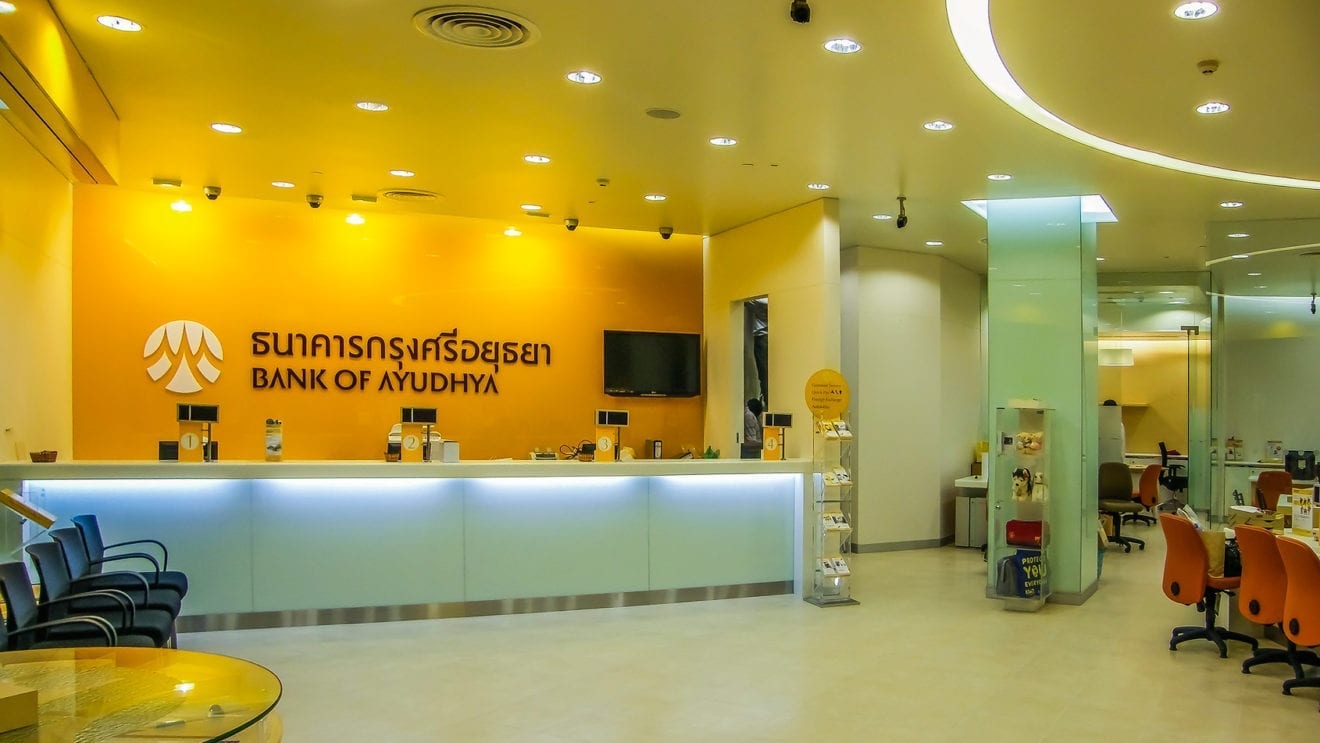
    Bank of Ayudhya PCL, Thailand’s fifth-largest lender, said on Friday its quarterly net profit rose 10.6 percent from a year earlier, boosted by higher net interest income as a result of strong loan growth from retail clients.

    Bank of Ayudhya, controlled by Japan’s Mitsubishi UFJ Financial Group Inc, raised its 2016 loan target range to 8 per cent to 9 per cent, from 5 per cent to 6 per cent, after consolidating loans from Cambodia subsidiary Hattha Kaksekar, it said in a statement.

  • Cisco sees doubling in digital banking clients

    Cisco sees doubling in digital banking clients

    James Cronk, global director, Financial Services Industry, at US-based Cisco, said the banking and financial-services sectors were now “transferring their legacy environment into digital transformation to support digital payment”.

    Around 4.5 per cent of Thai banking customers currently use digital payment, a proportion that will rise significantly in the next few years, driven by the development of information-technology infrastructure and security, he said.
    Cisco’s comprehensive economic analysis estimates that digital innovation in retail banking will drive US$405 billion (Bt14.4 trillion) in value globally from 2015 to 2017.

    Last year, financial services as a whole captured just 29 per cent or $117 billion of that opportunity. Moreover, more than 90 per cent of the potential value is driven by key digital-use cases, including sales and services transformation, next-generation workers, video-based advice, mobile payment and connected ads, Cronk said.

    Cisco has six platforms and solutions to support digital transformation in financial services – customer experience, workforce experience, agile IT-fast IT, analytics and insights, cyber security and liability, and risk compliance and management – the global director said.

    Having a road map to digital value in retail banking means banks will be positioned “to enable IT agility and operational effectiveness, create differentiation in their business strategies from those of competitors, and define disruptive new digital-enabled business processes”, he explained.

    Vatsun Thirapatarapong, managing director of Cisco in Thailand and Indochina, said the ratio of digital-banking users in Thailand would increase to 10 per cent of all banking users in the next three years, due to the popularity of using e-payment among generation-Z individuals, the usage of mobile first/cloud first, as well as start-ups developing fintech (financial technology) solutions to support digital payment.
    Moreover, IDC has reported that consumers expect banks to deliver highly personalised hi-tech services coupled with the convenience of anytime, anywhere.

    This group of consumers is growing and accounted for about 4.5 per cent of banking customers in the Asia-Pacific last year, according to the global IT market-intelligence firm, which expects the segment to grow to about 15 per cent by 2020.
    Meanwhile, the Bank of Thailand has reported that there are currently around 12.9 million users of mobile banking in the Kingdom. The value of Thailand’s online retail market is expected to reach $10 billion-$15 billion by 2020, up from less than $2 billion last year, the central bank said.

    The mobile penetration rate reached almost 87 per cent of the population, with smart-phone penetration at 50 per cent, while 50 per cent of all online transactions are done via mobile devices, it added. E-payments are expected to surge from Bt68.2 billion last year to Bt143 billion in 2020.

    Moreover, Thailand is entering in the first stage of the government’s national e-payment policy and, when the e-payment system is fully operational next year, the estimated cost savings for banks and businesses will be around Bt75 billion per year, the Bank of Thailand said. The Thai Bankers’ Association’s Payment System Office has agreed on a new fee structure, which will lower the cost of digital banking.