Retail News CRM

Tag: Finance

  • HSBC sets sights on Vietnam

    HSBC sets sights on Vietnam

    HSBC Bank (Vietnam) chief executive Pham Hong Hai (right) and Kelvin Tan, chief executive of HSBC Thailand, say HSBC aims to capitalise on its presence in seven of the 10 Asean countries.

    HSBC seeks to offer a better integrated regional service with the increase of cross-border investment following the formation of the  Asean Economic Community (AEC).

    The bank in particular is looking at Vietnam, where investment is set to surge under government policies to attract foreign investment.
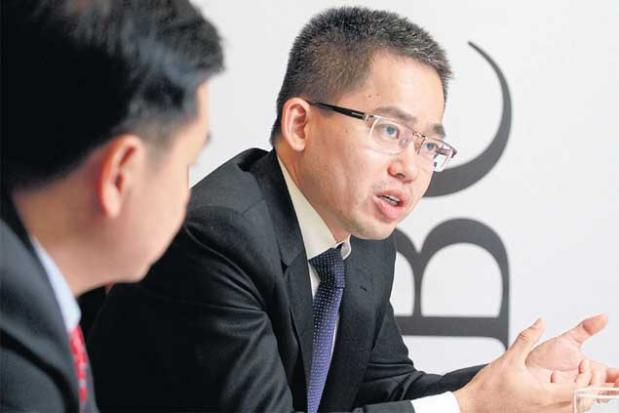
    Kelvin Tan, chief executive of HSBC Thailand, said the company aimed to capitalise on its presence in seven of the 10 Asean member countries. Only Myanmar, Cambodia and Laos do not have branches of HSBC.

    “We made it very clear to our investors since last year that Asean will be one of our main focuses to help HSBC’s future growth,” said Mr Tan.

    HSBC will also focus on the Pearl River Delta, which consists of Hong Kong and Guangzhou, China.

    Mr Tan said the company will enhance the connectivity between its subsidiaries in each country to serve customers better and expand business.

    “We add value to our services by offering well-connected financial services in this region.”

    When a Thai customer expresses an interest in investing in another country in which HSBC operates, the bank will refer the customer to the office in that country, which can provide local information for doing business.

    Many HSBC customers have already expanded their businesses in other countries, especially Vietnam, to tap into a bigger market as well as take advantage of low labour costs, he said. Thai investors should benefit from the cheaper labour by setting up production bases there and using Thailand as their regional headquarters, which is the policy that the Thai government is promoting.

    “Thailand is in a very strategic location for logistics and air transport so pushing the RHQ concept is a step in the right direction, but the government will also have to include stakeholders as part for this development,” said Mr Tan.

    Pham Hong Hai, chief executive of HSBC Bank (Vietnam), said Vietnam had attracted heavy investment from Asean countries over the past few years as well as from other Asian countries such as South Korea, Japan, Taiwan and China.

    Vietnam’s low labour costs and political stability are the major draws that attract a huge amount of foreign direct investment, he said. Given the low wage rate for unskilled labour, the country has attracted a lot of labour-intensive industries.

    “Cambodia, Laos and Myanmar also have cheap labour, but Vietnam has the added positive factors of political stability and good infrastructure,” said Mr Pham.

    He said the low wage rate would last for about five years.

    However, one problem that has emerged in Vietnam is a shortage of workers at management level. Mr Pham said he expected the AEC integration to attract more white-collar workers to the country.

    He said Vietnam’s ruling party just elected a new central committee, which is expected to maintain the current policies to strengthen the country’s economy.

    The policies that will be continued include privatisation of state enterprises, modernising the banking sector, enhancing the effectiveness of fiscal policy and improving the business environment, he added.

    Vietnam’s state enterprises contribute 35% of GDP. The government is due to allow private firms to gradually own bigger stakes in the enterprises in order to enhance their effectiveness.

    The government is improving Vietnam’s business environment by passing new laws that will shorten the time required to start a new business and also to obtain a licence, Mr Pham said. There there are a lot of opportunities in businesses such as logistics, retail and manufacturing, which are growing quickly.

    “When the manufacturing sector grows it is always followed by logistics services to support the industries,” he said. “We also see that the retail sector’s growing fast with Thai companies such as Central and TCC Group investing in Vietnam.”

    He said with a population of 90 million, with young people forming a large proportion, Vietnam’s demographic make-up offers great opportunities for retail businesses to benefit from their purchasing power, which will grow significantly.
  • BNI Set to Penetrate ASEAN Market

    BNI Set to Penetrate ASEAN Market

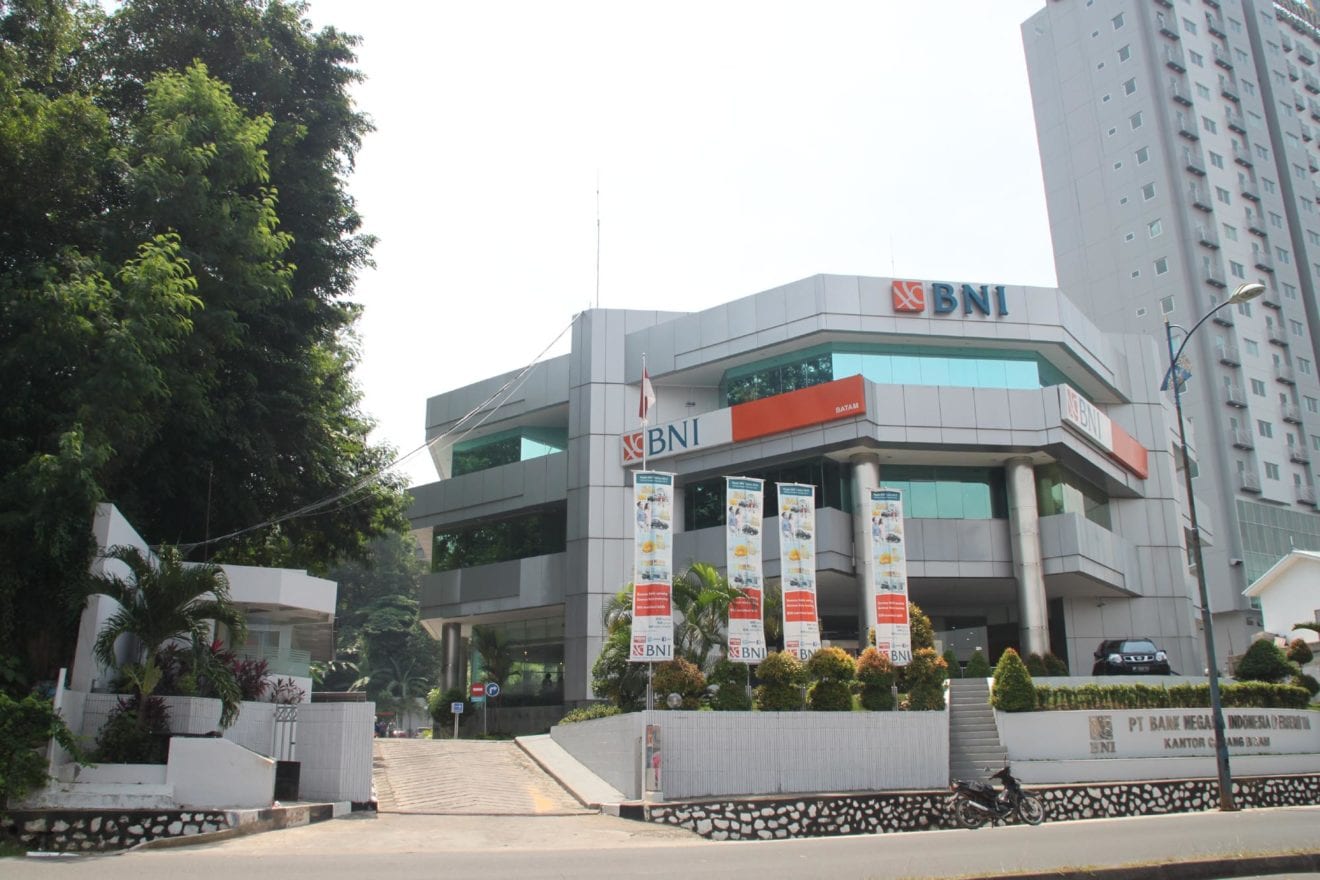
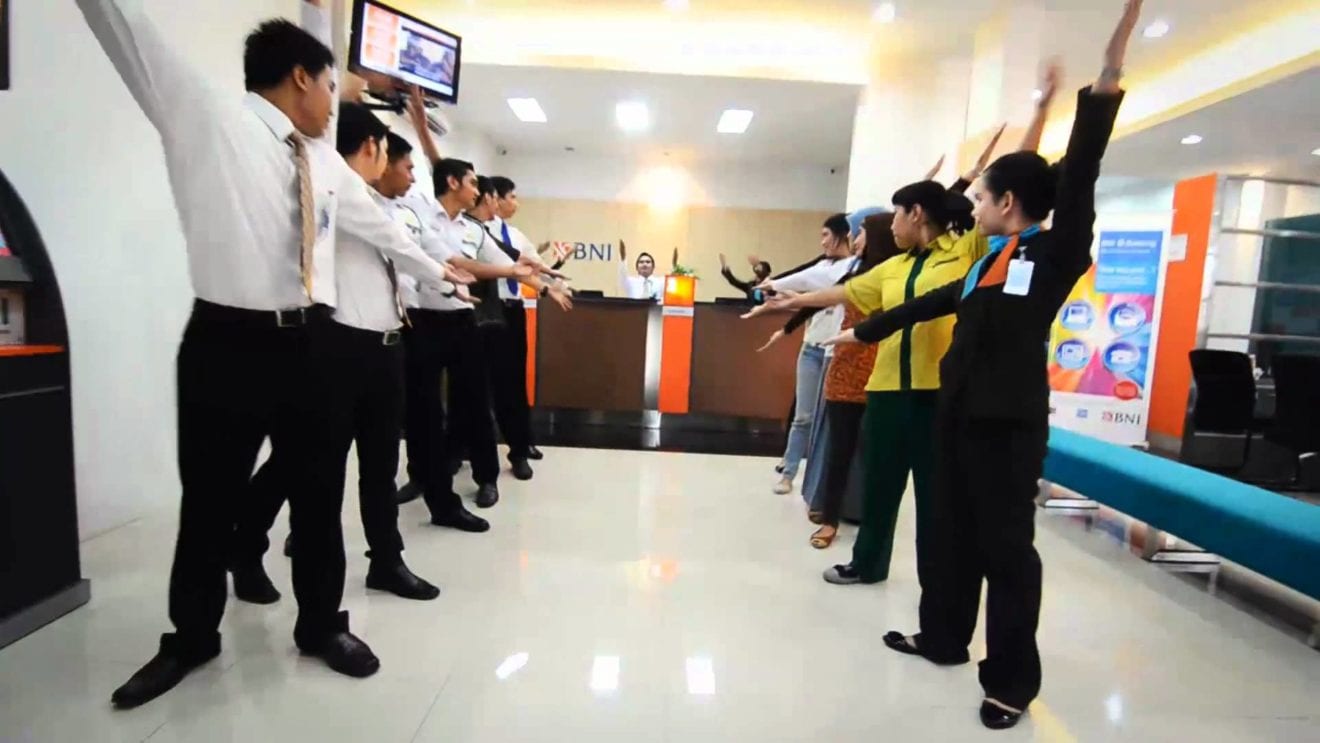
    Bank Negara Indonesia (BNI) president director Achmad Baiquni said that state-owned lender BNI would expand its business in other Southeast Asian countries, in addition to Myanmar.

    “There are some countries targeted by BNI, but we can’t reveal them yet, because it’s too early,” Baiquni told us during a tree-planting event at kilometer 59 of the Jakarta-Cikampek toll road on Saturday, March 26, 2016.

    Baiquni added that the expansion plan would be executed based on existing business potentials. Myanmar was selected since other state-owned companies were expanding their business in the country.

    “We have to follow our customers,” Baiquini explained.

    Baiquni admitted that BNI had looked into the business potential in Myanmar. He also expected that the expansion plan would be realized this year.

    BNI and Bank Mandiri are preparing to expand their businesses in the ASEAN market prior to Financial Services Authority’s agreement signings with Central Bank of Myanmar and Bank Negara Malaysia.

  • Maldives laments HSBC retail banking loss

    Maldives laments HSBC retail banking loss

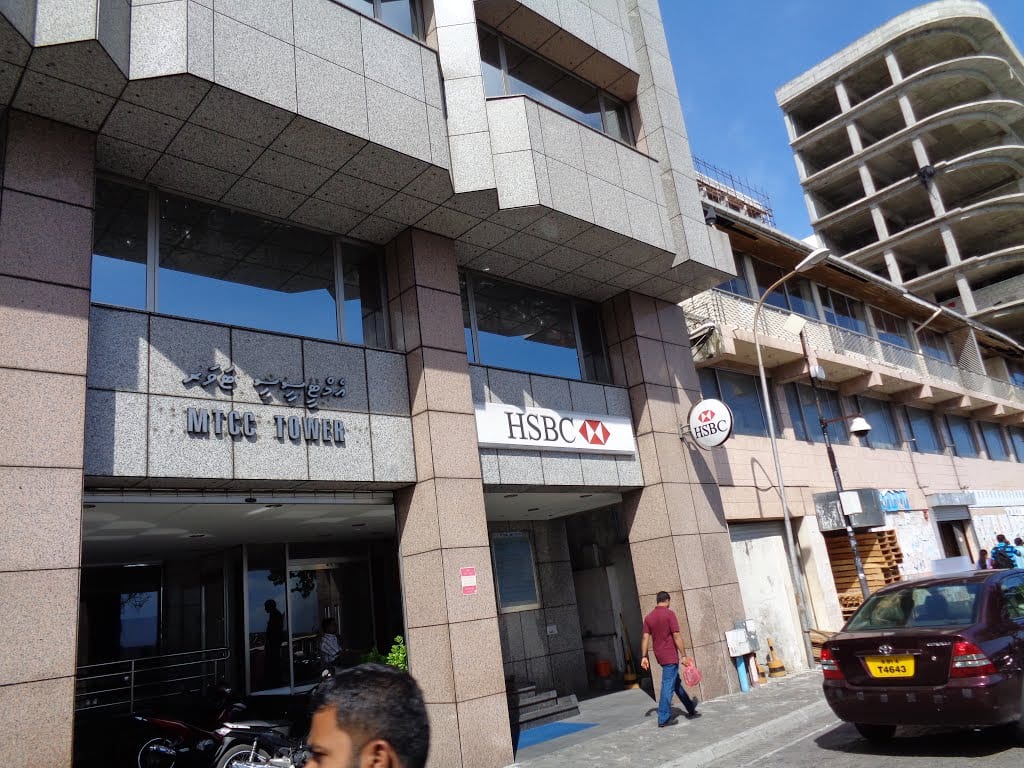
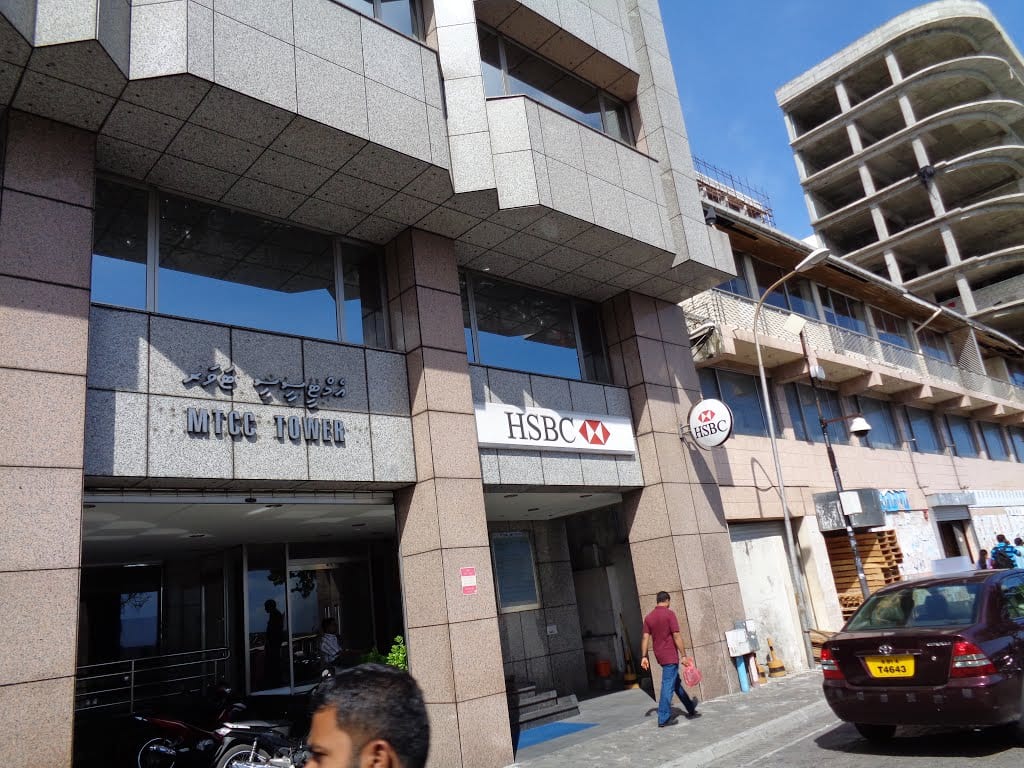
    Maldives central bank on Thursday lamented the decision by Banking giant Hong Kong and Shanghai Banking Corporation (HSBC) to cease retail banking in the Maldives from April.

    Speaking at the parliamentary finance committee governor Azeema Adam insisted that the Maldives Monetary Authority (MMA) does not wish HSBC to cease retail banking services in the Maldives but said the country still needed the bank’s other services.

    Male branch of HSBC had decided to cease retail banking operations from April 28 and is now informing its customers.

    An official from the Maldives Monetary Authority (MMA) also confirmed the plans by HSBC’s Male branch to shift to corporate-only operations. The official, however, did not give details.

    HSBC was not available for comment.

    HSBC operates in Maldives as a trading desk of the HSBC branch in Sri Lanka.

    The governor however, pointed out that HSBC’s decision was not limited to the Maldives.

    “Every bank has its own standards. Certain services that they offer. Instead of forcing something on them we look to find out how it could prosper as a business. We put in a lot of effort to bring HSBC to the Maldives,” Azeema explained.

    “Even when they [HSBC] first came they had sought to serve high net worth customers and individuals. We had given them the operating license knowing that all those years ago.”

    Azeema also revealed that several challenges had prompted the bank to adopt cost cutting measures.

    “It’s not something we also want. But if we look at the services provided by the banks in Maldives, HSBC is the third largest bank in the country. In terms of deposit size and loan size,” she continued.

    HSBC is the second highest banking profit tax payer in the Maldives, she added.

    An account in HSBC has to be opened with an initial deposit of MVR 50,000; the highest initial deposit required of any bank that operates in Maldives. The bank also pays the lowest deposit interest rate at 1 – 1.75 percent. Deposit interest rate on US Dollar accounts is 0.10 percent.

    As the bank charges a high amount in fees, the bank mainly hosts Maldivian businesses.

    In May 2014, complaints mounted over the bank’s decision to close down accounts held by many small and medium businesses citing administrative reasons. The businesses had complained that the move was made without prior notice.

    The decision by one of the biggest banks in the world comes a week after it was revealed that the Maldives had lost a major international banker.

    President Abdulla Yameen Abdul Gayoom told residents of Gaafu Dhaal atoll Gadhdhoo on February 15 that one of the major correspondent banks had dropped Maldives from its client list, while another one is considering a similar move. The reason, according to the president, is false claims made about Maldives, including threats posed by home-grown jihadists.

    “When we make such claims without considering the repercussions, it’s the people of Maldives that has to suffer,” he said, after inaugurating a project to establish a clean water system in the island.

    The president did not identify the bank that had dropped the Maldives. Haveeru, however, understands that US-based JPMorgan Chase had terminated its dealings with Maldivian banks in 2013.

    A correspondent bank is a financial institution that provides services on behalf of another, equal or unequal, financial institution. It can conduct business transactions, accept deposits and gather documents on behalf of the other financial institution.

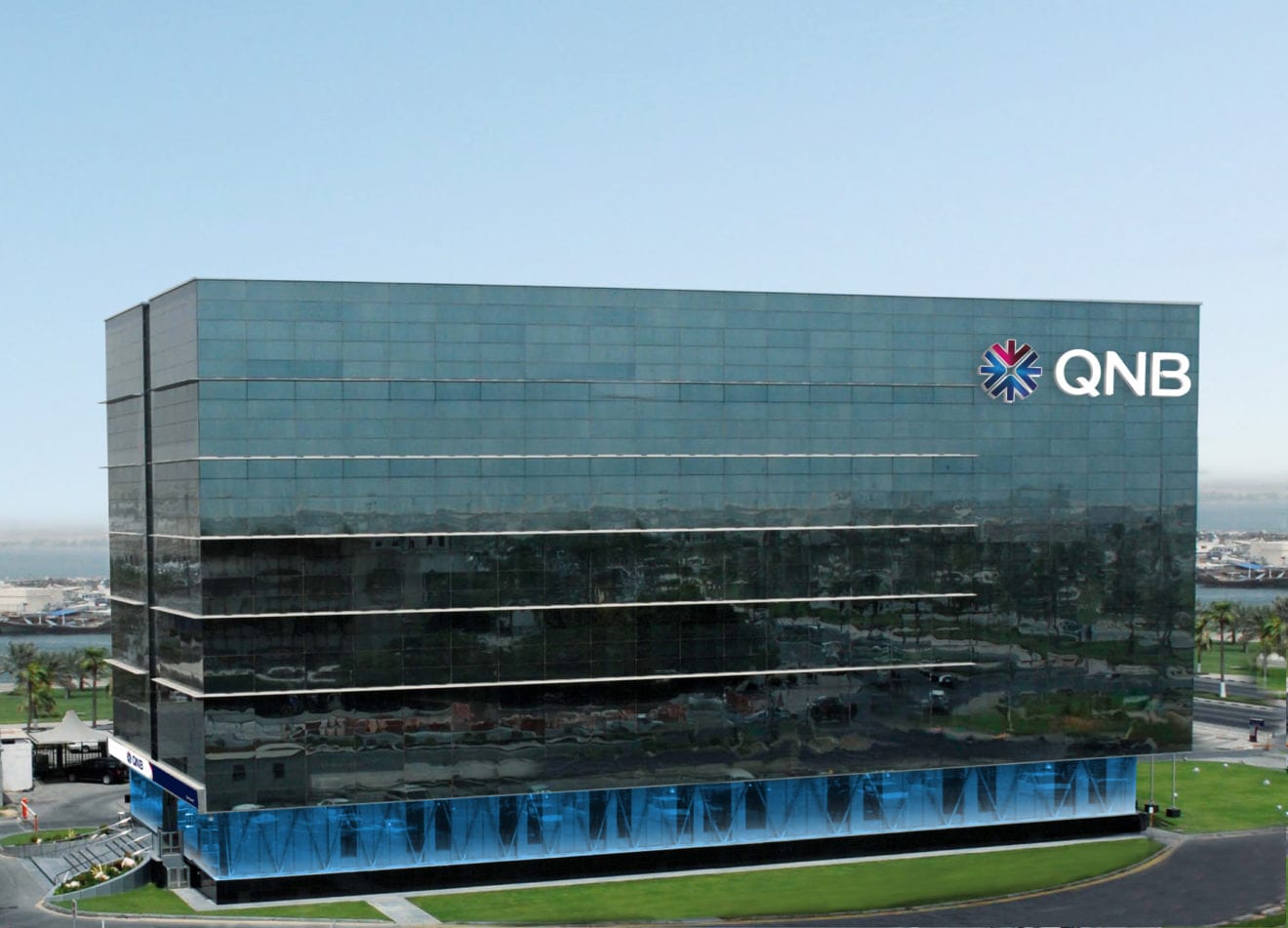
  • QNB chosen ‘Best Retail Bank in Qatar’

    QNB chosen ‘Best Retail Bank in Qatar’

    QNB has been recognised as the “Best Retail Bank in Qatar” by the Asian Banker Magazine.
    The prestigious award was received during The Asian Banker’s International Excellence in Retail Financial Services Awards 2016 ceremony held recently in Hong Kong.

    The awards ceremony was held in conjunction with The 15th Annual Excellence in Retail Financial Services Convention. It is considered an important financial event in the global retail banking agenda, where regional and global elite retail bankers can come together and enjoy unprecedented networking opportunities.

    According to The Asian Banker, QNB, a leading financial institution in the Middle East and Africa, received the “highly competitive award after successfully undergoing all the stringent valuation” for the international excellence in Retail Financial Services Programme.

    “The award is a true testament to the excellence of QNB’s retail services, given that the programme is considered the most prestigious, comprehensive and anticipated awards programme that recognises excellence amongst the world’s leading retail financial institutions as well as the undisputed performance benchmark of the best retail banks in an increasingly fierce marketplace,” QNB said.

    As a leading provider of strategic intelligence on the financial services industry, The Asian Banker facilitates awards programmes known for their rigor, impartiality and transparency.

    QNB is a previous recipient of these distinguished awards, gaining such recognitions as “Best Transaction Bank in the Middle East & Africa”, “Best Direct Bank”, “Best Cash Management Bank in Qatar”, and “Best Trade Finance Bank in Qatar”.

    QNB Group’s presence through its subsidiaries and associate companies extends to some 27 countries across three continents providing a comprehensive range of advanced products and services.
    The total number of employees is more than 15,200 operating through more than 635 locations, with an ATM network of 1,390 machines.

  • Asian banks fear impact of negative interest rates

    Asian banks fear impact of negative interest rates

    Central banks in emerging Asia that are struggling to revive growth and keep their financial systems stable are facing new risks as their counterparts in Europe and Japan plunge deeper into uncharted policy territory.

    The Bank of Japan in February joined several European central banks in turning policy on its head with a radical prescription of negative interest rates to revive flagging economies, prompting calls from emerging markets for some form of global coordination to avoid a race to the bottom for rates and currencies.

    Concerns about potentially destabilising spillovers into the rest of the world are likely to be a key talking point over the coming week as central banks in Indonesia, Thailand, the Philippines and Taiwan hold policy reviews.

    All four central banks have seen volatile swings in their currencies and stock markets over the past year as the world’s major central banks have taken markedly divergent policy paths.

    Yesterday, Bank Indonesia cut its benchmark interest rate by 25 basis points to 6.75 per cent, its third straight reduction of that size this year as it tries to lift sluggish economic growth.

    While many Asian economies have strengthened their defences since the 1997/98 regional financial crisis, they remain vulnerable to sudden capital outflows.

    Reserve Bank of India governor Raghuram Rajan, a critic of the massive stimulus rolled out in developed economies, has called on global central banks to adopt a system for assessing the wider impact of unconventional monetary policies.

    “It seems fair to say that the benefits seem to be diminishing after years of effort, and the costs increasing,” Mr Rajan said at a three-day International Monetary Fund (IMF) event in New Delhi.

    Low rates have created problems for savers around the world, and debt levels are continuing to rise to unsustainable levels from China and Japan to Europe – feeding fears of a fresh blow to the global economy from financial market dislocation.

    Mr Rajan’s concerns were echoed by his peers in emerging markets such as Indonesia and Malaysia, but few if any in the region expect the likes of the European Central Bank (ECB) to give priority to any nasty side effects for other economies when setting policy.

    “The potential for this (to manage economic crises) is becoming more and more limited as monetary policy rates have already trended closer to zero and quantitative easing is becoming more significant,” Bank Negara Malaysia governor Zeti Akhtar Aziz said.

    She said there is a need for greater policy coordination among countries to prevent over-reliance on monetary policy.

    Mr Juda Agung, Bank Indonesia’s executive director for monetary and economic policy, agreed. “A low-yield environment encourages excessive risk-taking behaviour. At the end, the credibility of the central bank is at stake,” he said.

    Mr Frederic Neumann, co-head of Asian economic research at HSBC, said that emerging economies are right to raise a voice of caution over unconventional policies.

    “Policymakers are backpedalling because it’s not entirely clear what the benefits of negative rates would be,” he said, referring to ECB president Mario Draghi’s suggestion last week that further rate cuts were probably off the table.

    Indeed, a recovery in the euro zone has flagged over the past year and deflation looms large, while Japan’s economy is teetering on the brink of its fourth recession in five years. The IMF has cut its global growth projections for 2016 and 2017, with a slowdown in China rippling across producers of oil, cars and a range of consumer products.

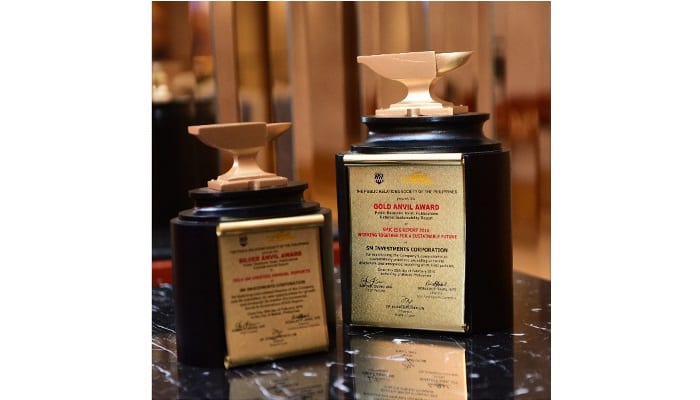
  • SM Investments Corporation wins two Anvil Awards for its Annual and ESG Reports

    SM Investments Corporation wins two Anvil Awards for its Annual and ESG Reports

    SM’s first 2014 ESG report with the theme, “Working Together for a Sustainable Future”, earned a Gold Anvil Award for manifesting the company’s commitment to sustainability practices and for providing accurate disclosure and integrated reporting of its ESG policies. It is a group-wide report highlighting good governance, social development and environmental consciousness of SM companies such as SM Retail, SM Prime Holdings, and BDO Unibank. SM recognizes that adhering to ESG global best practices is a journey as global guidelines and the needs of SM’s stakeholders continue to evolve.

    The 2014 Unified Annual Reports bagged a Silver Anvil Award for featuring inter-related themes of the company and its subsidiary on new opportunities for growth.

    The 2014 Unified Annual Reports consist of the Annual Report of SM with the theme, “Pursuing New Opportunities for Growth” and that of SM Prime Holdings, Inc. that carried the theme, “Building New Opportunities for Growth”.

    Dubbed as the “Oscars” of the public relations industry in the Philippines, the Anvil is presented to the outstanding public relations tools and programs that have met the high standards set for each category.  PR practitioners, industry communications specialists, academicians and business persons attended the event.

  • Indonesia to reopen banking transactions with Iran

    Indonesia to reopen banking transactions with Iran

    Indonesia said it is open to resume banking transactions with Iran following the lifting of economic sanctions against Iran.

    “Banking relations, an obstacle we are facing, will soon be resumed,” President Joko Widodo said after receiving Irans Foreign Minister Mohammad Javad Zarif on the sidelines of the 5th Organization of Islamic Cooperation Extraordinary Summit on Palestine and Al Quds here on Monday.

    The President said economic and investment cooperation between the two countries had been hindered because banking transactions were closed due to the imposition of economic sanctions against Iran.

    He said Indonesian banking authorities had agreed to follow up on the cooperation plan.

    “The chairman of the Financial Service Authority (OJK) said just now that the banking transactions would soon be resumed to develop and strengthen economic relations between the two countries,” he said.

    Bank Indonesia (the Central Bank) and OJK would discuss the mechanism for cooperation with Iranian banking officials.

    Due to the imposition of economic sanctions several years ago, Iranian banks were unable to conduct transactions with overseas banks.

    Since Irans nuclear program came to be known in 2002, the United Nations, the European Union, the US and several other countries had imposed economic sanctions on Iran.

    After these sanctions were revoked, the flow of trade to and from Iran is expected to become easier.

  • HSBC, Standard Chartered Caught Between ‘Brexit’ and China

    HSBC, Standard Chartered Caught Between ‘Brexit’ and China

    Two big U.K. banks’ shares tanked over the past couple of days, and unlike the British pound, they’re not weakening because of the so-called “Brexit” referendum — although that certainly doesn’t help.

    Instead, their fall may have a lot to do with the market and economic turmoil that has been taking place in China.

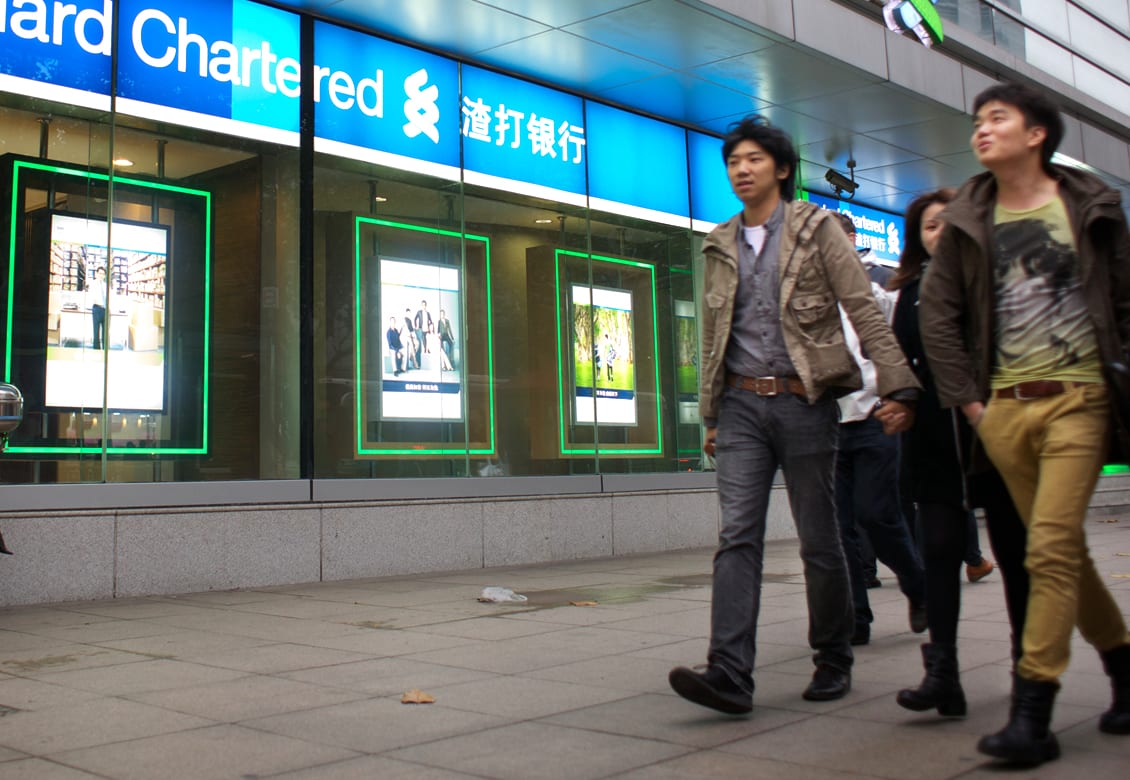
    The London-listed shares of emerging markets-focused bank Standard Chartered (SCBFF) fell by 10% at one point on Tuesday morning after it reported its first annual loss in more than 25 years.

    The bank reported a loss before tax of $1.5 billion last year, in sharp contrast to 2014’s profit of $4.2 billion.

    On Monday, HSBC’s (HSBC) shares fell in an otherwise rising market after the bank, which is the biggest in Europe and one of the biggest in the world by assets, reported a loss of $858 million before tax in the fourth quarter of last year, vs. a profit of $1.7 billion in the fourth quarter of 2014.

    HSBC, which is doing a lot of business in Asia and was even thinking of moving its headquarters there before deciding earlier this year to remain in London, eked out a 1% increase in pretax profit for full 2015 to $18.87 billion, but its adjusted loan impairment charges were up 17% at $3.7 billion over the period.

    The weak results of the two banks chime with rising investor worries about the exposure of U.K. banks to Asia, and particularly China, at a time when European banks have been making investors nervous again.

    Richard Barnes, senior director at Standard and Poor’s credit rating agency, received many questions about the risk of European banks’ exposure to Asia last week during an analyst call, and said the region was important particularly for HSBC and Standard Chartered.

    However, “we’ve seen European banks generally retrenching from a number of regions in the world including Asia … banks are trying to reduce exposure,” Barnes said, adding that, in China, “banks look again at their exposure to state-owned enterprises and are focusing on the ones that are likely to be supported by the government in a downturn.”

    HSBC has been deeply involved in the liberalization and deepening of China’s capital markets, having successfully negotiated a majority stake in a new, nationally licensed securities joint-venture in the mainland. HSBC Group Chairman Douglas Flint acknowledged in a statement on Monday that “China’s slower economic growth will undoubtedly contribute to a bumpier financial environment,” but he added that the country “is still expected to be the largest contributor to global growth as its economy transitions to higher added value manufacturing and services and becomes more consumer-driven.”

    He said this transition is driving the bank’s focus on the Pearl River Delta as a priority growth opportunity, as the area is a concentration of high-tech, research-focused and digital businesses.

    HSBC’s exposure to mainland China is around $143 billion, according to its annual report; of these, $135 billion are loans to other banks or non-bank financial institutions, sovereign and corporate loans, while $8 billion are loans to retail clients.

    China is perhaps even more important for Standard Chartered and has helped reduce the bank’s loss over the past year. Its Greater China business showed a pre-tax profit of $1.37 billion last year, compared to a loss of $1.33 billion in its European operations. In terms of exposure to China, Standard Chartered listed $77.67 billion in loans to customers in the country.

    The two banks would normally be sheltered from fears over their exposure to China by their presence in one of the strongest financial centers in the world, London. But with uncertainty in the U.K. rising because of the referendum on EU membership, expect a few particularly volatile months ahead for HSBC and Standard Chartered.

  • MasterCard says Australian retail sales ‘worrisome’

    MasterCard says Australian retail sales ‘worrisome’

    MasterCard’s Sarah Quinlan says a cooling property market is hitting retail sales. Australian retail sales will rise in 2016, but slowing wages growth and a cooling property market here and in China is dampening growth. That’s the prediction based on MasterCard’s first monthly analysis of millions of card payments made on card terminals.

    It began tracking retail sales in Australia last year based on all transactions at terminals and claims this gives more accurate data than that provided by the Bureau of Statistics, which relies on surveys.

    MasterCard’s first monthly survey of payments in Australia predicts retail spend will drop further. Photo: Jim Rice

    Sarah Quinlan, MasterCard’s New York-based senior vice-president of market insights, said retail sales year-on-year in Australia grew 3.2 per cent in value in January compared to a year earlier.

    Year-on-year sales growth in January 2015 was running at about 6 per cent.

    She said growth at the moment is due to inflation because of a depreciating Australian dollar and the trend down is being driven by real wages growth declining. This has been reinforced by house prices cooling because regulators have capped investor lending.

    A big slowdown in spending by Chinese tourists and investors is the other main factor which is hitting all countries.

    “You could have absolutely predicted the real estate outcome,” she said. “There’s two things I watch in spending; I watch consumer confidence and wage growth.”

    MasterCard's first monthly survey of payments in Australia predicts retail spend will drop further.

    Growth due to importing inflation

    In the US, she said, wage growth has been poor, but consumer confidence is higher than in Australia now.

    “They are absolutely confident they are going to hold their job now or they can find a job if they want to switch. It is the opposite of what’s happening here,” Ms Quinlan said.

    “While you still have a positive growth rate in your spending in Australia, it is of a worrisome nature because it is more due to importing inflation due to a 35 per cent drop in the Australian dollar [versus the US dollar] since 2012.”

    The pullback of Chinese money, she said, is due to a property bubble there and numerous senior officials being hit with corruption allegations.

    “We can tie exactly back to the day back in August 2013 that [politician] Bo Xilai was arrested for corruption and there’ve been 100,000 people arrested for corruption subsequently. So they are just not showing their wealth now,” she added.

    “And this debt bubble up there is huge right now, it makes ours pale by comparison. By our calculations around 75 per cent of the economy in China is owned by state-owned enterprises. So the state has been running this huge bubble.”

    As well as Australia, MasterCard produces a monthly report called SpendingPulse based on 160 million transactions per hour on its network for the US, Japan, Canada, Brazil, Hong Kong and Britain.

  • Game changer for Maybank Islamic

    Game changer for Maybank Islamic

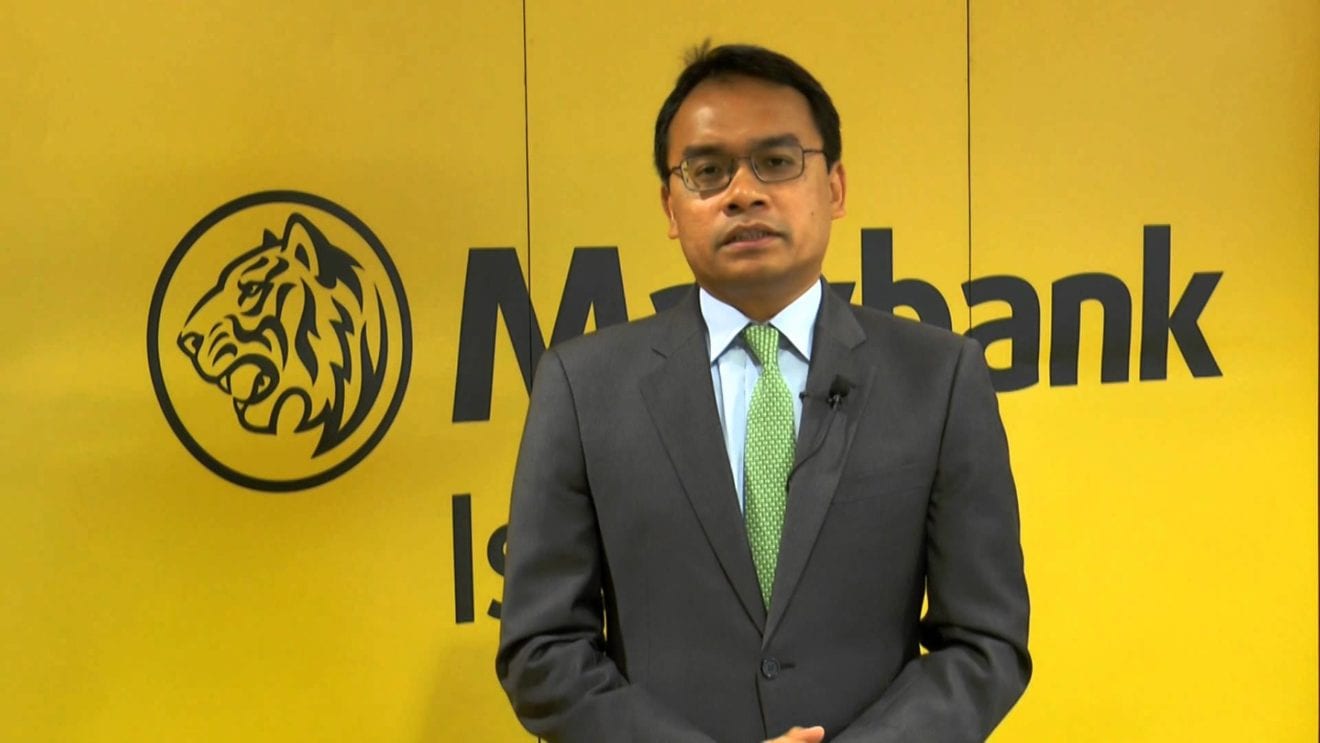
    Malaysia’s biggest Islamic lender, Maybank Islamic Bhd, says the investment account (IA) business is set to be a game changer for the group in its effort to boost earnings growth amid the subdued banking landscape.

    The Islamic lender, which has total assets worth close to RM147bil, will focus on its new mudarabah (profit-sharing) investment fund launched in July last year in view of the Islamic Financial Services Act (IFSA) 2013.

    Describing the IA business as “the evolution of the next phase of growth”, Maybank Islamic chief executive officer Datuk Muzaffar Hisham told StarBiz that demand for the IA business has shot up significantly, as the value of its mudarabah fund rose to RM18bil in the last six months of 2015.

    “Judging from this figure, we are confident that the fund will continue to grow, underpinned by strong demand from the Muslim and non-Muslim population as well as the benefits it offers.

    “We have a customer base of about 4.5 million, of which 50% comprises non-Muslims,” explained Muzaffar.

    The value proposition offered by the mudarabah IA is that MayBank Islamic could provide steady returns of between 4% and 5% per year to its customers.

    “We are confident that this fund will be a growth driver for us, moving forward,” he added.

    He pointed out that “the bank has put in place an effective and robust risk management framework for all of its products, including the new IA, which aims to provide capital preservation, financial security and steady returns through low risk and low to medium-risk investments.”

    Under the IFSA 2013, all banks are required to distinguish IA and Islamic deposit. This means that products with mudarabah (profit sharing) or wakalah (agency) features are considered IAs and are not-principal guaranteed and hence not protected by the Malaysia Deposit Insurance Corp.

    The classification aims to provide greater legal clarity on the types of syariah financial contracts. Customers will have a choice and will be able to differentiate between products that are principal guaranteed and those which are not that provide potentially higher risk returns like mudarabah.

    Besides garnering a pole position in terms of asset size, Maybank Islamic’s market share in the country is also the biggest in terms of financing at 33.6% and deposit at 27.9%.

    At group level, Maybank Islamic’s contribution to the Maybank Group is also significant, accounting for close to 30% in revenue and 48.7% in total loans and financing.

    All these figures were for the third quarter ended Sept 30, 2015 (Q3’15).

    Muzaffar said the bank is also looking to grow its Islamic banking business in the region, adding that the business in Singapore and Indonesia each accounted for about 5% of Maybank Islamic’s revenue.

    Although Indonesia has the highest Muslim population in the world, he noted that syariah banking was relatively still at its infancy stage unlike commercial banking.

    “The Islamic banking business in Indonesia accounts for close to 9% of the total banking business there.

    “In Malaysia, it is 25%. Hence, there is plenty of room for growth and we intend to grow and take advantage of this situation,” he added.

    According to Muzaffar, the challenge for the bank in venturing overseas will be the regulatory framework, in which Maybank Islamic has to operate in, as well as the uncertainties in the Basel III rules pertaining to its implementation in Islamic finance.

    On the corporate investment business, he said it would be dependent on the country’s economic growth, adding that the bank would continue to look at opportunities in the debt and initial public offering markets.

    As for its fourth-quarter results, he said Maybank Islamic hopes to maintain its performance in the preceding quarter, although much will be dictated by the external economic environment and market conditions.

    For Q3’15, the bank recorded a 13.2% year-on-year growth in pre-tax profit to RM1.23bil from RM1.09bil. The growth in earnings was on the back of strong financing growth, which grew by 23% to RM127bil.

    Total income for the period stood at RM2.98bil as opposed to RM2.46bil. Total capital ratio and return on equity for the period stood at 15.18% and 16.14%, respectively.

  • HSBC to stop retail banking in Maldives

    HSBC to stop retail banking in Maldives

    Banking giant Hong Kong and Shanghai Banking Corporation (HSBC) is to cease retail banking services in Maldives from April. We understand that the Male branch of HSBC had decided to cease retail banking operations from April 28 and is now informing its customers.

    An official from the Maldives Monetary Authority (MMA) also confirmed the plans by HSBC’s Male branch to shift to corporate-only operations. The official, however, did not give details.

    HSBC was not available for comment.

    HSBC operates in Maldives as a trading desk of the HSBC branch in Sri Lanka.

    An account in HSBC has to be opened with an initial deposit of MVR 50,000; the highest initial deposit required of any bank that operates in Maldives. The bank also pays the lowest deposit interest rate at 1 – 1.75 percent. Deposit interest rate on US Dollar accounts is 0.10 percent.

    As the bank charges a high amount in fees, the bank mainly hosts Maldivian businesses.

    In May 2014, complaints mounted over the bank’s decision to close down accounts held by many small and medium businesses citing administrative reasons. The businesses had complained that the move was made without prior notice.

    The decision by one of the biggest banks in the world comes a week after it was revealed that the Maldives had lost a major international banker.

    President Abdulla Yameen Abdul Gayoom told residents of Gaafu Dhaal atoll Gadhdhoo on February 15 that one of the major correspondent banks had dropped Maldives from its client list, while another one is considering a similar move. The reason, according to the president, is false claims made about Maldives, including threats posed by home-grown jihadists.

    “When we make such claims without considering the repercussions, it’s the people of Maldives that has to suffer,” he said, after inaugurating a project to establish a clean water system in the island.

    The president did not identify the bank that had dropped the Maldives. Haveeru, however, understands that US-based JPMorgan Chase had terminated its dealings with Maldivian banks in 2013.

    A correspondent bank is a financial institution that provides services on behalf of another, equal or unequal, financial institution. It can conduct business transactions, accept deposits and gather documents on behalf of the other financial institution.

  • Standard Chartered names James Dolphin as its CIO for retail banking

    Standard Chartered names James Dolphin as its CIO for retail banking

    Standard Chartered Bank has appointed James Dolphin as its Chief Information Officer (CIO) for retail banking. From March 2016, Dolphin will report directly to the bank’s Group CIO, Dr Michael Gorriz, and be based in Singapore.

    Prior to this role, Dolphin was Capital One’s CIO for retail and direct banking for since 2012. In that role, he led Capital One’s digital transformation strategy for the retail business by building strong engineering teams, and instilling a software development culture. He also redesigned and rewired Capital One’s retail channels to deliver market-leading digital experiences during his time there.

    Besides Capital One, Dolphin has held senior technology leadership roles at Bank of America too.

    “James brings with him a strong reputation as a technology leader and innovator. He is highly experienced in leading large teams and driving an agile culture that is innovative and customer-centric. I am confident that he will be a valuable addition to Standard Chartered,” said Dr Gorriz.

    1

  • Indonesian bank opens branch in Seoul

    Indonesian bank opens branch in Seoul

    An Indonesian bank, Bank Negara Indonesia (BNI) 46, opened a branch office in Seoul, South Korea, in Wise Tower, on Monday. It was inaugurated by the Ambassador of Indonesia to South Korea, John A Prasetio and Manager of BNI46 Seoul, Wan Andi Aryati. “The banking industry in South Korea is already shaken, but BNI46 still sees market potential,” Wan Andi said in a statement received by ANTARA here Monday. The BNI46 targets the domestic trade market according to her. “BNI Seoul wants to be a bridge to establish cooperation between Indonesia and South Korea by providing loans and other related banking services,” Wan Andi said.

    The BNI46 also provides services for South Korean businessmen who want to invest in Indonesia, she added.
    “We are also targeting the Indonesian labor market in South Korea, which now reaches 40 thousand people. We are committed to providing the best service for the Indonesias foreign exchange heroes,” she said.

    Meanwhile, Ambassador Prasetio stated that the world economy is still in a state of collapse. The stock market and the value of currency in some countries against the US dollar continues to decline.

    “This shows that the global sentiment has not been encouraging. Uniquely, the Indonesian economy is relatively solid in the middle of the uncertainty shocks,” the ambassador said.

    Cooperation in trade and investment between Indonesia and South Korea are still positive. The demand for Indonesian products and South Koreas investment in the country are progressive, according to him.

    “They respond positively on the economic policies of President Jokowi (Joko Widodo). I believe that the presence of BNI46 in Korea is very important to bridge cooperation between the two countries,” the ambassador said.

    Data from the Investment Coordinating Board (BKPM) shows that South Koreas direct investment in the country in the last five years is ranked fourth with a value of more than US$7 billion. Currently, there are 2,700 South Korean companies in Indonesia.

  • BRI records net profit of Rp25.2 trillion

    BRI records net profit of Rp25.2 trillion

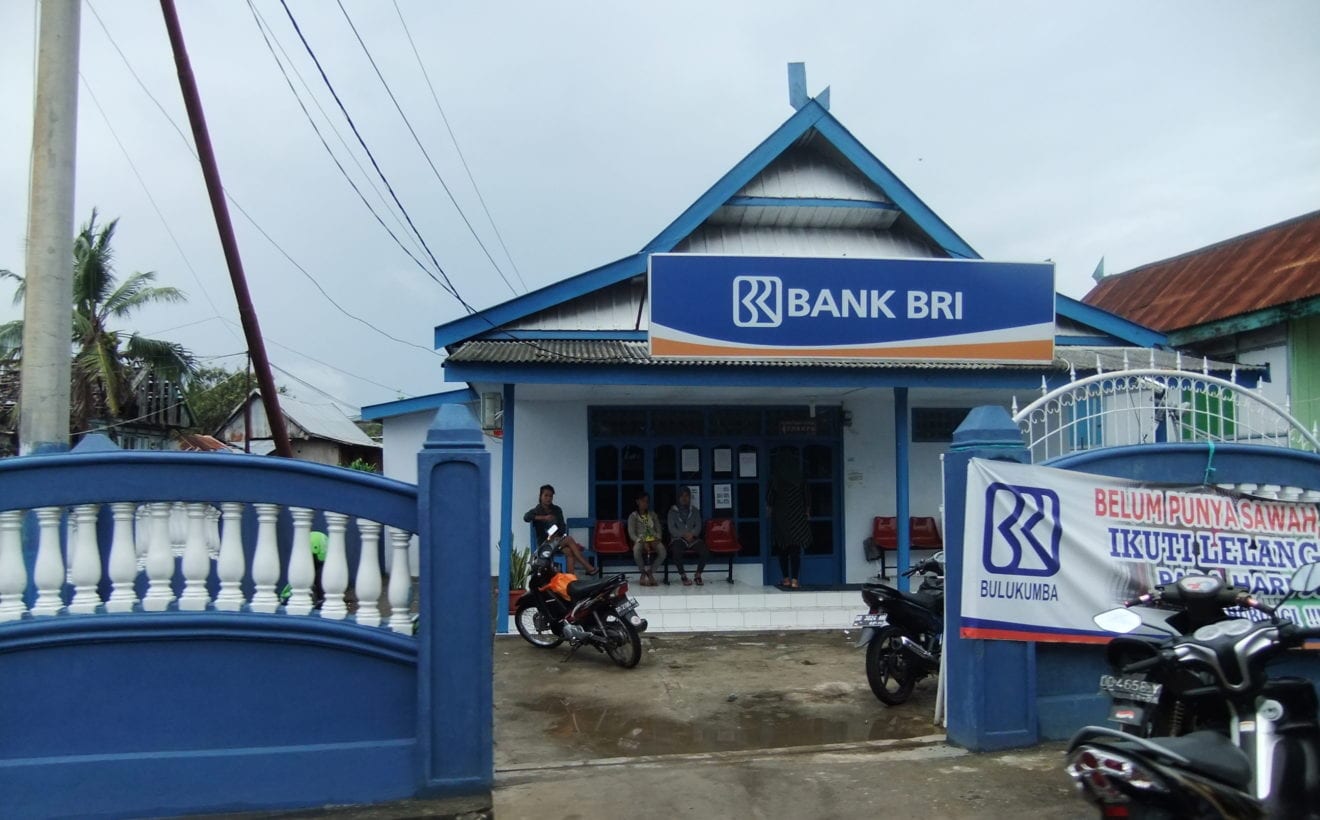
    PT Bank Rakyat Indonesia Tbk. made a net profit of Rp25.2 trillion in 2015, representing a 4.5 percent growth from Rp24.2 trillion it made in the previous year.

    “The growth is driven by an increase in the interest income that reached Rp82.2 trillion, reflecting a growth of 13.5 percent from the previous year,” the state-owned lenders president director, Asmawi Syam, said here on Wednesday.

    The banks non-interest income reached Rp14.2 trillion, up 21.4 percent from the previous years figure, taking the total income of the lender to Rp96.4 trillion, 14.6 percent above the previous figure.

    Outstanding loans distributed by Bank BRI till 2015-end reached Rp558.4 trillion, reflecting a growth of 13.9 percent year-on-year compared to the same period of the previous year. These loans were given across all business sectors.

    Credits to the micro-sector, which is the core business area of the bank, grew by 16.8 percent year-on-year to reach Rp178.9 trillion with the number of customers increasing to 7.8 million from 7.3 million, year-on-year.

    “Credit growth in the micro-sector was driven by the re-launch of a smallholder credit program (KUR) by the government in the middle of August 2015,” he said.

    Since its launch on August 18 2015, Bank BRI has extended Rp16.2 trillion in credits to more than 920,000 businessmen across the country through the KUR program.

    Credits to non-state-owned companies in the corporate segment grew 31.5 percent year-on-year to Rp75.1 trillion while credit to the consumer segment grew 9.8 percent to Rp88.5 trillion.

    Credits to state-owned companies were up 9.6 percent to Rp81.2 trillion and to small commercial and medium businesses rose 7.5 percent to Rp134.7 trillion.

  • Moody’s continues to review for downgrade ratings of Standard Chartered Bank Korea

    Moody’s continues to review for downgrade ratings of Standard Chartered Bank Korea

    Moody’s expects to conclude the review in March 2016, after incorporating SCB’s efforts to turn around SCBK’s performance, as well as the detailed results of SCBK’s parent, Standard Chartered Bank’s (SCB, FC deposits Aa2 rating under review for downgrade, BCA a2 rating under review for downgrade) performance for 2015.

    These results will be available in late February.

    Moody’s had originally placed the long-term ratings of SCBK on review on 9 November 2015. Please refer to “Moody’s reviews for downgrade Standard Chartered Bank Korea’s ratings” published on 9 November 2015.

    Moody’s notes that SCB is restructuring its poorly performing Korean retail and commercial banking businesses, introducing some uncertainty as to the future of SCBK’s operations.

    The ratings review of SCBK will consider whether: (1) these initiatives have the potential to change SCBK’s stand-alone credit profile, as expressed by its BCA; and/or (2) to change the strategic importance of SCBK to SCB and therefore potentially to affect the strength of support from SCB.

    The following ratings are on review for downgrade:

    – Local- and foreign-currency long-term deposit ratings of A1

    – Foreign currency senior unsecured MTN rating of (P)A1

    – Local- and foreign-currency short-term deposit ratings of P-1

    – Foreign currency commercial paper and other short-term ratings of P-1/(P)P-1

    – Long-term and short-term counterparty risk assessment of A1(cr) and P-1(cr)

    – BCA of baa2, and adjusted BCA of a3

    The principal methodology used in these ratings/analysis was Banks published in January 2016. Please see the Ratings Methodologies page on www.moodys.com for a copy of this methodology.

    SCBK is headquartered in Seoul, with total assets of KRW61.7 trillion or USD54 billion as of June 2015.