Tag: Finance

  • Dollar slips on black market

    Dollar slips on black market

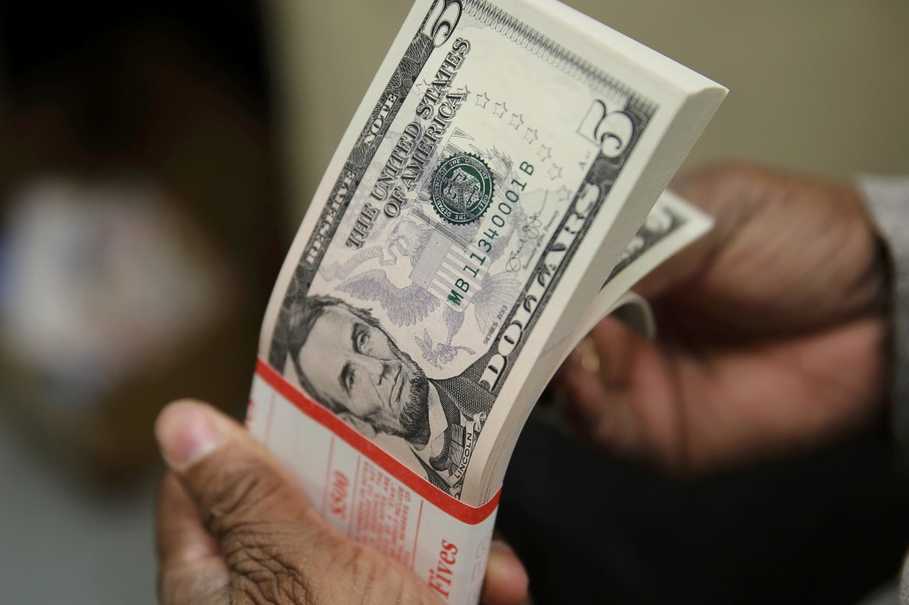
    The U.S. dollar declined slightly against the Vietnamese dong on the black market Saturday morning.

    Unofficial exchange points sold the greenback at VND25,980, down 0.15% from Friday.

    Vietcombank maintained its rate at VND25,473.

    The State Bank of Vietnam’s reference rate was stable at VND24,245.

    The dollar has gained over the dong by 4.31% since the beginning of the year.

    Globally the U.S. dollar slipped on Friday after data showed inflation in the world’s largest economy subsided last month, cementing expectations the Federal Reserve will start cutting interest rates this year, Reuters reported.

    The dollar initially fell against the yen, the currency pair most sensitive to U.S. economic data because of a high, positive correlation to Treasury yields. The greenback, however, edged higher to trade flat on the day, with investors still focused on the wide interest rate differential between the United States and Japan.

    The dollar was last up slightly against the Japanese unit at 160.815 yen, after earlier hitting a 38-year high of 161.27 yen. Traders remained on high alert for intervention from Japanese authorities to boost its currency.

  • China asks Visa, Mastercard to cut transaction fees

    China asks Visa, Mastercard to cut transaction fees

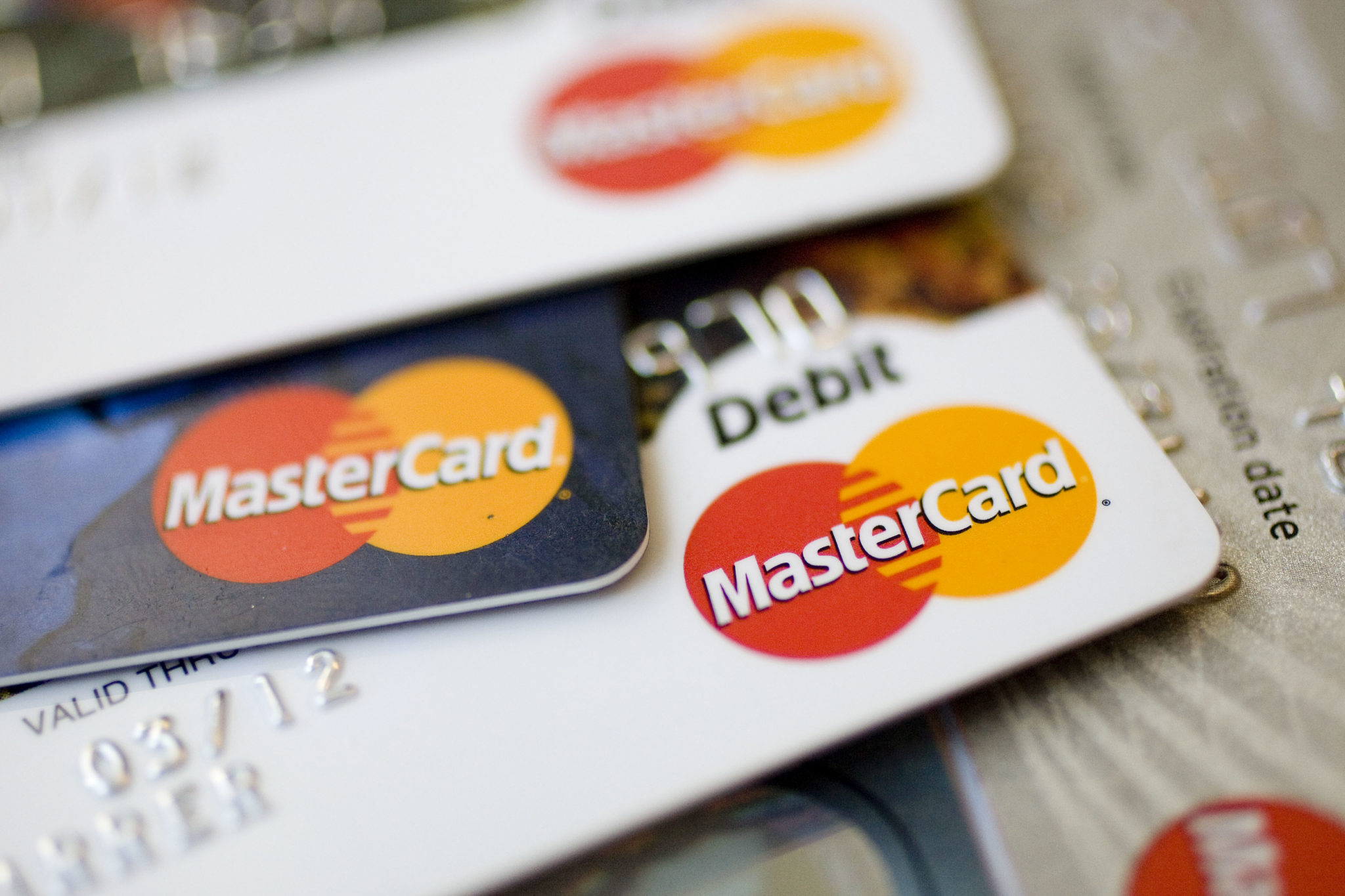
    China is pushing for Visa and Mastercard to lower their bank card transaction fees in the country, as part of an effort to facilitate payments for foreign visitors, Bloomberg News reported, citing a person familiar with the matter.

    According to a report published on Friday, the Payment & Clearing Association of China is negotiating with global card issuers, including Visa and Mastercard, to lower fees charged on foreign card transactions.

    The association proposed trimming the fee to 1.5 percent from 2-3 percent, the report added.

    Mastercard told Bloomberg that it had received the proposal from the industry association and said it would work with partners to lower costs for local merchants accepting foreign bank cards.

    Visa and Mastercard did not immediately reply to Reuters’ requests for comment.

    According to a statement posted on its website on Tuesday, the industry group issued a proposal earlier this week to global card issuers on the fee cut without disclosing details of the price cut.

  • Citizens’ deposits at banks reach new record high

    Citizens’ deposits at banks reach new record high

    Citizens’ deposits reached a new historic peak of VND6.676 quadrillion (US$262.2 billion) as of the end of March, according to the State Bank of Vietnam.

    This marked a 2.2% growth from the end of 2023.

    Meanwhile, corporate deposits fell 3.1% to VND6.6 quadrillion in the same period .

    After a period of declining interest rates that began last March, many banks have started to raise deposit interest rates since May.

    Analysts expect a rise in deposit interest rates by 0.5 to 1 percentage point, reaching around 7% per year in the year’s second half.

    However, the rates are unlikely to return to the high levels seen at the end of 2022, following a bank-run incident that resulted in a private lender being placed under central bank control.

    Credit growth has only reached 2.4% this year, failing to meet the targets of 5% for the first half and 15% for the entire year, which analysts attribute to a sluggish real estate market.

    The local real estate sector has experienced a significant downturn, leading to major developers facing challenges in repaying debt, including bond interest and principal, due to liquidity constraints and decreasing property values.

    The situation escalated at the end of 2022, following the arrest of Truong My Lan, Chairwoman of Van Thinh Phat group, who is on death row for multiple financial frauds.

    The arrest was part of Vietnam’s anti-corruption campaign, which intensified in late 2021.

  • Banks overwhelmed, unable to meet gold demand

    Banks overwhelmed, unable to meet gold demand

    Gold buyers rushed to banks early Tuesday morning to get queue tokens but many had to leave empty-handed since there were too many people.

    Nam arrived at a branch of Vietcombank in Hanoi at 7 a.m. but minutes after opening the bank said it could no longer receive more customers. “The bank took in only 40 customers and told the rest to come back tomorrow,” he said.

    On Monday he received token number 122 but only 20 people were able to buy. A staff member took his contact details and asked him to come back to buy, but when he did another told him that all scheduled purchases had been canceled and he had to queue again. Another Hanoi resident, Hoa, visited a bank for the second time on the morning but could not buy. “There was no priority for those who had queued the previous day”, she said. “We all had to queue again.”

    Since Monday the four state-owned lenders Agribank, BIDV, Vietcombank, and VietinBank saw a surge in number of customers after the State Bank of Vietnam began to distribute gold through them.

    A deputy CEO of one of the four banks, who asked to be anonymous, said that the number of buyers has exceeded the anticipation of the banks. He said that every transaction takes a long time because customers have to fill in several forms to prevent money laundering. As the banks filled up, some left to buy at stores of Saigon Jewelry Company (SJC), the state-owned gold distributor.

    But by 10.30 a.m. all SJC stores in Hanoi had run out of bullion. The situation was no better in HCMC. At an SJC store in District 3, the parking lot was full by 9.30 a.m. as customers filled up the facility. After 45 minutes of distributing tokens, the store had 300 people waiting in the queue.

    The store limited each person to one tael of 37.5 grams or 1.2 ounces. The state-owned lenders sell gold at the same prices as SJC. Saigon Jewelry Company gold bar prices dropped 1.25% to VND78.98 million ($3,107.00) per tael Tuesday morning, a three-month low.

  • UBS Gets Off Lightly With Money Laundering Fine

    UBS Gets Off Lightly With Money Laundering Fine

    The Federal Department of Finance (EFD) fined UBS for failing to report suspected money laundering. The long-standing cases all revolve around the former president of Yemen.

    The number of unreported cases to the Financial Department is alarmingly high. Internally, UBS recorded 5,438 warning notices in connection with its relationships with former Yemeni President Ali Abdullah Saleh and his family. However, the bank did not forward these warnings to the Money Laundering Reporting Office Switzerland (MROS).

    Saleh ruled Yemen for over three decades and faced international criticism for corruption. At UBS, he was classified as a PEP, or politically exposed person. As a rule, relationships with such clients should be clarified extra carefully.The relationship dates back to 2004. Not only Saleh and his two wives but also a total of 25 people related to Saleh had customer relationships with UBS.

    The EFD’s penalty notice from April 4 mentions a case from 2009. At that time, Saleh’s son personally submitted a check from the Sultan of Oman for 10 million dollars in Zurich. An internal bank note is cited: It is generally known that wealthy rulers in the Arab world support their poorer colleagues with such gifts. According to the EFD, this was a flimsy excuse, and the bank should have raised the alarm.

    In 2011, amid the turmoil of the Arab Spring, the bank reviewed the business relationship, which resulted in the aforementioned 5,438 warning notices. Subsequently, almost all of the Saleh family’s accounts were closed, but no MROS report was made.

    UBS also failed in the handling, as this allowed very large sums of money, presumably associated with corrupt practices by Ali Abdullah Saleh, to be withdrawn from state control.

    The responsible individuals could not be identified due to only partially or incompletely submitted documents. As a result, the penalty was automatically lower. The department also noted that UBS has since improved its risk management.

    Saleh lost power in Yemen in 2012 and was killed by Houthi fighters in 2017.

  • Dollar slips against dong

    Dollar slips against dong

    The U.S. dollar fell against the Vietnamese dong Tuesday morning.

    Vietcombank sold the dollar at VND25,468, down 0.05% from Monday.

    The State Bank of Vietnam kept its reference rate stable at VND24,245.

    The greenback went up 0.27% to VND25,840 on the black market.

    It has increased against the dong by 4.29% since the beginning of the year.

    The dollar waned on Tuesday following a slight pick up in risk appetite, but it held tight ranges against its peers ahead of key inflation data from major economies this week that markets are looking to for guidance on the global interest rate outlook.

    Currency moves were largely subdued in early Asia hours after a quiet overnight session due to holidays in Britain and the United States, but the overall mood was positive with world shares firming.

    The euro was a touch firmer at $1.0860 despite some dovish comments from European Central Bank (ECB) policymakers on Monday and data showing German business morale stagnated in May.

  • UBS Tops Out New HQ in Hong Kong

    UBS Tops Out New HQ in Hong Kong

    Switzerland’s UBS is doubling down on Hong Kong. Today, it topped out its new office based in West Kowloon.

    UBS topped out its new Hong Kong office building on Wednesday. The ceremony, featured UBS group CEO Sergio Ermotti, Asia global wealth management (GWM) chair Amy Lo, GWM president Iqbal Khan and leading executives from Hong Kong property giant Sun Hung Kai.

    The office is based in West Kowloon, which is located across the Victoria Harbor from Hong Kong’s traditional central business district. It is located next to major commercial building ICC, which houses banking rivals like Morgan Stanley and Deutsche Bank, as well as the high-speed rail that can quickly access mainland China, including southern Shenzhen in around 14 minutes.

    Currently, UBS has five different offices in Hong Kong and under the new arrangement, it will consolidate the work spaces and occupy 14 floors in the West Kowloon commercial building. The bank will start moving into the new office in early 2026.

    «Hong Kong is a strategic market for UBS in Asia,» Ermotti said in a statement. Our new office building marks an exciting new chapter for UBS as it will bring all of our Hong Kong operations under one roof, enhancing collaboration across all business divisions and facilitating the continued growth of our franchise.

  • Vietnam ranks third in crypto gains

    Vietnam ranks third in crypto gains

    Vietnam ranked third globally in cryptocurrency gains last year with US$1.18 billion in profits, according to a report from U.S. crypto data provider Chainalysis.

    It was behind the U.S. ($9.36 billion) and the U.K. ($1.39 billion). China and Indonesia were in fourth and fifth places with $1.15 billion and $1.06 billion.

    Vietnam’s crypto gains were doubled that of Spain and the Philippines and triple that of Thailand.

    Eight countries recorded more than $1 billion.

    Chainalysis said the positive trends of 2023 have carried over into 2024, with notable crypto assets like Bitcoin achieving all-time highs in the wake of Bitcoin exchange-traded fund approvals and increased institutional adoption.

    “If these trends continue, we may see gains more in line with those we saw in 2021,” it said, adding that as of March 13 Bitcoin was up 65.4% and Ether was up 70.2%.

    The large crypto gains in Vietnam, however, might be enjoyed only by the minority.

    A report by Coin98 Insights earlier this year showed that 64% recorded no profit last year, with 44% of them making losses.

  • UBS Asia Job Cuts Show What Switzerland Faces

    UBS Asia Job Cuts Show What Switzerland Faces

    It is a year since the government and regulators forced UBS to rescue Credit Suisse. The recent news of job cuts in Asia makes it very clear what could be just around the corner for the domestic financial hubs.

    UBS is cutting about 70 jobs in Asia, according to various media reports on Thursday. Most of the redundancies are taking place in Singapore and Hong Kong.

    The step also ostensibly affects the bank’s core Global Wealth Management (GWM) business even though the number of employees has been growing steadily in that region since 2022. But as UBS reported in February, the Asia Pacific made significantly less money in the fourth quarter of last year. Pre-tax profit fell by 46 percent to $97 million compared to the same period a year earlier. At the same time, the cost-income ratio rose to 87.7 percent.

    That is in itself remarkable. Besides the US, Asia is a strategic growth market for the bank. Both regions are integral to its future financial success and key to its investment growth story with UBS making large investments in both markets in recent years. The results are there for everyone to see, particularly after integrating Credit Suisse’s business. There is no other bank in Asia that has such a large wealth management business with such high levels of invested assets.

    At the end of 2022, before the forced takeover of Credit Suisse, about 16,500 individuals worked at UBS in Asia Pacific. At the time, that was 22 percent of the group’s entire workforce.

    The current job cuts are likely due to plain economics. But they also have to be seen in the context of a wider restructuring. This has now started just about a year after the government and regulators forced UBS to take over its former rival and Switzerland’s second-largest bank. That is also exactly what the bank announced in February.

    Singapore, Hong Kong, and Luxembourg come first, followed by Switzerland afterward, an order of events that is expected to hold up over the next few years.

    We got a taste of that this year. In April, the bank will start consolidating its branch network with that of Credit Suisse’s domestic business. About 85 branches belonging to both will be impacted by the consolidation. What is currently happening in Singapore and Hong Kong shows what can be expected in Switzerland very soon.

    Moreover, when following the UBS schedule step-by-step, it is clear that the domestic market is to see very significant disruption.

    The integration of the franchises of the country’s two largest banks will change the financial hub sustainably and substantively. And it will be on a scale that we can’t yet really imagine. With that, the fact that UBS’s management is not wasting any time should be welcomed. The sooner the process is completed, the sooner the bank can concentrate on its actual job. Focusing on doing business with clients.

    As part of that, it will be this exact core business experiencing the current round of cuts that will determine the success of its efforts to become a wealth management powerhouse – both in Asia and Switzerland.

  • Gold heads up after plunge

    Gold heads up after plunge

    Saigon Jewelry Company gold bar price rose 0.75% to VND81.1 million ($3,283.73) per tael Thursday.

    Gold bar plunged 2.42% Wednesday after reaching a new historic peak of VND82.5 million.

    The gold ring price increased VND0.88% to VND69 million per tael on Thursday. A tael equals 37.5 grams or 1.2 ounces.

    Globally gold prices traded flat in early Asian trade hours on Thursday, within close range of record-high levels on a broadly weaker dollar, as traders awaited more economic data that could steer hopes for a mid-year rate cut by the U.S. Federal Reserve.

    Spot gold was flat at $2,173.89 per ounce. U.S. gold futures dipped 0.1% to $2,178.20.

    The Fed is expected to hold rates steady at its policy meeting next week, but the focus will be on the ‘dot plot’ projections. The U.S. central bank in its December meeting pencilled three-quarter-point rate cuts for 2024.

  • Google Wallet will now automatically add your tickets and passes from Gmail

    Google Wallet will now automatically add your tickets and passes from Gmail

    Google Wallet is receiving a set of small quality of life updates designed to enhance the user experience and make it your go-to digital home for essential passes, tickets, and more. The updates include tighter integration with Gmail to eliminate the extra step of manually adding passes and movie tickets to your wallet.

    If you’ve ever purchased a movie ticket or booked a flight online, you’ve likely encountered the inconvenience of having to scramble through your Gmail in order to find the confirmation. Only to find out that the cellular signal is very weak, and your email won’t load. This is a perfect use case for Google Wallet, which Google just announced now directly integrates with Gmail, automatically surfacing movie tickets and boarding passes from participating airlines and movie chains.

    Google states that this feature is currently available with select global chains, but that the company is working hard to expand its reach. This will likely save you some time and fuss, as you can now have your tickets and passes readily available in one spot with you need them.

    Managing your collection of passes within Google Wallet just got more convenient. You now have the ability to manually archive most passes. Archiving a pass places it in the “Archived Passes” section of the app.

    If you ever need to unarchive any of these previous passes, you can do so as well by tapping on the pass and selecting “Unarchive Pass.” Furthermore, the ability to archive passes extends to your Wear OS devices for more efficient organization, no matter where you are.

    Google Wallet is further blurring the lines between your digital life and the real world. For US-based users, there’s a new beta feature out: loyalty cards saved in Wallet are now cleverly linked with Google Search and Shopping. This means that your membership benefits can be highlighted as you browse for products online, potentially unlocking special offers and discounts. Businesses interested in taking part in this beta test will need to reach out to Google support in order to enroll.

    Lastly, Google Wallet is becoming more accessible around the globe. Back in November, Google Wallet became available to residents of the Dominican Republic, Monaco, and Peru. This means that Google Wallet is now available in 74 countries worldwide for both Android and Wear OS.

  • Digital Banking Specialist Adnovum Secures AI Expertise

    Digital Banking Specialist Adnovum Secures AI Expertise

    IT consulting firm Adnovum has joined forces with a Swiss artificial intelligence specialist. The partners want to use the technology of the future to transform the financial sector.

    Adnovum and Squirro have embarked upon a strategic partnership, as we learned in a press release on Wednesday. The aim of this cooperation? To use Squirro’s artificial intelligence (AI), natural language processing, and retrieval augmented generation technologies to enhance the digital solutions offered by Adnovum.

    Together, the two companies want to launch new offers which will transform the banking and insurance sectors, as they promoted in the press release.

    The cooperation will focus on the Swiss and Singapore markets. There, the new AI solutions are intended to go beyond the conventional digital transformation and complement human intelligence. Processes in service management and client engagement are particular focus points.

    In recent years, Adnovum has made a name for itself in digitizing the Swiss financial center, and also has a presence in Asia. Squirro was founded in 2012 and is a fast-growing company with teams in Switzerland, the United States, the U.K., and Singapore. Clients of the AI specialist include the European Central Bank and the Bank of England.

  • Apple Pay is down for some users forcing them to pay for purchases like a Luddite

    Apple Pay is down for some users forcing them to pay for purchases like a Luddite

    Some social media users are complaining that they are unable to use contactless payment system Apple Pay to ring up a transaction using a Chase credit card. On Apple’s System Status page, it notes that Apple Pay is undergoing some maintenance at the moment and adds that some users in Maryland may have issues with the feature. However, the problem appears to be preventing Apple Pay users from hearing that satisfying “ding” indicating that their credit card has been accepted in other states as well.

    Nilay Patel, editor-in-chief of The Verge stating that his Chase card was declined when using Apple Pay. Patel noted that when he called Chase, the bank told him that the problem is an “unexpected Apple Pay upgrade” which matches the reason for the issue posted by Apple on the System Status page. Other Thread users weighed in complaining about the same problem including one poor (and possibly hungry) iPhone user who wrote, “Yup, Chase Apple Pay declined getting my baguette and vegan cheese.”

    Considering that the weekend is usually prime time for shopping, we wonder whether Apple should have performed the maintenance on Apple Pay during a time when shoppers are less likely to be tapping their iPhones on POS (point of sale, not what you thought the abbreviation stood for) machines. For example, at 1 am PST (4 am EST), most Americans are sleeping and charging up their iPhone units.

    If this is a problem that happens to you today whether you are shopping in Maryland or Massachusetts, or anywhere else in the U.S., there is the perfect workaround but only if you are up to doing this. Once your Apple Pay payment is declined, follow these directions precisely:

    • Put your iPhone in your pocket.
    • Reach into your other pocket and remove your wallet.
    • Open the wallet and remove the Chase card that is connected to Apple Pay.
    • Run the card through the POS terminal like you might have done years ago before Apple Pay was launched.

    If this happened to you today, we’re sure you were sweating and trying hard to remember how you paid for purchases made before October 20th, 2014 when Apple Pay launched. But those with a memory of a bygone era have been able to pay for their purchases today by simply using their Chase credit card without bringing Apple Pay into the picture. Or, you could pay for your purchases with cash.

  • Banks see massive layoffs

    Banks see massive layoffs

    Faced with difficulties that are expected to linger, large western banks are slashing costs by downsizing their payrolls and increasing the use of artificial intelligence.

    Deutsche Bank has said it is laying off 3,500 employees, or 4% of its workforce, to reduce costs by 2.5 billion euros (US$2.7 billion) a year by 2025.

    One of the ways the German lender has chosen to cut costs is to promote “simplified workflows and automation,” and so most of the jobs will be shed in the back office. Its pre-tax net profit fell by 14% last year to 4.9 billion euros ($5.3 billion).

    Deutsche Bank is the latest of a number of lenders to announce layoffs in recent months. UBS is cutting 3,000 jobs in Switzerland, where it is headquartered.

    Citibank, the third largest American bank, last month said it would cut 20,000 jobs in the next two years, equivalent to 10% of its global workforce, to save $2.5 billion in the long term.

    January was also when the U.S. financial industry laid off the most workers, 23,238, since Sept. 2018, according to a report by recruitment company Challenger, Gray & Christmas.

    The layoff announcements continue in early 2024 amid massive downsizing by the global financial industry.

    Major banks around the world axed more than 60,000 jobs in 2023, among the highest in a year since the financial crisis.

    Citibank started sacking workers in November 2023.

    In the U.K., a number of lenders, including Barclays, Lloyds and Metro Bank, announced staff reduction at around the same time.

    Some banks cited increased automation and the use of artificial intelligence as reasons to reduce their payroll.
    Lloyds is eliminating certain roles and only hiring data and technology personnel.

    The downsizing is also intended to prepare for a more difficult business environment as rising interest rates impact the economy.

    Deutsche Bank said it had increased provisions for potential bad debts by 300 million euros to 1.5 billion euros ($1.6 billion) in 2023, which reflected “the continued challenging impact of macro-economic and interest rate conditions.

    Investment banks, which had to slash wage costs last year, are expected to continue downsizing.

  • Dollar steps up over dong

    Dollar steps up over dong

    The U.S. dollar rose against the Vietnamese dong Wednesday morning.

    Vietcombank sold the dollar at VND24,570, up 0.16% from Tuesday.

    It fell 0.40% to VND24,850 on the black market.

    The greenback has increased by 0.61% against the dong since the beginning of the year.

    Globally the dollar remained under pressure on Wednesday after retreating from a nearly three-month high against the euro in the previous session with a decline in U.S. bond yields adding to the drag.

    Analysts pointed to technical factors for the dollar’s pullback, following a two-day rally of as much as 1.4% against the euro after unexpectedly strong U.S. jobs data and more hawkish rhetoric from Federal Reserve Chair Jerome Powell scuppered bets for an early interest rate cut.

    The U.S. dollar index – which measures the currency against six major peers, including the euro – was flat at 104.14 after Tuesday’s 0.29% slide. On Monday, it had reached its highest since Nov. 14 at 104.60.