Tag: Finance

  • Open Finance Startup to Expand Across Southeast Asia

    Open Finance Startup to Expand Across Southeast Asia

    Singapore-based Finantier has closed an oversubscribed seed financing round at more than 20 times its pre-seed valuation.

    Finantier plans to strengthen its presence in Indonesia and Southeast Asia after raising seven figures in seed funding in a round led by Global Founders Capital and East Ventures, it announced on Wednesday.

    Founded in 2020, the fintech provides an application programming interface (API) platform for financial institutions to access and analyze consumer financial data. The new funds will also go towards scaling and enhancing its product offerings and double the size of its team.

    Southeast Asia’s large unbanked population presents challenges for financial institutions who lack access to consumer financial data, handicapping them in providing financial services such as payments, lending, and insurance, among others, Finantier explained.

    To address this, the company works with over 150 companies to aggregate data from alternative sources to give its clients access to a more comprehensive range of datasets and enable the unbanked population to benefit from their digital data footprint.

    Finantier’s clients and partnerships have seen over 50 percent monthly growth in 2021, while its team has grown fivefold to 50 employees, the company said.

    Open finance is an extension of open banking data-sharing principles to enable third-party providers to access customers’ data across a broader range of financial sectors and products, including savings and investments.

    With open finance facilitating the open exchange of consumer data, companies can leverage it to reach more customers while creating more personalized financial services, Diego Rojas, Finantier co-founder and CEO, said.

    Rojas previously worked closely with the co-founders of NYSE-listed LendingClub and was the technical lead at the founding team of GIC-backed Chinese online lending marketplace Dianrong.

    COO Edwin Kusuma was previously from Google and was also formerly CEO of P2P lending firm 360Kredi and director of operations at Kredinesia, while CPO Keng Low was the technical lead for a payments startup in Silicon Valley and previously an Entrepreneur-in-Residence at East Ventures.

  • Technology Banker Returns to UBS

    Technology Banker Returns to UBS

    Swiss bank UBS enticed a key technology banker back, after a six-month stint at Wells Fargo.

    UBS is hiring Paul McEwen as its head of technology services. McEwen had previously overseen the Swiss bank’s cloud services before leaving six months ago for Wells Fargo, which hired him as head of the infrastructure.

    He will be back at UBS next month, the newswire reported, and report to Mike Dargan, who was recently elevated into UBS’ top management.

    Dargan now oversees technology as well as UBS’s group corporate services. CEO Ralph Hamers has called the new job crucial in differentiating UBS.

  • UBS Remains in Race for Dutch Asset Manager

    UBS Remains in Race for Dutch Asset Manager

    The Swiss bank is among the suitors remaining for Dutch asset manager NN. The competition for NN is strong – but UBS may have an ace up its sleeve.

    The sale of Dutch money manager NN is entering the next round with UBS, DWS, Prudential, and U.S.-based Nuveen submitting bids. None of the reported suitors nor the target commented.

    The potential acquirers are in the midst of due diligence, according to the newswire, though the deadline to place bids for the 300 million euro ($363 million) asset manager is July 1. The other firms which had expressed interest in buying – including Allianz, Generali, and The Royal London Group – have retreated.

    NN aims to take in as much as 1.6 billion euros by selling. UBS has somewhat of an inside track on NN because ING spun it off in 2014 – under then-CEO Ralph Hamers, who moved to the UBS top job last November.

  • Bank of Singapore Nets Ex-UBS Wealth Planning Veteran

    Bank of Singapore Nets Ex-UBS Wealth Planning Veteran

    Bank of Singapore bolsters its business with the hire of a 30-year wealth planning veteran from UBS.

    Bank of Singapore hires Paul Chua as its global head of wealth planning, according to a statement, effective June 28 this year.

    In his Singapore-based role, Chua reports to global head of products Lim Leong Guan.

    Chua succeeds Tariq Salem who remains with the bank to focus exclusively on his role as head of structured solutions group.

    Chua has over 30 years of tax and wealth planning experience in advising ultrahigh net worth and multi-generational families on the structuring of their estate, succession, and wealth transfer strategies.

    He was most recently with UBS where he spent 19 years, last as its Singapore head of wealth planning.

    Aside from exemplary leadership qualities, Chua is known as an industry veteran who extends a personal touch when dealing with clients, said Lim, who also joined Bank of Singapore from UBS last year. We are confident that he will be a key addition to our wealth planning team to help develop deeper and more meaningful relationships with our clients.

    At a minimum net worth of $250 million, Bank of Singapore is increasingly focused on the family office segment which has seen clients onboarded triple in 2020 compared to 2019.

    The bank also hired Carrie Ng as head of single-family office advisory – a newly created role – in March this year and Joanna Ho as the Greater China and North Asia head of wealth planning last year.

  • UOB Pilots Digital Signature Authorization

    UOB Pilots Digital Signature Authorization

    The initiative will remove one of the roadblocks – the need for physical signatures – in fully digitalizing the documentation process.

    UOB is starting a 12-month trial to test the use of Government Technology Agency’s (GovTech) Sign with Singpass among its retail and corporate customers, which will be used to confirm transactions such as individual wealth planning services and the PayNow Corporate application using a customer’s digital signature, the bank announced on Thursday.

    The features feature enables customers to use Singpass – the digital identity for Singapore residents that is identifiable and uniquely linked to the user – to sign electronic documents digitally via the Singpass app.

    The bank said it is pushing this innovation as research shows that COVID-19 has accelerated the move to online services, with more than 65 percent of customers expecting banking services to be digital by default.

    The change in customer expectations and experience during COVID-19 has made it imperative that we explore and extend our digital capabilities across more of our financial services and products, Susan Hwee, UOB head of group technology and operations, said in the announcement.

    UOB plans to expand the service to include more of its products and services for both the retail and wholesale segments in Singapore, and to expand its electronic signature capability to the region from 2022.

    One benefit from the move to e-signatures is its reduction of paper usage – more than 2 million multi-page hardcopy documents each year, which in turn will save more than 700 trees per year, once rolled out across its markets.

  • Volkswagen, Ford To Exit Auto Finance Business In India

    Volkswagen, Ford To Exit Auto Finance Business In India

    The auto financing arms of Volkswagen AG and Ford Motor Co plan to stop giving new credit to car buyers and dealers in India and will exit from the country, sources aware of the development told Reuters. Volkswagen Finance Private Ltd, the German carmaker’s finance arm, stopped giving loans to car buyers in India last year and in May told dealers of all VW brands, which includes Volkswagen, Skoda and Audi, to find another financing, two sources with direct knowledge of the talks said.

    As some customers failed to make repayments, the finance unit has suffered losses, and will close for business by Dec. 31, the sources said.

    More than 50% of Volkswagen group dealers use credit from the finance arm, they said.

    Volkswagen Finance Private Ltd said in a statement that it had acquired a major stake in Indian loan brokerage portal KUWY Technologies to service its retail customers.

    It is in talks with dealers and will review its business strategy by the end of the year, the company said.

    The auto finance arms are classified as non-banking financial companies (NBFCs) and they compete with banks for providing credit. But banks have access to cheaper funding so can offer loans at lower rates than those offered by NBFCs or shadow lenders.

    To offset the disadvantage, Volkswagen and Ford would offer incentives to those dealers who have used their credit finance, the sources said.

    Dealers typically need credit to buy cars from automakers which they then sell on to customers.

    Volkswagen’s plan to exit the financing business has surprised dealers, coming weeks ahead of the launch of Skoda’s new sport-utility vehicle (SUV) to boost sales in India, the two sources said.

    Skoda dealers have been asked to find new financing by the end of the month – a tight deadline ahead of a new model launch, one source said.

    Ford Credit, the automaker’s financing arm, stopped lending to car buyers at the end of last year and will cease credit to dealers by June 30, two separate sources said.

    The decision to exit the financing business comes at a time when Ford is finalizing a new strategy for India after ending ties with Mahindra & Mahindra on Dec. 31.

    A Ford Motor India spokesperson said the company regularly assesses market conditions for its credit business and the decision to discontinue was conveyed to dealers in October – before it made any announcement on the Mahindra partnership.

    “We are confident the auto financing sector in India can support Ford customer and dealer new financing needs. Our team continues to service our existing book of business,” the spokesperson said, adding that 25%-30% of its dealers do business with Ford Credit.

  • UOB Pilots Digital Signature Authorization

    UOB Pilots Digital Signature Authorization

    The initiative will remove one of the roadblocks – the need for physical signatures – in fully digitalizing the documentation process.

    UOB is starting a 12-month trial to test the use of Government Technology Agency’s (GovTech) Sign with Singpass among its retail and corporate customers, which will be used to confirm transactions such as individual wealth planning services and the PayNow Corporate application using a customer’s digital signature, the bank announced on Thursday.

    The features feature enables customers to use Singpass – the digital identity for Singapore residents that is identifiable and uniquely linked to the user – to sign electronic documents digitally via the Singpass app.

    The bank said it is pushing this innovation as research shows that COVID-19 has accelerated the move to online services, with more than 65 percent of customers expecting banking services to be digital by default.

    The change in customer expectations and experience during COVID-19 has made it imperative that we explore and extend our digital capabilities across more of our financial services and products, Susan Hwee, UOB head of group technology and operations, said in the announcement.

    UOB plans to expand the service to include more of its products and services for both the retail and wholesale segments in Singapore, and to expand its electronic signature capability to the region from 2022.

    One benefit from the move to e-signatures is its reduction of paper usage – more than 2 million multi-page hardcopy documents each year, which in turn will save more than 700 trees per year, once rolled out across its markets.

  • Huawei Eyes Digital Finance Expansion

    Huawei Eyes Digital Finance Expansion

    Huawei is eyeing opportunities in digital finance to diversify its revenue mix amid ongoing U.S. sanction pressure against its smartphone and telecom equipment business.

    Huawei is the latest major Chinese player to make an entry into the global digital finance market, eyeing growth opportunities from Southeast Asia, the Middle East, Latin America, and Africa where financial inclusiveness is underdeveloped.

    Intelligent finance itself has a market valued at several hundreds of billions of dollars, but the potential is bigger because there will be cross-sector opportunities,» said Huawei’s global financial services business unit president Jason Cao in a report.

    Digitalized financial services have already penetrated into various commercial fields, and a cross-industry, full-scenario eco-system can be built by us to serve the clients.

    Huawei will look to leverage various capabilities, including facial recognition and big data technology, to develop innovative solutions.

    It recently formed an alliance with 25 partners including software developers, fintech companies, and risk managers to create an ecosystem of digital financial solutions.

    You do not just offer what financial firms demand in the new era, Cao said. The key to staying ahead is developing innovative scenario-based solutions.

    Huawei will look to be less reliant on its smartphone and telecom equipment business amid ongoing pressure from U.S. sanctions such as export controls to cut access to high-end chip suppliers.

    In addition, Meng Wanzhou, Huawei’s chief financial officer and daughter of founder Ren Zheng Fei, is currently in a legal battle to fight extradition to the U.S. over accusations that she deceived HSBC to bypass sanctions against Iran.

    Meng’s lawyers are scheduled this month to convince a Canada-based judge to allow them to rely on newly discovered evidence that supposedly proves that HSBC was aware of the sanctions risks. The evidence is believed to be sourced from documents in a recent agreement between Meng, Huawei and HSBC which resulted from a court ruling in Hong Kong.

  • DBS Kicks Off Business at Chinese Securities JV

    DBS Kicks Off Business at Chinese Securities JV

    DBS’ securities joint venture in China will officially commence business operations after receiving its license from the mainland regulator.

    Securities joint venture DBS Securities (China) will kick off operations, according to a statement, effective immediately after receiving its securities business license from the China Securities and Regulatory Commission.

    The joint venture will operate brokerage, securities investment consulting, securities underwriting and sponsorships, as well as proprietary trading.

    DBS joins other global banks to capitalize on China’s market-opening especially with regards to the securities business where the likes of J.P. Morgan and Goldman Sachs are seeking to obtain full ownership of their joint ventures.

    Today, DBS Securities is honored to become the first Sino-Singapore securities joint venture, said DBS group chief executive Piyush Gupta. We hope to continue to facilitate China’s economic growth and look forward to contributing to its ‘Dual Circulation’ strategy.

    DBS Securities currently has a registered capital of 1.5 billion yuan ($230 million) and is majority-owned by DBS (51 percent). Other shareholders include Donghao Lansheng Investment Management (24.67 percent), Shanghai Huangpu Investment Holding (13.33 percent), Shanghai Huiyang Asset Management (6.5 percent) and Shanghai Huangpu Guidance Fund Equity Investment (4.5 percent).

  • Standard Chartered Private Bank Loses Managing Director

    Standard Chartered Private Bank Loses Managing Director

    Standard Chartered has lost a managing director and senior private banker in Hong Kong.

    Phoebe Chow has left Standard Chartered Private Bank, sources said after more than four years with the British lender.

    When contacted, a spokesperson for the bank declined to comment on the exit.

    Chow joined Standard Chartered Private Bank in 2017 to oversee various client markets including the Philippines and Taiwan. Previously, she was a Singapore-based team leader at Credit Suisse where she worked for more than eight years.

    Standard Chartered’s private banking arm has effectively fallen under a new structure this year after it merged with retail banking and wealth management into a single consumer, private and business banking (CPBB) unit.

    Standard Chartered Private Bank was under the watch of CPBB chief executive Judy Hsu after its former head Dider von Daeniken left last year until the recent replacement hire of ex-UBS banker Raymond Ang two months ago.

  • Vietnam stock market posts world’s highest gains

    Vietnam stock market posts world’s highest gains

    Vietnam’s benchmark VN-Index has surged 34.51 percent in the first half of this year, marking the highest increase in the world.

    Abu Dhabi was second with its stock market rising 33.06 percent, followed by Austria with 32.65 percent, according to China-based stock database StockQ.

    With an increase in five consecutive sessions in the past week, VN-Index reached 1,374.05 points last Friday, up 4.06 percent from a week earlier. Vietnam ranked third among the most active markets in the past week after Argentina and Hungary, according to the Chinese stock database.

    Abundant cash flow, constantly increasing number of new investors, and immediate measures to reduce congestion has propelled the stock market.

    The number of new investors entering the stock market in May scaled a new monthly record, with over 113,000 new trading accounts opened.

    The VN-Index’s continuous growth has broken most forecasts made by domestic securities companies.

    Citing geopolitical risks and complicated developments of the Covid-19 pandemic, the Viet Dragon Securities Company (VDSC) had forecast that the VN-Index could reach a high of 1,272 points, equivalent to a year-on-year increase of about 15 percent.

    Other securities firms like Ho Chi Minh Securities Corporation (HSC), Vietcombank Securities (VCBS) and Viet Capital Securities (VCSC) made similar forecasts of the index reaching 1,250-1,280 points.

    The index has surged rapidly, pushing the price-earnings (P/E) ratio to 18.8. While this figure is still much lower than other Southeast Asian countries, including the Philippines, Indonesia and Thailand, it shows Vietnam’s stock market is coming of age.

    In a newly released strategy report, VNDirect Securities said: “The market is no longer undervalued but also not too high, meaning that businesses need more time to improve their results and pull the valuation ground to a more attractive level.”

  • Bank Jago Partners Mambu and Google Cloud for Digital Bank

    Bank Jago Partners Mambu and Google Cloud for Digital Bank

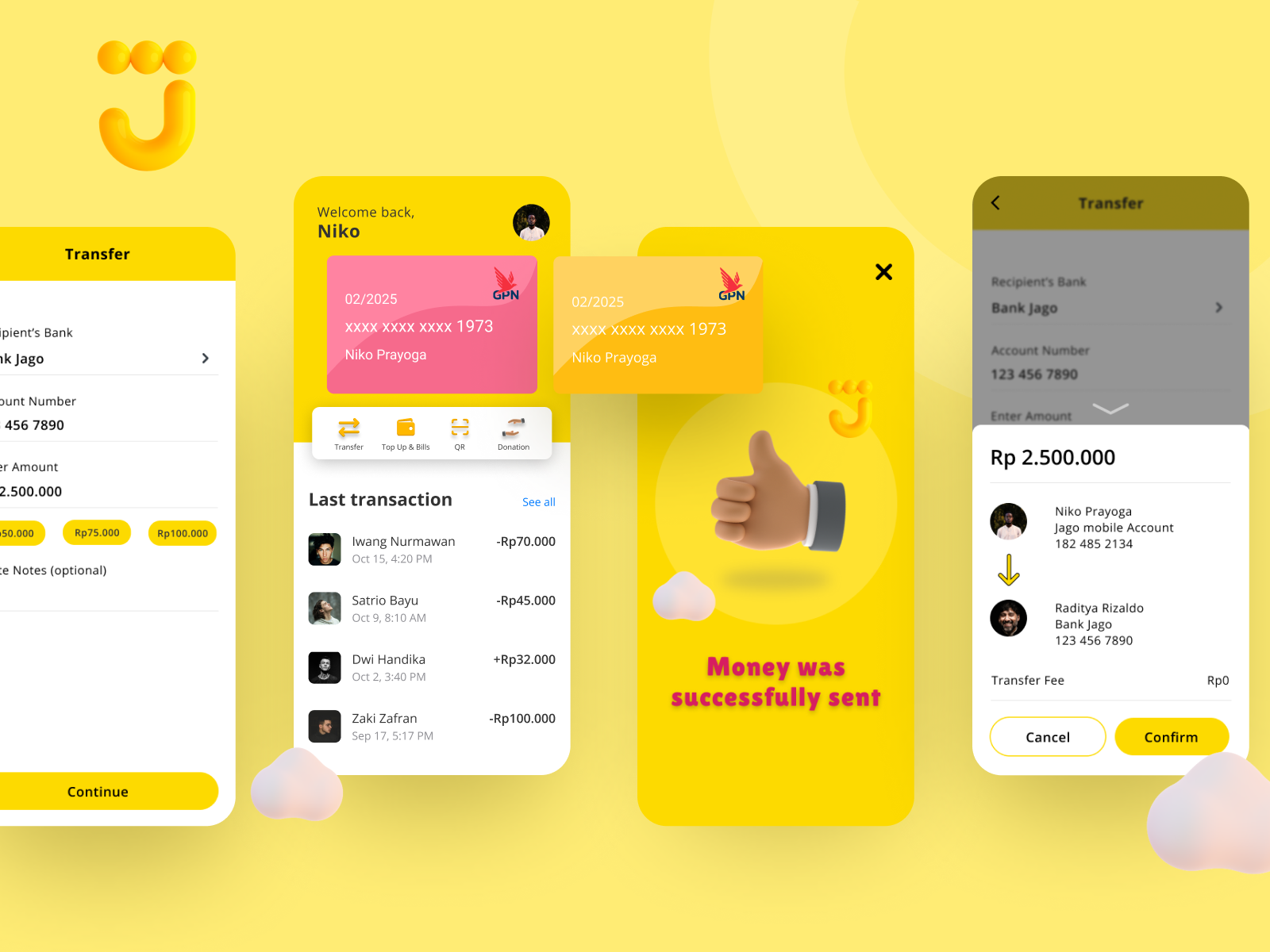
    The strategic partnership allows the bank to operate in the cloud in Indonesia, where banking data must remain in-country, according to an announcement this week.

    The digital bank will use Mambu’s SaaS banking platform and Google Cloud to offer new services to meet the needs and demands of Indonesian customers.

    Bank Jago launched its smartphone app in April 2021 in Indonesia, home to the fourth-largest unbanked population globally.

    Its service offerings include everyday transactions and payments, and the bank has plans to branch out into SME lending.

    Bank Jago believes that technology is not only providing new experiences to its customers, but it also enables the bank to operate efficiently, and to constantly create innovative breakthroughs, Kharim Siregar, Bank Jago president director, said in the announcement

    Formerly known as Bank Arto, Bank Jago is backed by the likes of super app Gojek, which recently increased its stake in the lender, as well as Singapore state investor GIC.

  • J.P. Morgan Seeks Full Ownership of Chinese JV

    J.P. Morgan Seeks Full Ownership of Chinese JV

    J.P. Morgan is seeking regulatory approval to obtain full ownership of its mainland Chinese securities joint venture.

    J.P. Morgan has applied to regulators for approval of its full ownership of the securities joint venture, according to a report citing China chief executive Mark Leung.

    The bank currently has a 71 percent stake in the unit after last boosting ownership in November 2020.

    J.P. Morgan joins Goldman Sachs in the race to become the first to obtain full ownership of their securities unit in mainland China.

  • UBS’ Insourcing Revolution Shakes Cognizant

    UBS’ Insourcing Revolution Shakes Cognizant

    Outsourcing giant Cognizant has had to let dozens of staff in Switzerland go as UBS continues its policy under CEO Ralph Hamers of bringing entire IT departments back in-house. Both the major Swiss banks, UBS and Credit Suisse are long-standing Cognizant customers. UBS used to pay Cognizant up to $330 million a year for IT services and business process outsourcing. Credit Suisse spends around $220 million a year with Cognizant Services, $100 million of it in Switzerland.

    The major IT consultancy and outsourcing companies make immense amounts of money from the financial sector, and U.S.-based Cognizant, one of the sector’s top companies globally, has sales of $5.6 billion to the finance sector, a good third of its total turnover.

    However, the relationship between UBS and Cognizant has been turning frosty in recent years, and in Switzerland there has been a falling out. UBS last year elected not to renew a service contract, with effect from the end of April. This meant that at a stroke Cognizant lost half of its business with UBS – around $60 million worth.

    As a result, Cognizant faced making 70 to 80 consultants working for UBS redundant. The company had had up to 200 staff under contract to UBS. The bank took on around a third of them and another third were taken on by other IT services companies such as Epam and Infosys.

    Neither Cognizant nor UBS would comment on the termination of the contract.

    Two separate said there were two reasons for UBS dropping Cognizant. In May 2020 the U.S. company was the victim of a ransomware attack that wrecked its efforts to provide IT services from home offices.

    UBS then canceled its global contract for several years of IT services early, with effect from the end of April this year, on security concerns. The second reason is UBS’s tendency over the last few years to take IT services back in-house.

    In 2018, the bank unilaterally canceled its long-standing partnership with Cognizant in India. UBS sold its «India Service Center» with around 200 staff to Cognizant in 2009 and at the same time signed a contract for several years of services, which was first of all not extended and then canceled entirely.

    Competition between outsourcing vendors is extremely fierce and the pressure on prices is enormous. UBS constantly beat Cognizant and other IT service providers down on price.

    Mike Dargan, who became UBS’s chief information officer in 2016, reversed the bank’s strategy of outsourcing. The massive acceleration in innovation and digitalization in the financial sector forced Dargan to the conclusion that IT development and services should be dealt with by in-house departments in order to keep up.

    Chris Gelvin, a UBS veteran who has been head of group operations since 2018 and was in January this year also appointed chief transformation officer, is responsible for implementing this strategy.

    In the meantime, Dargan has risen within the ranks of top management to become COO as well as chief digital and information officer. The step-by-step ending of the vendor contracts and the in-housing strategy are completely in line with Hamers’ thinking.

  • DBS Expands Digital Exchange Offering

    DBS Expands Digital Exchange Offering

    DBS expands the offering on its digital exchange with its first-ever bond issuance via security token offering.

    DBS has issued a S$15 million ($11.35 million) bond through a security token offering (STO) on its digital exchange, according to a statement.

    The bond has a six-month tenor with a coupon rate of 0.60 percent per annum.

    The issuance was executed via private placement and DBS was the sole bookrunner for the transaction.

    According to the bank, asset tokenization enabled the digital bond can be traded at a significantly smaller minimum of S$10,000 per board lot, further driving liquidity and lowering barriers for investor access.

    While most bond tokenization exercises announced in Asia to date tend to be repackaged forms of a conventional bond issue, the current transaction directly combines existing legal and tax infrastructure requirements with a direct issuance on the digital exchange in smaller lot sizes, said DBS’ global head of fixed income Clifford Lee.

    This bond token structure was only made possible because of the progressive development of Singapore’s legal and tax infrastructure, which can facilitate more STO issuances to broaden and deepen our capital markets.

    According to DBS’ group head of capital markets Eng-Kwok Seat Moey, the bank expects more issuers to leverage asset tokenization for fundraising.

    Our maiden STO listing on the DBS Digital Exchange is a significant milestone, as it highlights the strength of our digital asset ecosystem in facilitating new ways of unlocking value for issuers and investors, he said.

    We expect asset tokenization to increasingly become more mainstream as more of our clients start to embrace security token issuance as part of their capital fundraising exercise which we believe will boost Singapore’s ambitions to be a digital asset hub in Asia.

    DBS’ digital exchange – DDEx – launched in December 2020 with an initial offering that covered cryptocurrency trading.

    Daily trading volumes have increased 10-fold compared to the initial week of the launch, the bank said, with over 120 participants on the exchange and S$80 million of digital assets in custody.

    Earlier this month, the bank launched a crypto trust offering that combined wealth planning services with emerging digital currencies.