Tag: Finance

  • Elon Musk’s tweets send Vietnamese crypto investors into spiral of anxiety

    Elon Musk’s tweets send Vietnamese crypto investors into spiral of anxiety

    Elon Musk’s recent tweets have partly contributed to sending Bitcoin and other cryptocurrencies tumbling, and Vietnamese investors into losses and diminishing their hope in the future of digital currencies.

    Thien Tuan from the northern town of Mong Cai has seen his VND30 million ($1,300) investment in several cryptocurrencies depreciate by nearly 40 percent in the last few days.

    The 28-year-old had entered the crypto market in early April with no prior investment experience. Half of his savings is now in XRP, which has fallen 36 percent since mid-April, and Dogecoin, which has lost half its value in two weeks.

    He says: “Some of my friends have advised me to exit the market and look for other reliable assets like gold. I’m worried my losses will rise to 80-90 percent in the coming weeks.”

    On several Facebook groups of which he is a member, hundreds of people are expressing similar concerns about Bitcoin, Dogecoin and other cryptocurrencies after their prices plunged due to the remarks made by Musk and other reasons.

    In March Mush had announced that customers could buy Tesla cars using bitcoin, but on May 13 he said in a tweet the company had suspended the plan. Bitcoin lost 12 percent almost immediately.

    In another Twitter comment on May 17 Musk seemed to imply Tesla could sell its Bitcoin holdings, which sent the cryptocurrency down another 8 percent.

    The world’s most popular coin has lost 47 percent from its peak in mid-April, while other cryptocurrencies too are down by double digits.

    Other factors that contributed to the falls are China further cracking down on digital currencies and Binance Holdings, the largest cryptocurrency exchange, being investigated by U.S. authorities for money laundering and tax offenses.

    Tran Cuong, 22, of Hanoi invested $700 in Bitcoin and Dogecoin, and says “I have lost nearly $500 due to Elon Musk’s tweets.”

    The sharp falls have raised concerns among coin miners in Vietnam.

    Viet Hung of the southern province of Dong Nai only started mining a month ago and was expecting to recoup his investment by the end of the year.

    “Now that the market has plunged, I don’t know whether to continue mining or sell the equipment and cut my losses,” he says.

    Minh Huy, a seller of mining rigs in HCMC, says many prospective buyers have suspended purchase plans to watch how the market moves before making a final decision.

    Some of these deals are potentially worth billions of dong (VND1 billion = $43,500).

    “The plunging market not only hurts investors but also hardware suppliers,” Huy says.

    Hoang Bao of Hanoi, who has years of experience in coin mining, says he has yet to see people sell off equipment, but feared that if prices keep falling the market could soon turn “chaotic.”

    “The worst-case scenario is that rigs will be left to gather dust like last time, but this time it will be on a much bigger scale,” he says, referring to the 2018 Bitcoin selloff.

    Bitcoin and other cryptocurrencies are not recognized as a legitimate means of payment in Vietnam. The State Bank of Vietnam has warned that owning, trading and using cryptocurrencies are risky and not protected by law.

  • Hong Kong to Bar Retail Access to Cryptocurrencies

    Hong Kong to Bar Retail Access to Cryptocurrencies

    The Hong Kong government is seeking to restrict cryptocurrency access to wealthier investors amid an ongoing global crackdown by regulators.

    Cryptocurrency exchanges operating in Hong Kong will have to licensed by the Securities and Futures Commission (SFC) and limit access to professional investors – defined as individuals with a portfolio of HK$8 million ($1.03 million) – according to government proposals published on Friday.

    Hong Kong’s Financial Servies and Treasury Bureau (FSTB) said it had been consulting the market on the changes since last year and intends to advance its proposals into law in the upcoming 2021-22 session of the city’s legislative assembly.

    The FSTB continues to advance the regulatory changes despite concerns by local players that the restriction against retail access could drive exchange abroad and investors to unregulated channels.

    According to the FSTB, confining the services of a [virtual asset] exchange to professional investors is appropriate at least for the initial stage of the licensing regime.

    Hong Kong authorities’ move to tighten on crypto coincides with similar regulatory efforts elsewhere including China’s crackdown on mining and trading as well as U.S. tax proposals to report cryptocurrency transferal of over $10,000.

  • UBS Fined for Rigging European Bond Trading

    UBS Fined for Rigging European Bond Trading

    The European Commission censured seven investment banks for maintaining a cartel on European government bond-trading. The Swiss bank was hit with the largest fine, despite cooperating.

    Brussels extracted a total of 371 million euros ($453 million) on UBS, UniCredit, and Nomura for a seven-bank ring which colluded between 2007 and 2011 on prices and volumes of European government bonds, the commission said in a statement on Thursday.

    The other banks censured in the cartel were not fined: Natwest had blown the whistle on it, while Bank of America and Natixis escaped because their wrong-doing fell outside of a time period for which fines could be levied. Lastly, WestLB, now Portigon, generated zero revenue from the scheme in the last business year, capping its potential fine at nil.

    UBS, which racked up the biggest fine (174.2 million euros), told domestic agency AWP that it is considering an appeal. The fine will take roughly $100 million out of UBS’ second-quarter results, it said.

    The Swiss bank’s fine would have been 45 percent higher had it not cooperated with the commission, overseen by Brussels’ anti-trust chief Margrethe Vestager. The commission fined Nomura 130 million euros and Italy’s Unicredit, now run by UBS’ former top investment banker Andrea Orcel, 69 million euros.

  • HSBC to Fund New Climate Solutions

    HSBC to Fund New Climate Solutions

    The bank is collaborating with the World Resources Institute (WRI) and WWF to unlock access to finance to help new climate-based projects create real-world impact. HSBC said it would put in $100 million of funding – half of which will be deployed in Asia – over the next five years to build towards a net-zero economy, according to a statement on Thursday.

    Keeping global temperature rises within safe limits requires new thinking and new technology. Asia is particularly vulnerable to climate change, but it is also where solutions are emerging fast, Peter Wong, HSBC deputy chairman and CEO said in the statement.

    The partnership covers 14 markets in Asia Pacific, including Australia, India, Indonesia, Hong Kong, Japan, mainland China, South Korea and Vietnam, across three funding streams: energy transition, nature-based solutions, and business innovation.

    The bank cited several projects as examples: improving industry access to renewables and green technologies in China, working with partners in Thailand to restore parts of Chiangmai’s degraded forests and advance sustainable agriculture, and supporting Hong Kong start-ups focused on climate innovations.

    Ignoring the human impact on climate will delay reducing inequality and achieving sustainable long-term growth in the region, the bank said.

    The Climate Solutions Partnership is part of the bank’s previously announced ambitious plans to combat climate change, under which it is setting aside $1 trillion in green financing to support customers in the transition to net-zero.

    Climate activists have criticized the bank for its support for the fossil fuel industry, alleging that it has invested some $80 billion in fossil fuels since the Paris Agreement in 2015.

    In March, the bank committed to phasing out support for the coal industry by 2030 in the developed world and by 2040 in the developing world, following pressure from activist investors.

  • Deutsche Bank Sets Up ESG Center in Singapore

    Deutsche Bank Sets Up ESG Center in Singapore

    Deutsche Bank has set up a Singapore-based center focused on developing environmental, social and governance-related solutions.

    Deutsche Bank’s center will focus on innovation in ESG and fintech to develop new products to address market gaps, according to a statement.

    In addition to internal activities, the center will also share global best practices with regulators and regional bodies in Asia, such as Asean and Asia Pacific Economic Cooperation.

    The center will house a sizeable team that will work across all business divisions, developing solutions across impact monitoring, data management and payments to unbanked communities.

    The transition of Asia towards sustainable practices requires ESG transaction models, products, solutions and regulatory measures which meet international standards while supporting on-the-ground realities in Asia, said Deutsche Bank’s APAC head of ESG Kamran Khan.

  • UBS Cuts 700 Jobs

    UBS Cuts 700 Jobs

    Swiss bankers are the first to go in the Swiss bank’s current round of cuts. UBS has started cutting jobs as part of its current round of cost-savings measures, with around 700 employees in Switzerland affected.

    Most of the cuts will be in the corporate center although 200 jobs will go in wealth management and UBS Switzerland. These are in addition to the roughly 125 jobs UBS was going to get rid of before the Covid-19 pandemic put those plans on ice

    UBS CEO Ralph Hamers announced a $1 billion cost-savings target during first-quarter results last month. UBS’s cuts are aimed at the jobs expected to become redundant as a result of its ongoing digitalization processes. finews.com reported on the plans in April. They are expected to be wide-ranging and take out 3,000 jobs in total.

    UBS has not confirmed the figure but it is realistic in view of the savings targets and the bank’s cost structures. It also announced that restructuring costs would total $300 million in the second quarter, most of which were in the scope of the cuts originally announced last year.

    According to Bloomberg, around a dozen managing directors as well as more junior bankers in the advisory and trading business were recently let go. In wealth management, about five managing directors and several executive directors were impacted. In the investment bank, most of those cuts were those responsible for wealth management clients.

    CEO Hamers said his current efforts are aimed at implementing and executing the transformation and digitalization strategy, which is expected to take about three years.

  • UBS Quietly Advances Token Efforts With Clients

    UBS Quietly Advances Token Efforts With Clients

    UBS has been quietly running a tokenization trial with weighty institutional investors. The Swiss-based bank has been offering more than 100 institutional clients access to a pilot program to tokenize real assetsThe project is operating on the Ethereum platform, the person said.

    This represents the next step in a push into putting assets on the blockchain and selling slices represented in coins. The project, being overseen by UBS investment banker Chetan Tolia, is looking at tokenizing traditional assets including debt, structured products, and physical gold.

    The Swiss wealth manager last week dipped its toes into cryptocurrencies, in a major concession to client demand. The tokenization program has quietly been running, separately out of UBS’ investment bank, for at least 12 months, the person said. UBS declined to comment.

    UBS has long held that it is interested in distributed ledger more than it is in cryptocurrencies themselves – which represent a threat to traditional banking. The Swiss bank transacts on we.trade, a blockchain-based trade finance platform, co-launched a so-called utility settlement coin with other banks, and is part of banking’s R3 blockchain consortium.

    It isn’t clear how long UBS intends to run the tokenization pilot or release it more widely, or which products it is tokenizing.

  • DBS’ Ajay Mathur A Phygital Strategy Is Our Key Differentiator

    DBS’ Ajay Mathur A Phygital Strategy Is Our Key Differentiator

    The lack of a physical presence, short track records, limited offerings, and other factors will act as hurdles for digital-only banks to overcome, according to DBS’ Hong Kong head of consumer banking group and wealth management Ajay Mathur.

    Banks and other financial service providers used to compete along with price, product, and convenience but increasingly so, the competition has moved away from these elements towards digital speed, simplicity, and contextuality,» Mathur said. Although many banks are trimming property, including DBS which has offloaded office space in both Hong Kong and Singapore, Mathur underlines that retaining a client-facing real estate remains critical alongside digital presence – a phygital presence.

    This is not merely for optics or unwilling adopters of technology but to capture opportunities from both simple financial needs that can be executed online, such as a simple single stock trade, as well as more complex ones offline, such as succession or legacy planning.

    If we are able to smoothly deliver business online and offline, we can create a customer experience that can truly differentiate us, Mathur says. A ‘phygital’ strategy is our key differentiator.

    Even in the field of technology, Mathur said there is more to be desired from neobanks.

    Although some virtual banks are challenging traditional lenders in portfolio management capabilities – Stashaway, for example, claims to have superior discretionary mandate performance at much lower fees – Mathur underlined that many of such offerings are static in nature which, alone, is insufficient to meet client needs, especially in Asia’s market of hands-on investors.

    It’s very easy to create a so-called robo advisor. Many fintech already have offerings where they match clients with investment strategies based on a survey that assesses risk profile,» he explains. What is harder to create is robo-analysts. Robo-analysts can map your actual holdings against your profile and risk appetite to provide advice for clients to make actual transactions.

    And should virtual banks achieve a sufficient threshold in their capabilities, years of track record will still be required before broad confidence from the market can be achieved.

    We have spent many years and resources to develop brand and trust,» Mathur said. «Money is a very complex and emotional issue. It’s not something you can easily hand over to a company with no vintage.

    Nonetheless, Mathur acknowledges that it is still early days and, in fact, attributes some of the industry’s digital enhancements to the emergence of virtual banks.

    We welcome competition from fintechs, he said, adding that newly licensed digital lenders in Hong Kong have achieved a «credible start» in acquiring new clients and assets.

    They’ve kept peer banks on their toes and brought about nice improvements in customer experience.

    Within DBS, tech investments are now strategically focused on three areas: data, artificial intelligence and ecosystems.

    In addition to transforming its capabilities – seeking data to better understand clients and applying this via artificial intelligence to enhance user experience, for example – the bank is also transforming its role.

    Our traditional role is to act as a pipeline connecting financial services between the bank and a customer,» Mathur said. «But as we increasingly view ourselves less as a bank and more as a tech firm, we’ve been focused more on developing ecosystems. Rather than acting as a pipeline, we want to be a platform not only to deal with our customers but to deal with customers of our partners. This can effectively increase our ring of influence.

  • Backbase Grows Asia Leadership Team

    Backbase Grows Asia Leadership Team

    The engagement banking platform provider has appointed a digitalization specialist to support banks and financial institutions in the region with their digital transformation efforts.

    Backbase has appointed Abhijit Chavan as regional vice president of customer success for Asia, part of the company’s Asia leadership team, according to an announcement on Tuesday.

    Chavan brings more than 15 years of strategic experience at the top levels of management consulting, including at Accenture Strategy and PwC Consulting.

    In his new role, Chavan will look after customer success, ROI delivery, and prescriptive digital banking transformation for Backbase clients in the region and support customers in strengthening their market positions through Backbase’s Engagement Banking Platform.

    Backbase opened its regional headquarters in Singapore in January 2020. It subsequently partnered with Vietnam’s TPBank to accelerate digital transformation and transform the bank’s traditional products, services, and core banking system, and with the Philippines’ Uno digital bank to automate customer onboarding, account opening, origination, and self-service processes.

    The Netherlands-based company also opened a new office in Japan to help banks and financial institutions accelerate their digital transformation, improve customer engagements and optimize data insights as to the Japanese market transitions to digital banking.

  • DBS Launches Crypto Trust Offering

    DBS Launches Crypto Trust Offering

    DBS enlarges its cryptocurrency offering with a trust solution from its private banking arm amid growing demand for the asset class even within wealth succession plans. DBS Private Bank launches its cryptocurrency trust solution via wholly-owned DBS Trustee, according to a statement.

    The new trust offering is limited to cryptocurrencies currently supported by the bank’s digital asset exchange – DBS Digital Exchange (DDEX) – which includes Bitcoin, Ether, Bitcoin Cash, and XRP.

    According to the bank, the solution will ensure that critical information like access instructions or wallet backups will be kept confidential when passing on wealth in succession plans due to the additional protection afforded to trusts and their exclusion from the probate process.

    Confidentiality, peace of mind and taxation often emerge as top-of-mind concerns in our conversations with clients, and we would advise them to set up trust structures rather than wills, which are subject to the probate process, said DBS Private Bank’s regional head of family office, wealth planning and insurance solutions Lee Woon Shiu.

    This is especially so considering that international regulations and protocols are still nascent in the digital asset space, which could give rise to complications or unnecessary confusion if proper measures are not in place to prevent them.

    DBS expands its crypto offering amid growing demand for the digital asset class with DDEX registering S$80 million ($59.9 million) in assets under custody and a 10-fold increase of trading volumes since launch to S$30-40 million.

    The exchange currently has 120 clients with more awaiting onboarding.

    In recent years, more clients have expressed interest or are already invested in digital assets, and we expect this trend to accelerate as cryptocurrencies turn more mainstream, said group head of DBS Private Bank Joseph Poon. «Our trust structure allows clients to conveniently hold these assets, with a peace of mind that they will be safely managed and passed on to their intended beneficiaries.»

  • Banks dominate Vietnam’s profit makers list

    Banks dominate Vietnam’s profit makers list

    Seven banks are in the list of Top 10 most profitable listed companies in Q1, recording increases in pre-tax profits.

    Topping the list are two state-owned lenders Vietcombank and VietinBank. The former recorded VND8.6 trillion ($373.9 million) in pre-tax profits, up 65 percent year-on-year, while the latter posted VND8 trillion, up 171 percent.

    Another state-owned bank, BIDV, made it to the list at eighth place, with pre-tax profit surging 87 percent to VND3.4 trillion.

    The surge for the three state-owned banks follows very low figures recorded in the same period last year as a result of the onset of the Covid-19 pandemic.

    Of the four private banks in the top 10 list, Techcombank ranked fifth with a 77 percent surge in pre-tax profits to VND5.5 trillion. It was followed by MBBank and VPBank, posting 108 percent and 38 percent rises in pre-tax profits to VND4.58 trillion and VND4 trillion, respectively.

    Private lender ABC was in tenth place with pre-tax profits rising 61 percent to VND3.1 trillion.

    Like the state-owned lenders, the four private banks experienced an increase in net interest income as well as non-interest income well above the growth in operating costs and provision for doubtful debts.

    Brokerage Rong Viet Securities Corporation (VDSC) has forecast the banks will continue to see profit growth in the next three quarters. However, growth would not be as high as the 50 to 100 percent-plus rates of Q1.

    Steelmaker Hoa Phat Group was the most profitable non-bank enterprise on the list, ranking third, up from the eighth place in the same period last year.

    It was the only non-bank enterprise in the top 10 that saw a growth in pre-tax profit, which tripled to VND7.7 trillion.

    The steel giant has benefited from surging steel prices that have lifted its revenue for the period by 60 percent year-on-year to VND31 trillion.

    The other two non-bank enterprises in the list, real estate giant Vinhomes and diary giant Vinamilk, both experienced a drop in profits.

    Vinhomes reported VND7 trillion in pre-tax profits, down 30 percent, to rank fourth on the list.

    Vinamilk’s pre-tax profits fell 6 percent to VND3.15 trillion as it finished Q1 as the ninth most profitable listed firm.

    Two enterprises in Q1 2020 top 10 list, have fallen out – the state-owned Petrovietnam Gas Corp (PV Gas) and main airport operator Airports Corporation of Vietnam (ACV).

    PV Gas saw its pre-tax profits fall 10 percent due to surging selling expenses and operation costs. The ACV, meanwhile, saw its pre-tax profits fall to half that of the same period las year as the pandemic hit the aviation industry particularly hard, slashing deeply the number of flights and passengers.

  • OCBC Posts Record High Quarterly Net Profit

    OCBC Posts Record High Quarterly Net Profit

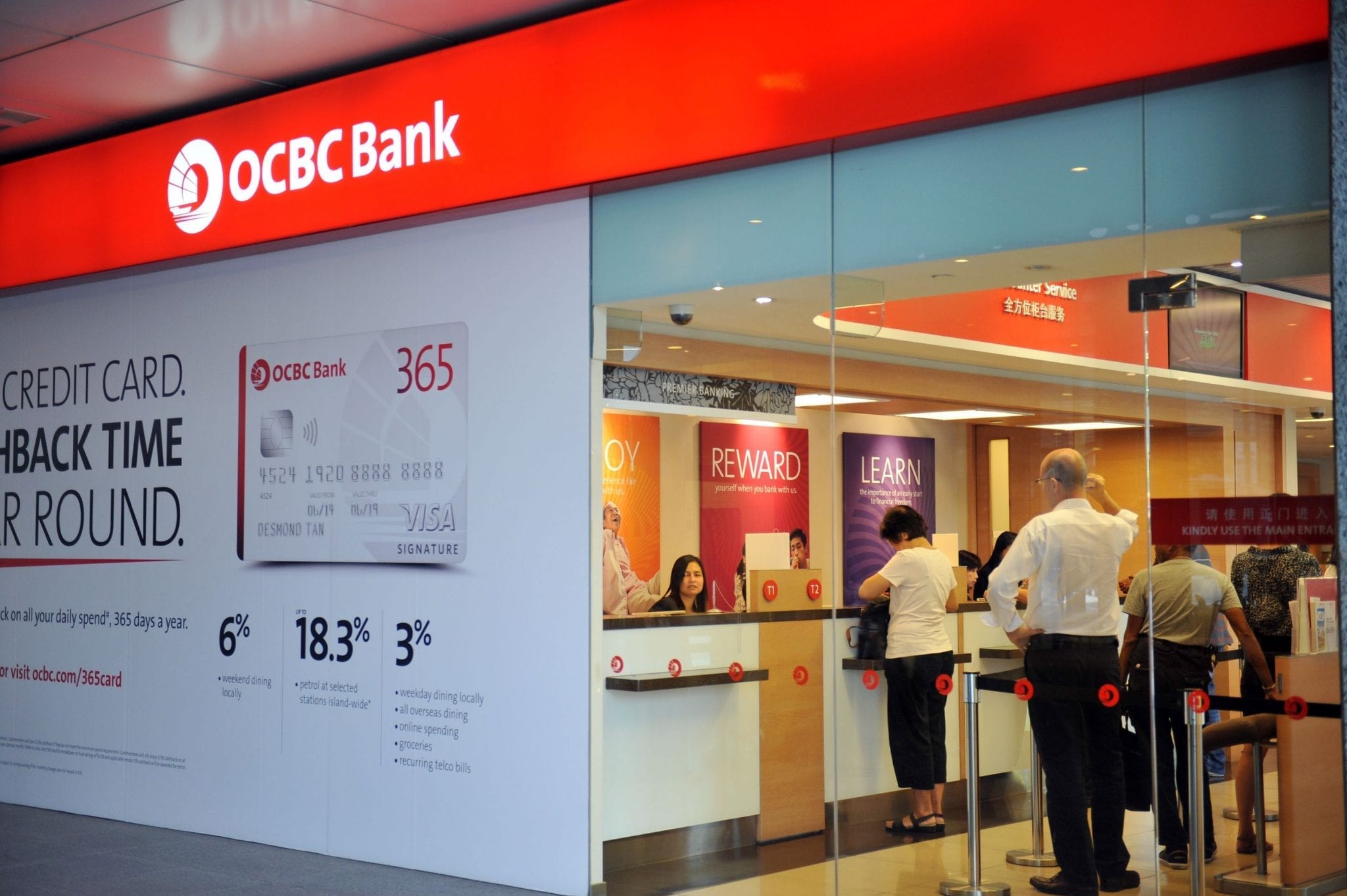
    The quarter’s earnings were driven by broad-based income growth and lower allowances. OCBC Bank recorded a net profit of S$1.5 billion ($1.13 billion) for the January-March period, a jump of 115 percent from the same period last year (S$698 million), and 33 percent higher than the preceding quarter (S$1.13 billion), according to financial results posted on Friday.

    The bank said the record quarterly profit was driven by broad-based income growth and lower allowances. OCBC hit a new high in fee income (S$585 million), while making a far smaller allowance compared with the year-ago period (S$161 million vs. $657 million). Performance was also boosted by its insurance arm Great Eastern, which reported a twelvefold increase in profits this quarter.

    Income from wealth management, comprising insurance, premier and private banking, asset management, and stockbroking, rose 40 percent to S$1.21 billion – 41 percent of the group’s total income.

    Assets under management at Bank of Singapore, its private banking arm, rose 1 percent from the previous quarter to reach $123 billion as of 31 March 2021.

    OCBC highlighted growing momentum from renewed market optimism across its businesses, as well as improved quarterly earnings from its overseas banking subsidiaries.

    While we remain watchful of the prevailing risks in the operating environment, our strong balance sheet and capital position will enable us to capitalize on opportunities arising from improved economic conditions, particularly in ASEAN and Greater China,» OCBC chief Helen Wong said.

    Earnings at Singapore’s «big three» local banks all beat analyst estimates (DBS: S$1.44 billion, OCBC: S$1.13 billion, UOB: S$891.4 million, according to Refinitiv).

    DBS, which announced its first-quarter results last week, also experienced a strong quarter, doubling its income from the quarter before to reach S$2.01 billion and posting record wealth management fees.

    UOB’s earnings grew to S$1 billion for the same period – up 46 percent on the back of strong fees, trading, and investment income.

  • DBS has Strong Interest in Cryptocurrencies

    DBS has Strong Interest in Cryptocurrencies

    The bank is seeing more traction for its crypto assets business, which provides cryptocurrency trading and digital custody for accredited investors.

    Daily trading value on DBS’ digital exchange has grown tenfold since its launch to reach $30-40 million, with an investor base of 120 accredited investors and some S$80 million in digital assets under custody, DBS chief Piyush Gupta said at a media briefing last week as it announced its first-quarter results.

    I do think given the amount of interest in all the four cryptos that we trade now, that interest is quite high. And therefore, I do think it will pick up. But whether it picks up to tens of millions, or hundreds of millions of income over the next few years, it’s hard to say. So my thinking is, we should get in there, figure it out and grow and then we’ll get a better sense for how big this could be in time,» Gupta said, adding that the bank has a pipeline of hundreds of customers.

    The DBS Digital Exchange offers exchange services between SGD, USD, HKD, JPY, and four of the most established cryptocurrencies: bitcoin, ether, bitcoin cash, and XRP. Gupta said the bank would be scaling the business in subsequent quarters by issuing security tokens and extending the exchange’s trading hours, which currently works during Asian trading hours, to round-the-clock.

    Earlier this month, the bank also announced the development of Partior – an open industry platform with Temasek and J.P. Morgan that aims to reimagine and accelerate value movements for payments, trade, and foreign exchange settlement.

  • Vietnam stock market daily trading value closes in on Singapore

    Vietnam stock market daily trading value closes in on Singapore

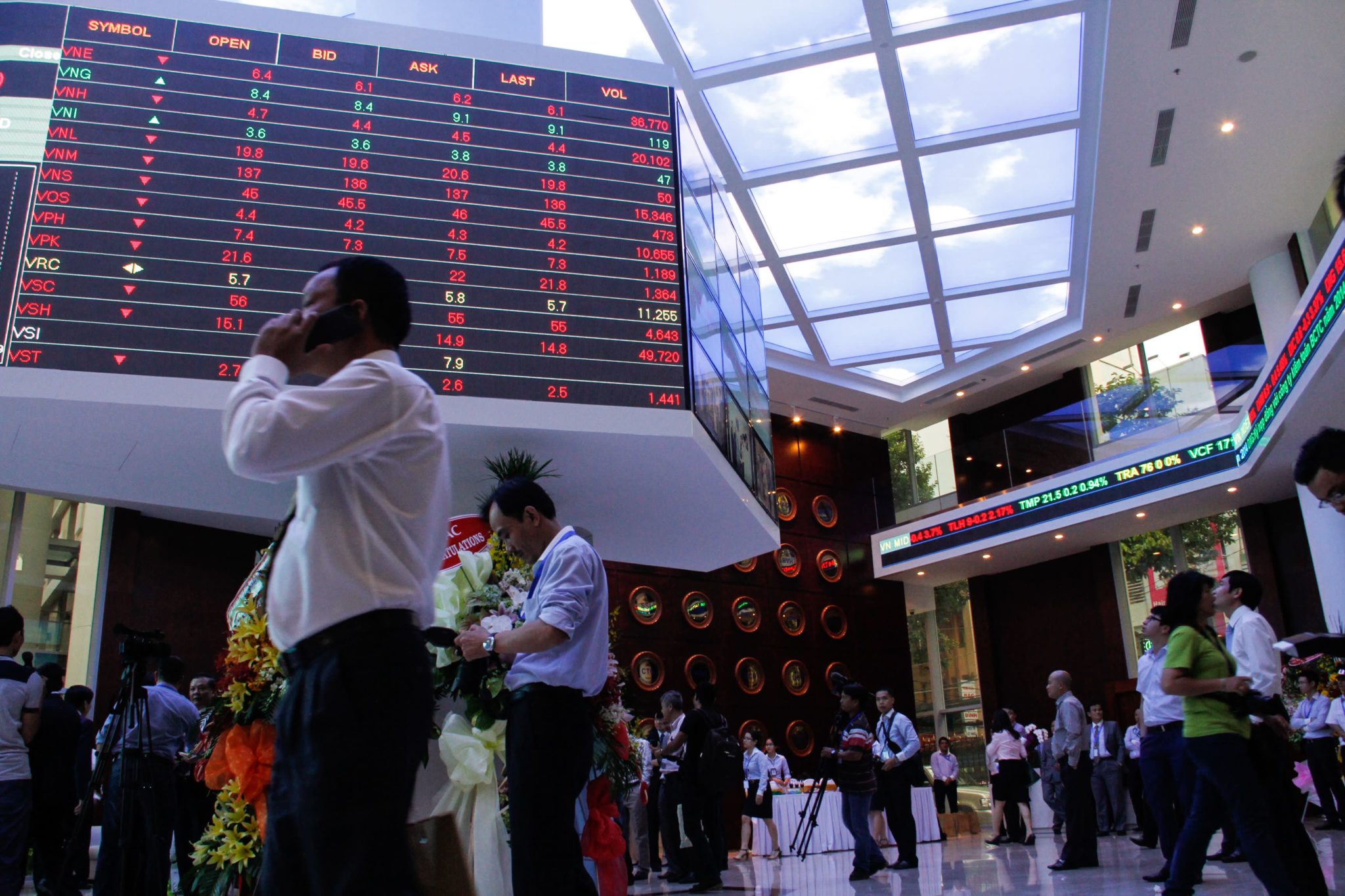
    The average daily securities trading value surged 5.6 times year-on-year in April to $725 million, nearly equivalent to that of Singapore, according to HSBC.

    The lender said in a recent report that the figure, which far exceeds those of Malaysia and Indonesia, was due to the increase in new investors and recovery of the economy.

    In March, the number of new trading accounts hit a record 113,900, taking the total to over 3.02 million.

    The economic recovery is underpinned by strong FDI flows, improvements in the manufacturing segment, and increased consumption, the report said.

    The benchmark VN-Index has risen 12.9 percent in the year-to-date compared to 4.2 percent for Asia ex-Japan.

    The index has repeatedly scaled new peaks this year after surpassing the psychological barrier of 1,204 points first reached in 2018.

    HSBC expected the market to continue to rise in the absence of alternative asset classes and bank deposit rates in decline.

    Though foreign investors have been pulling out of the stock market, HSBC said they would not be able to ignore Vietnam for much longer since it has proved to be one of the most resilient growth economies and 24 out of the 30 blue chips have still not reached the foreign cap.

    Besides, despite rising to record levels, the VN-Index remains 5 percent lower than its five-year average level with a price-to-earnings ratio of 15.1.

  • Net Profits Rebound at UOB

    Net Profits Rebound at UOB

    The bank’s quarterly earnings surged on the back of strong fees, trading, and investment income as business momentum improved.

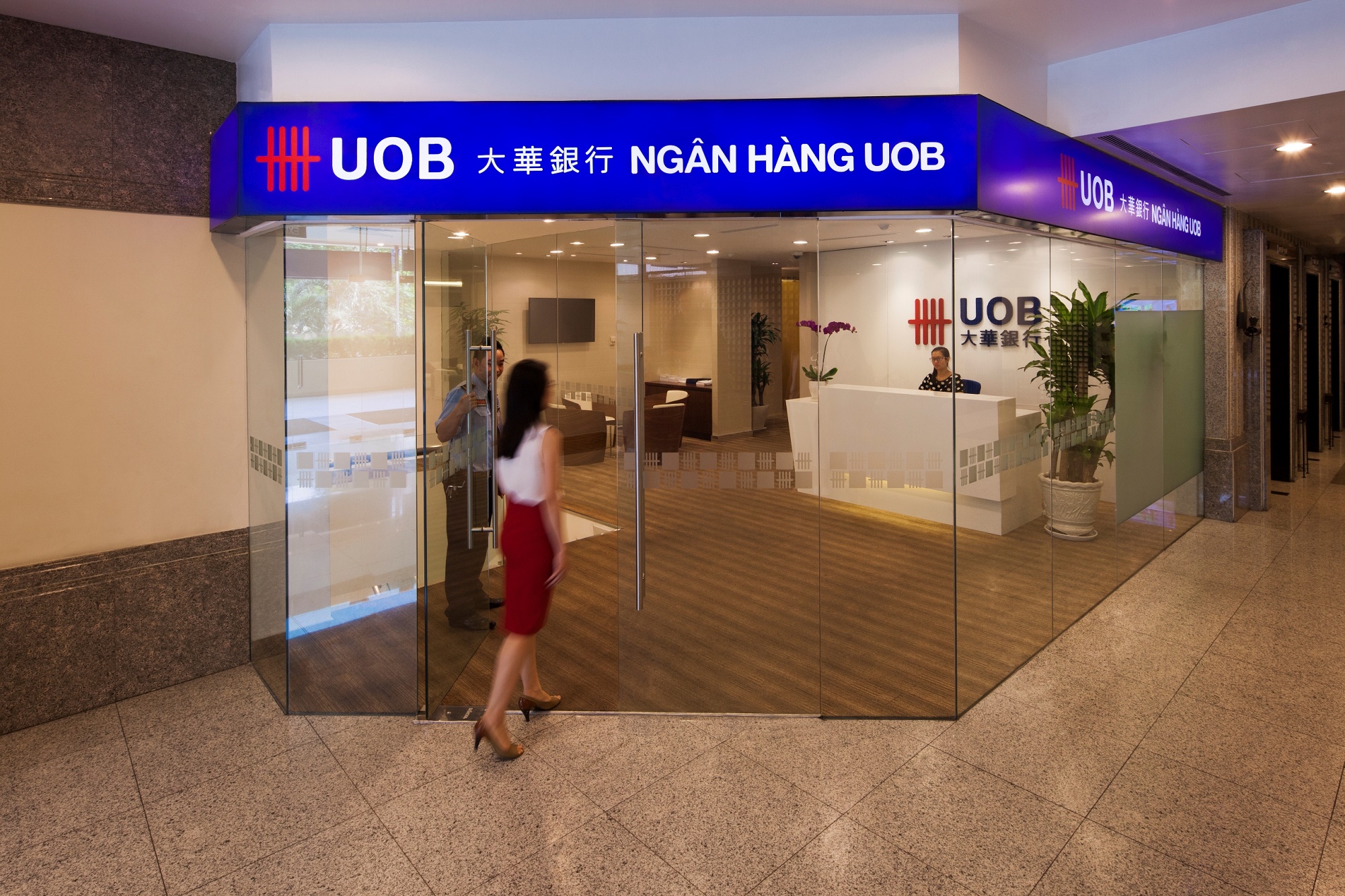
    UOB’s earnings grew to S$1 billion ($750 million) in the first quarter of 2021 – up 46 percent from the previous quarter’s S$688 million and up 18 percent from the same period last year, according to financial results posted on Thursday.

    Income grew 11 percent to reach pre-Covid levels at S$2.5 billion, while fee income reached a new high to reach S$638 million (+22 percent), led by wealth management fees from investments and bancassurance. The bank also saw stronger activity in loans and investment banking, as well as treasury income. Its wealth management assets grew 10 percent to S$136 billion, of which 60 percent was from customers abroad.

    The bank highlighted growth across its key markets in Singapore, North Asia, and its Asean franchise. It expressed optimism as sentiment and business activities pick up and trade flows resume between Asean and Greater China.

    Across our key markets, we are seeing robust credit demand from our large corporate and institutional clients, Wee Ee Cheong, UOB deputy chairman, and CEO, said.

    Sustainability was a key theme for UOB, as total sustainable financing reached $12 billion during the quarter. During this period, the bank also issued Singapore’s first sustainability bond and global first dual-tranche sustainability bond.

    The bank’s AUM in ESG-focused investments also reached S$2.2 billion at the end of the quarter.

    DBS, which announced its first-quarter results last week, also experienced a strong quarter, doubling its income from the quarter before to reach S$2.01 billion and posting record wealth management fees.

    OCBC is due to release its quarterly results tomorrow, but its insurance arm Great Eastern has already reported a twelvefold increase in profits this quarter.