Tag: Finance

  • HSBC’s Noel Quinn Faces Questions from British MPs

    HSBC’s Noel Quinn Faces Questions from British MPs

    HSBC chief executive Noel Quinn is scheduled for a virtual session tomorrow with the U.K.’s Foreign Affairs Committee where he is expected to face tough questions about the bank’s relationship with Beijing.

    HSBC’s Noel Quinn alongside chief compliance officer Colin Bell will face questioning from the British parliament’s Foreign Affairs Committee (FAC) this week regarding political developments in Hong Kong.

    This occurs just days after self-exiled activist Ted Hui called on British member of parliament (MP) to investigate the British lender over frozen accounts and an apology from Quinn saying he had «no choice» after being instructed by Hong Kong police.

    The virtual session between FAC and top HSBC executives is scheduled for tomorrow with a private meeting followed by a public one at 2:30 pm in the U.K.

    The FAC meeting is expected to cover a number of recent events in Hong Kong including the passing of the national security law and the freezing of accounts belonging to activists involved in local protests.

    On Quinn’s emailed apology to Hui last week, Conservative MP and FAC chair Tom Tugendhat called the response «extraordinary» adding that the HSBC CEO was clearly defending his actions by denying responsibility, according to a  report.

    Companies listed in London should expect to be scrutinized according to the values we hold, not those of a foreign dictatorship,» he said.

    According to Hui, who self-exiled to the U.K., he has recently shared evidence and detailed information regarding the recent account freezes, as requested by FAC members.

    Any banks, businesses or organizations helping the communist tyranny to suppress the freedom of Hong Kong people will inevitably pay a heavy price internationally, Hui said in a social media post over the weekend.

    I will do everything I can to make these organizations face the consequences.
  • China’s Central Bank Signals Break-Up Risk for Non-Bank Players

    China’s Central Bank Signals Break-Up Risk for Non-Bank Players

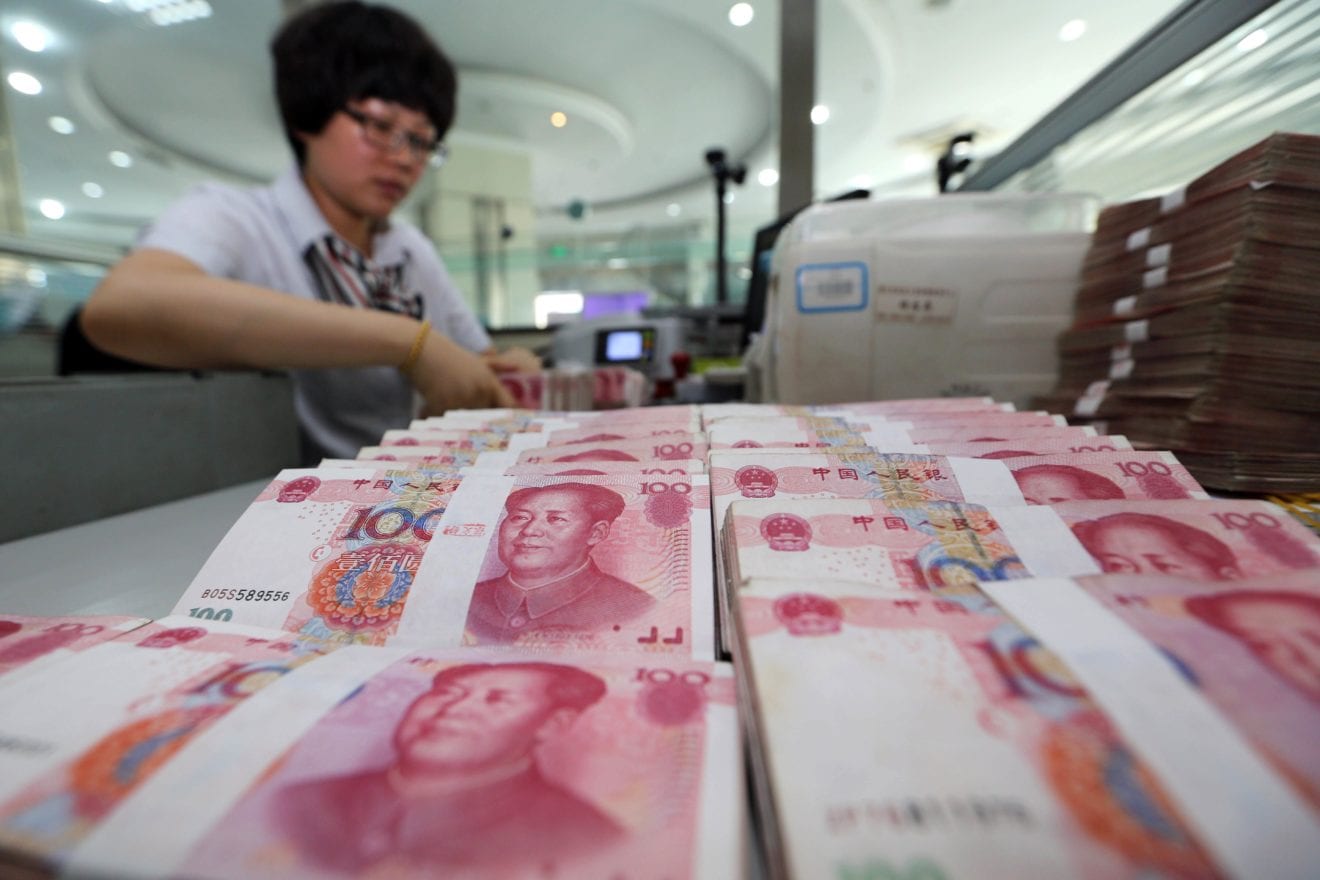
    The latest draft rules proposed by the People’s Bank of China signals even more regulatory tightening against the mainland fintech sector including the potential to even break up non-bank institutions deemed to hinder payment development.

    The People’s Bank of China (PBoC) proposed this week that it could advise the state council’s antitrust committee to take action should non-bank institutions severely hinder the healthy development of the payment service market.

    Actions suggested include the ability to break-up non-bank financial institutions that are deemed to be too dominant and abusive of their leading market positions.

    This spells more tightening for the likes of payment giants like Ant’s Alipay or Tencent’s Tenpay which own the majority of mainland China’s digital payment market share.

    According to guidelines released earlier this month, the PBoC defines a digital payments monopoly as any non-bank service provider with at least half of the market share for online transactions.

    Two non-bank providers with a combined market share of two-thirds or three providers with three-quarters will also qualify for antitrust investigations.

    Two or three firms having less than a 10 percent market share will not trigger investigations, the PBoC added.

    The new rules spell headwinds for China’s leading fintech giants whose dominance could at the very least potentially face supervision over capital adequacy requirements especially if they offer deposit products with interest rate payments, if not a full break up.

    While onlookers remain cautious, some have expressed optimism about limited intervention due the risk of such actions resulting in curbed innovation.

    Globally, regulations have actually intensified to rein in the dominance of big tech. In our view, this is meant to prevent market abuse, said UBS Global Wealth Management’s APAC CIO Min Lan Tan in a recent virtual roundtable. Regulators will be careful not to stifle innovation. Significant changes in business models or the breakup of companies, we think, is unlikely.

  • Bidders Emerge for AXA’s Singapore Unit

    Bidders Emerge for AXA’s Singapore Unit

    Three bidders have reportedly emerged as frontrunners for AXA’s business in Singapore after the French insurer first signaled a potential sale in August last year.

    HSBC, Malayan Banking’s insurance joint venture Etiqa and an at least one Chinese firm are reportedly in the running, according to a «Bloomberg» report citing unnamed sources.

    Etiqa was established in 2005 and provides general and life insurance solutions. It was founded as a merger between a Maybank-Ageas joint venture and Malaysia’s National Insurance.

    HSBC also has an existing insurance business in Singapore and its chairman Mark Tucker recently called for accelerated expansion across Asia.

    According to the report, expectations are for the sale to raise about $700 million amid AXA CEO Thomas Buberi’s attempt to shift focus to property and casualty insurance, evidenced by its $15.3 billion purchase of XL Group in 2008.

    The three frontrunners will have a few weeks before submitting binding bids for AXA Singapore.

    AXA’s Singapore unit offers life, property, and casualty insurance and it generated 615 million euros ($745 million) of revenue for 2019, according to its annual report.

  • Ralph Hamers’ Long Road to Leaving ING Behind

    Ralph Hamers’ Long Road to Leaving ING Behind

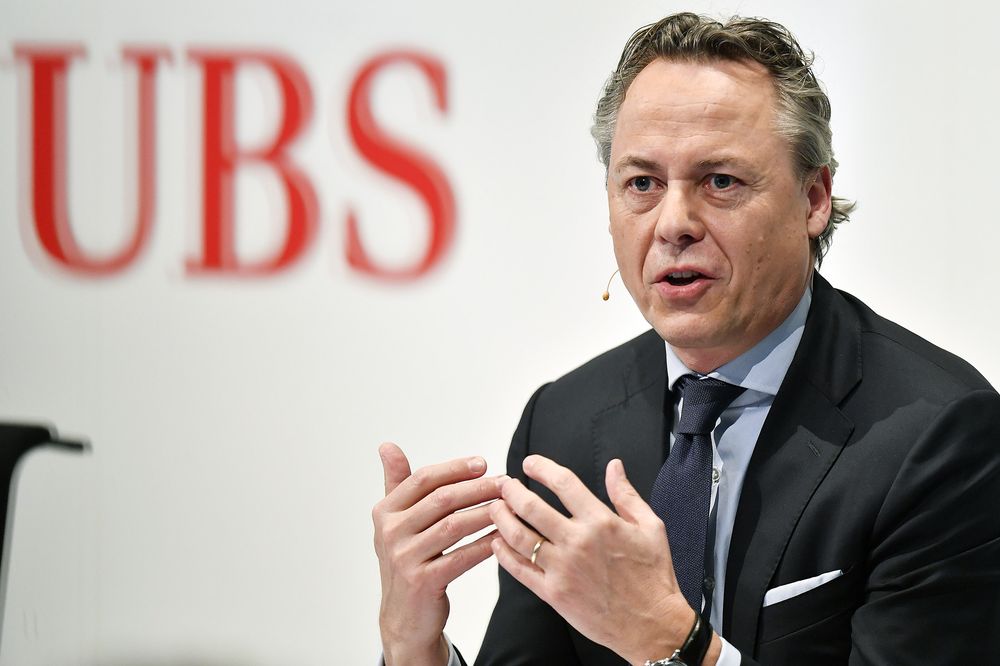
    The UBS boss has a long road to shaking off his past: he faces an 18-month journey before knowing if prosecutors will charge him in a Dutch money-laundering investigation.

    A Dutch criminal probe into whether Ralph Hamers and money laundering is ticking on after prosecutors agreed to comply with a surprising court ruling last month. Prosecutors were ordered to revisit a money-laundering scandal at ING that culminated in a 775 million euro ($939 million) settlement.

    We’re currently clarifying the organizational questions in relation to the court’s decision,» the Dutch prosecutor told HandelsblattThe German outlet reported that it may take prosecutors as long as 18 months to decide whether to press charges against Hamers or not, citing a person familiar with the investigation.

    The matter is potentially explosive for the Swiss lender, which hired him in full knowledge of the 2018 settlement – UBS had ordered an outside evaluation of Hamers while recruiting him, and the Dutch banker also passed Swiss fitness and probity checks by regulator Finma.

    What UBS didn’t know is that a Dutch activist, Pieter Lakeman, would successfully force the 2018 settlement to be reopened. This represents a major stumbling block for Hamers, who ran ING from 2013 until mid-2020, then joined UBS in September and took over fully three months ago.

    The Dutch prosecutor’s comments perfectly exemplify the logistics involved in reopening the investigation: Hamers has since moved to Switzerland and is widely expected to later this month unveil an outline of his plans to modernize and update UBS during his tenure.

    But he must also appear in-person in the Netherlands when prosecutors want to question him, seriously cutting into his chockfull calendar running the Swiss lender. The pandemic also complicates his life in a very practical way: Switzerland last week reimposed a mandatory ten-day quarantine on travels from the Netherlands (the Netherlands requires the same of all visitors from abroad).

  • HSBC’s Noel Quinn Apologizes to Self-Exiled Hong Konger

    HSBC’s Noel Quinn Apologizes to Self-Exiled Hong Konger

    Self-exiled lawmaker Ted Hui publicly shared and criticized HSBC CEO Noel Quinn’s apology over frozen accounts which claimed that the bank was done on orders by the Hong Kong police.

    I regret that HSBC is not able to operate your bank and credit card accounts, said Quinn in an email dated January 11 and sent to Hui who has shared an image on his Facebook account.

    Quinn explained that the bank had no choice but to take action after being instructed by the Hong Kong police, Hui said, and he also apologized over communications with HSBC.

    The ex-Democratic Party member and his family’s accounts were allegedly frozen by HSBC alongside Hang Seng Bank and Bank of China after police said they were probing for a money laundering linked to a crowdfunding campaign.

    According to Hui, there is no legal basis for freezing his nor his family’s accounts, underlining a specific concern that he had not received questions regarding any suspicious transactions prior to the move.

    Hui has since said his family accounts were unfrozen and his personal accounts were partially released. He also noted that HK$200,000 ($25,800) had been frozen, less than the initial HK$850,000 ($110,000) claimed by local police.

    HSBC said it would not comment on specific accounts and maintains its stance that it must comply with the jurisdictions in which it operates.

    Hui also said that the bank had initially chosen to cancel his account before changing its decision to just freezing it.

    I can hardly accept the nearly laughable U-turn explanation given by HSBC regarding my credit cards, from ‘a commercial decision to cancel’ to ‘frozen only’ after enormous public criticisms, he said. This is not so much a mistake made by a frontline staff member.

  • StanChart Nets Ex-Bank of Singapore Relationship Manager

    StanChart Nets Ex-Bank of Singapore Relationship Manager

    Standard Chartered hires a new private banker focused on the Singapore market, formerly from Bank of Singapore, according to a note.

    Suresh Nair joins Standard Chartered as a senior client partner for private banking, according to the note, effective as of today with a focus on the Singapore market. In his new role, Nair will report to Adeline Chow, private banking team lead for Singapore and Malaysia.

    A spokesperson for the bank confirmed the hire.

    Nair was most recently with Bank of Singapore where he was responsible for the Singapore, Malaysia and international teams. Previously, he had over 20 years of banking experience working for the likes of J.P. Morgan, HSBC Private Bank and American Express. In addition to Southeast Asia, Nair also has some experience covering the Dubai market.

  • UBS Boss Ralph Hamers in Tight Spot

    UBS Boss Ralph Hamers in Tight Spot

    The new UBS boss’ chances of escaping a criminal trial over money laundering at the last bank he ran appear to be slimming.

    Ralph Hamers is 99 percent certain to be formally criminally investigated in the Netherlands over money-laundering accusations, the Dutch activist who is seeking to reopen the probe told Swiss weekly NZZ am Sonntag.

    Pieter Lakeman, the 78-year-old who runs a foundation devoted to financial transparency and fair business, told the outlet that Dutch prosecutors informed him in a letter dated January 8 that they would seek charges against Hamers over his role in a money-laundering scandal at ING that culminated in a 2018 settlement.

    The matter has exploded less than three months into Hamers’ tenure running the world’s largest wealth manager, where he is widely expected to modernize, soften a hidebound, bulky hierarchy, and better equip the Swiss bank on technology, data, and digitization.

    The Dutch legacy means Hamers will instead have to devote considerable time and resources to answer to investigators. A feted European banking CEO who was also wooed by HSBC, Hamers may not be tenable if criminally charged in the Netherlands.

    UBS’ board has thus far backed him, and noted that it had ordered an outside review of the ING events while it was recruiting Hamers – which found no wrong-doing.

    Hamers also passed Swiss financial regulator Finma’s fitness and probity testing. UBS Chairman Axel Weber made clear this week that «we are monitoring the situation and will adjust to developments.»

  • HSBC Hires Ex-SSGA ETF Capital Markets Head for Asia

    HSBC Hires Ex-SSGA ETF Capital Markets Head for Asia

    HSBC’s asset management arm the former Asia Pacific head of ETF capital markets from State Street Global Advisors.

    HSBC Global Asset Management hired Jacqueline Pang in the newly created Hong Kong-based role of APAC head of exchange-traded fund sales, according to a statement, reporting to global head of ETF sales Olga De Tapia. She will be tasked with expanding HSBC Global Asset Management’s ETF business, including sales and distribution.

    Pang is a 20-year investment management veteran and was previously with SSGA for eight years. Prior to that, she was with Amundi Asset Management for five years where she ran its capital markets business and overseeing ETFs covering brokers and market makers across Europe.

    «ETFs are one of the fastest-growing investment products in Asia and we’re expanding our sales team to continue to meet the investment needs of our Asian clients,» said de Tapia. «[Pang] extensive client-facing and ETF market experience will be invaluable to help grow our ETF platform in the region.»

  • Top UBS Banker Defects

    Top UBS Banker Defects

    Quintet is replenishing its management with a high-profile Dutch banker, in its latest raid on UBS. The Luxembourg-based private bank is hiring Eli Leenaars as its operating chief, it said in a statement on Tuesday. Currently a vice-chairman at UBS, Leennaars is due to replace Colin Price in the job, effective June 1.

    The hire of Leennaars, a prominent Dutch banker, is the latest in a string of high-profile hires from UBS for Quintet. The Qatari-controlled private banking group is seeking a revival of its fortunes under new management stocked heavily with ex-UBS top executives.

    The project was spearheaded by UBS’ ex-private bank head Juerg Zeltner until he died suddenly in March. Now run by Jakob Stott, also an ex-executive of the world’s largest wealth manager, Quintet opened a Swiss bank last year and is in the process of streamlining eight largely autonomous private banks across Europe.

    Leennars, who has kept a low profile since moving to Zurich in 2015, was far more prominent in his 24-year career with ING. He was reportedly ultimately outmaneuvered for the top job in 2013 – by none other than Ralph Hamers, now also in Switzerland. Just ten weeks into Hamers’ tenure as CEO of UBS, Leennaars appears overworking for big companies.

    After decades of service at large organizations, I am eager to put my experience and energy to work at this highly entrepreneurial firm, he said in a statement. The 60-year-old banker was instrumental in the transformation of ING after the 2008/09 crisis, after which Hamers overhauled its aging infrastructure in favor of a so-called agile organization.

  • HSBC Becomes First Foreign Fintech in China

    HSBC Becomes First Foreign Fintech in China

    HSBC furthers its expansion in mainland China with the latest launch of a fintech subsidiary based in Shanghai. The British lender announces the opening of the HSBC Fintech Services (Shanghai) Company Limited, according to a media statement, with an eye to scale up its wealth management business in the mainland.

    We believe technology can help provide better customer services, which can spur the growth of the real economy,» said Mark Wang, president, and chief executive officer for China.

    The opening of HSBC Fintech reflects HSBC’s commitment to investing in mainland China and also our support to developing technology and innovation in the financial world.

    The new entity will initially provide centralized technology and data services to the bank’s mobile financial planning offering in the mainland – HSBC Pinnacle Venture – to target customers outside the branch network. Digital tools introduced will cover financial planning, employee benefits, and wellbeing platforms for through a one-stop platform focused on corporates.

    In the future, HSBC Fintech will gradually expand the scope of its services to cover other HSBC entities.

    Through this corporate platform, we hope to provide dedicated financial services traditionally available only to high net worth customers to corporate employees on a broader basis, creating positive commercial value for companies, and bringing mutual benefits to both companies and employees, added Trista Sun, vice chair of HSBC Insurance Asia Pacific and execute director of HSBC Fintech Company.

  • Standard Chartered Appoints Chief Investment Officer

    Standard Chartered Appoints Chief Investment Officer

    Standard Chartered promotes a 25-year financial markets veteran internally to become its chief investment officer based in Singapore, according to an internal memo.

    Standard Chartered appoints Steve Brice as its new chief investment officer, according to an internal memo, as well as head of the discretionary portfolio management division.

    He will lead 25 investment professionals and chair the bank’s global investment committee which forms cross-asset investment views for the private and retail banking segments.

    A spokesperson for the bank confirmed the appointment.

    Brice is a longstanding Standard Chartered employee, spending 23 of his 25 years in the industry with the bank beginning in 1998. He was previously its Southeast Asia chief economist; head of research for the Middle East and South Asia; and South Africa head of global markets.

    Prior to joining Standard Chartered, he began his financial career with London-based consultant IDEA where he was its regional head of FX for Europe.

  • OCBC Names New CEO as Samuel Tsien Retires

    OCBC Names New CEO as Samuel Tsien Retires

    The banking industry veteran, with 35 years of banking experience, will take the helm from 14 April 2021.

    OCBC has named Helen Wong as the successor for its outgoing chief executive Samuel Tsien, who retires after 14 years at the bank, the firm announced on Friday evening.

    Wong, who rejoined OCBC in January 2020 to lead OCBC’s new wholesale banking unit after starting her career at the bank as a trainee in 1984, was appointed after a rigorous global search, the bank said in the announcement.

    Wong is widely regarded as a top female banker in Hong Kong with deep Greater China experience and extensive market knowledge and is regarded as an expert on the Southeast Asian region.

    She previously spent 27 years at HSBC, where she held various senior management positions in corporate and investment banking, including president and chief executive of HSBC China, head of global banking (Hong Kong), and chief executive of Greater China.

    Tsien, 66, joined OCBC Bank in July 2007 as the global head of global corporate bank and was appointed the group CEO in 2012.

    In his nine years as the Group CEO, Sam has significantly built the OCBC franchise into a much more diversified and resilient business. He has strengthened the risk culture and internal processes, and instilled a set of solid corporate values to guide the team in doing business in a sustainable way, OCBC chairman Ooi Sang Kuang said in an internal memo to staff.

  • The great banking profit paradox of Covid-hit 2020

    The great banking profit paradox of Covid-hit 2020

    Banks made huge profits in 2020 although the economy grew at the slowest rate this decade and 70 percent more companies shut down than in 2019.

    VietinBank, Vietnam’s third largest lender by assets, reported a 40 percent increase in profit. Vietcombank reported profits of around $1 billion, the same as the previous year. Tien Phong Commercial (TPBank) and Vietnam Maritime Commercial Joint Stock Bank saw their profits increase by 11 percent and a scarcely believable 90 percent.

    State-owned VietinBank attributed the jump in profits to a surge in non-interest income and reduction in operation costs.

    Vietcombank said it owed its profits to bancassurance. In the first nine months, profits had been down 17 percent, but they recovered rapidly in the last three months, increasing by 30 percent, to claw back to the previous year’s levels.

    VPBank and Techcombank were two of the most profitable lenders. They have yet to announce full-year figures, but in the first nine months their profits rose by 30 percent and 20 percent, respectively.

    VPBank managed to cut costs while its income remained steady, while Techcombank saw interest income increase by 28 percent and non-interest income by 65 percent.

    They benefited from a particular segment auto loans. The 50 percent cut in car registration fees in the second half of the year sparked a rush to borrow to buy vehicles. VIB’s interest income in the third quarter was up 38 percent, and the fourth quarter saw probably more of the same. Income for the first nine months rose by 30 percent. TPBank’s interest income too rose by almost 30 percent.

    “Banks’ results are not as we expected,” SSI Securities researchers said in a note. They had forecast in April that banks’ profits would fall by 11 percent in 2020, but in the first nine months, they rose by 11 percent.

    They said the rising profits were due to a surge in non-interest income and improvement in net interest margin (NIM).

    For the banks SSI researched, non-interest income was up by 15 percent in the first half and almost 60 percent in the third quarter, with private joint stock banks providing a major boost.

    “Payment services, trade finance, bancassurance, and remittances revived in the third quarter after social distancing in April and May suppressed demand,” SSI said.

    The second quarter saw NIM plunge due to interest rate cuts and loan restructuring, but it recovered in the third quarter, in fact, reaching a three-year peak as deposit interest rates fell sharply and lending interest rates gradually rose back up.

    The third quarter saw a 9 percent rise in interest income and 31 percent increase in non-interest income.

    It is estimated that for the full year banks’ net profits would rise by 10.2 percent, while that of non-financial companies would fall by over 21 percent, financial data company Fiingroup said.

  • UOB Prices Capital Securities Using SORA

    UOB Prices Capital Securities Using SORA

    The bank has become the first issuer to reference the Singapore Overnight Rate Average Overnight Indexed Swap (SORA-OIS) rate for a capital security.

    The reset coupon rate of UOB’s perpetual, non-call five-year additional Tier 1 (AT1) securities on the first call date will reference the five-year SORA-OIS rate, instead of the five-year Swap Offer Rate (SOR) interest rate swap that had been the benchmark reference rate in the market, the bank said in a statement on Friday.

    The issuance will further encourage the use of the new benchmark rate for pricing in the Singapore dollar bond market as part of broader industry efforts to develop deep and robust SORA-based cash and derivative markets, UOB said.

    Priced at a coupon of 2.25 percent per annum, 181 basis points above the prevailing five-year SORA-OIS as at 7 January 2021, UOB’s latest AT1 securities with a transaction size of S$150 million ($113.26 million) were subscribed by high-net-worth and institutional investors. If the bonds are not redeemed in 2026, the coupon will be reset based on 181 basis points above the five-year SORA-OIS on the first call date.

    The transition from SOR and SIBOR to SORA, a transaction-based interest rate benchmark underpinned by the SGD overnight interbank funding market, is aligned with the development that risk-free rates are being used across the global markets as new benchmark rates for financial markets.

    As the industry progresses on the transition to SORA, we will continue to step up our efforts and play our part in expanding the use of SORA across more financial products, Lee Wai Fai, UOB chief financial officer, said in the statement.

  • APAC Investment Banking Fees Break Records Amid Pandemic

    APAC Investment Banking Fees Break Records Amid Pandemic

    Investment banking fees in the Asia Pacific ex-Japan region rose to reach record-highs in 2020, driven most notably by a surge in Chinese capital markets.

    Asia ex-Japan investment banking fees reached $28.5 billion in 2020, a 23.4 percent increase, according to Refinitiv data.

    This marks an all-time high in annual fees earned since Refiniv began collecting such data in 2000 and also the first time the region surpassed European fees.

    The most notable record broken was in debt capital markets which saw proceeds from APAC-domiciled issuers reach $3.1 trillion – a first time ever the $3 trillion mark was broken since Refinitv started keeping records in the 1970s.

    This represents a 23.3 percent increase, breaking last year’s record of $2.5 trillion, with China making up the lion’s share at around $2.3 trillion.

    The most notable surge was from equity capital markets which saw $409.9 billion of funds raised (up 66.5 percent) – surpassing the last all-time high of $342.5 billion in 2010 – while issuances grew 40.2 percent.

    China once again dominated as the top issuing country, raising over $275 billion in funds, while industrials was the leading sector with a 185 percent year-on-year spike.

    Mergers and acquisition activities also saw a robust climb of 10.3 percent to $1 trillion after activity in the second half of 2020 rebounded 85.5 percent and 24.1 percent in value and deal number, respectively.