Tag: Finance

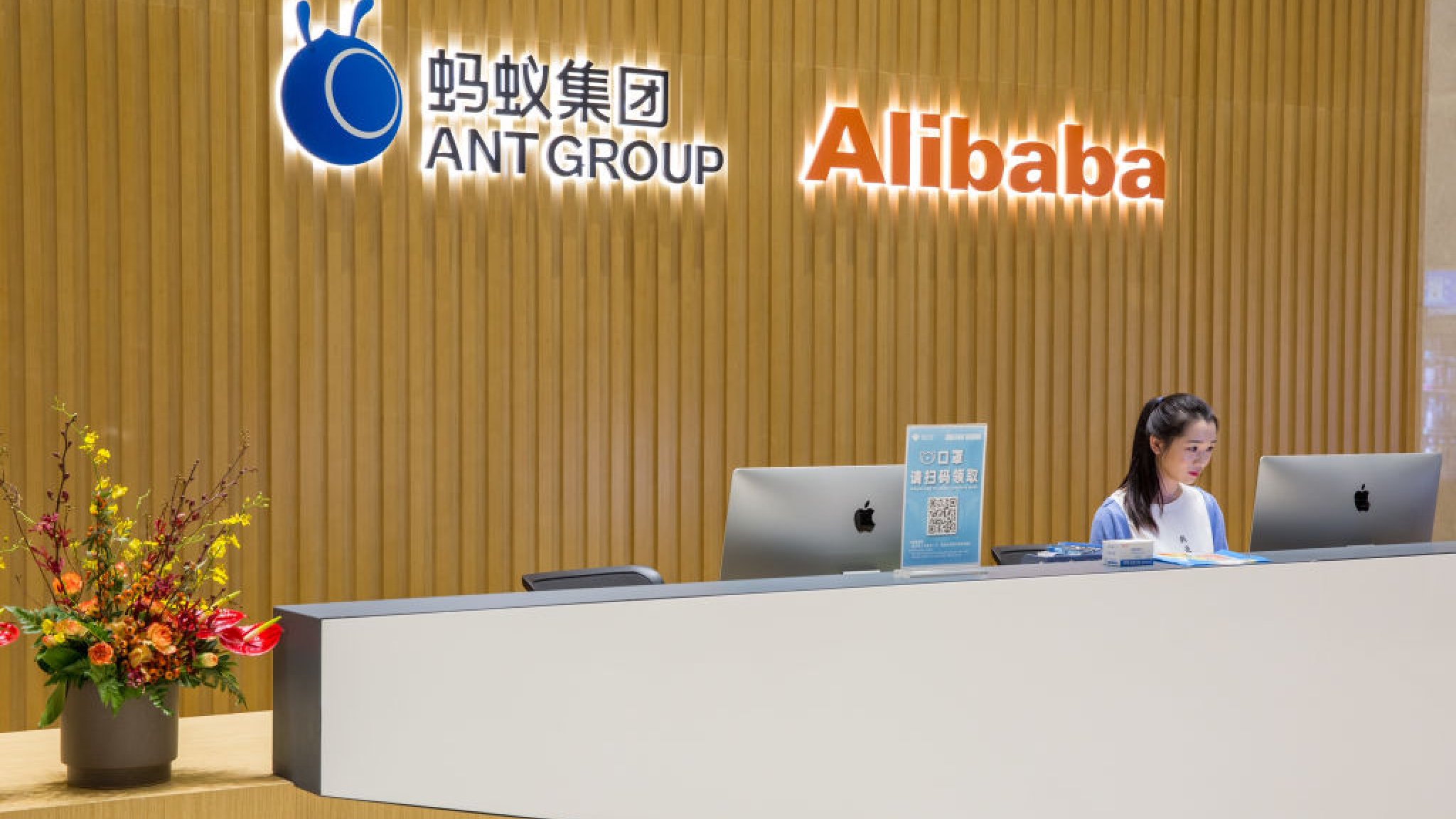
  • Ant Group Issues Financial Self-Discipline Rules

    Ant Group Issues Financial Self-Discipline Rules

    The internal guidelines come amid increased scrutiny by Chinese regulators of the country’s financial technology sector.

    In a statement, Ant said it will stop issuing loans to minors on its consumer loan platforms and will prevent small business loans from flowing into stock and property markets. The group’s credit-rating service Zhima Credit will also not be available to financial institutions including microloan lenders.

    The publication of the rules on Friday comes four months after the technology giant’s scrapped $37 billion IPO. The group has since agreed with Chinese regulators to restructure itself into a financial holding company, which will make it subject to capital requirements similar to those for banks in mainland China.

    Last month, the governor of the People’s Bank of China Yi Gang suggested a listing revival was possible for Ant, saying that you just follow the standard of legal structure and you will have the result.

    However, no timeline was specified, and the restructuring is expected to take some time with the listing revival not within the scope of the high-level government agenda right now, according to a report which highlighted greater focus by Beijing on Ant’s shareholders.

  • LINE BK Tops 2 Million Users in First Four Months

    LINE BK Tops 2 Million Users in First Four Months

    LINE Corporation today announced that LINE BK, Thailand’s first social banking service, surpassed 2 million users as of February 23, just four months after starting operations.

    Since launching in October 2020, LINE BK has exceeded expectations in terms of transaction volume, loan applications, and the number of new users. As many as 50,000 new savings accounts are opened on a single day, and the total amount of financial transactions on the platform over the first four months has surpassed 21 billion baht (about US$700 million).

    As of late February, LINE BK had issued personal loans with an outstanding balance of over 5 billion baht (about US$165 million), and during peak periods, LINE BK saw more than 40,000 loan applications on a single day — and 30% of those approved had never received a loan before. Those numbers clearly demonstrate how Thailand has a strong need for an all-in-one, fully digital financial services app.

    LINE BK offers a wide range of integrated financial solutions—including special rate accounts with interest rates of up to 1.5% annually and debit cards—all within the LINE app so users do not have to switch between apps or memorize bank account numbers. Through LINE BK Credit Line, our personal loan service, customers can easily apply for personal loans anywhere, at any time, and get approved instantly, at which point the funds become immediately available.

    “We are very pleased to see how quickly LINE BK has been accepted by the Thai people,” said Young Eun Kim, Chief Operating Officer of LINE Financial Asia and Chairman of the Board of Directors of KASIKORN LINE. “We opened LINE BK on the principle of ‘Banking in Your Hand’, offering people greater convenience and accessibility for their main banking services. Moreover, additional benefits like cashback deals and low interest rates on loans have also helped users embrace LINE BK.”

    Moving forward, LINE BK will offer more financial solutions, expanding its portfolio to cover insurance and financial investment products.

    LINE BK is a collaboration between KASIKORNBANK (or KBank), through its subsidiary KASIKORN Vision Company Limited (or KVision), and LINE Corporation, through its subsidiary LINE Financial Asia, with the objective of creating synergy between KBank’s digital banking leadership in Thailand and LINE’s 47 million digital users. As the first comprehensive “social banking” platform in Thailand, LINE BK aims to be accessible for everyone and ensure a better financial experience for people’s daily lives.

    LINE is currently developing plans to expand banking services into other countries, including Japan, Taiwan, and Indonesia.

  • Switzerland and China to Deepen Finance Ties

    Switzerland and China to Deepen Finance Ties

    Despite the increasing discord between China and the U.S., Switzerland wants to further deepen its cooperation in financial matters with the Far East nation.

    Swiss Finance Minister Ueli Maurer exchanged views with Chinese Vice Premier Liu He at a virtual ministerial meeting (yesterday) Wednesday, according to a statement from the Federal Department of Finance (FDF). The two politicians each had a high-ranking delegation at their side.

    Maurer and Liu He thus developed perspectives on deepening bilateral relations in the areas of stock market trading, sustainable financial services, asset management, and digital central bank money. The central banks of both countries are known to be working on projects for digital central bank money, although the respective approach differs greatly in terms of the user base.

    China is working on a digital version of the yuan for everyone (the «retail» version of a digital currency), while the Swiss National Bank (SNB) is evaluating a so-called «wholesale» version, for the time being, a cryptocurrency reserved for the financial market.

    The latest meeting followed similar contacts in 2017 and 2019. The governments of Switzerland and China also want to intensify financial market relations in parallel with the existing free trade agreement. In this context, the Swiss financial center envisages using the opening steps in the Chinese financial market for concrete joint projects.

  • UBS Lifts Ex-CEO Sergio Ermotti’s Pay in Final Year

    UBS Lifts Ex-CEO Sergio Ermotti’s Pay in Final Year

    Swiss bank UBS lifted pay for outgoing CEO Sergio Ermotti by nearly 14 percent and granted its new CEO Ralph Hamers a $3.3 million bonus for four months of work.

    Zurich-based UBS paid Sergio Ermotti 14.2 million Swiss francs ($15.4 million) last year, according to its annual report disclosed on Friday, from 12.5 million francs last year. The Swiss banker ran the bank from 2011 until October 31.

    The board of directors recognizes that Sergio Ermotti successfully led UBS through a very challenging year marked by the Covid-19 pandemic,» UBS said in an excerpt of his performance assessment included in the report.

    Ralph Hamers, who took over as CEO of the Swiss wealth manager four months ago, was paid 4.5 million francs, according to the report. At ING, Hamers earned 2.6 million euros ($3.1 million) in 2019, his last full year running the Dutch bank.

    It is common knowledge that Switzerland pays better than wider Europe: Even after a big cut in 2019, Ermotti’s payday made him the top-earning CEO of a listed European bank. Hamers’ UBS bonus last year – 3 million francs – alone is larger than his entire 2019 salary from ING.

    Ralph Hamers has launched a number of strategic initiatives, all with the aim of ensuring the continued long-term success of UBS,» the bank said.

    The unexpected reopening of a criminal investigation into Hamers in the Netherlands puts the Swiss bank on the back foot: it desperately needs its new CEO’s know-how to revitalize, but not with those plans effectively captive to the Dutch legal process, nor at the cost to its reputation.

    UBS had to pay a modest 164,000 francs to «make whole» Hamers – or to compensate him for ING instruments and awards he abandoned to join the Swiss bank. By contrast, it paid Iqbal Khan 8.1 million francs to replace Credit Suisse awards when UBS poached him as private bank co-head in 2019.

  • DBS Loan to Spur Green Solutions in Maritime Industry

    DBS Loan to Spur Green Solutions in Maritime Industry

    The bank has issued a sustainability-linked loan to Sembcorp Marine, which references the Singapore Overnight Rate Average.

    The $500 million sustainability-linked financing facility, believed to be the industry’s first, will help steep the maritime giant to cleaner, greener and renewable energy solutions, the two sides announced in a joint statement on Thursday.

    The loan’s interest rate comprises a compounded daily SORA rate calculated in arrears and an applicable margin. The loan features interest rate discounts linked to pre-determined Environmental, Social and Governance (ESG) targets, which are aligned with Sembcorp Marine’s performance targets set out in the group’s sustainability report.

    The inclusion of green financing dovetails with our strategic transformation and pivot since 2015 to provide innovative engineering solutions to the global offshore & marine and energy industries, William Goh, Sembcorp Marine’s group finance director, said.

    In 2019, some S$530 million of Sembcorp Marine’s projects were related to green solutions. The company has also introduced more green features in its operations, such as the use of solar energy to reduce emissions.

    As a purpose-driven bank, we believe financial institutions have a strategic and pivotal role to play in proactively supporting industries’ work towards a lower-carbon future, Dorian Delteil, DBS head of oil and gas, said.

    DBS recently raised its commitment to finance S$50 billion in renewable, clean energy and green projects by 2024, up from S$20 billion previously.

  • StanChart Revamps Hong Kong Branches

    StanChart Revamps Hong Kong Branches

    Standard Chartered continues making transformations to its physical presence in Hong Kong, including plans to revamp its branches in the city.

    Standard Chartered will revamp its Hong Kong branches with plans to create paperless services with more digitalization, according to its chief executive for the market Mary Huen during a post-results briefing. More private rooms will also be built for in-person meetings between clients and their wealth managers.

    Branch visits fell 25 percent during the pandemic, Huen said, with more demand for financial services through digital channels.

    The bank will look to add, relocate or close some branches with the aim of maintaining 70 in the city.

    Elsewhere in the city, where the bank employs around 6,000 workers, Standard Chartered is already making changes to its physical presence.

    It is shedding multiple floors from its Hong Kong main office and renting out space from another office located in an industrial district in the eastern part of the city.

    In November last year, the bank said it would roll out flexible working options for around half of its 85,000 staff worldwide by early 2021. Standard Chartered employees in Hong Kong reportedly started using co-working spaces last month operated by IWG as part of a 12-month trial for access to 3,500 offices globally.

  • DBS Names Malaysia Country Head

    DBS Names Malaysia Country Head

    DBS reshuffles several senior managers and appoints a new country head for Malaysia, effective June 1 this year.

    The Singaporean lender named Abdul Raof Latiff as the new Malaysia country head, according to a statement, succeeding Jeffrey Ling who will retire from the role.

    Ling, who joined the bank in 1995, will stay as a senior advisor to help continue engagement with DBS’s key clients in Malaysia.

    Latiff joined DBS in 2017 and was most recently its group head of digital for institutional banking and group head of global transaction services product management. Latiff has over 25 years of banking experience and he previously held senior positions in the region with the likes of Citigroup, J.P. Morgan and HSBC.

    Latiff’s existing roles will be taken over by 15-year DBS veteran Lim Soon Chong, currently group head of investment products and advisory for consumer banking and wealth management.

    The new appointments reflect our commitment to groom talent from within, and enable us to continue to provide more development opportunities to our senior team across the region, said DBS group head of institutional banking Tan Su Shan.

    As a result of our deliberate effort to build our timber from within, a large proportion of our senior leaders have also been developed internally, including over 80 percent of our managing directors.

  • Vietnamese banks continue to ascend global brand rankings

    Vietnamese banks continue to ascend global brand rankings

    Nine Vietnamese lenders, five of them state-owned, have risen up the list of the world’s 500 most valuable banking brands.

    State-owned Agribank, one of the ‘Big 4’ state-owned lenders, jumped 17 places to 173th in the annual ranking put out by U.K. consultancy Brand Finance.

    Fellow state-owned lenders Vietcombank and VietinBank rose 27 and 61 spots to 180th and 216th.

    BIDV was at 246th and MB at 374th, up 30 and 12 spots.

    Of the private lenders, VP Bank rose 37 places to 243rd and the country’s private player, Techcombank, jumped 57 spots to 270th.

    Sacombank and ACB rose 30 and 23 places to 392nd and 397th.

    The report said VietinBank was one of 10 fastest-growing banks globally last year.

    “Vietnam’s banking sector has seen the greatest year-on-year brand value growth of any nation in the rankings with 23 percent,” the consultancy said.

    “Vietnam’s ability to effectively control and constrain Covid-19 has allowed it to buck the sector-wide trend of declining brand value.

    “Internal reforms have strengthened accountability in the Vietnamese financial sector, which has had the knock-on effect of boosting not just revenues, but brand reputation and trust.”

    Vietnam’s banking sector has recorded cumulative brand value growth of 753 percent in the last five years, the second-highest rate in the rankings.

    “Since the Vietnamese government introduced its strategy to boost accountability and the strength of the banking sector, including more stringent capital requirements and greater transparency, customer perception has improved,” Brand Finance said.

    China’s ICBC was the world’s top bank brand.

    Chinese banks maintained their dominance in the rankings, accounting for 33 percent of total brand value and seven of the 10 top climbers.

  • StanChart Profits Plunge and Miss Estimates

    StanChart Profits Plunge and Miss Estimates

    Profits at Standard Chartered more than halved in 2020 and miss analyst estimates, according to its latest annual results.

    Standard Chartered posted $1.61 billion in pre-tax profits for 2020, a 57 percent plunge compared to 2019’s $3.71 billion.

    It also missed the average forecast of $1.85 billion, according to analyst estimates compiled by the bank.

    Credit impairments increased from $1.4 billion to $2.3 billion.

    According to the bank, the impact of global interest rates will cause income levels in 2021 to be similar to 2020, though credit impairments are expected to decrease.

    The bank also forecasts annual income growth of 5-7 percent to return in 2022.

    Returns in 2020 were clearly impacted by higher provisions, reduced economic activity and low-interest rates, in each case the result of COVID-19,» said Bill Winters, Standard Chartered group chief executive.

  • HSBC Expands China Private Banking Footprint

    HSBC Expands China Private Banking Footprint

    HSBC continues to voice its ambitions to pivot to Asia with plans to extend its onshore private banking services to ten mainland cities in the coming five years.

    Days after securing $3.5 billion in investments for its wealth unit over the next five years, HSBC reiterated its ambitions in Asia, home to nearly half of the bank’s $1.6 trillion of wealth balance and 65 percent of group revenue.

    Regional head of wealth and personal banking Greg Hingston set out plans for the mainland market during this five-year period including the extension of private banking to ten cities onshore and the doubling of its client base for Jade – a segment targeting clients with a $1-5 million in investable assets (the private bank targets clients with $5 million or more), according to a statement.

    Hinston said the bank also aims to double its Jade client base in Singapore and become a lead foreign bank for non-resident Indians.

    The bank also reiterated its hiring goals with plans to add more than 5,000 client-facing wealth-related roles in the next five years. These roles include relationship managers, investment counselors and specialists to support clients in Hong Kong, Singapore, and mainland China.

    The bank also underlined its intention to improve its distribution in the three markets; digital and platform capabilities in the broader region; and product development, especially for high and ultra-high net worth clients.

    We have a bold but achievable ambition, to be Asia’s leading wealth management provider by 2025, said Nuno Matos, HSBC’s chief executive for wealth and personal banking.

  • StanChart CEO Signals He Will Stay on the Job

    StanChart CEO Signals He Will Stay on the Job

    Despite rumors of Bill Winter’s potential exit, the 59-year old chief executive said he would stay with Standard Chartered following a 2020 that saw profits miss analyst targets and plummet 57 percent.

    Although rumors of an exit emerged earlier this year with investment and commercial banking chief Simon Cooper reportedly named as a potential successor, Bill Winters publicly reassured of his stay with the British lender.

    Don’t let the grey hair fool you,» said Winters, during a media call for the bank’s 2020 financial results. «I came here to do a job – the job is not yet done.

    Winters was named group chief for Standard Chartered in 2015 and will celebrate his sixth full year with the bank in June this year.“

    That job is a mandate to return to growth after pre-tax profits in 2020 plunged 57 percent to $1.61 billion, missing analyst estimates of $1.85 billion while returning just 3 percent on tangible equity (ROTE), well below its longer-term target of 10 percent.

    While the bank noted that low-interest rates will likely cause 2021 to yield similar income levels as last year it was confident that it would reverse momentum quickly with plans to achieve 5-7 percent income growth from 2022 onwards. The is done with the aim of achieving 7 percent ROTE by 2023 to meet its longer-term target of more than 10 percent ROTE.

    The bank highlighted its refreshed strategic priorities which focus on four areas: leveraging its network, maintaining its affluent business, scaling up its mass retail business and capitalizing on opportunities in sustainability. a

  • HSBC Replaces Singapore Chief

    HSBC Replaces Singapore Chief

    HSBC has named a new Singapore chief executive to succeed Tony Cripps who is set to leave and join Saudi British Bank.

    Wong Kee Joo has been appointed as HSBC’s new Singapore CEO, according to a report citing an internal memo.

    Wong replaces Tony Cripps who is set to become the managing director-designate and board member of the Saudi British Bank (SABB), where HSBC is the largest shareholder at 31 percent, effective April 4.

    Before Wong takes on the new role on June 1, HSBC Singapore’s chief operating officer Olfert De Wit will act as the interim Singapore CEO.

    Wong is currently the Asia Pacific head for global liquidity and cash management and according to HSBC’s deputy chairman and chief executive Peter Wong, such a role has enabled «strong experience in developing digital solutions for wholesale clients and supporting the trade and investment flows between China and ASEAN.

    He had also previously worked in various markets including the U.K., Thailand, Hong Kong, and mainland China.

    We will be increasing our investment in both people and technology as we continue to strengthen our wholesale banking services and to grasp the growing wealth management opportunities in Southeast Asia and beyond, the memo said.

  • Credit Pressures Drag HSBC Profits Lower

    Credit Pressures Drag HSBC Profits Lower

    Credit impairment charges dragged HSBC profits lower in 2020 but it still managed to beat analyst estimates.

    Pre-tax profits fell 34 percent at HSBC in 2020 due to higher expected credit losses and lower revenue, according to a statement from the bank. This includes a 10 percent drop in revenues to $50.4 billion, attributed to the impact of lower interest rates and a $1.3 billion asset impairment charge from software intangibles.

    This beat profit forecasts of $8.3 billion, according to analyst estimates compiled by HSBC.

    For the fourth quarter, it posted a 10 percent drop in revenues with a 50 percent drop in adjusted profit before tax to $2.2 billion.

    The bank announced that it would be resuming dividend payments after a long pause since the fourth quarter of 2019.

    This was a difficult decision and we deeply regret the impact it has had on our shareholders, said HSBC group chairman Mark Tucker.

    We are therefore pleased to restart dividend payments at the earliest opportunity. The Board has announced an interim dividend of $0.15 for 2020, and adopted a policy designed to provide sustainable dividends in the future.

  • UBS Enlists More Firepower for Parisian Appeal

    UBS Enlists More Firepower for Parisian Appeal

    Swiss bank UBS secured a coterie of Europe’s political and legal elite for its side, as it heads into the appeal of a high-stakes criminal verdict in France.

    On March 8, UBS’ legal team under chief lawyer Markus Diethelm and Allen & Overy’s Denis Chemla head back to criminal court in Paris, in an attempt to overturn a 2019 guilty verdict attached to a 4.5 billion ($5 billion) fine against the wealth manager.

    Much like UBS’ 2008 settlement in the U.S. for $780 million, the French case represents a watershed for Switzerland’s wider banking industry. Others including crosstown rival Credit Suisse are closely watching UBS’ case, which is expected to set precedent for other Swiss wealth managers.

    UBS is enlisting European political nobility including ex-European Commission head Jean-Claude Juncker and former German finance minister Wolfgang Schaeuble and Peer Steinbrueck on its side.

    It is hard to overstate the importance of the French trial for UBS: besides the huge financial impact, the case caused shareholders to deny the Swiss bank’s top management and board a key backing two years ago. UBS is pulling out all the stops as a result.

    The influential politicians join an armada of advisers to UBS, including ex-German politician Theo Waigel. The addition of Steinbrueck is especially ironic: the German politician in 2012 threatened to send a financial cavalry to Switzerland to root out tax dodgers and cheats – a tone that was perceived as tactless by Swiss diplomats.

    The reason the politicians are so key to UBS’ appeal is that the bank plans to make a European Union guideline from 2003 a key part of its argument to the court, which hears the entire case anew. The directive safeguarded cross-border interest payments and required Swiss banks to notify EU member states if their citizens were earning interest in wealth held in Switzerland.

    It was superseded four years ago when Switzerland began adopting automatic data-swapping agreements with the bloc. A big part of UBS’ new defense plan is that a large portion of French wealth held at UBS wasn’t undeclared – the bank had also been passing on withholding tax to France, though French officials wouldn’t have known who the money stemmed from.

    Waigel, an ally of former German chancellor Helmut Kohl, was instrumental in drafting the EU directive in the late 1990s. Together with his former negotiating partners, the ex-politico is reportedly being deployed to reconstruct the decades-old plan in order to support UBS’ defense. The trial was set for last June but postponed to 2021 due to the pandemic.

    This agreement allows Swiss banks to manage foreign assets while maintaining banking secrecy,» Swiss lawyer and academicPeter Nobel, who is also advising UBS, told the Swiss outlet. If the French justice system retroactively criminalizes this as money laundering, it is violating an agreement of international law.

  • HSBC Investment Strategists Named to Expanded Roles

    HSBC Investment Strategists Named to Expanded Roles

    HSBC makes three new appointments to oversee the overall investment strategy across the newly merged wealth unit.

    The bank appoints Fan Cheuk Wan as Asia chief investment officer (CIO) for private banking and wealth management, according to a statement. In her expanded role, she will oversee investment strategies and themes across all asset classes for the bank’s affluent and super affluent segment, Premier and Jade, respectively, in addition to the private banking segment.

    Fan is a wealth industry veteran and joined HSBC’s private banking arm in 2016. She previously worked with Credit Suisse, ABN AMRO, Cazenove, BNP Paribas and Standard Chartered.

    In addition, the bank has also appointed Patrick Ho as the North Asia CIO and James Cheo as the Southeast Asia CIO for the unit. This is also an expanded role for Ho and Cheo who previously solely served the private bank.

    Ho joined HSBC Private Banking in 2017 and previously worked with Credit Suisse, UBS, Bear Sterns and BNP Paribas. Cheo rejoined in 2019 and previously worked with Barclays.

    The wealth and personal banking division was created in early last year by merging retail banking and wealth management, asset management, insurance and private banking to create a unit with $1.5 trillion in assets as of the third quarter of 2020.