Tag: Finance

  • Ex-UBS Chairman Marcel Ospel Dies

    Ex-UBS Chairman Marcel Ospel Dies

    Marcel Ospel, the chairman of UBS until shortly before a 2008 Swiss government rescue, has died. He was 70. Ospel was eventually ousted after UBS was forced to repeatedly go cap in hand to shareholders as well as seek an injection from Singapore’s sovereign wealth fund

    Ex-UBS overseer Marcel Ospel stepped down in April of 2008, eight months before the Swiss-based bank was forced to take a bailout after more than $50 billion in crisis losses. He died after a prolonged battle with cancer.

    The mercurial Swiss banker had largely retreated from public life following UBS’ fall from grace, after which he was considered a persona non grata in Switzerland. He is survived by his wife, Adriana Bodmer and their two children as well as four children from two previous marriages.

    Ospel’s legacy is his 31-year career at UBS, where he began as an apprentice in 1977. He was the chief architect of the landmark merger between Union Bank of Switzerland (former UBS) and Swiss Bank Corporation (SBC), which is now UBS, in 1998.

    Ospel was also instrumental in a long deal spree including Brinson Partners, GAM, Warburg, and O’Connor, the Chicago derivatives firm which brought wunderkind David Solo into the UBS fold. Ospel remained close to Solo, who ran GAM until 2015 and is now chairman of a Credit Suisse joint venture.

    Ospel climbed into the chairman’s job from the CEO in 2001, handing over the top job to Peter Wuffli. Swissair went bust in the first year of Ospel’s tenure as chairman – bringing the Swiss banker public anger for his perceived failure to extend the flagship carrier a line of credit.

    As chairman, maintained tight control from behind the scenes via a so-called chairman’s office. In practice, this meant that everyday operational decisions like big investment banking loans were vetted by Ospel and two close associates, Stephan Haeringer and Marco Suter – to whom he also remained close until his death.

    Ospel was eventually ousted after UBS was forced to repeatedly go cap in hand to shareholders as well as seek an injection from Singapore’s sovereign wealth fund. The bank took years to stanch its crisis-era withdrawals and recover from damaging tax probes.

    It also spent the post-crisis years setting aside scandals including rigging foreign exchange and metal markets as well as Libor, the then-benchmark interest rate. Ospel, reportedly worth north of $150 million, emerged as a private investor, including in fintech firm Evolute.
  • UOB Offers Liquidity Boost to SMEs

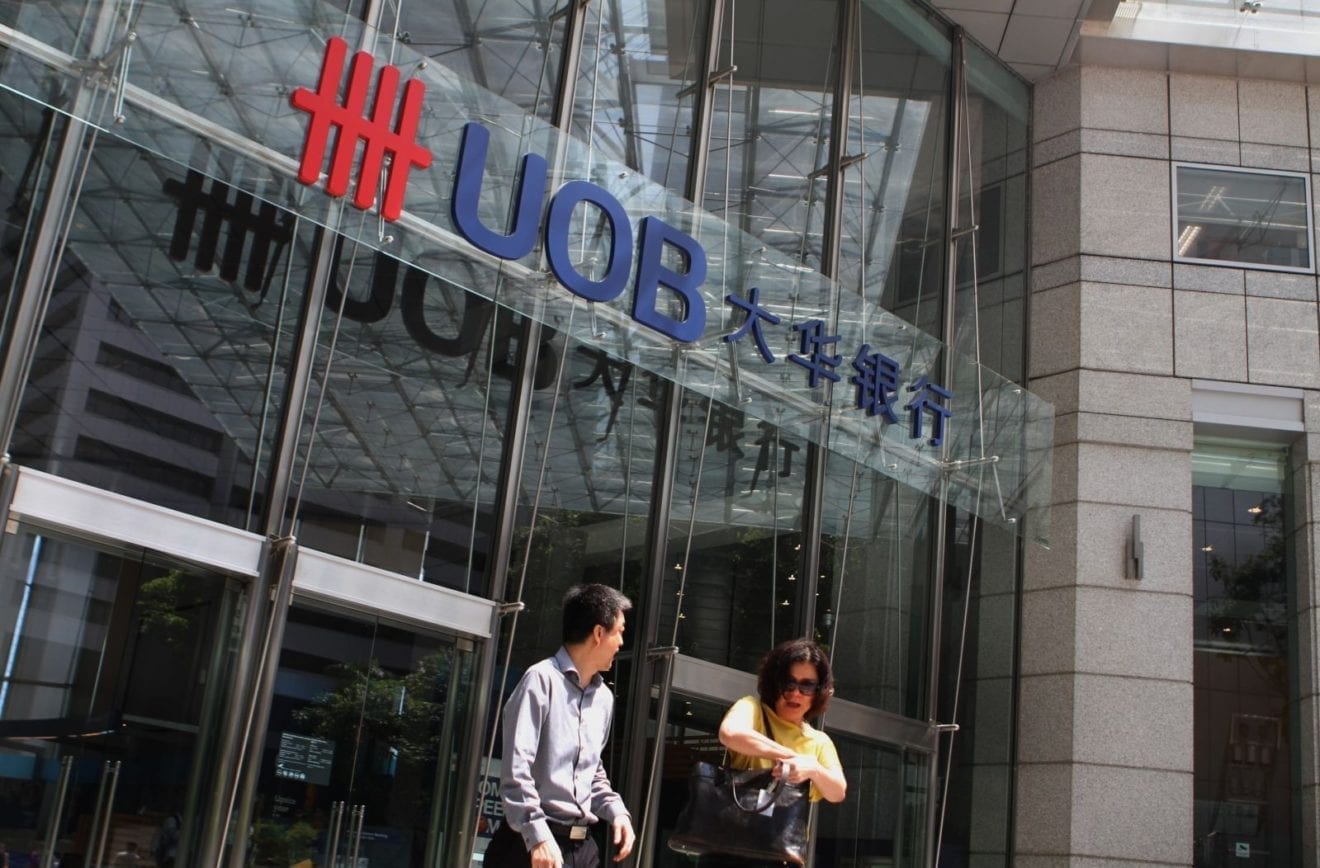
    UOB Offers Liquidity Boost to SMEs

    Businesses that require urgent access to funding to stay afloat during the Covid-19 outbreak can take up pre-approved loans of up to S$200,000 ($140,000) and only service the interest until December 31.

    UOB has announced collateral-free loans to help small and medium enterprises, especially those from hard-hit sectors such as retail and food and beverage, gain access to much-needed funds quickly.

    According to a statement on Tuesday, this will be offered to customers with a good repayment track record and at least a 12-month borrowing relationship with the bank, and the funds will be available in two business days.

    UOB said that as a result of the Covid-19 outbreak, it has seen more customers who are seeking loans to provide their businesses with liquidity, citing a threefold increase in loan approvals from January to March this year.

    The reality is that small businesses already operate on tight cash flow and do not have the liquidity to withstand the prolonged economic shock that is expected from the Covid-19 pandemic. As such, they require urgent access to funding in order to stay afloat, said Lawrence Loh, head of group business banking, UOB.

  • UBS Tops Broadridge’s China Rankings for Asset Managers

    UBS Tops Broadridge’s China Rankings for Asset Managers

    UBS Global Asset Management took the top of Broadridge’s ranking of global asset managers in China, based on a survey of 50 fund gatekeepers from the mainland market.

    The survey is based on six criteria: brand perception, China fund assets under management (AUM), global investment strength, local business operations and scope, and the firm’s strategic prioritization of the China market.

    The Swiss asset manager took the top spot again – the firmed first launched the rankings in October 2019 – followed by J.P. Morgan and Blackrock. By AUM size, Blackrock, UBS, DWS, Invesco and Fidelity all ranked in the top five.

    As with many other things in the mainland market, brand name matters and it often has stronger effects to distribution than other more mature markets that may use a portfolio of diverse instruments such as through discretionary mandates.

    The survey highlighted both J.P. Morgan and Fidelity for their strong efforts in this regard, with the former taking the top rank – it scored high across all 50 respondents – and the latter breaking the top 10 as a new entrant.

    Despite an ongoing global pandemic, global asset managers continue to capitalize on a historic opportunity to enter the mainland market with such deep levels of participation, sometimes at the wholly-owned level. J.P. Morgan will look to invest $1 billion to take full ownership of its joint venture partner China International Fund Management (CIFM). BlackRock and Singapore’s Temasek are in talks with China Construction Bank’s wealth unit to form a new asset management joint venture.

    Barring further COVID-19 related setbacks in the mainland, we see that global managers are well set to resume the rapid ramp-up of their onshore presence, said Yoon Ng, Broadridge’s senior director of APAC insights, adding that local authorities are expected to keep opening up the financial sector as planned.

  • Citi to Hand Job Offers to All Summer Interns

    Citi to Hand Job Offers to All Summer Interns

    Fears among graduates that virtual or shortened internship programs at banks amid the Covid-19 pandemic will make it more difficult for them to secure a job after completing the program have been alleviated, at least for Citi’s summer interns.

    The bank previously announced that its summer internship program would be delayed from June 1 to July 6, and shortened to five weeks, as a result of the escalation of the virus outbreak. In a statement on Tuesday, it promised the 76 students of its incoming batch a full-time analyst role if they meet the minimum requirements of the program.

    Citi’s offer also promises to pay the interns for the 10-12 weeks despite the truncated program, essentially giving them at least five weeks’ paid leave. Four out of five of this year’s batch of summer interns in Singapore are from local universities. They will be attached to one of the bank’s eight business or technology divisions.

    While these are trying times, we recognized that it is temporary and remain unwaveringly committed in our strategy to build a strong, diverse talent pipeline through key initiatives such as our summer internship program, Jorge Osorio, Head of Human Resources, Citi Singapore, said in a statement on Wednesday.

    Interns at banks usually have to compete for the openings available, and it is not unusual for only half the batch of interns at banks to receive job offers, according to jobs portal eFinancial Careers.

    Other banks have also made changes to their internship programs this year as a result of the ongoing pandemic: Credit Suisse has converted its EMEA spring internship into a virtual program, while Goldman Sachs previously announced that it would be halving the duration of its summer analyst program but will pay participants for the full 10 weeks.

  • HSBC Private Bank Managing Director to Depart

    HSBC Private Bank Managing Director to Depart

    He announced his departure on LinkedIn on Friday, saying he was «excited» to head to his next destination.

    Shang-Wei Chao, HSBC Private Banking’s Singapore and Malaysia market head, will be leaving the firm, he announced in a LinkedIn post, which was confirmed by a spokesperson at the bank.

    Chao joined HSBC in 2016, after 12 years at UBS, where he was a client advisor and desk head covering numerous Southeast Asian markets. The bank did not disclose plans for a replacement.

    Since joining HSBC Private Banking in 2016, I’ve felt that I was on an express train that didn’t need to stop to refuel, Chao said in the post.

    The bank has successfully transitioned to its strategy to get back to growth, and other transformation goals have made amazing headway, he said about his time at the firm.

  • Ex-UBS Private Banking Veteran Reemerges at StanChart

    Ex-UBS Private Banking Veteran Reemerges at StanChart

    A private banking veteran, most recently with UBS leading a team covering high net worth clients in Hong Kong, has reemerged at Standard Chartered.

    Chiu Wai Man has joined Standard Chartered as a deputy market head for Hong Kong, effective as of yesterday.

    A spokesperson for the bank confirmed the new hire.

    Chiu was most recently the Hong Kong country team head at UBS where she joined in 2018 with the task of hiring more relationship managers for the bank’s high net worth business in the city under regional market manager Adeline Chien. Chiu has around 20 years of banking experience and was previously with Hang Seng leading a 30-strong private banking team after stints with ANZ and HSBC.

    2020 remains on track to reach its target of $100 billion assets under management (AUM) in the next two to four years. The bank had over $67 billion of AUMs as of 2019-end.

    In January this year, Standard Chartered hired another ex-UBS banker, Gerald See, as an executive director and senior client partner based in Singapore to focus on ultra-high net worth (UHNW) clients. At UBS, See was previously a director in its family office and UHNW division.

  • HSBC Creates Coronavirus-Focused Restructuring Unit

    HSBC Creates Coronavirus-Focused Restructuring Unit

    HSBC is forming a global restructuring team targeting corporate clients affected by the coronavirus pandemic.

    Patrick Nolan has been named head of client leadership to lead the new team, relinquishing his previous role as global head of corporate banking, according to a report citing an internal memo.

    Also joining are Gregory Guyett, co-head of global banking and markets, and Barry O’Byrne, global head of commercial banking, who were tasked by chief executive Noel Quinn to help assemble the team. HSBC’s chief risk officer Pam Kaur will also reportedly join the new restructuring unit.

    The internal announcement of a new global restructuring team coincides with the recent news of debt troubles from oil trader Hin Leong which has been hit by turbulent commodity prices. The Singaporean reportedly owes a total of $3.85 billion to 23 banks including $600 million to HSBC, the lender with the largest exposure to the firm.

    The coronavirus pandemic and rough negotiations at OPEC have created a volatile environment for the oil market in 2020. Year-to-date, brent crude prices have plunged over 56 percent.

  • HSBC’s Pro-Dividend Shareholders Call for Regulator Intervention

    HSBC’s Pro-Dividend Shareholders Call for Regulator Intervention

    Enraged retail investors of HSBC in Hong Kong have invoked the Securities and Futures Commission in the latest development of the HSBC dividend cancellation fiasco. A 500-strong group that claimed to be HSBC shareholders assembled at the offices of the Securities and Futures Commission (SFC), urging the local regulator to intervene and help reverse a decision by the British lender to scrap dividends on Bank of England orders. Leading the group was local politician Christine Fong Kwok-shan.

    The [Prudential Regulation Authority] orders have hit many retirees hard in Hong Kong, including my father who invested in HSBC shares for decades,» Fong said, according to a report that claimed SFC staff accepted the letter without commenting.

    We understand that HSBC canceled dividend payments at the order of the British regulator. As usual, it needs a regulator to talk to another regulator.

    The new group joins the growing coalition of pro-dividend shareholders that include the Hong Kong Federation of Trade Unions, which boasts 420,000 members, and a self-dubbed HSBC Shareholder Alliance of allegedly 600 owners of HSBC stock.

    Despite the fact that dissatisfied investors have no legitimate case to push for a reversal, they continue nonetheless to mobilize in order to meet the 5 percent shareholder threshold to trigger an extraordinary general meeting and have their demands directly heard. As of Thursday, 3 percent of shareholders have pledged their support.

    We profoundly regret the impact this will have on you, your families and your businesses, said HSBC chief executive Noel Quinn in a rare letter earlier this week directly addressing Hong Kong shareholders earlier this week. We are acutely aware of how important the dividend is to our shareholders in Hong Kong. We deeply value your support as a shareholder and we never take that for granted.

  • OCBC Shutters Investors Hub During Circuit Breaker

    OCBC Shutters Investors Hub During Circuit Breaker

    The bank hopes to encourage more people to stay home and comes in support of stricter social distancing measures implemented by the government to contain the spread of Covid-19.

    OCBC Bank’s wholly-owned brokerage subsidiary, OCBC Securities, will temporarily close its Investors Hub at OCBC Centre South from 20 April to 4 May 2020, it announced in a statement on Friday.

    The bank said customers will be able to continue to trade or make transactions through their trading representatives or on OCBC Securities’ digital platform, iOCBC, as the brokerage will continue to be operational during this time.

    The Monetary Authority of Singapore also urged the public to minimize visits to their premises during the current circuit breaker period.

    While financial services remain available as one of the essential services exempted from the suspension of activities at workplace premises announced by the Ministry of Trade and Industry (MTI) on 3 April 2020, customers are urged to use digital, email, and telephone channels as far as possible and minimize face-to-face interactions at FI premises,» the regulator said in a statement on Friday.

    About half of the bank branches in Singapore have closed, along with most of the physical service locations of insurers, brokers and fund managers, in view of reduced customer traffic.

  • Q1 Profits Plummet for Citigroup

    Q1 Profits Plummet for Citigroup

    First-quarter profits plummeted 46 percent at Citigroup due in part to its high exposure to unsecured lending via credit cards.

    Citi posted $2.52 billion in first-quarter profits and set aside $4.9 billion in anticipation of increasing defaults fuelled by the ongoing coronavirus pandemic. The U.S. business reported a first-quarter loss of $837 million with the card business representing half of the reserves set aside for expected loan losses.

    Citi’s chief financial officer Mark Mason did not provide specific details on expected profitability pressures but nonetheless said it was «reasonable to expect» further loss provisioning spending on the effectiveness of U.S. government relief programs.

    Credit card defaults are historically correlated with unemployment and the ongoing health crisis has placed added pressure on lenders more dependent on such unsecured loans. In 2019, the U.S. credit card business accounted for 15 percent of total net income.

    Globally, the consumer banking business was flat as gains from the U.S. arm were offset by a 4 percent decline in Asia to $1.8 billion due to lower revenues in its cards business – this could see a boost from its recent partnership with major e-platform HKTVmall.

    Citi’s overall earnings were offset in part by trading fees as equities and fixed income trading business posted a 39 percent spike as activity rose with increased turbulence.

  • DBS Sets Date for AGM

    DBS Sets Date for AGM

    The bank will pay its final dividend of S$0.33 per share on May 26, after approval at the AGM. DBS Bank will hold its annual general meeting (AGM) by electronic means on April 30. As no physical attendees permitted in light of ongoing «circuit breaker» measures, shareholders should pre-register to be able to watch and/or listen to the proceedings online, the bank said in a statement on Thursday

    Originally scheduled for March 31, DBS said it would postpone its AGM, following government measures that imposed stricter measures to enforce safe distancing in social settings, given the Covid-19 virus outbreak.

    Earlier this month, Singapore Exchange Regulation said it would automatically extend by 60 days the deadline for all issuers with financial year-end on or before 31 March 2020 to hold their AGMs.

    The date of UOB’s AGM has not been fixed, it is likely to hold its meeting on April 30. UOB investors are due to approve a final dividend of 55 cents a share and a special dividend of S$0.20 per share at the AGM.

    OCBC also said it would defer its AGM, originally scheduled for April 30, to a future date to be determined. The bank was due to pay a final dividend of S$0.28 per share on June 5, with the record date on May 26.


  • Siam Commercial Bank Set to Launch Myanmar Unit

    Siam Commercial Bank Set to Launch Myanmar Unit

    Thailand’s third-largest lender has received preliminary approval to operate in the Southeast Asian nation of 54 million people.

    SCB will be allowed to open up to 10 branches in the business area with an initial focus on Thai clients with investments in the country, according to Reuters report citing chief executive Arthid Nanthawithaya, who said the bank already had over 100 existing business clients across consumer goods, energy and agricultural sectors.

    Nanthawithaya said the bank will aim to boost its loan assets to 7 billion baht ($210 million) by 2024. After 2021, SCB will also be able to enter the retail market in Myanmar, offering personal loans and wealth management services.

    Not unlike to its Thai banking rivals, SCB has been expanding to widen its regional network with a presence in six other markets including Laos, Shanghai and Singapore. The move to launch in Myanmar follows recent news of Bangkok Bank’s acquisition of a controlling stake in Indonesia’s PT Bank Permata for $2.7 billion in December last year.

  • OCBC Chief Executive Receives Pay Rise

    OCBC Chief Executive Receives Pay Rise

    His remuneration comprised a base salary of S$1.24 million, a bonus of $5.84 million, deferred shares worth S$3.89 million, and other benefits worth $102,000, but he donated more than half his base salary to charity.

    OCBC CEO Samuel Tsien’s pay for 2109 grew to S$11.1 million, up 3.5 percent from $10.7 million last year, according to the bank’s annual report, filed with Singapore Exchange on Tuesday.

    But not all of that is going to his pocket, with the chief of Singapore’s oldest bank donating S$650,600 from his 2019 base salary to support community and environmental causes under its #OCBCCares Program, without asking for tax deduction benefits, the bank said.

    For the full year of 2019, OCBC posted record net profits of S$4.87 billion ($3.48 billion), an 8-percent rise from the year before, driven by strong performances across its banking, wealth management and insurance businesses.

    With Covid-19 wrecking havoc on the global economy, the bank’s outlook for 2020 is more muted.

    Although we are hopeful that a gradual recovery of consumer confidence and sentiments will start to set in towards the end of 2020, a stronger and steady economic recovery will likely be a 2021 event,» Tsien and chairman Ooi Sang Kuang said in the opening message.

    In the opening message, Tsien noted the bank’s progress in contributing towards a more sustainable future, highlighting that the bank brought in almost half of its S$8 billion in sustainable finance assets in 2019 alone, including clean and renewable energy projects using solar and wind.

    The bank previously declared its intention to build a sustainable finance portfolio of S$10 billion by 2022

    While not receiving double-digit pay hikes as they did last year, the CEOs of Singapore’s «Big Three» still managed to grow their coffers on the back of record years at the banks.

    Despite his pay rise, Tsien still trails Piyush Gupta, Asia’s highest-paid banker, who received S$12.1 million in 2019 – about 2-percent more than 2018 – in his 10th year at the helm of DBS.

    United Overseas Bank (UOB) deputy chairman and CEO Wee Ee Cheong received S$10.75 million ($7.53 million) in 2019, a 1.8-percent increase from the year before.

  • Gold Is Set to Jump

    Gold Is Set to Jump

    The monetary policy measures taken by the world’s main central banks in response to the outbreak of the coronavirus has paved the way for higher gold prices. Nevertheless, the precious metals’ business as a whole has come under severe stress recently.

    The price of an ounce of gold has shot past the $1,700 mark for the first time since 2012 – extending its ascent in sync with equity markets. Less than a month ago, gold stood at $1,450 per ounce. The increase is almost 20 percent for this short period of time.

    Now, the path is open for a valuation of $1,800 or more,» said Alberto Tocchio at Colombo Wealth in an interview. Gold reached a record of $1,920 per ounce in the fall of 2011.

    Gold is riding on a wave following the extremely expansive monetary policy of the U.S. Federal Reserve (Fed). With the liquidity that the Fed is pumping into markets, equities have risen and some investors will have decided to hedge against another crash by adding gold to their portfolio. Gold is a typical safe haven in times of crisis.

    The surge of the gold price will keep the precious metals business busy for some time, analysts said. Two of the Swiss gold refineries have resumed their production on Monday, starting at 30 to 40 percent of capacity.

    The refineries are concentrating on gold bars because that’s where demand is highest. The two companies have orders for dozens of tons of gold for delivery by the end of May, according to experts.

    The orders were placed by private gold trading firms, commercial banks, and central banks. The surge in demand for gold meant that these companies can’t produce any silver, platinum or palladium before June. This will cause further stress to the business, said Andreas Habluetzel, CEO of Degussa Goldhandel, a gold trader.

    Numerous mints around the globe have been closed for business – one of which being the Rand Refinery in South Africa. It makes the world-famous Krugerrand coins. «There’s some indication pointing to a longer-term closure because the Covid-19-crisis has yet to reach large areas of Africa and as the continent isn’t as well prepared for the problem as Europe,» Habluetzel said.

    A group of politicians and businessmen have joined hands to lead the fight against the virus in Africa – with ex-Credit Suisse boss Tidjane Thiam, former South African Finance Minister Trevor Manuel, and Donald Kaberuka, ex-president of the African Development Bank among them.

    The key indicator for the future development of the gold price will be inflation. Inflation is due to accelerate once the financial and monetary policy measures taken by governments and central banks take effect.

    That, in turn, is likely to give gold a boost, because the precious metal is known as a safe haven for investors that fear inflation. A price of as much as $3,500 for an ounce is theoretically on the table under these circumstances, according to Christian Kaemmerer, a technical analyst. He put his estimate, which he deemed conservative, on his online service platform TA4YOU on Tuesday.

  • HSBC Self-Reports Potential Money-Laundering Breaches

    HSBC Self-Reports Potential Money-Laundering Breaches

     The London-headquartered bank’s Australian unit disclosed the potential breaches in a regulatory filing last week.

    The bank flagged potential money laundering breaches to local watchdog AUSTRAC, adding that «regulators and other bodies may make findings that the bank has engaged in misconduct, including breaches of law or conduct that falls below community standards and expectations».

    The breaches include small amounts of cross-border transactions involving non-banking financial institutions which HSBC was unable to properly report due to technical reasons.

    HSBC is amongst the latest lenders in Australia to proactively disclose internal money-laundering lapses amidst the unraveling of the Westpac scandal that allegedly involved 23 million breaches of anti-money laundering laws that included payment facilitation between known child abusers. In addition to resignations, senior executives such as Brian Hartzer and Peter King, former and interim chief executive of Westpac, respectively, will face trial as defendants in a case filed by U.S. investors.

    In December last year, NAB also self-reported anti-money laundering failures with regards to mischarged fees to alleged hundreds of customers and its chairman Philip Chronican assured shareholders of reasonable enforcement.

    The message we have had from AUSTRAC is that we are not going to be measured to a perfect standard, Chronican said. We are going to be measured to a standard that we fix things when we find them and that we put the energy and resources into fixing it and we show the right attitude towards resolution of the issues.