Tag: Finance

  • UBS with a personal touch

    UBS with a personal touch

    One of the key challenges facing wealth managers today is how to gauge the needs of their clients. UBS has designed an app that will help its bankers to collect information going far beyond the core financial interests.

    What are you passionate about? Who are the people you care about most? What do you really want to do with your wealth and life?

    These are questions that the wealth management of UBS will put to its U.S. clients soon with the help of an app it designed together with Deloitte consultants. The new app is designed to help clients gain a more complete picture of their total wealth.

    The bank worked closely with clients and financial advisers in the launch of the application, it said in a statement. The clients can expect tailor-made insights through the use of the app.

    Apart from gathering information about the personal needs of clients with the help of algorithms, the app also introduces functionality that lets clients set and track financial milestones, alongside enhanced online account management features.

    In a bid to enhance the communication between client and relationship manager, the bank is introducing a one-click connection to the financial adviser. This feature sets the app apart from rival bids.

    The app will also help customers keep a view over their finances at UBS and other companies, something that UBS rivals also are keen to introduce as it would help them in advising their clients.

  • Standard Chartered Robber to Face Charges in Singapore

    Standard Chartered Robber to Face Charges in Singapore

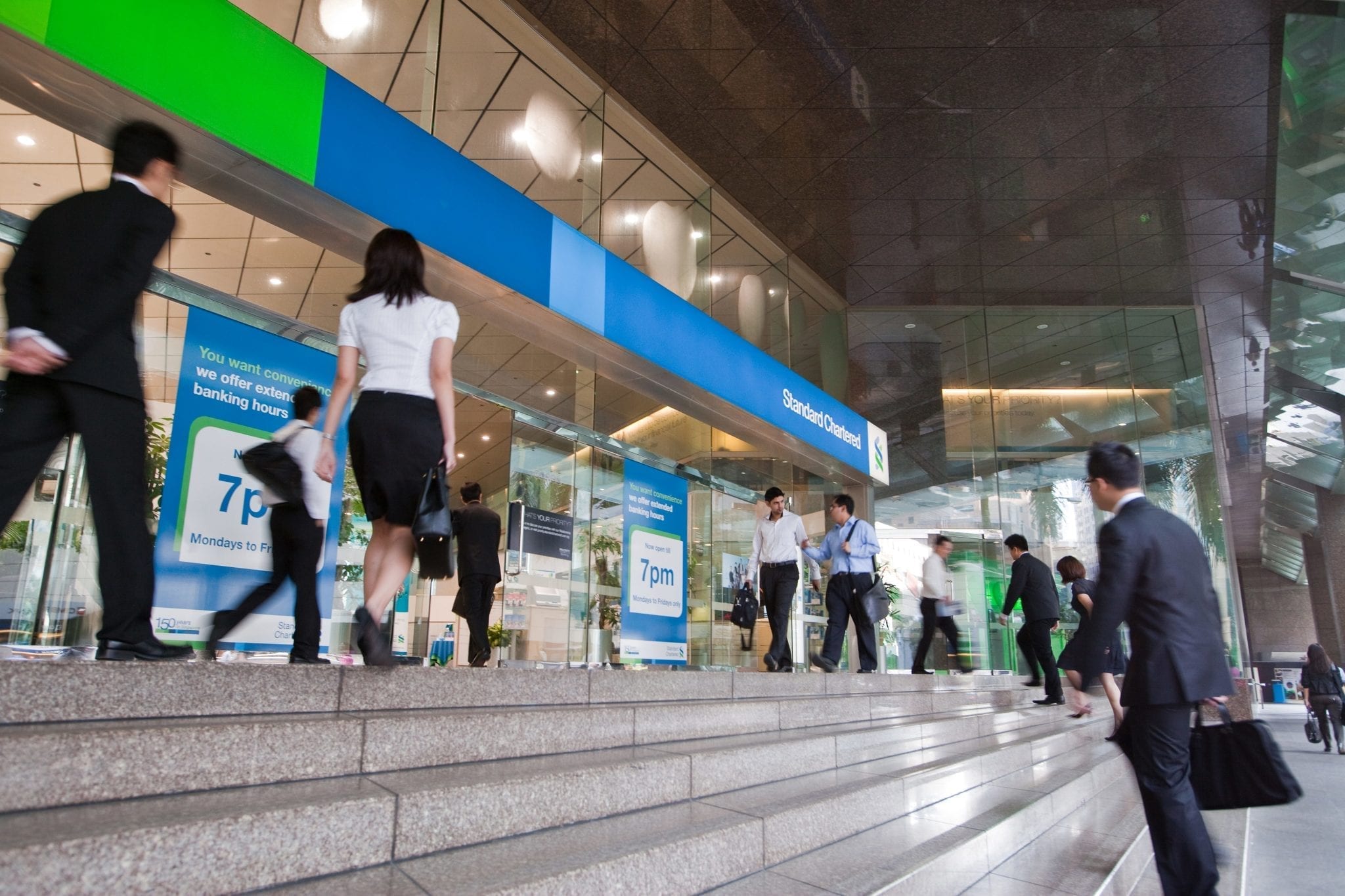
    The man, wanted in connection with the 2016 robbery of a Standard Chartered branch in Holland Village, will face charges in Singapore after his appeal against extradition from the U.K. was dismissed by a London judge.

    Canadian national David James Roach will face extradition to Singapore from London, where he is currently held, to face charges of robbery and money laundering, the Singapore Police Force said in a statement on Thursday.

    The Singapore authorities will do whatever is necessary and permissible within our legal framework to seek justice against those who commit crimes in Singapore, regardless of nationality and where they might have fled to, the statement said.

    The 28-year-old suspect took $30,490 in cash from the bank in a robbery that took place on the morning of July 7, 2016. By the time the police were able to establish his identity, he had already fled to Bangkok, Thailand. He was later detained by local authorities and found guilty of violating money-laundering laws by bringing money from the robbery into Thailand.

    After serving a 14-month sentence, he returned to Canada on January 11, 2018, but was detained in London during a stopover at the request of Singapore authorities.

    Robbery carries a 10 years’ jail and at least six strokes of the cane, while the money laundering charge comes with a 10-year sentence and a S$500,000 ($360,000) fine. For the extradition to proceed, Singapore authorities have agreed to the U.K.’s request to waive the caning if Roach is found guilty.

  • AXA Investment Management Launches All China Strategy

    AXA Investment Management Launches All China Strategy

    AXA Investment Managers as launched its All China Evolving Trends strategy, which aims to provide investors with access to the growing pot of investable Chinese equities listed both in China and abroad.

    The strategy will invest in A-Shares listed on the Shanghai and Shenzhen stock exchanges traded via the HongKong Stock Connect, H-shares listed in Hong Kong as well as Chinese companies that are listed globally. It will be managed by William Chuang, who has over 18 years of investment experience and currently oversees the Greater China region research for AXA Investment Managers (AXA IM) Framlington Equities investment platform.

    We see that the Chinese equity market offers a diverse and attractive set of opportunities to investors. Our goal is to tap into those opportunities with a robust investment approach and the flexibility to invest across Chinese onshore and offshore equities,» said Chuang, portfolio manager at AXA IM in a media statement on Friday.

    We have been researching Chinese companies for many years, we felt this was the optimum time to launch an All-China strategy as the Chinese A-share market attracts greater interest following inclusion into various indices and importantly, there are plenty of high-quality companies which are benefitting from structural growth drivers including rising consumption, technology innovation and shifting demographics,» Chuang added.

    Utilizing a fundamental, bottom-up investment approach, Chinese companies will be selected through the lens of five long term investment trends which form the basis of AXA IM Framlington Equities’ evolving economy thematic range:

    • Aging and Lifestyle – the changing ways that people are living across the globe as life expectancies rise.
    • Connected Consumer – technological advancements that enable companies to engage their customers more deeply in a digital economy.
    • Automation – applications of robotics and automation to improve or optimize processes across various industries.
    • CleanTech – low-carbon economy solutions and sustainable resources management.
    • Transitioning Societies – economic inclusion and changing consumption patterns of the growing global middle class, particularly in the developing world.

    In addition to the launch, AXA IM has hired Natalia Mu as an Investment Specialist to provide further expertise in the region. She works closely with William and the AXA IM Framlington Equities thematics portfolio managers and assists sales teams across Asia.

    We are convinced that the secular themes we have identified will accelerate and evolve over the next decade and believe investors should be invested in active strategies that aim to capture those opportunities. China is a key strategic focus for AXA IM, and the launch of the strategy is a logical progression of the thematic range, said Matthew Lovatt, Global Head of AXA IM Framlington Equities.

  • Standard Chartered Launches Singapore-Based Venture

    Standard Chartered Launches Singapore-Based Venture

    The bank is partnering with Australia-based start-up Assembly Payments to deliver next-generation payment solutions to merchants globally.

    Standard Chartered is launching a new payments venture to be headquartered in Singapore as part of a strategic partnership with Assembly Payments, the two parties announced on Tuesday.

    The joint venture will offer merchants globally a digital payment platform to manage transactions across multiple payment types and countries, including online, mobile and point-of-sale, digital wallets, debit and credit cards and real-time payments, a joint statement said.

    As the world moves towards platform-based e-commerce, the need for the next generation of tools to empower merchants and enable financial inclusion continues to grow, Alex Manson, head of SC Ventures, the bank’s innovation, fintech investment and ventures arm, said.

    The payments venture is the latest in a series of new business models the bank has launched recently, which include a strategic joint venture with PCCW, HKT and Ctrip Finance in Hong Kong to deliver a new standalone digital retail bank, virtual banking partnerships in Taiwan and Korea and SME-focused financial and business services platform Solv in India.

    Assembly, which already offers these services in its home market, said the partnership better positions it to capture a larger slice of the $29 trillion international payments market and exponentially grow its business.

    Since its founding in 2013, Assembly has already raised $70 million in equity financing. Its rapid growth has been spurred on by the introduction of the country’s fast payment network, the New Payments Platform.


  • DBS Evacuates Staff as Covid-19 Case Detected

    DBS Evacuates Staff as Covid-19 Case Detected

    An employee at its headquarters, who was tested on 11 February, was confirmed to have been infected with the novel coronavirus or Covid-19.

    DBS has evacuated its staff from the bank’s Marina Bay Financial Center (MBFC) Tower 3 headquarters following confirmation that one of its employees there had contracted the Covid-19 virus.

    In a statement released on Wednesday, the bank said it is «providing the employee and his family with every support and guidance» and is conducting detailed contact tracing with all employees and other parties that the infected employee may have come into contact with. It is also deep cleaning and disinfecting the affected office space in accordance with Ministry of Health guidelines.

    In the meantime, staff on the affected floor have been instructed to work from home, and all employees will be provided a personal hygiene and protection care pack, the bank said.

    The news comes a day after two cases were reported in Singapore’s central business district, with one located just next door at MBFC Tower 1, where Standard Chartered is a key tenant. The other case is an employee of United Industrial Corporation (UIC), who works at Clifford Centre.

    Buildings in the area have stepped up preventive measures in recent days, requiring all tenants and guests to undergo a temperature screening before entering and to fill up forms with their contact information and recent travel history.

  • Coronavirus Hits Singapore CBD

    Coronavirus Hits Singapore CBD

    Staff of major firms are being told to work from home and temperature screening and sanitation are being stepped up at many towers in the central business district as two cases emerge.

    The novel coronavirus outbreak in Singapore has spread to its financial district, with two employees at buildings in the area found to have been infected, «The Business Times» reported, citing circulars seen by the publication.

    The first, who contracted the virus on February 8, works at Marina Bay Financial Centre (MBFC) Tower 1, where Standard Chartered is a key tenant. DBS has offices in Tower 3. The building’s management said that affected office space, lifts and ground floor common area have been deep cleaned and disinfected in accordance with Ministry of Health guidelines, according to the report.

    The other, an employee of United Industrial Corporation (UIC), works at Clifford Centre. No other UIC employee has displayed any signs of the virus as of February 7, a circular said, noting the building has since been disinfected.

    The Monetary Authority of Singapore (MAS) issued an advisory urging financial institutions to adopt additional measures and precautions on Friday, the same day the city-state raised its response level to Orange, the same level as during the Sars epidemic in 2003.

    They include maintaining effective internal controls across operations should split team arrangements be implemented, anticipating and preparing for an increase in demand for services such as cash withdrawal or online financial services, informing customers of the availability of services and operating hours, and supporting staff morale.

    It also warned of the heightened risk of cyber threats as actors take advantage of the situation to conduct email scams, phishing and ransomware attacks.

    As a precaution against the novel coronavirus, UOB has closed two banking outlets in Shanghai and Beijing, the bank said in a media statement on Monday.

    UOB’s Commercial Banking Centre in Kwun Tong, Hong Kong remains closed until 14 February. Corporate customers are encouraged to use the Tsim Sha Tsui and Causeway Bay branches during this time.

  • HSBC Offers Buffer for Hong Kong SMEs

    HSBC Offers Buffer for Hong Kong SMEs

    HSBC continues to show support for small to medium-sized businesses hit by the coronavirus outbreak in Hong Kong with additional liquidity relief of $30 billion.

    The bank said during the weekend that it would extend $3.9 billion of additional liquidity relief to affected businesses as the coronavirus outbreak has led to 36 infected individuals and one death in Hong Kong.

    According to HSBC, the initiative will target taxi and public light bus operators; borrowers of property-secured commercial loans; trade finance customers; and borrowers of import trade loans. Relief measures include temporary interest-only repayments, extensions to repayment schedules and the creation of overdraft facilities. In addition to SMEs, the bank is now mulling additional initiatives to support individuals.

    Our community needs every bit of help at this unprecedented time, said HSBC’s Hong Kong chief executive Diana Cesar in a report. We are committed to supporting our customers and will introduce more initiatives that will provide near-term relief.

    HSBC becomes the seventh local lender to announce support for the relief efforts after ICBC Asia recently said it would provide temporary interest-only payment arrangements for mortgage loan borrowers, waited or reduced credit card late payment penalties alongside improved fees and rates for investment and deposit products.

    Other lenders that have publicly announced support include Bank of China (Hong Kong), Bank of East Asia, China Citic Bank International, Hang Seng Bank and Standard Chartered.

    Efforts in Hong Kong mirror that of mainland China’s which include support from both the local financial sector as well as global players like UBS and Julius Baer. Meanwhile, the coronavirus outbreak continues to worsen with reported infections now rising beyond 40,000 and deaths exceeding 900.

  • OCBC Applies Analytics For Charity Work

    OCBC Applies Analytics For Charity Work

    Besides contributing $300,000 and manpower to a community shop, the bank will also leverage its data analytics to guide them on the distribution of food items.

    OCBC Bank will contribute S$300,000 and volunteer support for the operation of the first community shop in Singapore – Community Shop @ Mountbatten, set up by Food from the Heart (FFTH). The donation will spread over five years to fund the shop set-up, operations, and food supplies.

    We are committed to helping the needy in a strategic manner. This community shop is another good initiative to ensure that food donations match the needs of beneficiaries, and we will consider scaling up across other parts of Singapore if it is successful, said Koh Ching Ching, OCBC Bank’s head of group brand and communications in a statement.

    On top of the monetary contributions, the bank’s staff will volunteer at the shop when needed. Community Shop @ Mountbatten will enable close to 5,000 eligible households to obtain preferred food items instead of standard packages from charities and donors that may include items they do not require.

    to assist in a year-long exercise to capture data to guide the provision of food items that match the needs of families in need.

    In 2017, OCBC Bank started supporting FFTH by providing eggs to 2,500 households monthly. The on-going project has seen the distribution of close to 900,000 eggs to 3,800 households cumulatively.

    This will help minimize the stockpiling of unwanted food items and reduce food waste. The households that stand to benefit from this initiative include those from the Mountbatten, Macpherson and Marine Parade constituencies.

  • DBS Makes First Transaction on Networked Trade Platform

    DBS Makes First Transaction on Networked Trade Platform

    The platform, which connects players in the trade value chain in Singapore to their counterparts abroad, cuts trade processing time from about one week to a day.

    DBS Bank has completed the first fully digital trade settlement on Singapore’s Network Trade Platform – a $3.5 million letter of credit transaction between car manufacturer Audi and its local distributor Premium Automobiles.

    The first transaction is a «critical step towards transforming documentary trade, of which domestic letters of credit constitute around $150 billion of Singapore’s trade flows», DBS said.

    A second trade among the two parties, valued at $2.8 million, is currently in the works.

    The NTP is part of a wider concerted effort by the Singapore government to drive an industry-wide digital transformation to build a trade and logistics digital ecosystem that connects businesses, community systems and platforms and government systems.

    «Digitalizing a traditionally paper-centric trade ecosystem requires support from like-minded industry partners who embrace technology and change,» said Serene Ho, director of Networked Trade Platform Office (NTPO). She said the office would continue to work with financial institutions and industry partners to «realize Singapore’s vision of a paperless trade ecosystem».

    In the statement, DBS highlighted its other recent initiatives to digitize trade, including the ICC Tradeflow Platform with Trafigura; HeveaConnect, a digital trading marketplace for sustainable rubber; Agrocorp, a digital trade platform for commodities; and YunLiangMeng, a blockchain platform for automotive logistics.

  • Standard Chartered Hires Senior Strategist From BCG

    Standard Chartered Hires Senior Strategist From BCG

    The move continues the bank’s string of similar hires from top global consulting firms to its Singapore office.

    Standard Chartered has hired Douglas Jackson as managing director of group strategy, who moved from Boston Consulting Group earlier this month.

    His move continues a string of recent hires by the bank, which has been bringing on consultants due to its restructuring drives that have taken place since the appointment of CEO Bill Winters in 2015.

    The publication noted the bank’s 2019 hire of Pierre Paoli, who moved from BCG to lead its strategic initiatives unit for commercial and institutional banking, the hire of IBM consultant Sushil Anand as head of computational and digital advisory for wealth management, and former Deloitte and UBS strategist Christopher Williams as global head of strategy, governance and change for technology services.

    The bank, which makes two-thirds of its profits from Asia, will certainly benefit from Jackson’s intimate familiarity with the region, where he helped global and local companies realize their ambitions in Southeast Asia. His expertise includes strategy, business model innovation, risk management and operations transformation, particularly in finance and the public sector.

    According to his LinkedIn profile, Jackson spent more than 10 years at the management consulting firm’s Vietnam office, most recently as a senior advisor. His time in the country also included a secondment at Vietnam International Bank in Hanoi. Prior to that, Jackson was also stationed in Thailand for almost 10 years as country manager of A.T. Kearney, and was a branch manager for J.P. Morgan in Seattle.

  • Citi Singapore to Shut Iconic Branch

    Citi Singapore to Shut Iconic Branch

    As part of its network reconfiguration, Citi is shuttering its iconic branch at McDonald House on 28 February.

    For its replacement, the U.S. bank said it will soon launch a whole new and exciting retail banking branch experience after its MacDonald House lease expires at the end of this month. Details on the new branch were not revealed.

    Citi consistently reviews its branch network strategy. Clients today increasingly bank on mobile, with almost 100 percent of financial transactions being able to be served through digital platforms. Our retail footprint and the way we serve customers will continue to evolve,» said a Citibank Singapore spokesperson.

    MacDonald House, situated across the road from Dhoby Ghaut MRT station, was initially built for a bank. It became gazetted as a national monument in 2003 and has a place in Singapore’s history as the site of a bombing attack in 1965 during the Indonesia-Malaysia confrontation, or the Konfrontasi.

    Citi commenced business at the MacDonald House in 2005, taking up 37,000 sq ft of space over four floors. The 14 staff currently at the MacDonald House branch will be redeployed to the bank’s remaining 13 branches in Singapore, the Citi spokesperson added.

    The bank’s latest branch network rejig comes as part of the review led by Citibank Singapore’s new chief executive Brendan Carney, who moved to Singapore from South Korea in May last year.

    The lender’s move also comes amidst a change in the banking landscape, as 21 consortiums vie for the five digital bank licenses offered by the city-state.

  • UBS Doubles China Headcount Early

    UBS Doubles China Headcount Early

    UBS shows no sign of slowing down its mainland China expansion plans despite an ongoing coronavirus outbreak, having met its target set in 2016 to double headcount to 1,200 ahead of schedule.

    UBS group chief executive Sergio Ermotti said in 2016 that the bank would double its China headcount in within five years to tap into the gargantuan domestic financial industry which is undergoing a historic transition to allow greater foreign ownership.

    Sources familiar with the matter said that UBS had already met the target to overall double staff size from 2016’s 600 to 1,200 ahead of its 2022 plan.

    The bank remains committed to wealth management in China despite the ongoing outbreak,, adding that business was largely unaffected with the exception of deferring non-critical travel. For staff that must enter the mainland, the bank has asked that they stay home for a 14-day period afterward before returning to office – the widely used standard to determine if one has been infected by the deadly virus.

    A spokesperson for the bank declined to comment on the matter.

    Even with its current scale, the bank’s hiring spree in mainland China is unlikely to end soon. UBS’s majority-owned investment banking joint venture is also accelerating growth with plans to double its current headcount of around 400 in three to four years, in addition to pursuing full ownership by 2020-end.

    Overall, our plan is to steadily grow China onshore headcount, but we are not just going to compete on size,» said David Chin, APAC head of investment banking and China country head at UBS, to reporters in December last year, placing emphasis on the derivatives business.

    Chinese regulators announced last year that it would scrap foreign ownership limits this year in futures, securities, and mutual fund companies. Global financial institutions including J.P. Morgan, Goldman Sachs and BlackRock are vying for a piece of mainland China’s financial industry as the country undergoes a landmark opening of its $45 trillion market.

  • Citibank’s Singapore Head of Retail Exits

    Citibank’s Singapore Head of Retail Exits

    Citi’s head of retail banking in the city-state leaves after more than two decades with the American lender.

    Charles Wong exits the bank after nearly five years in his last role as Singapore head of retail banking. A spokesperson for the bank confirmed his exit.

    In 2015, Wong was appointed to his current role to oversee the retail banking business alongside wealth management, bancassurance, sales and network distribution.

    With over 20 years of experience at Citi, Wong has held a range of roles in retail banking, bancassurance, credit payment products and marketing across Asia Pacific. He was seconded to Citibank’s China business from 2006 to 2008 where he was the head of branch expansion and ATM distribution as well as director for CitiBusiness and customer experience. He was also previously involved in the launch of the Citi Priority segment across APAC which targets emerging affluent customers.

  • Grab Moves Into Wealth Management With Acquisition

    Grab Moves Into Wealth Management With Acquisition

    Grab on Tuesday announced the acquisition of Bento Invest, a Singapore-based Robo-advisory start-up for an undisclosed sum. It allows Grab to kickstart the offering of retail wealth management solutions to users, driver-partners, and merchant-partners via its app.

    With the acquisition, Bento will be rebranded as GrabInvest with products launched on the Grab app in the first half of the year in Singapore. GrabInvest will be a new core business vertical under Grab’s financial services arm, Grab Financial Group, led by Chandrima Das, founder, and chief executive of Bento.

    «In Southeast Asia, there is a lack of access to affordable wealth management products and retirement planning solutions for most people. As we face an increasingly volatile and uncertain economic environment, it is imperative for Southeast Asians to acquire the tools and knowledge to protect their future by sustainably building wealth for themselves and their families,» said Reuben Lai, Senior Managing Director of Grab Financial Group in a media statement.

    Bento’s proprietary digital wealth platform includes client onboarding, and portfolio construction and rebalancing supported by robust risk management capabilities. The platform is built and backed by a team of seasoned asset management and banking professionals who will join the GrabInvest team. Bento’s founder, Chandrima Das, has over two decades of leadership experience in banks and asset managers across Asia and the U.K. She was formerly Managing Director at Bank of Singapore and prior to that, CEO of ING Investment Management.

    GrabInvest will operate under a retail wealth management capital markets services license in Singapore, namely the MAS Retail Licensed Fund Management Company (LFMC) license. It hopes to offer cash management and portfolio-based financial solutions to its users, driver-partners, and merchant-partners, with Singapore as the first market to roll-out.

    GrabInvest said its aim is to democratize access to retail wealth management products, by providing people in Southeast Asia with the opportunity to save and invest in financial products traditionally limited to affluent individuals and institutional investors. GrabInvest aims to make wealth management services accessible by adopting a low-cost model, easy to understand by allowing users to transact on a platform they are familiar with, transparent by having full disclosures on fees with zero hidden elements, and trusted by adhering to consumer protection standards outlined by the regulators.

    Grab Financial Group currently offers financial services across Southeast Asia in payments (GrabPay), rewards (GrabRewards), lending (GrabFinance), and insurance (GrabInsure) to micro-entrepreneurs, small business owners, driver-partners and users across Southeast Asia.

  • OCBC Automates Cooperation with Law Enforcers

    OCBC Automates Cooperation with Law Enforcers

    OCBC has implemented an automated solution that accelerates collaboration with law enforcement agencies by up to 100-fold.

    On average, it takes between 10 days and three months for banks to respond to production orders or requests by law enforcement agencies to provide information for investigation on the bank accounts of individuals or companies. With the new solution – Production Orders: Electronic Transmission (POET) – OCBC will cut turnaround time to just one or two working days with minimal manual processing assuming the information requested does not exceed 13 months.

    By greatly reducing the turnaround time for production orders, we are doing our part to put the squeeze on criminals, said Loretta Yuen, OCBC’s head of group legal and regulatory compliance.

    After a successful pilot, OCBC launched POET in collaboration with the Commercial Affairs Department (CAD) in July 2019. Since then, it has extended collaboration to other agencies including the Singapore Customs, Inland Revenue Authority of Singapore (IRAS), the Corrupt Practices Investigations Bureau (CPIB) and various units under the Singapore Police Force. It is in collaboration with more than 10 law enforcement agencies and expects about 70 percent of production orders to come through POET.

    Other banks are also considering to adopt the solution to improve compliance efficiency. In addition to DBS and UOB, the report noted that foreign banks in Singapore also expressed interest in POET.

    Collaboration with regulators aside, Yuen also highlighted the benefit of data gathered by POET for banks not only to respond to requests but to identify compliance risk early.

    We can use it as additional surveillance risk indicators, as well as in intelligence data mining and transactional link analysis to identify hidden relationships and/or clustering relationships that may pose money laundering risks to the bank, Yuen said.

    On average, OCBC receives more than 1,000 production orders per month from law enforcement agencies and the figure is projected to rise in the coming years.