Tag: Finance

  • Worldpay announces Australasian expansion

    Worldpay announces Australasian expansion

    Worldpay, a global leader in payment technology, has announced major investment in Australasia for 2019. The first is the opening of two sales offices in Australia; the second is the expansion of its global footprint to New Zealand after obtaining a local licence for acquiring card payments. These regional investments will enable Worldpay to serve its Australasian clients through an enhanced market presence and in-country payment processing.

    This regional investment builds upon Worldpay’s commitment to the region, having been one of the first non-banking technology providers to launch a domestic acquiring licence in Australia in 2016. Worldpay’s new offices will be located in Melbourne and Sydney, with Sydney acting as the country headquarters. The new sites will not only help to better serve existing clients with rich payments expertise, solutions consulting and on-the-ground account management, but also deliver on Worldpay’s ambitious plans to boost its client roster, which already includes VGW, Skiddoo, Lonely Planet, Webjet, and Supernova, the owner of Sand & Sky, Coco & Eve, BodyBoss and SkinnyMint.

    eCommerce in Australia is expected to grow by more than 37 percent over the next three years to be worth almost US$40bn by 2022, with New Zealand also experiencing high levels of eCommerce growth. The buoyant market conditions have attracted a number of global brands to the region, giving shoppers more choice and have increased retailer competition for consumer spending. With 20 percent of consumers in Australia and New Zealand shopping via mobile every month, smartphone penetration alongside more frictionless payment methods offered by digital wallets could open new opportunities for retailers to differentiate their offering and grow mobile commerce.

    Phil Pomford, General Manager, Global Enterprise eCommerce, APAC at Worldpay: “Australasia is an exciting region with lots of growth potential, but also its own unique set of challenges. By building a team of payments experts located in Australia, alongside the addition of a domestic card payment acquiring capability in New Zealand, Worldpay can offer a service that goes beyond the transactional. Our investment and addition of this new licence will enable us to further provide unparalleled access to global markets to help eCommerce businesses deliver on their international growth ambitions.”

    The New Zealand card payment processing licence will allow Worldpay to process transactions domestically for merchants trading in New Zealand. This new licence means the global payments leader is one of a few providers to offer domestic acquiring capabilities in the country. It will also make it easier for New Zealand-based firms to trade with the rest of the world, creating a seamless payment experience for both domestic and international clients.

    Pomford continued, “While there’s a lot of competition from traditional providers, Worldpay can offer something different. We’re already helping thousands of multi-national companies around the globe to drive sales, gain better data insights and enter new markets at scale. With our Australasian expansion, we want to show businesses in Australia and New Zealand that we’re the technology partner of choice to help them grow, and go global.”


    Domestic acquiring in New Zealand will be available in Q2 2019.
  • FIS to merge with Worldpay

    FIS to merge with Worldpay

    FIS and Worldpay have arranged to merge to bolster their combined financial services portfolio

    Upon closing, the combined company is expected to be better positioned to offer enterprise banking, payments, capital markets, and global eCommerce capabilities empowering financial institutions and businesses worldwide.

    The combination is expected to expand FIS’ capabilities by enhancing its acquiring and payment offerings while increasing Worldpay’s distribution footprint by accelerating its entry into new geographies.

    FIS and Worldpay solutions and services encompass financial institution issuer services, network and merchant services including global leadership in eCommerce, as well as loyalty and fraud solutions benefiting consumers and businesses. Clients are expected to benefit from the combined omnichannel payment and multi-currency capabilities, robust risk, and fraud solutions and advanced data analytics.

    “Scale matters in our rapidly changing industry,” stated FIS chairman, president and CEO Gary Norcross said.

    “Upon closing later this year, our two powerhouse organizations will combine forces to offer a customer-driven combination of scale, global presence and the industry’s broadest range of global financial solutions. As a combined organization, we will bring the most modern solutions targeted at the highest growth markets.”

    “Combining with FIS helps us accelerate the achievement of that, now benefiting from new scale and capabilities that will truly differentiate the company globally,” Worldpay CEO And executive chairman Charles Drucker said.

    The merger has drawn mixed reactions from commentators. Barron’s Robert Teitelman questions what Worldpay is number one at: “How do you judge solutions sets, global communities and client focus? Define personalization. And then there’s the accelerating future! Either Norcross is trying to obscure how these two companies fit together in a complicated jigsaw puzzle, or this is just how payment-processing folks talk.”

    In a PaymentsSource article by John Adams that comments on the pressure to build a global powerhouse to counter large-scale Fintech mergers, he pulls in a quote from Zil Bareisis, a senior analyst at Celent who said: “As open banking and faster payments grow, the ability to offer end-to-end solutions from merchants to account funding irrespective of payment rails will be increasingly important.”

  • UOB Prices First Panda Bond

    UOB Prices First Panda Bond

    United Overseas Bank announced it has priced Singapore’s first Panda Bond at 3.49 percent, one of the lowest rates among all Panda bonds. The Singapore based lender UOB said that its three-year, 2 billion renminbi (S$404 million) offering garnered strong demand with a subscription rate of 2.7 times from asset managers and commercial bank investors across Asia. Thirty-eight percent was placed to China’s onshore investors and 62 percent to international offshore investors.

    «Our participation in China’s onshore debt market, one of the largest globally, enables us to grow our presence in China as the country continues to liberalize the renminbi and its financial markets. Further, through this offering, we can diversify our funding sources and continue to tap the increased connectivity between China and ASEAN arising from the Belt and Road Initiative to serve our customers’ needs,» said Wee Ee Cheong, CEO of UOB, said in a media statement.

  • Henley & Partners Opens Australia Office

    Henley & Partners Opens Australia Office

    New office caters to burgeoning international demand for Australia’s investor migration programs, as well as interest from within Australia for alternative residence and citizenship options abroad. Global firm in residence and citizenship planning Henley & Partners has announced its expansion into Australia and has made several key personnel hires, the firm said in a media release.

    The office is located in Melbourne, and will be led by director Tony Le Nevez.

    «Australia is the number one resettlement destination for high-net-worth individuals. With our global presence and expertise in assisting these clients acquire alternative residence or citizenship, it makes perfect sense for us to open an office in Australia,» Dominic Volek, managing partner and head of Southeast Asia, said.

    Strong Regional Growth

    This has been a period of strong growth in the region for the firm, which recorded 48 percent year-on-year growth in Southeast Asia. It opened a Thailand office in 2018 to cater to the burgeoning demand for residence and citizenship planning services among HNWIs there.

    «We expect the interest and demand that we are seeing in Southeast Asia to continue with eight of the top 10 fastest growing wealth populations forecast to be in Asia over the next five years,» Volek said.

    Key Appointments

    • Tony Le Nevez, Director, Henley & Partners Australia

    Le Nevez has over 35 years’ experience in the migration services industry. He previously worked for the Australian Department of Immigration in Canberra, and at for the Australian foreign service in Bangkok, Athens and Vienna, where he was a senior policy advisor and First Secretary. He joined the private sector in 2006 and is a member of the Investment Migration Council.

    • Jacky Poh, Deputy Head, Henley & Partners Singapore

    A wealth management professional for over 10 years, Poh has worked closely with HNWIs to execute prudent investment strategies inclusive of discretionary portfolios. Poh works closely with the managing partner to ensure the smooth operations and resource management of the Singapore office. He is also focused on establishing and maintaining relationships with key clients and stakeholders to drive business growth, with an emphasis on progressive Southeast Asian markets.

  • UOB Hires New Managing Director

    UOB Hires New Managing Director

    United Overseas Bank recently hired a regional head of engagement to expand its digital team in SingaporeIndustry veteran Kristina Curtis joined UOB two months . ago as managing director, regional head of engagement, group retail digital. Her LinkedIn profile shows extensive experience in digital banking, having worked for ANZ as customer analytics and digital for global wealth, and for BT financial group as chief digital officer.

    When contacted, the bank declined to comment on the personnel move.

    Experience in digital banking

    The demand for people who have leadership and project management experience in digital banking is high in Singapore as banks are pushing to launch new digital platforms in areas of payment and wealth management.

    The ability to leverage on mobile application and new technologies to build an effective communication pathway with the customers and allow for continuous engagement is increasingly valued, evident from the fact that Curtis is not the only recent senior digital.

    Last October, UOB officially appointed Aaron Chia, formerly from Western Union, as the new head of its digital plus unit for wealth and lifestyle products.

  • Facebook’s unannounced mobile payment service shows up

    Facebook’s unannounced mobile payment service shows up

    Facebook’s Marketplace seems to be one of the few successful features launched by the social network giant in the last couple of years. Now, Facebook plans to add an important tool that will make the entire Marketplace experience smoother and easier, at least this is how we’re seeing things at first glance. A mobile payment service that will allow Facebook users to pay for goods they buy through Marketplace is already showing in the Android and iOS app. A new Pay with Facebook option is now available on some Facebook pages that sell various products (i.e. Marshmello Music).

    The new option supports various payment methods that use Visa and Mastercard, as well as cryptocurrency, though the latter seems just a placeholder for now since we don’t recognize the symbol.

    At the moment, the whole process seems a bit convoluted because the buyer must first send a request to the seller, who will then have to accept or refuse the offer and send another payment request to the buyer.

    Although it sure doesn’t sound like a seamless process, Pay with Facebook may at least offer Marketplace users a more secure (and free) method of payment. We’re still waiting for Facebook’s official announcement to learn more about the new mobile payment service, but we can’t guarantee it will ever come.

  • Australian dollar rises over weekend

    Australian dollar rises over weekend

    The Australian dollar has risen slightly over the weekend to 70.42 US cents, up from 70.22 US cents on Friday.

    The Aussie dollar also trades at 62.67 euro cents, 54.20 British pence, $1.03 New Zealand dollars, 78.24 Japanese Yen, and 4.733 Chinese Renminbi.

    Australian markets are also expected to be affected by Monday’s public holiday in Victoria, South Australia, Tasmania and the ACT.

    CommSec chief economist Craig James says its no surprise that after the losses in the US, there would be similar declines in our own market on Monday.

    “US investors are trying to mull up the state of the economy – job figures were much weaker than expected but the question is whether this is just a one off type development. And housing stats were much firmer than expected,” he told AAP.

    “So that data was more mixed than anything.”

    He said investors could expect Monday to be a little softer in terms of volume, and potentially, growth because of the public holiday.

    He said because of that, no major economic data had been released.

    But what everyone is waiting for is a development in the US-China trade dispute.

    “Without new information, we are effectively in a holding pattern.”

  • All Vietnamese commercial banks to be listed before 2020

    All Vietnamese commercial banks to be listed before 2020

    A Prime Minister approved plan requires all commercial joint stock banks to be listed before 2020 towards increased transparency and diversity. This is one of a series of solutions set out in the scheme to “Restructure the stock market and insurance market by 2020 with orientation towards 2025” approved by the Prime Minister late last month.

    Accordingly, commercial banks are required to list on any of Vietnam’s three official stock exchanges – the Ho Chi Minh Stock exchange (HOSE), Vietnam’s main exchange which accounts for over 90 percent of total market capitalization; the Hanoi Stock Exchange (HNX), which houses remaining listed companies; and the Unlisted Public Company Market (UPCoM), which is set up to encourage unlisted public firms to participate in the securities market so that they can later transfer to one of the two main stock markets.

    Currently, only 17 of 31 banks are registered for trading on all three floors.

    The Prime Minister has assigned the Ministry of Finance and the State Bank of Vietnam (SBV) to supervise and direct banks on listing, securitizing debts, provision of required services for derivatives trading, as well as monitor domestic and capital sources on the market.

    Last year, PM lauded Vietnam’s stock market for outperforming other Southeast Asian nations in capital mobilization, with a market cap of 72 percent of GDP at the end of 2-10.

  • Kasikornbank aims high as K Plus users pass 10 million

    Kasikornbank aims high as K Plus users pass 10 million

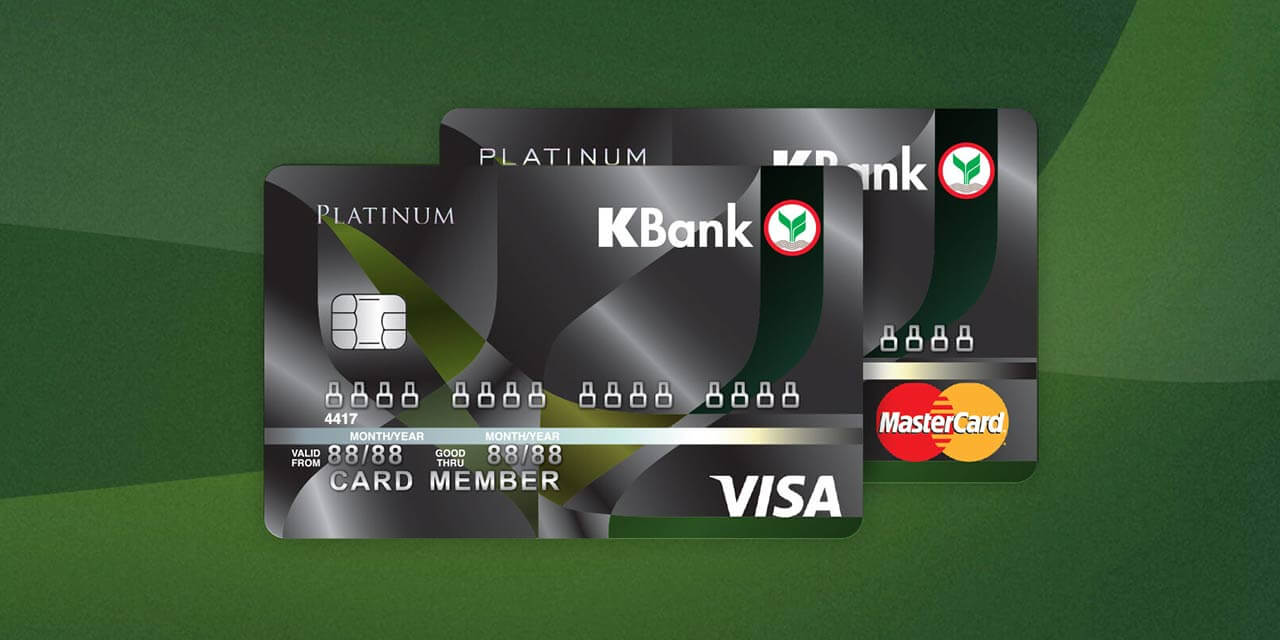
    Thailand’s fourth-largest bank by assets – by loans and deposits it also ranks fourth – has set some eye-catching targets. Take its K-Plus mobile banking offering. Already K-Plus has 10 million customers; that in itself is an already impressive number, given that Kasikornbank has around 14 million customers in total. And it represents impressive annual growth: the bank ended 2017 with 7.3 million users, up from 4.6 million the previous year, but it is a drop in the ocean compared to the target it has set.

    The bank believes it can grow K-Plus numbers to up to 100 million by expanding it to the regional market via partnerships. It is also continuing to target low-income earners who are not currently Kasikornbank customers.

    Organic growth targets for retail loans are in the range of 9-12% for 2019, and it is using machine lending and artificial intelligence technology to initiate financial and life solutions related to customers’ lifestyles and needs.

    K Bank grabs ride-hailing deal

    And then there is the investment in Grab: in November last year, K Bank invested $50m in the ride-hailing firm, with an aim to help launch the GrabPay electronic wallet in its sixth South-East Asian market in 2019.

    The deal also enables K Bank to use Grab’s data on merchants and drivers. The goal is to craft loan products while minimising non-performing loans with optimised use of data. So the Grab app will be integrated with the K Plus app and the bank will offer loans via the apps.

    Other 2018 highlights included a local chart-topping success in the Apple App store. K Plus is Thailand’s most popular app on Apple’s iOS platform outside the gaming segment, ahead of local rival banks Siam Commercial, Krung Thai Bank and Bangkok Bank.

    But it is the use of data and its potential for monetisation that really is attention-grabbing. K Bank really is aiming high in terms of becoming what it terms a ‘data-driven bank’, and believes that project data-driven data will account for one-half of its income by 2020.

    Such ambitions do not come cheap. K Bank’s IT group has set an investment budget for tech development this year of around $160m. It is, admittedly, a modest sum by Chase or Citi standards, but in the context of the Thai market, it is a significant investment. And if K-Plus can grow user numbers to anything approaching 100 million, and get close to its data revenue targets, K Bank will certainly put itself on the map.

    Mastercard trumps Visa for Earthport

    As EPI goes to print comes news that Mastercard looks to head off rival Visa as it attempts to buy Earthport for £233m ($306m).

    Over the Christmas period, Visa made an unexpected £198m bid for the company. The offer was recommended by the Earthport’s board and put to shareholders; however, in a statement to the market on 25 January, Earthport’s board withdrew its recommendation for Visa’s offer and urged shareholders to instead take Mastercard’s deal, which is at a 10% premium to Visa’s. Earthport’s shares, which have risen four-fold since Visa first offered to buy the company, rose another 30% to £0.36.

    Earthport has been around the block a few times since it was founded in 1997. It floated on AIM in 2009, and its adjusted operating loss for 2018 rose by 33% to £8.4m (FY2017: £6.3m). Its share price stumbled around single-digit territory for much of 2018, reaching a low of £0.055 in December, having peaked at £0.48 in April 2015.

    Earthport provides cross-border payment services in the UK, Europe, North America and internationally, operating through two segments: transactional and professional services. It does this through a combination of a network of segregated bank accounts in various geographies, software that mirrors movements of funds from bank to bank, and a knowledge base embedded in the platform and organisation related to each country.

    A deal for either Mastercard or Visa makes sense from the perspective of growing revenue from international money transfers. In other words, Earthport offers a revenue stream not dependent on traditional plastic cards. At the figures being canvassed the purchase price does seem steep, but is quite a coup for the new management team that took over at Earthport last year.

  • AEON gives hefty prizes for the lucky winners of the “AEON Happy Pay” campaign

    AEON gives hefty prizes for the lucky winners of the “AEON Happy Pay” campaign

    Recently, Ms. Saranya Pipoppinyo (5th from left), Vice President Marketing of AEON Thana Sinsap (Thailand) Public Company Limited awarded prizes to the lucky winners of the “AEON Happy Pay” campaign. The grand giveaway comprises of three prizes of gold bars, worth 100,000 baht each, the second is 20 prizes of 50 satang gold necklaces and the third is 100 vouchers with a combined value of 586,500 baht.  Eligible participants include AEON Your Cash customers that make an installment payment at participating department stores and shops from 30 August – 30 November, 2018.


  • Card-not-present fraud will cost retailers US$130 billion

    Card-not-present fraud will cost retailers US$130 billion

    Increasingly complex card-not-present fraud will cost retailers US$130 billion globally in digital sales over the next five years. A Juniper Research study predicts that retailers’ slow pace in keeping up with new fraud prevention requirements will allow cybercriminal practices to become more widespread as more and more consumers shop online. It observes that established point-of-sale vendors will need to move towards mobile POS technology in order to expand their reach into fresh markets and reduce their exposure to card-not-present fraud.

    “A layered fraud detection and prevention (FDP) solution naturally helps directly preventing fraud, but it also offers major gains in terms of recovering potentially lost revenue through false positives,” said the report’s author Steffen Sorrell. “This is something about which retailers remain undereducated, and has allowed fraudsters to capitalise on relatively low FDP spend”.

    An implication of the Juniper research is that a low understanding of FDP investment return is causing the low uptake of the technology. the report anticipates digital payment players will be spending $9.6 billion annually on FDP solutions by 2023.

  • Telstra to trial 5G in banking sector

    Telstra to trial 5G in banking sector

    Australia’s Telstra has used this week’s Mobile World Congress to announce a partnership with Commonwealth Bank of Australia And Ericsson to trial 5G edge computing technologies in the financial services sector.

    The three-way collaboration will involve testing end-to-end banking solutions over 5G technology in an effort to explore the future of banking.

    The companies will evaluate how 5G edge computing can help reduce the network infrastructure currently required at bank branches to support high-speed transactions.

    Speaking at the event, Telstra group executive for networks and IT Nikos Katinakis said 5G has the potential to transform the global financial services sector.

    “5G edge computing is all about bringing the network closer to the user or application. For financial institutions like Commonwealth Bank, it will help to enhance existing banking applications as well as deliver new use cases such as artificial intelligence, all supported by a range of software defined networking solutions,” he said.

    “Together with Ericsson, we are pleased to be working closely with Commonwealth Bank, an industry leader, to help them design and deliver the next generation of banking services, powered by Telstra’s 5G technology and using edge computing.”

    Katinakis added that the lessons learned from the collaboration will be applicable to other industry verticals beyond financial services.

  • Australian dollar lost

    Australian dollar lost

    The Australian dollar has fallen against its US counterpart Tuesday, buying 70.91 US cents from Monday’s 71.11 US cents. The local currency is at  79.39 Japanese yen, from 79.23 ; 62.40 euro cents, from 62.36 ; 53.57 British pence, from 53.48 and 104.16 NZ cents, from 104.04. Last Friday, the local currency has been given a lift after a survey of Chinese manufacturing surprised on the high side.

    The Caixin/Markit Manufacturing Purchasing Managers’ Index (PMI), released on Friday, rose to 49.9 in February, from 48.3 in January, topping expectations. It was enough to hoist the Aussie dollar up to 71.05 US cents from a low of 70.90 US cents, though it was still down 0.4 per cent on the week. The US currency rose overnight when data showed US economic growth beat forecasts in the December quarter, supported by strength in household consumption.

    In contrast, Australian households have been reining in spending amid sluggish wage growth and sliding home prices. CoreLogic property data out on Friday showed home prices across the country fell another 0.7 per cent in February, though that was a small improvement from January’s 1 per cent drop. The Reserve Bank of Australia recently warned that a further significant fall in prices could undermine household wealth and spending.

    The weakness in consumption is one reason analysts suspect figures for GDP out next week will indicate annual growth slowed to about 2.6 per cent last quarter.

    “We expect home price falls to double to 14 per cent, peak to trough, making a negative household wealth effect on consumption likely,” said UBS economist George Tharenou.

    “We expect GDP to clearly slow to a below-trend 2.3 per cent in 2019, seeing unemployment rise and the RBA cut in November, with risk of earlier easing.”

    Investors have already moved to price in the risk of a cut in interest rates this year, with futures implying about an 80 per cent probability of a quarter point easing in the 1.5 per cent cash rate. That in turn has pushed down Australian bond yields and fattened the premium offered by US debt. Yields on Australian 10-year bonds are now 56 basis points below those on US paper, compared with 36 basis points at the start of the year. Australian government bond futures dipped in line with Treasuries, with the three-year bond contract easing 3.5 ticks to 98.330 while the 10-year contract fell 5 ticks to 97.8550.

  • Vietnam Jan-Feb FDI inflows up 9.8 pct to $2.58 bln

    Vietnam Jan-Feb FDI inflows up 9.8 pct to $2.58 bln

    Vietnam received $2.58 billion in foreign direct investment (FDI) in January-February, up 9.8 percent from the same period a year earlier. FDI pledges, which indicate the size of future FDI disbursements, were more than 2.5 times higher than the same period last year, climbing to $8.47 billion, the Ministry of Planning and Investment said in a statement on Tuesday.

    Of the pledges, 81.8 percent are to be invested in manufacturing and processing, while 5.6 percent would go to real estate, the ministry said.

    Hong Kong was the top source of FDI pledges in the period, followed by Singapore and South Korea.

    The Southeast Asian country reported a record high FDI inflows of $19.1 billion last year, up 9.1 percent.

  • Tokyo stocks close lower after Indian air strike reports

    Tokyo stocks close lower after Indian air strike reports

    Tokyo stocks closed lower on Tuesday following media reports saying Indian warplanes crossed into Pakistani airspace over the ceasefire line in Kashmir and dropped payloads. The benchmark Nikkei 225 index, which opened higher, lost 0.37%, or 78.84 points, to end at 21,449.39 while the broader Topix index was down 0.23%, or 3.67 points, to 1,617.20.