Tag: Finance

  • Dollar Hits New High Against Dong: What This Means for Consumers and Retailers

    Dollar Hits New High Against Dong: What This Means for Consumers and Retailers

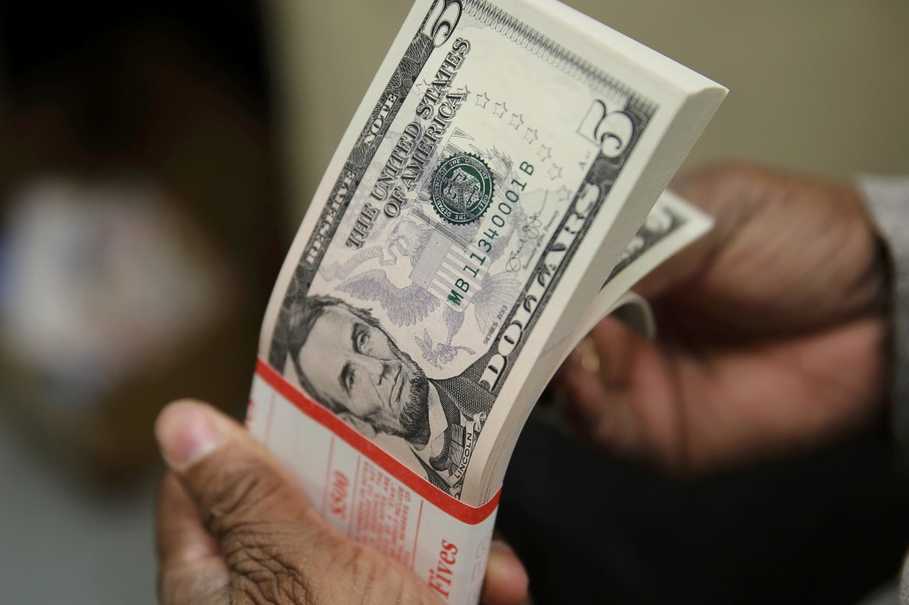
    This Tuesday, the U.S. dollar continued its ascent against the Vietnamese dong, with Vietcombank selling the greenback at an exchange rate of VND26,480, a slight increase of 0.04% from the previous day. Meanwhile, the State Bank of Vietnam raised its reference rate to VND25,255, marking a similar rise of 0.04%. Transactions on the black market showed the dollar gaining 0.11%, now priced at VND26,580. It’s clear the dollar is enjoying quite a moment against its Vietnamese counterpart.

    In broader global markets, the U.S. dollar held steady against major currencies, as traders awaited crucial updates from a White House summit with European leaders, an event that could influence the trajectory of the ongoing military conflict in Ukraine. Amid these geopolitical tensions, the dollar index climbed 0.31% to 98.122, reaffirming its strength and drawing attention to the delicate balance of global market dynamics.

    “Markets are currently exercising caution,” noted Tina Teng, an independent market analyst based in Auckland. She emphasized that traders are evaluating the potential implications for global energy markets amid shifting sentiments. “The U.S. dollar is strengthening against other currencies while risk-on attitudes continue to dominate, with stock indexes reaching record highs,” she added, framing the dollar’s robust performance in the context of wider market trends.

    Meanwhile, the euro was hovering at $1.1667, enjoying a minor increase of 0.06% in Asia, maintaining its position within a trading range it has occupied for the last fortnight. With all eyes on the Federal Reserve’s annual symposium in Jackson Hole this week, market participants are eager for direction. Fed Chair Jerome Powell is set to address the economic outlook and lay out the central bank’s policy framework, which could have significant ramifications for future interest rates.

    Questions & Answers

    What led to the recent increase in the U.S. dollar’s value against the Vietnamese dong?
    The U.S. dollar rose against the Vietnamese dong, reaching a new high influenced by a slight increase in Vietcombank’s selling rate and the State Bank of Vietnam’s adjustments to its reference rate, amid a cautious global market reacting to geopolitical developments.

    How did global events impact the dollar’s performance?
    Global events, particularly the anticipated outcomes of a White House summit regarding the Ukraine conflict, contributed to the dollar’s strength, as traders remained cautious and assessed potential implications for the market.

    What factors are influencing the markets in the upcoming week?
    Market participants are closely watching the Federal Reserve’s annual symposium in Jackson Hole for insights on interest rates, as Fed Chair Jerome Powell is expected to clarify the central bank’s economic outlook and policy direction.

  • Gold Prices Dip 1.8% This Week Amid Fluctuating Global Market Dynamics

    Gold Prices Dip 1.8% This Week Amid Fluctuating Global Market Dynamics

    Global gold prices are facing a decline this week as fresh inflation data has made investors rethink expectations for rate cuts, all while the market’s gaze shifts to the pivotal discussions between U.S. President Donald Trump and Russian President Vladimir Putin.

    As of Friday, spot gold remained relatively stable at $3,336.66 per ounce, marking a 1.8% decrease for the week. Meanwhile, U.S. gold futures ended nearly unchanged at $3,382.6.

    In Vietnam, the Saigon Jewelry Company (SJC) held steady with its gold bar price at VND124.5 million per tael and gold rings at VND119.1 million per tael. For context, a tael is equivalent to 37.5 grams or 1.2 ounces. Notably, gold prices in Vietnam have skyrocketed 48% since the beginning of the year, leaving consumers breathless.

    The U.S. dollar saw a slight retreat, making dollar-based commodities more attractive to those holding foreign currencies. However, on Thursday, new data revealed that U.S. producer prices rose steeply in July, their highest increase in three years. This prompted traders to reassess their expectations, now estimating an 89.1% chance of a 25-basis-point rate cut by the Federal Reserve in September, down from 95% prior to the announcement.

    Following this data release, gold prices took a hit, with spot gold closing 0.6% lower. “While gold prices stabilized on Friday, there’s still a potential storm brewing depending on the outcome of the Trump-Putin summit in Alaska,” remarked Lukman Otunuga, senior research analyst at FXTM.

    Trump labeled the meeting as “high-stakes,” as he heads to Alaska to negotiate a ceasefire deal concerning Ukraine, leaving many to wonder how such geopolitical maneuvers might sway gold’s next move. Will gold dazzle or doze off? Only time will tell.

    Questions & Answers

    What influenced the recent decline in gold prices?
    Recent inflation data has led investors to reconsider anticipated rate cuts from the Federal Reserve, contributing to a decline in gold prices.

    How significant has the increase in gold prices been in Vietnam this year?
    Gold prices in Vietnam have surged by a remarkable 48% since the start of the year, attracting considerable interest from consumers.

    What is the focus of the upcoming Trump-Putin summit?
    The summit is primarily centered around discussions of a ceasefire deal for Ukraine, which could have implications on market stability and gold prices.

  • Dollar Gains Ground Against Dong Amid Global Currency Decline

    Dollar Gains Ground Against Dong Amid Global Currency Decline

    The U.S. dollar is gaining ground against the Vietnamese dong while showing weakness against other major currencies. On Thursday morning, Vietcombank reported a 0.04% increase in the dollar’s exchange rate, bringing it to VND26,460. Concurrently, the State Bank of Vietnam adjusted its reference rate down by 0.03%, setting it at VND25,240.

    In the black market, the dollar edged up 0.02%, reaching VND26,505. However, on a global scale, the dollar found itself at multi-week lows against other major currencies as traders anticipated the Federal Reserve might resume interest rate cuts in the coming month, according to Reuters.

    This shift in expectations, combined with a surge in institutional investment in cryptocurrencies, has propelled Bitcoin to new record heights — a surprising twist in an already volatile market.

    Turning to specific figures, the dollar recently fell 0.7% to 146.38 yen, marking its weakest point since July 24. Meanwhile, the British pound saw some upward movement, hitting $1.3590, its highest since late July. The euro lingered around $1.1712, just shy of Wednesday’s peak of $1.1730, which was last seen on July 28.

    The U.S. dollar index, which tracks the currency against a basket of six major rivals, eased slightly to 97.673, down about 0.8% over the previous two sessions, touching 97.626 on Wednesday for the first time since July 28.

    Questions & Answers

    How has the U.S. dollar fared against the Vietnamese dong recently?
    The U.S. dollar has strengthened against the Vietnamese dong, with recent rates showing it at VND26,460 from Vietcombank.

    What impact are expectations of interest rate cuts by the Federal Reserve having on the dollar?
    Traders are betting on forthcoming interest rate cuts, which have contributed to the dollar’s decline against major peers, pushing it to multi-week lows.

    Are any cryptocurrencies impacted by these currency fluctuations?
    Yes, increasing investment in cryptocurrencies has led Bitcoin to reach new record highs, indicative of shifting asset preferences among investors in response to broader economic trends.

  • UBS Job Cuts Ignite Industry Conversations on Future Workforce Dynamics

    UBS Job Cuts Ignite Industry Conversations on Future Workforce Dynamics

    Recent media reports indicate that the anticipated job cuts at UBS are advancing at a more sluggish pace than originally expected. The integration of Credit Suisse, acquired in 2023, has proven to be a winding road that even the most casual observers can easily spot.

    The upcoming “major milestone” in this integration process involves migrating Swiss clients to UBS’s systems and platforms, a task projected for completion by mid-2026. Just a month ago, during its half-year results presentation, the bank expressed optimism about these plans, stating it was “well on track.” However, as detailed by the Financial Times, it appears the expected job reductions are lagging, adding to the uncertainty surrounding this transition.

    While UBS has not publicly set a target for its workforce post-integration, internal sources suggest that plans aim for a headcount of around 85,000 by the end of 2026. As of mid-2025, the bank employed 105,000 full-time equivalents, down from 119,000 at the end of June 2023. Although initially, the pace of job cuts exceeded expectations, that momentum has weakened considerably. More than 3,500 jobs were cut each quarter in the latter half of 2023, but by the start of 2024, that number dwindled to an average of only 1,300 per quarter. As of this year, 3,500 roles have already been eliminated, revealing that UBS is behind its own reduction schedule.

    Integration Phases: A Tale of Two Markets

    The first phase of this integration saw accelerated job eliminations particularly in investment banking and international markets like Asia and the U.S. Such regions were always expected to feel the impact of these cuts sooner than Switzerland, a fact that seems to be playing out as anticipated.

    Cost-Savings Targets Well Within Reach

    In addressing its strategy, UBS stated, “We are working toward cost targets, not headcount numbers.” The bank has made significant strides towards its goal of reducing costs by USD 13 billion by 2026, achieving an impressive 70 percent of that target already. CFO Todd Tuckner noted that future cost reductions will be shared equally between technology expenses and personnel-related costs.

    Challenges of Natural Attrition

    UBS has also counted on natural attrition to help manage staff levels. Typically, about 7 percent of employees leave voluntarily each year. However, as of early 2025, the bank’s attrition rate had dipped below this historical average, creating obstacles for its job-cutting objectives.

    Interestingly, UBS has prioritized internal candidates for filling its open positions; last year, over two-thirds of these roles in Switzerland were filled from within, showcasing the bank’s commitment to retaining talent when possible.

    Migration Timeline and Future Job Cuts

    The timeline for client migration is crucial, with plans to wrap up by the end of March 2026. An insider highlighted that cost-reduction strategies are “not linear,” as certain legacy Credit Suisse systems cannot be decommissioned until client migration is complete. UBS has committed to conducting job cuts over several years, relying largely on natural attrition, early retirements, and relocating external roles into the company.

    The bank has pledged to minimize the number of roles eliminated during this integration and actively supports affected staff, offering assistance to help them secure new positions either within UBS or externally. In a world where change is often the only constant, UBS aims to navigate its own transformation with as much care for its employees as possible—because no one likes being caught without a safety net.

    Questions & Answers

    What has contributed to the slowdown of job cuts at UBS?
    The slowdown in job cuts can be attributed to lower-than-expected natural attrition rates and a commitment to maintaining workforce stability during the integration process.

    When is UBS expected to complete its client migration from Credit Suisse?
    UBS plans to complete the migration of Swiss clients to its platforms by the end of March 2026, a pivotal moment for the integration efforts.

    How is UBS managing its cost-reduction goals?
    UBS is on track to achieve 70 percent of its cost-reduction target of USD 13 billion by 2026, focusing on savings from technology spending and personnel-related expenses.

  • Gold Makes a Modest Comeback After Monday’s Market Dip

    Gold Makes a Modest Comeback After Monday’s Market Dip

    Global gold prices experienced a slight rebound on Tuesday, recovering from a significant drop in the previous session as investors geared up for crucial U.S. inflation data that could shape the Federal Reserve’s future interest rate decisions.

    Spot Prices Show Signs of Recovery

    In the latest market activity, spot gold crept up by 0.1%, trading at $3,348.41 per ounce. Meanwhile, U.S. gold futures for December delivery dipped marginally by 0.2% to $3,397.10. In Vietnam, the price of gold bars remained stable at VND123.9 million (approximately US$4,716.85) per tael, while gold rings stood firm at VND119 million per tael, with one tael equivalent to 37.5 grams or 1.2 ounces.

    Market Pulse Shifts with Economic News

    Monday saw gold prices plunge by 1.6% globally, as futures dropped over 2% after U.S. President Donald Trump announced a halt on imposing tariffs on imported gold bars, easing market anxieties. Analysts are now closely monitoring upcoming Fed rate cut trends, with economists expecting core CPI data to rise by 0.3% for July, pushing annual inflation to 3%, noticeably above the Fed’s target of 2%.

    “Market participants are undoubtedly focusing on the potential Fed rate cut, which has already been partially factored in for September,” noted Kelvin Wong, a senior market analyst at OANDA. He added, “If core CPI data comes in slightly lower than anticipated, it could bolster expectations for future rate cuts, ultimately reducing the cost of holding gold.”

    Traders Anticipate Rate Cuts

    Investment sentiment remains strong, with traders pricing an 85% likelihood of a Fed rate reduction next month, according to the CME FedWatch Tool. Historically, gold tends to shine in periods of economic uncertainty and low-interest-rate environments. Interestingly, gold is like that quirky friend who is always there when the going gets tough, reflecting its safe-haven status.

    Despite the turbulence, traders demonstrated limited reaction to a White House statement indicating the extension of a pause on escalating U.S. tariffs on Chinese imports for an additional three months.

    Positive Movement in Alternative Precious Metals

    In related markets, spot silver climbed 0.7% to $37.89 per ounce, while platinum rose 0.4% to $1,331.50, and palladium increased by 0.8%, hitting $1,145.03. These movements suggest a broader recovery across precious metals, paralleling the cautious optimism in gold markets.

    Questions & Answers

    How have recent U.S. announcements influenced gold prices?
    Recent U.S. announcements, particularly President Trump’s decision to pause tariffs on imported gold bars, alleviated market fears and contributed to a notable drop in gold prices on Monday. This announcement is part of a larger backdrop of economic uncertainty influencing investor sentiment.

    What factors are analysts watching in relation to gold prices?
    Analysts are closely watching the upcoming U.S. consumer price index data as it could provide insights into potential Federal Reserve interest rate cuts. Predictions of a 0.3% rise in core CPI for July may impact gold’s appeal as a safe investment.

    What role does gold typically play in economic uncertainty?
    Gold traditionally serves as a safe-haven asset during periods of economic instability and low-interest rates. Its price performance tends to improve as investors seek stability amidst unpredictability in the financial markets.

  • UOB Boosts Deposit Growth but Faces Rising Bad Loans in Second Quarter

    UOB Boosts Deposit Growth but Faces Rising Bad Loans in Second Quarter

    United Overseas Bank (UOB) has reported a mixed bag for the second quarter of 2025, with a robust expansion in deposits but a concerning rise in bad loans. According to UOB Kay Hian analyst Jonathan Koh, the bank’s current account savings account (CASA) ratio climbed to 56.5%, marking a five-percentage-point jump compared to the previous quarter. This uptick is complemented by a 14% year-on-year growth in CASA balances, amidst a 7% decline in fixed deposits over the same period.

    However, as depositors celebrated the bank’s stability, there was unease surrounding its asset quality. Koh highlighted that UOB’s non-performing loan (NPL) formation surged to S$472 million in Q2, with NPLs in the “others” category increasing by S$110 million year-on-year, largely attributed to exposure in the commercial real estate sector in the USA.

    The rising tide of NPLs also affected dealings in Greater China, which saw an increase of S$282 million compared to the same quarter in 2024. Yet amidst these challenges, UOB’s NPL ratio remained steady at 1.6%, bolstered by upgrades, recoveries, and write-offs totaling S$430 million, according to Koh.

    Looking towards the future, Koh addressed the economic landscape, suggesting the initial effects of reciprocal tariffs will be manageable. “Management is more concerned about the second-order impacts stemming from a slowdown in business investment and domestic consumption,” he noted, suggesting that the real ripple effects may unfold in the coming months.

    In terms of UOB’s exposure to international markets, Koh indicated that corporate clients with exports to the US account for 10-25% of their total sales, which translates to about 1.3% of UOB’s total loans. “Notably, around 80% of UOB’s wholesale business is tied to the domestic economy and intra-regional trade, with trade loans representing 10% of total loans, out of which 20-30% involves companies looking toward the US market,” he added.

    With economic currents fluctuating, UOB’s strategy appears anchored in resilience while navigating the potential challenges ahead. As retail and corporate sectors brace for what’s next, whispers of forthcoming adjustments and prudent measures are already echoing across the financial landscape.

    Questions & Answers

    What factors contributed to the rise in UOB’s non-performing loans?
    The increase in non-performing loans was primarily driven by elevated formations, especially in the commercial real estate sector in the USA and an uptick in NPLs for Greater China.

    How did UOB’s deposit growth perform in the second quarter?
    UOB reported a 14% year-on-year growth in CASA balances, alongside a notable improvement in its CASA ratio, which reached 56.5%, although fixed deposits declined by 7% in the same timeframe.

    What concerns did UOB Kay Hian’s analyst express regarding economic conditions?
    Analyst Jonathan Koh highlighted concerns over second-order impacts from a potential slowdown in business investment and domestic consumption, while suggesting that the direct effects of reciprocal tariffs would be manageable.

  • VN-Index Soars to New Record High, Setting Stage for Thriving Market Opportunities!

    VN-Index Soars to New Record High, Setting Stage for Thriving Market Opportunities!

    In a landmark surge, Vietnam’s benchmark VN-Index climbed 1.07% on Monday morning, officially crossing the coveted 1,600 mark for the first time. Just an hour and a half into trading, the index soared to 1,602, marking a gain of around 16 points from the previous close of 1,584.95.

    During this period, the trading volume on the Ho Chi Minh Stock Exchange surged to VND20 trillion (approximately US$762.5 million).

    In the VN30 basket, which includes the 30 largest capitalized stocks, shares of the Masan Group hit their ceiling price, reflecting robust investor interest.

    Notable gains were also seen among prominent players in the consumer goods and retail sectors, as stocks like Vinamilk’s VNM, Mobile World’s MWG, and brewer Sabeco’s SAB appreciated by 1%.

    Conversely, five blue chips faced testing waters, with significant drops of over 1%. Vincom Retail’s VRE, alongside TPBank’s TPB and Sacombank’s STB, experienced declines ranging from 1.3% to 1.8%.

    Market analysts had anticipated that the VN-Index would breach the 1,600 threshold this week, with predictions hinting at a potential rally toward 1,650, provided capital inflows stay robust.

    Questions & Answers

    What milestone did the VN-Index achieve on Monday morning?
    The VN-Index surged past the 1,600 mark, reaching 1,602 for the first time in history.

    How much trading volume was recorded on the Ho Chi Minh Stock Exchange during this surge?
    The trading volume amounted to VND20 trillion, which is roughly US$762.5 million.

    Which sectors saw notable gains in stock prices?
    The consumer goods and retail sectors performed well, with significant stocks like Vinamilk, Mobile World, and Sabeco all rising by 1%.

  • Bank Rakyat Indonesia Reports 11.25% Drop in H1 Net Income, Reaching $1.63B

    Bank Rakyat Indonesia Reports 11.25% Drop in H1 Net Income, Reaching $1.63B

    The latest financial results from Bank Rakyat Indonesia (BRI) unveil a challenging landscape, as the bank’s net income dropped to $1.63 billion (IDR 26.53 trillion) in the first half of 2025. This marks an 11.25% decline from the same period last year, raising eyebrows among industry observers and stakeholders. Basic and diluted earnings per share were reported at IDR 174, reflecting the pressures faced over the past year.

    A Closer Look at Income Streams

    Total interest and shariah income also experienced a dip, totaling $6.3 trillion (IDR 102.38 trillion), which represents a reduction of 2.59% year-on-year. Operating income slid by 9.18%, landing at $2.15 billion (IDR 35.01 trillion), spotlighting ongoing challenges in generating strong revenue amid economic headwinds.

    Provisions Rise, Loan Dynamics Shift

    In a notable shift, net provisions for impairment losses surged to nearly $1.45 billion (IDR 23.5 trillion) in the first half of 2025, compared to IDR 21.37 trillion in H1 2024. This uptick signals rising caution in the lending environment, suggesting potential strains in loan repayment capabilities among borrowers.

    On the brighter side, BRI reported a 6% year-on-year growth in loans, showing resilience in consumer and corporate segments, which expanded by 9.45% and 15.6%, respectively. However, KUPEDES loans, the bank’s flagship micro-lending product, underwent a striking contraction, with its contribution to total loans dropping to 13.6% in June 2025 from 16.8% in 2023. This shift has led to a reduced bank-only loan yield, as pointed out in a separate report by UOB Kay Hian.

    Margins and Market Sentiment

    Despite these challenges, the net interest margin (NIM) held steady at 7.76% for H1 2025, demonstrating a degree of stability amidst fluctuating operating conditions. It seems that while some sectors may be tightening their belts, BRI is navigating through with a blend of caution and strategy.

    Questions & Answers

    What contributed to BRI’s decline in net income for H1 2025?
    BRI’s net income fell primarily due to decreased operating income and rising provisions for impairment losses, reflecting a challenging lending environment.

    How did BRI’s loan dynamics change in the first half of 2025?
    Loans overall grew 6% year-on-year, with growth in consumer and corporate loans; however, the bank’s KUPEDES micro-lending product significantly contracted.

    What does BRI’s net interest margin indicate?
    BRI’s net interest margin of 7.76% suggests a stable lending environment despite the challenges, indicating the bank’s ability to manage its interest income effectively.

  • UBS Joins Climate Alliance Exit: What It Means for Retail Sustainability Efforts

    UBS Joins Climate Alliance Exit: What It Means for Retail Sustainability Efforts

    In a surprising twist for the banking sector, UBS, once a founding member of the Net-Zero Banking Alliance (NZBA), has officially exited the climate initiative. Announcing its departure on Thursday, UBS provided no detailed explanation for its decision, merely noting it was part of an annual review of its sustainability affiliations.

    UBS’s departure is part of a broader trend sweeping through the financial world. A wave of exits began last fall, coinciding with the U.S. elections, when prominent firms like J.P. Morgan, Bank of America, Goldman Sachs, Wells Fargo, and Citi also stepped away. Most recently, Barclays added its name to the list, marking a significant shift in collective industry commitment to climate action.

    UBS’s Commitment Amidst Changes

    Despite its exit, UBS insists that its commitment to sustainability is unwavering. “Our ambition to play a leading role in the area of sustainability remains unchanged,” the bank affirmed, pledging to further its sustainability strategy anchored in three pillars: Protect, Grow, and Attract. UBS is determined to assist clients in navigating their transition to a low-carbon economy, asserting that it will continue to incorporate climate-related risks and opportunities into its operations for the benefit of all stakeholders.

    Even as UBS withdraws from the NZBA, it recognizes the alliance’s previously invaluable role in fostering frameworks for decarbonization, especially during its founding in 2021. The bank’s ongoing commitment to integrating sustainability into its risk management practices highlights a complex narrative — one where leaving the alliance might just be a savvy strategy rather than a complete retreat from climate responsibility.

    Questions & Answers

    What prompted UBS to leave the Net-Zero Banking Alliance?
    UBS did not specify a reason for its departure, simply stating it was part of its annual review of sustainability memberships.

    Is UBS continuing its sustainability efforts despite leaving the alliance?
    Yes, UBS emphasized that it remains committed to its sustainability goals and will continue to support clients in their transition to a low-carbon economy.

    Which other banks have recently exited the Net-Zero Banking Alliance?
    Other notable exits include J.P. Morgan, Bank of America, Goldman Sachs, Wells Fargo, Citi, and Barclays, indicating a significant trend among major financial institutions.

  • Indonesia, Malaysia, and Thailand Unveil New Banks for Local Currency Transaction Initiative

    Indonesia, Malaysia, and Thailand Unveil New Banks for Local Currency Transaction Initiative

    In a significant move towards fostering regional economic collaboration, Bank Negara Malaysia (BNM), Bank Indonesia (BI), and the Bank of Thailand (BOT) have unveiled an expanded framework for local currency transactions. This initiative aims to facilitate seamless cross-border settlements for trade and investment among the three nations.

    New Players Join the Local Currency Transaction Framework

    The three central banks have appointed several qualified commercial banks to operationalize this Local Currency Transaction Framework (LCTF). These institutions are set to simplify and enhance trade-related financial engagements across Malaysia, Indonesia, and Thailand. Among the newly appointed banks in Malaysia are AmBank, Bank of China (Malaysia), OCBC Bank Malaysia, Standard Chartered Bank Malaysia, and Sumitomo Mitsui Banking Corporation (SMBC) Malaysia. Indonesia’s roster includes PT Bank Danamon Indonesia, PT Bank OCBC NISP, PT Bank Pembangunan Daerah Jawa Timur, and the Jakarta Branch of Bank of China (Hong Kong).

    For transactions specifically between Malaysia and Thailand, the selected banks mirror those chosen for Indonesia, with the addition of Bank of China (Thai). In the Indonesia-Thailand corridor, key players now include PT Bank OCBC NISP and the Bank of China (Hong Kong) Jakarta Branch.

    Strengthening Regional Connectivity and Economic Fortitude

    The expanded network is expected to significantly improve customer interaction, broaden access to local currency liquidity, and present businesses with enhanced avenues for cross-border transactions. As noted in a recent statement by the central banks, this cooperative framework aims to bolster trade and investment growth, creating a comprehensive support mechanism for businesses looking to navigate the financial landscapes of all three countries.

    Hold on to your receipts, because this initiative could very well make cross-border trading as easy as ordering takeout!

    Questions & Answers

    What is the purpose of the Local Currency Transaction Framework?
    The LCTF aims to facilitate cross-border settlements of trade and investment among Malaysia, Indonesia, and Thailand, making it easier for businesses to transact in local currencies.

    Which banks have been appointed to support the LCTF?
    New additions include Malaysia’s AmBank and Bank of China, and Indonesia’s PT Bank Danamon and PT Bank OCBC NISP, among others, with a comprehensive list of banks aimed at both regional partnerships.

    How will the expanded network benefit businesses?
    The enhanced ACCD network will improve customer outreach, increase market access to local currency liquidity, and provide better options for cross-border transactions, ultimately supporting trade and investment growth.

  • Gold Prices Surge Close to All-Time Highs: What This Means for Retail Investors

    Gold Prices Surge Close to All-Time Highs: What This Means for Retail Investors

    The rally in Vietnam’s gold prices shows no signs of slowing down as values edge closer to their all-time high from earlier this year. On Tuesday afternoon, the Saigon Jewelry Company reported its gold bar price climbing 0.41% to reach VND123.8 million, or approximately US$4,726.91, per tael. This marks a mere 0.16% away from the previous peak of VND124 million recorded on April 22.

    Meanwhile, the price of gold rings also saw an uptick, rising 0.42% to VND119.3 million per tael. For context, a tael is equivalent to 37.5 grams or 1.2 ounces.

    The surge in gold prices in Vietnam has been impressive, escalating by 47% since the year’s start.

    On the global stage, gold prices stabilized on Tuesday, maintaining a position near a one-week high following a slowdown in U.S. job growth, which fueled speculation of a potential Federal Reserve rate cut in September. This shift has influenced both the dollar and Treasury yields, according to reports from Reuters.

    Spot gold remained steady at $3,371.40 per ounce, with bullion recently reaching its highest point since July 24. U.S. gold futures also held firm at $3,425.30.

    “Short-term momentum has improved for the bullish side of the story… the fundamental narrative supporting gold prices is that the Fed is still in a position to actually cut rates in September,” noted Kelvin Wong, a senior market analyst at OANDA.

    Questions & Answers

    What recent trends are influencing gold prices in Vietnam?
    Vietnam’s gold prices have surged 47% this year, with recent price increases attributed to expectations of a Federal Reserve rate cut, after slower job growth in the U.S.

    How close are Vietnam’s gold prices to breaking previous records?
    Gold prices in Vietnam are currently just 0.16% away from the previous peak of VND124 million per tael set in April, highlighting a potential upcoming record.

    What are some global factors affecting gold prices?
    Globally, gold prices have been influenced by recent U.S. economic data, particularly concerning job growth, which has led to speculation of a Federal Reserve rate cut, affecting the dollar and Treasury yields.

  • Fintech Innovations Steal the Spotlight in APAC’s Thriving Card Payment Landscape

    Fintech Innovations Steal the Spotlight in APAC’s Thriving Card Payment Landscape

    In the fast-paced arena of Asia-Pacific’s bustling $24.7 trillion card payment market, fintech firms are carving out a competitive edge with their tech-savvy agility. Unlike traditional banks and platform giants who command significant portions of the landscape, these nimble fintech players are redefining digital payments and accelerating innovation across both mature and emerging markets.

    Fintechs Outpace Traditional Banks

    Sean Fu, Senior Vice President for Greater China at Global Payments, provides insight into this evolving competition, observing that fintech firms excel due to their scalability and technological leverage. “Among these three, I see the FinTech players as more competitive in the market,” he remarked, citing their ability to expand rapidly across borders.

    While banks continue to hold sway with their established reputation and control over card issuance, Fu notes that their outdated infrastructure can hinder their efficiency. “Their disadvantages are obvious—slow processing and higher operational costs,” he added. In essence, while banks can subsidize acquiring costs to attract major merchants, they often grapple with cumbersome legacy systems that stifle speed and innovation.

    Platform Giants Navigate Their Own Challenges

    On the other hand, platform companies enjoy high levels of user engagement and app stickiness. However, they are not immune to challenges, facing significant technology costs along with regulatory and security hurdles similar to those encountered by fintechs. Even so, it’s the fintechs that are driving the game forward with pioneering solutions in buy-now-pay-later schemes, contactless payments, and integrated wallets—attributes that make them remarkably agile and expansive in scope.

    A Competitive Landscape Unfolds

    Assistant Professor Ruan TienYue from the Department of Finance at NUS Business School highlights the distinct lanes of competition arising from these dynamics. “Banks are fiercely competing on card issuance as well as acquiring merchants, while fintechs are leading different innovations. Meanwhile, platform companies are integrating card payments into their own digital ecosystems,” Ruan explained.

    This seismic shift in competitive strategies is particularly evident in emerging markets like the Philippines and Malaysia, where fintechs are gaining traction. For instance, in the Philippines, where a staggering 99% of the market consists of small and medium-sized businesses, the government is promoting an alternative payment method known as QR PH, fueling fintech growth. Similarly, Malaysian fintechs are zeroing in on the tourist-driven hospitality sector with tailored digital solutions.

    While mature markets like China and Australia currently dominate in terms of card penetration, Ruan notes that emerging economies are catching up with impressive growth rates in digital payments. “Emerging economies are following very fast growth in terms of these digital payments,” he observed.

    The Road Ahead: Collaboration Is Key

    To boost card payment adoption, especially in rural areas, both experts advocate for public-private collaborations. “First of all is education—then infrastructure—then customized solutions,” Fu stated, listing mobile banking and alternative payments as vital tools for expanding reach. Ruan echoed this sentiment, suggesting that governments should spearhead investment in infrastructure and launch campaigns aimed at promoting the usage of bank accounts and cards.

    Questions & Answers

    How are fintechs gaining an edge in the card payment market?
    Fintechs leverage their technology-driven agility, allowing for faster scalability and the ability to innovate in ways traditional banks cannot, particularly in areas like buy-now-pay-later and integrated wallets.

    What challenges do platform companies face in this competitive landscape?
    Platform companies benefit from user engagement but struggle with high technological costs and face regulatory hurdles similar to those encountered by fintechs.

    Why is public-private collaboration important for expanding card payment adoption?
    Collaboration is crucial for improving education, infrastructure, and customized solutions, particularly in reaching rural areas where traditional banking services may be limited.

  • VN-Index Soars to Its Largest Gain in Four Months: Retail Market Celebrates Strong Recovery!

    VN-Index Soars to Its Largest Gain in Four Months: Retail Market Celebrates Strong Recovery!

    The index closed 32.98 points higher, rebounding from a prior drop of 7.31 points. This encouraging shift reflects a resurgence of investor confidence in the Vietnamese stock market.

    Trading volume on the Ho Chi Minh Stock Exchange surged by approximately 9.2%, reaching VND42.6 trillion (US$1.63 billion), a clear sign of renewed activity.

    Most stocks in the VN-30 basket, representing the 30 largest companies, ended the day on a high note. Four notable stocks—VJC from budget airline Vietjet, VIC from conglomerate Vingroup, SHB of Saigon Hanoi Commercial Bank, and TPB from TPBank—hit their ceiling prices, illuminating a robust market sentiment.

    However, not every blue chip could bask in the glow; FPT of tech giant FPT Corporation slid slightly, closing down by 0.4%. It’s almost as if FPT was the lone wolf at a party of jubilant investors.

    Foreign investors took a different stance, emerging as net sellers with VND10.26 trillion in sales, predominantly offloading stocks like VIC and SSI of SSI Securities Corporation.

    Meanwhile, the HNX-Index on the Hanoi Stock Exchange, which tracks mid and small-cap stocks, climbed 1.29%, while the UPCoM-Index for unlisted public companies advanced by 0.66%, demonstrating that the upward momentum was widespread.

    Questions & Answers

    What was the performance of the VN-Index on August 4, 2025?
    On August 4, 2025, the VN-Index saw a significant increase of 2.21%, closing at 1,528.19 points—its most substantial gain in nearly four months.

    Which stocks hit their ceiling prices during this trading session?
    Four stocks achieved ceiling prices: VJC of Vietjet, VIC of Vingroup, SHB of Saigon Hanoi Commercial Bank, and TPB of TPBank, highlighting a thriving market environment.

    How did foreign investors react during this trading session?
    Foreign investors were net sellers, offloading VND10.26 trillion, primarily selling shares of VIC and SSI Securities Corporation, indicating a cautious approach amidst the market’s rising trend.

  • Islamic Finance Market Set to Reach $7.7 Trillion by 2033: A Future of Growth and Opportunity

    Islamic Finance Market Set to Reach $7.7 Trillion by 2033: A Future of Growth and Opportunity

    The Islamic finance market is poised for remarkable growth, projected to reach an astonishing $7.7 trillion by 2033, according to a report by Allied Market Research. This translates to a compound annual growth rate (CAGR) of 12% over the next decade, scaling from a valuation of $2.5 trillion in 2023.

    The surge in cashless transactions and the rise of digital banking are key drivers behind this expansion. Innovations such as real-time payment systems and AI-enhanced fraud detection are not just buzzwords; they are pivotal in shaping consumer preferences and ensuring secure financial interactions. “By emphasizing risk-sharing models and providing alternatives to interest-based lending, Islamic financial institutions have been successful in reaching underserved populations, particularly in developing economies,” the report emphasizes.

    Rooted in Shariah law, Islamic finance has distinctive principles that prohibit interest (riba) and speculative practices (maysir), favoring instead profit-sharing and asset-backed financing. These concepts resonate particularly well in regions where conventional banking systems may not adequately serve the community. Governments in many Muslim-majority countries and prominent financial hubs are stepping up their support for Islamic finance, leveraging favorable policies and regulatory reforms to foster growth.

    Clear legal frameworks that align with Sharia principles are being established, creating a safe and secure landscape for Islamic banking, investment, and insurance products. “This not only enhances trust but also attracts a growing base of consumers who are seeking ethical investment options,” the report notes. It seems that Islamic finance is not just about numbers; it’s crafting a narrative where ethics meets commerce.

    However, the journey is not without its hurdles. The lack of standardization and regulatory consistency can shadow market players, while complex product structuring poses additional challenges. To navigate these waters, institutions are increasingly turning to AI-driven solutions for fraud prevention and blockchain technologies to secure transactions, ensuring smoother operations and increased consumer confidence.

    Questions & Answers

    What is the projected growth of the Islamic finance market over the next decade?
    The Islamic finance market is projected to grow to $7.7 trillion by 2033, achieving a compound annual growth rate of 12%.

    What are some key factors driving the growth of Islamic finance?
    The shift towards cashless transactions, advancements in digital banking, real-time payment systems, and AI-driven fraud detection are significant factors propelling the market.

    What challenges does the Islamic finance market face?
    Challenges include a lack of standardization, regulatory harmonization, and the complexity of product structuring. Institutions are seeking to address these issues through AI technology and blockchain for secure transactions.

  • UBS Settles Legacy Credit Suisse RMBS Case with U.S. DOJ: A New Chapter Unfolds

    UBS Settles Legacy Credit Suisse RMBS Case with U.S. DOJ: A New Chapter Unfolds

    In a significant move, UBS has put another Credit Suisse legacy issue behind it by reaching a settlement with the U.S. Department of Justice (DOJ). This agreement pertains to outstanding obligations linked to a 2017 settlement concerning Credit Suisse’s former Residential Mortgage-Backed Securities (RMBS) business, as detailed in a press release from UBS.

    The pivotal moment came on August 1, 2025, when Credit Suisse Securities (USA) LLC signed a definitive agreement with the DOJ, committing to fulfill all remaining consumer relief obligations established in the original 2017 settlement. As part of this resolution, UBS will disburse a substantial payment of USD 300 million.

    Looking ahead, UBS anticipates registering a credit in its Non-core and Legacy segment during the third quarter of 2025. This credit will stem from the release of a contingent liability recognized during the acquisition of Credit Suisse and is expected to contribute positively to the financial narrative the bank is crafting.

    This settlement aligns perfectly with UBS’s broader strategy aimed at addressing lingering legacy issues quickly and equitably, reinforcing their commitment to serve the interests of all stakeholders involved. For UBS, it’s not just about closing old chapters; it’s about paving the way for a more resilient future—after all, who doesn’t love a good comeback story?

    Questions & Answers

    Why did UBS reach a settlement with the U.S. DOJ?
    UBS settled with the U.S. DOJ to resolve outstanding obligations tied to a 2017 agreement related to Credit Suisse’s former RMBS business, demonstrating their commitment to addressing legacy issues swiftly.

    What is the financial impact of the settlement for UBS?
    The settlement entails a payment of USD 300 million, and UBS expects to register a credit in its Non-core and Legacy segment, contributing positively to its financial standing in the third quarter of 2025.

    How does this settlement fit into UBS’s overall strategy?
    This resolution is part of UBS’s broader strategy to address remaining legacy matters efficiently and equitably, enhancing transparency and trust among stakeholders while moving towards a stronger financial future.