Retail News CRM

Tag: Finance

  • Sygnum Targets Institutional Investors with Germany Expansion

    Sygnum Targets Institutional Investors with Germany Expansion

    Swiss crypto bank Sygnum is accelerating its growth by offering asset management solutions in Germany and Liechtenstein, tapping into two key European markets to attract institutional investors with a promise of impressive double-digit returns.

    On Tuesday, Sygnum, which has established a stronghold in Switzerland and Singapore, announced its plan to extend its investment offerings to these nations as it eyes a broader European strategy. This move allows institutional and wholesale investors in Germany and Liechtenstein to access a carefully curated segment of Sygnum’s crypto investment solutions.

    Laying the Groundwork in Liechtenstein

    The firm’s recent registration in Liechtenstein, achieved in September 2024, has paved the way for its entry into the German market. This expansion underlines Sygnum’s ambition to provide professional investors across Europe with trustworthy access to digital assets. Central to their appeal is a non-directional, low-volatility investment strategy that seeks to capture yield opportunities in the dynamic crypto market while skillfully managing associated technological and platform risks. Remarkably, this strategy has consistently produced annualized double-digit returns since its launch.

    Responding to Surging Institutional Demand

    Fabian Dori, Chief Investment Officer at Sygnum, emphasized the significance of this move, stating, “Our expansion into Germany and Liechtenstein reflects strong demand from institutional investors seeking trusted access to sophisticated crypto investment strategies.” He added that these markets represent substantial growth potential as investors increasingly regard digital assets as essential components for diversification in their portfolios. Indeed, as interest in crypto investment flourishes, you might just find that even the most traditional investors are warming up to this unconventional asset class!

    Building Strong Local Partnerships

    To facilitate distribution, Sygnum is implementing a liability umbrella solution in collaboration with Reuss Private Access. This partnership will ensure that Sygnum Europe manages distribution across the EU, enabling investors in both Germany and Liechtenstein to access its innovative solutions through authorized distribution partners. Plans for further expansion into additional European markets are already in development.

    A Global Player in the Financial Landscape

    With a Swiss banking license and significant regulatory presence in Singapore, Abu Dhabi, Luxembourg, and Liechtenstein, Sygnum is strategically positioned as a bridge between traditional finance and the emerging digital asset economy. This unique regulatory footprint supports Sygnum’s model of what they refer to as “Future Finance.”

    Questions & Answers

    What prompted Sygnum to expand into Germany and Liechtenstein?
    The expansion is driven by strong demand from institutional investors seeking reliable access to sophisticated crypto investment strategies, alongside the goal of enhancing Sygnum’s European growth strategy.

    What kind of investment strategy does Sygnum offer?
    Sygnum provides a non-directional, low-volatility investment strategy aimed at capturing yield opportunities within the crypto market while managing risks associated with technology and platforms, boasting annualized double-digit returns since inception.

    How is Sygnum facilitating distribution in these new markets?
    Sygnum is using a liability umbrella solution in partnership with Reuss Private Access to oversee distribution within the EU, allowing investors in Germany and Liechtenstein to access its asset management services via authorized partners.

  • Hong Kong Sees Modest 0.2% Rise in Total Deposits This July

    Hong Kong Sees Modest 0.2% Rise in Total Deposits This July

    As Asian consumers continue to shift their shopping preferences towards digital platforms, retailers are racing to innovate and meet this growing demand. According to recent data, e-commerce in the region is projected to reach a staggering $4.9 trillion by 2025, reflecting a significant increase in online shopping habits. The rise of mobile commerce, coupled with a surge of digital payment solutions, is transforming the retail landscape as never before.

    Retail Giants Adapt to Changing Consumer Behavior

    In response to these trends, major retailers are reimagining their strategies. Companies such as Alibaba and JD.com are not just enhancing their online offerings; they’re also integrating augmented reality (AR) experiences and AI-driven personalization to captivate customers. Imagine walking through your living room and being able to visualize a new sofa in your space, all thanks to an AR app—retailers are pushing the boundaries of technology to create unique shopping experiences.

    Local Brands Tapping Into E-Commerce Opportunities

    Interestingly, it’s not just the big players making strides. Smaller, local brands are also embracing e-commerce, often with remarkable success. Brands in Southeast Asia, such as the fashion label Zalora, are harnessing social media to engage with shoppers directly, turning Instagram and Facebook into powerful sales platforms. The agility and creativity displayed by these brands demonstrate the vitality of the local retail sector amidst fierce competition.

    Challenges of Rapid Digital Transformation

    However, this rapid digitization is not without its challenges. Issues such as logistics, cybersecurity, and maintaining customer trust are paramount. Retailers are increasingly investing in robust supply chain solutions to ensure timely deliveries, but the question remains—can they keep up with the soaring demand? As the race intensifies, businesses must find the right balance between technology and customer service to avoid a misstep.

    Why Sustainability is the New Buzzword

    Amid all these changes, sustainability has emerged as a significant concern for consumers in Asia. Brands that prioritize eco-friendly practices are not just favored, but are also seeing increased loyalty from a consumer base that is more environmentally conscious than ever. Witness the innovative approaches taken by companies like Uniqlo, which focuses on sustainability in its production processes, capturing the interest of younger shoppers who deeply value ethical consumption.

    The Future of Retail in Asia: A Thriving Hybrid Model

    Looking ahead, many industry insiders predict a hybrid model where physical stores coexist with vibrant digital platforms. This approach allows retailers to offer a seamless omnichannel experience, empowering customers to shop however they please—be it online from the comfort of their couch or in-store for those tactile experiences. As the lines between online and offline blur, the industry’s capacity for adaptation and resilience will undoubtedly shape the future of retail in Asia.

    Questions & Answers

    What is driving the growth of e-commerce in Asia?
    The growth of e-commerce in Asia is driven by a rising preference for online shopping, advancements in mobile commerce, and an increase in digital payment options, projected to reach $4.9 trillion by 2025.

    How are local brands finding success in e-commerce?
    Local brands like Zalora are successfully leveraging social media platforms to engage directly with consumers, turning these channels into potent sales avenues and showcasing their agility in the market.

    What challenges do retailers face with digital transformation?
    Retailers face several challenges, including logistics, cybersecurity, and maintaining customer trust, as they strive to keep pace with the rapid demand for online shopping.

  • Maybank Reports 4% Increase in H1 Net Profit, Reaching $1.23 Billion

    Maybank Reports 4% Increase in H1 Net Profit, Reaching $1.23 Billion

    In an intriguing juxtaposition of regional economic trends, Maybank’s financial results for the first half of 2025 reveal a complex landscape for loans across Asia. While activities in Malaysia and Singapore showcased robust growth, Indonesian lending experienced a slight dip, highlighting uneven recovery trajectories across the region.

    Solid Growth for Maybank in Malaysia and Singapore

    Maybank reported a commendable 4% year-on-year increase in net profit, reaching $1.23 billion (MYR5.22 billion) during H1 2025. The bank’s net operating income also moved in a positive direction, climbing to $3.64 billion (MYR15.4 billion), reflecting a 3.2% growth.

    Investment Income Fuels Profit Boost

    Boosted by non-interest income from enhanced investment and trading activities, profit before tax (PBT) surged by 3.2% to $1.68 billion (MYR7.11 billion). However, this positive performance came with a small caveat; net interest margin saw a decline of 2 basis points from the previous year. Maybank attributed this slight downturn to a softer interest rate environment, particularly in Singapore.

    Inflation Pressures Cost Structure

    Despite the overall profitability, the bank faced rising overhead costs, which totaled $1.78 billion (MYR7.53 billion). Contributing factors included inflation-driven increases in personnel expenses and higher marketing and software maintenance costs. The net impairment provisions were pegged at MYR901 million.

    Regional Loan Dynamics

    Breaking down the loan performance, Malaysia emerged as a strong performer, with loans growing by 6.8% compared to the same period last year, while Singapore recorded an increase of 4.3%. Meanwhile, Indonesia experienced a 0.4% decrease in loans, a decision driven by strategic corporate portfolio rebalancing.

    Deposits on the Rise

    In a sign of market confidence, total deposits surged by 6.1%, bolstered primarily by Singapore’s impressive 21.5% growth and Malaysia’s respectable 4.9% increase. These figures suggest that while loan activities varied, confidence in deposit growth remains strong across the region.

    With these results, Maybank continues to navigate the ebbs and flows of a post-pandemic economic landscape, illustrating how differing conditions can affect financial institutions even within the same conglomerate.

    Questions & Answers

    What were Maybank’s net profits for H1 2025?
    Maybank’s net profit for the first half of 2025 reached $1.23 billion (MYR5.22 billion), showing a 4% increase year-on-year.

    How did loans perform in various countries?
    In Malaysia, loans grew by 6.8%, while Singapore saw a 4.3% increase. Conversely, loans in Indonesia decreased by 0.4% due to corporate portfolio adjustments.

    What factors contributed to the rise in overhead costs?
    Maybank’s overhead costs rose primarily due to inflation-driven adjustments in personnel expenses, higher marketing costs, and increased software maintenance expenses.

  • VP Bank Steers Toward Stability with Strategic Growth Initiatives

    VP Bank Steers Toward Stability with Strategic Growth Initiatives

    VP Bank is making headlines with impressive half-year results, showcasing a significant profit increase thanks not only to operational improvements but also one-time special factors. The financial institution reported a healthy net inflow of new funds, all while keeping expenses in check. Yet, amid the encouraging figures, the outlook remains cautiously measured.

    After a tumultuous 2024, characterized by layoffs that sent shockwaves through the banking sector, a thorough cleansing of its client portfolio—including a significant reduction in Russian clientele—VP Bank unveiled its financial figures for the first half of 2025 this week. The bank’s group profit skyrocketed by 150.2 percent year-on-year, reaching 28.8 million Swiss francs. However, if adjusted for a one-off insurance payment of 4.6 million francs, the profit increase would have settled at a more modest 115.1 percent.

    Net New Money Inflows Shine Despite Soft Commission Income

    The bank demonstrated resilience in its interest operations, managing to mitigate losses from falling interest rates. Overall income dipped by 3.6 percent to 73.2 million francs, maintaining a steady loan volume of 5.9 billion francs, consistent with its year-end figures from 2024. In the crucial commission and services sector, income saw a slight uptick of 1.1 percent, reaching 69 million francs. Notably, VP Bank celebrated an impressive net inflow of new money totaling 2.1 billion francs, pushing assets under management up by 2.2 percent to 51.9 billion francs.

    Operational Improvements Yield Lower Expenses

    The bank’s trading operations also showed marked improvement, reporting a 29.5 percent rise in revenue, achieving 29.5 million francs. Operating expenses fell by 4 percent to 142.8 million francs, with personnel costs holding steady at 85.9 million francs. In a trend that delighted stakeholders, general expenses were trimmed by 4.1 percent, landing at 41.9 million francs. Depreciation costs dropped sharply as well, decreasing by 19.7 percent to 15 million francs. These operational upgrades have collectively contributed to a better cost-income ratio, which has improved to 81.5 percent—down from 91.5 percent in the first half of 2024 and 93.3 percent for the full year.

    Commitment to Strategy and Cost Efficiency

    VP Bank’s aggressive strategy to boost efficiency and foster growth is starting to pay off handsomely, reinforcing its commitment to maintaining strict cost discipline moving forward.

    Urs Monstein, Group CEO of VP Bank, offered an optimistic perspective: “The bank was able to significantly improve its results compared to the previous year. Our initiatives are yielding effects, allowing us to grow even under challenging conditions. We remain focused on sustainable profitability, rigorous cost control, and steadfast implementation of our strategy.” Despite the positive momentum, the bank’s outlook for the latter half of the year is tempered. Monstein cautioned that after a strong initial six months, augmented by temporary one-off factors and above-average demand trends, VP Bank anticipates a normalization of business performance in the second half of 2025, influenced by geopolitical uncertainties.

    Questions & Answers

    What were the key factors behind VP Bank’s profit increase?
    The profit surge of 150.2 percent is attributed to both operational improvements and a one-off insurance payment that contributed significantly to the financial results.

    How did VP Bank manage to control its operating expenses?
    VP Bank successfully reduced its operating expenses by 4 percent, primarily through trimming general expenses and a notable decrease in depreciation costs.

    What is VP Bank’s outlook for the second half of 2025?
    The outlook is cautious, with expectations of a return to normalized business development, largely due to geopolitical uncertainties affecting the banking sector.

  • Hong Kong Banks Encouraged to Streamline Hiring Processes to Attract Premier Talent

    Hong Kong Banks Encouraged to Streamline Hiring Processes to Attract Premier Talent

    Banks operating in Hong Kong are urged to rethink their hiring practices if they aspire to attract and retain the best talent, according to insights from recruitment specialists. A recent survey by Asian Banking & Finance revealed that hiring rose by 2.5% across 15 lenders, yet experts caution that more streamlined application processes and relaxed language requirements are crucial in a competitive market.

    Selectivity and Delays Hamper Talent Acquisition

    The hiring landscape has become increasingly selective and convoluted, which is dissuading potential candidates. Robert Sheffield, managing director for China and Hong Kong at Ireland-based recruitment firm Morgan McKinley, remarked that the prolonged hiring timelines are pushing top-tier candidates toward competitors who offer a more efficient process. “We’re seeing a number of those top candidates take opportunities that come with a faster onboarding experience,” he stated in a recent Zoom session.

    Amid an array of hurdles, applicants often face cognitive and personality assessments, alongside an exhaustive need for detailed references. On top of that, hiring managers are scrutinizing soft skills and emotional intelligence to gauge cultural fit, leading to additional rounds of interviews involving compliance and risk departments.

    Regulatory Pressures Add Complexity

    These lengthy procedures are exacerbated by a growing burden of regulatory compliance, especially over the past two years. Sheffield emphasized, “Banks are under an enormous amount of pressure to ensure compliance, with increasingly complex regulations on anti-money laundering, artificial intelligence, KYC protocols, and data privacy.” Consequently, banks are ramping up hiring in areas like KYC, asset liability, and regulatory risk management which encompasses credit, market, operational risks, and tech roles.

    Shifting Employee Mindsets

    The job market is not the only arena experiencing caution; candidates themselves are becoming more selective. Elaine Chu, senior manager of financial services at Robert Walters Hong Kong, highlighted that prospective employees are now placing a premium not just on salary but also on job stability. “Candidates have grown more reserved,” she noted, especially as pay increments have noticeably shrunk.

    In a surprising twist, banks may need to rethink their Mandarin requirements, with Sheffield pointing out that a vast majority of roles primarily necessitate English proficiency. “For many positions, this requirement has made the hiring process unnecessarily prolonged—three or four times longer than what it needs to be,” he explained. Considering that about 70% of Hong Kong’s talent pool hails from Mainland China, flexibility in requirements could tap into broader talent resources.

    Adapting to Change

    Rather than cutting back, most of Hong Kong’s banks are opting to adjust their hiring strategies. Chu noted, “For many institutions, there’s a shift in seniority; if a vice president departs, they might now hire an assistant vice president, or similarly, opt to onboard an associate.” Moreover, there’s a notable increase in internal applicants stepping up to fill gaps.

    Last year, banks collectively hired more employees than they let go, with the latest ranking survey indicating a 2.5% increase in their workforce to a total of 70,611. This growth eclipses the previous year’s 0.16% rise among the same group of banks, excluding Standard Chartered Bank, which did not participate in the latest study.

    Smallest lender Tai Sang Bank and homegrown Hang Seng Bank achieved remarkable growth, with their headcounts increasing by 40% and 19%, respectively. While Hang Seng Bank bolstered its workforce by over 1,300 employees, Tai Sang welcomed 14 new faces, bringing its total to 49.

    The Asia-Pacific division of HSBC Holdings Plc remains the largest player in Hong Kong’s banking sector, employing around 20,000 staff members, a figure unchanged from last year. Five other lenders—Bank of China (Hong Kong), Shanghai Commercial Bank, Chong Hing Bank, CMB Wing Lung Bank, and Public Bank (Hong Kong)—also reported a hiring surge.

    Navigating the IPO Landscape

    Despite the general caution in hiring, there’s a noticeable uptick in demand for roles related to initial public offerings (IPOs) amidst a resurgence in listings. Chen shared that contract hiring is becoming prevalent across various sectors, although pay raises are lagging, generally hovering around 10% to 15%. This is a far cry from the historic 20% increases during a robust market.

    Sheffield pointed out that while the hiring pace for investment bankers is slow due to subdued global deal volumes, demand for elite deal-makers remains. “There will be aggressive hiring spurts on occasion, but these will become less common,” he remarked.

    Reflecting on the IPO landscape, it is fascinating to note that Hong Kong’s projected IPO proceeds for the first half are expected to soar over eightfold to $108.7 billion (US$14 billion) compared to last year. This remarkable growth positions the region as the world leader, bolstered by Mainland Chinese firms seeking growth opportunities through dual listings, according to data from Ernst & Young Global Ltd.

    Questions & Answers

    What factors are influencing banks’ hiring practices in Hong Kong?
    Recruitment experts indicate that banks need to simplify their application processes and relax language requirements, particularly eliminating unnecessary Mandarin mandates for specific roles to attract top talent effectively.

    How are candidates responding to the current job market?
    Candidates are becoming increasingly discerning, factoring in job stability alongside potential salaries, and exhibiting more caution than in previous years, particularly since pay increases have diminished.

    Which banks are leading the hiring trends in Hong Kong?
    Tai Sang Bank and Hang Seng Bank reported the fastest hiring growth at 40% and 19%, respectively, while HSBC remains the largest employer in the sector, maintaining a stable workforce of about 20,000 staff.

  • Vietnam’s Gold Prices Soar to New Heights in Record-Breaking Surge

    Vietnam’s Gold Prices Soar to New Heights in Record-Breaking Surge

    Vietnam’s gold market continues to shine brightly, reaching unprecedented heights as prices soar once again.

    In the latest surge, gold from the Saigon Jewelry Company climbed 0.47%, peaking at VND127.7 million (US$4,849.70) per tael. Gold rings followed suit, increasing by 0.41% to VND122.1 million per tael, marking yet another record high.

    Since the start of the year, Vietnamese gold prices have skyrocketed by 52%, considerably outpacing the stock market’s 29% gains—a dazzling display that’s catching the attention of investors and gold aficionados alike.

    In contrast, the U.S. dollar has appreciated by 3.75% against the Vietnamese dong, adding another layer of complexity to the market landscape. Globally, spot gold prices held steady at $3,372.67 per ounce, with the market eagerly awaiting U.S. PCE data that could influence the Federal Reserve’s upcoming policy decisions. A stronger dollar is currently tempering any potential gains, as reported by Reuters.

    U.S. gold futures for December delivery settled a marginal 0.03% lower at $3,417.5. Just last week, gold prices reached a near two-week high following comments from Federal Reserve Chair Jerome Powell regarding a potential interest rate cut in September. While Powell acknowledged rising risks to the job market, he also highlighted persistent inflation concerns, leaving the final decision unclear.

    In a high-interest-rate environment, the allure of non-yielding gold tends to wane, making its recent rise all the more intriguing. As the sun shines brightly on Vietnam’s golden moment, many are left wondering how high this shiny trend can go.

    Questions & Answers

    How have gold prices in Vietnam changed recently?
    Gold prices in Vietnam have surged significantly, with the Saigon Jewelry Company reporting a 52% increase since the beginning of the year, vastly outstripping stock market gains.

    What factors are influencing global gold prices?
    Global gold prices are being influenced by anticipation surrounding U.S. PCE data and the Federal Reserve’s interest rate policies, with a stronger dollar currently capping gains.

    What impact do interest rates have on gold’s attractiveness?
    In a high-interest-rate environment, gold’s appeal diminishes because it does not yield any interest compared to other investments, making its recent rise particularly notable.

  • Gold Prices Hold Steady at Historic Highs Amid Market Fluctuations

    Gold Prices Hold Steady at Historic Highs Amid Market Fluctuations

    Saigon Jewelry Company is holding firm with gold bar prices at VND125 million (approximately US$4,750.59), and gold rings are reflecting a similar stability at VND119.5 million per tael.

    The gold market remained steady as investors looked toward the Federal Reserve’s Jackson Hole symposium later this week, seeking insights on potential interest rate adjustments and monitoring Washington’s diplomatic moves to resolve the ongoing conflict in Ukraine, according to reports from Reuters.

    Globally, spot gold climbed 0.2% to $3,337.62 per ounce, while U.S. gold futures for December delivery saw a slight increase of 0.1% landing at $3,381.50.

    “Gold is currently in a consolidative phase, biding its time for a significant catalyst to push higher. The Jackson Hole event is certainly one to watch for dovish guidance from the Fed,” noted Kyle Rodda, a financial market analyst with Capital.com.

    Historically, gold thrives in low-interest-rate settings and during periods of heightened market uncertainty, making its current performance all the more intriguing.

    Questions & Answers

    What are the current prices for gold bars and rings in Vietnam?
    As of now, gold bars are priced at VND125 million (about US$4,750.59), while gold rings are stable at VND119.5 million per tael.

    What upcoming event is impacting investor sentiment towards gold?
    Investors are closely watching the Federal Reserve’s Jackson Hole symposium, seeking insights that could influence interest rate decisions.

    What role does the current economic environment play in gold prices?
    Gold generally performs well in environments of low interest rates and increased uncertainty, which is contributing to its strong market presence.

  • South Korea’s Payment Card Market Set to Hit $1 Trillion by 2025: A Game Changer for Retail!

    South Korea’s Payment Card Market Set to Hit $1 Trillion by 2025: A Game Changer for Retail!

    In a remarkable shift towards digital finance, South Korea’s payment card market—encompassing both point-of-sale (POS) payments and ATM withdrawals—is projected to grow by 3.8%, reaching an impressive $1 trillion (KRW1.4 quadrillion) by 2025, as revealed in a recent report by GlobalData. This growth is largely fueled by a burgeoning preference for digital payment solutions among consumers.

    Between 2020 and 2024, card payments in South Korea are anticipated to experience a robust compound annual growth rate (CAGR) of 7.8%, spiking to about $972.4 billion (KRW1.3 quadrillion) by 2024. In stark contrast, cash withdrawals from ATMs are expected to grow only marginally at 0.9%, as more consumers opt for card-based transactions over traditional cash withdrawals.

    “South Korea’s cards and payments industry is well-developed, with each individual estimated to hold more than six cards as of July 2025,” noted Shivani Gupta, a banking and payments analyst at GlobalData. Gupta also highlighted that the frequency of card usage is on the rise, increasing from an average of 86.2 transactions per card in 2021 to a projected 97.8 transactions per card by 2025.

    By 2025, POS transactions are expected to dominate the landscape, accounting for a striking 96.1% of all card payments, leaving a minuscule share for cash withdrawals. The total number of card payment transactions is forecasted to increase from 24.2 billion in 2021 to 30.7 billion by 2025, achieving a CAGR of 6.2%, and advancing further to 35.9 billion by 2029.

    Efforts to enhance card usage are evident in recent industry initiatives. In January 2025, payment company NHN KCP partnered with Verifone to launch the all-in-one POS terminal “KCP Terminal The Black,” specifically designed to assist small and medium-sized businesses. Additionally, a collaborative agreement signed in July on Jeju Island between six organizations, including the Korea Payment Service Promotion Agency, aims to broaden the use of contactless cards on local bus services. Who knew public transport could be this tech-savvy?

    Looking ahead, the payment cards market is expected to continue its upward trajectory, forecasted to grow at a CAGR of 3.6% from 2025 to 2029, ultimately reaching KRW1.6 quadrillion ($1.2 trillion) by 2029, according to Gupta.

    Questions & Answers

    What is driving the growth of the South Korean payment card market?
    The growth is largely attributed to a rising preference for digital payments among consumers, significantly influencing both POS payments and ATM withdrawals.

    How many cards does the average South Korean hold?
    As of July 2025, it is estimated that each individual in South Korea will hold more than six payment cards, reflecting the market’s robust development.

    What innovations are being introduced to enhance card usage?
    Recent innovations include the launch of the all-in-one POS terminal “KCP Terminal The Black” by NHN KCP and Verifone, aimed at supporting small and medium-sized businesses, as well as initiatives to expand contactless card use in public transport on Jeju Island.

  • Dollar Hits New High Against Dong: What This Means for Consumers and Retailers

    Dollar Hits New High Against Dong: What This Means for Consumers and Retailers

    This Tuesday, the U.S. dollar continued its ascent against the Vietnamese dong, with Vietcombank selling the greenback at an exchange rate of VND26,480, a slight increase of 0.04% from the previous day. Meanwhile, the State Bank of Vietnam raised its reference rate to VND25,255, marking a similar rise of 0.04%. Transactions on the black market showed the dollar gaining 0.11%, now priced at VND26,580. It’s clear the dollar is enjoying quite a moment against its Vietnamese counterpart.

    In broader global markets, the U.S. dollar held steady against major currencies, as traders awaited crucial updates from a White House summit with European leaders, an event that could influence the trajectory of the ongoing military conflict in Ukraine. Amid these geopolitical tensions, the dollar index climbed 0.31% to 98.122, reaffirming its strength and drawing attention to the delicate balance of global market dynamics.

    “Markets are currently exercising caution,” noted Tina Teng, an independent market analyst based in Auckland. She emphasized that traders are evaluating the potential implications for global energy markets amid shifting sentiments. “The U.S. dollar is strengthening against other currencies while risk-on attitudes continue to dominate, with stock indexes reaching record highs,” she added, framing the dollar’s robust performance in the context of wider market trends.

    Meanwhile, the euro was hovering at $1.1667, enjoying a minor increase of 0.06% in Asia, maintaining its position within a trading range it has occupied for the last fortnight. With all eyes on the Federal Reserve’s annual symposium in Jackson Hole this week, market participants are eager for direction. Fed Chair Jerome Powell is set to address the economic outlook and lay out the central bank’s policy framework, which could have significant ramifications for future interest rates.

    Questions & Answers

    What led to the recent increase in the U.S. dollar’s value against the Vietnamese dong?
    The U.S. dollar rose against the Vietnamese dong, reaching a new high influenced by a slight increase in Vietcombank’s selling rate and the State Bank of Vietnam’s adjustments to its reference rate, amid a cautious global market reacting to geopolitical developments.

    How did global events impact the dollar’s performance?
    Global events, particularly the anticipated outcomes of a White House summit regarding the Ukraine conflict, contributed to the dollar’s strength, as traders remained cautious and assessed potential implications for the market.

    What factors are influencing the markets in the upcoming week?
    Market participants are closely watching the Federal Reserve’s annual symposium in Jackson Hole for insights on interest rates, as Fed Chair Jerome Powell is expected to clarify the central bank’s economic outlook and policy direction.

  • Gold Prices Dip 1.8% This Week Amid Fluctuating Global Market Dynamics

    Gold Prices Dip 1.8% This Week Amid Fluctuating Global Market Dynamics

    Global gold prices are facing a decline this week as fresh inflation data has made investors rethink expectations for rate cuts, all while the market’s gaze shifts to the pivotal discussions between U.S. President Donald Trump and Russian President Vladimir Putin.

    As of Friday, spot gold remained relatively stable at $3,336.66 per ounce, marking a 1.8% decrease for the week. Meanwhile, U.S. gold futures ended nearly unchanged at $3,382.6.

    In Vietnam, the Saigon Jewelry Company (SJC) held steady with its gold bar price at VND124.5 million per tael and gold rings at VND119.1 million per tael. For context, a tael is equivalent to 37.5 grams or 1.2 ounces. Notably, gold prices in Vietnam have skyrocketed 48% since the beginning of the year, leaving consumers breathless.

    The U.S. dollar saw a slight retreat, making dollar-based commodities more attractive to those holding foreign currencies. However, on Thursday, new data revealed that U.S. producer prices rose steeply in July, their highest increase in three years. This prompted traders to reassess their expectations, now estimating an 89.1% chance of a 25-basis-point rate cut by the Federal Reserve in September, down from 95% prior to the announcement.

    Following this data release, gold prices took a hit, with spot gold closing 0.6% lower. “While gold prices stabilized on Friday, there’s still a potential storm brewing depending on the outcome of the Trump-Putin summit in Alaska,” remarked Lukman Otunuga, senior research analyst at FXTM.

    Trump labeled the meeting as “high-stakes,” as he heads to Alaska to negotiate a ceasefire deal concerning Ukraine, leaving many to wonder how such geopolitical maneuvers might sway gold’s next move. Will gold dazzle or doze off? Only time will tell.

    Questions & Answers

    What influenced the recent decline in gold prices?
    Recent inflation data has led investors to reconsider anticipated rate cuts from the Federal Reserve, contributing to a decline in gold prices.

    How significant has the increase in gold prices been in Vietnam this year?
    Gold prices in Vietnam have surged by a remarkable 48% since the start of the year, attracting considerable interest from consumers.

    What is the focus of the upcoming Trump-Putin summit?
    The summit is primarily centered around discussions of a ceasefire deal for Ukraine, which could have implications on market stability and gold prices.

  • Dollar Gains Ground Against Dong Amid Global Currency Decline

    Dollar Gains Ground Against Dong Amid Global Currency Decline

    The U.S. dollar is gaining ground against the Vietnamese dong while showing weakness against other major currencies. On Thursday morning, Vietcombank reported a 0.04% increase in the dollar’s exchange rate, bringing it to VND26,460. Concurrently, the State Bank of Vietnam adjusted its reference rate down by 0.03%, setting it at VND25,240.

    In the black market, the dollar edged up 0.02%, reaching VND26,505. However, on a global scale, the dollar found itself at multi-week lows against other major currencies as traders anticipated the Federal Reserve might resume interest rate cuts in the coming month, according to Reuters.

    This shift in expectations, combined with a surge in institutional investment in cryptocurrencies, has propelled Bitcoin to new record heights — a surprising twist in an already volatile market.

    Turning to specific figures, the dollar recently fell 0.7% to 146.38 yen, marking its weakest point since July 24. Meanwhile, the British pound saw some upward movement, hitting $1.3590, its highest since late July. The euro lingered around $1.1712, just shy of Wednesday’s peak of $1.1730, which was last seen on July 28.

    The U.S. dollar index, which tracks the currency against a basket of six major rivals, eased slightly to 97.673, down about 0.8% over the previous two sessions, touching 97.626 on Wednesday for the first time since July 28.

    Questions & Answers

    How has the U.S. dollar fared against the Vietnamese dong recently?
    The U.S. dollar has strengthened against the Vietnamese dong, with recent rates showing it at VND26,460 from Vietcombank.

    What impact are expectations of interest rate cuts by the Federal Reserve having on the dollar?
    Traders are betting on forthcoming interest rate cuts, which have contributed to the dollar’s decline against major peers, pushing it to multi-week lows.

    Are any cryptocurrencies impacted by these currency fluctuations?
    Yes, increasing investment in cryptocurrencies has led Bitcoin to reach new record highs, indicative of shifting asset preferences among investors in response to broader economic trends.

  • UBS Job Cuts Ignite Industry Conversations on Future Workforce Dynamics

    UBS Job Cuts Ignite Industry Conversations on Future Workforce Dynamics

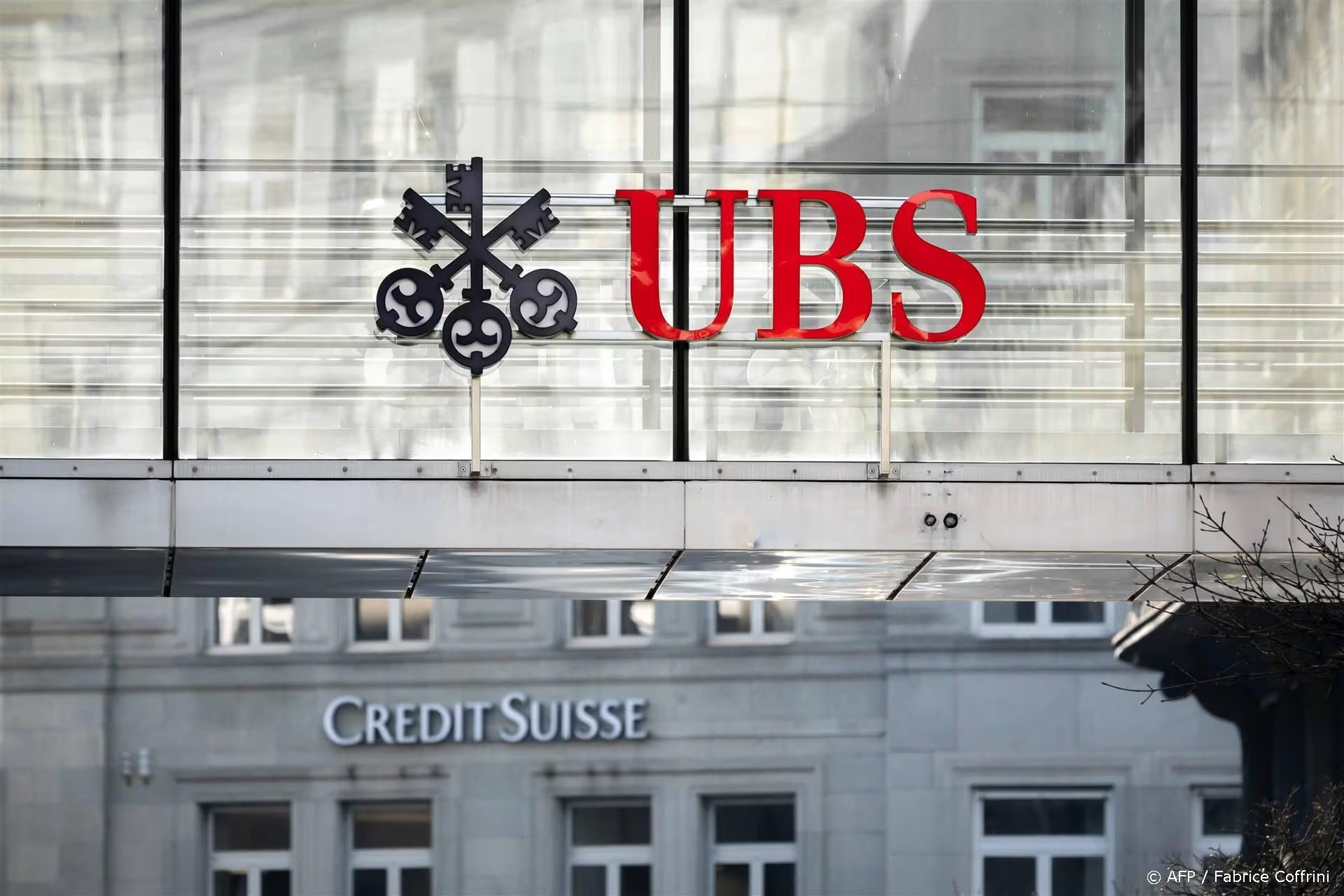
    Recent media reports indicate that the anticipated job cuts at UBS are advancing at a more sluggish pace than originally expected. The integration of Credit Suisse, acquired in 2023, has proven to be a winding road that even the most casual observers can easily spot.

    The upcoming “major milestone” in this integration process involves migrating Swiss clients to UBS’s systems and platforms, a task projected for completion by mid-2026. Just a month ago, during its half-year results presentation, the bank expressed optimism about these plans, stating it was “well on track.” However, as detailed by the Financial Times, it appears the expected job reductions are lagging, adding to the uncertainty surrounding this transition.

    While UBS has not publicly set a target for its workforce post-integration, internal sources suggest that plans aim for a headcount of around 85,000 by the end of 2026. As of mid-2025, the bank employed 105,000 full-time equivalents, down from 119,000 at the end of June 2023. Although initially, the pace of job cuts exceeded expectations, that momentum has weakened considerably. More than 3,500 jobs were cut each quarter in the latter half of 2023, but by the start of 2024, that number dwindled to an average of only 1,300 per quarter. As of this year, 3,500 roles have already been eliminated, revealing that UBS is behind its own reduction schedule.

    Integration Phases: A Tale of Two Markets

    The first phase of this integration saw accelerated job eliminations particularly in investment banking and international markets like Asia and the U.S. Such regions were always expected to feel the impact of these cuts sooner than Switzerland, a fact that seems to be playing out as anticipated.

    Cost-Savings Targets Well Within Reach

    In addressing its strategy, UBS stated, “We are working toward cost targets, not headcount numbers.” The bank has made significant strides towards its goal of reducing costs by USD 13 billion by 2026, achieving an impressive 70 percent of that target already. CFO Todd Tuckner noted that future cost reductions will be shared equally between technology expenses and personnel-related costs.

    Challenges of Natural Attrition

    UBS has also counted on natural attrition to help manage staff levels. Typically, about 7 percent of employees leave voluntarily each year. However, as of early 2025, the bank’s attrition rate had dipped below this historical average, creating obstacles for its job-cutting objectives.

    Interestingly, UBS has prioritized internal candidates for filling its open positions; last year, over two-thirds of these roles in Switzerland were filled from within, showcasing the bank’s commitment to retaining talent when possible.

    Migration Timeline and Future Job Cuts

    The timeline for client migration is crucial, with plans to wrap up by the end of March 2026. An insider highlighted that cost-reduction strategies are “not linear,” as certain legacy Credit Suisse systems cannot be decommissioned until client migration is complete. UBS has committed to conducting job cuts over several years, relying largely on natural attrition, early retirements, and relocating external roles into the company.

    The bank has pledged to minimize the number of roles eliminated during this integration and actively supports affected staff, offering assistance to help them secure new positions either within UBS or externally. In a world where change is often the only constant, UBS aims to navigate its own transformation with as much care for its employees as possible—because no one likes being caught without a safety net.

    Questions & Answers

    What has contributed to the slowdown of job cuts at UBS?
    The slowdown in job cuts can be attributed to lower-than-expected natural attrition rates and a commitment to maintaining workforce stability during the integration process.

    When is UBS expected to complete its client migration from Credit Suisse?
    UBS plans to complete the migration of Swiss clients to its platforms by the end of March 2026, a pivotal moment for the integration efforts.

    How is UBS managing its cost-reduction goals?
    UBS is on track to achieve 70 percent of its cost-reduction target of USD 13 billion by 2026, focusing on savings from technology spending and personnel-related expenses.

  • Gold Makes a Modest Comeback After Monday’s Market Dip

    Gold Makes a Modest Comeback After Monday’s Market Dip

    Global gold prices experienced a slight rebound on Tuesday, recovering from a significant drop in the previous session as investors geared up for crucial U.S. inflation data that could shape the Federal Reserve’s future interest rate decisions.

    Spot Prices Show Signs of Recovery

    In the latest market activity, spot gold crept up by 0.1%, trading at $3,348.41 per ounce. Meanwhile, U.S. gold futures for December delivery dipped marginally by 0.2% to $3,397.10. In Vietnam, the price of gold bars remained stable at VND123.9 million (approximately US$4,716.85) per tael, while gold rings stood firm at VND119 million per tael, with one tael equivalent to 37.5 grams or 1.2 ounces.

    Market Pulse Shifts with Economic News

    Monday saw gold prices plunge by 1.6% globally, as futures dropped over 2% after U.S. President Donald Trump announced a halt on imposing tariffs on imported gold bars, easing market anxieties. Analysts are now closely monitoring upcoming Fed rate cut trends, with economists expecting core CPI data to rise by 0.3% for July, pushing annual inflation to 3%, noticeably above the Fed’s target of 2%.

    “Market participants are undoubtedly focusing on the potential Fed rate cut, which has already been partially factored in for September,” noted Kelvin Wong, a senior market analyst at OANDA. He added, “If core CPI data comes in slightly lower than anticipated, it could bolster expectations for future rate cuts, ultimately reducing the cost of holding gold.”

    Traders Anticipate Rate Cuts

    Investment sentiment remains strong, with traders pricing an 85% likelihood of a Fed rate reduction next month, according to the CME FedWatch Tool. Historically, gold tends to shine in periods of economic uncertainty and low-interest-rate environments. Interestingly, gold is like that quirky friend who is always there when the going gets tough, reflecting its safe-haven status.

    Despite the turbulence, traders demonstrated limited reaction to a White House statement indicating the extension of a pause on escalating U.S. tariffs on Chinese imports for an additional three months.

    Positive Movement in Alternative Precious Metals

    In related markets, spot silver climbed 0.7% to $37.89 per ounce, while platinum rose 0.4% to $1,331.50, and palladium increased by 0.8%, hitting $1,145.03. These movements suggest a broader recovery across precious metals, paralleling the cautious optimism in gold markets.

    Questions & Answers

    How have recent U.S. announcements influenced gold prices?
    Recent U.S. announcements, particularly President Trump’s decision to pause tariffs on imported gold bars, alleviated market fears and contributed to a notable drop in gold prices on Monday. This announcement is part of a larger backdrop of economic uncertainty influencing investor sentiment.

    What factors are analysts watching in relation to gold prices?
    Analysts are closely watching the upcoming U.S. consumer price index data as it could provide insights into potential Federal Reserve interest rate cuts. Predictions of a 0.3% rise in core CPI for July may impact gold’s appeal as a safe investment.

    What role does gold typically play in economic uncertainty?
    Gold traditionally serves as a safe-haven asset during periods of economic instability and low-interest rates. Its price performance tends to improve as investors seek stability amidst unpredictability in the financial markets.

  • UOB Boosts Deposit Growth but Faces Rising Bad Loans in Second Quarter

    UOB Boosts Deposit Growth but Faces Rising Bad Loans in Second Quarter

    United Overseas Bank (UOB) has reported a mixed bag for the second quarter of 2025, with a robust expansion in deposits but a concerning rise in bad loans. According to UOB Kay Hian analyst Jonathan Koh, the bank’s current account savings account (CASA) ratio climbed to 56.5%, marking a five-percentage-point jump compared to the previous quarter. This uptick is complemented by a 14% year-on-year growth in CASA balances, amidst a 7% decline in fixed deposits over the same period.

    However, as depositors celebrated the bank’s stability, there was unease surrounding its asset quality. Koh highlighted that UOB’s non-performing loan (NPL) formation surged to S$472 million in Q2, with NPLs in the “others” category increasing by S$110 million year-on-year, largely attributed to exposure in the commercial real estate sector in the USA.

    The rising tide of NPLs also affected dealings in Greater China, which saw an increase of S$282 million compared to the same quarter in 2024. Yet amidst these challenges, UOB’s NPL ratio remained steady at 1.6%, bolstered by upgrades, recoveries, and write-offs totaling S$430 million, according to Koh.

    Looking towards the future, Koh addressed the economic landscape, suggesting the initial effects of reciprocal tariffs will be manageable. “Management is more concerned about the second-order impacts stemming from a slowdown in business investment and domestic consumption,” he noted, suggesting that the real ripple effects may unfold in the coming months.

    In terms of UOB’s exposure to international markets, Koh indicated that corporate clients with exports to the US account for 10-25% of their total sales, which translates to about 1.3% of UOB’s total loans. “Notably, around 80% of UOB’s wholesale business is tied to the domestic economy and intra-regional trade, with trade loans representing 10% of total loans, out of which 20-30% involves companies looking toward the US market,” he added.

    With economic currents fluctuating, UOB’s strategy appears anchored in resilience while navigating the potential challenges ahead. As retail and corporate sectors brace for what’s next, whispers of forthcoming adjustments and prudent measures are already echoing across the financial landscape.

    Questions & Answers

    What factors contributed to the rise in UOB’s non-performing loans?
    The increase in non-performing loans was primarily driven by elevated formations, especially in the commercial real estate sector in the USA and an uptick in NPLs for Greater China.

    How did UOB’s deposit growth perform in the second quarter?
    UOB reported a 14% year-on-year growth in CASA balances, alongside a notable improvement in its CASA ratio, which reached 56.5%, although fixed deposits declined by 7% in the same timeframe.

    What concerns did UOB Kay Hian’s analyst express regarding economic conditions?
    Analyst Jonathan Koh highlighted concerns over second-order impacts from a potential slowdown in business investment and domestic consumption, while suggesting that the direct effects of reciprocal tariffs would be manageable.

  • VN-Index Soars to New Record High, Setting Stage for Thriving Market Opportunities!

    VN-Index Soars to New Record High, Setting Stage for Thriving Market Opportunities!

    In a landmark surge, Vietnam’s benchmark VN-Index climbed 1.07% on Monday morning, officially crossing the coveted 1,600 mark for the first time. Just an hour and a half into trading, the index soared to 1,602, marking a gain of around 16 points from the previous close of 1,584.95.

    During this period, the trading volume on the Ho Chi Minh Stock Exchange surged to VND20 trillion (approximately US$762.5 million).

    In the VN30 basket, which includes the 30 largest capitalized stocks, shares of the Masan Group hit their ceiling price, reflecting robust investor interest.

    Notable gains were also seen among prominent players in the consumer goods and retail sectors, as stocks like Vinamilk’s VNM, Mobile World’s MWG, and brewer Sabeco’s SAB appreciated by 1%.

    Conversely, five blue chips faced testing waters, with significant drops of over 1%. Vincom Retail’s VRE, alongside TPBank’s TPB and Sacombank’s STB, experienced declines ranging from 1.3% to 1.8%.

    Market analysts had anticipated that the VN-Index would breach the 1,600 threshold this week, with predictions hinting at a potential rally toward 1,650, provided capital inflows stay robust.

    Questions & Answers

    What milestone did the VN-Index achieve on Monday morning?
    The VN-Index surged past the 1,600 mark, reaching 1,602 for the first time in history.

    How much trading volume was recorded on the Ho Chi Minh Stock Exchange during this surge?
    The trading volume amounted to VND20 trillion, which is roughly US$762.5 million.

    Which sectors saw notable gains in stock prices?
    The consumer goods and retail sectors performed well, with significant stocks like Vinamilk, Mobile World, and Sabeco all rising by 1%.