Tag: financial

  • Visa and LINE pay to partner on next-generation fintech solutions

    Visa and LINE pay to partner on next-generation fintech solutions

    Visa (NYSE: V), the global payments leader, and LINE Pay Corporation, operator of digital wallet and fintech services on the LINE messaging app, today announced a strategic partnership that will see them create new financial services experiences for their collective user bases of millions of consumers and merchants worldwide[1].

    The two companies will collaborate across multiple areas, including:

    • Everyday consumer payments: LINE’s 187 million global monthly active users will be able to apply for a digital Visa card from within the LINE app, and over time, add any of their existing Visa cards to make seamless payments from their mobile phone.  The companies will also offer consumers additional and enhanced experiences like integrated loyalty programs and tailored offers and new payment capabilities for users when they travel overseas.
    • Solutions for merchants: Through Visa, LINE Pay consumers will be able to use LINE Pay branded capabilities at Visa’s 54 million merchant locations worldwide, enabling them to take advantage of LINE Pay offers and services. They will also be able to see these transactions in their LINE Pay digital wallet, even where LINE Pay is not directly accepted. In addition, Visa and LINE Pay will collaborate on ways for merchants to interact with the LINE Pay service as well as LINE Pay digital wallet, supporting the continued growth of globally interoperable payments.
    • Fintech services: LINE Pay and Visa will develop new experiences based on blockchain that enable B2B and cross-border payments and alternative currency transactions.
    • Marketing: Ahead of the Tokyo 2020 Olympic Games, Visa and LINE Pay will partner on exclusive marketing campaigns and promotions to contribute to Japan’s acceleration towards a cashless society in the lead-up to and after the Olympic Games.

    Messaging apps are a fast-growing frontier in digital commerce, as consumers look for more of their everyday tasks, like payments, to be integrated with the apps where they’re spending more of their time. As consumer preferences shift further towards a single app from which they can do everything – transfer money, make an online purchase, pay bills, book travel, and order food – LINE Pay and Visa’s partnership will make that seamless experience a reality for millions of users while ensuring LINE Pay and Visa further drive the expansion of globally interoperable, open-loop payments.

    This new partnership extends the existing relationship between Visa and LINE Pay, which includes co-branded LINE Pay Visa cards in Taiwan and to be launched later this year in Japan.

    “The Visa co-brand program that currently serves 2.3 million customers in Taiwan is one of Visa’s fastest-growing programs globally,” said Chris Clark, Regional President, Asia Pacific, Visa.  “We are excited to extend this momentum to a range of new solutions in more markets around the world.  As the LINE Pay team continue to enhance the utility of the LINE messaging application for consumers’ everyday lives, we are impressed by the potential of LINE’s distribution power and consumer loyalty to further drive the growth of the global, open-loop payments ecosystem to benefit all players on our network – consumers, merchants, and issuing and acquiring banks.”

    “LINE Pay is more than just a payment method. As we transition to a cashless society, LINE Pay is focused on delivering added value to LINE’s users around the world and business partners,” said Youngsu Ko, CEO of LINE Pay and LINE’s Fintech Company. “With Visa’s global network and infrastructure, LINE Pay users will be able to enjoy the advantages of that innovative, worldwide network.”

    As payments move away from traditional plastic cards into smartphones, connected devices, and other digital formats, Visa is working with its partners around the world to enable new consumer experiences that are based on digital cards and extending its network to collaborate with new players. This includes the Visa fintech fast-track program, which makes it quicker and easier to build and deliver new commerce experiences on Visa’s payments network.

  • J.P. Morgan Invests In Indian Fintech

    J.P. Morgan Invests In Indian Fintech

    J.P. Morgan has invested in a fintech player in the business payments based in India.  To help its clients experience clearer electronic invoice presentation and quicker reconciliation, the U.S. financial group invested an undisclosed sum in India-based Global PayEx, a player in the Electronics Invoice Presentment & Payment (EIPP) and business-to-business (B2B) payments space.

    «At J.P. Morgan, we continue to invest in innovation to help our clients optimize and simplify their payment operations,» said Sridhar Kanthadai, Head of Wholesale Payments for the Asia Pacific at J.P. Morgan in a media statement on Monday.

    The investment by J.P. Morgan extends the fintech’s footprint in the Far East, Middle East, Europe, and the United States, said Brij Sharma, CEO, Global PayEx. Its cloud-based platform – Freepay – facilitates the electronic sharing of invoices, handling of payments and comprehensive management of transaction information between B2B buyers and sellers.

    Operational for more than three years, Freepay improves working capital efficiency by digitizing all processes in the order-to-cash cycle such as invoicing, dynamic credit and trade terms support, credit/debit notes, instantly applicable cash discounts, full document support for payment decisions including ePoD, and analytics-driven dunning.

  • UOB Outlines Growth Priorities

    UOB Outlines Growth Priorities

    Amid rising global trade tensions and concerns over a synchronized global slowdown, UOB wants to focus on three areas for growth. UOB wants to focus on regional connectivity, ecosystem partnerships, and strong balance sheet/quality earnings to harness growth, the bank said at its Corporate Day held in Singapore on Wednesday.

    In such an environment, it is even more important that we focus on the fundamentals and not lose sight of our main objectives, UOB’s chief executive Wee Ee Cheong underlined.

    In his keynote address, he added that with rising global trade tensions and concerns over a synchronized global slowdown, it was essential that the bank focused on its key priorities.

    At UOB, this rests on our consistent approach of putting our customers at the center, he said. The Corporate Day covered how UOB will continue to build on its regional operating model, to invest at scale in digital and new technology, to equip its people for the future and to drive productivity and performance.

    Currently, the bank has more than 40 percent of group operating profit derived outside of Singapore. Of this, close to 80 percent comes from operations in Southeast Asia and Greater China. «We expect these numbers to go up as we strengthen our regional connectivity, collaborate in win-win partnerships to tap intra-regional flows and the region’s rising affluence for growth,» Wee added.

    Southeast Asia has the third largest population globally, after China and India. The region also has a young population, with 384 million people below 35 years old.

    Given Southeast Asia’s prospects, the bank will continue to make significant investments in developing its digital capabilities to make banking simpler, smarter and safer across all its network. «Throughout the region, we have invested in an omnichannel approach: engaging our customers across a range of touchpoints that best suit them – offline or online, physical or digital or a combination. This is because we know that digital is not the only way that our customers want to be served,» Wee said.

    The impact of UOB’s omnichannel approach is enhanced by the ecosystems which the bank has forged with like-minded partners for the customer’s benefit.

  • Google Pay update brings Gmail integration

    Google Pay update brings Gmail integration

    Google is trying to build an entire ecosystem that will allow users to access any important information from just about every Google app. Gmail has been integrated with many other Google apps, but other developers noticed the benefits and added integration with the email app.

    The newest app that benefits from Gmail integration is Google Pay, which doesn’t come as a surprise since the changes were spotted a few months ago. Now, Google Pay has been updated with Gmail importing, which means that the mobile payment app will browse through your emails and add the relevant information to its system.

    For example, whenever you receive loyalty cards, movie tickets, and boarding passes in the Gmail inbox, they will be automatically added in Google Pay. Keep in mind though that if you delete the email containing the information, it will disappear from Google Pay as well.

    The improvement makes it easier to access loyalty cards, tickets, and more without having to go through your emails every time you want to know something about them. It’s also easier to find coupons and boarding passes that are being sent to your Gmail inbox and make use of them.

    It’s worth mentioning that the new Gmail import feature is disabled by default, so you’ll have to enable it in Google Pay by heading to Settings / General / Gmail Imports and using the toggle available after the latest update.

  • New Financial Institution Launched in Singapore

    New Financial Institution Launched in Singapore

    A news Singapore-based firm, formed by home-grown industry veterans, targets financial technology, regulatory technology, infrastructure, and sustainability-driven enterprises. Licensed by the Monetary Authority of Singapore (MAS), Vanda Global Capital, formed by home-grown industry veterans, is focused on grooming high potentials in the technology vertical, and in impact-driven companies reflecting environmental, social and governance causes.

    The firm targets financial technology, regulatory technology, infrastructure, and sustainability-driven enterprises. Vanda prioritizes and emphasizes unwavering support of Singapore-based initiatives, congruent with Singapore’s vision of establishing the nation as a leading fintech hub, the company said on Tuesday.

    At the helm of Vanda is its CEO, Low Wei Ling, a banking and finance industry veteran of over 25 years of experience and with a solid track record in internationally acclaimed investment banking, asset management, universal and private banking business franchises.

    She serves the MAS Banking Advisory Group and was awarded the International Outstanding Young Private Banker of the Year for exemplary leadership globally. She is a judge of the MAS Global Hackcelerator & Fintech Awards.

    Vanda Global Capital’s leadership management team also includes industry visionaries like Richard Eu Yee Ming of Eu Yan Sang International and Wong Joo Seng of Spark Systems and co-founder of M-DAQ.

    As Co-Founder and Executive Director of the Board of Vanda Global Capital, Eu Yee Ming, who holds a Law Degree from University of London, was a merchant banker, stockbroker, venture capitalist and is also the Non-Executive Chairman of Eu Yan Sang International, a healthcare company that focuses on traditional Chinese medicine (TCM) with annual revenues of over S$300 million.

    Co-Founder & Non-Executive Director of the Board of Vanda Global Capital, Wong Joo Seng is a banking and finance veteran and a venture partner of Vickers Venture Partners. He is founding CEO of GK Goh Financial Services, the derivative trading subsidiary of GK Goh Holdings, and also co-founder of M-DAQ and the company’s founding Chairman.

  • UOB Partners Local E-commerce Platform To Mine Opportunities

    UOB Partners Local E-commerce Platform To Mine Opportunities

    United Overseas Bank has partnered with a popular e-commerce platform to build ecosystem partnerships. This follows a string of partnerships announced with other high profile online platforms.  United Overseas Bank (UOB) announced a regional alliance with local e-commerce platform Qoo10 on Monday, complementing the bank’s efforts to help small businesses seize opportunities in the digital economy. Qoo10, with more than three million buyers, is the top e-commerce platform in Singapore.

    «Our alliance with Qoo10 enables us to extend our touchpoints to provide small businesses with the financing they need directly on the e-commerce site, helping them to take advantage of opportunities quickly as they arise,» said Lawrence Loh, Head of Group Business Banking at UOB.

    In January this year, Qoo10 launched QuuBe, a blockchain-based e-commerce platform which already has more than two million products on the marketplace. Through the alliance, Qoo10 will be able to tap UOB’s holistic suite of financial solutions to help consumers and merchants buy and sell products more easily on both the Qoo10 and QuuBe platforms.

    «Partnering established and trusted allies such as UOB enables us to empower our merchants and customers with readily accessible solutions that provide greater financial flexibility in running a business or making purchases,» says Ku Young Bae, CEO of Qoo10.

  • New Milestone for Hong Kong as a Financial Center

    New Milestone for Hong Kong as a Financial Center

    The Hong Kong Monetary Authority has granted the first virtual banking licenses to three institutions. According to their business plans, these banks will launch their services within six to nine months.

    The three banks that received a license are Livi VB, SC Digital Solutions and ZhongAn Virtual Finance to operate in the form of a virtual bank. The granting of these banking licenses takes effect today, according to a media release on Wednesday.

    According to their business plans, these three newly licensed virtual banks intend to launch their services within 6 to 9 months. After the granting of the above banking licenses, the number of licensed banks in Hong Kong will be increased to 155.

    Reinforcing Hong Kong’s Position

    The Hong Kong Monetary Authority (HKMA) is making good progress in the processing of the remaining 5 virtual bank applications, according to further information.

    «It is a major milestone in reinforcing Hong Kong’s position as a premier international financial center. I believe that virtual banks will not only help drive fintech and innovation but also bring about brand new customer experiences and further promote financial inclusion in Hong Kong», Norman T.L. Chan, CEO of the HKMA, said.

    Targeting the Retail Public and SMEs

    I believe that virtual banks will have to offer innovative and customer-centric services in order to attract customers. Moreover, in targeting the retail public and SMEs as their main client base, virtual banks should help promote financial inclusion in Hong Kong, he added.

    The U.K. market, where neobanks and digital-only challengers have been around for a while, shows there’s a big chance new players will grab a significant chunk of new financial services revenue in the near future in Hong Kong, but that doesn’t mean all is lost for traditional banks here, Fergus Gordon, a managing director at Accenture who leads its Banking practice in Asia Pacific and Africa, said.

    Some Consolidation Expected

    Virtual banks will need some years to establish themselves, then there will likely be some consolidation among some of the players, and in the meantime, traditional players should continue to rapidly reconfigure their branch networks to become more focused on experiences and use technology to make the transition from digital to physical and back much more seamless, he added.

  • UOB Hires New Managing Director

    UOB Hires New Managing Director

    United Overseas Bank recently hired a regional head of engagement to expand its digital team in SingaporeIndustry veteran Kristina Curtis joined UOB two months . ago as managing director, regional head of engagement, group retail digital. Her LinkedIn profile shows extensive experience in digital banking, having worked for ANZ as customer analytics and digital for global wealth, and for BT financial group as chief digital officer.

    When contacted, the bank declined to comment on the personnel move.

    Experience in digital banking

    The demand for people who have leadership and project management experience in digital banking is high in Singapore as banks are pushing to launch new digital platforms in areas of payment and wealth management.

    The ability to leverage on mobile application and new technologies to build an effective communication pathway with the customers and allow for continuous engagement is increasingly valued, evident from the fact that Curtis is not the only recent senior digital.

    Last October, UOB officially appointed Aaron Chia, formerly from Western Union, as the new head of its digital plus unit for wealth and lifestyle products.

  • Judge extends Sears lifeline to mid-January

    Judge extends Sears lifeline to mid-January

    Embattled US department store Sears has been granted yet another lifeline, with a bankruptcy auction now scheduled for January 14. That will give billionaire hedge fund operator Edward Lampert, Sears biggest shareholder and former CEO, one final opportunity to preserve the business. At Monday’s auction, he will bid against rival parties seeking to liquidate the business, described by GlobalData Retail MD Neil Saunders as “more like a patient in a coma than a fully functioning retailer”.

    Sears filed for Chapter 11 bankruptcy protection in October and the independent directors of the 126-year-old company are seeking its liquidation, seeing it as the only means by which creditors can retrieve some of the $5 billion in debts it owes. Lampert wants the remaining 425 stores trading under the Sears and Kmart banners to remain open, convinced it can return to viable trading.

    Saunders disagrees and says talk of a potential liquidation of the company suggests the much-storied retailer is now at the end of its long road to collapse.

    “Its recent journey to this point has been characterised by incredibly poor strategic decisions, chronic underinvestment, and continuous financial machinations designed to keep the company afloat. All of this impacted trading, which has remained dire.”

    Saunders says while Lampert has worked hard to rescue the remains of his empire, there is simply not enough financial firepower left in the company to persuade investors of his bid. Indeed, the terms of the deal put forward by Lampert would only likely delay the inevitable and make it far more difficult for creditors to extract their money.

    “Moreover, his track record in putting the company on a sound financial footing has been less than impressive, and we believe this has undermined his credibility with stakeholders.”

    Saunders says there may be interest from people who see value in elements of Sears business such as the automotive side, the online operations, the brands, and the various home services. Those operations include brands like Kenmore appliances, DieHard batteries and Wrangler jeans. “As such, parts of Sears could live on even if the company as we know it will disappear.”

    According to The Wall Street Journal, Sears, which merged with rival Kmart in 2005, has been losing money for seven years under Lampert’s leadership. Sine April 2007, the company has shed 200,000 staff, lost $30 billion in shareholder value and closed more than 1700 stores, leaving it with less than 700 now.

    Saunders says Sears will act as a case study in how not to run a retail operation.

    “It also serves as an example that even the once most powerful and cutting edge of brands can easily fail in a retail environment where change and evolution are the order of the day.”

  • Maybank Malaysia bags ‘The Banker’s Bank’ award

    Maybank Malaysia bags ‘The Banker’s Bank’ award

    Malayan Banking Bhd (Maybank) clinched The Banker’s Bank of the Year 2018 in Malaysia award with its fresh thinking on how to provide the best service quality to previously underserved consumers. In a statement, The Banker Editorial said Maybank launched HouzKEY, an innovative rent-to-own product, the first of its kind in Malaysia, recognising a gap in the market to provide services to Islamic banking customers.

    “With a growing demand for affordable homes in the country, Maybank created this alternative solution, which allows for home ownership through a leasing scheme that does not require a deposit.

    “Customers have a flat rate rental payment for five years, and at the end of that time, have the option to purchase the property at a price agreed at the start of the contract, continue to rent with a 2% annual rent increase, or to terminate the contract with no obligation,” it said.

    The scheme is Shariah-compliant, being based on the Ijarah principle of leasing.

    Maybank president/CEO Datuk Abdul Farid Alias said the bedrock of its success is predicated on the bank’s mission of humanising financial services, which drives it to innovate and offer financial solutions that enrich the lives of customers.

  • Strong sales growth for India’s textile manufacturing sector in Q2

    Strong sales growth for India’s textile manufacturing sector in Q2

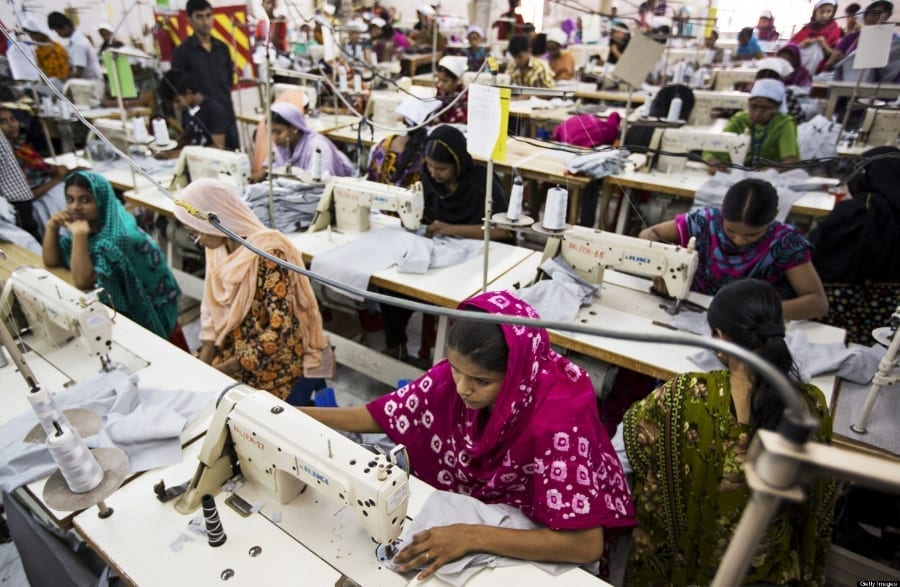
    The manufacturing sector, particularly textile and iron and steel segments, maintained its pace of sales growth in the second quarter of 2018-19 as compared to the year-ago period, the RBI said on Wednesday. Demand condition in the manufacturing sector “maintained its pace in the September quarter 2018-19 as reflected in strong sales growth (year-on-year)”, as per the RBI analysis of 2,700 listed private sector non-financial companies.

    “The manufacturing sector sales growth was mainly supported by robust demand conditions in chemical and chemical products, iron and steel, and petroleum products industries coupled with significant improvement recorded by textile industry,” the RBI said.

    The central bank said heavy moderation was seen in the sales growth of motor vehicles and other transport equipment, driven in part by a large adverse base effect, and pharmaceutical and medicine industries.

    The information technology (IT) sector also recorded further improvement in sales growth over the year-ago period.

    The manufacturing sector continued to record strong growth in net profits, which received support from other income.

    The RBI said companies in manufacturing sector posted a net profit of Rs 47,100 crore in the reported quarter, up 29.4 per cent from the same period last year. The data is based on abridged financial results of 1,734 companies in the manufacturing sector.

    “Despite continuous contraction in the telecommunication, the services (non-IT) sector posted a turnaround riding on the support from wholesale and retail trade,” the RBI said.

    The profit of IT sector, based on data of 172 firms, was Rs 17,700 crore in the second quarter, up 5.8 per cent over the July-September period of 2017-18.

    As per the RBI, the combined sales of 2,700 companies was Rs 9,81,800 crore in the September quarter, up 18.2 per cent from the year-ago period.

    Their net profit was Rs 71,900 crore, an increase of 41.7 per cent year-on-year.

    On expenditure front, manufacturing companies continued to face rising input cost (cost of raw materials, staff cost) pressures. In case of IT sector, staff costs accelerated in tandem with the improvement in sales growth, the RBI said.

  • Garuda Indonesia Expects to Make Profit in 2018: CEO

    Garuda Indonesia Expects to Make Profit in 2018: CEO

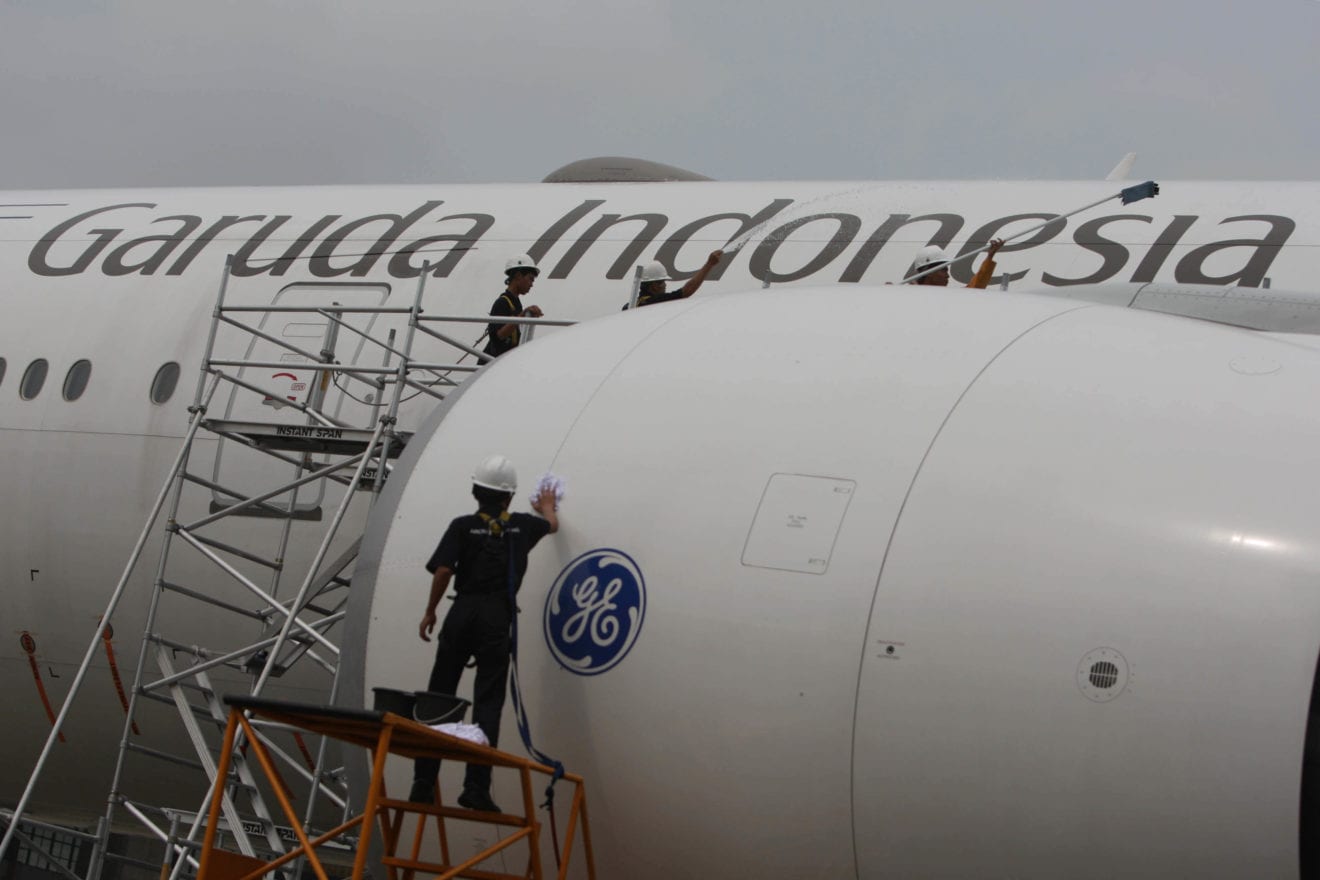
    National flag carrier Garuda Indonesia expects to end 2018 in profit and is targeting a net profit of Rp 1 trillion ($69 million) for 2019, its chief executive said on Friday. Garuda saved $96 million by working with lessors to restructure the financing of its planes until November 2019, chief executive Ari Askhara told reporters.

    “Our net profit for 2018 is positive, even though it might be a small amount,” he said, attributing the result to cost-cutting, renegotiation of aircraft leases and new partnerships.

    The result would be a marked improvement for the airline, which reported a $116.86 million net loss for the first six months of 2018. Ari declared in September that Garuda had abandoned hopes of making a profit this year, after struggling with fuel costs and a rising rupiah versus the US dollar.

    The new partnerships include Garuda taking operational control of rival Sriwijaya Group in November, gaining a majority share of the fast-growing domestic aviation market.

    That partnership could be escalated to a 51 percent share ownership of Sriwijaya, depending upon discussion with Garuda advisors and the Ministry of State-Owned Enterprises, Ari  told a media briefing. Garuda’s profit had yet to see a positive boost from Sriwijaya, he said.

    “Garuda might also see a partnership with [Malaysia’s] AirAsia … through [Garuda unit] Citilink but it’s very early,” he said.

    AirAsia president director Dendy Kurniawan confirmed in a statement that early talks with Garuda were underway, with “various forms of cooperation to support the industry being discussed,” but noted no final decision has been reached.

    Garuda has been battling for market share against local market leader Lion Air, which in October suffered a crash of a Boeing 737 MAX jet, killing all 189 people on board.

    Ari said Garuda had 30 million passengers in 2018 and would expand its fleet to include a new Airbus SE 330neo in September 2019 and a 737 MAX jet at the end of 2020.

    New profitable routes domestically and internationally are planned for 2019, he said.

    Ari also said an intended private placement of shares from subsidiary Garuda Maintenance Facility AeroAsia to longtime partner Air France Industries KLM Engineering & Maintenance had been canceled.

    He said that he considered the current share price of GMF AeroAsia too low and wanted to increase the company’s valuation first.

    Ari said GMF Aeroasia would partner with Dunlop and China Construction Indonesia to build a tire plant in 2019, with the first stage seeing a $300 million investment from the companies involved.

    The plant would be for the domestic market and supply 50 percent of its output to Garuda, 48 percent to Lion Air and 2 percent to AirAsia Group.

    Domestic air traffic more than tripled in Indonesia over the past decade as rising prosperity and lower fares made flying affordable for more people.

    With 129 million passengers in 2017, the Southeast Asian country is the world’s 10th-largest aviation market and is projected to continue growing.

  • Samsung is No. 1 in world for R&D spending

    Samsung is No. 1 in world for R&D spending

    Samsung Electronics was the No. 1 investor in R&D in the world this year, according a report from the European Commission. The annual R&D Investment Scoreboard report released by the commission analyzes R&D indicators of top companies in the world, based on their most recent accounts and annual reports. The 2018 report studied 2,500 companies worldwide from 46 countries.

    Samsung Electronics invested a total of 13.44 billion euros ($15.2 billion) in R&D this year, an 11.5 percent year-on-year increase compared to last year’s report, when it took third place on the list. This is the first time a Korean company has come in first since the European Commission first published the report in 2004.

    Tailing Samsung in second place was Alphabet, Google’s holding company. It spent a total of 13.39 billion euros. Volkswagen was ranked third at 13.14 billion euros. The list went on to include Microsoft, Huawei, Intel and Apple, all having spent between 9.7 billion and 12.3 billion euros.

    Samsung was the only Korean company within the top 50 R&D spenders worldwide. However, the report showed that, in terms of the ratio of R&D investment to sales – which the report dubbed “R&D intensity” – Samsung fell behind other major companies higher up the list.

    The local company’s R&D intensity was 7.2 percent – lower than second rank Alphabet’s 14.5 percent and Chinese IT company Huawei’s 14.7 percent. It was slightly higher than Apple, however, which had a ratio of 5.1 percent.

    The report also showed that, apart from Samsung, Korea was falling behind in R&D investment compared to neighboring countries Japan and China.

    The 2,500 companies studied for the report had invested a combined 736.4 billion euros, with 14 percent of that total coming from Japan-based companies and 10 percent from China. The top contributors were the United States at 37 percent and the European Union at 27 percent.

    A total of 70 companies from Korea were included in the study. LG Electronics was the only other one mentioned by name, coming in third place in the “Top 3 companies by R&D for the main industries: Other” category after Japan’s Panasonic and Sony.

  • Puma global sales grow on more stores number

    Puma global sales grow on more stores number

    Puma worldwide sales increased by 17 per cent on a constant currency basis in the first nine months of this year as the sportswear label achieved growth in every region. Asia and the Americas drove sales, with both markets achieving double-digit growth year-on-year.

    Sales for the period reached €3.422 billion, with gross profit margin by by 150 basis points to 48.8 per cent. Operating profit rose 40 per cent from €215 million to €300 million and net earnings from €134 million last year to €176 million.

    CEO Bjorn Gulden said Puma was still witnessing large shifts in product trends and consumer demand, “but feel we have reacted fast enough to continue our growth”.

    The company’s move to expand its own-operated store network is paying off, with sales up 22..5 per cent year to date, increasing the share of the company’s overall sales to 22.5 per cent. The company said additional stores, improving same-store sales and e-commerce all contributed to the increase.

  • bKash and Ant Financial in strategic partnership to promote financial inclusion for the unbanked in Bangladesh

    bKash and Ant Financial in strategic partnership to promote financial inclusion for the unbanked in Bangladesh

    The leading mobile financial services provider of Bangladesh, bKash Limited (“bKash”) and Ant Financial Services Group (“Ant Financial”), operator of Alipay, today announced a strategic partnership to promote financial inclusion for the unbanked and underbanked communities in Bangladesh. The partnership involves Ant Financial investing into bKash and increasing its technological capabilities, allowing it to provide greater convenience and security in mobile financial services throughout Bangladesh.

    Established in 2010 by founding shareholders, BRAC Bank Limited and Money in Motion LLC, bKash is running a network of more than 180,000 agents throughout urban and rural areas of Bangladesh with over 30 million registered accounts.

    “Along with its investment, Alipay brings the best payment technologies built by thousands of engineers and the knowledge of applying those technologies to economies like China which went through a massive transformation in recent years. Such track record makes Ant Financial a fitting partner for bKash since Bangladesh too has a large population of 160 million and an economy that is advancing rapidly. This investment opens many new opportunities for bKash and demonstrates the confidence a world-class player is placing in Bangladesh,”said Kamal Quadir, Chief Executive Officer of bKash.

    “Ant Financial and bKash share similar goals, in that we want to bring equal opportunities to everyone here in Bangladesh. bKash can tap on the experience Alipay has built over the last decade serving 800 million users together with our strategic partners worldwide. As part of Ant Financial’s global strategy, we are keen to share our technology know-how with partners like bKash, who has successfully brought financial services to the largely unbanked population in Bangladesh. bKash is managed by a strong team with deep local knowledge and execution capabilities. We are confident, together with bKash, we can bring highly secure and inclusive financial services to address the needs of local people and small businesses here,” said Eric Jing, Executive Chairman and Chief Executive Officer of Ant Financial.

    “bKash, a company taking financial services to the doorsteps of millions of unbanked people in Bangladesh, will benefit immensely from this landmark partnership with Ant Financial. It will help bKash significantly step up its activities in changing and positively impacting on the lives of millions,” said Selim R. F. Hussain, Managing Director and CEO of BRAC Bank.

    bKash and Ant Financial were both named in Fortune Change The World 2017 list, a recognition given to companies that have had a positive social impact through activities that are part of their core business strategy.

    International Finance Corporation (IFC) and the Bill & Melinda Gates Foundation have been shareholders in bKash, since 2013 and 2014 respectively.