Tag: financial

  • HSBC Joins Singapore Banks In Local Relief Measures

    HSBC Joins Singapore Banks In Local Relief Measures

    HSBC Singapore is the latest to join other Singapore banks in announcing a slew of relief measures to help businesses and retail customers tide through the effects of the Covid-19 outbreak.

    HSBC announced on Friday its set of support measures for Singapore clients, joining DBS, Standard Chartered, OCBC who already pushed out their relief packages on Thursday. UOB had announced mid-week it would set aside S$3 billion to support small- and medium-sized enterprises (SME).

    The bank’s set of support measures aims to ease Singapore’s flow of commercial trade, which includes maturity extensions to SGD$600 million of current trade loans and 1-hour turnaround on the issuance of shipping guarantees. «Trade underpins Singapore’s economy and society. The measures that we have introduced today aim to facilitate the continued flow of trade by easing the cashflow and operational pressures faced by businesses tackling supply chain disruptions. We are committed to supporting our customers,» said Tony Cripps, Chief Executive Officer of HSBC Singapore.

    In addition, it is waiving amendment fees on Letters of Credit impacted by delays, plus providing enhanced support to enable customers to shift towards digital processing.

    On Thursday, DBS provided details of its liquidity relief packages to address their customers’ «most urgent cash flow needs» after the lender announced its year-end results. In particular, it will provide a six-month principal repayment moratorium for SME property loans.

    In addition, DBS will offer an extension of import facilities of up to 60 days to act as immediate cash-flow support for businesses coping with disruptions from the Covid-19 situation. These relief packages will be available to customers with good repayment histories when they apply, it added. Assistance for affected retail customers will be shared on DBS/POSB’s website from 17 February.

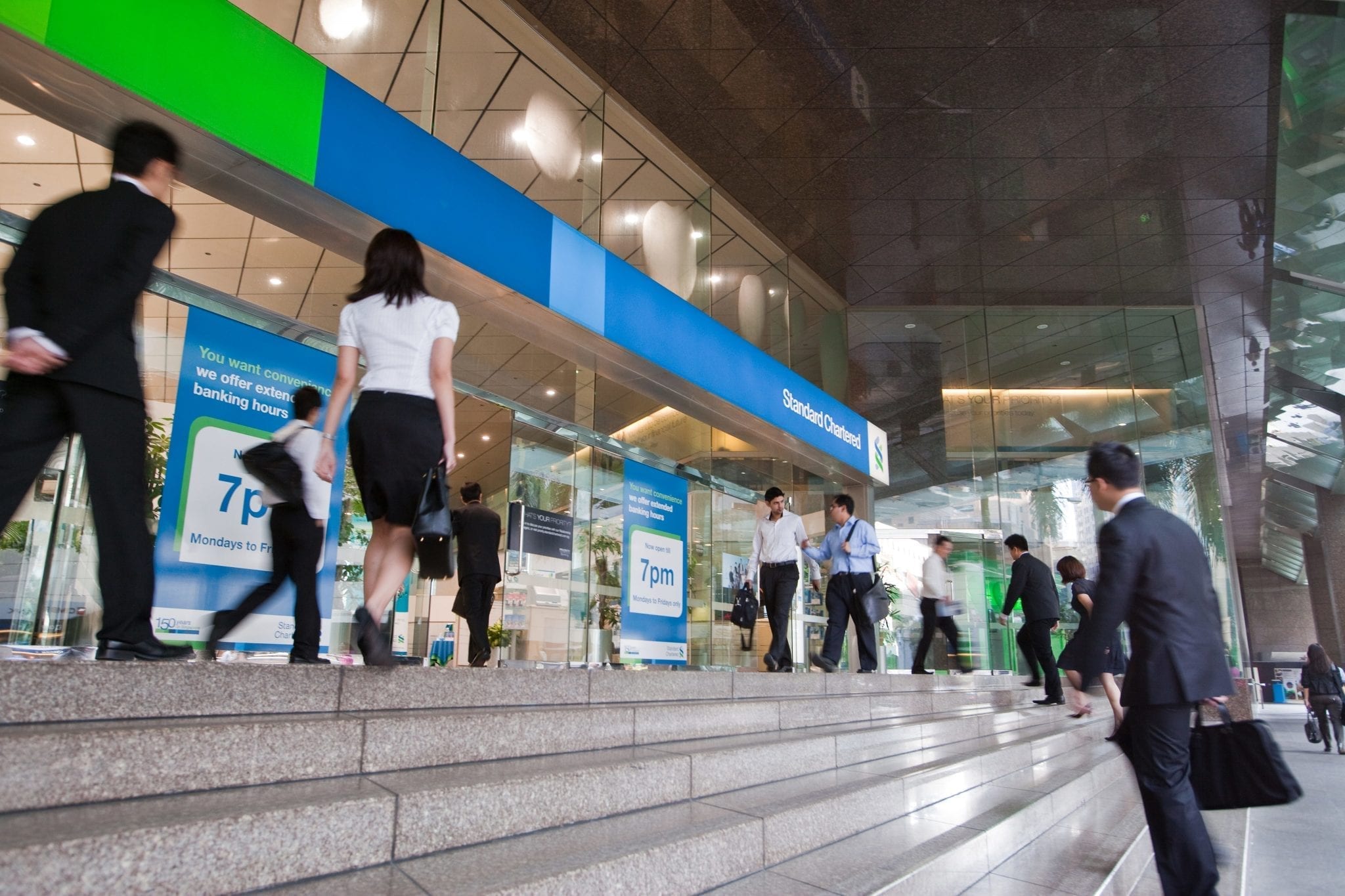
    Standard Chartered is looking to offer loan tenor extensions and principal moratoria of up to 12 months for affected clients with business banking installment loans upon request. Other forms of support could include bill maturity extensions of up to three months for clients with trade facilities who face delayed trade payments, waivers of business banking late fees and related charges such as restructuring costs for up to six months, and extra loans or overdrafts against their property for clients with commercial mortgages.

    For OCBC, it will offer targeted support to customers across its core markets which include Singapore, Malaysia, China, Hong Kong, and Macau. Measures include letting customers restructure their loans, providing a moratorium on principal repayment for loans, extending the due date of affected trade finance bills, and extending bridging loans in the form of additional working capital financing.

    The bank will not limit he help it will extend to customers, noting that the scale of the virus outbreak is «different from that of previous challenges» due to increased connectivity in the region, said OCBC chief executive Samuel Tsien in a media statement.
  • Coronavirus Hits Singapore CBD

    Coronavirus Hits Singapore CBD

    Staff of major firms are being told to work from home and temperature screening and sanitation are being stepped up at many towers in the central business district as two cases emerge.

    The novel coronavirus outbreak in Singapore has spread to its financial district, with two employees at buildings in the area found to have been infected, «The Business Times» reported, citing circulars seen by the publication.

    The first, who contracted the virus on February 8, works at Marina Bay Financial Centre (MBFC) Tower 1, where Standard Chartered is a key tenant. DBS has offices in Tower 3. The building’s management said that affected office space, lifts and ground floor common area have been deep cleaned and disinfected in accordance with Ministry of Health guidelines, according to the report.

    The other, an employee of United Industrial Corporation (UIC), works at Clifford Centre. No other UIC employee has displayed any signs of the virus as of February 7, a circular said, noting the building has since been disinfected.

    The Monetary Authority of Singapore (MAS) issued an advisory urging financial institutions to adopt additional measures and precautions on Friday, the same day the city-state raised its response level to Orange, the same level as during the Sars epidemic in 2003.

    They include maintaining effective internal controls across operations should split team arrangements be implemented, anticipating and preparing for an increase in demand for services such as cash withdrawal or online financial services, informing customers of the availability of services and operating hours, and supporting staff morale.

    It also warned of the heightened risk of cyber threats as actors take advantage of the situation to conduct email scams, phishing and ransomware attacks.

    As a precaution against the novel coronavirus, UOB has closed two banking outlets in Shanghai and Beijing, the bank said in a media statement on Monday.

    UOB’s Commercial Banking Centre in Kwun Tong, Hong Kong remains closed until 14 February. Corporate customers are encouraged to use the Tsim Sha Tsui and Causeway Bay branches during this time.

  • New financial policies in Macau

    New financial policies in Macau

    China is supposedly set to report new financial arrangements in Macau in potential scorn to protest-stricken Hong Kong. Xi Jinping will visit Macau next Monday to recognize the city’s twentieth jubilee come back to China. The President’s visit and the revealed monetary motivations are intended to throw a “sign to HK,”. The capital is set to disclose a huge number of arrangements including the foundation of a Yuan-designated stock trade in the Chinese exceptional authoritative area. The new impetuses likewise incorporate the speeding up of a Yuan settlement focus that is now underway, and the assignment of more land in terrain China for Macau to create.

    Both cities are considered as semi-self-governing areas of the country that have their own lawful, authoritative and legal structures from the continent. Since July, the megapolis has been injured by across the board manifestations as a part of its residents’ campaign for increasing the quality of freedom from the terrain. The conceivable money related motivating force is an endeavor to put pressure on HK, and in the more drawn out term, to develop Macau.

    Not a viable replacement for Hong Kong

    McGregor brought up that it is improbable for Macau or some other Chinese city to supplant Hong Kong’s centrality sooner rather than later. “If they could have recreated the city, somewhere else, and every one of the things HK can do, especially in money-related operations, China would have done it as of now,” he stated. It used to be colonized by Great Britain, and later that came back to China ‘97. Under the “one nation, two structures” formation, its residents have conceded some level of money related and legitimate autonomy from the territory. A similar type of structure applies to neighbor Macau, a previous Spanish settlement that came back to be under the Chinese control in October ‘99. What’s more, from the point of view of Beijing, the city is the token example of overcoming adversity of the strategy working out, said McGregor. Macau’s financial dynamic quality is completely reliant on the Casino business “at the mercy of Beijing,” expert clarified, taking note of that gaming business is banned in the terrain. Macau has been the Gaming Capital of the continent for a long long time. But back in the beginning of the Millenium casinos were controlled and monopolized by S.Ho. In 2002 a new era of Macau began because businesses used the strategy similar to casino deposit bonus offers in Norway. The capital has the ability to switch the tap up and down and stop hot shots coming there, so Macau is satisfying its capacity, and China is truly content with it.

    One nation, two structures

    Beijing has been attempting to sell the “one nation, two structures” thing to Taiwan for quite a long time, yet the ongoing social turmoil in HK has undermined the validity of that guideline, as experts explained. In November, the President, who is looking for a second term in this year’s elections, has totally dismissed the “one nation, two structures’ recipe. China sees his Country as a maverick territory and has recently recommended the island should go under Chinese jurisdiction in a comparative course of action.

    “Obviously it’s not working in HK, and unmistakably it isn’t appealing in Taiwan,” as it was stated about the arrangement.  As Taiwan officials prepare for the forthcoming surveys, it shows up likely that Tsai will win once more. “That is a major issue for the capital,” he stated, bringing up that she was “hostile to them.” The president is at present under a great deal of weight on numerous fronts. Indeed, even as continuous fights in HK keep on compromising the president’s hold on power, Taiwan’s decisions may likewise help hostile to China notions. On the U.S. front, there’s the exchange war, and locally, there is a financial log jam in China.  However, he said he is certain that Xi won’t be “avoided” locally, yet he may be left with no decision yet “to share power more than he has been eager to do hitherto.”

  • UBS Profit Climbs, Disposes of Fund Unit

    UBS Profit Climbs, Disposes of Fund Unit

    UBS’ quarterly profit more than doubled on the year amid big spending cuts. The Swiss bank set out two-year targets and disclosed the sale of a funds business.

    The Zurich-based bank’s fourth-quarter net profit rose to $722 million, from $315 million year-ago, amid a nearly six percent cut in spending, it said on Tuesday. It lifted its dividend to 0.73 Swiss francs per share, after paying out 0.70 francs in 2018.

    We are balancing investments to take advantage of opportunities for growth across our businesses and regions while managing for efficiency,» the Swiss bank said. It recently unveiled a major restructuring of its flagship private bank, which is the centerpiece of CEO Sergio Ermotti’s 2012 new strategy for the bank.

    The private bank’s newly-disclosed goal is to hike profit before taxes by at least ten percent annually. As a whole, UBS’ year was more mixed: net profit dropped nearly five percent to $4.3 billion. The wealth manager couldn’t cut annual spending quickly enough to match a tumble in revenue.

    UBS is disposing of a majority of Fondcenter, a money management platform for its institutional clients, to Clearstream for $600 million, it said in a separate statement. The move will bolster UBS’ hardest type of capital, the bank said.

  • Barclays Cuts Dozens of Investment Banking Jobs

    Barclays Cuts Dozens of Investment Banking Jobs

    Barclays seeks to cut 100 mainly senior jobs in its investment banking arm including dozens of roles in Asia.

    The British lender will mostly cut managing director and director positions based in London and Asian financial hubs with a primary focus on trading roles, according to a report citing anonymous sources. The cuts are already underway and the report named the departures of Jonathan Kitei, Americas head of securitized product sales; Tim Johnston, EMEA head of cash high-touch trading and sales; and Anindya Das Gupta, India head of treasury.

    Whilst the cuts would impact dozens of positions in Asia, it will not result in an exit of any business line or market in the region, one of the sources said.

    Global banks continue to pare down costs with the broader industry having announced nearly 80,000 job cuts last year – a record high since 2015. At Barclays where headcount totaled 83,000 in 2018, the bank said it had cut 3,000 jobs in the second quarter last year. More headwinds can be expected with Barclays chief executive Jes Staley saying in October that the 2020 outlook would be «unquestionably more challenging now than it appeared a year ago.

  • StanChart to Boost Limited 25 Percent Youth Market Share

    StanChart to Boost Limited 25 Percent Youth Market Share

    Standard Chartered aims to boost its market share amongst next-generation users with the launch of its digital bank.

    The bank has three times more market share amongst older clients than those in their twenties and thirties, according to a report citing Standard Chartered chief executive Bill Winters, who hopes that its upcoming digital lending business will help change the mix.

    Our virtual bank can help expand our market share of the younger generation, Winters said. We are very focused on developing digital services. The launch of our Hong Kong virtual bank will be a key strategy for our business.

    Digital rivals entering the market and are attempting to initially lure clients with attractive pricing on deposit rates. For example, ZA Bank – the first virtual lender to launch – made its entrance in grand fashion with a 6.8 percent three-month deposit offering, significantly higher than the 2-3 percent offered by traditional competitors. Hong Kong’s central bank said last week that the remaining seven virtual banks are earmarked to launch this year.

    We will offer an attractive package which is not purely based on pricing but also exceptional convenient services for customers,» Winters explained. «Our team has been testing some good, innovative products with a small group of customers.

    Standard Chartered will enter the market with considerable experience managing an online-only banking business having launched eight such outfits over the last 18 months in Africa. Its inaugural digital lending entrance occurred in Ivory Coast in mid-2018 where it attracted 18,000 new accounts in the first year. Within the region, the bank has also launched in Uganda, Tanzania, Kenya, Ghana, Botswana, Zambia and Zimbabwe.

    Whilst Africa has undoubtedly very different characteristics when compared to Hong Kong due to the latter market’s high population of unbanked individuals, the technological benefits gained from digitally acquiring clients was self-evident.

    The number of new customers we have in Africa over the past 12 months is more than what we had in the prior 12 years, Winters explained.

    Although Standard Chartered is undergoing major transformational changes to both its business model and infrastructure, Winters underlines that components of the old regime will remain such as the bank’s branch network.

    Brick-and-click is a good business model, he said. Our branch network gives confidence to people as they continue to serve customers who never want to pick up a mobile phone app to do their banking.

    Hong Kong too is facing changes after experiencing unprecedented political unrest that has threatened the city’s status as a global financial hub. But this is another area Winters sees no need to rewrite the strategy for.

    We will not change our view on Hong Kong, which remains our regional hub, acting as a gateway to mainland China, he said. These have been very difficult times during the past six months. But I am confident in Hong Kong, whose fundamentals are still resilient. Hong Kong’s capital markets – including IPOs, equities trading and debts, remain very active. It remains a regional financial hub.

  • Razer-Led Consortium Bids for Digital Banking License

    Razer-Led Consortium Bids for Digital Banking License

    A consortium led by Razer is the latest to join the race for one of Singapore’s five digital banking licenses.

    The consortium includes the Singapore supermarket giant owners’ – the Lim brothers – private vehicle Sheng Siong Holdings; Richard Li’s insurance firm FWD Group; internet entrepreneur Chen Danian’s tech company LinkSure Global; Insignia Ventures Partners; and Carro, an online marketplace for cars.

    Razer, which leads the consortium, will own a 60 percent in the stake with the remaining five partners holding a 40 percent stake, according to an SCMP report citing a statement.

    We’ve thought about this long and hard,» said Lee Li Ming, Razer’s chief strategy officer and the newly appointed CEO of Razer Fintech as of January 1. We believe that we can do something revolutionary here in Singapore.

    According to Lee, the firm will target those in the age group of 12 to 35 years old due to the segment’s limited financial knowledge and challenges with entering the banking system due to a lack of savings and credit history. The firm will look to leverage its base of young users alongside its existing digital payment networks Razer Merchant Services and e-wallet service Razer Pay.

    Youth and millennials are underserved even in a crowded space like Singapore, Lee commented. We want to help them from a young age.

    Prior to the Razer-led consortium, Grab and Singtel were the latest to reportedly form a partnership to jointly bid for a digital banking license. The Monetary Authority of Singapore will announce the successful recipients of the digital banking clines in mid-2020.

  • BMW Financial Services India Appoints Kathrin Frauscher As The MD & CEO

    BMW Financial Services India Appoints Kathrin Frauscher As The MD & CEO

    BMW India has appointed Kathrin Frauscher as the new Managing Director (MD) and Chief Executive Officer (CEO) of BMW Financial Services India. Before her new appointment, Frauscher was serving as the CEO of BMW Financial Services in Denmark and has been associated with the BMW Group since 2007. She has also worked as the Head of Sales Performance for BMW Financial Services in Northern Europe and has significant experience of working with the BMW Group in retail sales for BMW and Mini Cars.

    On her appointment, Ritu Chandy, Regional Chief Executive Officer of BMW Group Financial Services for Asia Pacific said, “Kathrin Frauscher made a major contribution to the success of BMW Financial Services Denmark in the last few years. We are confident that she will continue the successful development of the business as she takes charge of operations in India. Ms. Frauscher has significant knowledge and has demonstrated long-standing dedication and commitment to her markets which are the best prerequisites for good leadership.”

    Kathrin Frauscher has succeeded Andre Van Rheenen at the BMW Financial Services in India. BMW Financial Services India was started in June 2010 and operates with three business areas- Retail Finance, Commercial Finance and Insurance Solutions.

  • China Wants Macau as Financial Hub

    China Wants Macau as Financial Hub

    Beijing has directed state-owned banks and enterprises to help set up infrastructure in Macau to aid financial diversification, and to serve as a contingency plan if the situation in Hong Kong worsens.

    Two officials who helped develop the Shanghai stock exchange moved to Macau to help establish its yuan-based stock exchange, one of the sources told «Reuters». Chinese officials, and bankers in Hong Kong, say the push to develop financial infrastructure in Macau is part of a plan to avoid any major market disruption in Hong Kong that could impact Chinese businesses.

    The financial industry used to be an idea that we reserved for Hong Kong. We used to give all the favorable policies to Hong Kong. But now we want to diversify it, said one Chinese official who requested anonymity.

    The idea is not for Macau to replace or undermine Hong Kong but for China to have a contingency plan in case the situation in Hong Kong worsens, sources at Reuters added.

    The slew of new policies for Macau is aimed at diversifying the city’s casino-dependent economy into a financial center. Macau’s casino operators, which have been hit by slowing economic growth and the Sino-U.S. trade war could look forward to the development opportunities in Hengqin, casino executives who were interviewed said.

    Xi Jinping has made very clear that he wants a diversified Macau economy, said one Chinese official. The future focus will be on tourism and finance, to make it a center to host international meetings like Singapore.

    Besides establishing a yuan-denominated stock exchange and speeding up a yuan settlement center which is currently being developed, the policies will also be looking at land allocation in Macau. As part of that effort, Macau will be allocated more land on the mainland island of Hengqin to develop in areas such as education and healthcare.

    These policies also mark the 20th anniversary of the former Portuguese colony’s return to Chinese rule, as Xi plans a visit to Macau next week. There, Xi is expected to announce policies to further integrate Macau with mainland cities in the Greater Bay Area, the region around the Pearl River Delta that also includes Hong Kong, according to Chinese officials and Macau executives.

  • Vietnam second among ASEAN members in attracting fintech funding

    Vietnam second among ASEAN members in attracting fintech funding

    Vietnam’s fintech firms secured $410 million, or 36 percent of the global capital pouring into Southeast Asia between January and September, behind Singapore.

    The country’s share of regional venture capital funding devoted to fintech soared from just 0.4 percent in 2018, according to a report prepared by the United Overseas Bank (UOB), PwC and the Singapore Fintech Association (SFA).

    Singapore remained the top destination for regional fintech investment, with 51 percent, down from 53 percent in 2018, with Indonesia in third place with 12 percent, down from 37 percent last year.

    ASEAN Fintech Funding 2019PercentageSingaporeVietnamIndonesiaOthersSource: Tracxn

    By the end of the third quarter this year, ASEAN had received $1.14 billion in funding for fintech firms, up sharply from $35 million in 2014, the report said.

    The surge in investments in Vietnam this year is attributable to two large deals, both in digital payments. In July, digital payment firm VNpay received $300 million in investment from Japanese multinational conglomerate SoftBank and Singaporean sovereign wealth fund GIC.

    And in January, e-payment app MOMO Pay landed $100 million from investors led by American private equity firm Warburg Pincus in its Series C funding round. The two deals accounted for 98 percent of Vietnam’s total fintech funding in the first nine months.

    In terms of the number of funding deals in 2019, Vietnam came third in ASEAN at 8 percent of total deals, up from 2 percent in 2018, behind Singapore and Indonesia with 51 percent and 28 percent respectively.

  • OCBC Targets 200 Homegrown Cyber Risk and Security Staff

    OCBC Targets 200 Homegrown Cyber Risk and Security Staff

    OCBC is partnering with Temasek Polytechnic in an effort to train up to 200 employees to become cyber risk analysts and cybersecurity specialists in the next three years.

    The bank and higher education institution will launch a cyber certification program focused on four main areas: digital services and solutions, software development, risk and assurance, and security operations and monitoring. OCBC collaboration with lecturers of Temasek Poly’s School of Informatics and IT will also cover subject matters such as risk management, audit, and cybersecurity.

    At OCBC, we strongly believe that people will be the most important line of defense against potential threats, said Vincent Choo, OCBC’s head of group risk management. The bank takes great efforts to ensure that our people are aware of and trained to deal with existing and emerging risks.

    The certification is part of OCBC’s Future Smart program, a $20 million initiative to upgrade internal talent. In July 2019, OCBC also partnered with Ngee Ann Polytechnic to create a data certification program to train 200 data science and analysts over the next three years in order to double the number of such talents.

  • China Accelerates Blockchain Growth

    China Accelerates Blockchain Growth

    China’s national parliament has passed a new law on cryptography aimed to facilitate development concurrently with the country’s central banking efforts to launch its own digital currency.

    The newly adopted law, effective as of January 1, 2020, «was necessary for regulating the utilization and management of cryptography, facilitating the development of the cryptography business and ensuring the security of cyberspace and information», the National People’s Congress Constitution and Law Committee.

    The new law distinguishes cryptography into three classifications: core, common and commercial. Core and common cryptography will be strictly managed by Chinese authorities and used to protect confidential national information.

    If cryptography is deemed as commercial, which assumes no risk to state security or the public interest, cryptography management departments and other relevant personnel are unable to ask for disclosure of «exclusive information related to the cryptography such as source codes and must keep the business secrets and privacy they get in their duties strictly confidential.

    The new law marks a further acceleration of China’s blockchain-related policy which is likely to pave the way to various initiatives including the nation’s efforts to launch its own digital currency which its central bank claims is almost ready.

    The law was also enacted one day after President Xi Jinping called for more research and investments into blockchain technology, stressing competition from other major countries and the need for China to obtain first-mover to increase «influence and rule-making power in the global arena».

  • Singapore Fintech Festival 2019 Kicks Off in November

    Singapore Fintech Festival 2019 Kicks Off in November

    The Singapore Fintech Festival is set to kick off on the week of November 11 and will feature over 250 industry leaders to discuss the future of the financial services industry.

    The conference will feature a myriad of topics revolving around four key themes: the future of finance; sustainability; exponential technologies; and global investment and market opportunities.

    Various sessions will be joined by leading global industry names such as HSBC group CEO, Noel Quinn; Standard Chartered group CEO, Bill Winters; LGT group CEO, H.S.H. Prince Philipp von und zu Liechtenstein; and more.

    Last year’s Singapore Fintech Festival was widely attended with more than 45,000 participants from 130 different countries. To learn more about the Singapore Fintech Festival agenda for 2019, click here.

  • Alibaba Acquires One-Third of Ant Financial

    Alibaba Acquires One-Third of Ant Financial

    Alibaba Group has bought a 33 percent equity interest in Ant Financial, pulling the financial tech giant closer to mainland China.

    Following the acquisition, Ant will no longer be required to pay 37.5 percent of its pre-tax profits to the e-commerce behemoth.

    The profit transferal agreement was brokered in 2011 following a dispute Alibaba and Yahoo which consequently led the former’s co-founder Jack Ma to shift Ant Financial – formerly known as Alipay – into a separate entity he controlled. Concerns about conducting business in China with a foreign-owned entity was the cited for the move.

    Every year we generate new stuff and we acquire new stuff. We never stop,» Alibaba chairman Daniel Zhang said at its annual investor conference in Hangzhou. «Payment and financial services are very important pillars in Alibaba’s system.

    The latest deal places the value of Alibaba’s global portfolio at $83 billion with investments into diverse high tech industries including artificial intelligence and augmented reality, according to group CFO Maggie Wu.

    Ant, valued at $150 billion, offers a full range of financial services and products including micro-lending, insurance, credit scoring and China’s largest money market fund. It is also in the midst of foreign acquisitions in India and Thailand. Its flagship digital payments platform currently boasts 900 million users.

  • Singapore Among World’s Worst in Workplace Diversity

    Singapore Among World’s Worst in Workplace Diversity

    While Singapore might be the world’s most competitive economy, its workplaces have a long way to go, ranking close to bottom in terms of diversity and inclusion, and a quarter of employees reporting bullying, according to surveys by Refinitiv and Kantar.

    While Asia-Pacific counted 23 firms on the 2019 Diversity and Inclusion Index published by financial markets data provider Refinitiv, the only representative from Singapore was Singtel.

    The survey, published Tuesday, ranks over 7,000 companies globally and identifies the top 100 publicly traded companies on 24 separate metrics across four key pillars: diversity, inclusion, people development, and controversies.

    The increasing transparency in the reporting of social metrics will offer opportunities for investors to better integrate ESG principles into the investment and strategy decision-making process, Refinitiv chief revenue officer Debra Walton said.

    Singtel came in 79th on the list. Australia led the region, with nine companies in the top 100, followed by Japan with five.

    Singapore’s workplaces were ranked second-last in terms of diversity and inclusion practices by data, consulting and insights firm Kantar in its latest Inclusion Index, released Tuesday.

    According to the survey, which polled 18,000 people in 14 countries across 24 industries, Singapore was identified with the highest level of workplace bullying, along with Brazil and Mexico.

    Compared to the global peers, Singapore workers are the most likely to «feel uncomfortable» by their employers, and 44 percent said they experience «stress and anxiety» at work, compared to 39 percent globally, according to the survey.

    If you are serious about inclusion and diversity in your business, you need to get serious about measuring it. Diversity is the fact, while inclusion is the act, and until now inclusion has been much harder to measure, Mandy Rico, global director of Kantar’s Inclusion Index, said about the findings.