Tag: financial

  • StanChart Eyes Mainland Brokerage Business

    StanChart Eyes Mainland Brokerage Business

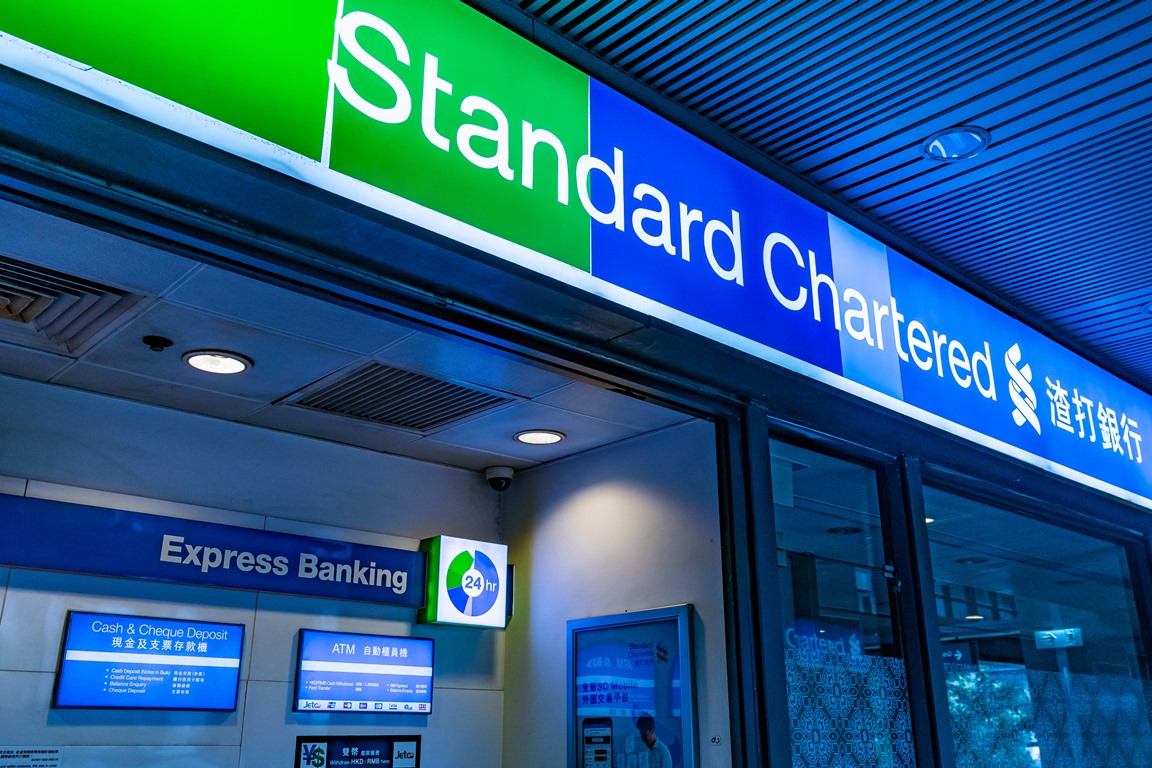
    Standard Chartered is reportedly applying for a brokerage license in China, joining its peers in the wave of foreign entry into the mainland market.

    Mainland’s securities watchdog, the China Securities Regulatory Commission (CSRC), has accepted an application from Standard Chartered Hong Kong on October 10 to set up a securities firm in the market, according to a report from state-owned media Xinhua.

    According to Standard Chartered, the bank was looking to further develop onshore business through acquiring new licenses.

    Since Beijing made good on a trade deal signed with the U.S. to scrap foreign ownership caps on securities and mutual fund firms, foreign financial institutions from the U.S., Europe, Japan and Singapore have been rapidly seeking to establish a presence to capitalize on new opportunities. Within brokerage, Japan’s SBI was the most recent to express greater interest in the mainland’s sub-sector due in part to growing political instability in Hong Kong.

  • UBS Mulls VR-Based WFH Traders

    UBS Mulls VR-Based WFH Traders

    UBS is reportedly exploring the option for traders to work from home through simulated experiences via virtual reality headsets.

    The bank is experimenting with creating a trading floor simulation for its London-based staff, according to a report, using Microsoft’s HoloLenses.

    If people really can’t come to the office, can we create a virtual presence?» said Beatriz Martin, head of U.K. at the bank. «We are thinking about experimenting with the tools that are out there.

    The HoloLenses are a head-mounted unit that uses multiple censors, advanced optics and holographic processing that display information and images that can blend in with the real world.

    UBS’s work-from-home efforts extend beyond just its trading operations or the European region. The Swiss bank has already launched a «UBS Workspace» platform which allows employees to have mobile-based access to any files or the information in the exact same format at any time and place.

    Within Asia, 90 percent of employees are able to work from home via «UBS Workspace» with three-quarters of all staff across wealth management and investment banking already being enabled by the platform.

  • Barclays APAC Head of FX Trading Departs

    Barclays APAC Head of FX Trading Departs

    Barclays’ head foreign exchange trading in Asia Pacific will reportedly exit just 18 months after joining the British bank.

    Pritpal Gill, head of G10 FX and FX options trading in the region, has been let go by Barclays, according to a report citing unnamed sources, after joining its Singapore offices less than two years ago in January 2019.

    Prior to joining Barclays, Gill ran a family office and also worked with Citigroup.

    Gill’s exit is part of Barclay’s broader efforts to reduce costs by cutting 100 senior jobs mostly from its corporate and investment banking unit.

    Previous senior exits include Jonathan Kitei, Americas head of securitized product sales, and Anindya Das Gupta, India head of trading.

  • Mastercard and Asian Development Bank build multi-stakeholder alliance to digitalize supply chains

    Mastercard and Asian Development Bank build multi-stakeholder alliance to digitalize supply chains

    Mastercard and its partners N-Frnds, SGeBIZ and Finastra have formed an alliance with the support of the Asian Development Bank (ADB) to create technology solutions to drive greater digital efficiency across the retail supply chain in Asia and increase wholesalers’ access to credit.

    “These unprecedented times underscore the importance of building an inclusive, sustainable digital economy, including through the application of technology to digitize trade, which can make it easier for small and medium-sized businesses to participate in global supply chains,” commented Michael Froman, Vice-Chairman and President, Strategic Growth for Mastercard. “Innovative partnerships like this one can support the agility and resilience of supply chains, accelerating access to finance and improving efficiency.”

    The global pandemic and accompanying economic impact have severely disrupted supply chains and trade networks, particularly for small and medium enterprises (SMEs) that account for 90% of all global businesses, employ about half of all workers and deliver more than half of GDP.

    The pandemic has also reduced control over cash flow and access to credit by SMEs. Even before COVID-19, the ADB estimated there was a $1.5 trillion funding gap in 2018, with smaller businesses most impacted. The International Chamber of Commerce estimates a potential $2 trillion to $5 trillion shortfall in trade financing through 2021 if demand returns to the global economy.

    As a result, it is vital for the public and private sectors to come together to enable a faster and more efficient shift towards digitalization for SMEs across global supply chains, trade and access to financing. Mastercard, in line with its broader commitment to bring 1 billion individuals and 50 million micro and small businesses into the digital economy, has responded by developing a collaborative market-leading solution with SGeBIZ, Finastra and N-Frnds. The program will start in Indonesia with 500 retailers and aims to build to 5,000 retailers by the end of Q1 2021.

    “COVID-19 has had an adverse impact on the global supply chain and these collaborative solutions are critical to ensuring grocery stores stay stocked, pharmacies have access to medicines and people can buy the daily goods they need,” said Safdar Khan, Divisional President, SEA Emerging Markets Mastercard. “Mastercard is proud to work with like-minded partners to integrate digital payments with the flow of commerce to deliver solutions for SMEs that help them navigate today’s environment and thrive in the future.”

    “ADB has been working closely with the Government of Indonesia in its efforts to alleviate the impact of the coronavirus disease (COVID-19) pandemic, including through the $1.5 billion financing approved in April 2020. Our partnership with Mastercard and its alliance partners in the pilot digital supply chain project will provide critical access to finance to affected MSMEs and immediate assistance to keep the food and essential goods supply chain running,” said Ahmed Saeed, Vice President for East Asia, Southeast Asia and the Pacific, Asian Development Bank.

    The results of the alliance are a technology solution that provides two key benefits:

    1. Wholesaler access to credit: Mastercard will leverage supply chain data from N-Frnds, SGeBIZ’s digital procure-2-pay platform and other sources to partner with Finastra and its Trade Bank customers to automate access to working capital finance.

    The collaboration will increase the digital data available to assess creditworthiness and create new models to evaluate it. Access to the resulting lines of credit will enable wholesalers to react more quickly to upcoming promotions, increase their inventory levels and build their businesses.

    “One of the most fundamental problems for SMEs and micro-businesses across Asia is access to finance,” said Simon Paris, CEO, Finastra. “Without credit, financially excluded businesses become caught in cycles that restrict their capacity to grow and leave them underprepared for the effects of market disruption. Technology is the enabler to tackle financial inclusion challenges. As part of this collaboration, we are able to drive change to bring positive outcomes, through digital transformation and innovative new lending pathways.”

    1. Fully digitalized marketing campaigns: Through integrating digital payments and supply chain data with promotions, FMCG trade spend can be allocated more efficiently with better visibility and inclusion of SME retailers.

    The alliance will leverage N-Frnds’ mobile solution – which optimizes logistics and operations by connecting FMCG companies with wholesalers for placing orders, coordinating deliveries and monitoring inventory levels – to better communicate upcoming promotional efforts between suppliers and wholesalers.

    “We are excited to join N-Frnds, our strategic partner for the last mile in this new initiative to digitalize and streamline trade financing and promotions in traditional markets. We believe that this new collaboration will enable us to lead the transformation of value chains in Indonesia, both by extending credit and ensuring that our promotional spend is significantly more effective and enjoyed by the four million grocery stores in Indonesia,” says Kadir Gunduz, President Director, Coca-Cola Amatil Indonesia.

  • Citi Names APAC Trade Head

    Citi Names APAC Trade Head

    Citi’s treasury and trade solutions unit promotes its former head of trade finance for Asia Pacific to lead the region’s trade unit. Citi Treasury and Trade Solutions (TTS) appoints Kanika Thakur as its Asia Pacific trade head, effective immediately, according to a statement. Thakur succeeds Vishal Kapoor was named head of TTS for Citi Hong Kong in May this year.

    In her Hong Kong-based role, Thakur reports to Rajesh Mehta, APAC TTS head and Ebru Pakcan, global head of trade.

    A career Citi banker, Thakur joined in 2001 as a management associate in India. Since then, she has also worked in Hong Kong and Singapore within trade across roles such as sales and structuring, product management, and distribution. Prior to her latest appointment, Thakur was the APAC head of trade finance.

    According to the statement, Thakur takes on the role amidst a «new operating environment» of evolving needs such as «shifts in trade flows, reconfiguration of supply chains and [the] advent of new technologies».

    In addition to maintaining our market leadership [in the trade business, Thakur] will also be responsible for charting the course of our future business model in a rapidly changing environment, said Mehta.

    Citi’s trade business generated high single-digit growth in 2019 and has also seen an uptick in activity this year amidst an economically challenging environment, the statement added.

  • OCBC Profits Plunge in Q2

    OCBC Profits Plunge in Q2

    The bank recorded a decline that was steeper than predicted by analysts, owing to soaring provisions for loan losses and shrinking lending income during the Covid-19 pandemic.

    OCBC’s net profit for the second quarter of 2020 was S$730 million ($533 million), up 5 percent from the previous quarter and 40 percent lower compared to a year ago, the bank said in its quarterly earnings report published on Friday.

    Provisions for credit losses stood at $750 million in Q2, higher than the previous quarter’s $657 million, and $111 million a year ago.

    Net interest income fell 9 percent to S$1.48 billion, which the bank said was largely from a 16 basis points decline in NIM as asset pricing adjusted to the significant cuts in interest rates faster than the reduction in customer deposit funding costs

    The bank recommended an interim dividend of 15.9 cents per share for the first half of 2020. This represents half of the maximum 31.8 cents dividend per share that OCBC can declare in FY20, as MAS has recommended locally incorporated banks headquartered in Singapore to cap dividends at 60 percent of FY19. A scrimp dividend is also offered, which gives shareholders the option to receive the dividend in the form of shares, with the issue price of the shares set at a 10 percent discount.

    This decline is steeper than expected – a Refinitiv poll among analysts expected net income to fall 31.7 percent to S$835 million during the quarter, with earnings per share to fall 24.1 percent year-on-year to S$0.218 per share.

    OCBC group CEO Samuel Tsien said the bank has been defensively shoring up its balance sheet and preparing for a slow recovery.

    We protected our customer franchise, managed our expenses in line with income expectations, increased our allowance coverage, preserved our capital and raised our capital efficiency to position for the future post-pandemic. We will continue to contain all discretionary expenditures, including management compensation,» Tsien said in a statement.

    Singapore’s two other listed banks reported their earnings yesterday – DBS reported a 22 percent year-on-year drop in Q2 net profit for the first quarter to S$1.25 billion, while UOB reported a 40 percent decline.

  • Grab Grows Suite of Financial Products

    Grab Grows Suite of Financial Products

    The platform is launching new products, which include a micro-investment solution, a third-party loan platform and a buy-now-pay-later service for purchases with e-commerce partners.

    The finance arm of Singapore-based ride-hailing and payments firm Grab has rolled out a new strategy to expand its consumer services ecosystem and «empower individuals to grow their personal wealth, manage their finances and protect what they value,» the firm announced on Tuesday.

    Thrive With Grab brings an expanded range of new lending, wealth, and insurance products, with which it hopes to tap into Southeast Asia’s vast mass market financial services opportunity.

    By offering innovative micro-transaction-based financial services, convenient financial management tools and access to products from leading global financial institutions, we hope to unlock the tremendous potential in financial services in the region in ways that serve all Southeast Asians,» Reuben Lai, senior managing director, Grab Financial Group (GFG), said.

    Grab will be pushing into retail wealth by focusing on accessible, convenient, and transparent investment products and solutions while broadening its wealth management offerings that feed into its goal of strengthening its open fintech ecosystem, Lai said at a media briefing ahead of the launch on Tuesday.

    The company will also provide customers with opportunities to invest in products and solutions traditionally limited to affluent individuals and institutional investors, Lai said, adding that Grab will also launch a series of financial education programs to help users make more informed in financial decisions.

    Following its acquisition of wealth management platform Bento earlier this year, Grab will roll out micro-investment solution AutoInvest in September, which allows users to invest as they spend with their everyday Grab transactions from S$1 ($0.73), and invest from their wallet balance to earn returns of about 1.8 percent per year, which can then be cashed out directly to their GrabPay wallets.

    Lai also noted the growing demand for online consumer lending, citing research from Boston Consulting Group that shows that more than one-third of Southeast Asian consumers are willing to shift some banking activities, such as loans, too non-banking platforms.

    To meet this demand, it is launching a third-party consumer loan platform, starting in Singapore, before expanding to Malaysia and other countries. Consumers will be able to apply for personal loans offered by bank partners directly within the Grab app.

    GFG will also expand its buy-now-pay-later line of offerings by launching PayLater Instalments and «PayLater Postpaid» on select e-commerce sites in Singapore and Malaysia in October, and launch its first hospitalization insurance plan for consumers in Indonesia.

    The company laid off 5 percent of its workforce in June, which founder and CEO Anthony Tan said would help it better face the challenges of a post-Covid economy. He also said the strategic roadmap for Grab Financial, which is a «long-term bet for the future,» remains unchanged.

    Grab is also part of a consortium with Singtel that has applied for a digital banking license in Singapore.

  • HSBC Promotes Investment Duo at Private Bank

    HSBC Promotes Investment Duo at Private Bank

    HSBC Private Banking promotes two executives in its investment and product solutions unit in Asia, effective immediately.

    The bank appoints Jeffrey Yap as head of investment services and product solutions (ISPS) for Southeast Asia after his last role as regional head of fixed income, currencies and commodities (FICC) Asia Pacific, according to a statement. Adam Lau has also been appointed to the newly created role of regional head of market solutions, Asia Pacific.

    Yap joined HSBC in 2017 from Alliance Group (PAG), where he was managing director responsible for the firm’s public fixed-income investments. Lau is a 20-year financial veteran who joined HSBC in 2018 from Natixis where he was its Greater China head of equity solution sales. He was also previously with Deutsche Bank as its Greater China head of private banking and retail sales and J.P. Morgan as a structured product marketer.

    Yap reports to Philip Kunz, head of Southeast Asia at HSBC Private Banking and Abdel Ben Tkhayet, APAC head of ISPS while Lau will continue to report to the latter.

    In addition to developing talent internally, the bank also highlighted Singapore as a key market for its wealth business and underlined specific client segments that bank in the booking center.

    As a leading international wealth center, Singapore is one of our key wealth markets, where we serve a significant group of international clients from Southeast Asia, Greater China and other parts of the world, Kunz.

    Under the leadership of [Yap] and [Lau], I’m confident that HSBC Private Banking will build on our strong momentum and expand and enhance our range of products and services to distinctly meet our clients’ wealth needs.

  • Wirecard Assessing Singapore Services

    Wirecard Assessing Singapore Services

    The firm is at the center of one of the region’s biggest corporate accounting scandals in recent years, having admitted that €1.9 billion is missing from its financial accounts. Wirecard has informed the Monetary Authority of Singapore (MAS) that it is assessing if it can continue providing its services in Singapore, which include credit card payments and usage of its pre-paid cards, following its parent company’s insolvency filing in Germany.

    MAS is closely monitoring the operations of Wirecard, the regulator said in a statement on Tuesday, noting that the company has complied with directions to hold customers’ funds in segregated accounts with banks here.

    DBS is seeking details from Wirecard if it can continue to use its services, and will transition to other service providers if necessary, while UOB and OCBC merchant partners use payment gateways by Mastercard and Visa and not Wirecard.

    The German payments processor, once seen as a rising star in the fintech world, has come under intense scrutiny over its alleged improper accounting conduct, which came to a head on June 18, when it was supposed to report its full-year-2019 and first-quarter-2020 results after three delays.

    However, auditor EY said it could not find sufficient audit evidence of the missing €1.9 billion in the firm’s balance sheet.

    This led to the resignation of CEO and largest shareholder Markus Braun on June 19, and his arrest several days later by German authorities on suspicion of market manipulation and false data.

    The Singapore Police Force’s (SPF) Commercial Affairs Department (CAD), which deals with white-collar crimes, started criminal investigations into Wirecard’s operations in the country in February 2019.

    MAS said on Monday that it was working with the Accounting and Corporate Regulatory Authority (ACRA) and CAD to scrutinize other possible aspects of the case.

  • China Regulator Issues Record-High Penalty

    China Regulator Issues Record-High Penalty

    China’s securities watchdog issued 3.6 billion yuan of penalties over a case of insider trading by a Shanghainese entrepreneur and his daughter – an all-time record-high regulatory fine.

    Wang Yaoyuan and his daughter Wang Chengcheng were fined 2.72 billion yuan ($380 million) for using inside information to build long positions on the shares of listed healthcare company Joincare Pharmaceutical Group. The two made a net gain of 906.4 million yuan ($128 million) which was also confiscated by the China Securities Regulatory Commission (CSRC).

    According to the CSRC, the two had obtained insider information that Joincare’s second-largest shareholder Hongxinhang would transfer a 4.8 percent stake to units controlled by two major investors: Tencent founder Ma Huateng and ZhongAn chief executive Ou Yaping. The elder Wang obtained insider information in 2015 through Ou and the controller of Hongxinhang via phone calls and physical meetings.

    Neither Tencent’s Ma nor ZhongAn’s Ou was fined or reprimanded by the regulator.

    China’s regulator has been increasingly active with issuing fines in a move viewed by onlookers as the end to the practice of immaterial penalties to further discourage unhealthy practices. Earlier this year, the People’s Bank of China imposed the first-ever fines of above 10 million yuan ($1.4 million) to China Minsheng Banking Corporation, China Everbright, and Huatai Securities.

    In the first quarter of 2020, the CSRC issued a total of 19 penalties accounting for a 35 percent year-on-year increase, involving mostly cases of insider trading, market manipulation and violation of disclosure rules.

    The 3.6 billion yuan fine on the Wangs reportedly surpassed the former leading fine of 3.47 billion yuan issued against the ex-controller of Shanghai Duolun Industry over price manipulation and disclosure breaches.

  • Revolut, Appears to be a Normal Bank

    Revolut, Appears to be a Normal Bank

    Revolut has announced the introduction of fees for free account users. This will anger customers and is a perfect example of how to botch an opportunity.

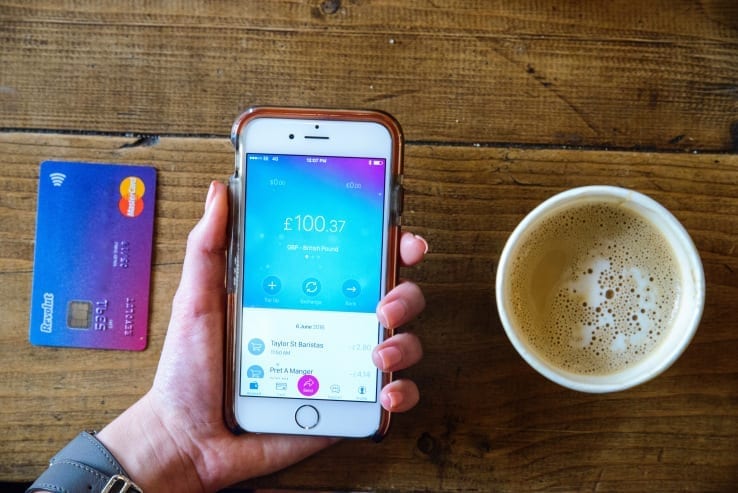
    The noise surrounding U.K.-based digital bank Revolut has just become a fair degree louder in recent days: the company announced to its free-account customers in an email that the days of using a service free-of-charge were numbered.

    We’ve been talking with thousands of you about how we can help you get even more from your money, was the introductory statement. The remainder of the letter was devoted to how Revolut was going to make more money from serving its clients.

    And that’s why it will introduce forex fees on August 12, 2020. From that day onwards, sending money abroad will cost $1.06 for a transaction in the respective country’s currency, 4 francs for transactions in the dollar, and 6 francs in any other currency – for instance, if you wish to send pound sterling to someone in Brazil.

    Furthermore, the upper limit for free exchange orders will be lowered to 1,250 francs and the percentage charged for orders on weekends increased to 1 percent from 0.5 percent.

    That will anger a substantial percentage of the bank’s clients. A large majority of Revolut clients have used the services of the digital bank to make foreign payments precisely because costs were low and fees almost inexistent.

    So to introduce fees for a service that has been advertised as free of charge is more than just a little ironic. It smacks more of how you’d expect a normal bank to behave and not a fintech. At least if you held a similar view of banks as the founder of Revolut, who had launched his company precisely because of such actions.

    It is also poignant at what point of time the company has chosen to announce the changes. Revolut, which has been typically bullish about its performance, seems to have been forced to raise the fees because of a drop in revenues during the pandemic lockdown.

    Revolut CEO Nikolay Storonsky in May claimed that the bank was awash with money after a recently concluded financing round and that he considered making acquisitions. That was shortly after reports about the departure of more than a dozen of the bank’s managers and the announcement that it would cut 60 jobs.

    A further 50 jobs are on the line in Poland and Portugal, according to a report, an online magazine. And the way of disposing of the workers raises some questions: ex-employees have said that they were called into their manager’s office one morning and told to choose between resigning or being sacked.

    And the rest of the staff were said to have received one part of their salary in recent months in stock, more or less voluntarily.

    Revolut is using such methods to reach its goal of profitability by year-end. The corona-crisis looks to have hampered its efforts. Revolut seems one of the very few payment fintechs not to have profited from the stay-at-home message that boosted online shopping.

  • Citi’s South Asia Head of Private Banking Departs

    Citi’s South Asia Head of Private Banking Departs

    Citigroup’s South Asia head of private banking is leaving the firm at the end of March.

    Jyrki Rauhio, Citigroup’s South Asia head of private banking, is leaving the bank at the end of March «to pursue other opportunities», according to an internal memo.

    Citigroup confirmed the memo’s content and said the bank won’t replace Rauhio. Jyrki Rauhio performed the role of South Asia Head for two years and did a great job putting in place a platform for growth and wants a new challenge, a Citi spokesperson said.

    Steven Lo, Asia-Pacific head of Citi Private Bank initially put in the North and South Asia structure when he took on the role of Asia Pacific CEO to help scale the business.

    However, Jyrki’s role will not be replaced and all the South Asia Global Market Managers will now report to Steven. «As a result, this gives us the opportunity to relook the structure of the business and Steven Lo has decided to streamline it,» the bank spokesperson said.

    Rauhio, based in Singapore, has been with the bank for 25 years in locations including Helsinki, Warsaw, New York, and Hong
    Kong.

  • UOB Malaysia Offers Moratorium For Loan Repayments Up To a Year

    UOB Malaysia Offers Moratorium For Loan Repayments Up To a Year

    UOB Malaysia on Friday announced immediate liquidity relief assistance for customers affected by COVID-19, as the government activated the army to enforce its restricted movement order.

    Two days after the Malaysian government enforced a Movement Control Order (MCO) to curb the spread of COVID-19, UOB Malaysia announced a slew of measures to help its corporate clients, especially small- and medium-sized enterprises (SMEs), and individual customers, to have more flexibility in their cash flow management and to ease their financial burden.

    We are committed to supporting and helping our customers who are impacted by COVID-19 and we will respond swiftly in helping them alleviate their financial burden, said Wong Kim Choong, Chief Executive Officer, UOB Malaysia said in a media statement.

    UOB Malaysia’s measures for its customers will be assessed and approved on a case-by-case basis. The bank will continue to evaluate its list of relief measures for both its conventional and Islamic banking customers to ensure it provides them with an adequate level of support to help them through this difficult time. Relief measures introduced by UOB Malaysia for both its conventional and Islamic banking customers include:

    • Moratorium on their loan repayments for up to one year;
    • Flexibility to request an extension of trade bills maturing between 18 and 31 March 2020 for clients with good track records. Clients can also choose to repay their trade repayments at the original maturity date;
    • Applications for the government-administered Special Relief Facility through UOB Malaysia; and
    • Review to grant additional facilities based on clients’ financing needs for those who need access to additional financing.
  • Ant Financial Services targets 40 million service providers

    Ant Financial Services targets 40 million service providers

    Ant Financial Services subsidiary Alipay says it will spend the next three years opening up its online payments platform to support the digital transformation of 40 million service providers across China.

    “The service sector in China is still in the nascent stages of digital transformation, and that means it has huge untapped potential,” said Ant Financial CEO Simon Hu.

    He said consumer demand for digitalized services has been expanding rapidly in Mainland China with the number of searches for lifestyle services within the Alipay app surging 300 percent last year alone. Currently, just 1 million service providers are on the platform.

    “Alipay’s success has always depended on the success of our partners, and that is why we believe the only way to best serve consumers is to open up our platform further, so service providers can better tap into consumer demands,” he said.

    “Building a one-stop digital lifestyle platform not only creates immense value for our users – it will also play an essential role in accelerating the digital transformation of the service industry and unlocking more growth opportunities.”

    Alipay will work with 50,000 independent software vendors to help the service providers digitize their operations, helping service companies in fields including consumer retail, food-and-beverage, hotels-and-accommodations, transportation and medical services.

    Hu said that during the coronavirus outbreak, Alipay launched an incentive program for service providers to create mini-programs that could help consumers deal with the impact, including providing for the needs of people forced to stay at home and minimizing physical contact with service providers. It took just one week for more than 1200 developers to respond and 181 mini-programs were created allowing ‘contactless services’ in areas such as grocery delivery, medical and legal advice, logistics and public services. One, offering free medical advice by AliHealth, attracted an average of 700,000 visits daily.

    “Amid the ongoing coronavirus outbreak, we have also seen how digital technology can be used to help service providers become more agile and respond effectively to the fast-changing market environment,” said Hu.

    Another example was Beijing grocery startup Meicai, which connects farmers with consumers and restaurants. A mini-program making its delivery services available to Alipay users amid the coronavirus outbreak drew more than 800,000 new users and attracted orders from 80 cities across China.

  • UOB Launches Financial Solution for Women in Singapore

    UOB Launches Financial Solution for Women in Singapore

    United Overseas Bank and Prudential Singapore launched a financial solution for women in Singapore that combines a savings account with complementary medical insurance for six female-related cancers.

    United Overseas Bank (UOB) designed a solution for women who may not be placing enough emphasis on their own financial and health needs such as the 37 percent who put the needs of their loved ones before themselves, according to a 2017 survey by UOB and Prudential Singapore. Among married women, this figure went up to 52 percent. The survey also found that close to one in two women (45 percent) say they want a savings account that comes with free critical illness protection.

    To help women protect their wealth and health, UOB and Prudential Singapore have worked in partnership to offer women a dedicated savings account that comes with free coverage for six female-related cancers. The coverage amount is based on their monthly average balance over the past three months.

    For example, if the account holder saves between $50,001 to $75,000 on average over the past three months, she will receive $75,000 in coverage. If the account holder saves more than $100,000 on average, the sum assured increases to $200,000.

    «Women in Singapore today juggle multiple responsibilities, including our careers, parenthood, aging parents, relationships and community involvement, and often this means our own wellbeing takes a backseat. Even as more women are placing a priority on growing their savings, such as our female customers who have increased their current and savings account balances by 20 percent in the past five years, more than one in four women are still not sufficiently protecting their savings with insurance in the event of a critical illness,» Jacquelyn Tan, Head of Personal Financial Services Singapore, UOB, said the UOB Lady’s Savings Account was created with the intent to help women take care of themselves so they would not have to exhaust their personal savings in the unforeseen event of a cancer being diagnosed.

    The UOB Lady’s Savings Account will help female consumers to fill the gap for medical insurance coverage in their financial portfolios. While each individual needs an estimated $316,000 in critical illness protection needs, the average Singaporean only has $60,000 in coverage, leaving a gap of $256,000.