Retail News CRM

Tag: financial

  • Your Apple Wallet is about to get much better

    Your Apple Wallet is about to get much better

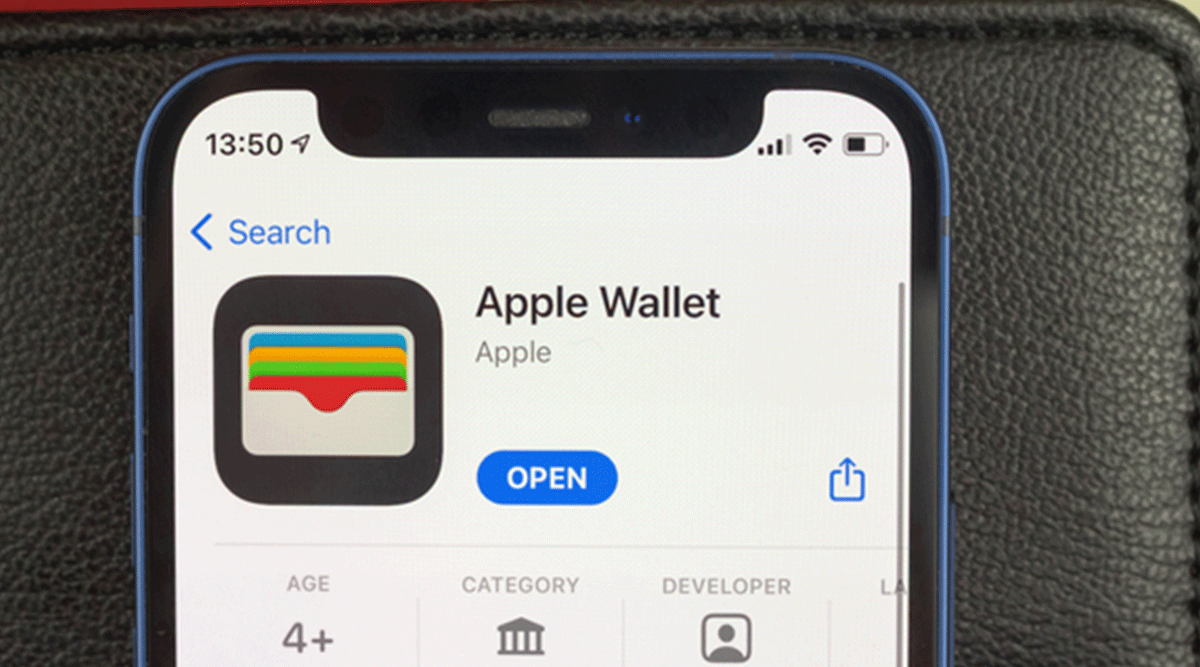
    As we await the stable release of iOS 18.4 in April, the beta versions are already giving us a solid preview of what’s coming. The latest beta release reveals a useful new feature for tracking your spending that is set to land in Apple Wallet.

    In the first iOS 18.4 beta, the Wallet app introduced a menu labeled “Subscriptions & Payments.” Now, with the latest update, it has been rebranded to “Preauthorized Payments,” and as you might guess, this change shifts the focus more toward payments that have been authorized in advance.

    This section in Wallet will now display merchants that you have given the go-ahead to charge your Apple Pay for things like subscriptions, automatic top-ups and regular bills. So, if you use Apple Pay for things like adding money to your transit card or paying for your gym membership, those transactions should show up here.

    Apple seems to have recognized that calling this section “subscriptions” could be a bit misleading, so the new name – preauthorized payments – makes it clearer. However, while the name change is helpful, it doesn’t change the fact that you are still managing recurring payments across different sections rather than having them all in one place.

    Right now, if you want to check your subscriptions, you can do it through the App Store or your iPhone’s Settings, which is a bit faster and easier. Just tap the Apple Account section at the top with your profile picture and you will find the Subscriptions section there.

    Whether you go through the App Store or Settings, the Subscriptions page looks the same. It shows all your active subscriptions and when they are set to renew.

    While this works, I think the new addition to Wallet is a nice step forward in making it easier to track your recurring payments. It gives you a better view of your spending, which has been a key focus of the Wallet app lately.

    Still, I think Apple could make it even easier by bringing everything under one roof. Imagine being able to see exactly how much you are spending each month – whether it is for Apple TV shows, Netflix, or any other subscriptions – all in one place. It would save a lot of time and make managing your money that much simpler.
  • Vietcombank Remittance named best remittance company in Vietnam

    Vietcombank Remittance named best remittance company in Vietnam

    Vietcombank Remittance was honored as “Remittance Company of the Year – Vietnam” for the third consecutive time by Asian Banking & Finance on Dec. 24.

    This achievement affirms the quality of services and the growth of Vietcombank Remittance, recognizing the company’s efforts and demonstrating its position in both the domestic and international remittance markets.

    Vietcombank Remittance is the only remittance company in Vietnam to organize the Client Conference for three consecutive years successfully. This year’s event featured participation from strategic partners in Taiwan, South Korea, the United States, and several other countries, highlighting the company’s role in fostering international cooperation and collaboration.

    The company consistently supports government agencies in developing policies to enhance remittance resources. Vietcombank Remittance actively participates in programs organized by the Overseas Vietnamese Committee of Ho Chi Minh City to promote collaboration among stakeholders and increase the efficiency of remittance flows. The company has also significantly contributed to Ho Chi Minh City People’s Committee’s project on “Optimizing the Effectiveness of Remittance Resources.”

    Vietcombank Remittance is committed to collaborating with the Ho Chi Minh City People’s Committee to implement specific initiatives such as supporting the improvement of policy mechanisms and facilitating convenient conditions for overseas Vietnamese to send money home. It collaborates closely with regulatory agencies to create clear legal frameworks and facilitate the use of technology in remittance operations.

    The company is leading initial efforts to establish the Vietnam Remittance Association to elevate the industry’s position on the international stage. This association is expected to serve as a bridge between the government, businesses, and the overseas Vietnamese community, ensuring policies are geared toward sustainable development.

  • Vietnam stocks gain little as global markets steady

    Vietnam stocks gain little as global markets steady

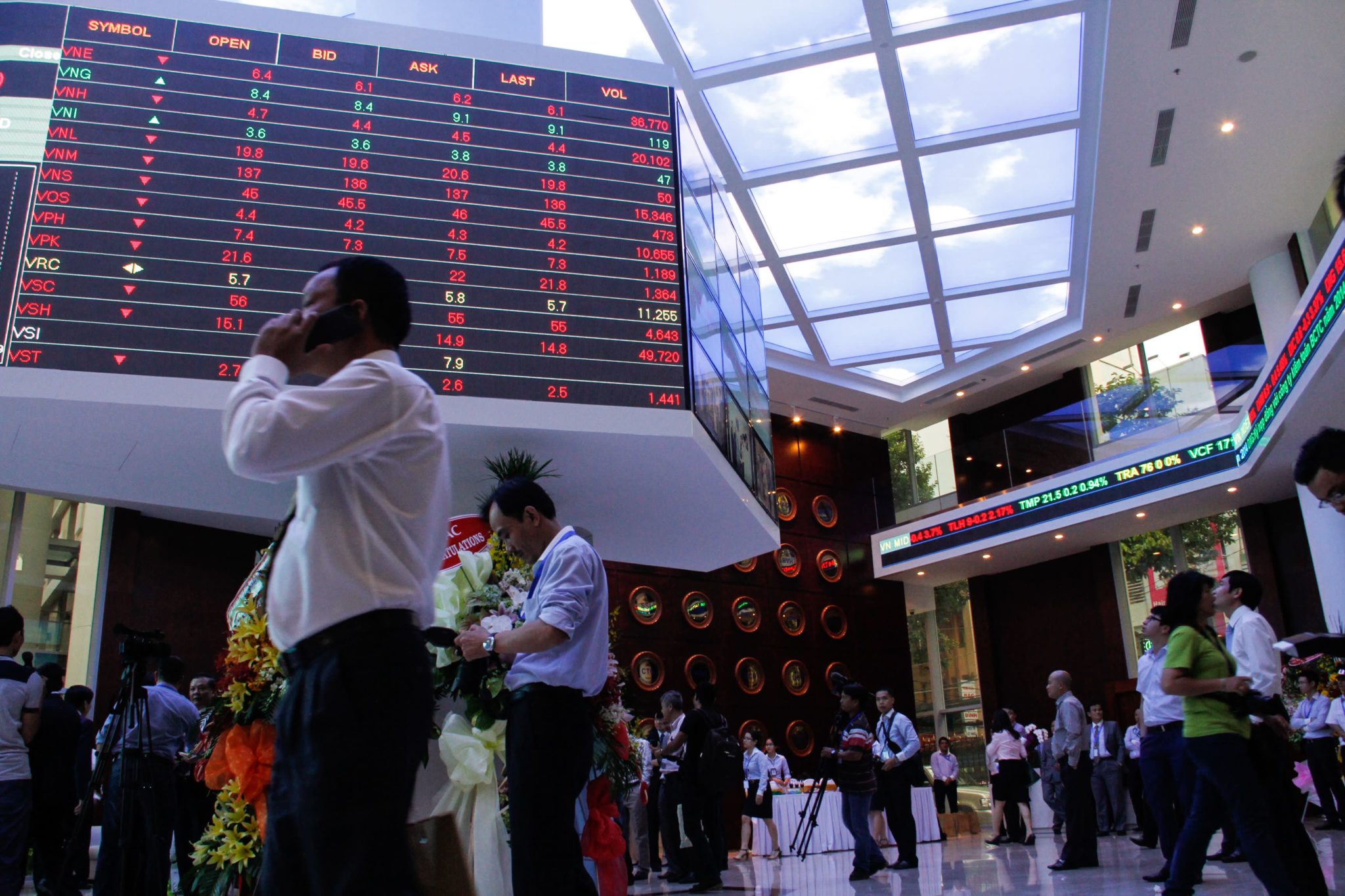
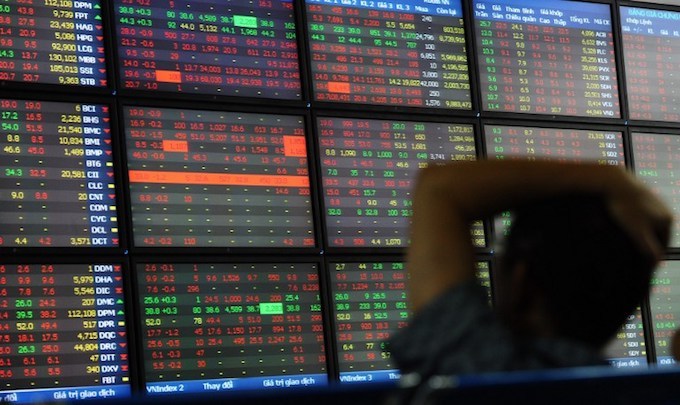
    Vietnam’s benchmark VN-Index rose 0.08% to 1,245.76 points while global markets showed stability as investors waited for the result of the U.S. election. The index closed 1.05 points higher after dropping 10.18 points in the previous session.

    Trading on the Ho Chi Minh Stock Exchange decreased by 31% to VND10.982 trillion.

    The VN-30 basket, comprising the 30 largest capped stocks, saw 11 tickers gained.

    GVR of Vietnam Rubber Group led with a 1.7% rise, followed by SHB of Saigon Hanoi Commercial Bank, up 1%.

    POW of electricity producer Petrovietnam Power Corporation went up 0.9% and HPG of steelmaker Hoa Phat Group closed 0.8% higher.

    Nine blue chips fell. CTG of state-owned lender VietinBank dropped 1.8% and BID of state-owned lender BIDV declined by 0.6%.

    Foreign investors were net sellers to the tune of VND854 billion. They have been net selling non-stop for the last eight weeks.

    They mainly net sold MSN of conglomerate Masan Group and VHM of property giant Vinhomes.

    The HNX-Index for stocks on the Hanoi Stock Exchange, home to mid and small caps, rose 0.18%, while the UPCoM-Index for the Unlisted Public Companies Market went up 0.30%.

    Globally stocks were steady on Tuesday but implied volatility ratcheted up in currency markets in an early indication of the market frenzy to come, as the world awaits the outcome of a knife-edge U.S. election, Reuters reported.

    Europe’s benchmark STOXX index edged down 0.2% while MSCI’s broadest index of Asia-Pacific shares outside Japan inched 0.7% higher, as stock markets held their breath ahead of Wednesday’s open.

    China’s blue chip CSI300 jumped 2.5% and Hong Kong’s Hang Seng rose 1.4%.

  • Vietnam stocks slip as Asian shares subdued

    Vietnam stocks slip as Asian shares subdued

    Vietnam’s benchmark VN-Index fell 0.59% to 1,268.21 points Thursday as other Asian markets were little changed.

    The index closed 7.59 points lower after dropping 8.07 points in the previous session.

    Trading on the Ho Chi Minh Stock Exchange increased by 6% to VND16.59 trillion (US$671 million).

    GVR of Vietnam Rubber Group plunged 2.3%, followed by PLX of fuel distributor Petrolimex, down 2%.

    FPT of IT giant FPT Corporation and MBB of lender MB both fell 1.8%.

    Three blue chips gained, led by VHM of property giant Vinhomes, up 2.9%, and VIC of private conglomerate Vingroup, up 2.4%.

    Foreign investors were net sellers to the tune of VND684 billion, mainly selling FPT and HPG of steelmaker Hoa Phat Group.

    The HNX-Index for stocks on the Hanoi Stock Exchange, home to mid and small caps, fell 0.50%, while the UPCoM-Index for the Unlisted Public Companies Market went down 0.30%.

    Asian shares were subdued on Thursday, with Japanese stocks sliding to their lowest in three weeks as investors sought safety, pushing the yen to a one-month high while U.S. economic worries boosted prospects for the Federal Reserve to cut rates.

    Amid the fragile sentiment, Japan’s benchmark Nikkei slid more than 1% to its lowest in three weeks, while stocks in tech-heavy Taiwan and South Korean stood slightly higher on the day, giving up earlier gains.

    The MSCI’s broadest index of Asia-Pacific shares outside Japan up 0.25%, subdued after having tumbled nearly 3% during a three-day losing streak. The index had risen more than 0.6% but gave up those gains.

  • Singapore ranks first globally in crypto adoption

    Singapore ranks first globally in crypto adoption

    Singapore has secured the top spot globally in crypto adoption this year, thanks to high scores in technology and regulatory environment, according to a recent study.

    The country scores 9.5 over 10 in innovation and technology, 9.1 in economic factors, and 8.3 in regulatory environment, according to the Henley Crypto Adoption Index 2024 by British investment migration consultancy Henley and Partners.

    Three other parameters that the company used to rank the level of crypto-friendliness among countries and territories were infrastructure adoption, public adoption and tax-friendliness.

    Hong Kong (China) came second with the highest score in economic factors, 9.8.

    It was followed by the United Arab Emirates, the U.S. and the U.K.

    Henly said that it studied crypto-friendly countries that host investment migration programs, based on their adoption and integration of cryptocurrencies and blockchain.

    Its index provides crypto investors with a comprehensive overview of the extent to which these countries are embracing this emerging technology.

    In another study, Henley found that the number of individuals holding more than US$1 million in cryptocurrency assets worldwide has doubled over the past year, reaching 172,300 as of June-end.

    There are now 28 crypto billionaires in the world, it added.

    In another report released earlier this year, crypto payment firm Triple-A said that Singapore boasts one of the highest crypto ownership rates globally.

    Around 24.4% of its population own crypto assets, compared to the global average of 6.8%.

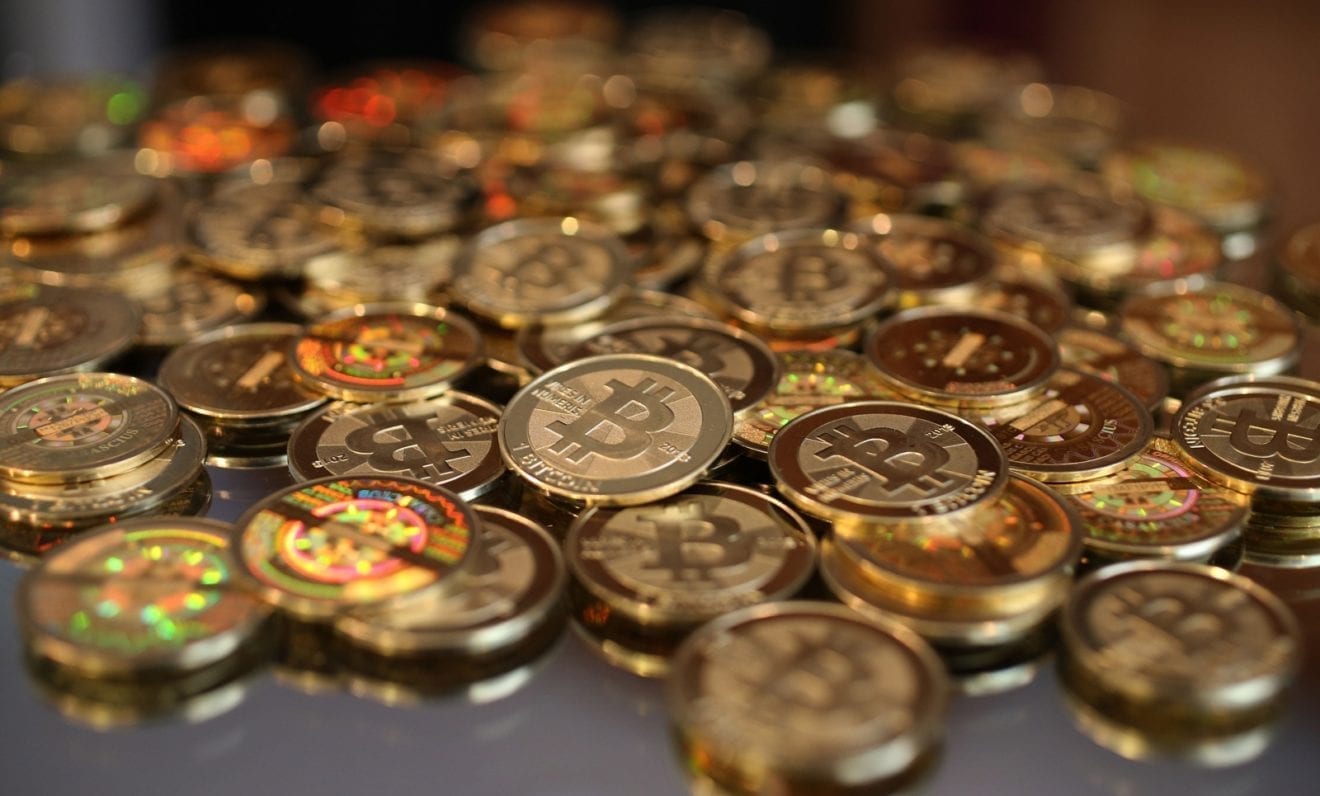
    Bitcoin, the leading crypto, surged to a new peak of over $73,000 in March and is now hovering around $59,000.

  • Dollar gains on black market

    Dollar gains on black market

    The U.S. dollar rose against the Vietnamese dong on the black market Friday afternoon.

    Unofficial exchange points sold the greenback at VND25,750, up 0.53% from Thursday.

    The State Bank of Vietnam kept its rate unchanged at VND24,246.

    The dollar has risen 5.36% to VND25,750 against the dong this year.

    Globally the dollar was poised to snap a two-week losing streak on Friday, as traders pondered the U.S. rates outlook, while the yen was steady after inflation in Japan accelerated for a second month, keeping the prospect of a rate hike there on the table.

    The U.S. dollar was on the front foot in Asian hours after a stormy week that saw the yen, euro and sterling make significant gains against the greenback as investors fully price in a rate cut from the Federal Reserve as soon as September.

    The yen was at 157.72 per dollar after touching a six-week high of 155.375 on Thursday, according to Bank of Japan data. This was in the wake of Tokyo’s suspected interventions last week that could total nearly 6 trillion yen ($38.14 billion).

  • Dollar weakens on black market

    Dollar weakens on black market

    The U.S. dollar fell against the Vietnamese dong on the black market Tuesday morning. Unofficial exchange points sold the greenback at VND25,690, down 0.35% from Wednesday.

    Vietcombank kept its rate unchanged at VND25,457. The State Bank of Vietnam’s reference rate was stable at VND24,245.

    The dollar has risen over the dong by 4.16% since the beginning of the year.

    Globally, the dollar hung around five-week lows on Tuesday as comments from Federal Reserve Chair Jerome Powell bolstered the case for a rate cut in September, while cryptocurrencies gained on rising odds of former President Donald Trump getting reelected.

    Powell said on Monday that the three U.S. inflation readings over the second quarter of this year “add somewhat to confidence” that the pace of price increases is returning to the Fed’s target sustainably.

    The euro was a shade lower at $1.0893, while sterling last fetched $1.2967. The dollar index, which measures the U.S. unit versus six peers, was at 104.3, not far from the one month low of 104 it touched on Monday.

  • UBS Gets Off Lightly With Money Laundering Fine

    UBS Gets Off Lightly With Money Laundering Fine

    The Federal Department of Finance (EFD) fined UBS for failing to report suspected money laundering. The long-standing cases all revolve around the former president of Yemen.

    The number of unreported cases to the Financial Department is alarmingly high. Internally, UBS recorded 5,438 warning notices in connection with its relationships with former Yemeni President Ali Abdullah Saleh and his family. However, the bank did not forward these warnings to the Money Laundering Reporting Office Switzerland (MROS).

    Saleh ruled Yemen for over three decades and faced international criticism for corruption. At UBS, he was classified as a PEP, or politically exposed person. As a rule, relationships with such clients should be clarified extra carefully.The relationship dates back to 2004. Not only Saleh and his two wives but also a total of 25 people related to Saleh had customer relationships with UBS.

    The EFD’s penalty notice from April 4 mentions a case from 2009. At that time, Saleh’s son personally submitted a check from the Sultan of Oman for 10 million dollars in Zurich. An internal bank note is cited: It is generally known that wealthy rulers in the Arab world support their poorer colleagues with such gifts. According to the EFD, this was a flimsy excuse, and the bank should have raised the alarm.

    In 2011, amid the turmoil of the Arab Spring, the bank reviewed the business relationship, which resulted in the aforementioned 5,438 warning notices. Subsequently, almost all of the Saleh family’s accounts were closed, but no MROS report was made.

    UBS also failed in the handling, as this allowed very large sums of money, presumably associated with corrupt practices by Ali Abdullah Saleh, to be withdrawn from state control.

    The responsible individuals could not be identified due to only partially or incompletely submitted documents. As a result, the penalty was automatically lower. The department also noted that UBS has since improved its risk management.

    Saleh lost power in Yemen in 2012 and was killed by Houthi fighters in 2017.

  • With Google Pay going the way of the dodo soon, you need to start withdrawing funds

    With Google Pay going the way of the dodo soon, you need to start withdrawing funds

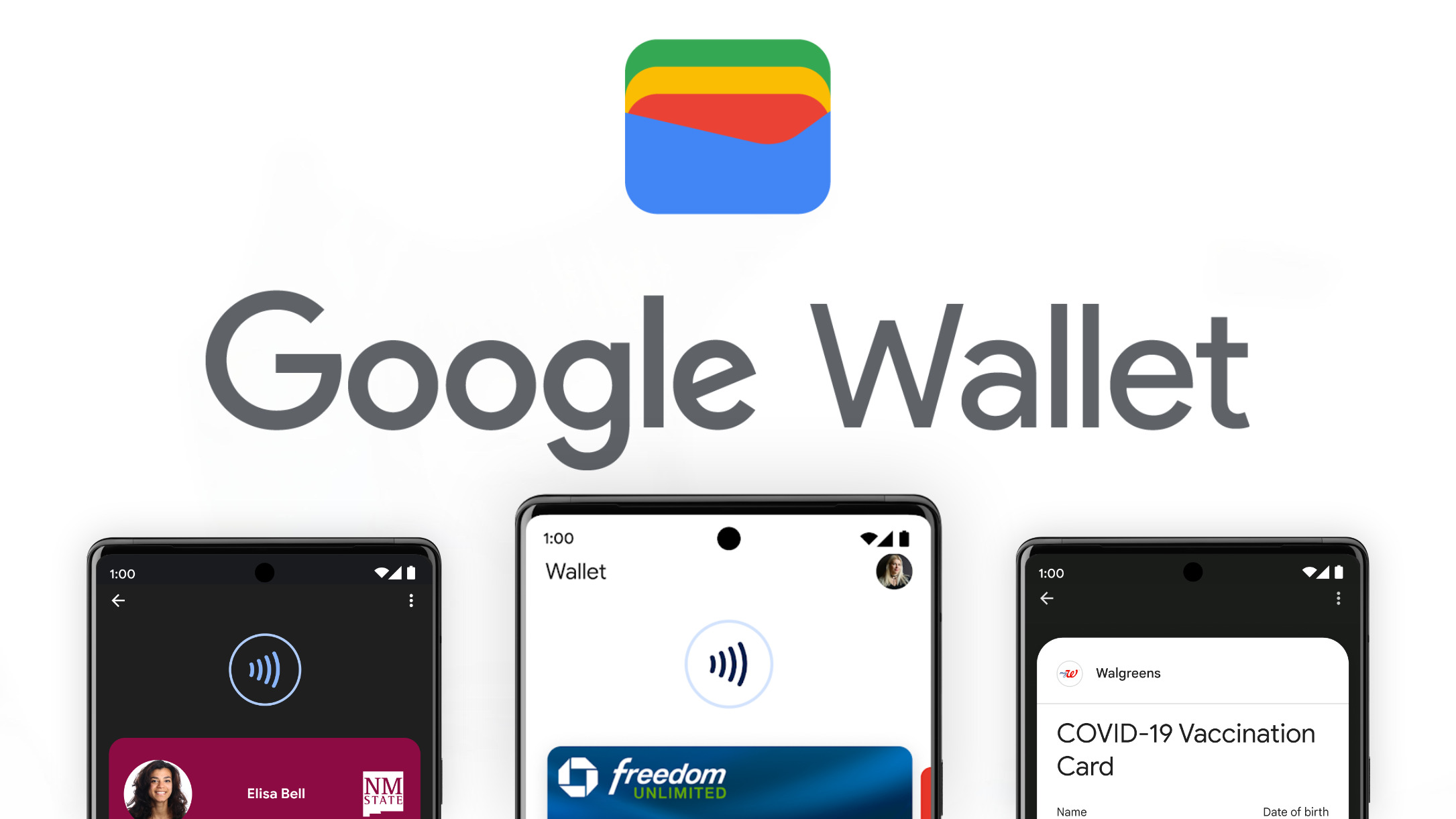
    In late February, Google announced that the Google Pay app was shutting down in the US. The company wants people to transition to Google Wallet, which offers many of Google Pay’s features, including paying at online checkouts and in stores. Google Pay will stop working for US citizens after June 4, so if you have a lot of funds, you might want to start transferring them to your bank account.

    Google Wallet, as the name implies, is more of a digital wallet and can be used to store payment cards and other digital items like your driver’s license and loyalty cards. According to Google, it’s used five more times than Google Pay in the US, but what it did not mention is that Google Wallet doesn’t have Google Pay’s peer-to-peer payment feature.

    If you want to transfer funds from the Google Pay app to your bank account, you should do it by June 4. After that date, you will have to visit the Google Pay website to transfer money out of it.

    Even if that doesn’t sound too much of a hassle to you, you should start withdrawing cash right away if there’s a lot of it in your Google Pay account.

    That’s because currently, you can withdraw up to $5,000 from the app every day if your account is verified. The app has a rolling $20,000 7-day limit, meaning you cannot withdraw more than $20,000 within a 7-day period. If your identity is not verified, the total limit is $700 for seven days.

    Google is informing customers that new daily and weekly caps will apply once the app is sunsetted, per Droid Life. Starting June 4, you will not be able to withdraw more than $200 in any given week. Whether you access the limit in a single transaction or withdraw it over a 7-day period is up to you.

  • Google Wallet will now automatically add your tickets and passes from Gmail

    Google Wallet will now automatically add your tickets and passes from Gmail

    Google Wallet is receiving a set of small quality of life updates designed to enhance the user experience and make it your go-to digital home for essential passes, tickets, and more. The updates include tighter integration with Gmail to eliminate the extra step of manually adding passes and movie tickets to your wallet.

    If you’ve ever purchased a movie ticket or booked a flight online, you’ve likely encountered the inconvenience of having to scramble through your Gmail in order to find the confirmation. Only to find out that the cellular signal is very weak, and your email won’t load. This is a perfect use case for Google Wallet, which Google just announced now directly integrates with Gmail, automatically surfacing movie tickets and boarding passes from participating airlines and movie chains.

    Google states that this feature is currently available with select global chains, but that the company is working hard to expand its reach. This will likely save you some time and fuss, as you can now have your tickets and passes readily available in one spot with you need them.

    Managing your collection of passes within Google Wallet just got more convenient. You now have the ability to manually archive most passes. Archiving a pass places it in the “Archived Passes” section of the app.

    If you ever need to unarchive any of these previous passes, you can do so as well by tapping on the pass and selecting “Unarchive Pass.” Furthermore, the ability to archive passes extends to your Wear OS devices for more efficient organization, no matter where you are.

    Google Wallet is further blurring the lines between your digital life and the real world. For US-based users, there’s a new beta feature out: loyalty cards saved in Wallet are now cleverly linked with Google Search and Shopping. This means that your membership benefits can be highlighted as you browse for products online, potentially unlocking special offers and discounts. Businesses interested in taking part in this beta test will need to reach out to Google support in order to enroll.

    Lastly, Google Wallet is becoming more accessible around the globe. Back in November, Google Wallet became available to residents of the Dominican Republic, Monaco, and Peru. This means that Google Wallet is now available in 74 countries worldwide for both Android and Wear OS.

  • Apple Pay is down for some users forcing them to pay for purchases like a Luddite

    Apple Pay is down for some users forcing them to pay for purchases like a Luddite

    Some social media users are complaining that they are unable to use contactless payment system Apple Pay to ring up a transaction using a Chase credit card. On Apple’s System Status page, it notes that Apple Pay is undergoing some maintenance at the moment and adds that some users in Maryland may have issues with the feature. However, the problem appears to be preventing Apple Pay users from hearing that satisfying “ding” indicating that their credit card has been accepted in other states as well.

    Nilay Patel, editor-in-chief of The Verge stating that his Chase card was declined when using Apple Pay. Patel noted that when he called Chase, the bank told him that the problem is an “unexpected Apple Pay upgrade” which matches the reason for the issue posted by Apple on the System Status page. Other Thread users weighed in complaining about the same problem including one poor (and possibly hungry) iPhone user who wrote, “Yup, Chase Apple Pay declined getting my baguette and vegan cheese.”

    Considering that the weekend is usually prime time for shopping, we wonder whether Apple should have performed the maintenance on Apple Pay during a time when shoppers are less likely to be tapping their iPhones on POS (point of sale, not what you thought the abbreviation stood for) machines. For example, at 1 am PST (4 am EST), most Americans are sleeping and charging up their iPhone units.

    If this is a problem that happens to you today whether you are shopping in Maryland or Massachusetts, or anywhere else in the U.S., there is the perfect workaround but only if you are up to doing this. Once your Apple Pay payment is declined, follow these directions precisely:

    • Put your iPhone in your pocket.
    • Reach into your other pocket and remove your wallet.
    • Open the wallet and remove the Chase card that is connected to Apple Pay.
    • Run the card through the POS terminal like you might have done years ago before Apple Pay was launched.

    If this happened to you today, we’re sure you were sweating and trying hard to remember how you paid for purchases made before October 20th, 2014 when Apple Pay launched. But those with a memory of a bygone era have been able to pay for their purchases today by simply using their Chase credit card without bringing Apple Pay into the picture. Or, you could pay for your purchases with cash.

  • Vietnam central bank governor earns ‘A+’ in Global Finance report

    Vietnam central bank governor earns ‘A+’ in Global Finance report

    Global Finance magazine has given Nguyen Thi Hong, Vietnam’s first female central bank governor, an A+ on its 2023 Central Banker Report Cards.

    Hong, 55, is one of only three central bank governors in the world that was rated A+ by the U.S.-based magazine.

    The other two were the Reserve Bank of India Governor Shaktikanta Das and Thomas J Jordan, Chairman of the Governing Board of the Swiss National Bank.

    Hong became Governor of the State Bank of Vietnam (SBV), appointed by the legislative National Assembly, in November 2020.

    She holds a master’s degree in Developmental Economics and started working at SBV in 1991, where she held several management positions.

    The Central Banker Report Cards, published annually by Global Finance since 1994, grade the central bank governors of 101 key countries, territories, and districts, including the European Union, the Eastern Caribbean Central Bank, the Bank of Central African States, and the Central Bank of West African States.

    Grades are based on a scale from A to F for success in inflation control, economic growth goals, currency stability and interest rate management, with an “A” representing an excellent performance down through an “F” for outright failure.

    The full Central Banker Report Cards 2023 report and grade list will appear in Global Finance’s October issue print editions, as well as online at GFMag.com.

    “Fighting inflation, which has been fueled by pent-up demand and disrupted supply chains, has everyone turning to their central bankers for help,” said Global Finance founder and editorial director Joseph Giarraputo.

    Governors that earned an A grade included Brazil’s Roberto Campos Neto, Israel’s Amir Yaron, Harvesh Kumar Seegolam of Mauritius, New Zealand’s Adrian Orr, Paraguay’s Jose Cantero Sienra, Julio Velarde of Peru, Chin-Long Yang of Taiwan, and Uruguay’s Diego Labat.

  • UBS Slows Digitalization After Significant Cyberattack

    UBS Slows Digitalization After Significant Cyberattack

    The bank engaged in an extensive review after being one of the banks affected by a Russian ransomware attack early in the year. The first casualty? Going digital.

    It is a small section in UBS’s full second-quarter report, but a telling one. Buried on page 41 is a small but substantial tidbit. The bank has just finished a post-incident review after January’s ION XTP ransomware attack.

    To jog people’s memory given the constant diet of entirely unfamiliar names and acronyms from the criminal fringes of cyberspace, ION XTP is the one with derivatives. It paralyzed the trading operations at several banks, although you wouldn’t know it from ION itself, characterizing the entire thing as a cleared derivatives cyber event…contained to a specific environment.

    UBS had told us about it in its first quarter report, saying the event had disrupted its exchange-traded derivatives clearing activities, although it managed to restore them after 36 hours with workarounds.l

    If nothing else, it made waves and caused a great deal of anxiety. A senior US Treasury Department official weighed in with a virtual «keep moving…there is nothing to see here» exercise over the cyber assault from Russian ransomware gang LockBit, according to a report at the time.

    We’ve now arrived at the legendary financial institution post-incident review. A career killer to some and the unwelcome originator of dozens of findings and remedial actions for many others. UBS maintains it identified needed improvements to its framework and will «take actions» to enhance cyber-risk assessments and controls over third-party vendors.

    That’s unremarkable in most contexts, except this attack had very significant ramifications, a key one being that it seemingly chips away at a cherished cornerstone of UBS’s strategy under previous CEO Ralph Hamers.

    But don’t take my word for it. Let’s hear what the company says in its quarterly report.

    Although we are continuing our efforts regarding innovation and digitalization, to ensure there is the right focus during this initial period of integration we have reprioritized some UBS changes, the bank wrote.

    Turgid stuff indeed. You could make a case for switching a few clauses around for clarity. Still, it sounds pretty transparent and clear. I don’t know about you, but it doesn’t much so

  • VN-Index tiptoes up after plunge

    VN-Index tiptoes up after plunge

    Vietnam’s benchmark VN-Index rose 0.15% to 1,179.76 points Monday.

    The index closed 1.77 points higher after losing 55.49 points on Friday.

    Trading on the Ho Chi Minh Stock Exchange (HoSE) fell by 38.49% to VND22.17 trillion ($930.73 million).

    CTG of state-owned lender VietinBank led with a 4.2% rise, followed by BID of state-owned lender BIDV, up 3.2%.

    TPB of private TPBank went up 2.2% and BCM of Becamex Investment and Industrial Development closed 2.1% higher.

    SSB of Southeast Asia Commercial Bank (SeABank) lost 3.1%, and GVR of Vietnam Rubber Group was down 2.8%.

    Foreign investors were net buyers to VND82.45 billion, mainly buying VIC of private conglomerate Vingroup and CTG of state-owned lender VietinBank.

    The HNX-Index at the Hanoi Stock Exchange, where mid and small-caps list, was up 0.85% while the UPCoM-Index at the Unlisted Public Companies Market was up by 0.26%.

  • EY Bags the Elephant With UBS Audit Deal

    EY Bags the Elephant With UBS Audit Deal

    UBS selects EY as its auditor for the expanded bank following its takeover of Credit Suisse in March. PwC will audit Credit Suisse’s books for 2023.

    EY will have lots more work to do at UBS starting next year, having been retained to audit the merged entity starting next. The Big Four firm has been auditing UBS’s books since 1998, charging it $70 million last year for its services, while Credit Suisse paid PwC $90 million.

    EZ declined to comment on whether it was retained by UBS, saying only that The size and scale of the global EY financial services audit practice means we are able to access resource and specialist skills from across our network.

    The firm can tap into a global staff of about 20,000 bank auditors. The source told the FT that EY’s international operations are more closely integrated than those of its rivals, making it easier for resources to be shared internationally.

    The report went on to say that EY will probably have to drop the work that it does for Credit Suisse to avoid conflicts of interest. The auditor was hired about two years ago by Credit Suisse to look into anti-money laundering measures in its Asian wealth unit.

    PwC has a much shorter relationship with Credit Suisse than EY does with UBS. In 2020, PwC replaced KPMG as Credit Suisse’s external auditor. Earlier this year, Credit Suisse had to delay the release of its annual report after an SEC inquiry.

    The report came out mere days before Credit Suisse was taken over by UBS on March 19.

    On March 10 the SEC asked the bank to explain how it concluded entity-level material weakness did not exist for fiscal years 2021 and 2022, according to the documents.

    EY is not without blemish, having signed off on the books of German fintech Wirecard which collapsed in 2020. It was subsequently barred for two years from bidding for audit contracts for publicly listed companies in Germany.

    UBS, Credit Suisse, and PwC declined to comment to the FT.