Tag: FinTech

  • Indonesia Eyes Fintech Regulation to Avoid ‘Loan Shark-Like’ Practices

    Indonesia Eyes Fintech Regulation to Avoid ‘Loan Shark-Like’ Practices

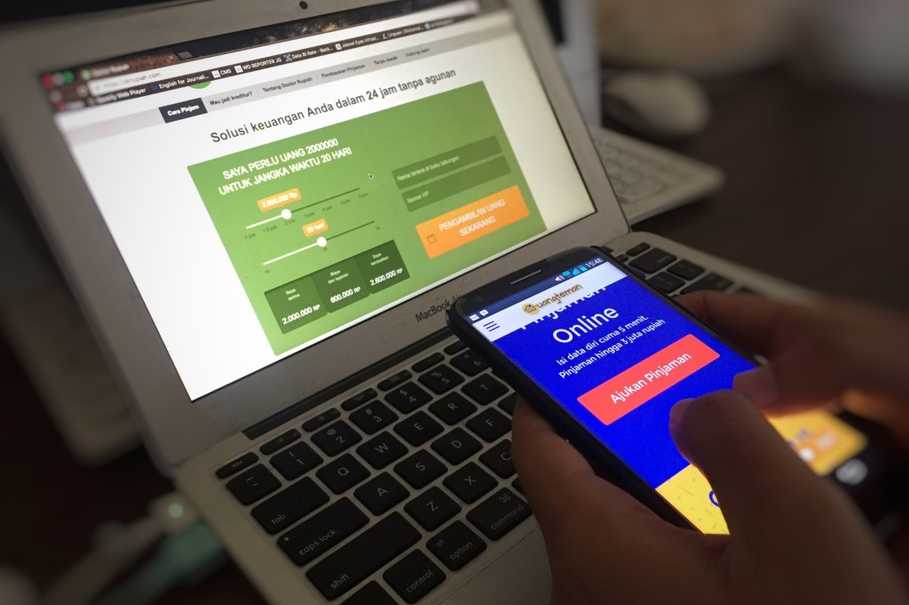
    Indonesia’s financial regulator said it was considering setting a cap on interest rates and the size of loans offered by fintech firms, in a move aimed at minimizing the risk of defaults.

    The emergence of these peer-to-peer (P2P) lending platforms, offering loans ranging from as little as a few hundred dollars to several thousands, has so far been welcomed by Indonesia, Southeast Asia’s biggest economy where tens of millions of people have little or no access to bank credit.

    More than 300,000 people have borrowed from these firms, with total loan distribution reaching 3 trillion rupiah ($218 million) as of January, versus 247 billion in December 2016, according to data from the Financial Services Authority (OJK).

    Meanwhile, annual growth in bank lending has slowed to under 10 percent, from over 20 percent in the commodity boom years. ‎

    “We support P2P lending so the people can have an easier access [to financing]. But when the access has been easier, the P2P companies feel the need to offer a high rate,” Eko Ariantoro, the director of the financial inclusion development directorate at the OJK, told reporters on Tuesday (13/03).

    “We don’t want these developing fintechs to become loan shark-like businesses‎,” he said.

    Ariantoro said the proposed maximum lending rate was still under discussion.

    There are 36 registered fintech firms operating in Indonesia and the OJK said 42 others were in the process to be approved.

    The OJK plans to also issue a new regulation for crowdfunding platforms this year as part of efforts to protect customers’ funds, Eko said.

    “We are trying to regulate the mechanism to acquire and collect funds. There should be a form of responsibility to the fund owner,” he said.

  • Fintech firms can soon offer currency-exchange services

    Fintech firms can soon offer currency-exchange services

    Non-bank institutions will be allowed to directly engage in currency exchange business starting next month as part of a broader deregulation drive to promote the local financial technology sector, the finance ministry said Tuesday.

    Under revised regulations on currency exchange, a qualified fintech firm will be able to offer a currency exchange service of up to $2,000 per person through their online platforms.

    Such fintech firms are required to make a reserve against potential claims from customers and set up a technical safety system, the ministry said.

    In 2016, a total of $5.26 billion was traded in currency exchanges.

    The government has been lifting regulations on foreign currency trading as part of a general effort to reduce the administrative regulations that have been cited for holding up market growth.

  • Indonesia Central Bank to Prepare Fintech Regulatory Roadmap

    Indonesia Central Bank to Prepare Fintech Regulatory Roadmap

    Bank Indonesia is currently preparing a roadmap of regulations for financial technology, or fintech, products in an effort to support the rapid change of the global financial system in the digital era, the central bank’s official said on Thursday (08/02).

    “This is a response to the shift from physical to virtual as it presents risks and challenges […] There will be a roadmap to regulate fintech to follow its dynamic development,” Sukarelawati Permana, director of the policy and payment department at the central bank, said at an economic forum.

    The central bank is collaborating with Financial Services Authority, or OJK, to create the regulatory roadmap.

    Sukarelawati, however, did not reveal the details of the framework or when it will be released.

    The regulations, according to her, will mitigate risks presented by the sector’s development, while still supporting the shift of traditional payment systems into the digital realm.

    “As we surely cannot block innovation, we as the authorities will try to balance the digital economy,” Sukarelawati said.

    The central bank previously issued a provision to support innovation in the fintech sector that benefits the economy while maintaining the principles of consumer protection, risk management and prudence, Sukarelawati said.

    A 2017 Bank Indonesia regulation regarding financial technology implementation dictates that fintech providers register with the central bank.

    The regulation excludes payment system service providers (PJSP) who have obtained a license from Bank Indonesia and providers who are under other authorities. But the providers must still inform the central bank regarding new products, services, technologies and business models.

    Bank Indonesia is currently also conducting a study on the feasibility of issuing digital currency.

  • Standard Chartered sets up digital innovation, fintech investment unit

    Standard Chartered sets up digital innovation, fintech investment unit

    Standard Chartered PLC has established a new business arm named SC Ventures, to drive digital innovation, invest in fintech and start-up companies and promote rapid testing and implementation of new business models.

    The new unit will focus on problem solving and spreading innovation best practices and client centric design, managing minority investments in FinTech companies and further investments in promising technologies and sponsor and oversee new disruptive technology ventures that are wholly or partially owned by Standard Chartered.

    SC Ventures will be headed by by Alex Manson, who is the Global Head of Transaction Banking.

    “Technology is at the heart of Standard Chartered’s strategy – driving efficiencies, increasing automation, introducing global platforms, reducing manual errors and strengthening how it combats financial crime,” the group said in a statement.

    In 2015, it announced it was investing about US$3 billion (RM11.9 billion) over three years in technology and systems.

  • Chinese co-working space operator opens second Singapore hub

    Chinese co-working space operator opens second Singapore hub

    Prominent Chinese co-working space operator UrWork is opening a second Singapore location in the first quarter of next year. The company, which is backed by Alibaba’s Ant Financial and Sequoia Capital among others, launched its first overseas branch at Ayer Rajah Crescent in July. Its new outlet will be at Suntec City and is part of the firm’s efforts to become a bridge between South-east Asia and China, founder and chief executive Mao Daqing said.

    Beijing-based UrWork, which has been billed as China’s answer to Silicon Valley co-working giant WeWork, has been valued at about US$1.5 billion (S$2 billion).

    It has 100 co-working sites in 33 Chinese cities and is the country’s largest co-working space operator.

    The company plans to expand globally into 35 cities with 160 locations over the next three years.

    To stand out in the increasingly crowded co-working market, UrWork positions itself as a provider of key services to start-ups looking for global growth.

    It runs a series of acceleration programmes to help new firms scale, and has also developed a proprietary scheme partnering Chinese government agencies and service suppliers to help foreign start-ups enter the Chinese market.

    Its second location in Singapore will span 1,300 sq m in Suntec City and will take in South-east Asian start-ups looking to expand into China, as well as Chinese firms keen on growing in the region.

    UrWork also invested in Jakarta-based co-working space Rework earlier this year as part of its regional strategy.

    The company signed a memorandum of understanding with trade agency IE Singapore and property giant CapitaLand last December to help Singapore firms break into the China market by offering co-working spaces as well as business advisory services.

    South-east Asia has become a market with plenty of opportunities for investors in China “due to a strong supply of high-potential tech start-ups, big market volume, surging amount of freelancers, low operational cost and high rate of digital penetration”, said Mr Mao.

    “As a Chinese home-grown company, we know the needs of Chinese entrepreneurs in China and overseas, laying a solid foundation for our fast-scaling and service integration,” he added.

    Key sectors of interest for UrWork in Singapore and South-east Asia include artificial intelligence, the Internet of Things and fintech, Mr Mao said.

  • Angry investors file police reports against fintech firm SixCapital

    Angry investors file police reports against fintech firm SixCapital

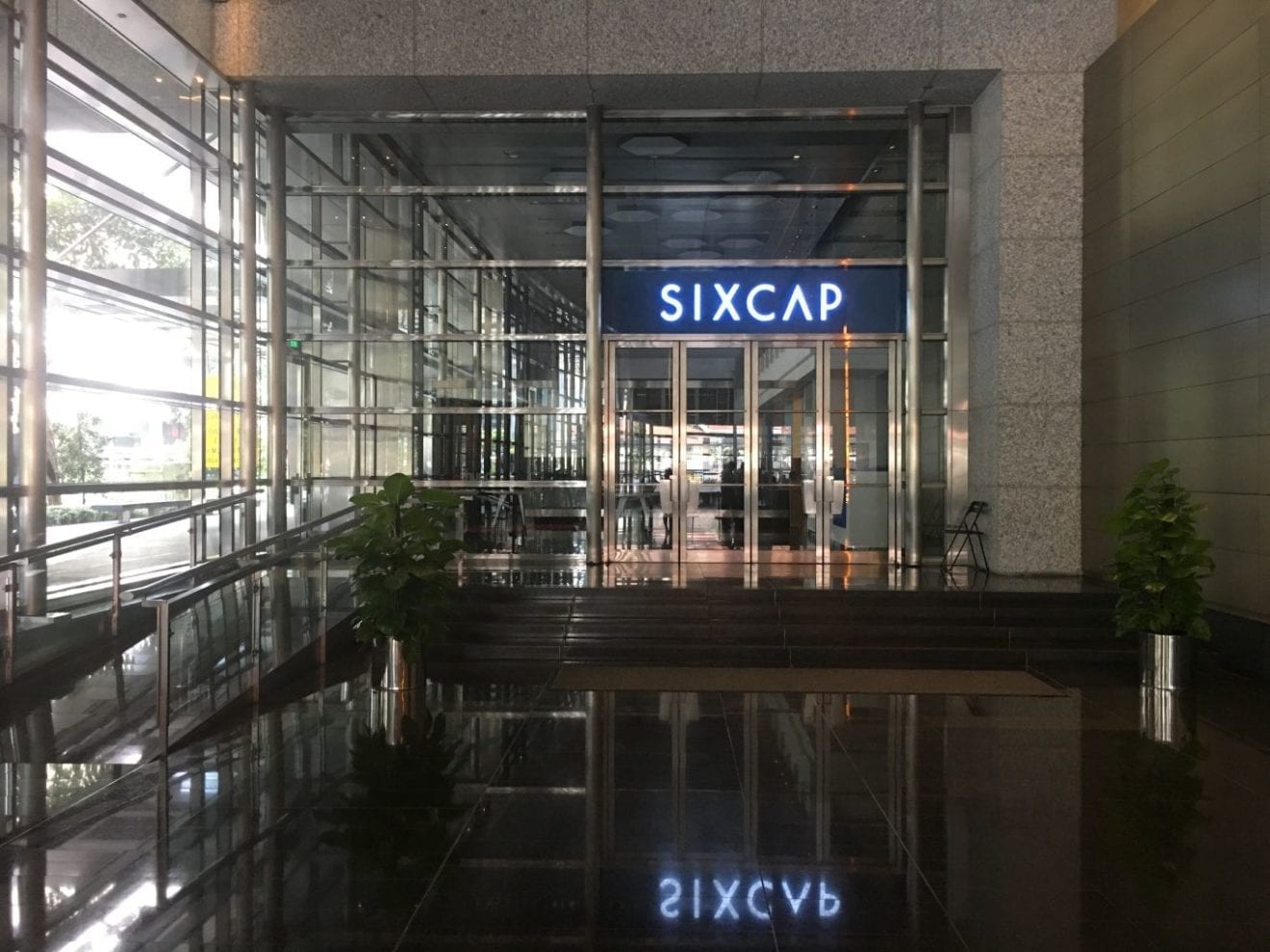
    Police reports have been filed by angry investors who fear they have lost millions of dollars invested in a local fintech currency trading firm that built a high profile by painting its name on an aircraft and wooing potential clients in Davos, Switzerland.

    SixCapital, or SixCap as the firm is called, promised returns as high as 18 per cent a year but stopped making payouts around June. Investors also had difficulties accessing their performance reports.

    Around 1,000 investors and employees put millions of dollars into the fintech firm that described itself as using “big data and powerful analytics” to make currency trades.

    The firm, which has an office on the ground floor of SGX Centre 1 in Shenton Way, appears to have hit trouble earlier this year.

    It e-mailed clients on June 8, saying that OCBC Bank told it in May that its banking accounts could no longer be supported.

    SixCap said it had been trying to open accounts with other banks since May 25, but “the KYC (Know-Your-Customer) processes these days are more stringent and take longer than before”.

    More recently, in a letter to investors dated Nov 10, SixCap said it had discontinued its two products, Tagg and B’Data, which earn yields for investors through foreign exchange trading.

    Investors were told they could expect their principal back “over a 24-month period beginning in the second half of February 2018”.

    The same letter detailed the abrupt resignation on Oct 9 of SixCap chief scientific officer Abdalla Kablan and 13 of his key IT staff.

    SixCap had acquired Malta-based data analysis start-up Hippo Data, founded by Dr Kablan, earlier this year.

    “By now, almost all the employees in Malta have resigned and left abruptly,” wrote SixCap boss and sole owner Patrick Teng Chee Wai.

    The exodus brought operations at SixCap’s tech firms to a halt, impacting the group’s “various Ricebowl business models”, he said.

    Ricebowl is a forex trading model offered by SixCap.

    Mr Teng said: “Ricebowl is a system being developed and refined with the help of Dr Kablan and he has in fact written academic papers on this system which were shared with the Monetary Authority of Singapore about one to two years ago.”

    The Straits Times could not find these papers, and Mr Teng declined to share them, citing confidential content.

    Dr Kablan said he could not comment and is seeking legal advice.

    Mr Teng’s son, Mr Paul Teng, who was SixCap’s chief investment officer, did not answer questions about Ricebowl.

    He told  last Monday : “I can’t comment because I’ve resigned since Nov 1. I’d rather not talk about it. Ricebowl was always looked after by my dad.”

    One of SixCap’s presentation materials states that FX B Share, the predecessor of B’Data, is governed by Singapore law and vetted by law firm Rajah & Tann.

    Rajah & Tann senior partner David Yeow told by e-mail: “The reference to my firm in the attachment was made without prior notice or approval from my firm.”

    Investors in Tagg and B’Data are now asking how they can recover their money.

    Some filed reports with the police and the Commercial Affairs Department last month as they want an investigation into its transactions.

    A police spokesman told The Straits Times: “It is inappropriate to comment on investigations, if any.”

    The Straits Times visited SixCap’s Shenton Way office before noon on Nov 24 but the lights were off and the door locked. A security guard said it had been closed since Nov 20.

    SixCap’s chief revenue officer, Ms Jaslyn Tan, told The Straits Times that Six Capital (FX Trading) had moved to Marina Bay Financial Centre Tower 3. She did not answer further queries.

    The address she gave was for a serviced office space shared with about 20 other companies. The Straits Times visited the place last Tuesday and was told by a staff member that neither Mr Patrick Teng nor Ms Tan was present.

    It marks a sharp turn of events for SixCap, which worked hard to raise its profile. The firm was a sponsor of some events hosted by The Wall Street Journal and CNBC, where Mr Patrick Teng would appear as a speaker.

    In December last year, SixCap had its livery painted on an AirAsia jet to promote Tagg’s launch in the Indonesian market.

    And in January, Mr Teng and son Paul went to Davos, Switzerland, to ink a memorandum of understanding with an Indonesian university – Universitas Gadjah Mada – on the sidelines of the World Economic Forum.

    SixCap’s most recent product is Thundr TV, a $99 device or app that allows access to TV channels.

    During Thundr’s Singapore roadshow in July, Miss Universe Indonesia 2015 Anindya Putri and Miss Universe Croatia 2015 Mirta Kustan were featured as channel personalities.

    For now, investors are split on what to do. Some believe SixCap will pay them back eventually, while others are not so sure.

    A semi-retired freelance consultant who wanted to be known only as Mr Rao sank $20,000 in Tagg and $80,000 in B’Data. He joined a small gathering of investors on Nov 20 to discuss their next steps.

    Mr Rao, 49, said: “A few retirees indicated that they had poured in significant retirement sums. One lady was the age of my mother. She said that she was going to the temple to pray.”

  • Hong Kong’s TNG FinTech to launch e-wallet in UK

    Hong Kong’s TNG FinTech to launch e-wallet in UK

    TNG FinTech Group has extended its global money transfer partnership with Tranglo Europe to cover the UK.

    TNG will invest $20 million to launch a local electronic wallet in the UK, becoming the first Asian FinTech company to access the European market with a next-generation financial services offering.

    With the service launch, TNG users will be able to make secure and instant money transfers in and out of the UK.

    Outbound remittances from the UK were estimated by the World Bank to be approximately £16.5 billion ($174.29 billion) last year, with the lion share flowing to Asia and the Middle East.

    The agreement builds on TNG’s existing partnership with Tranglo covering Asian markets. Tranglo is a payment gateway with money service business licenses for the UK, Malaysia, Singapore and Indonesia.

    TNG is reporting double-digit growth in monthly transaction volumes month-to-month. The company generated over US$1 billion worth of transactions in the first two years of launch, and last year raised a record US$115 million during a Series A funding round. The company secured a stored value facilities license from the HKMA in August last year.

    “As a global market leader with the “know-how” to roll out e-wallet platforms, we will ride on the success of TNG Wallet in Hong Kong and duplicate our expertise and experience in Europe, TNG CEO Alex Kong said.

    “The launch of the UK e-wallet will demonstrate TNG’s continued innovation to meet the needs of UK consumers initially, and then expanding to the rest of Europe.”

  • SingX expands remittances to Malaysia and HK

    SingX expands remittances to Malaysia and HK

    Singapore FinTech startup now supports cross-border digital remittance to the markets. Singapore-based FinTech startup SingX has expanded its online remittance services to Malaysia and Hong Kong.

    SingX founder and CEO Atul Garg said the company SingX has introduced remittances to two new markets, from Singapore to Malaysia and from Singapore to Hong Kong, as these markets have a considerable amount of cross-border payments taking place because of their long ties with Singapore.

    Licensed by the Monetary Authority of Singapore, SingX targets individuals and SMEs. The expansion of its service to new geographies is expected to appeal to Malaysians in Singapore who transfer money back home to pay for expenses and Singapore residents who invest in stocks, property and trade in Hong Kong and China.

    The company launched its first product, cross-border fund transfer from Singapore to India, in January this year. Based on its current monthly run rate, after six months of operations, SingX’s online remittance platform would have achieved an annualized run rate of $100 million.

    SingX’s online platform claims to be cheaper, faster and more convenient as it charges consumers a fraction of what they typically pay for overseas money transfers. It does this by cutting out cable charges and bank commissions and offering transparent and live forex exchange rates. It also claims to be more convenient as it eliminates the need to fill out complex forms and for personal visits to a branch. The only fee payable is a small handling fee which is made known to the customer upfront.

    Compared to bank transfers, users of SingX are expected to save up to 90% in remittance charges when transferring funds to India, Malaysia and Hong Kong.

    SingX has implemented two-factor authentication and secure data transmission methods. As a regulated payment services provider, it has also ensured the customer’s money is kept in a segregated client account.

    SingX has further plans to roll out new services to a number of new countries around the globe soon.

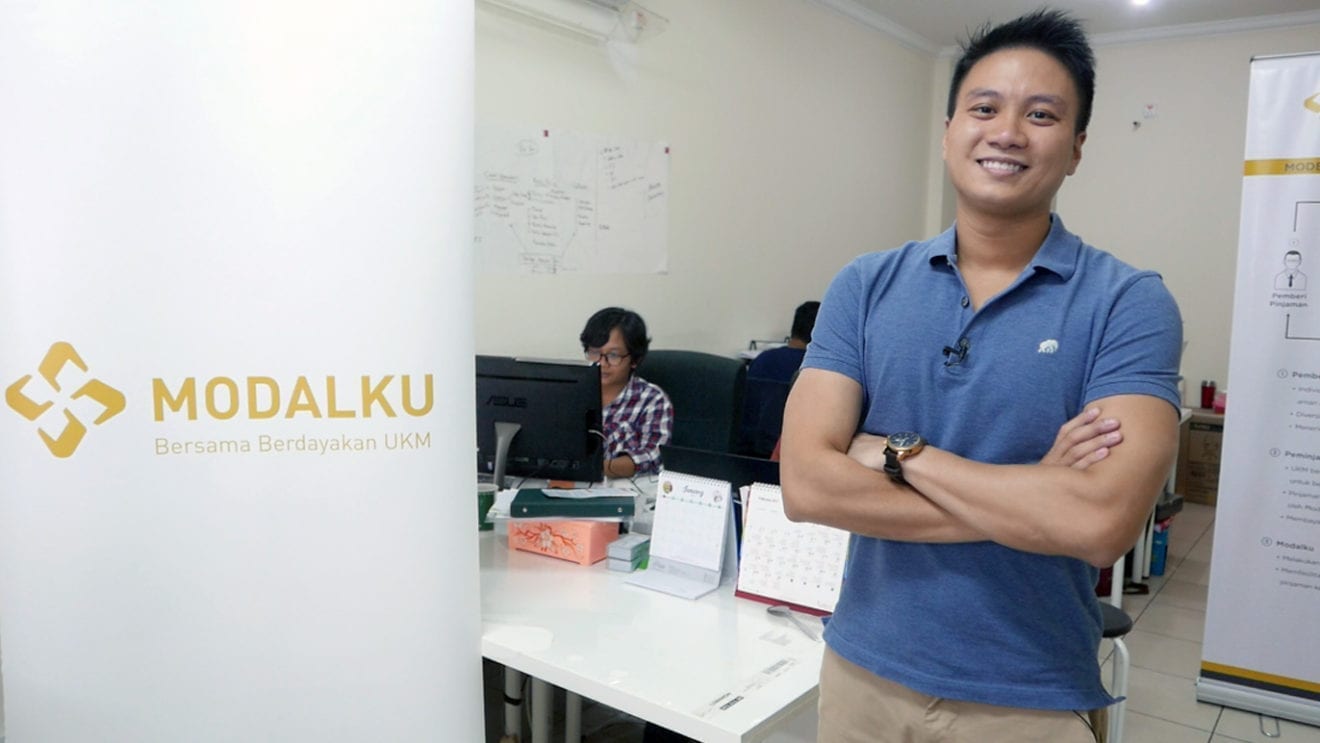
  • Modalku launches mobile app for lenders

    Modalku launches mobile app for lenders

    Modaluku, a peer-to-peer (P2P) lending platform in Indonesia, has announced the launch of its mobile app for alternative investment.

    The app, named Modalku, offers more ease and practicality for lenders. All activities, beginning from sign-up to crowdfunding for alternative investments, can be done via smartphone anytime and anywhere. The app is available on iOS App Store and Google Play Store.

    Activated Modalku lenders can start crowdfunding for alternative investments straight away. The app has an ‘Auto Allocation’ feature, where lenders can crowdfund Small and Medium-sized Enterprise (SME) loans according to their personal preferences, based on criteria like return rates, loan duration, and allocation per loan.

    The Auto Allocation feature was designed with active lenders in mind. With it, the app generates hassle-free passive income without lenders having to manually allocate their funds every time an attractive alternative investment opportunity is available. The feature also maximises portfolio diversification and minimizes risk.

    New users can apply and sign up to become lenders with a semi-automated process. For example: the app will autofill address details from postal codes for easier application. Additional features, such as notifications for every SME loan ready for crowdfunding and low balance reminders, ensure that lenders will not miss an investment opportunity.

    As proof of Modalku’s commitment to consumer protection, the app incorporates state-of-the-art data security measures, including fingerprint login, advanced encryption, and auto-logout.

    “Modalku offers a win-win relationship for our users, both SME borrowers and lenders seeking alternative investment opportunities. In a diversified portfolio, P2P lending has proven to be an excellent investment alternative. Lenders can start from funding Rp1 million [US$75] for each SME loan, earning monthly repayments and good risk-adjusted returns. Our new app will give lenders greater access to peer-to-peer lending as an alternative investment option” said Modalku co-founder and CEO Reynold Wijaya.

    Financial Services Authority (OJK) Regulation, Licensing and Supervision of Financial Technology director Hendrikus Passagi added, “We warmly welcome the launch of Modalku’s mobile app as we believe the technology will support financial inclusion in Indonesia, along with the development of a cashless society.

    “Data from the Indonesian Internet Service Providers Association (APJII) shows that nearly 73% of Indonesian internet traffic happens on mobile devices and tablets. The app can increase the broader public’s interest in funding Special Needs Business (Puberku), such as Indonesian SMEs.

    David Ng, one of Modalku’s lenders added “I have gained attractive returns from my alternative investments in Modalku. Their products provide good risk-adjusted returns (through diversification), with a concept that is easy to understand. The Modalku app makes managing my portfolio even easier. I have activated the Auto Allocation feature to automate my alternative investments; all activities can practically be done via smartphone.”

    Modalku’s P2P lending business model connects SME borrowers with lenders through a digital marketplace. By financing SME loans, registered lenders gain an alternative investment with higher returns compared to term deposit and bonds.

    Modalku is the largest P2P lending platform in Indonesia, with loan disbursement totalling over Rp215 billion into 400 SME loans.

    This app follows the release of their Modalku Dana Usaha app, launched in January 2017 for SME borrowers.

    Modalku Dana Usaha is the first app to provide working capital loans in Indonesia, providing a quick, safe, and user-friendly process.

  • Singapore and Denmark sign fintech pact

    Singapore and Denmark sign fintech pact

    The Monetary Authority of Singapore (MAS) and the Danish Financial Supervisory Authority (Danish FSA) yesterday signed a FinTech Co-operation Agreement which aims to help FinTech companies in Singapore and Denmark to expand into each other’s markets.

    The agreement will enable both regulators to refer FinTech companies to their counterparts. MAS and the Danish FSA have also committed to exploring joint innovation projects together, and to share information on emerging market trends and their impact on regulation.The agreement was signed at the sidelines of the Money 20/20 Europe conference in Copenhagen. Singapore will also host the inaugural Money 20/20 Asia conference in March next year.

    Sopnendu Mohanty, Chief FinTech Officer, MAS, said: “Singapore and Denmark are important gateways to their surrounding regions. This cooperation agreement signifies the commitment of MAS and Danish FSA to promoting innovation in financial services and growing the FinTech landscape. We look forward to closer interactions between our respective FinTech ecosystems and more opportunities for our businesses to grow, expand and serve customers in each other’s markets.”

    Thomas Brenøe, Deputy Director General, Danish FSA, said: “The FSA is committed to encourage innovation in the financial sector. We are currently establishing a FinTech Lab to support the development of fintechs and provide assistance for these to set up business in Denmark. Financial innovation is not confined to national borders, and we are therefore delighted to enter into this agreement with MAS. This agreement will ensure cooperation between the Danish FSA and MAS and will foster opportunity for businesses in Denmark and Singapore to grow.” Brian Mikkelsen, Danish Minister of Industry, Business and Financial Affairs added: “I am very happy that Denmark and Singapore have been able to join forces in this agreement. I am sure that this will help many FinTech companies and create an even better growth environment for these companies in both Singapore and Denmark.

  • Visa, Validus to provide virtual card solutions for SMEs

    Visa, Validus to provide virtual card solutions for SMEs

    Visa has teamed up with FinTech platform Validus to provide SMEs with virtual card solutions designed to help scale their businesses. The partnership seeks to unlock capital for SMEs to reinvest in their products and services.

    The solution has already been adopted by GroXers Inc Pte Ltd, a food and beverage distributor in Singapore.

    Under this partnership, Validus is working with Visa to facilitate immediate cash flow to SMEs with unpaid invoices in their payment cycles. By clearing invoices for SMEs using a Visa virtual commercial card, Validus helps SMEs expand faster and have a faster turnover for their products and services.

    The food & beverage (F&B) businesses, have to deal with a large number of buyers ranging from “Small businesses often face challenges such as access to capital to fund their business growth and this makes them vulnerable. Similarly, suppliers for these businesses may be challenged to provide adequate credit, as they do not have the skills to underwrite higher credit lines,” commented Vikram Kshettry, head of B2B Partnerships and Small Business Asia Pacific at Visa.
    “It is essential that businesses are able to access credit from specialist lenders to invest in their businesses, and for suppliers to be paid on time. The presence of such lenders, who can respond faster to business needs, is key to Singapore’s continued SME growth.”

    GroXers Inc, a leading enterprise run by well-known Singaporean entrepreneur, Nichol Ng, stated that the solution has freed up their cash flows considerably.

    “We have been looking for a solution that bridges the gap between our cash flow and account receivables and this is our biggest untapped asset. It is interesting to see how this solution has enabled us to receive our money faster and more seamlessl,” Ng aid.

    “At GroXers Inc, 100% of our receivables from B2B retailers are now on credit card payment. We genuinely feel that in today’s economy, we should free our time and cash flow to focus on growing our business.”

    Validus and Visa will look to increase their commitment to supporting SMEs in Singapore across a range of industries. This includes businesses that specialize in the distribution, services and manufacturing sectors.

  • China’s AliPay, UnionPay & WeChat Pay join LATAM Fintech’s payments revolution

    China’s AliPay, UnionPay & WeChat Pay join LATAM Fintech’s payments revolution

    The fintech dLocal that specializes in cross-border payments for emerging markets, has integrated AliPay, UnionPay and WeChat Pay – China’s three major digital payments providers – into its platform. The addition for Uruguay-based dLocal with a US presence is touted as enabling global merchants to reach some “300 million Chinese consumers.”

    Collectively these three providers captured the vast bulk of the Chinese market for online payments (over 70%), which translated into $2.9 trillion (trn) of such payments in 2016.

    According to the market research firm Analysys, for the first quarter of 2017 Alipay, which was founded by Alibaba Group in 2004 and its founder Jack Ma, accounted for around 54% share of mobile transaction value while WeChat Pay garnered a 40% share.

    For the Uruguayan-based dLocal, which has largely been focused on the Latin American region and other emerging markets, it expands the company’s services to Asia. It is couched as enabling the firm to “offer a broader portfolio of payments and country coverage to global merchants” who want to reach some 2 billion (bn) emerging consumers in markets where payment methods are different of those in Europe and the US.

    Chinese Cross-Border E-Commerce

    Cross-border ecommerce in China reached an estimated RMB 259bn (c.$40bn) in 2015, equivalent to over 6% of China’s total consumer e-commerce. And, the growth rate has been put at more than 50% annually according industry figures and as highlighted recently by Chenan Xia, a principal at McKinsey in Hong Kong.

    Lower prices, higher quality items, larger disposable incomes and the search for non-fake goods are among a factors contributing to the rise in online cross-border purchases, creating a huge opportunity for ecommerce and marketplace businesses.

    China’s major e-commerce site, Alibaba’s Tmall, for example, has moved into the market with a cross-border site (Tmall Global), whilst smaller consumer rivals and start-ups have got in on the act.

    US e-commerce behemoth Amazon has also become increasingly active in China, having opened its offshore shopping sites of late to Chinese consumers and offering users of Amazon.cn, its Chinese site, a selection foreign products described in the local language and with Chinese specifications.

    On the flip side, Tmall Global has attracted major foreign retailers like US-based Costco and South Korea’s Lotte Mart, to its cross-border site.

    “China is the global Mecca for ecommerce and we are unlocking the doors for cross-border purchases in this market by bringing all the pertinent payment options into one solution,” said Sebastián Kanovich, CEO of dLocal, who is described as a pioneer in emerging markets payments.

    Chinese Payment Providers

    As regards the background and timeline of discussions between dLocal and AliPay, WeChat Pay and UnionPay, last year dLocal had implemented bank transfers for China, However, as Kanovich pointed out “the conversion was quite low” as these are not the dominant forms of payment for ecommerce purchases in China.

    The first item in dLocal’s 2017 Product Roadmap was to secure the top three payment methods – AliPay, WeChat Pay and UnionPay – so that they could start processing local debit and credit cards, as well as accept payments through the hugely popular e-wallets.

    “From start to go-live – contract and integration – it has taken six months. For credit and debit card acceptance, the integration was pretty straight forward as it was completely API-based,” revealed Kanovich.

    He added: “To process payments through the AliPay and WeChat Pay e-wallets, we had to develop QR-code technology, which is how AliPay and WeChat Pay operate. This was a new capability we had to develop, because none of the payment option providers in the markets we’re in are utilizing QR codes.”

    The user experience for a payment via QR code works as follows. During the checkout process, when the user indicated that they want to pay with AliPay or WeChat Pay e-wallets, dLocal generates and displays a unique QR code to the shopper which they scans to be redirected to pay with AliPay or WeChat Pay.

  • OJK to Monitor Fintech

    OJK to Monitor Fintech

    The Financial Service Authority (OJK) has formed two new directorates as a response to financial technology (fintech) development. OJK deputy chief commissioner Rahmat Waluyanto said that the two new directorates are Digital Financial Innovation Unit and Fintech Permit and Monitoring Unit.

    “The directors have been appointed, but it can’t yet be announced because it’s not official yet. The Digital Financial Innovation Unit will handle regulatory sand box and research,” he said, as quoted by Antara last week.

    In a bid to respond to fintech development, OJK has also formed Fintech Expert Forum and fintech innovation hub. The forum will facilitate fintech industry development comprising individuals from 21 entities, such as ministries, agencies, associations, universities and other relevant business players.

    The committee will give recommendations and inputs as well as facilitate coordination between agencies and fintech start-up companies. Meanwhile, OJK’s fintech innovation center is projected to become a hub of various fintech incubators to discuss developments.

    OJK chief commissioner said that Fintech Expert Forum will facilitate and ensure coordination of various start-up players. The forum will discuss developing fintech issues. “And discuss future developments in fintech industry,” he said.

    Indonesia has seen a rapid growth of fintech players. As of January 2016, Indonesia Fintech Association reports that the country has 165 domestic start-ups. The figure has quadrupled compared to that of in the first quarter of 2014 with 40 companies.

  • Paycock to supply Seoul with optical recognition-based mobile payment service

    Paycock to supply Seoul with optical recognition-based mobile payment service

    Fintech startup Paycock announced Monday that it would begin supplying Seoul City with a mobile payment service based on optical character recognition technology starting in June. The service allows stores to accept credit card payments through the company’s mobile application, Paygood, making it possible for payments to be made and accepted no matter the time or location of the payment participants. Seoul City will be providing the mobile application to merchants in the Namdaemun and Dongdaemun markets as part of its support program for small business owners.

    Paycock’s payment application does not require a traditional card-reading device, as its OCR technology enables not only payment via physical credit and debit cards but also mobile application-based credit cards. This OCR technology, which is the product’s key technology, is accompanied by AI deep learning technology to prevent credit card fraud and theft.

    As the application is highly convenient to use and guarantees the security of credit card transactions, it is expected to be widely adopted by small business owners, individuals working in the delivery business, and companies that employ traveling sales representatives. CEO Kwon Hae-won said, “Our product has been fully vetted in terms of security. It has passed the security tests and evaluations of companies recommended by the Korea Internet & Security Agency and the Financial Security Institute.”

    Paycock has already signed MOUs with corporations and the governments of six countries, including the United States. Through its participation in K-Global@Moscow 2017, which is scheduled to be held on June 5, the company plans to seek out opportunities for it to enter the Russian and Northern European markets. Paycock receives support for its overseas marketing activities from the K-ICT Born2Global Centre, an organization affiliated with the Ministry of Science, ICT and Future Planning.

  • Singapore banks seek to simplify online transactions

    Singapore banks seek to simplify online transactions

    Four banks in Singapore are participating in a pilot that aims to explore ways to simplify online banking transactions with the use of the government’s MyInfo online authentication service.

    The pilot is backed by the Smart Nation and Digital Government Office (SNDGO) and Government Technology Agency (GovTech), in collaboration with the Monetary Authority of Singapore (MAS).

    Prospective customers of United Overseas Bank (UOB), Development Bank of Singapore (DBS), Oversea-Chinese Banking Corporation (OCBC) and Standard Chartered Bank (StanChart) with a registered profile on myinfo.gov.sg will be able to apply for a new bank account without needing to submit supporting documentation.

    This aims to provide greater convenience and a faster transaction time for consumers while benefiting banks in the form of higher productivity and lower compliance costs.

    Banks in Singapore currently require users to submit copies of their identity, income and CPF documents for applications. With MyInfo, customers can pre-fill these Government-verified personal particulars into the necessary forms, and avoid the need to submit supporting documents.

    MyInfo has been rolled out for SingPass users since May 2016 for popular government digital services such as balloting of the Housing Development Board’s Build-To-Order (BTO) flats. MyInfo is scheduled to be available on most government digital services with SingPass two-factor authentication (2FA) by 2018.

    Jacqueline Poh, Chief Executive, GovTech, said, “We want to explore how citizen-centric government digital services can be extended to better help industry and transform service-delivery to citizens. We have seen good take-up of MyInfo, and hope that this public-private collaboration will provide citizens with even more benefits.”

    Sopnendu Mohanty, Chief FinTech Officer, MAS, said: “MAS is excited by the opportunities that national infrastructure platforms can bring to the financial industry, such as hassle-free online account opening and instant account activation in the near future. MAS would like to urge the industry to reimagine their customer journey for instant gratification as they leverage platforms like MyInfo.”

    Michael Gorriz, Group CIO, Standard Chartered Bank, said: “Central database and central data-keeping is absolutely the way forward. If you look at the 3 parties – the Singapore government, the citizens and the banks or other entities – it is really a win-win-win situation. So first of all, for the consumer, he only has to enter the data once and then he decides who has access to the data. We as a Bank, we win, because we get qualified data from the consumer, which he puts all due diligence and care in to keep it up to date.”

    After this pilot, MyInfo may be extended later this year to other popular transactions such as applications for credit cards and home loans. MyInfo could also be extended to other sectors with strong citizen touch points such as insurance.