Retail News CRM

Tag: FinTech

  • Digital payments fueling FinTech investments in APAC

    Digital payments fueling FinTech investments in APAC

    The APAC FinTech landscape is witnessing unprecedented growth, with FinTech solutions and services expected to gross more than $70 billion in revenue by 2020.

    Market research firm Frost & Sullivan believes the market is on track to record a CAGR of 72.5% over this period.

    “Asia-Pacific FinTech investment increased exponentially in 2015. There was a four-fold increase of investments in APAC FinTech companies from 2014 to 2015 which shows growing investor confidence in the Asia-Pacific region. Meanwhile 42% of the investment deals concentrated on digital payments,” Frost & Sullivan VP for digital transformation Ajay Sunder said.

    Innovation hubs have formed around Hong Kong, Singapore and Sydney riding on the back of favorable government regulations, strong start-up ecosystems and heavy consumer demand among the 18-34 demographic group in particular.

    The emergence of new business models is enabling players to innovate and invest in technologies such as Blockchain, digital payments, cloud services, cyber security, product lines and solutions. Players must rethink strategies and align their business vision with technology goals to define their value proposition to customers and survive in the rapidly evolving digital ecosystem.

    “Digital payment will remain the largest segment, primarily driven by mobile payment solutions, while Blockchain will not remain limited to financial services; there will be new use cases for Blockchain, and traditional ICT vendors will start offering Blockchain-as-a-Service,” noted Sunder.

    Frost points to innovative services providers such as BitSE, Canopy, Coinsecure, DxMarkets, Freecharge, HedgeSPA, MOLPay, Otonomos and TranServ as addressing unmet needs, embracing new technologies and gaining a disruptive advantage by leveraging diverse opportunities.

  • Fintech investment fund Senjo Group opens new HQ in Singapore

    Fintech investment fund Senjo Group opens new HQ in Singapore

    Senjō Group, a privately held investment firm, unveiled today its new global headquarters in Singapore. The leading financial technology investor has leased the entire 56th floor of One Raffles Place in Singapore’s Central Business District.Established in 2015, Senjō Group was first set up as a holding company for a portfolio of payments and financial technology companies with operations spanning Asia, Europe, North America and Africa.

    This growing portfolio of companies operate across payments processing, cross-border remittance, foreign exchange, trade finance, e-commerce, mobile payments, commodity trading and factoring – functions split between Senjō’s core business units: Payments, Commerce, Ventures, Trading and Finance.

    “Senjō offers deep operational expertise across e-commerce, payments, technology and corporate finance. Our strategy has always been to invest in profitable financial technology firms with high growth potential in Asia and around the world. Our goal is to build a world-class financial technology group, and to do that we need the right space,” said Yoshio Tomiie, Head of Commerce, Senjō Group, “Singapore has established an enviable position as a leading Asian financial technology centre with an exciting innovation eco-system, a great talent pool and fantastic infrastructure. It also boasts a business-friendly environment so it was therefore an obvious winner when considering locations for new headquarters for our global operations.”

    Senjō invests in both start-ups and established companies that are profitable and scalable, as well as partnering with companies who are looking to benefit from its global footprint, financial support and operational expertise. Senjō aims to increase its portfolio significantly over the coming years.

    “Our mission is to make commerce better, faster, easier. All our portfolio companies are dedicated to identifying and addressing inefficiencies – in transactions and payments, e-commerce, financial markets and trading – to create value for our customers, our partners and our shareholders,” added Yoshio Tomiie, Head of Commerce, Senjō Group. “Senjō’s management team has had significant experience in the acquisition, operation, and growth of financial technology companies, and we’re very well equipped to continue operating in this space.”

    The Group’s commitment to expanding their business is also reflected in recent executive appointments: Gavin Lock joins as Chief Operating Officer and Sam Evans joins as the Vice President of Business Development and Head of Ventures. Lock has had over 20 years of global experience working in both technology and communications sectors, and he has held primarily executive roles in strategy, M&A and management consulting. He joins from Accenture, where he was Senior Manager/ Principal of Strategy Consulting. Evans brings over 30 years of experience from the financial technology and payments industries, where he has held positions in business development, sales and general management, with familiar names such as Unilever, First Data and Sun Microsystems.

    In addition to the new Singapore headquarters, Senjō also has regional offices in Japan, Indonesia, Malaysia, Myanmar, Thailand, Luxembourg and the UK, and operations in most major markets.

  • Globe’s Fintech Subsidiary Mynt Selects Amdocs to Power its Casa Service

    Globe’s Fintech Subsidiary Mynt Selects Amdocs to Power its Casa Service

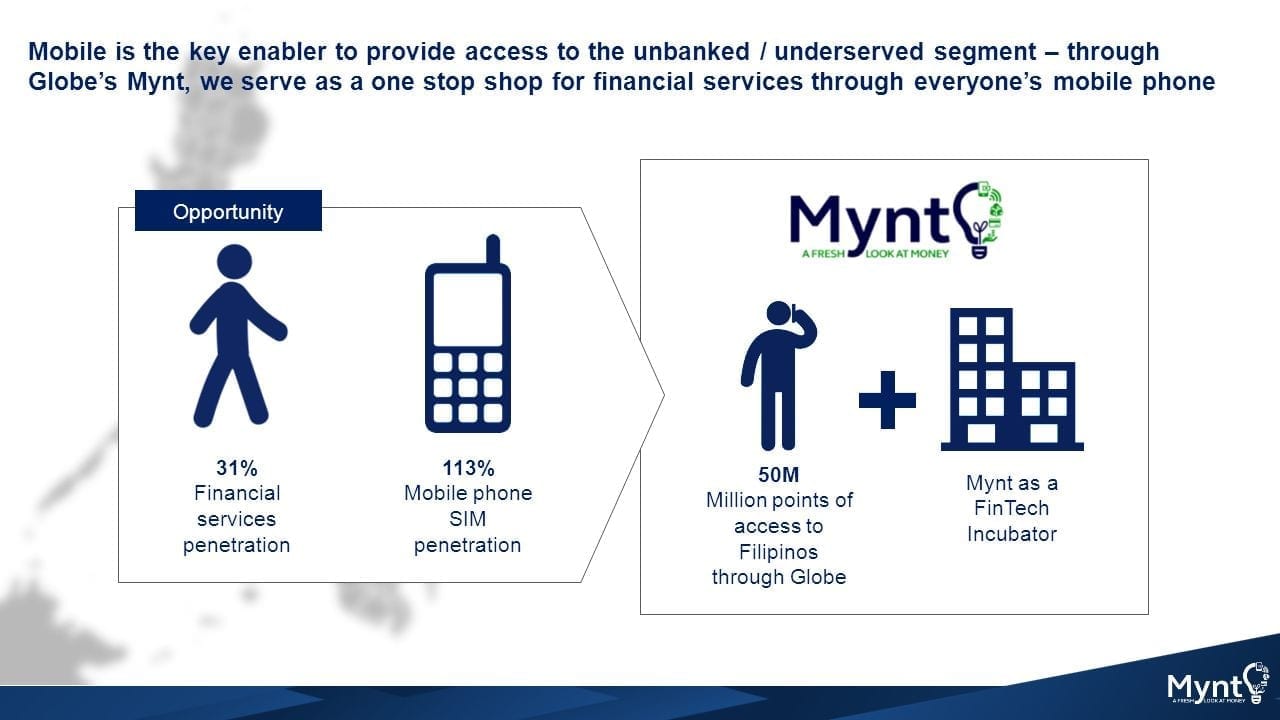
    Amdocs, the leading provider of customer experience solutions, today announced that Mynt, Globe Telecom’s fintech subsidiary, has selected the Amdocs Mobile Financial Services solution to power Casa – a new service that will enable Mynt to offer retailers a cloud-based, financial-grade, white-label digital money fintech platform, providing retailers with the means to offer a wide range of financial services and generate a new revenue stream.

    The Mynt Casa service, which will be powered by the Amdocs Mobile Financial Services solution, will enable retailers to offer bill payments, money transfers, closed-loop merchant payment solutions and loyalty program management. In addition, a card management feature will support them in issuing a closed-loop companion prepaid card to any customer, even if they do not hold a bank account. Cards will be linked to the user’s mobile wallet account, allowing them to pay for purchases at retail and online stores.

    The Amdocs solution will be deployed on Amazon’s public cloud. Based on a multi-tenant system, it will enable retailers in different locations to be hosted as separate tenants on a centralized platform, wholly managed by Amdocs. Under a five-year software as a service (SaaS) agreement, Amdocs will assume complete responsibility for development, deployment, operation and maintenance of the Amdocs solution via a revenue-sharing model with Mynt.

    “Retailers in emerging markets such as the Philippines need their own e-money solution that allows them to offer financial services such as point-of-sale payments, using cashless methods such as mobile wallets, payment cards and loyalty points,” said JM Aujero, chief sales officer at Mynt. “With Casa’s easy-to-use cloud-based platform, we will be able to provide for this need in a way that is tailored to each individual retailer. At the same time, it will enable them to offer wider financial services, such as third-party bill payments and money transfers without having to invest in new infrastructure deployment and operations.”

    “The ability for retailers and merchants to offer their own financial services solutions is a huge opportunity for mobile financial services providers to drive usage and adoption,” said Patrick McGrory
    , president for Amdocs’ emerging offerings. “Casa, powered by Amdocs’ cloud-based solution, provides superior, retail-specific capabilities, combined with a time-to-market advantage that will enable Mynt to quickly roll out services to its retail partners across the Philippines.”

    Amdocs also separately announced the availability of its Mobile Financial Services Card Management System (CMS). CMS supports any service provider in issuing both closed loop and open loop prepaid and debit cards to their customers, even to those who have no bank account. The card can be linked to a consumer’s mobile wallet with a stored value and/or loyalty point account as the source of funds. They can use the card to pay for purchases at a retail point of sale terminal, withdraw cash from an ATM, or for online shopping.


  • Gamified Trading App TradeHero’s Brand Acquired by Ayondo

    Gamified Trading App TradeHero’s Brand Acquired by Ayondo

    Ayondo, a social trading technology developer for the financial services industry, has acquired the TradeHero brand, a Singapore-based trading gamification app.

    The acquisition for TradeHero’s brand outside of China and the United States, expands ayondo’s footprint in Singapore nearly a year after it announced a partnership with KGI Fraser Securities Pte Ltd to launch KGI Contrax, a platform for investors to trade Contracts for Difference (CFD).

    Robert Lempka, CEO of the ayondo Group, says: “For ayondo, mobile technology is a big part of the Group’s strategy for expansion and growth. The TradeHero brand is extremely well established in Asia and was the missing piece in our product range. Following Top Traders and taking social trading to the next level, in offering fully automated execution is exactly what is in ayondo’s DNA.”

    Dominic Morris, co-founder of TradeHero and the new Head of Innovation for ayondo Group, adds: “ayondo and TradeHero share the same vision, that is to democratise the world of investing through easy-to-use disruptive technology and knowledge sharing.”

    The team of TradeHero’s mobile technology specialists built the foundation for ayondo’s Singapore based Mobile Lab, where the group’s latest research and development takes place. The group is engaged in advanced negotiations with a SGX-listed company on a Reverse Takeover (RTO) transaction. This could result in ayondo being the first fintech company to be listed on the Singapore Exchange (SGX) and the head office being moved to Asia’s fintech hub.

  • Finance Magnates’ 2016 Summit Kicks Off in Downtown London

    Finance Magnates’ 2016 Summit Kicks Off in Downtown London

    The highly anticipated Finance Magnates London Summit kicked off today at The Brewery in the heart of the online trading industry. For five years now Finance Magnates has been hosting the prestigious event that has seen over two thousand attendees on an annual basis.

    2016 has been a very unique year for the foreign exchange and broader financial industry with two seismic events potentially redefining the current status quo. With the Brexit referendum in the UK and the victory of President-elect Donald Trump in the US, the industry seems primed for a shakeup, and the biggest names and players worldwide are now together under one roof to discuss the issues.

    Summit Kicks Off

    The event began with the Networking Blitz Opening Party today, which saw over 1,000 individuals attend. The Blitz is the first part of the two-day Summit, which features over 2,000 attendees and 90 exhibitors at a prestigious London venue. Industry elites were able to enjoy a wide range of refreshments and entertainment, as well as several attractions such as in the Institutional Lounge and more.

    second

    What to Expect on Day 2

    Looking beyond today, the second day of the summit features a full schedule of panels, seminars, and workshops, including roundtable discussions between some of the industry’s most recognizable figures. Attendees will be able to explore and immerse themselves in a wide range of topics, including the adoption of data driven market intelligence, blockchain technology, the influence of the upcoming MiFID II regulation, retention management, and much more.

    In addition to a plethora of different topics and events, the Finance Magnates London Summit will also include multiple workshops and exclusive product launches. Attendees are invited to take part in each of these presentations, which will be capped by the Finance Magnates Awards ceremony tomorrow evening. The winning brokers, providers, and other groups will be announced at the ceremony – only London Summit registered attendees, the gold standard of the executive level of the global industry, are given the privilege of participating in the voting process, ensuring a truly transparent and representative competition.

    third

  • Bank Indonesia launches financial technology office

    Bank Indonesia launches financial technology office

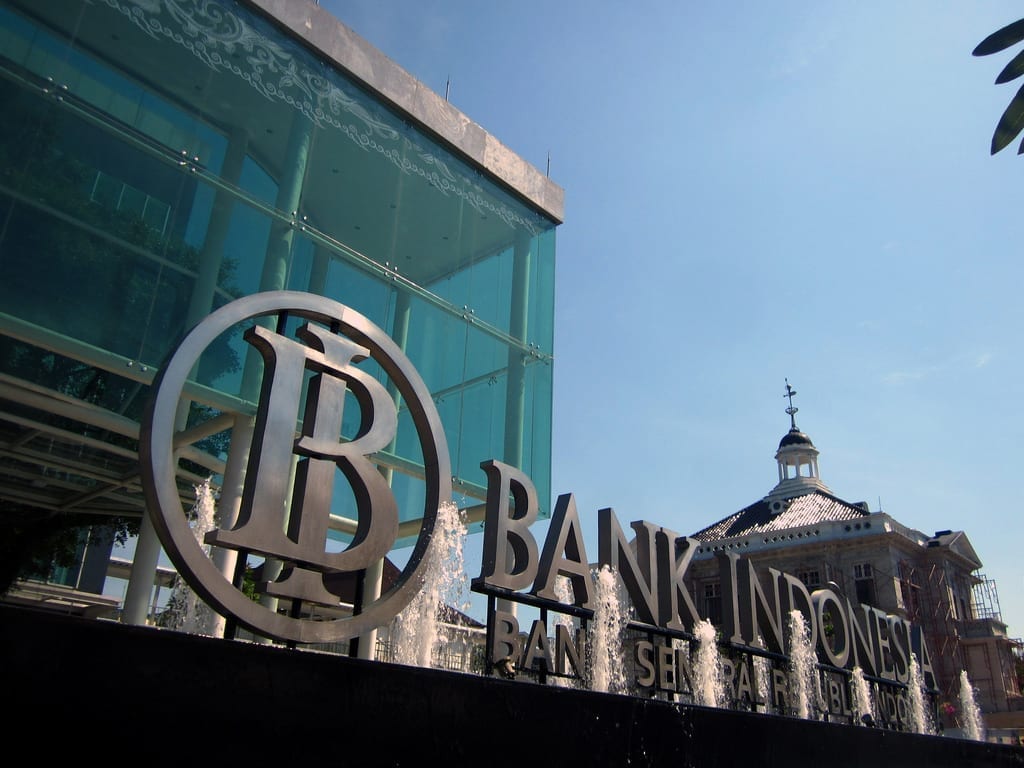
    Bank Indonesias governor Agus Martowardojo has launched the Financial Technology (Fintech) Office that will serve as a think-tank in developing the financial services industry.

    “Technology innovation in financial sector is now a must. Therefore, innovation must be a continuous process,” Agus said in his speech while opening the Fintech Office here on Monday.

    He explained that the Fintech Office will have four roles to play. First, it will serve as a facilitator in ideas exchange among Fintech regulators and industry players.

    Second, Fintech Technology will contribute with business intelligence that will facilitate the system and generate tools to transform raw data into new information for analysis material.

    The third role that the Fintech will play will be to provide assessments besides testing various ideas and regulations. It will also help as a coordination and collaboration platform for Fintech stakeholders.

    “We will make it a one stop service accessible to the financial players where we will explain the policies that we issue,” Agus noted.

    The Fintech Office, he added, would also act as a regulatory sandbox or a policy formulating laboratory.

    “Such a sandbox will be a restricted platform for innovation development as well as policy testing and evaluation,” Bank Indonesias Deputy Governor Ronald Waas noted.

    However, he added, not all Fintech business segments will be included in Fintech Office as it has been specified that the facility will be for the new Fintech businesses which are not regulated by Bank Indonesia as a payment system authority.

    “The businesses included in Fintech Office will be the breakthrough ones or the new ones” Ronald noted.

    Data obtained from Financial Service Authority shows that currently, 120 Fintech companies have a total asset value of Rp100 billion (about US$7.4 million), a 50 percent increase over the early 2015 figure.

  • FinTech hub opens in Singapore

    FinTech hub opens in Singapore

    LATTICE80, a not-for-profit FinTech Hub, has opened an innovation facility in Singapore’s central business district.

    The new two level facility has been established with the aim of supporting FinTech firms with product development, testing and go-to-market strategies.

    LATTICE80 measures more than 30,000 square feet and features an open event space with the capacity to host 250 people, a private and public lounge, semi-open and open-plan offices, a cafe, boardrooms, meeting rooms, a podcast studio and a nursing room.

    To date, more than 20 foreign and local FinTech companies and associations at varying stages of growth have signed up to be based at the facility. Solution types being worked on by these firms include blockchain, robo-advisors, trading systems, online marketplaces, financial education, cognitive computing, big data analytics and fund management.

    LATTICE80 has partnered with key financial and technology players such as IBM, UOB, KPMG, MatchMove, EZ-Link, Singapore Fintech Consortium, Femtechleaders SG and Metropolitan Management Services to provide solutions and services like APIs, cloud technology and blockchain to support companies.

    Additionally, the National University of Singapore will work hand-in-hand with LATTICE80 to shape the curriculum for FinTech. It will also involve roll outs of training and capability development programmes particularly in the areas of cybersecurity, payment gateway and developing dynamic mobile applications.

    “We want to create a platform that can support the FinTech ecosystem in Asia and form bridges that link to global players. We’re serious about fostering connections with the technology and financial communities here in Singapore and globally,” LATTICE80 CEO Joe Seunghyun Cho said.

    “We’re co-creating the future of innovation, banking and finance in Singapore and considering the enthusiastic group of start-ups we have today, I’m very confident that we have the foundation to create a truly unique world-class community.”

    Companies onboard LATTICE80 include Spark Systems, which is building new generation trading platforms for hedge funds, banks, financial institutions and other high volume institutional participants in the foreign exchange market, and Percipient, a Singapore-based startup which has developed a customized digital solution for the State Bank of India.

  • Standard Chartered and IBM back Byte Academy’s Singapore fintech school

    Standard Chartered and IBM back Byte Academy’s Singapore fintech school

    Standard Chartered Bank, IBM, Insead, Thomson Reuters and Microsoft are backing a fintech school at New York-based Byte Academy’s first international venture, in Singapore.

    The firms have come together to form a fintech skills charter that will guide Byte Academy’s 12-week and eight-week courses for students focussing on fintech and software development.The 12-week full-time courses will provide the fundamentals for students to work on real, industry-specific problems and allow for interaction with industry partners to prepare for direct placement and job matching upon graduation. Students that graduate receive guaranteed job placements at the bank and tech partners.

    Shameek Kundu, global head, data, architecture and innovation, Standard Chartered, says: “The establishment of Byte Academy is another progressive initiative which will help to fuel Singapore’s Smart Nation ambitions by adding to the country’s great ecosystem of financial institutions, technology companies, universities and research organisations.”

    Nobuhiro Ito, director, developer experience and evangelism, Microsoft Singapore, adds: “Byte Academy’s presence here in Singapore will help accelerate skills development that will help contribute to a more vibrant FinTech ecosystem and build a stronger Singapore core.”

  • Governement Aims to Protect Fintech Customers

    Governement Aims to Protect Fintech Customers

    Coordinating Minister for Economic Affairs Darmin Nasution wants to have an agency that protects customers of (financial technology/fintech) companies. The agency will also monitor and supervise fintech businesses to make sure they comply with existing laws and regulations.

    The agency, he said, will work in similar ways to the Central Securities Depository (KSEI) and the Clearing and Guarantee Corporation (KPEI) in supervising capital market transactions.

    “In the case of contract breaches, consumers must not incur losses. There must be an agency that covers the loss, he said at the Indonesia Fintech Festival, Tuesday, August 30.

    He said that the fintech industry offers an opportunity for entrepreneurs and the financial services sector. But fintechs have their negative impacts and risks as well, that’s why the OJK and Bank Indonesia (BI) must regulate the industry for the protection of its customers.

    BI Governor Agus Martowardojo supports the development of fintechs, saying it is an industry that allows faster, more efficient services for the financial industry in terms of payment system.

    Agus said he has three hopes for the fintech industry. First, for international fintechs to register as an Indonesian entity. Second, to have all payments denominated in rupiah, and third is for the industry to save their funds in the national banking system.

    President Joko Widodo, who attended the Fintech Festival, said that the business is a golden opportunity for people living in remote areas. Widodo believes that better access to financial services will crunch income gap.

    “I invite fintech businesses to innovate and spawn new breakthroughs in the use of digital technology that will fast-track financial inclusivity,” he said.

  • Jokowi to Open Indonesia Fintech Festival and Conference 2016

    Jokowi to Open Indonesia Fintech Festival and Conference 2016

    President Joko “Jokowi” Widodo is scheduled to open the Indonesia Fintech Festival and Conference 2016 at the Indonesia Convention Exhibition, Tangerang, on 29th August 2016. The event is organized by the Financial Service Authority (OJK) and the Indonesia Chamber of Commerce and Industry (Kadin).

    “President Jokowi will open the event and it will be closed by Queen Maxima of the Netherlands,” said the OJK’s Deputy Commissioners for Non-bank Finance Industry (IKNB) Dumoly F. Pardede on Thursday.

    Dumoly said a startup competition will be held during the event. In addition, an international financial technology conference will also be held. It will also provide assistance to fintech startups. “It will also host meetings between investors.”

    The event is aimed at establishing shared understanding of harmonious development of fintech ecosystem among industrial stakeholders in Indonesia. “There’s a shared commitment among several fintech practitioners to enhancing fintech in Indonesia,” Dumoly explained.

    Dumoly said the festival will be held annually in order to produce the best startups. “It’s a prestigious event, we will create an area of fintech, new trends and cultures in Indonesia,” he said.

    Kadin’s Startup Technology Innovation Department head Patrick Walujo said 72 startups will participate in the festival. “They will exhibit their products. We expect to see more startups next year,” he said.

  • Fintech group ayondo launches first product in Singapore

    Fintech group ayondo launches first product in Singapore

    Financial technology group ayondo has partnered with KGI Fraser Securities, a Taiwanese-owned brokerage in Singapore to launch KGI Contrax, which uses ayondo’s platform TradeHub.

    The platform, under a white-label arrangement, allows investors to buy and sell Contract for Difference (CFD). With CFDs, an investor can participate in the future market movements of an underlying asset without actually owning or taking physical delivery of the asset.

    Edwin Lee, Head of Wealth Management, KGI Fraser said: “We are excited about the partnership with ayondo, who brings with them extensive expertise as leaders and pioneers in innovative financial technology. CFDs are well known in Singapore and we believe that KGI Contrax may appeal to many investors because of its ease of use and innovative features.”

    Robert Lempka, CEO and co-founder of ayondo, said: “ayondo’s mission is to revolutionise trading and investing for individual investors. We are already a pioneer and leader in our core markets in Europe and we want to expand into Asia, and in particular in Singapore where you have very tech-savvy people who may be looking for a faster and more transparent way of executing their trades.”

    In addition to the launch of KGI Contrax, ayondo is introducing the concept of social trading to investors in Asia. Social trading is one of the latest growth industries that tap innovative technology to change the way trading and investment services are traditionally provided. This modern way to invest allows retail investors to copy the trading strategies of successful experts at the click of a mouse or a few touches on their mobile devices.

    Those who do not have sufficient time or expertise to trade on their own can automatically copy the performance of the “Leading Traders,”, who share their trading strategy on ayondo and can generate additional revenues from their trading skills.

    ayondo ranks traders over five different career stages, from Street Trader up to Institutional Trader, based on their risk and return profiles. Better risk management and performance will get the trader to the next ayondo career levels.

    Mr Lempka explained: “There have been a lot of discussions about online trading threatening the livelihood of remisiers. We see social trading as a possible way in which remisiers can have a profitable future by signing up to become Leading Traders and even increasing the number of clients or followers they have.

    “ayondo is very well positioned with its business model and scalable solutions. The group already covers a broad spectrum of services in the Finance 2.0 field covering both retail and institutional sectors.”

    Currently, investors who wish to use ayondo’s social trading platform will have to open an account with its London office. ayondo has way over 100,000 users from 123 different countries.

  • Startupbootcamp FinTech partners CIMB to expand regional reach

    Startupbootcamp FinTech partners CIMB to expand regional reach

    Financial services technology accelerator Startupbootcamp FinTech and Malaysia’s CIMB Group have announced a partnership that would give startups in the programme access to the region’s markets.

    In a statement announcing that applications for next year’s accelerator programme are now open, CIMB said the partnership would increase support in offering the 2016 startups additional expertise, exposure channels, and access into the high potential markets in Asean, particularly Thailand and Indonesia.

    “Both countries have high smartphone penetration and high numbers of unbanked, with Indonesia, for example, being home to 6% of the world’s unbanked, which makes these markets well-timed for FinTech innovation,” the banking group said.

    The Startupbootcamp FinTech Singapore 2016 accelerator programme will provide funding, mentorship, office space and access to a network of industry partners, investors and venture capital firms for 10 selected Singapore-based FinTech startups. Each successful team will also receive 15,000 euros (RM70,469) living expenses and office space for at least three months at accelerator hub, BASH, in Singapore’s startup cluster, One-North.

    Launched late last year, the Fintech programme has to date accelerated 11 teams, who graduated from the accelerator on July 29, having received mentorship and practical guidance from over 200 entrepreneurs, investors, industry participants and partners as well as access to international markets.

    Commenting on the partnership, CIMB Group CEO Tengku Datuk Zafrul Aziz said that as a leading Asean universal banking group, CIMB is strategically placed to assist businesses including startups, in the region to realise their potential.

    “We are certainly excited to partner Startupbootcamp FinTech to not only advance financial innovation in the region, but also create in-roads for these FinTech businesses in growing markets such as Thailand and Indonesia.

    Furthermore, as CIMB continues to spur our own innovation space, this partnership also opens up further avenues for collaboration and cross-pollination of ideas with these startups to grow FinTech in Asia. I am confident that CIMB would be able to adopt some of the innovative solutions that are brought to fruition through our investment into this partnership,” said Tengku Zafrul.

    CIMB, a firm advocate of banking technology, counts products and services such as CIMB Clicks, Plug N’ Pay, Rekening Ponsel and Speedsend under its belt.

    Startupbootcamp FinTech co-founder Markus Gnirck, meanwhile, said that the partnership with CIMB was a huge value-add for our startups, offering them great accessibility to the region’s growing markets.

    Along with the opening of applications, plans for a new FastTrack tour, which will take place in 14 different cities across the Asia Pacific region were also unveiled.

    The FastTrack tour will provide startups with the opportunity to pitch before an audience of financial industry experts and angel investors and receive one-on-one advice on their business model and go-to-market strategy.

  • Indonesian FinTech start-ups raise stakes for banks

    Indonesian FinTech start-ups raise stakes for banks

    A string of innovative financial products from Indonesian start-ups are circumventing the traditional payment and investment system, helping to broaden financial inclusion and challenging the established banks.

    Indonesia’s tech-savvy youth have already given rise to pioneering start-ups with social and religious missions and the so-called FinTech industry is set to disrupt traditional banks by offering everything from Bitcoin remittances to mobile pawn shops and retail lending platforms.x

    New alternatives

    With a large swath of the population still unbanked – in part due to the country’s challenging geography – new technologies in banking, transactions and payments offer significant growth potential, with banks under increasing pressure to respond to the trend.

    Banks and regulators in Asia are at difficult levels of understanding of the sector, explained Mohit Mehrotra, an executive director at Deloitte Consulting. “Asia has a huge potential for FinTechs. Countries like India and Indonesia, with their low financial services penetration and large unbanked and underserved populations, are perfect breeding grounds with several white spaces for FinTechs to play an important role,” he told local media in May.

    But collaboration with the FinTech sector is also an option and represents a potential source of growth, particularly for larger banks. “Big banks, by nature of their legacy set-ups, find it increasingly difficult for forging new digital-enabled business models that FinTechs specialise in,” said Mehrota.

    This is starting to be acknowledged by the big banks. Jamie Dimon, chairman of JPMorgan Chase & Co, in a letter to shareholders in May warned there were “hundreds of start-ups with a lot of brains and money” working on various alternatives to traditional banking services.

    Rapid rise

    With Indonesia’s demographic trends favouring smaller and more flexible solutions, start-ups are set to gain a competitive advantage over established banks in areas such as mobile payments and crowd funding, which are increasingly popular in the new web-based financial services field.

    Regional investors have been quick to spot the trend. On June 1, Japan-based venture capital firm CyberAgent Ventures announced a new $50m fund for South-east Asian start-ups, with more than half of the new fund’s activity directed towards the Indonesian market. The firm has predominantly focused on series A Indonesian start-ups until now, but the new fund will open the doors to tech start-ups in the seed, series A and series B stages.

    “We are very bullish, especially on Indonesia,” Steven Vanada told regional media. “It doesn’t only have to be in consumer business or e-commerce… We’re keeping our eyes on other sectors too,” he added.

    Such moves will likely draw interest towards firms like Blossom, a product targeting the global Muslim community. Based out of south Jakarta, the firm brings together Bitcoin, microfinance and Islamic finance, the latter of which is increasingly popular in Indonesia.

    The company’s model involves collecting money from global investors for entrepreneurs who want to start a small business. Blossom does not give the funds to business owners directly, but works through an intermediary or a local microfinance institution. After a 12-month investment cycle, Blossom collects profits from the microfinance institutions and distributes them to the investors.

    Bitcoin rise

    Due to Indonesia’s large underbanked population, Bitcoin is expected to gain significant traction as consumers bypass banks and other financial institutions. World Bank inclusion data from 2014 put the percentage of people above 15 years of age in Indonesia with a financial account at 36%, up from 20% in 2011 and the percentage with a loan from a financial institution at 13%. This compares poorly with regional peers with more than two-thirds of the population in East Asia and the Pacific having an account.

    Artabit, a US and Indonesian start-up, is tapping into the market by combining payment solutions using the Bitcoin network. One use of its products is for remittance services. Hong Kong-based Bitspark recently joined forces with Artabit to provide a remittance service for Indonesian workers in Hong Kong who want to send money back home.

    But despite the huge potential for digital payments in countries such as Indonesia, some industry participants say that infrastructure is still lacking. “Given the size of Indonesia, it may take some time before digital payments are widely used for retail e-commerce because the required infrastructure will have to be in place first,” said Raj Dharmodaran, MasterCard Asia Pacific’s group head for emerging payments.

    He also highlighted the importance of having a regulatory framework that supports the growth of digital payments, saying that a country should have globally standardised regulations conducive to the growth of digital payments.

    For now, the Indonesia government is maintaining a strict stand against the digital currency. The central bank does not recognise Bitcoin as a legal form of currency and has warned people to use it at their own risk. However, the Indonesian public are beginning to embrace the technology and related services as new FinTech start-ups help to make them more accessible and easier to use.