Retail News CRM

Tag: FinTech

  • Mastercard Takes HongKong’s Education Sector into New Milestone

    Mastercard Takes HongKong’s Education Sector into New Milestone

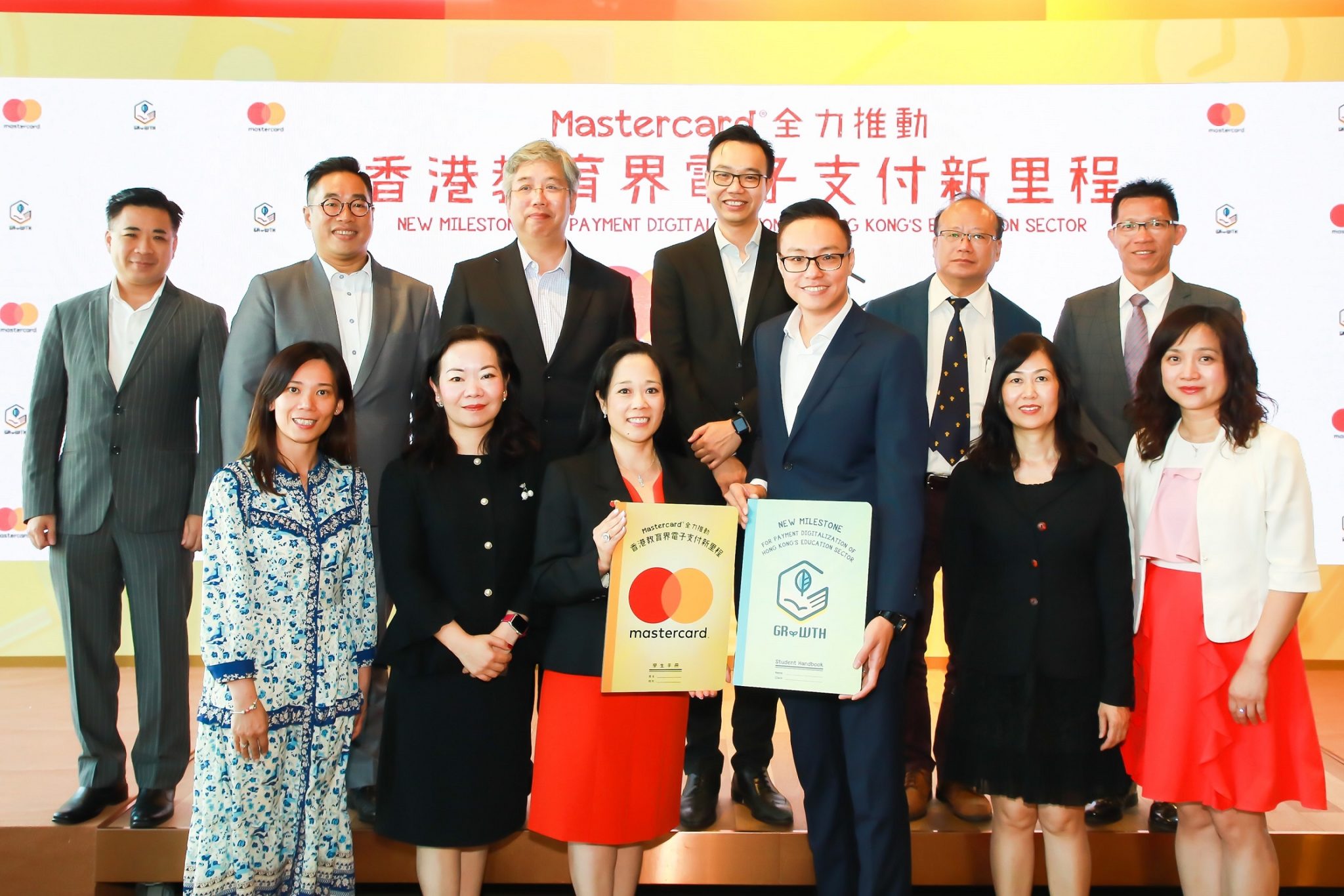
    Mastercard is bringing cashless payments to Hong Kong’s education sector through a seamless FinTech and EduTech platform, which enables the city’s first-ever integrated education app with multiple in-app digital payments.

    Through an exclusive partnership with local education app developer GRWTH, Mastercard will bring hassle-free, fast, safe, and convenient cashless payments experience to schools and parents. The enhanced app integrates digital payments, account reconciliation, student profiles, home-school communication, as well as school administration into one single platform.

    The partnership addresses the pain points faced by parents in daily school payments situations, such as spending a lot of time preparing cash or issuing checks, keeping track of expenses that are often paid in small amounts, and students missing out opportunities to join school activities due to losing cash or checks. All school expenses can be settled via the in-app digital payments function, thereby eliminating the need to deal with cumbersome cash or checks. Parents can also easily track their school payments anytime, anywhere, giving them greater peace of mind.

    Schools also benefit from saving massive administrative time and costs that come with handling the complex payment procedures. Teachers can also save time spent during class manually collecting payments from students. The app offers an exclusive backend reconciliation system, which provides a direct and convenient way to keep track of payments. This includes simplifying reconciliation procedures via transaction categorization and real-time transaction tracking as well as report generation. It relieves the pressure for schools in handling school expenses, allowing more quality teaching time.

    “We are proud to partner with Mastercard to attain our goal of enriching the life of our children through technology. GRWTH links up students, school administrators and parents and provide them with powerful and innovative tools for better home-school communication and organization,” said Adam Chan, co-founder and CEO, GRWTH. “By connecting the education, finance and technology sectors, we aspire to push forward the development of digital payments in Hong Kong.”

    “We are excited to turn a new chapter for the Hong Kong education sector. By bringing together EduTech and FinTech, Mastercard aspires to alleviate the pressure of handling large amounts of cash and checks for schools and parents, not only by providing them with fast, safe and convenient cashless payments experiences but also by helping them devote more time and energy into students’ growth and development,” said Helena Chen, managing director, Hong Kong and Macau, Mastercard. “Through Mastercard’s technology, we can truly lay the foundations for the future of our next generation, and push forward the development of Hong Kong as a smart city.”

    As the exclusive partner, Mastercard provides a one-click, secure digital payments solution. Parents simply need to store their Mastercard card details only once to enjoy the seamless, one-click experience for all future payments. To provide even more convenience, the new in-app payments service is not only available for Mastercard credit and debit cardholders, but also to Mastercard prepaid cardholders. With the world’s fastest and most reliable global payments network, Mastercard cardholders can enjoy the same robust, multi-layered security protections that comes with paying with a Mastercard.

    GRWTH has recently launched the service to 10 schools in Hong Kong as part of a pilot program* and plans to gradually expand the service to all kindergartens, primary and secondary schools in Hong Kong. “Our school aspires to bring changes to the education sector by leveraging technology and innovation. We are excited to be one of the 10 pilot schools to introduce a cashless payments option for parents,” said Chu Tsz Wing, chief principal, St. Hilary’s Primary School & VNSAA ST. HILARY’S SCHOOL.

    Apart from its in-app payment function, the GRWTH app includes tools for home-school communication and school administration, and will soon integrate the ability to pay vendors such as extra-curricular activities and school service providers, allowing parents to make instant and direct payment. The “GRWTH Community” is made up of over 100 NGOs and commercial organizations in Hong Kong. Parents can choose personalized extracurricular activities for their children based on the multi-intelligence analysis function in the app’s talent pool. The GRWTH app is available for free download via Apple App Store and Google Play Store.

    *The 10 pilot schools are:

     Buddhist Lim Kim Tian Memorial Primary School

     Buddhist Wing Yan School

     ELCHK Ma On Shan Lutheran Primary School

     Fung Kai No.1 Primary School

     Gloria Creative Kindergarten and Gloria Creative Kindergarten (Sheung Shui)

     Lok Sin Tong Leung Wong Wai Fong Memorial School

     N.T.W.J.W.A. LTD. Leung Sing Tak Primary School

     St. Edward’s Catholic Primary School

     St. Hilary’s Primary School and VNSAA ST. HILARY’S SCHOOL

     The ELCHK Wo Che Lutheran School

  • Temasek Foundation and Indonesia To Develop Fintech Talents

    Temasek Foundation and Indonesia To Develop Fintech Talents

    Temasek Foundation International (TF INTL) and Ngee Ann Polytechnic (NP) has partnered with Indonesia’s Ministry of Research, Technology and Higher Education (MoRTHE) on Wednesday to deliver a new programme that encourages an exchange of knowledge among academia, industry partners and regulators in the financial technology (FinTech) sphere.

    «The digital economy is disrupting work and indeed, lives. This means that educators need to collaborate to reinvent and update their skills to keep pace with industry developments,» said Benedict Cheong, chief executive of TF INTL in a press statement.

    Educators To Benefit

    This programme will enable educators from Indonesia and Singapore to exchange knowledge and develop new ways to train aspiring youths in financial technology, Cheong said.

    «We hope to develop lecturers with high performance and good understanding in Financial Technology, to supply talent who can compete in the industry’s 4.0 era. This MoU will give a lot of benefits to Indonesia’s Higher Education, especially in universities and polytechnics in Indonesia,» said Ir. Paristiyanti Nurwardani, director of learning of MoRTHE.

    Commitment

    TF INTL has committed a grant of about S$523,000 for this cross-border programme, which will include experiential learning through lab crawls, hackathons, seminars and workshops.

    The course participants will get to visit and network with FinTech developers and users to gain fresh insights into the emerging field, as well as take part in challenges that will inspire innovative applications for the financial sector.

    Collaboration

    Over the next three years, the three parties will collaborate to implement a FinTech learning programme for higher education providers in Indonesia.  Some 180 academic leaders and faculty from Indonesian tertiary institutions will work towards developing FinTech curriculum and capability.

    The programme will span over two runs, ending in 2020. The institutions confirmed for the first run include: Institute Teknologi Bandung (ITB), Politeknik Negeri Jakarta (PNJ), Universitas Indonesia (UI), Universitas Pendidikan Indonesia (UPI), Universitas Padjadjaran (UNPAD) and Univeristas Airlingga (UNAIR).

  • Indonesian fintech startup Moka raises $24M

    Indonesian fintech startup Moka raises $24M

    Indonesia’s Moka, a startup that helps SMEs and retailers manage payment and other business operations, has pulled in a $24 million Series B round for growth.

    The investment is led by Sequoia India and Southeast Asia — which recently announced a new $695 million fund — with participation from new backers SoftBank Ventures Korea, EDBI — the corporate investment arm of Singapore’s Economic Development Board — and EV Growth, the later stage fund from Moka seed investor East Ventures. Existing investors Mandiri Capital, Convergence and Fenox also put into the round.

    The deal takes Moka  to $27.9 million raised to date.

    Moka was started four years ago primarily as a point-of-sale (POS) terminal with some basic business functionality. Today, it claims to work with 12,500 retailers in Indonesia and its services include sales reports, inventory management, table management, loyalty programs, and more. Its primary areas of focus are retailers in the F&B, apparel and services industries. It charges upwards of IDR 249,000 ($17) per month for its basic service and claims to be close to $1 billion in annual transaction volume from its retail partners.

    That’s the company’s core offering, a mobile app that turns any Android  or iOS device into a point-of-sale terminal, but CEO and co-founder Haryanto Tanjo — who started the firm with CTO Grady Laksmono — said it harbors larger goals.

    “Our vision is to be a platform, we want to be an ecosystem,” he told TechCrunch in an interview.

    That’s where much of this new capital will be invested.

    Tanjo said the company is opening its platform up to third-party providers, who can use it to reach merchants with services such as accounting, payroll, HR and more. The focus is initially on local services that cater to SMEs in Indonesia, but as Moka targets larger enterprises as clients, he said that it will integrate larger, global solutions, too.

    Moka offers services beyond point-of-sale, but the core offering is turning any smart device into a cash machine

    Moka itself is expanding its capabilities on the payment side.

    Indonesia, the world’s fourth largest country based on population and Southeast Asia’s largest economy, is in the midst of a fintech revolution with numerous companies pioneering mobile-based wallet services aimed at ending the country’s fixation on cash-based transactions. That’s mean that there are a plethora of options available today. Tanjo said Moka is working to support them all in order to help its merchants grow their businesses and consumers to have easier lives.

    There are so many wallets here in Indonesia,” he said. “There are more than 10 right now and maybe in the next few months there’ll be 15-20, we want to be the platform that works with all of them.”

    Already it works with the likes of OVO, T-Cash and Akulaku, and e-wallets including DANA and Kredivo. The startup is also working in another area of fintech: loans.

    As an extension of its platform, it has tied up with SME loan companies who can reach out to Moka businesses using its platform. With the merchant’s consent, Moka can provide business data — including revenue, profit, etc — to help provide data to assess a loan application. That’s important because the process is particularly challenging in Southeast Asia, where few organized credit checking facilities exist — it makes sense that Moka — which has built its business around encouraging business growth and management — uses the information it has access to help its partners.

    Tanjo said the company takes an undisclosed cut of the loan in cases where it has successfully connected the two parties. He said that he doesn’t expect that to initially become a major revenue stream, but over time he anticipates it will help its customer base grow and become a more important source of income for the startup.

    Sequoia India has some experience in POS startups having backed Pine Labs in India, which recently landed a big $125 million round from PayPal and Singapore sovereign fund Temasek. Still, there are plenty of local players across various markets in Southeast Asia, including StoreHub, which is backed by Temasek subsidiary Vertex Ventures, and Malaysia’s SoftSpace.

    While those two competitors have established a presence in multiple markets in Southeast Asia, Tanjo — the Moka CEO — said there are no plans to venture overseas for at least the next 12 months.

    “We’re still scratching the service,” he said. “So it doesn’t make sense to expand too soon.”

  • Higher Risk Still Means Higher Interest in Fintech Lending

    Higher Risk Still Means Higher Interest in Fintech Lending

    For platforms that boast superior debtor risk assessments and aim to compete with conventional banks, online peer-to-peer lending services have so far fell short of their promises.

    These services currently offer annual interest rates of 19 percent on average to their clients, most of which are small and medium enterprises. However, the Indonesia’s Financial Services Authority (OJK) says this is still too high to attract more borrowers that generally do not qualify for bank loans.

    In comparison, conventional banks offer SMEs loans at interest rates of up 10 percent, or 7 percent with the state subsidy. Ajisatria Sulaeman, director of the Association of Financial Technology (Aftech), said borrowers using peer-to-peer services are often those who do not meet banks’ requirements.

    It means there are risks that those banks do not want to take, hence the higher interest to adjust to the higher risk, Ajisatria said. While it is easy for peer-to-peer services to obtain potential borrowers’ behavior data on social media and through the use of services such as technology startup Go-Jek, it is still costly to verify.

    “Without data from the civil registry, how can we make sure that they use their own identity numbers and not those of others?” Ajisatria said.

    “So data from the Directorate General of Population and Civil Registration and the Financial Information Service System are still very important. With that, we can ensure that borrowers are not fraudulent,” Ajisatria said on Thursday.

    Some peer-to-peer lenders even resort back to conventional credit scoring services, such as Pefindo, but this comes at additional costs, which are passed on to borrowers in the form of higher interest rates.

    “The focus is on how we can easily identify borrowers, especially those with good intentions,” Ajisatria said.

    He said peer-to-peer platforms will be in a better position to assess loan risks if they have easy access to the population registry data. The number of bad loans can be reduced, which in turn, will allow peer-to-peer lenders to charge lower interest rates.

    Sluggish lending by banks over the past few years has seen Indonesia’s financial regulator welcome peer-to-peer platforms, which usually disburse small loans to micro, small and medium businesses that banks often consider high risk.

    Loan growth has dropped to below 10 percent over the past two years from 20 percent previously, central bank data shows. Chatib Basri, a former finance minister, said in March that a climate of healthy competition and a growing number of online lending firms could help to reduce high interest rates.

    “This approach can be made by multiplying the firms in the market segment, which will certainly cause interest rates to decline,” said Chatib, who just became an advisor to peer-to-peer lender ModalKu.

    Indonesia currently has 66 registered peer-to-peer lending firms, which have paid out Rp 7.8 trillion ($525 million) in loans as of July this year, compared with just Rp 247 billion by December 2016, according to the OJK.

    These firms serve to connect more than 250,000 individual lenders to 1.85 million borrowers. OJK deputy commissioner Sukarela Batunanggar said the financial regulator until now still has no intention to cap interest rates and limit the size of loans these financial technology firms can offer. Aftech, which was established in 2015 and now consists of 152 fintech startups offering various services, ranging from lending, insurance and investment, plans to issue a standard on fintech interest rates soon, but it is currently still finalizing the amount.

    Economic Contribution

    According to a study conducted by Aftech and the Institute for Development of Economics and Finance (Indef), fintech lending firms have contributed Rp 26 trillion to Indonesia’s gross domestic product since the OJK issued a regulation on such services in 2016.

    Indonesia’s nominal gross domestic product was Rp 13,558 trillion at the 2017 exchange rate, according to the Central Statistics Agency (BPS).

    “While this is relatively small, there is still hidden potential on fintech platforms, as until now, it has not reached those in need of loans across the country,” Indef economist Bhima Adinegara said.

    The presence of peer-to-peer lending firms has resulted in the creation of 215,433 jobs since 2016, with total wages amounting to around Rp 4.6 trillion.

    “The government must use this potential to increase financial inclusion by issuing easier regulations to expand the sector further, so it can contribute more to the Indonesian economy,” Bhima said.

  • Decision time for Malaysia’s fintech regulators

    Decision time for Malaysia’s fintech regulators

    Just as Kuala Lumpur hosted the opening of what claims to be the “largest blockchain centre in Asia,” a newly published report has urged the Malaysian government to hone and relax the regulations covering blockchain technology.

    The 242-page report, entitled “Tailoring Malaysian blockchain regulations for the new digital economy”, was published yesterday by the University of Malaya’s Faculty of Law.

    While it aims to be a “starting point to synthesize some of the [existing] legal viewpoints into collective practical solutions which will benefit Malaysia,” it also calls on the country’s central bank and securities commission to work together to define and provide better clarity, especially in regard to crypto-related taxation.

    The legality of crypto-currency trading in Malaysia remains somewhat unclear, as it is not formally illegal but remains unregulated. Report project director Nur Husna Zakaria said the current government stance was “promising” because, as yet, “none of the regulators in Malaysia has banned any transaction related to blockchain,” but she urged all government stakeholders to work alongside the country’s blockchain community to “ensure whatever regulation is [put] in place … is comprehensive.”

    According to the Malaysia’s Sun Daily, the country’s Inland Revenue Board is now studying the country’s crypto-currency market but has given no timeline on the release of any guidelines or legislation.

    The University of Malaya report was published the day after international technology developer NEM Foundation opened its new Southeast Asian HQ in Kuala Lumpur. The 11,000-square-foot facility, that NEM claims is the biggest blockchain-focussed facility in Asia, will act as a learning centre, incubator and accelerator for blockchain related startups.

    The centre aims to serve as an R&D facility for NEM related developers, business users and crypto exchanges and already Appsolutely Inc, a crypto-based rewards and loyalty business from the Philippines, has based its regional operations at the NEM centre, as has Indonesian crypto retail startup Pundi X and Singaporean mobile settlement solution Dragonfly Fintech.

    Singapore-based NEM, that gained global notoriety after its own digital token was at the centre of a $530 million hack in January 2018, announced earlier this month that it had devoted $40 million to an on-going global expansion program. NEM says $5 million of this fund has been allocated to support blockchain companies based at the new Kuala Lumpur centre.


  • Korea’s first Internet bank struggling to raise capital

    Korea’s first Internet bank struggling to raise capital

    K-Bank, the country’s first Internet-only bank, is struggling to raise the capital it needs to expand as profits remain elusive amid increasing costs, sources directly involved with the issue said.

    “K-Bank recently asked local private equity funds (PEFs) to participate in an additional rights offer because it wants to raise its capital to 500 billion won ($455 million) by the end of the year. However, investors have concerns about the bank’s future profitability given its weak growth in consumer loans and growing policy threats,” a local PEF source said.

    “It’s highly unlikely the bank can achieve its goal. One reason is it has too many shareholders. This can create additional administrative costs, which I believe is not good for K-Bank as it has to address many challenges as quickly as possible,” said the source.

    After a delay of one month, K-Bank’s shareholders approved in June a plan to raise 150 billion won via a rights offer. The bank was in discussions with new investors and PEFs to raise up to 300 billion won in an additional shares sale.

    Korea Telecom (KT), the country’s dominant fixed-line operator, is the largest shareholder of K-Bank with 18.01 percent, followed by Woori Bank with 12.97 percent, NH Investment with 10.10 percent, Hanwha Life with 8.13 percent, GS Retail with 8 percent, KG Inicis with 6.57 percent, Danal with 6.57 percent and 13 others owning the rest, according to the bank.

    New “digital banks” are widely expected to have an impact on its performance particularly by poaching customers and eroding margins across its retail segments.

    Consumers and industry watchers see evidence of these trends and some say they are happening faster than expected. A key question is services differentiation that haven’t been extensively explored because Internet banks charge lending rates comparable to existing banks, which offer mobile banking services 24 hours a day.

    “My question is how well K-Bank is positioned in terms of product differentiation. Differentiation will make its services much more attractive by contrasting its uniqueness with other competing services and products. K-Bank made an impressive start, however, it has to respond to lots of questions from shareholders and investors if it wants to attract more,” said another PEF source.

    K-Bank reported an 83.8 billion won net loss last year, according to data from the Korea Federation of Banks. The bank, which began operating in April of last year, has extended about 1.95 trillion won in loans as of May this year. But it reported an 8.6 billion won loss by exempting customers from commission fees to win more users.

    The PEF sources have asked the financial regulators to ease rules that bar non-financial companies from owning more than 10 percent of a bank.

    “This regulation limits the growth of internet-only banks. If the rule is eased, then the bank’s largest shareholder KT has no legal issues in participating in a large-scale share sale,” said the second source, adding it will be tough for K-Bank to change the industry dynamics and resolve?the broader industry’s woes.

  • Vietnamese startups pour $129 million into financial tech scene

    Vietnamese startups pour $129 million into financial tech scene

    Widespread smartphone usage, increased consumer spending and a low unemployment rate have spurred investment. Vietnamese startups have invested $129 million into financial technologies, with investors saying the country has high potential for tech development, a conference in Hanoi heard last week.

    Vietnam is one of the best markets for financial technologies given its widespread smartphone usage, increased consumer spending and low unemployment rate, Varun Mittal, Ernst & Young’s ASEAN FinTech head, said at the conference.

    FinTech (financial technologies) are technological innovations created to support or enable banking and financial services such as AI-powered trading.

    “Foreign investors are interested in and even willing to buy FinTech from Vietnam due to the country’s markets being attractive for FinTech development,” Mittal said.

    The company said there are almost 80 FinTech firms currently operating in Vietnam, with about 47 percent specializing in payment services. This is partly due to the fact that most Vietnamese people still conduct transactions in cash.

    Mittal also said that several banks want to collaborate with FinTech firms to develop digital banking software instead of developing the software themselves, citing lower costs.

    Korea-based financial group Keb Hana’s chairman Kim Jung Tai said that the group is working with a Vietnamese bank on the development of FinTech during a meeting with Vietnam’s Deputy PM Vuong Dinh Hue in Hanoi back in January.

    However, obstacles still remain. Vietnam’s financial services country leader for Ernst & Young, Nguyen Thuy Duong, said the Southeast Asian nation does not yet have an official policy regarding cooperation between banks and FinTech firms. The fact that many FinTech companies are just fledgling startups with limited capital, workforces and experience doesn’t help either.

    Duong added that the State Bank of Vietnam is working on developing a legal framework to experiment with FinTech before applying it on a larger scale.

  • Payments and lending dominate Indonesia’s Fintech scene

    Payments and lending dominate Indonesia’s Fintech scene

    Payment and lending focused Fintech startup companies dominate the overall Indonesia Fintech landscape in terms of maturity level, according to IDC Financial Insights.

    This was followed by marketplace, wealth management, company solution and accounting based software providers.

    “The collaboration between Fintech and traditional institutions (banks) becomes mandatory for now and in the future. There are several Indonesia banks that have done collaboration actions either in [the] operation aspect or through investment funds. We believe that speed to dominate the market is the key to win for Fintech especially in payments category,” said Handojo Triyanto, Senior Research Manager, IDC Financial Insights.

    “In the future Indonesia Fintech market will have consolidations by collaboration, mergers and acquisitions between the players. It has already happened as Go Jek (Go Pay) acquired Midtrans, Kartuku, and Mapan. The driver is the need to penetrate consumer market as soon as possible… not only to grab higher market share, but also to attract more investors.”

  • Fintech transforming B2B money transfer market

    Fintech transforming B2B money transfer market

    The cross-border B2B money transfer market is ripe for disruption, as new technologies and legislative changes redefine traditional banking practices across the globe, according to Juniper Research.

    Cross-border B2B transactions will exceed $218 trillion by 2022, up from $150 trillion in 2018, the company predicts.

    Disrupting traditional cross-border B2B transactions

    B2B Money Transfer: Cross-border Market Opportunities 2018-2022 Research author Lauren Foye explained: ‘While traditional banks still facilitate the vast bulk of B2B cross-border transactions, new technologies, such as virtual accounts, eInvoicing, and blockchain technology will aid in driving businesses to solutions which provide savings in time, efficiencies, and transparency’.

    The proportion of cross-border B2B transfer values facilitated by newer Fintech start-ups and disruptive technologies, will grow from 7.5% in 2017; equating to $10.4 trillion, to reach 13.3% or $29 trillion by 2022. This will occur as more businesses utilize these efficient and transparent methods in a notoriously cloudy industry.

    Juniper cited activities by Visa and Mastercard as beacons in this space. In addition to offering its own Visa B2B Connect’ service which utilizes blockchain-based Chain Core, Visa has partnered with Fintech start-up ‘Billtrust’ to provide virtual cards for B2B transactions. Likewise, Mastercard is working with Optal, to offer virtual accounts to businesses.

    Opportunity to lead innovation charge

    Juniper believes that banks are well placed to benefit from the opportunity posed in B2B transfers. For instance, legislative changes such as PSD2 in Europe, serve as a perfect opportunity to partner with Fintechs to deliver innovative services to companies; lest institutions fall behind and see Fintechs ultimately out maneuver them.

  • Indonesia Eyes Fintech Regulation to Avoid ‘Loan Shark-Like’ Practices

    Indonesia Eyes Fintech Regulation to Avoid ‘Loan Shark-Like’ Practices

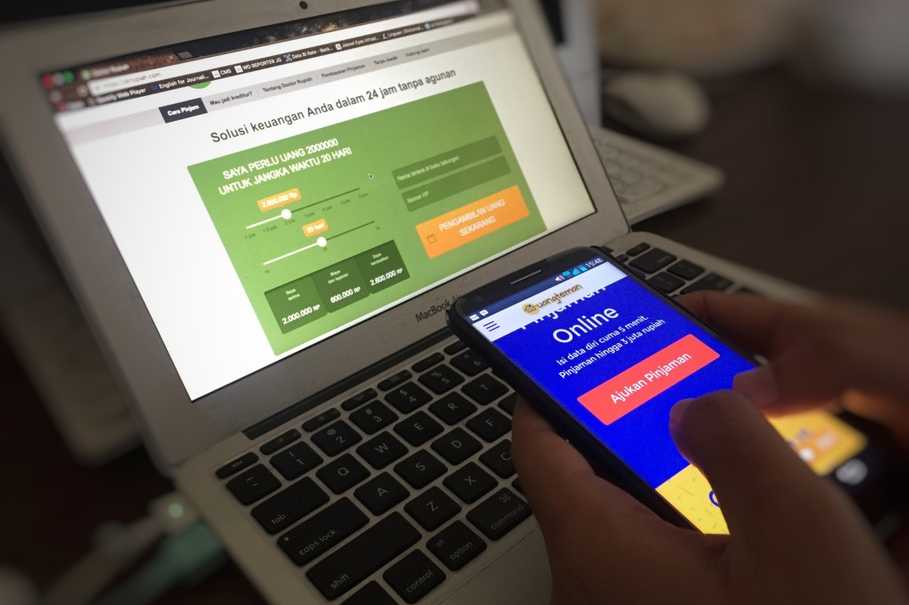
    Indonesia’s financial regulator said it was considering setting a cap on interest rates and the size of loans offered by fintech firms, in a move aimed at minimizing the risk of defaults.

    The emergence of these peer-to-peer (P2P) lending platforms, offering loans ranging from as little as a few hundred dollars to several thousands, has so far been welcomed by Indonesia, Southeast Asia’s biggest economy where tens of millions of people have little or no access to bank credit.

    More than 300,000 people have borrowed from these firms, with total loan distribution reaching 3 trillion rupiah ($218 million) as of January, versus 247 billion in December 2016, according to data from the Financial Services Authority (OJK).

    Meanwhile, annual growth in bank lending has slowed to under 10 percent, from over 20 percent in the commodity boom years. ‎

    “We support P2P lending so the people can have an easier access [to financing]. But when the access has been easier, the P2P companies feel the need to offer a high rate,” Eko Ariantoro, the director of the financial inclusion development directorate at the OJK, told reporters on Tuesday (13/03).

    “We don’t want these developing fintechs to become loan shark-like businesses‎,” he said.

    Ariantoro said the proposed maximum lending rate was still under discussion.

    There are 36 registered fintech firms operating in Indonesia and the OJK said 42 others were in the process to be approved.

    The OJK plans to also issue a new regulation for crowdfunding platforms this year as part of efforts to protect customers’ funds, Eko said.

    “We are trying to regulate the mechanism to acquire and collect funds. There should be a form of responsibility to the fund owner,” he said.

  • Fintech firms can soon offer currency-exchange services

    Fintech firms can soon offer currency-exchange services

    Non-bank institutions will be allowed to directly engage in currency exchange business starting next month as part of a broader deregulation drive to promote the local financial technology sector, the finance ministry said Tuesday.

    Under revised regulations on currency exchange, a qualified fintech firm will be able to offer a currency exchange service of up to $2,000 per person through their online platforms.

    Such fintech firms are required to make a reserve against potential claims from customers and set up a technical safety system, the ministry said.

    In 2016, a total of $5.26 billion was traded in currency exchanges.

    The government has been lifting regulations on foreign currency trading as part of a general effort to reduce the administrative regulations that have been cited for holding up market growth.

  • Indonesia Central Bank to Prepare Fintech Regulatory Roadmap

    Indonesia Central Bank to Prepare Fintech Regulatory Roadmap

    Bank Indonesia is currently preparing a roadmap of regulations for financial technology, or fintech, products in an effort to support the rapid change of the global financial system in the digital era, the central bank’s official said on Thursday (08/02).

    “This is a response to the shift from physical to virtual as it presents risks and challenges […] There will be a roadmap to regulate fintech to follow its dynamic development,” Sukarelawati Permana, director of the policy and payment department at the central bank, said at an economic forum.

    The central bank is collaborating with Financial Services Authority, or OJK, to create the regulatory roadmap.

    Sukarelawati, however, did not reveal the details of the framework or when it will be released.

    The regulations, according to her, will mitigate risks presented by the sector’s development, while still supporting the shift of traditional payment systems into the digital realm.

    “As we surely cannot block innovation, we as the authorities will try to balance the digital economy,” Sukarelawati said.

    The central bank previously issued a provision to support innovation in the fintech sector that benefits the economy while maintaining the principles of consumer protection, risk management and prudence, Sukarelawati said.

    A 2017 Bank Indonesia regulation regarding financial technology implementation dictates that fintech providers register with the central bank.

    The regulation excludes payment system service providers (PJSP) who have obtained a license from Bank Indonesia and providers who are under other authorities. But the providers must still inform the central bank regarding new products, services, technologies and business models.

    Bank Indonesia is currently also conducting a study on the feasibility of issuing digital currency.

  • Standard Chartered sets up digital innovation, fintech investment unit

    Standard Chartered sets up digital innovation, fintech investment unit

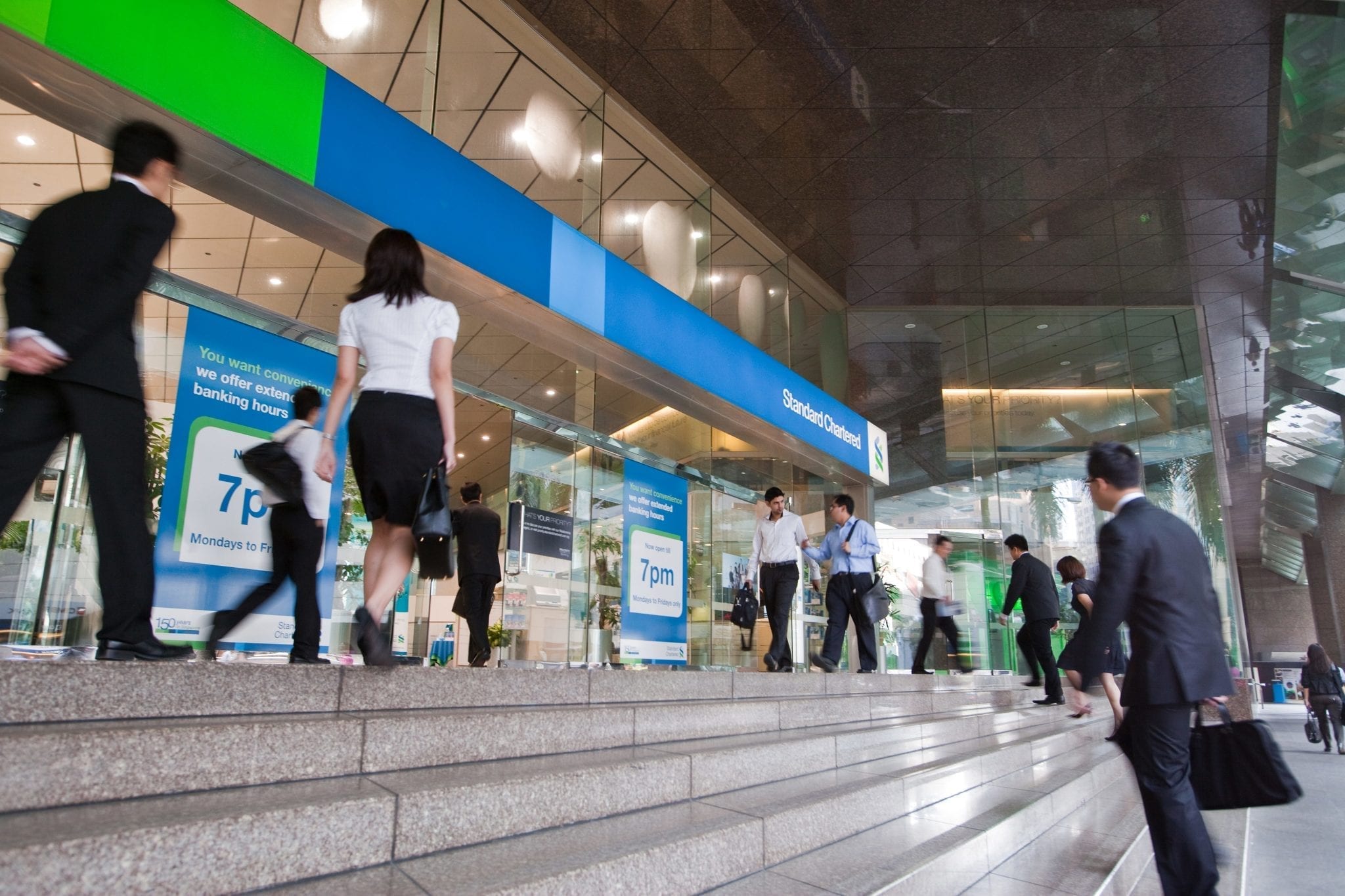
    Standard Chartered PLC has established a new business arm named SC Ventures, to drive digital innovation, invest in fintech and start-up companies and promote rapid testing and implementation of new business models.

    The new unit will focus on problem solving and spreading innovation best practices and client centric design, managing minority investments in FinTech companies and further investments in promising technologies and sponsor and oversee new disruptive technology ventures that are wholly or partially owned by Standard Chartered.

    SC Ventures will be headed by by Alex Manson, who is the Global Head of Transaction Banking.

    “Technology is at the heart of Standard Chartered’s strategy – driving efficiencies, increasing automation, introducing global platforms, reducing manual errors and strengthening how it combats financial crime,” the group said in a statement.

    In 2015, it announced it was investing about US$3 billion (RM11.9 billion) over three years in technology and systems.

  • Chinese co-working space operator opens second Singapore hub

    Chinese co-working space operator opens second Singapore hub

    Prominent Chinese co-working space operator UrWork is opening a second Singapore location in the first quarter of next year. The company, which is backed by Alibaba’s Ant Financial and Sequoia Capital among others, launched its first overseas branch at Ayer Rajah Crescent in July. Its new outlet will be at Suntec City and is part of the firm’s efforts to become a bridge between South-east Asia and China, founder and chief executive Mao Daqing said.

    Beijing-based UrWork, which has been billed as China’s answer to Silicon Valley co-working giant WeWork, has been valued at about US$1.5 billion (S$2 billion).

    It has 100 co-working sites in 33 Chinese cities and is the country’s largest co-working space operator.

    The company plans to expand globally into 35 cities with 160 locations over the next three years.

    To stand out in the increasingly crowded co-working market, UrWork positions itself as a provider of key services to start-ups looking for global growth.

    It runs a series of acceleration programmes to help new firms scale, and has also developed a proprietary scheme partnering Chinese government agencies and service suppliers to help foreign start-ups enter the Chinese market.

    Its second location in Singapore will span 1,300 sq m in Suntec City and will take in South-east Asian start-ups looking to expand into China, as well as Chinese firms keen on growing in the region.

    UrWork also invested in Jakarta-based co-working space Rework earlier this year as part of its regional strategy.

    The company signed a memorandum of understanding with trade agency IE Singapore and property giant CapitaLand last December to help Singapore firms break into the China market by offering co-working spaces as well as business advisory services.

    South-east Asia has become a market with plenty of opportunities for investors in China “due to a strong supply of high-potential tech start-ups, big market volume, surging amount of freelancers, low operational cost and high rate of digital penetration”, said Mr Mao.

    “As a Chinese home-grown company, we know the needs of Chinese entrepreneurs in China and overseas, laying a solid foundation for our fast-scaling and service integration,” he added.

    Key sectors of interest for UrWork in Singapore and South-east Asia include artificial intelligence, the Internet of Things and fintech, Mr Mao said.

  • Angry investors file police reports against fintech firm SixCapital

    Angry investors file police reports against fintech firm SixCapital

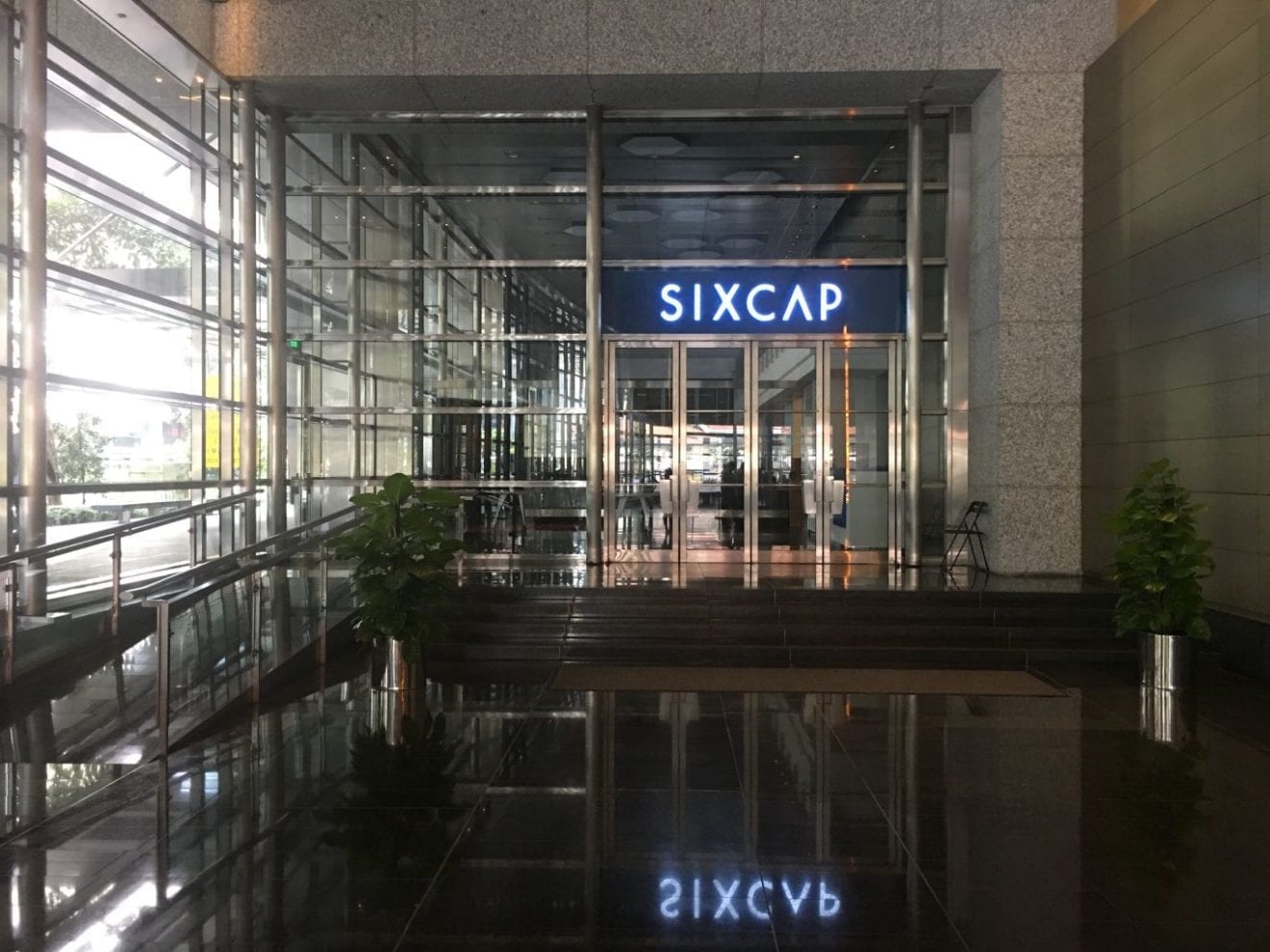
    Police reports have been filed by angry investors who fear they have lost millions of dollars invested in a local fintech currency trading firm that built a high profile by painting its name on an aircraft and wooing potential clients in Davos, Switzerland.

    SixCapital, or SixCap as the firm is called, promised returns as high as 18 per cent a year but stopped making payouts around June. Investors also had difficulties accessing their performance reports.

    Around 1,000 investors and employees put millions of dollars into the fintech firm that described itself as using “big data and powerful analytics” to make currency trades.

    The firm, which has an office on the ground floor of SGX Centre 1 in Shenton Way, appears to have hit trouble earlier this year.

    It e-mailed clients on June 8, saying that OCBC Bank told it in May that its banking accounts could no longer be supported.

    SixCap said it had been trying to open accounts with other banks since May 25, but “the KYC (Know-Your-Customer) processes these days are more stringent and take longer than before”.

    More recently, in a letter to investors dated Nov 10, SixCap said it had discontinued its two products, Tagg and B’Data, which earn yields for investors through foreign exchange trading.

    Investors were told they could expect their principal back “over a 24-month period beginning in the second half of February 2018”.

    The same letter detailed the abrupt resignation on Oct 9 of SixCap chief scientific officer Abdalla Kablan and 13 of his key IT staff.

    SixCap had acquired Malta-based data analysis start-up Hippo Data, founded by Dr Kablan, earlier this year.

    “By now, almost all the employees in Malta have resigned and left abruptly,” wrote SixCap boss and sole owner Patrick Teng Chee Wai.

    The exodus brought operations at SixCap’s tech firms to a halt, impacting the group’s “various Ricebowl business models”, he said.

    Ricebowl is a forex trading model offered by SixCap.

    Mr Teng said: “Ricebowl is a system being developed and refined with the help of Dr Kablan and he has in fact written academic papers on this system which were shared with the Monetary Authority of Singapore about one to two years ago.”

    The Straits Times could not find these papers, and Mr Teng declined to share them, citing confidential content.

    Dr Kablan said he could not comment and is seeking legal advice.

    Mr Teng’s son, Mr Paul Teng, who was SixCap’s chief investment officer, did not answer questions about Ricebowl.

    He told  last Monday : “I can’t comment because I’ve resigned since Nov 1. I’d rather not talk about it. Ricebowl was always looked after by my dad.”

    One of SixCap’s presentation materials states that FX B Share, the predecessor of B’Data, is governed by Singapore law and vetted by law firm Rajah & Tann.

    Rajah & Tann senior partner David Yeow told by e-mail: “The reference to my firm in the attachment was made without prior notice or approval from my firm.”

    Investors in Tagg and B’Data are now asking how they can recover their money.

    Some filed reports with the police and the Commercial Affairs Department last month as they want an investigation into its transactions.

    A police spokesman told The Straits Times: “It is inappropriate to comment on investigations, if any.”

    The Straits Times visited SixCap’s Shenton Way office before noon on Nov 24 but the lights were off and the door locked. A security guard said it had been closed since Nov 20.

    SixCap’s chief revenue officer, Ms Jaslyn Tan, told The Straits Times that Six Capital (FX Trading) had moved to Marina Bay Financial Centre Tower 3. She did not answer further queries.

    The address she gave was for a serviced office space shared with about 20 other companies. The Straits Times visited the place last Tuesday and was told by a staff member that neither Mr Patrick Teng nor Ms Tan was present.

    It marks a sharp turn of events for SixCap, which worked hard to raise its profile. The firm was a sponsor of some events hosted by The Wall Street Journal and CNBC, where Mr Patrick Teng would appear as a speaker.

    In December last year, SixCap had its livery painted on an AirAsia jet to promote Tagg’s launch in the Indonesian market.

    And in January, Mr Teng and son Paul went to Davos, Switzerland, to ink a memorandum of understanding with an Indonesian university – Universitas Gadjah Mada – on the sidelines of the World Economic Forum.

    SixCap’s most recent product is Thundr TV, a $99 device or app that allows access to TV channels.

    During Thundr’s Singapore roadshow in July, Miss Universe Indonesia 2015 Anindya Putri and Miss Universe Croatia 2015 Mirta Kustan were featured as channel personalities.

    For now, investors are split on what to do. Some believe SixCap will pay them back eventually, while others are not so sure.

    A semi-retired freelance consultant who wanted to be known only as Mr Rao sank $20,000 in Tagg and $80,000 in B’Data. He joined a small gathering of investors on Nov 20 to discuss their next steps.

    Mr Rao, 49, said: “A few retirees indicated that they had poured in significant retirement sums. One lady was the age of my mother. She said that she was going to the temple to pray.”