Tag: FinTech

  • UBS Poised for Indian Fintech Deal

    UBS Poised for Indian Fintech Deal

    Swiss bank UBS is reportedly poised to pour several hundred million into a payments start-up in India. The investment is alongside some of the Swiss wealth manager’s ultra-rich clients.

    Zurich-based UBS is negotiating a $400 million investment in Paytm, an Indian e-commerce payment system reported on Thursday, citing people close to the talks. The bank’s asset management arm wants to co-invest with UBS’ wealthy clients, the outlet reported – which would mark one of the largest such deals.

    The ten-year-old fintech was valued at $16 billion in its last round of financing two years ago. It competes with services like Google Pay or WhatsApp’s payment service, as well as regional start-ups.

    UBS is attempting to buy shares from Paytm employees, the news service reported. It doesn’t appear to be a done deal yet: «UBS aims to finalize an agreement as soon as this month, though talks could still be delayed or fall apart,» «Bloomberg» reported from sources.

    Paytm counts Softbank, Ant Financial, Berkshire Hathaway, and asset manager T. Rowe Price, among its investors. Its CEO, Vijay Shekhar Sharma, said this week Paytm could turn a profit as soon as this year.

  • HSBC Becomes First Foreign Fintech in China

    HSBC Becomes First Foreign Fintech in China

    HSBC furthers its expansion in mainland China with the latest launch of a fintech subsidiary based in Shanghai. The British lender announces the opening of the HSBC Fintech Services (Shanghai) Company Limited, according to a media statement, with an eye to scale up its wealth management business in the mainland.

    We believe technology can help provide better customer services, which can spur the growth of the real economy,» said Mark Wang, president, and chief executive officer for China.

    The opening of HSBC Fintech reflects HSBC’s commitment to investing in mainland China and also our support to developing technology and innovation in the financial world.

    The new entity will initially provide centralized technology and data services to the bank’s mobile financial planning offering in the mainland – HSBC Pinnacle Venture – to target customers outside the branch network. Digital tools introduced will cover financial planning, employee benefits, and wellbeing platforms for through a one-stop platform focused on corporates.

    In the future, HSBC Fintech will gradually expand the scope of its services to cover other HSBC entities.

    Through this corporate platform, we hope to provide dedicated financial services traditionally available only to high net worth customers to corporate employees on a broader basis, creating positive commercial value for companies, and bringing mutual benefits to both companies and employees, added Trista Sun, vice chair of HSBC Insurance Asia Pacific and execute director of HSBC Fintech Company.

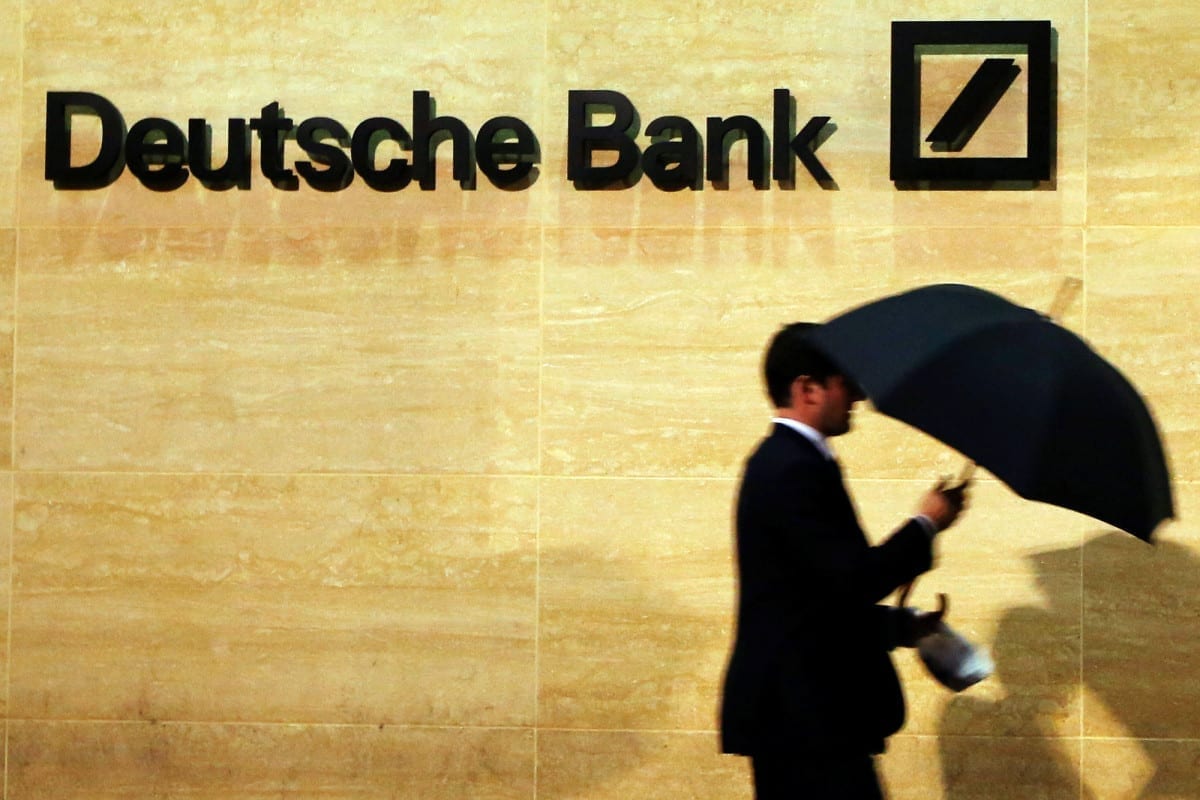
  • Deutsche Bank Taps Singapore Fintech for Digital Assets POC

    Deutsche Bank Taps Singapore Fintech for Digital Assets POC

    The two sides will jointly explore a proof-of-concept (POC) using a grant under the Monetary Authority of Singapore’s Financial Sector Technology and Innovation (FSTI) scheme.

    Deutsche Bank Securities Services will work with Singapore-based blockchain development firm Hashstacs to explore the technological and practical feasibility of digital assets interoperability, liquidity, cross-border connectivity and smart contract templates.

    The POC will also explore the support of sustainability-themed digital bonds, according to a joint statement on Thursday,

    We see a clear place for an integrated platform that can service cross-border issuer-investor needs in Singapore and around the world, Jeslyn Tan, global head of product management, securities services at Deutsche Bank, said about the collaboration.

    Founded in 2019, Hashstacs previously partnered with Malaysia’s national stock exchange on a blockchain POC project for its bonds marketplace, and is working with EFG Bank to co-develop a blockchain platform that will enhance and simplify the processes of structured products.

  • Razer Fintech Partners Singapore-Based Rely

    Razer Fintech Partners Singapore-Based Rely

    The two sides will collaborate to enable a Buy-Now-Pay-Later solution for merchants in Southeast Asia.

    Razer Fintech, the financial technology arm of Singapore gaming and technology brand Razer, is expanding its fintech offerings and its payments ecosystem for customers with access to a buy-now-pay-later (BNPL) solution provided by Rely, it announced in a statement.

    The service will be offered in Southeast Asia to merchants registered under Razer Merchant Services (RMS), its B2B (business-to-business) solution. RMS includes online payments and a card processing gateway, and the region’s largest offline payment network of over 1 million physical acceptance points.

    This collaboration is also aligned to our longstanding commitment to continue using our know-how in fintech to build new and innovative ways to meet the needs of a burgeoning and digital-savvy youth and millennial segment in Southeast Asia,» Lee Li Meng, CEO, Razer Fintech, said in the announcement.

    The announcement noted the growing popularity of BNPL, citing a Finder survey from October 2020 that said almost 1.1 million Singaporeans have used a BNPL service.

    Founded in 2017, Singapore-based Rely works with brands and enterprise clients such as Qoo10 Singapore, to offer deferred and installment payments for online and offline purchases.

    Rely’s strategic partnership with Razer follows the company’s recent announcement to expand its services in Singapore, Malaysia and South Korea after securing capital from Goldbell Financial Services to process up to S$100 million in buy-now-pay-later transactions.

  • Fintech Sector Shows Resilience Amid Pandemic

    Fintech Sector Shows Resilience Amid Pandemic

    Singapore’s fintech investments rebounded in the second quarter of 2020, with investors recognizing the opportunities existing in Southeast Asia.

    Despite an initial decline in funding (-49 percent in Q1 2020 vs. Q4 2019), fintech investments in Singapore grew more than fourfold to $278 million in the second quarter of 2020, compared to the quarter before, according to the «Singapore FinTech Landscape 2020 and Beyond» report, released on Tuesday.

    Over the past five years, the number of fintechs in the city-state has grown from less than 100 to over 1,000, with the number of employees growing from about 1,100 to more than 10,000, the report said.

    The report, published by the Singapore Fintech Association (SFA) and Oliver Wyman, highlights Singapore’s evolution as a fintech innovation center over the past five years and forecasts the trends expected in the next five years.

    Singapore is Asia’s highest-ranking fintech city, according to Findexable’s «Global FinTech Index 2020,» with more than 40 percent of Southeast Asian fintech’s based in the republic.

    The key enablers that have contributed to Singapore’s success include innovation-focused investors, a close-knit network of corporates, banks and partners, as well as progressive government and industry associations, the report said.

    Looking ahead, the report recommended several themes to ensure the republic remains attractive for fintech firms: continue to keep regulation current, further open up financial services infrastructure, and work towards harmonizing standards.

  • Singapore Fintechs Exceedingly Optimistic on Growth Prospects

    Singapore Fintechs Exceedingly Optimistic on Growth Prospects

    The majority of fintech companies in Singapore are bullish about their prospects over the next three to five years, as they see new opportunities emerging in the post-pandemic world.

    The majority of companies surveyed in the «Fintech Talent Report 2020» said they are planning to hire more people in the coming months to support their expansion plans, and are gradually shifting towards hiring local talent.

    Demand for talent is even higher than last year, despite the pandemic and economic situation, the report said.

    This shows that the FinTech industry is resilient and continues to be a strong source of growth in the market. In fact, the challenge is the availability of talents with the right skillset and mindset,  Wanyi Wong, fintech leader at PwC Singapore, said.

    The report, published by PwC Singapore, the Singapore FinTech Association (SFA), and the Banking and Financial Services Union (BFSU), surveyed 1,491 individuals working at fintech firms with a presence in Singapore.

    It said that the introduction of digital banks in Singapore is likely to have spillover benefits to the wider fintech community, increasing the availability of local talent across the industry.

    The combination of banking and fintech is seen as offering the best of both worlds and driving interest in people to learn the necessary skills to work in such institutions,» the report said.

  • Blockchain Ecosystem Report Lanuched

    Blockchain Ecosystem Report Lanuched

    The Singapore Blockchain Ecosystem Report 2020, launched at this year’s Singapore FinTech Festival x Singapore Week of Innovation and TeCHnology, highlights impactful developments and trends in Singapore’s blockchain ecosystem over the last year.

    The report is co-presented by OpenNodes, Temasek, IBM, PwC Singapore, EY, and SGTech, and supported by the Infocomm Media Development Authority and the Monetary Authority of Singapore. It highlights Singapore’s lively blockchain research landscape due to active contributions from both academic institutions and the private sector.

    The report also showcases how COVID-19 has accelerated the application of blockchain technology, which is being used to verify health credentials amid the pandemic.

    It features a bibliometric analysis of blockchain-related scientific publications, showcasing Singapore’s pioneering progress in driving both high quality and quantity research in the field of blockchain technology. It concludes that Singapore has produced the highest number of research publications on the subject in ASEAN, and the third-highest in the world.

    PwC Singapore conducted a survey for the Singapore Blockchain Ecosystem Report 2020 to assess the developments of blockchain-related activities in Singapore. Results showed that blockchain emerged as one of the top three technology trends in Singapore for 2021, with 70 percent of the respondents showing support for the technology. The survey also ranked Si

  • Fintech Lightnet Partners Visa and Velo Labs

    Fintech Lightnet Partners Visa and Velo Labs

    The three partners will collaborate on payment solutions aimed at addressing the under-served micro, small and medium enterprise (MSME) lending market. Singapore-headquartered fintech Lightnet Group has signed a memorandum of understanding with decentralized credit and settlement network Velo Labs and Visa to expand lending to the MSME market in Asia, according to a press statement on Monday.

    This initiative aims to enable users with poor or inexistent credit histories to receive a line of credit by depositing digital assets as collateral, with Velo tokens serving as the digital asset collateralizing financial solutions. This approach is suited to connect over 1 billion unbanked and underbanked individuals in APAC to the global financial system, Lightnet and Velo Labs said.

    Working closely together, the collaboration will also facilitate near-real-time global transactions between participating banks, money transfer operators and other financial service providers.

    The announcement cited the large opportunity for the MSME lending market, noting that $5.2 trillion in MSME lending goes unserved annually, with more than half of this financing gap existing in the Asia-Pacific (APAC) region.

    Being new-to-credit or lacking creditworthiness is often an obstacle to achieving one’s financial goals, such as securing loans to start a business or even buying a car…We are providing customers from the MSME market with another pathway to build credit and improve financial wellness, Tridbodi Arunanondchai, vice chairman and group CEO of Lightnet Group, said.

    Lightnet was co-founded in 2018 by Chatchaval Jiaravanon – a family member of the Charoen Pokphand group in Thailand – and tech entrepreneur and former investment banker Tridbodi Arunanondchai. Earlier this year, the startup raised $31.2 million in a series A funding round led by UOB Venture Management, the private equity unit of UOB Bank. It recently partnered Swiss crypto bank Seba to offer remittance services for migrant workers in Asia.

  • Fintech Launches Low-Cost Customizable Portfolio

    Fintech Launches Low-Cost Customizable Portfolio

    Digital wealth manager Endowus’ new product allows investors to build customizable portfolios with direct access to a selection of low-cost funds.

    The Fund Smart platform, launched Thursday, allows investors to directly access institutional share-class and trailer-free funds using cash, CPF, and Supplementary Retirement Scheme (SRS) funds.

    The platform’s curated model portfolios include an ultra-defensive fixed income portfolio that prioritizes capital preservation, flexible cash management solutions, as well as thematic and sector-focused portfolios such as ESG environment, social, governance (ESG) or socially responsible investing (SRI) funds, Shariah-compliant funds, and thematic funds.

    People struggle with too many options – a growing array of platforms, and far too many funds to choose from with confusing fee structures,» Samuel Rhee, Endowus chairman and chief investment officer, explained in the announcement.

    According to the company, Fund Smart was developed based on a survey of more than 700 investors that focused on their preferences and behavior patterns. Some 71.6 percent of respondents indicated a desire to customize their investment portfolios, with lower incurred costs (84 percent) and the flexibility to choose funds from specific geographies or sectors (74.5 percent) as key considerations.

    We want our clients to experience the same quality of advice we have provided with our core portfolio products, but now with greater flexibility, Rhee said.

    Fund Smart has no sales fees, no transaction fees, no lock-ups, and full trailer fee rebates, along with automated rebalancing and regular savings plans capabilities.

  • Line Launches Social Banking Platform in Thailand

    Line Launches Social Banking Platform in Thailand

    Thailand is the first market where Line has integrated banking services on its main mobile platform. Japan-based Line, which operates one of Thailand’s most popular social media platforms, has rolled out banking services in the kingdom in partnership with Kasikornbank.

    The Line BK service allows users to customers to transfer money, open savings accounts, apply for loans, and make payments directly from the messaging platform. It also promises high-interest rates for saving accounts and a range of banking services, including personal loans for freelancers and individuals without fixed incomes, according to an announcement on Tuesday.

    The company said it plans to expand banking services into other countries, including Japan, Taiwan, and Indonesia.

    The Line messaging app launched in 2011 and since then has grown into a diverse, global ecosystem that includes AI technology, fintech and more.

    In Thailand, LINE introduced its messenger service in 2012, and quickly grew into the country’s leading social media platform.

  • Singapore Fintech Gears Up for Global Expansion

    Singapore Fintech Gears Up for Global Expansion

    To support its global ambitions, it has appointed a veteran entrepreneur to its board. Singapore insurtech BetterTradeOff (BTO) is preparing to expand globally through partnerships with major banks and insurance companies looking to offer their customers the benefits of BTO’s life-planning tool through a white-label enterprise solution.

    In addition, BTO plans to roll out both its direct-to-consumer «Up» life planning platform and «Up Adviser» software to new markets, following successful launches in Singapore. It also appointed Jeremie Bonnin to its board of directors, who will support its growth as it launches into new markets, the startup said in a statement on Thursday.

    Bonnin was a founding member of media and telco conglomerate Altice Group, which has recorded $25 billion in revenues across Europe and the U.S. He relocated to Singapore in 2018, where he served as senior advisor to Altice’s founder and management team, while mentoring and investing in Southeast Asian startups eyeing international expansion.

    With Covid-19 negatively impacting so many people, especially the poorest, we’re looking at partnerships that will allow us to make our solution available in more countries and to millions of more people, while bringing the power of sound financial planning to those who need it most, Laurent Bertrand, BTO co-founder and chief executive, said.

    BetterTradeOff was founded in 2015 and offers a software-as-a-service life planning solution that provides financial advisers with a collaborative digital platform for visualizing financial advice and building trust through transparency. It currently operates in Hong Kong, Singapore, Philippines, UAE, and Switzerland. The firm has raised $2 million in seed funding and has 15 staff based in Singapore.

  • Chinese Regulators Add More Hiccups for Ant IPO

    Chinese Regulators Add More Hiccups for Ant IPO

    The much anticipated blockbuster listing of Chinese fintech giant Ant continues to face obstacles, this time from mainland regulators claiming a conflict of interest with its payment arm Alipay.

    The China Securities Regulatory Commission (CSRC) is looking into Alipay’s role over concerns of a potential conflict of interest, according to a «Reuters» report citing unnamed sources.

    Alipay was allegedly the only third party channel which allows access to the five Chinese mutual funds investing in the IPO.

    The efforts have proven effective as the channel has lured more than 10 million retail investors into the five mutual funds that were launched in late September, creating an alternative to traditional channels like banks and brokerage houses.

    According to the report, the probe is not expected to derail the IPO though it has delayed plans for its Shanghai listing already as Ant had hoped to obtain CSRC approval last month.

    And in Hong Kong, where Ant will conduct the other leg of its dual listing, progress was also slowed with original plans for a September 24 hearing with the local bourse’s listing committee and an official IPO after the Chinese National Day holiday that ended on October 8. Sources claim that Ant is aiming for a Hong Kong hearing in the coming days.

    Separately, Republican senator Marco Rubio called for the Trump administration to take a serious look at delaying Ant Group’s IPO, adding that it was outrageous that Wall Street is rewarding the Chinese Communist Party’s blatant crackdown on Hong Kong’s freedom and autonomy.

  • Fintech firm NextPay seeks to raise $100 mln

    Fintech firm NextPay seeks to raise $100 mln

    E-payment company NextPay Holdings plans to raise up to $100 million in the first quarter next year via a private placement. Its CEO, Nguyen Huu Tuat, said that the company is looking for strategic foreign investors and would offer them a 20 percent stake, revealing that it is in talks with several investors from the U.S., Japan, South Korea, and China.

    Last year it had wanted to raise around $30 million from investors, but Tuat said the company has jettisoned the plan and instead now seeks to make a $100 million IPO in 2022 on the Ho Chi Minh City Stock Exchange.

    The company provides mobile points of sale devices and an app for cashless payment. It has 70,000 merchants in Vietnam and aims to increase the number to 300,000 by 2023.

    NextPay allows a customer to pay by a variety of methods such as card, contactless, and QR code by providing a merchant with a pocket-size mobile point of sale device which connects with a smartphone.

    Vietnam is seeing increasing competition in the fintech market as the government seeks to promote cashless payment.MoMo, the most popular e-wallet in the country, last year reportedly raised $100 million from U.S. private equity firm Warburg Pincus following previous investments of $25 million by Standard Chartered and $3 million by Goldman Sachs.

    Vietnam’s fintech market was valued at $4.4 billion in 2017 and is estimated to reach $7.8 billion in 2020, according to market research firm Solidiance.

  • Fintech Partners Plan Cybersecurity Platform

    Fintech Partners Plan Cybersecurity Platform

    the @-WISE Cybersecurity Centre of Excellence in Singapore aims to grow and groom cybersecurity talents.

    Plans for the cybersecurity platform were announced by partners Hong Kong-headquartered financial services group AMTD, the University of Waterloo, iQ4 and the Singapore FinTech Association (SFA) at a virtual signing ceremony on Thursday.

    The @-WISE Cybersecurity Centre of Excellence aims to raise the awareness of the importance of cybersecurity among digital platforms, fintechs, financial institutions, and other sectors in Singapore, the announcement said.

    As part of the partnership, the platform will also grow and groom cybersecurity talents, as well as build a cybersecurity ecosystem in response to the escalating cybersecurity threats, ultimately helping to shape a cyber talent strategy that will contribute to Singapore’s Smart Nation vision.

    AMTD and SFA previously announced a strategic agreement to promote entrepreneurship and innovation in Singapore’s fintech community, which builds on the two sides’ work under the MAS-SFA-AMTD Solidarity Grant.

  • Razer Fintech Eyes New Markets

    Razer Fintech Eyes New Markets

    The firm is said to be exploring opportunities in Southeast Asia and other emerging markets, such as India and Latin America, to grow its fintech business.

    The financial technology arm of Singapore gaming and technology brand Razer said that while awaiting results of its bid for a digital banking license in Singapore, it is currently exploring applying for digital bank licenses in other jurisdictions, it said on Wednesday with its financial results for the first half of 2020.

    Razer Fintech generated $1.8 billion in total purchase value in the first half of the year, representing an increase of 114.3 percent year-on-year, and just shy of the $2.1 billion it achieved across the whole of 2019. This was driven by the onboarding of new merchants and surges in online shopping and digital entertainment consumption activities due to the COVID-19 lockdown, Razer said in the announcement.

    Razer recorded a record high revenue of $447.5 million, with 25.3 percent year-on-year growth for the period, driven by strong growth across its Peripherals portfolio, strong double-digit percentage year-on-year growth for Systems in May and June, and phenomenal growth in the services business.

    In an interview with on Thursday, Razer Fintech chief executive Lee Li Meng said the company is well-positioned to grow its digital banking business and is able to pivot quickly from its digital payments business to being a digital banking platform.

    The company is also looking abroad for more opportunities in this field. «We want to build a global business and leverage on the Razer Inc side of things as they grow alongside the fintech business, Lee said.

    Razer Fintech is one of the largest offline-to-online digital payment networks in Southeast Asia and has processed billions of dollars in total payment value since its establishment in 2018. The company is also is part of a consortium that is vying for one of five licenses in Singapore’s digital banking regime.