Retail News CRM

Tag: FinTech

  • Standard Chartered Hires Fintech Leader

    Standard Chartered Hires Fintech Leader

    The bank is bringing on board a fintech evangelist, who will focus on strengthening data analytics and channel capabilities at its transaction banking business.

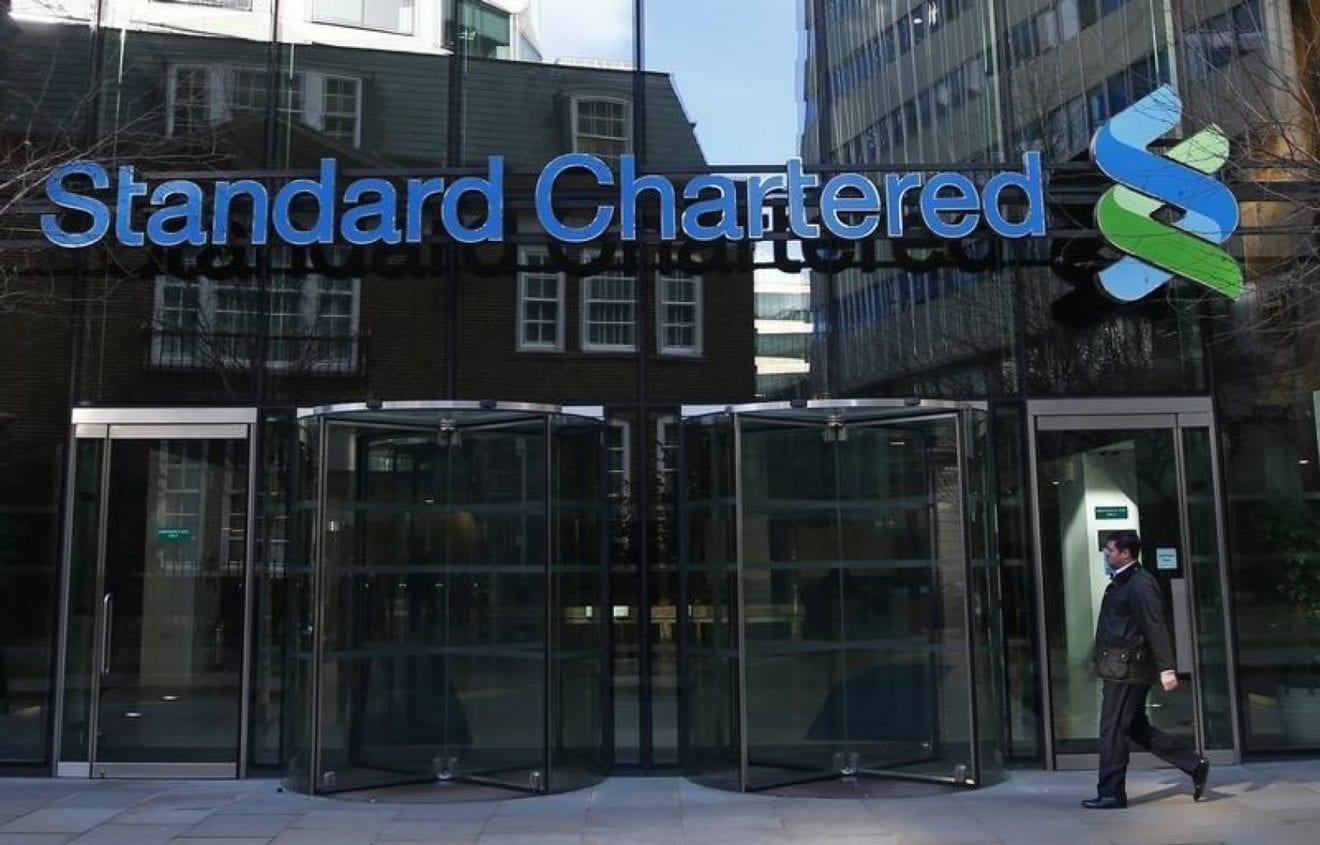
    Standard Chartered has announced that fintech leader Kahina Van Dyke has joined its Corporate, Commercial and Institutional Banking division (CCIB) team in Singapore as global head, digital channels, and client data analytics. Her career in financial services spans more than two decades, during which she focused on the access and delivery of financial services worldwide.

    She previously spent just under two years at blockchain payments company Ripple, where she was senior vice president of business and corporate development. She also held executive roles at Facebook, MasterCard, and Citi.

    She moves to Singapore for her new role and reports to CCIB chief executive Simon Cooper. She will also be a part of the CCIB management team, the statement said.

    The move signals the bank’s continued commitment to building its digital capabilities as fintech players continue to encroach on its turf, especially in Asia. In January Standard Chartered announced the appointment of Rene Keller as a chief information officer, CCIB.

    Projects to boost its tech capabilities include a mobile token rolled out for corporate clients in more than 38 markets; the joining of the Enterprise Etherium Alliance to develop blockchain research and application in banking; and a new venture with five other banks to address unmet financing demand from the early stages of supply chains.


  • Fintech Software Provider Opens APAC HQ in Singapore

    Fintech Software Provider Opens APAC HQ in Singapore

    The firm is opening a regional center to be closer to clients and strengthen its footprint in Asia Pacific on the back of rising demand for fintech services.

    Digital software provider Backbase is expanding to Asia Pacific with the opening of its regional headquarters in Singapore, the company announced in a statement on Tuesday.

    The Netherlands-based firm provides customized digital tools for SME banking, corporate banking, retail banking and wealth management, and counts global banks including Citibank, HSBC, Barclays, and Goldman Sachs as its clients. In the announcement, the firm said the APAC office will give the Backbase «access to specialized workers, shared innovation, and proximity to related professional services in the fintech industry.»

    CEO Jouk Pleiter said Backbase currently has 12 «very strategic» customers in the region, and is recruiting and onboarding digital talent for digital transformation projects across the region.

  • Shanghai Seeks Fintech Hub Status in Five Years

    Shanghai Seeks Fintech Hub Status in Five Years

    The Shanghai government announced a series of policies to motivate firms and talent while formally challenging the similar ambitions of nearby Hangzhou.

    Shanghai’s municipal government is taking an admittedly expedited path, according to a report citing a statement, to becoming a fintech center and will accelerate this development through a series of incentives including a tax cut on related tech firms to 15 percent (from 25 percent) and attractive housing and medical benefits to lure talent.

    Ant Financial, Hangzhou’s homegrown fintech pioneer, also announced yesterday that it would host a fintech conference to support Shanghai’s efforts with expectations to draw up to 30,000 global attendees. The «INCLUSION» conference held in late April will cover themes such as the global digital economy, digital finance, innovative technology, commerce and cities, and sustainability.

    Shanghai’s plans parallel that of Hangzhou’s which is also aiming to be a major hub in the field. In May last year, its local government delivered a plan in to transform the city into a global fintech center by 2030 while leveraging the sector to provide 120 billion yuan ($17.4 billion) in added value to the economy by 2022.

  • Fintech Firm Partners Alipay for Remittances

    Fintech Firm Partners Alipay for Remittances

    Tranglo will facilitate cross-border remittances to users of Alipay, who will be able to receive quick and secure money transfers within the app. Southeast Asian Fintech company Tranglo is partnering payment and lifestyle giant Alipay on cross-border remittances, the firm announced on Thursday on its blog.

    Tranglo said the service enables more inclusive money transfers across borders to a range of customers and hopes the service will be able to benefit Asian migrant workers, who frequently send money back home. The company already has a number of partnerships with local partners.

    Tranglo called it a significant milestone, noting Alipay’s user base of more than 1.2 billion customers globally, together with its local e-wallet partners.

    Founded in Malaysia in 2008, Tranglo operates a cross-border payment hub that provides smart services for mobile airtime top-ups, as well as foreign remittance and business payments.

    The firm’s remittance service works in 21 currencies and has 1,300 payout partners. As of 2019, it has processed $4.66 billion in transfers, according to its website. The company has offices in Kuala Lumpur, Singapore, U.A.E., London and Jakarta.

  • UOB Invests in Thai Fintech

    UOB Invests in Thai Fintech

    The funds will be invested into the Stellar Network, the blockchain technology underlying Lightnet’s platform, as well as to build a «next-generation financial mobility network.»

    Bangkok-based fintech Lightnet has raised $31.2 million in a Series A funding round led by UOB Venture Management, the private equity unit of UOB, the firm announced in a statement on Friday.

    Other backers include Seven Bank, Uni-President Asset Holdings, HashKey Capital, Hopeshine Ventures, Signum Capital, Du Capital and Hanwha Investment and Securities.

    According to its website, the company aims to disrupt the global remittance market by using smart contracts and distributed ledgers to replace the SWIFT system and underground banking. It is currently focusing on the millions of unbanked migrant workers in Southeast Asia, which rely on costly, slow, and fragmented services for cross-border remittances.

    Lightnet was co-founded by Chatchaval Jiaravanon – a family member of the Charoen Pokphand Group in Thailand – and tech entrepreneur and former investment banker Tridbodi Arunanondchai.

    «We project that within three years, Lightnet will facilitate over $50 billion worth of annual transactions through our industry-leading partner network,» Arunanondchai said.

  • Singapore Fintech Eyes Middle East

    Singapore Fintech Eyes Middle East

    The acquiring business in Dubai is one of the first initiatives the firm has in the pipeline for the Middle East.

    MoovPay has entered into a global’s exclusive partnership with China’s UnionPay International (UPI) for cross-border cashless payment services in the Middle East, the firm announced in a press release on Wednesday.

    As part of the agreement, businesses in the Arab world will be able to use UPI’s range of payment methods, which are commonly used in China, to make payments through MoovPay’s online payment solutions.

    «Our Dubai office will serve as a bridge between the Middle East and Asia Pacific, as well as a springboard for expansion into Europe, helping European merchants tap into both the Middle East and Chinese markets, particularly in e-commerce and mobile applications,» Moovpay CEO Ryan Gwee said about the firm’s ambitions in the region.

  • China Starts Fintech Regulation Pilot Program

    China Starts Fintech Regulation Pilot Program

    The program is part of the country’s efforts to create a more prudent and inclusive supervisory framework for the fintech sector.

    The People’s Bank of China is working with Beijing Municipality on a pilot program that will see it experiment with various oversight tools and regulatory guidelines in the fintech sector, the central bank announced in a statement.

    The pilot, which will explore fintech innovation regulatory tools «consistent with China’s realities and connected to international standards» will test flexible management procedures to make fintech regulation «more professional, unified and effective» and help financial institutions leverage technology to raise the quality and efficiency of financial services, the statement said.

    Last month, Fan Yifei, deputy governor of the People’s Bank of China, said the introduction of new standards is urgently needed to fill shortcomings in key areas, with a particular focus on data security.

    Under a fintech development plan released by the central bank in August, China aims to build a framework for fintech development by 2021. The calls for control of cyber risks and protection of financial information in the application of fintech.

  • Vietnam second among ASEAN members in attracting fintech funding

    Vietnam second among ASEAN members in attracting fintech funding

    Vietnam’s fintech firms secured $410 million, or 36 percent of the global capital pouring into Southeast Asia between January and September, behind Singapore.

    The country’s share of regional venture capital funding devoted to fintech soared from just 0.4 percent in 2018, according to a report prepared by the United Overseas Bank (UOB), PwC and the Singapore Fintech Association (SFA).

    Singapore remained the top destination for regional fintech investment, with 51 percent, down from 53 percent in 2018, with Indonesia in third place with 12 percent, down from 37 percent last year.

    ASEAN Fintech Funding 2019PercentageSingaporeVietnamIndonesiaOthersSource: Tracxn

    By the end of the third quarter this year, ASEAN had received $1.14 billion in funding for fintech firms, up sharply from $35 million in 2014, the report said.

    The surge in investments in Vietnam this year is attributable to two large deals, both in digital payments. In July, digital payment firm VNpay received $300 million in investment from Japanese multinational conglomerate SoftBank and Singaporean sovereign wealth fund GIC.

    And in January, e-payment app MOMO Pay landed $100 million from investors led by American private equity firm Warburg Pincus in its Series C funding round. The two deals accounted for 98 percent of Vietnam’s total fintech funding in the first nine months.

    In terms of the number of funding deals in 2019, Vietnam came third in ASEAN at 8 percent of total deals, up from 2 percent in 2018, behind Singapore and Indonesia with 51 percent and 28 percent respectively.

  • Singapore Fintech SaaS Raises $3 Million for Expansion

    Singapore Fintech SaaS Raises $3 Million for Expansion

    The AI-backed platform hopes to expand to the U.K. and Hong Kong and has already started testing in those markets.

    Osome, a Singapore-based business services firm that aims to digitize traditional corporate management processes, has secured $3 million in funding led by Target Global, with participation from Phystech Venture and AdFirst, the company announced on its blog on Tuesday.

    The raise follows $2 million secured in December 2018 for product development and market testing in Australia and Hong Kong. It was also led by Target Global, a venture capital firm based in Berlin, Germany, with 700 million euros in assets under management.

    Osome is led by Singapore-based serial entrepreneur Victor Lysenko, who has two exits as CEO and founder: Russian neobank Rocketbank and Groupon Russia.

    The firm uses a cloud-based platform to help business owners and entrepreneurs with legal compliance and tasks such as payroll, accounting, taxation, company formation, and filing reports.

    Launched in 2018, the firm has already amassed 2,300 customers in Singapore. It now has its eyes on other global financial centers.

    «The company’s exponential growth in Singapore both in terms of revenue and customer base validates the business model and represents a solid ground for further growth both inside and outside of the region,» said Phystech Ventures partner Olga Maslikhova.

  • China to Step Up Fintech Regulation

    China to Step Up Fintech Regulation

    The People’s Bank of China will introduce new standards in 17 areas, including blockchain, cloud services and artificial intelligence.

    China has plans to step up regulation in 17 areas of fintech to «guide the application of new technologies» applied across the financial industry, according to an article published by state news portal Xinhua.

    Speaking at the 2019 working conference of the National Financial Standardization Technical Committee on Wednesday, Fan Yifei, deputy governor of the People’s Bank of China, said the introduction of new standards is urgently needed to fill shortcomings in key areas, with a particular focus on data security, the publication reported.

    Fan noted that China currently has 65 national financial standards and 252 financial industry standards, which include mobile financial payment client technical specifications, voiceprint identification and more, but financial services and management standards are still weak.

    Explaining the rationale behind the regulatory push, Fan said that high-quality financial development requires high-quality financial standards.

    He also highlighted the need to expedite the internationalization of financial standards, actively carry out financial standardization research, cultivate a new generation of regulators savvy in this field, and to use fintech regulation to modernize financial governance systems and governance capabilities, the report said.

    China recently passed a new law on cryptography aimed to facilitate development concurrently with the country’s central banking efforts to launch its own digital currency, which will be effective January 1, 2020.


  • China to Step Up Fintech Regulation

    China to Step Up Fintech Regulation

    The People’s Bank of China will introduce new standards in 17 areas, including blockchain, cloud services and artificial intelligence.

    China has plans to step up regulation in 17 areas of fintech to «guide the application of new technologies» applied across the financial industry, according to an article published by state news portal Xinhua.

    Speaking at the 2019 working conference of the National Financial Standardization Technical Committee on Wednesday, Fan Yifei, deputy governor of the People’s Bank of China, said the introduction of new standards is urgently needed to fill shortcomings in key areas, with a particular focus on data security, the publication reported.

    Fan noted that China currently has 65 national financial standards and 252 financial industry standards, which include mobile financial payment client technical specifications, voiceprint identification and more, but financial services and management standards are still weak.

    Explaining the rationale behind the regulatory push, Fan said that high-quality financial development requires high-quality financial standards.

    He also highlighted the need to expedite the internationalization of financial standards, actively carry out financial standardization research, cultivate a new generation of regulators savvy in this field, and to use fintech regulation to modernize financial governance systems and governance capabilities, the report said.

    China recently passed a new law on cryptography aimed to facilitate development concurrently with the country’s central banking efforts to launch its own digital currency, which will be effective January 1, 2020.

  • Singapore Launches Research Platform for Fintech Investments

    Singapore Launches Research Platform for Fintech Investments

    The Fintech Research Platform will help investors and financial institutions connect with start-ups in the industry that they can partner with or invest in.

    The Monetary Authority of Singapore (MAS) has developed a prototype for an industry-wide fintech research platform in collaboration with accounting firm Deloitte and data and analytics provider S&P Global Market Intelligence to facilitate investments in the sector, the regulator announced in a statement on Tuesday.

    The platform, which will continue to be refined and built up, is designed with several objectives in mind: to increase transparency, boost investor confidence, and accelerate decision making, the statement said.

    The partners hopes to address the information gap in the sector: many investors and financial institutions currently do not have access to reliable and up-to-date company information relating to fintech start-ups and have to rely on informal networks to source investment opportunities.

    We believe that the deployment of capital in start-ups, particularly those offering business-to-business solutions, can be vastly improved by enhancing transparency and increasing the confidence in data on early-stage companies,  Sopnendu Mohanty, MAS chief fintech officer, said in the statement.

  • Singapore Fintech Partners Visa for Instant Remittances

    Singapore Fintech Partners Visa for Instant Remittances

    The partnership, using Visa’s push payment solution and secure network, allows consumers to transfer money in a faster, convenient and more secure way.

    Singapore cross-border fund transfer startup Nium is partnering with Visa to enable instant money transfers into recipients’ bank accounts through their 16-digit Visa debit card numbers, the firm announced in a press release on Monday.

    Designed for both peer-to-peer and business-to-business transfers, the rollout of the service currently covers remittances to Southeast Asian markets like Indonesia, Malaysia, Thailand, Vietnam and the Philippines.

    We understand that individuals’ and businesses’ need to receive money quickly, especially in markets where there are no instant payment solutions like FAST or IMPS, Prajit Nanu, Nium co-founder and CEO, said in the statement.

    Nium, formerly known as InstaReM, recently nixed plans to pursue a digital wholesale banking license, saying it would focus its efforts on its global business-to-business payments instead.

    The firm is part of Visa’s Fintech Fast Track program, which facilitates fintech partners to build and deliver new commerce experiences on Visa’s payments network.

  • Singapore Fintech Ditches Plans for Digital Bank License

    Singapore Fintech Ditches Plans for Digital Bank License

    Singapore cross-border startup InstaReM has withdrawn from the contest for a digital wholesale banking license, preferring to focus on its global business-to-business payments instead. It is the first firm to declare its withdrawal.

    InstaReM, which recently rebranded to Nium, has backed down from its application for a digital wholesale license because the banking landscape in the city-state looks rather crowded.

    Singaporean banks are extremely well entrenched in that ecosystem. Our strengths lie elsewhere and we have decided to consolidate and focus on those areas,» said Nium’s chief executive Prajit Nanu, who was quoted in «The Business Times.»

    Nanu said his company will focus on serving businesses in more than 40 markets. It holds regulatory licenses including in the European Union, Hong Kong, Indonesia, and Japan and is seeking new electronic money institution licenses for card issuing and stored value facilities in Mexico and Brazil. With $41 million raised earlier this year, it is one of the best-funded fintech startups in South-east Asia.

    Backed by investors including Temasek Holdings unit Vertex Ventures and Rocket Internet, Nium previously said it was interested in the digital bank license offered. Other companies that expressed a desire to apply included SingTel, Grab and Razer.

  • Chinese Fintech Investigated for Fake Government Threats

    Chinese Fintech Investigated for Fake Government Threats

    Chinese fintech firm 51 Credit Card is being investigated for threatening delinquent borrowers by pretending to be fake government officials.

    The Hong Kong-listed credit card management app allegedly hired external debt collectors acting as government officials, according to an Hangzhou police statement, and is suspected of «picking quarrels and provoking troubles».

    Complaints against the firm have been received by police since September and the firm confirmed earlier this week that an on-site investigation had been conducted by authorities.

    Our lack of training and oversight on partner companies has led to some radical behaviors in the communication with our borrowers, and it hurt certain borrowers, chairman and chief executive Sun Haitao said. «We are very sorry about that.»

    51 Credit Card noted in a statement that it was fully cooperating with the investigations and denied rumors that personal user data from the firm had leaked or been stolen. It also added that assets had not been frozen and that the firm had sufficient cash and assets to protect lenders and investors.

    51 Credit Card was founded in 2012 and the platform today boasts 83 million registered users and the management of over 138 million credit cards, according to its September interim report.