Retail News CRM

Tag: FinTech

  • Iceland Fintech Meniga Plans APAC Growth

    Iceland Fintech Meniga Plans APAC Growth

    The Iceland-based company has announced a new partnership with Visa to accelerate its expansion across the APAC region.

    Digital banking solutions provider Meniga plans to capture growth opportunities in Southeast Asia, following its certification as a Fintech Enablement partner under the Visa Ready Program, which will help facilitate partnership opportunities with financial institutions, fintechs and businesses in the region.

    Meniga has developed digital tools for financial institutions such as UniCredit, Crédito Agrícola and Swedbank, which revolve around advanced data consolidation and enrichment, customer engagement and new revenue opportunities.

    This marks an important step in our plans to accelerate our expansion within the APAC region, where we see a substantial growth opportunity, with the regional fintech ecosystem currently booming, Georg Ludviksson, CEO & co-founder of Meniga, said in an announcement on Wednesday.

    The company entered the Southeast Asian market in 2019, when it opened a new office location in Singapore. It has since successfully launched some of the most popular banking apps in the region, including for UOB.

  • Singapore’s Fintech and Remittance Associations Ink MOU

    Singapore’s Fintech and Remittance Associations Ink MOU

    The Singapore FinTech Association (SFA) and Remittance Association (Singapore) have signed an agreement to strengthen the money remittance segment.

    The two associations will jointly launch the new SFA Remittance Sub-Committee, which aims to promote the adoption of technologies to strengthen the capabilities, efficiencies and governance of Singapore’s money remittance industry, and catalyse its members’ digital transformation and internationalization efforts.

    The burgeoning number of fintech companies working in remittance and cross-border payments signals an opportune time for both associations to work together and work collaboratively with various stakeholders, the two sides said in a joint announcement on Thursday.

    In Singapore, a lot of existing licensees have to step up to compete as consumers become more technology savvy. It is, therefore, crucial for remittance licensees to explore and adopt technology as the current business landscape evolves, Barakath Ali, Remittance Association (Singapore) chairman, said.

    The sub-committee is chaired by neobanking and digital payments expert Ho Chee Wai, who is the country head for Singapore at cross-border fund transfer startup Nium.

    Among the issues the subcommittee hopes to work on are engagement between the remittance and fintech segments, nurturing the development of the cross-border payment ecosystem, engaging with regulators, and talent development.

  • IMAS’ Fintech Mentorship Program Returns

    IMAS’ Fintech Mentorship Program Returns

    The digital acceleration program gives fintechs the opportunity to work with professional mentors and develop solutions that can be rapidly commercialized.

    The Investment Management Association of Singapore (IMAS) has announced details of its 2021 edition of the Digital Accelerator Programme (DAP), which will focus on ESG, automated data management, and risk assessment.

    The Association-led buyside accelerator program is looking for fintechs with new approaches to improve and streamline operational processes, better manage data and risks, and create innovative tools to help managers manage their ESG regulatory requirements and reporting amidst fragmented global requirements. Partners for Track 1 include Nikko AM and Schroders. Interested fintechs have until 29 March 2021 to apply.

    In Track Two, which will take place in June/July, IMAS will invite asset management firms to work closely with fintech companies to create opportunities for the showcase of shortlisted solutions with the best fit.

    As many organizations operational processes change with the new CV-19 realities, we are creating a second opportunity for asset management firms to contribute problem statements which IMAS will then launch a global search for the relevant fintechs to solve, IMAS said in the announcement.

  • Allianz Partners Hong Kong Fintech Expansion

    Allianz Partners Hong Kong Fintech Expansion

    The investment will be used to finance WeLab’s further expansion and, in particular, enable the ongoing development of its technological platform.

    Allianz X, the digital investment unit of Allianz, has joined the Series C funding round for WeLab, with a $75 million investment, it announced in a statement this week.

    The investment aims to enable business expansion and tech platform development, as WeLab has close to 50 million private and business clients in Hong Kong and China, which are key growth markets for Allianz.

    The German insurance and asset management firm will cooperate with the unicorn on insurance and investment products, including digital wealth management solutions in Hong Kong. An expansion of the partnership is planned for the Greater Bay Area, and to Indonesia and Southeast Asia at a later stage, the announcement said.

    Asia is home to some of the most dynamic wealth management and banking markets of the world. Hong Kong, in particular, is a significant market for us, Desmond Ng, Allianz Global Investors head of Asia Pacific, said in the statement.

    Allianz X has already made several other investments in the region, including telemedicine company Halodoc, digital real estate brokerage 99.co, ride-hailing and lifestyle services platform GoJek, and BIMA, which provides digital insurance in emerging and developing markets.

    Established in 2013, WeLab provides digital banking services and loans for private customers, a digital lending platform to connect lenders and borrowers, as well as a number of technology-driven services. It has close to 50 million retail customers and 600 corporate customers in China, Hong Kong and Indonesia.

    In July 2020, WeLab Bank became the third of eight licensed virtual banks to launch in Hong Kong

  • Chinese Fintech Giants Join Efforts to Calm Markets

    Chinese Fintech Giants Join Efforts to Calm Markets

    Chinese fintech giants Ant Group and Tencent are the latest to attempt to inspire calm in markets after they told investors not to overreact to price swings and avoid making hasty decisions.

    Alipay, Ant Group’s payment arm, issued a letter earlier this week in its app to urge investors to take a longer-term view on the stock markets, which have seen turbulent swings erase $1.3 trillion from the CSI 300 index two weeks after reaching a 13-year high.

    According to the letter by a think tank under Ant Fortune – a wealth management platform within Alipay that provides access to over 6,000 funds – volatility is a natural characteristic and driver of returns for equities. Short-termism could result in investors «buying high and selling low», it said, adding that full panic in the market could signal that stocks have bottomed out.

    Earlier this month, Tencent’s wealth management platform also posted an article earlier this month, reminding investors that the majority of companies that generate high returns have previously seen a significant correction of share prices.

    The fintech duo’s warnings to investors coincide with efforts by Beijing to also inspire calm in markets.

    Chinese authorities are reportedly injecting funds to support the market via its so-called «national team» and censoring search phrases on social media.

  • Grab in Hiring Spree to Support Financial Services

    Grab in Hiring Spree to Support Financial Services

    The super app is looking to create around 350 new jobs in Singapore this year to support its growth plans.

    The new hires will support Grab’s plans to help micro SMEs digitalize, deliver digital financial services across Southeast Asia, and develop the Grab-Singtel digibank, according to an announcement on its website.

    The hiring drive was announced at a signing of a memorandum of intent with the Infocomm Media Development Authority and Digital Industry Singapore to support the development of Singapore’s tech ecosystem, through the development of its tech talent and R&D capabilities here.

    The vacancies are from fields including artificial intelligence, cybersecurity, data science, software engineering, product management and design. There will also be employment opportunities in areas such as finance, operations, legal, public affairs and business development, Grab said.

    We are building products that positively impact millions across Southeast Asia, and we want to continue deepening our R&D capabilities and push the boundaries of innovation, right here at our strategic base, Tan Hooi-Ling, Grab co-founder, said in the statement.

    Grab previously said it would be pushing into retail wealth by focusing on accessible, convenient, and transparent investment products and solutions while broadening its wealth management offerings that feed into its goal of strengthening its open fintech ecosystem.

    The company has grown its suite of financial products in the past year, rolling out e-money, lending and insurance distribution on its platform, and moved into wealth management with the acquisition of Singapore-based robo-advisor Bento, which was relaunched as GrabInvest.

    It also led a $100 million Series B fundraising round for LinkAja, an e-wallet in Indonesia, where the ride hailer has been vying with competitor Gojek for the top spot in digital payments.

  • Singapore Fintech Partners MoneyGram

    Singapore Fintech Partners MoneyGram

    The integration and implementation of Lightnet’s technology with MoneyGram’s money transfer services will provide customers with a wide selection of payout services across Southeast Asia.

    The Singapore-headquartered fintech company will provide its Bridgenet solution to enable money transfer operators to connect with MoneyGram’s money transfer service, broadening the range of payout services, the company said in an announcement.

    The success of this collaboration reflects Lightnet’s commitment towards improving the efficiency, convenience, affordability and accessibility of cross-border remittances. Lightnet is working tirelessly to make these kinds of services available to everyone, Tridbodi Arunanondchai, group CEO and vice chairman of Lightnet, said.

    Lightnet was co-founded in 2018 by Chatchaval Jiaravanon – a family member of the Charoen Pokphand group in Thailand – and Arunanondchai, a tech entrepreneur and former investment banker.

    The startup raised $31.2 million in 2020, in a Series A funding round led by UOB Venture Management. It also partnered Swiss crypto bank Seba to offer remittance services for migrant workers in Asia, and partnered Velo Labs and Visa to serve the micro, small and medium enterprise (MSME) lending market.

  • China’s Fintech Balancing Act

    China’s Fintech Balancing Act

    Days after the public reappearance of Alibaba founder Jack Ma, top Beijing authorities are facing a balancing act between reining in the dominance of internet giants while keeping the fintech industry sufficiently free to innovate.

    Investigations into fintech giant Ant Group will not undermine the firm’s business development nor does it signal a move against private businesses in mainland China, according to recent comments from Liang Tao, vice president of the China Banking and Insurance Regulatory Commission (CBIRC).

    In fact, banks and insurance agencies are encouraged to continue cooperation with internet platforms, said Liang in a recent press conference where he also credited the sector’s contributions to fintech advancements as well as improved financial efficiency and inclusiveness in China.

    Separately last month, the People’s Daily – the Chinese Communist Party’s official newspaper – published an editorial that downplayed political factors in the ongoing antitrust investigations, adding that the strengthening of anti-monopoly supervision will not bring about a ‘winter’ in the industry, but rather a new starting point for better and healthier development.

    Despite comments from state media and the CBIRC that tightening would have limited impact, China’s central bank recently signaled government intervention into payments providers deemed to dominant with the possibility of breakups should their market share be too high.

    The People’s Bank of China (PBoC) defined a digital payments monopoly as any non-bank provider with at least half of the market share for online transactions; any two non-bank providers with a two-thirds; or any three providers with three-quarters.

    The PBoC also proposed last week that it could advise the state council’s antitrust committee to take action should non-bank institutions severely hinder the healthy development of the payment service market».

    Following the scrapped $35 billion Ant IPO, the formation of a dedicated task force for the firm and the three-month disappearance of Jack Ma, Beijing’s top watchdogs signal a renewed take on the mainland’s fintech sector with hopes of controlling growth without obstructing innovation.

    Should Ma’s Ant Group be forced to break up as a result of the antitrust investigations, it remains to be seen how the outlook for the broader industry would be impacted but fintech giant could see its valuations slashed significantly.

    According to estimates from «Bloomberg Intelligence», Ant’s payment arm Alipay could see its value halved under the draft regulatory proposals. This could result in the overall Ant Group’s valuation plunging to around $108 billion, down from the original $320 billion before the IPO pullout, with further decreases should a breakup occur.


  • UBS Poised for Indian Fintech Deal

    UBS Poised for Indian Fintech Deal

    Swiss bank UBS is reportedly poised to pour several hundred million into a payments start-up in India. The investment is alongside some of the Swiss wealth manager’s ultra-rich clients.

    Zurich-based UBS is negotiating a $400 million investment in Paytm, an Indian e-commerce payment system Bloomberg reported on Thursday, citing people close to the talks. The bank’s asset management arm wants to co-invest with UBS’ wealthy clients, the outlet reported – which would mark one of the largest such deals.

    The ten-year-old fintech was valued at $16 billion in its last round of financing two years ago. It competes with services like Google Pay or WhatsApp’s payment service, as well as regional start-ups.

    UBS is attempting to buy shares from Paytm employees, the news service reported. It doesn’t appear to be a done deal yet: UBS aims to finalize an agreement as soon as this month, though talks could still be delayed or fall apart.

    Paytm counts Softbank, Ant Financial, Berkshire Hathaway, and asset manager T. Rowe Price, among its investors. Its CEO, Vijay Shekhar Sharma, said this week Paytm could turn a profit as soon as this year.

  • UBS Poised for Indian Fintech Deal

    UBS Poised for Indian Fintech Deal

    Swiss bank UBS is reportedly poised to pour several hundred million into a payments start-up in India. The investment is alongside some of the Swiss wealth manager’s ultra-rich clients.

    Zurich-based UBS is negotiating a $400 million investment in Paytm, an Indian e-commerce payment system reported on Thursday, citing people close to the talks. The bank’s asset management arm wants to co-invest with UBS’ wealthy clients, the outlet reported – which would mark one of the largest such deals.

    The ten-year-old fintech was valued at $16 billion in its last round of financing two years ago. It competes with services like Google Pay or WhatsApp’s payment service, as well as regional start-ups.

    UBS is attempting to buy shares from Paytm employees, the news service reported. It doesn’t appear to be a done deal yet: «UBS aims to finalize an agreement as soon as this month, though talks could still be delayed or fall apart,» «Bloomberg» reported from sources.

    Paytm counts Softbank, Ant Financial, Berkshire Hathaway, and asset manager T. Rowe Price, among its investors. Its CEO, Vijay Shekhar Sharma, said this week Paytm could turn a profit as soon as this year.

  • HSBC Becomes First Foreign Fintech in China

    HSBC Becomes First Foreign Fintech in China

    HSBC furthers its expansion in mainland China with the latest launch of a fintech subsidiary based in Shanghai. The British lender announces the opening of the HSBC Fintech Services (Shanghai) Company Limited, according to a media statement, with an eye to scale up its wealth management business in the mainland.

    We believe technology can help provide better customer services, which can spur the growth of the real economy,» said Mark Wang, president, and chief executive officer for China.

    The opening of HSBC Fintech reflects HSBC’s commitment to investing in mainland China and also our support to developing technology and innovation in the financial world.

    The new entity will initially provide centralized technology and data services to the bank’s mobile financial planning offering in the mainland – HSBC Pinnacle Venture – to target customers outside the branch network. Digital tools introduced will cover financial planning, employee benefits, and wellbeing platforms for through a one-stop platform focused on corporates.

    In the future, HSBC Fintech will gradually expand the scope of its services to cover other HSBC entities.

    Through this corporate platform, we hope to provide dedicated financial services traditionally available only to high net worth customers to corporate employees on a broader basis, creating positive commercial value for companies, and bringing mutual benefits to both companies and employees, added Trista Sun, vice chair of HSBC Insurance Asia Pacific and execute director of HSBC Fintech Company.

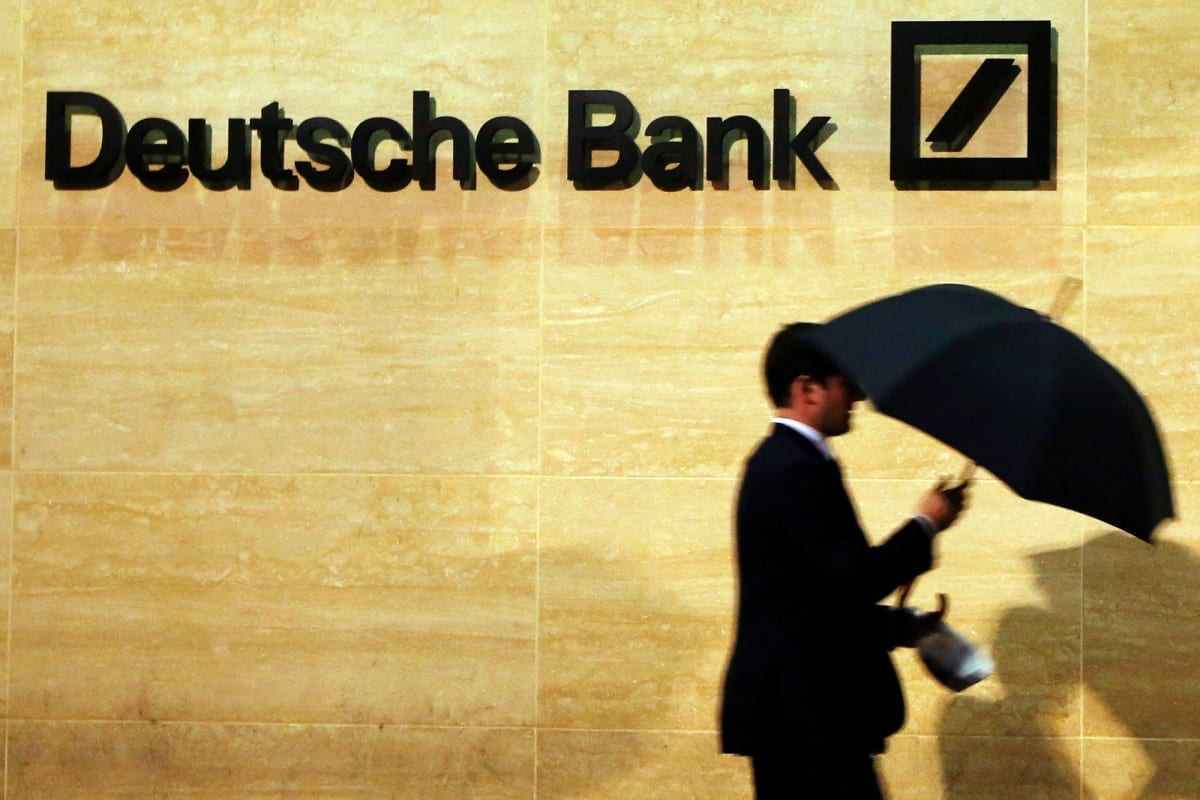
  • Deutsche Bank Taps Singapore Fintech for Digital Assets POC

    Deutsche Bank Taps Singapore Fintech for Digital Assets POC

    The two sides will jointly explore a proof-of-concept (POC) using a grant under the Monetary Authority of Singapore’s Financial Sector Technology and Innovation (FSTI) scheme.

    Deutsche Bank Securities Services will work with Singapore-based blockchain development firm Hashstacs to explore the technological and practical feasibility of digital assets interoperability, liquidity, cross-border connectivity and smart contract templates.

    The POC will also explore the support of sustainability-themed digital bonds, according to a joint statement on Thursday,

    We see a clear place for an integrated platform that can service cross-border issuer-investor needs in Singapore and around the world, Jeslyn Tan, global head of product management, securities services at Deutsche Bank, said about the collaboration.

    Founded in 2019, Hashstacs previously partnered with Malaysia’s national stock exchange on a blockchain POC project for its bonds marketplace, and is working with EFG Bank to co-develop a blockchain platform that will enhance and simplify the processes of structured products.

  • Razer Fintech Partners Singapore-Based Rely

    Razer Fintech Partners Singapore-Based Rely

    The two sides will collaborate to enable a Buy-Now-Pay-Later solution for merchants in Southeast Asia.

    Razer Fintech, the financial technology arm of Singapore gaming and technology brand Razer, is expanding its fintech offerings and its payments ecosystem for customers with access to a buy-now-pay-later (BNPL) solution provided by Rely, it announced in a statement.

    The service will be offered in Southeast Asia to merchants registered under Razer Merchant Services (RMS), its B2B (business-to-business) solution. RMS includes online payments and a card processing gateway, and the region’s largest offline payment network of over 1 million physical acceptance points.

    This collaboration is also aligned to our longstanding commitment to continue using our know-how in fintech to build new and innovative ways to meet the needs of a burgeoning and digital-savvy youth and millennial segment in Southeast Asia,» Lee Li Meng, CEO, Razer Fintech, said in the announcement.

    The announcement noted the growing popularity of BNPL, citing a Finder survey from October 2020 that said almost 1.1 million Singaporeans have used a BNPL service.

    Founded in 2017, Singapore-based Rely works with brands and enterprise clients such as Qoo10 Singapore, to offer deferred and installment payments for online and offline purchases.

    Rely’s strategic partnership with Razer follows the company’s recent announcement to expand its services in Singapore, Malaysia and South Korea after securing capital from Goldbell Financial Services to process up to S$100 million in buy-now-pay-later transactions.

  • Fintech Sector Shows Resilience Amid Pandemic

    Fintech Sector Shows Resilience Amid Pandemic

    Singapore’s fintech investments rebounded in the second quarter of 2020, with investors recognizing the opportunities existing in Southeast Asia.

    Despite an initial decline in funding (-49 percent in Q1 2020 vs. Q4 2019), fintech investments in Singapore grew more than fourfold to $278 million in the second quarter of 2020, compared to the quarter before, according to the «Singapore FinTech Landscape 2020 and Beyond» report, released on Tuesday.

    Over the past five years, the number of fintechs in the city-state has grown from less than 100 to over 1,000, with the number of employees growing from about 1,100 to more than 10,000, the report said.

    The report, published by the Singapore Fintech Association (SFA) and Oliver Wyman, highlights Singapore’s evolution as a fintech innovation center over the past five years and forecasts the trends expected in the next five years.

    Singapore is Asia’s highest-ranking fintech city, according to Findexable’s «Global FinTech Index 2020,» with more than 40 percent of Southeast Asian fintech’s based in the republic.

    The key enablers that have contributed to Singapore’s success include innovation-focused investors, a close-knit network of corporates, banks and partners, as well as progressive government and industry associations, the report said.

    Looking ahead, the report recommended several themes to ensure the republic remains attractive for fintech firms: continue to keep regulation current, further open up financial services infrastructure, and work towards harmonizing standards.

  • Singapore Fintechs Exceedingly Optimistic on Growth Prospects

    Singapore Fintechs Exceedingly Optimistic on Growth Prospects

    The majority of fintech companies in Singapore are bullish about their prospects over the next three to five years, as they see new opportunities emerging in the post-pandemic world.

    The majority of companies surveyed in the «Fintech Talent Report 2020» said they are planning to hire more people in the coming months to support their expansion plans, and are gradually shifting towards hiring local talent.

    Demand for talent is even higher than last year, despite the pandemic and economic situation, the report said.

    This shows that the FinTech industry is resilient and continues to be a strong source of growth in the market. In fact, the challenge is the availability of talents with the right skillset and mindset,  Wanyi Wong, fintech leader at PwC Singapore, said.

    The report, published by PwC Singapore, the Singapore FinTech Association (SFA), and the Banking and Financial Services Union (BFSU), surveyed 1,491 individuals working at fintech firms with a presence in Singapore.

    It said that the introduction of digital banks in Singapore is likely to have spillover benefits to the wider fintech community, increasing the availability of local talent across the industry.

    The combination of banking and fintech is seen as offering the best of both worlds and driving interest in people to learn the necessary skills to work in such institutions,» the report said.