Tag: FinTech

  • Coupang Reaches 34.5 Billion Dollars in Sales as Margin Squeeze Drags Valuation

    Coupang Reaches 34.5 Billion Dollars in Sales as Margin Squeeze Drags Valuation

    Coupang generated 34.5 billion dollars in revenue across South Korea and regional markets in fiscal 2025. Growth followed expansion in Taiwan and luxury retail.

    Sales climbed 14.1 percent year on year. Net income finished at roughly 208 million dollars, leaving the group operating on a net margin of 0.6 percent.

    The Seoul-based e-commerce operator relies heavily on its WOW subscription program. It pairs proprietary logistics with midnight-to-morning dawn delivery across densely populated South Korean metro districts. The company also runs its own fintech payment rail and operates luxury marketplace Farfetch, acquired to seed a cross-border fashion offensive.

    Cash flow and margin pressure

    Balance sheet disclosures for December 2025 show a current ratio of 1.0x, leaving short-term assets equal to short-term obligations. Debt-to-equity stood at roughly 1.0x at year-end. Free cash flow reached 522 million dollars for the fiscal period. Stock-based compensation accounted for 26.8 percent of operating cash flow, reflecting non-cash add-backs rather than cash conversion from retail sales.

    Gross margin held at 28.35 percent. Logistics expenditures, customer acquisition costs, and Farfetch integration costs continue to compress bottom-line profit. The stock dropped to 13.88 dollars, sitting at the bottom of its 52-week trading band between 13.88 dollars and 32.96 dollars. Market capitalisation now stands at 26 billion dollars.

    Regulatory exposure and security fallout

    Domestic operating risk escalated after a November 2025 data breach affected 33 million user accounts. The incident triggered regulatory reviews in Seoul. The Fair Trade Commission and labor authorities already maintain scrutiny over marketplace practices and courier working conditions.

    Legal exposure for corporate leadership remains an active concern under South Korean commercial codes. Foreign exchange fluctuations also shaved earnings value as the South Korean won weakened against the dollar. That compounded price competition from domestic rivals and global platforms such as Amazon.

    The Taiwan expansion and luxury play

    South Korea’s high digital retail penetration leaves limited runway for volume expansion at home. Geographic diversification has become essential for Coupang’s capital spending. Management has directed fulfillment investment into Taiwan, deploying its automated logistics blueprint in Taipei to test whether delivery speed can outmuscle incumbent Southeast Asian platforms.

    Buying Farfetch gave the group direct access to European luxury supply channels. Turning around the loss-making fashion portal while funding warehouse construction in Taiwan absorbs capital that could otherwise bolster operating cash.

    Valuation gap against regional peers

    Investors price Coupang at a forward price-to-earnings multiple of 71.4x. This reflects high expectations for earnings recovery despite a trailing price-to-sales multiple of 0.7x. By comparison, Latin American peer MercadoLibre trades at a forward price-to-earnings multiple of 32.8x. It generated 2.0 billion dollars in net income on 39.1 percent revenue growth to 28.9 billion dollars.

    Public equity markets place a clear premium on embedded fintech profitability over asset-heavy logistics networks that operate with sub-one-percent net margins. Coupang’s revenue expanded from 24.4 billion dollars in 2023 to nearly 34.5 billion dollars in 2025. Its next filing must demonstrate that overseas volume in Taiwan can generate operating use without further diluting returns.

  • Dtcpay Completes $25 Million Series A Funding Led by SBI Group

    Dtcpay Completes $25 Million Series A Funding Led by SBI Group

    Singapore payment institution dtcpay completed its $25 million Series A funding round after securing late-stage capital from Japanese financial conglomerate SBI Group. The transaction closes out a financing round first opened by Vertex Ventures Southeast Asia & India in April 2026, bringing fresh institutional weight to the firm’s cross-border settlement rails.

    SBI Group entered through its subsidiary SBI Ventures Asset and the SBI-NTU-Kyobo Digital Innovation Fund, joining Singapore-based asset manager Genedant Capital and existing backer Kwee Liong Tek. The capital gives dtcpay direct balance-sheet support to build out corporate settlement software and expand merchant acceptance across regional retail networks.

    Enterprise Portals and Merchant Networks

    Founded by chief executive Alice Liu, the payments company processes commercial transactions using fiat and regulated stablecoins. The fresh cash targets two technical milestones before the end of 2026: a redesigned enterprise management portal for corporate treasuries and an expanded feature set inside its consumer application.

    Traditional merchant acquirers across Southeast Asia charge between 1.5 per cent and 3.5 per cent on cross-border card settlements, with transactions taking up to three business days to clear. By routing payments through regulated stablecoin tokens, dtcpay settles transfers instantly at lower processing fees. That cost gap gives payment aggregators an opening among luxury retailers, hospitality operators, and cross-border wholesalers that handle high average order values.

    Regulatory Footprint in Asia and Europe

    Licensing barriers have historically held back digital asset adoption in Asian commerce, forcing merchants to rely on offshore intermediaries. Liu pursued a direct compliance route instead. The company holds a Major Payment Institution licence from the Monetary Authority of Singapore, allowing it to handle merchant acquisition, domestic money transfers, and cross-border remittances under strict local reserves oversight.

    Overseas expansion relies on a parallel structure in Europe, where dtcpay holds an Electronic Money Institution licence in Luxembourg. That European passport allows the firm to onboard Western brands and process consumer payments from European buyers without relying on correspondent banking partnerships.

    Institutional Backing and Market Expansion

    Strategic investors in the round provide commercial distribution that standalone venture funds cannot match. Vertex Ventures provided early operational support across Southeast Asian markets, while SBI Group brings established clearing relationships, banking partnerships, and securities networks across Japan and North Asia.

    Genedant Capital, which operates under MAS regulation in Singapore, and property investor Kwee Liong Tek provide access to regional commercial real estate and hospitality accounts. For regional retailers, integrating compliant digital asset rails removes currency conversion friction for overseas tourists and high-net-worth consumers.

    Product Roadmap for 2026

    Commercial execution now hinges on software delivery and corporate client acquisition. Dtcpay plans to roll out its upgraded business portal to commercial clients through the fourth quarter of 2026, targeting regional enterprises that manage multiple currency accounts across Southeast Asia.

  • Zomato and Blinkit Help 210,000 Delivery Partners Claim Rs 33.6 Crore

    Zomato and Blinkit Help 210,000 Delivery Partners Claim Rs 33.6 Crore

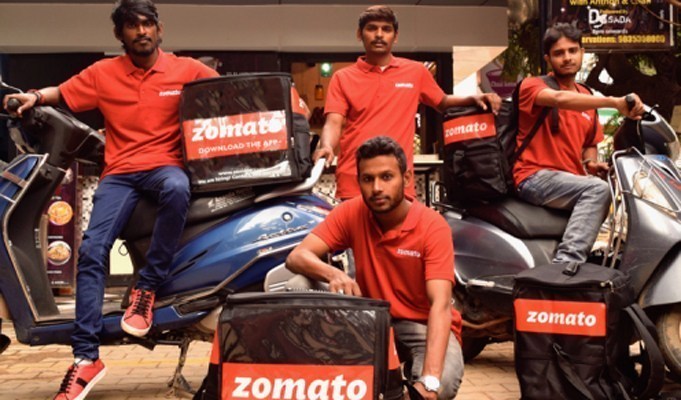
    Zomato and quick-commerce subsidiary Blinkit processed income tax returns for 210,000 delivery partners this year, recovering Rs 33.6 crore in tax refunds. Three out of four riders who used the service filed a return for the first time in their lives.

    Each delivery partner who completed the filing received an average refund of approximately Rs 1,600. The filings resolved tax deducted at source withheld at a standard rate of 1 per cent on platform payouts.

    Chatbot filings inside the partner app

    Filing took place entirely inside the Zomato and Blinkit delivery partner mobile applications. A dedicated chatbot guided riders through a automated process managed by an external tax service provider at a subsidised fee.

    The workflow removed manual paperwork and tax consultant visits, which previously prevented informal workers from claiming withheld earnings. Riders verified identity details and payout histories directly against tax records before submitting their forms.

    Credit history for gig workers

    Establishing an official tax record gives platform workers formal documentation that banks require for consumer loans, two-wheeler financing and rental agreements.

    “For many delivery partners, this may be their first experience with formal financial services,” said Aditya Mangla, CEO of Zomato. “The aim is to make that experience useful and accessible, and help delivery partners get easier access to credit and become more financially secure over time.”

    Platform retention and worker churn

    Fleet turnover remains the single largest operational cost for instant delivery operators across India. Zomato, Swiggy and Zepto compete constantly for riders across major metropolitan areas, where monthly churn routinely exceeds double digits.

    Value-added services such as tax recovery give platforms a retention tool that does not increase base delivery payouts. When riders recover withheld earnings directly through the company app, platforms build worker stickiness while positioning themselves as responsible employers ahead of pending gig-work labor regulations in states like Karnataka and Rajasthan.

    Tax deductions at source

    Indian tax regulations mandate e-commerce operators to deduct 1 per cent TDS on gross sales and contractor payouts. Most delivery workers earn below the basic taxable income exemption threshold, meaning the entire deducted balance is refundable upon filing an annual return.

    Unclaimed withholding balances previously stayed with the government when delivery personnel lacked the paperwork to submit formal claims. Zomato and Blinkit plan to maintain the automated tax integration for the upcoming assessment cycle as fleet sizes expand across tier-two and tier-three Indian cities.

  • Grab to Acquire Atome Financial in Deal Valued at up to $4.5 Billion

    Grab to Acquire Atome Financial in Deal Valued at up to $4.5 Billion

    Grab announced on Tuesday it will acquire buy now, pay later provider Atome Financial in a transaction that could value the Singapore-based lender at up to US$4.5 billion.

    The ride-hailing and delivery platform is paying $1.49 billion for an initial 60 per cent stake. The transaction folds Atome’s consumer cash loans, instalment cards and digital lending books directly into Grab’s financial services arm.

    Valuation and Performance Terms

    Grab agreed to purchase the remaining 40 per cent stake roughly two years after completion. That second payout rests on Atome hitting revenue and EBITDA targets. The eventual valuation will land between $2 billion and $4.5 billion.

    Alex Hungate, Grab president and chief operating officer, said buying Atome bypasses years of building credit models. It also avoids the initial credit losses required to refine underwriting. Grab plans to fund Atome’s consumer loan book through its licensed digital banks in Singapore, Malaysia and Indonesia to lower capital costs.

    Lending Power Inside Southeast Asian Wallets

    Consumer credit in Southeast Asia is consolidating around apps that control daily transactions. Independent instalment lenders face high customer acquisition costs and rising borrowing expenses. Stand-alone balance sheets struggle to compete with platforms that span ride-hailing, food delivery and retail spending.

    Buying Atome prevents rival e-commerce ecosystems and standalone fintechs from locking up merchant checkouts in key growth markets. The risk shifts to default rates on unsecured consumer debt as economic conditions tighten in markets such as Indonesia and the Philippines.

    “Consumer credit in Southeast Asia is increasingly sitting inside large commerce platforms or major wallet ecosystems. As underwriting and collection increasingly become commoditised, distribution becomes more important.”

    From Credit Saison to Regional Scale

    In 2019, Grab entered instalment lending through a joint venture with Japanese credit card company Credit Saison. The platform rolled out pay-later options across Singapore and Malaysia. Regional expansion into the Philippines, Indonesia and Thailand lagged behind dedicated consumer finance specialists.

    The buyout is scheduled to close by the third quarter of 2027. Following integration, Grab expects its enlarged financial services unit to deliver $500 million in adjusted EBITDA by 2028 on a combined gross loan portfolio exceeding $6 billion.

  • Ant International Deploys AI Agents Across 1.5 Billion-Account Network

    Ant International Deploys AI Agents Across 1.5 Billion-Account Network

    Ant International is deploying artificial intelligence agents across its global merchant acquiring network this quarter to automate cross-border payments and digital commerce workflows.

    Based in Singapore, the fintech arm of Ant Group processes transactions across dozens of partner e-wallets. Together, those wallets serve over 1.5 billion consumer accounts worldwide.

    Automating Cross-Border Commerce

    Autonomous AI systems are being integrated directly into merchant settlement channels and checkout interfaces. These software agents handle currency conversions, fraud monitoring and automated order reconciliation without manual intervention. Ant International is embedding the technology into its Alipay+ cross-border payment platform and WorldFirst business account solutions.

    Engineering teams in Singapore and Hangzhou designed the architecture. It allows software agents to execute transactions autonomously based on predetermined consumer and merchant parameters.

    The Regional Shift to Agentic Commerce

    Competition is heating up. Ant International is racing regional rivals to capture merchant transaction fees as generative artificial intelligence moves from text prompts to autonomous execution. Competing operators including Grab, Tencent and regional banking groups are testing similar machine-to-machine checkout models across Southeast Asia. The shift aims to lower settlement dispute rates and cut conversion friction for cross-border retailers selling to outbound travelers and digital buyers.

    For independent merchants, autonomous agent integration lowers payment handling overheads across multi-currency checkouts. Verification protocols remain the primary operational risk. Unauthorized autonomous agent decisions can trigger false approvals or dispute liabilities across fragmented regulatory jurisdictions.

    Building Beyond Traditional QR Networks

    Merchant acceptance under Alipay+ recently passed 90 million points of sale across travel hubs in Japan, South Korea, Europe and Southeast Asia. That network previously relied on consumer-initiated QR code scans to route local e-wallet transactions across national borders.

    Commercial deployment across enterprise merchant accounts begins later this quarter. Cross-border clearing metrics are due in the group’s next operational update.

  • Global Finance Names Winners of 19Th Annual Stars of China Awards

    Global Finance Names Winners of 19Th Annual Stars of China Awards

    Global Finance revealed the winners of its 19th annual Stars of China Awards on Thursday. The program recognizes commercial banks, fintech providers, and asset management firms across the mainland.

    The annual index benchmarks institutions navigating domestic economic adjustments. It measures operational strength, capital stability, and credit deployment to key industrial sectors.

    Lending Shifts Toward Industry and Tech

    State-owned lenders and regional commercial banks have redirected credit lines away from traditional real estate developers. Capital now flows toward high-end manufacturing, small businesses, and technology ventures. This shift mirrors policy directives from Beijing aimed at stabilizing production while consumer spending recovers at an uneven pace.

    Retail and consumer brands operating in China find their working capital tied directly to these institutional priorities. Supply chain operators, logistics networks, and hardware developers continue to secure competitive borrowing terms. Purely consumer-facing discretionary merchants face tighter credit underwriting from regional lenders.

    China’s resilient economy continues to face challenges from weak domestic demand and the property sector, but policy support, steady industrial activity, and efforts to stimulate lending provide reasons for cautious optimism. The country’s largest banks remain well capitalized and are expanding lending to manufacturing, technology, and small businesses.

    Balancing Property Drag and Small Business Credit

    Asset managers and commercial banks operate amid subdued domestic demand and persistent liquidity stresses in commercial real estate. Even with those pressures, core tier-one capital ratios at China’s top commercial institutions remained steady throughout the year.

    Evaluators assessed cross-border capabilities alongside domestic performance, tracking how Chinese firms handle outbound trade and currency settlement across the Asia-Pacific region. Trade corridors linking mainland suppliers with Southeast Asian retail networks serve as a primary growth driver for trade finance desks.

    Full Report Slated for November Release

    Global Finance founded the China-focused evaluation 19 years ago to track performance inside the world’s second-largest economy. The publication reaches 50,000 corporate and financial decision-makers across 196 countries.

    Full winner lists and the ranking of the Safest Banks in China will run in the November print and digital editions, ahead of an in-person awards ceremony in Beijing later this autumn.

  • Philippine Regulator Clears GCash Parent Mynt for $1.48 Billion IPO

    Philippine Regulator Clears GCash Parent Mynt for $1.48 Billion IPO

    The Philippine Securities and Exchange Commission has approved the initial public offering of Mynt, Inc, the parent company of GCash, for up to $1.48 billion (P92.32 billion).

    The company will list on the Philippine Stock Exchange with an expected initial market capitalization of $10.71 billion (P668.96 billion) under regulatory guidelines established in 2026 for large-scale issuers.

    Under the approved terms, Mynt will issue up to 1.61 billion primary common shares, while a selling shareholder will offer up to 6.42 billion shares, alongside an overallotment option of up to 1.20 billion shares priced at up to $0.16 (P10) each.

    Share structure and float relief

    Regulators granted Mynt permission to list with a 12 percent initial public float rather than the standard 15 percent requirement. SEC Memorandum Circular No. 11 allows this lower threshold for issuers valued above $3.2 billion at listing. With an anticipated market capitalisation of 668.96 billion pesos, Mynt easily surpassed that statutory mark.

    That regulatory waiver protects existing shareholders from heavy dilution while injecting fresh liquidity into the local bourse. The secondary share sale gives early backers a clean exit route. It also keeps excess cash off the operating balance sheet.

    Valuation and market impact

    A $10.71 billion listing immediately reshapes index weightings on the Philippine Stock Exchange, where conglomerates, real estate developers, and traditional lenders dominate trading. The float gives fund managers a direct, liquid proxy for domestic consumer spending and fintech transaction volumes. It also tests local capital depth by absorbing funds that might otherwise flow across regional equities.

    Across Southeast Asia, the float provides a pricing benchmark for consumer fintechs moving from venture capital to public markets. Digital payment operators in Indonesia, Vietnam, and Thailand face similar profitability pressures. Yet Mynt’s multibillion-dollar domestic valuation shows local exchanges can absorb large tech listings when profitability metrics line up.

    Path to the trading floor

    Clearance follows years of rapid expansion for GCash, which grew from a basic telco money transfer tool into an everyday payment utility for Philippine merchants, transit routes, and small businesses. Backed by Globe Telecom and Ant Group, the platform built a lead over domestic rivals by capturing both banked and unbanked retail transactions during the pandemic shift to digital settlement.

    Bookbuilding and domestic retail offer periods will set the final strike price within the approved 10-peso ceiling before trading begins in Manila.

  • Alipay+ Links to QR Ph to Connect 2.5 Million Philippine Merchants to Global Wallets

    Alipay+ Links to QR Ph to Connect 2.5 Million Philippine Merchants to Global Wallets

    Philippine Payments Management Inc. And Ant International have integrated Alipay+ into QR Ph, opening the country’s standardized merchant network to international digital wallet users across 2.5 million businesses.

    The integration connects arriving tourists directly to local point-of-sale systems after QR Ph transaction volumes jumped more than thirteenfold in 2025.

    Under the rollout, overseas visitors pay by scanning existing merchant QR Ph counter stands with their home banking applications and digital wallets. Filipino merchants receive payments in Philippine pesos through their standard settlement accounts without installing separate point-of-sale hardware or signing individual foreign merchant contracts. Bangko Sentral ng Pilipinas figures show digital channels handled 64.69 percent of total retail transaction volume nationwide in 2025.

    How the Cross-Border Routing Works

    Ant International operates Alipay+ as an aggregation switch connecting more than 50 e-wallets, bank apps, and domestic clearing systems covering two billion accounts globally. The Philippine Payments Management Inc., established under the National Payment Systems Act to oversee retail clearing houses PESONet and InstaPay, acts as the local operational counterparty under central bank supervision.

    Transactions clear instantly over the domestic interbank infrastructure. By routing foreign user credentials through the standardized QR Ph matrix, independent grocers, transport operators, and shopping mall tenants process foreign spend through their existing merchant acquiring banks.

    Through our partnership with Alipay+, we are extending that connectivity beyond our borders, enabling Filipino merchants, particularly SMEs, to serve international customers.

    Carmelita Araneta, general manager of Philippine Payments Management Inc., confirmed the system enables local micro, small, and medium businesses to capture inbound tourist spending directly without upgrading terminal hardware.

    Regional QR Linkages Across Southeast Asia

    Central banks across the Association of Southeast Asian Nations spent five years connecting national QR systems through bilateral central bank arrangements, including links between Singapore, Thailand, Malaysia, and Indonesia. Ant International has taken a parallel commercial route by plugging its private wallet switch directly into ten national QR schemes across Asia, the Middle East, and Latin America.

    Retailers benefit immediately from broader payment acceptance, yet the shift consolidates settlement traffic onto private gateway protocols rather than public central-bank settlement rails. For merchant acquirers and payment processors in Manila, merchant acquisition margins face pressure as payment routing shifts toward high-volume, low-margin standard QR processing.

    Central Bank Mandates and the Next Phase

    The Bangko Sentral ng Pilipinas designated PPMI as the country’s official payment system management body under Circular 980 in 2018, mandating standardized QR codes to eliminate proprietary closed-loop merchant terminals. That policy push cleared the ground for interoperability between competing domestic mobile wallets before enabling cross-border integrations.

    Ant International is now rolling out artificial intelligence analytics and fraud screening modules across its regional merchant network to manage currency conversion risks and transaction disputes. The Philippine clearing body will monitor cross-border settlement volumes through InstaPay as inbound tourist arrivals ramp up across provincial retail corridors.

  • ShardLab Backs StoreHub to Roll Out Payment-Linked Merchant Rewards

    ShardLab Backs StoreHub to Roll Out Payment-Linked Merchant Rewards

    Singapore-based venture studio ShardLab has made an undisclosed strategic investment in StoreHub to build payment-linked rewards products across Southeast Asia, the companies said on Wednesday.

    The partnership gives ShardLab direct access to StoreHub’s network of more than 20,000 merchant locations across Malaysia, the Philippines, Thailand and Japan, which together process over 200 million transactions worth roughly US$3.5 billion annually.

    Alongside the equity investment, the two firms will establish a joint venture to build consumer payment and loyalty software. The products aim to tie merchant promotions directly to payment processing rather than relying on separate stamp cards or third-party apps.

    Plugging loyalty into payment hardware

    ShardLab operates as the innovation arm of South Korean blockchain investment firm Hashed, established through a partnership with Thai financial group SCBX. The venture studio develops programmable loyalty systems designed to embed rewards rules directly into point-of-sale transactions.

    For small restaurants and boutique retailers, managing fragmented payment options, ranging from cash and bank transfers to QR codes and mobile wallets, often makes running structured loyalty programmes impractical. StoreHub sells cloud-based point-of-sale hardware and management software that consolidates sales, inventory and ordering for small businesses.

    StoreHub chief executive Wai Hong Fong said the joint venture is part of a broader push to automate merchant operations, including rebuilding the core platform around artificial intelligence tools to handle demand forecasting and staff scheduling.

    Distribution over experimental software

    Point-of-sale software providers across Southeast Asia are competing to control the merchant checkout counter. StoreHub contends with regional competitors including Singapore-based Qashier and Oddle, Indonesia’s iSeller, and global platforms such as Block and Lightspeed.

    While blockchain and Web3 developers have spent years running digital loyalty pilots, most failed to scale because they required separate consumer onboarding or complicated checkout steps. Tying reward issuance directly to StoreHub’s existing register hardware removes friction for both shop staff and shoppers during peak business hours.

    The joint venture partners plan to roll out their first joint payment and rewards features in select Southeast Asian markets before expanding across StoreHub’s regional store network.

  • Hawala Networks Tap Asian Fintech Platforms and Crypto to Move Funds

    Hawala Networks Tap Asian Fintech Platforms and Crypto to Move Funds

    Underground hawala networks are tapping instant payment rails, digital wallets and crypto assets to launder funds across Asia, a joint FATF and OECD study shows. More than 80 per cent of surveyed jurisdictions identified these unlicensed services as primary conduits for professional money laundering, with single operations clearing upwards of €500 million within months.

    The study, compiled with data from 45 jurisdictions including India and Pakistan, details how informal value transfer systems have shifted into commercial, scalable operations. Operators increasingly rely on encrypted messaging apps, digital banking logins and stablecoins to settle balances across borders without physical cash.

    Digital Wallets and Cross-Border Corridors

    Nearly 70 per cent of responding jurisdictions reported a sharp transition toward digital hawala. Hawaladars advertise currency exchange and transfer services in private groups on WhatsApp, Telegram and Signal, offering lower transaction fees than regulated money transfer operators.

    In one case cited by the Central Bank of Oman, an unlicensed ring moved money to Pakistan by having expatriates transfer funds via cash or mobile services. The operators then used payment apps and domestic instant payment systems such as Raast in Pakistan to settle the recipient side, capturing profits through currency differentials while running $72,293 in tracked flows over 12 months.

    Operators also deploy purpose-built mobile applications, virtual international bank account numbers (IBANs) and artificial intelligence tools to coordinate complex payment flows across multiple countries.

    Gambling Rings and Shadow Rails

    In India, investigators identified an illegal online wagering ring that used an extensive network of panel operators to process player deposits and withdrawals. The scheme routed transactions through the Unified Payments Interface (UPI), online bank accounts and digital wallets opened with stolen identities or run by money mules.

    Organisers converted portions of the proceeds into cash and routed them through underground hawala channels to the United Arab Emirates. The money was subsequently funneled back into India disguised as legitimate foreign investment.

    For legitimate fintech operators and digital banks across Asia, the findings signal heightened regulatory pressure to monitor micro-transactions and peer-to-peer flows on retail payment rails. National regulators and standard-setters are preparing stricter registration requirements and oversight rules for digital wallet providers and payment service intermediaries.

  • Sea Limited Posts $14.9 Billion First-Half Revenue as Logistics Spending Expands

    Sea Limited Posts $14.9 Billion First-Half Revenue as Logistics Spending Expands

    Singapore-based Sea Limited generated $14.9 billion in revenue during the first half of 2026, up 47 percent from a year earlier as Shopee expanded regional fulfillment networks.

    Net income rose 9 percent to $896 million over the six-month period, slowed by higher credit loss provisions at financial services arm Monee and heavy capital spending on domestic shipping capacity.

    Logistics and Fintech Reshape Core Operations

    Shopee solidified its lead across Southeast Asian markets by pouring capital into dedicated logistics networks, countering delivery bottlenecks that earlier pressured merchant margins. The group also preserved its overseas footprint in Brazil after retreating from short-lived retail expansions across other overseas territories.

    Financial unit Monee expanded consumer credit to bring unbanked shoppers onto Shopee’s marketplace. Higher lending volumes brought higher delinquency reserves, tracking the rising credit costs across Southeast Asian digital banking books.

    Earnings Split and Margin Pressures

    Gaming division Garena, developer of mobile title Free Fire, provided cash flow but continued to operate with few operational ties to the group’s retail and payment wings. Sea holds a market capitalization of $68 billion, trading at 44 times earnings with a gross margin of 44.34 percent.

    By comparison, Latin American peer MercadoLibre posted $19 billion in first-half revenue, though its net income slid 13 percent to $883 million under identical pressures from bad debt provisions and retail competition. Both operators demonstrate that defending marketplace supremacy in developing economies requires running integrated logistics and consumer credit arms directly on the corporate balance sheet.

    Investors are monitoring whether provisions inside the Monee lending portfolio stabilize ahead of the third-quarter financial filing.

  • Vietnam Fintech MFast Raises US$6 Million to Fund Philippines Expansion

    Vietnam Fintech MFast Raises US$6 Million to Fund Philippines Expansion

    Vietnamese financial services distribution platform MFast has raised US$6 million in Series A funding to expand its agent network and launch operations in the Philippines.

    Venture capital firm Wavemaker Partners led the round, with new participation from Tokyo-based Headline Asia and Thailand-based Finnoventure Fund I, managed by Krungsri Finnovate. Existing backers Do Ventures, Jafco Asia and Ascend Vietnam Ventures also joined the equity injection.

    Distribution beyond major metros

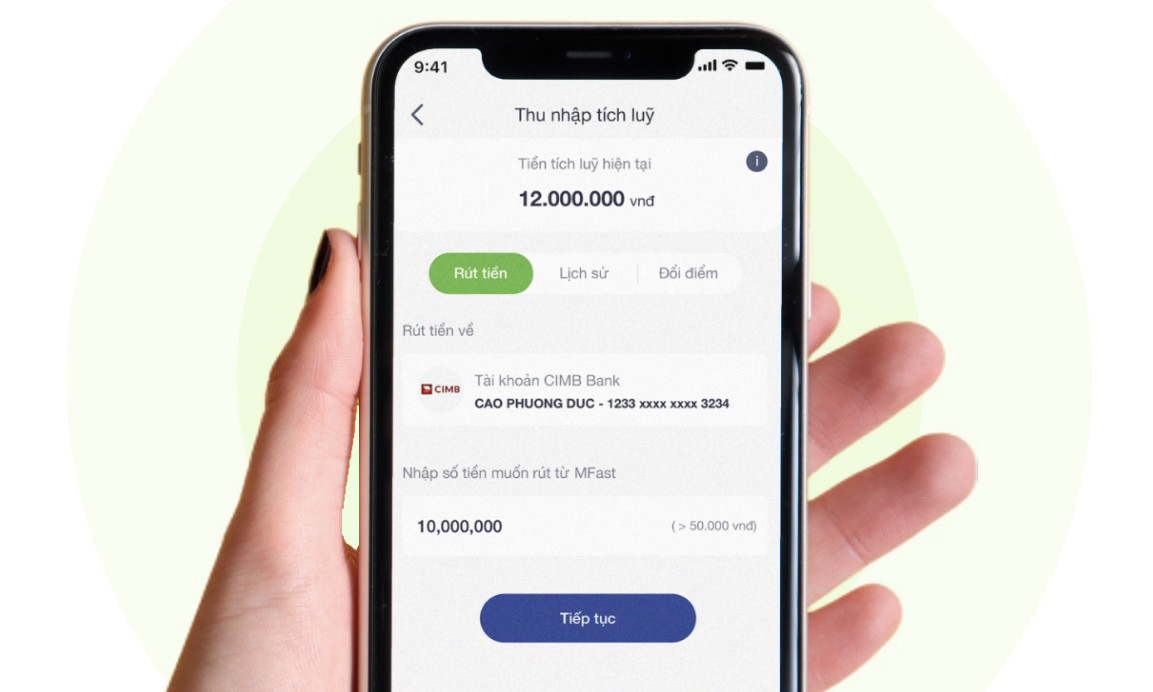
    MFast operates as a unit of Vietnam-based startup DigiPay, founded in 2017 by twin brothers Phan Thanh Long and Phan Thanh Vinh. The platform functions as an agent-driven marketplace selling insurance policies, consumer loans and banking products to retail customers.

    The business model relies on individual sales agents rather than physical storefronts. Traditional lenders and commercial brands routinely avoid opening physical branches in lower-tier cities such as Hue due to high real estate and operational costs. MFast uses mobile software to turn local individuals into commissioned sellers, bridging that retail gap.

    By August 2023, the network had grown to 160,000 active agents operating across all 63 cities and provinces in Vietnam. The company said it has connected more than one million consumers to financial products, while the number of income-earning agents rose 62 per cent year-on-year in the first half of 2023.

    Regional banking ties

    Consumer finance distribution in Southeast Asia has increasingly pivoted toward hybrid agency networks. Pure digital lending apps frequently face elevated default rates and high user-acquisition costs outside major capitals, making on-the-ground agent validation a practical distribution channel for commercial banks targeting lower-tier consumer markets.

    The startup has established distribution partnerships with international and regional lenders, including Singapore’s UOB, Thailand’s Kasikornbank, and SHB Finance, the Vietnamese consumer finance unit controlled by Thailand’s Bank of Ayudhya.

    MFast will use the capital to design bespoke credit products for segmented customer groups before launching its agency distribution model in the Philippines in 2024.

  • Indian Gen Z Spends Three Times More on Quick Commerce Than Older Shoppers

    Indian Gen Z Spends Three Times More on Quick Commerce Than Older Shoppers

    Indian Gen Z shoppers spend three times more on quick commerce platforms for groceries than consumers over 30, allocating 2.6 per cent of their wallet share to instant delivery.

    By contrast, traditional supermarket chains such as D-Mart capture just 0.85 per cent of their spending, according to transaction data from credit-on-UPI fintech platform Kiwi. Consumers aged 30 and older continue to direct the bulk of their grocery budgets to physical stores and neighbourhood kirana shops.

    Shifting priorities in grocery and credit

    Younger shoppers in India are bypassing traditional discount hunting in favour of speed. Kiwi, which analysed 25,000 users between June and July 2026, found that Gen Z cardholders use credit selectively for high-value items while relying on app-based delivery for routine supplies.

    They also spend 20 per cent more on rental and education payments compared to older age groups, pointing to heavy reliance on credit for essential recurring living costs. When financing larger transactions through equated monthly instalments, Gen Z users consistently choose longer repayment windows to reduce monthly outgo, accepting higher overall interest charges in exchange for immediate budget flexibility.

    “Gen Z is not necessarily using credit more frequently; they are using it differently,” said Siddharth Mehta, co-founder and chief operating officer at Kiwi. “Our data shows that convenience is playing a much bigger role in how younger consumers make payment and credit decisions.”

    Everyday essentials dominate digital wallets

    The pivot toward speed over pricing rewards mirrors broader consumer shifts across South Asia, where instant delivery platforms like Blinkit, Zepto and Swiggy Instamart have eroded market share from established hypermarkets. A separate study of 520,000 users by payroll fintech SalarySe confirmed that Gen Z spending remains concentrated on essential living costs, utilities and recurring digital subscriptions managed through automated UPI mandates, rather than discretionary lifestyle splurges.

    Kiwi, which has issued more than 200,000 RuPay credit cards over the past two years, reported a 10 per cent higher wallet share among Gen Z users compared to millennials on its platform. Retailers and card issuers now face the challenge of retaining young consumers who show little loyalty to multi-card cashback schemes, focusing instead on whether quick commerce operators can sustain current delivery speeds as order volumes rise into the festive quarter.

  • South Korea Faces Backlash over Planned 22 Percent Crypto Tax Rollout

    South Korea Faces Backlash over Planned 22 Percent Crypto Tax Rollout

    South Korea will enforce a 22 percent tax on annual cryptocurrency gains over 2.5 million won on Jan. 1. Retail traders across the country are pushing back hard.

    The policy targets earnings from trading and lending digital assets across domestic platforms serving an estimated 14 million registered users. Backlash intensified after the government scrapped a planned financial investment income tax on domestic equities. Retail investors argue the disparity unfairly penalises digital asset holders.

    Tax structure and revenue estimates

    Tax officials convened a closed-door expert panel to settle implementation rules. Yet questions remain. Traders and platforms want to know how the National Tax Service will assess earnings from staking yields and token airdrops.

    Parliamentary filings project annual tax revenue from digital assets between 400 billion won and 600 billion won. A prolonged market slump could drop that intake to 200 billion won. That lower sum represents less than half the corporate tax paid last year by Dunamu, the operator of South Korea’s largest digital asset exchange, Upbit.

    Local crypto trading volumes frequently rival main-board equity turnover in South Korea, one of the world’s most active retail markets. Regional rivals take a different path. Singapore and Hong Kong leave retail capital gains untaxed to attract capital, while Seoul pulls digital assets into its standard income tax net.

    Legislative push to delay rollout

    Political resistance is building ahead of the 2028 general elections. If the law takes effect in January, taxpayers will file their first returns in May 2028. That deadline falls just one month after voters cast ballots in the 23rd parliamentary elections.

    Opposition People Power Party lawmakers are moving to postpone the start date. Representative Jung Sung-kook introduced a bill on Aug. 10 to delay implementation by three years to Jan. 1, 2030. Representative Kim Sang-hoon is drafting a separate proposal for a two-year extension.

    Voters are also acting directly. A public petition on the National Assembly platform gathered more than 10,000 signatures within a week of its Aug. 21 launch. If the petition hits 50,000 verified signatures by Sept. 20, the parliamentary committee must open formal deliberations on whether to defer the start date.

  • Indonesian Trading App Ajaib Raises $270 Million from Japan SBI Holdings

    Indonesian Trading App Ajaib Raises $270 Million from Japan SBI Holdings

    Indonesian online stock trading platform Ajaib has raised $270 million in a Series C funding round backed entirely by Japanese financial services conglomerate SBI Holdings. The transaction delivers one of the largest single equity checks into Southeast Asian retail financial technology this year.

    The capital injection gives Ajaib substantial runway to expand its wealth management and retail brokerage offerings across Indonesia. Jakarta has become a competitive battleground for digital brokerages seeking to convert first-time millennial and Gen Z savers into active market participants.

    Japanese capital targets Indonesian retail investing

    SBI Holdings has built a wide investment portfolio across Asian digital finance, backing regional digital banks, payment rails and cryptocurrency infrastructure. The group led the round directly, cementing a deeper balance-sheet commitment to Indonesia’s domestic capital markets.

    Southeast Asian fintech funding endured two years of compressed valuations and selective dealmaking following the 2021 market peak. A single $270 million commitment signals that large strategic investors are once again willing to write late-stage checks for established market leaders with deep domestic distribution.

    Expanding product lines across domestic markets

    Ajaib launched in 2018 targeting first-time retail investors through mobile-first stock trading and mutual fund distribution. The platform grew quickly during Indonesia’s retail investing boom, securing unicorn status in 2021 before adding digital asset products and margin financing services.

    RetailNews Asia notes that rival platforms across Jakarta and Singapore are racing to consolidate wealth management, bond distribution and consumer credit onto single interfaces. Japanese institutional backers like SBI provide both long-term capital and potential product partnerships as Indonesian regulators tighten compliance requirements for digital asset brokers.

    The company will deploy the capital toward platform security, customer acquisition and new asset management products ahead of scheduled regulatory reviews in Jakarta.