Tag: FinTech

  • Fintech startup Mfast raises $1.5 mln

    Fintech startup Mfast raises $1.5 mln

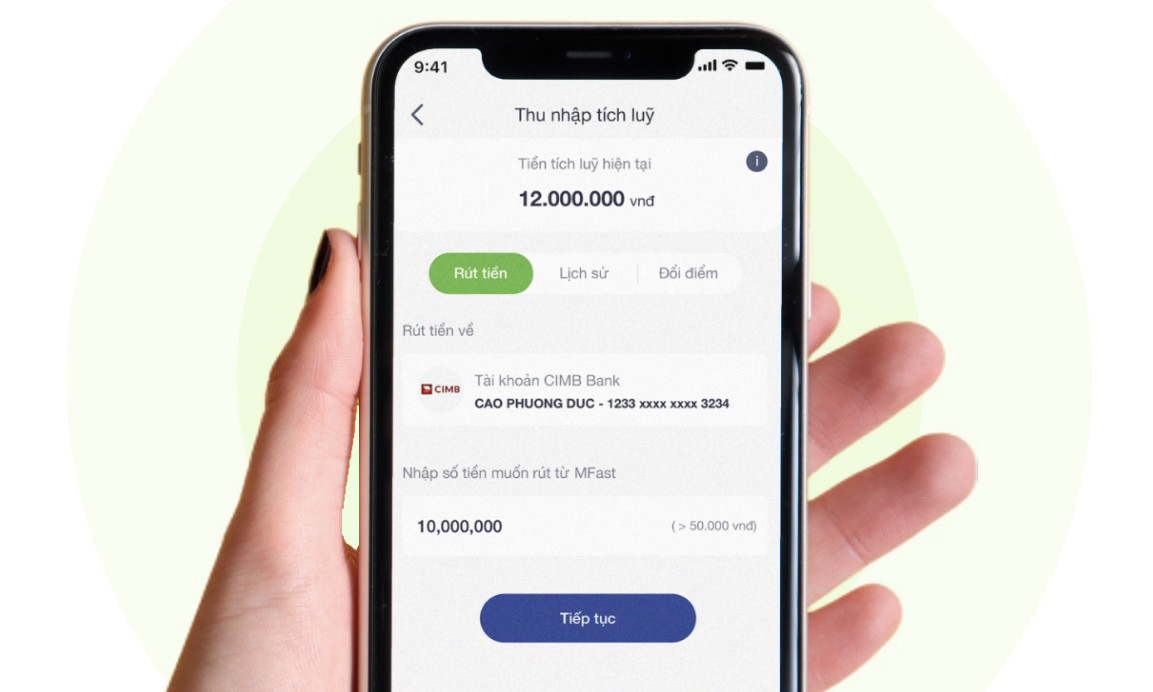
    Fintech startup Mfast has raised $1.5 million in its Pre-Series A funding from a group of investors led by Do Ventures.

    Mfast is a fintech platform that enables Vietnamese to access, use and introduce financial and insurance service packages as well as other product segments.

    After three years of operations in Vietnam, it has served nearly 600,000 users, with 75-80 percent of its end-users coming from remote provinces and rural areas.

    The amount disbursed to its financial partners has climbed to more than VND5 trillion ($217 million).

    Mfast’s mobile app claims to connect the underserved populations with financial and insurance institutions to give them access to basic financial services.

    Amy Do, investment manager of JAFCO Asia, a co-investor in the round, said that the fund had made the decision because of the great potential of the consumer credit and insurance market in Vietnam, as shown in the solid traction of the company despite the ongoing pandemic.

    Do Ventures is a $50 million early-stage venture capital fund that serves as a strategic partner for startups.

  • Open Finance Startup to Expand Across Southeast Asia

    Open Finance Startup to Expand Across Southeast Asia

    Singapore-based Finantier has closed an oversubscribed seed financing round at more than 20 times its pre-seed valuation.

    Finantier plans to strengthen its presence in Indonesia and Southeast Asia after raising seven figures in seed funding in a round led by Global Founders Capital and East Ventures, it announced on Wednesday.

    Founded in 2020, the fintech provides an application programming interface (API) platform for financial institutions to access and analyze consumer financial data. The new funds will also go towards scaling and enhancing its product offerings and double the size of its team.

    Southeast Asia’s large unbanked population presents challenges for financial institutions who lack access to consumer financial data, handicapping them in providing financial services such as payments, lending, and insurance, among others, Finantier explained.

    To address this, the company works with over 150 companies to aggregate data from alternative sources to give its clients access to a more comprehensive range of datasets and enable the unbanked population to benefit from their digital data footprint.

    Finantier’s clients and partnerships have seen over 50 percent monthly growth in 2021, while its team has grown fivefold to 50 employees, the company said.

    Open finance is an extension of open banking data-sharing principles to enable third-party providers to access customers’ data across a broader range of financial sectors and products, including savings and investments.

    With open finance facilitating the open exchange of consumer data, companies can leverage it to reach more customers while creating more personalized financial services, Diego Rojas, Finantier co-founder and CEO, said.

    Rojas previously worked closely with the co-founders of NYSE-listed LendingClub and was the technical lead at the founding team of GIC-backed Chinese online lending marketplace Dianrong.

    COO Edwin Kusuma was previously from Google and was also formerly CEO of P2P lending firm 360Kredi and director of operations at Kredinesia, while CPO Keng Low was the technical lead for a payments startup in Silicon Valley and previously an Entrepreneur-in-Residence at East Ventures.

  • Singapore Fintech Gets Digital Bank License in Philippines

    Singapore Fintech Gets Digital Bank License in Philippines

    Unobank will be entirely regulated under the Digital Banking License framework in the Philippines.

    DigibankAsia, a Singapore-headquartered fintech, has become the first fintech to receive a license to operate a digital bank in the Philippines, it announced in a statement on Tuesday.

    Uno, which is operated by Singapore-based DigibankAsia, has been working with digital services and consulting firm Xebia, fintech software provider Backbase, cloud banking provider Mambu and Amazon Web Services, for its rollout in the Philippines, which has among the lowest banking penetration in Southeast Asia.

    The Bangko Sentral ng Pilipinas’ vision and foresight to digitize the local banking industry is future-forward and apt, because ultimately it will help align the Philippines as a modern banking center for the region, Manish Bhai, Unobank CEO, said in the announcement.

    According to Uno, it aims to bridge the financial inclusion gap to help pave the way for all Filipinos to have access to basic financial services, and hopes to extend its services to the rest of Southeast Asia and South Asia.

    Around 70 percent of the population of the Philippines is considered unbanked, while the country has very high mobile penetration, with 60 percent owning a smartphone and 67 percent of the population using the internet.

    The country’s banking regulator previously issued two digital banking licenses, which are conversions from previous bank licenses.

  • Singapore Fintech Partners BNP for Impact Investment

    Singapore Fintech Partners BNP for Impact Investment

    AI-driven fintech GreenArc Capital and BNP Paribas have been awarded a proof of concept grant by the Monetary Authority of Singapore’s Financial Sector Development Fund.

    The partners will collaborate on impact measurement and audit project, which will be led by Rony J Palathinkal, COO of GreenArc Capital, according to an announcement.

    The POC is an extension of their previous work to develop the GreenArc platform – an impact investment solution with an embedded impact measurement module that connects investors with impact opportunities focused on financial inclusion and climate action.

    GreenArc uses advanced machine learning techniques to provide assurance of the stated impact objectives of financial products, as well as facilitate investor capital towards true sustainable investments to avoid impact washing. It has been deployed successfully by financial institutions to measure their debt portfolio’s impact.

    We aim to bring transparency to investors and liquidity to select last-mile lenders and microfinance lenders, Joris Dierckx, BNP Paribas regional head of Southeast Asia and CEO, Singapore, said, noting the growing interest among institutional and retail investors to have a positive impact climate change and economic inequality.

  • China Widens Regulatory Net for Fintech Crackdown

    China Widens Regulatory Net for Fintech Crackdown

    More than a dozen major technology firms in China are set to face similar restrictions imposed on Jack Ma’s Ant Group as Beijing widens its fintech crackdown.

    13 tech titans – including Tencent, ByteDance, JD.com, Meituan and Didi Chuxing – were summoned to a meeting over a series of new requirements for their financial units, according to a joint statement by Chinese regulators.

    State representatives at the meeting included the central bank, the banking and insurance regulator, the securities regulator and the foreign exchange watchdog. The 13 tech firms will face similar requirements previously imposed on Jack Ma’s Ant Group including the restructuring of financial units into holding companies for regulatory supervision.

    Restrictions will be tightened in numerous areas such as payment links to financial products, collection of customer data, credit scoring services and overseas listings.

    The latest regulatory push against the broader fintech sector follows the headline crackdown against Ant Group with the latest move being a probe against its IPO backers and considerations for the divestment of Ma’s stake.

  • ZA Tech Opens Fintech Center in Singapore

    ZA Tech Opens Fintech Center in Singapore

    The Singapore-based center aims to explore financial services innovation and help industry partners in the region to build new products that will accelerate their digital ambitions.

    ZA Tech Global has opened its first Asia Fintech Center (AFC), which will specialize in solving specific use-cases in insurance and financial services in collaboration with industry partners, according to an announcement by the Chinese firm, which provides proprietary insurtech capabilities and applications

    The center will have an initial focus on insurance use-cases by co-designing innovative propositions with insurers in ASEAN, the announcement said. It will also partner with local universities to develop further fintech expertise and talent.

    The internet economy continues to rapidly reshape consumer expectations across Asia, digital transformation is becoming as crucial as ever for financial services firms, Bill Song, CEO of ZA Tech, said, adding that the AFC is an important pillar of its regional ambitions.

    George Kesselman, ZA Tech’s head of commercial, will take on the additional responsibility as a leader of the AFC.

    ZA Tech Global is the business entity established by ZhongAn Technologies International, the international arm of Chinese online insurer ZhongAn Online P&C Insurance.

    The company previously inked micro-insurance partnerships with Grab and NTUC Income in Singapore, Ovo in Indonesia, and regionally with AIA

  • Iceland Fintech Meniga Plans APAC Growth

    Iceland Fintech Meniga Plans APAC Growth

    The Iceland-based company has announced a new partnership with Visa to accelerate its expansion across the APAC region.

    Digital banking solutions provider Meniga plans to capture growth opportunities in Southeast Asia, following its certification as a Fintech Enablement partner under the Visa Ready Program, which will help facilitate partnership opportunities with financial institutions, fintechs and businesses in the region.

    Meniga has developed digital tools for financial institutions such as UniCredit, Crédito Agrícola and Swedbank, which revolve around advanced data consolidation and enrichment, customer engagement and new revenue opportunities.

    This marks an important step in our plans to accelerate our expansion within the APAC region, where we see a substantial growth opportunity, with the regional fintech ecosystem currently booming, Georg Ludviksson, CEO & co-founder of Meniga, said in an announcement on Wednesday.

    The company entered the Southeast Asian market in 2019, when it opened a new office location in Singapore. It has since successfully launched some of the most popular banking apps in the region, including for UOB.

  • Singapore’s Fintech and Remittance Associations Ink MOU

    Singapore’s Fintech and Remittance Associations Ink MOU

    The Singapore FinTech Association (SFA) and Remittance Association (Singapore) have signed an agreement to strengthen the money remittance segment.

    The two associations will jointly launch the new SFA Remittance Sub-Committee, which aims to promote the adoption of technologies to strengthen the capabilities, efficiencies and governance of Singapore’s money remittance industry, and catalyse its members’ digital transformation and internationalization efforts.

    The burgeoning number of fintech companies working in remittance and cross-border payments signals an opportune time for both associations to work together and work collaboratively with various stakeholders, the two sides said in a joint announcement on Thursday.

    In Singapore, a lot of existing licensees have to step up to compete as consumers become more technology savvy. It is, therefore, crucial for remittance licensees to explore and adopt technology as the current business landscape evolves, Barakath Ali, Remittance Association (Singapore) chairman, said.

    The sub-committee is chaired by neobanking and digital payments expert Ho Chee Wai, who is the country head for Singapore at cross-border fund transfer startup Nium.

    Among the issues the subcommittee hopes to work on are engagement between the remittance and fintech segments, nurturing the development of the cross-border payment ecosystem, engaging with regulators, and talent development.

  • IMAS’ Fintech Mentorship Program Returns

    IMAS’ Fintech Mentorship Program Returns

    The digital acceleration program gives fintechs the opportunity to work with professional mentors and develop solutions that can be rapidly commercialized.

    The Investment Management Association of Singapore (IMAS) has announced details of its 2021 edition of the Digital Accelerator Programme (DAP), which will focus on ESG, automated data management, and risk assessment.

    The Association-led buyside accelerator program is looking for fintechs with new approaches to improve and streamline operational processes, better manage data and risks, and create innovative tools to help managers manage their ESG regulatory requirements and reporting amidst fragmented global requirements. Partners for Track 1 include Nikko AM and Schroders. Interested fintechs have until 29 March 2021 to apply.

    In Track Two, which will take place in June/July, IMAS will invite asset management firms to work closely with fintech companies to create opportunities for the showcase of shortlisted solutions with the best fit.

    As many organizations operational processes change with the new CV-19 realities, we are creating a second opportunity for asset management firms to contribute problem statements which IMAS will then launch a global search for the relevant fintechs to solve, IMAS said in the announcement.

  • Allianz Partners Hong Kong Fintech Expansion

    Allianz Partners Hong Kong Fintech Expansion

    The investment will be used to finance WeLab’s further expansion and, in particular, enable the ongoing development of its technological platform.

    Allianz X, the digital investment unit of Allianz, has joined the Series C funding round for WeLab, with a $75 million investment, it announced in a statement this week.

    The investment aims to enable business expansion and tech platform development, as WeLab has close to 50 million private and business clients in Hong Kong and China, which are key growth markets for Allianz.

    The German insurance and asset management firm will cooperate with the unicorn on insurance and investment products, including digital wealth management solutions in Hong Kong. An expansion of the partnership is planned for the Greater Bay Area, and to Indonesia and Southeast Asia at a later stage, the announcement said.

    Asia is home to some of the most dynamic wealth management and banking markets of the world. Hong Kong, in particular, is a significant market for us, Desmond Ng, Allianz Global Investors head of Asia Pacific, said in the statement.

    Allianz X has already made several other investments in the region, including telemedicine company Halodoc, digital real estate brokerage 99.co, ride-hailing and lifestyle services platform GoJek, and BIMA, which provides digital insurance in emerging and developing markets.

    Established in 2013, WeLab provides digital banking services and loans for private customers, a digital lending platform to connect lenders and borrowers, as well as a number of technology-driven services. It has close to 50 million retail customers and 600 corporate customers in China, Hong Kong and Indonesia.

    In July 2020, WeLab Bank became the third of eight licensed virtual banks to launch in Hong Kong

  • Chinese Fintech Giants Join Efforts to Calm Markets

    Chinese Fintech Giants Join Efforts to Calm Markets

    Chinese fintech giants Ant Group and Tencent are the latest to attempt to inspire calm in markets after they told investors not to overreact to price swings and avoid making hasty decisions.

    Alipay, Ant Group’s payment arm, issued a letter earlier this week in its app to urge investors to take a longer-term view on the stock markets, which have seen turbulent swings erase $1.3 trillion from the CSI 300 index two weeks after reaching a 13-year high.

    According to the letter by a think tank under Ant Fortune – a wealth management platform within Alipay that provides access to over 6,000 funds – volatility is a natural characteristic and driver of returns for equities. Short-termism could result in investors «buying high and selling low», it said, adding that full panic in the market could signal that stocks have bottomed out.

    Earlier this month, Tencent’s wealth management platform also posted an article earlier this month, reminding investors that the majority of companies that generate high returns have previously seen a significant correction of share prices.

    The fintech duo’s warnings to investors coincide with efforts by Beijing to also inspire calm in markets.

    Chinese authorities are reportedly injecting funds to support the market via its so-called «national team» and censoring search phrases on social media.

  • Grab in Hiring Spree to Support Financial Services

    Grab in Hiring Spree to Support Financial Services

    The super app is looking to create around 350 new jobs in Singapore this year to support its growth plans.

    The new hires will support Grab’s plans to help micro SMEs digitalize, deliver digital financial services across Southeast Asia, and develop the Grab-Singtel digibank, according to an announcement on its website.

    The hiring drive was announced at a signing of a memorandum of intent with the Infocomm Media Development Authority and Digital Industry Singapore to support the development of Singapore’s tech ecosystem, through the development of its tech talent and R&D capabilities here.

    The vacancies are from fields including artificial intelligence, cybersecurity, data science, software engineering, product management and design. There will also be employment opportunities in areas such as finance, operations, legal, public affairs and business development, Grab said.

    We are building products that positively impact millions across Southeast Asia, and we want to continue deepening our R&D capabilities and push the boundaries of innovation, right here at our strategic base, Tan Hooi-Ling, Grab co-founder, said in the statement.

    Grab previously said it would be pushing into retail wealth by focusing on accessible, convenient, and transparent investment products and solutions while broadening its wealth management offerings that feed into its goal of strengthening its open fintech ecosystem.

    The company has grown its suite of financial products in the past year, rolling out e-money, lending and insurance distribution on its platform, and moved into wealth management with the acquisition of Singapore-based robo-advisor Bento, which was relaunched as GrabInvest.

    It also led a $100 million Series B fundraising round for LinkAja, an e-wallet in Indonesia, where the ride hailer has been vying with competitor Gojek for the top spot in digital payments.

  • Singapore Fintech Partners MoneyGram

    Singapore Fintech Partners MoneyGram

    The integration and implementation of Lightnet’s technology with MoneyGram’s money transfer services will provide customers with a wide selection of payout services across Southeast Asia.

    The Singapore-headquartered fintech company will provide its Bridgenet solution to enable money transfer operators to connect with MoneyGram’s money transfer service, broadening the range of payout services, the company said in an announcement.

    The success of this collaboration reflects Lightnet’s commitment towards improving the efficiency, convenience, affordability and accessibility of cross-border remittances. Lightnet is working tirelessly to make these kinds of services available to everyone, Tridbodi Arunanondchai, group CEO and vice chairman of Lightnet, said.

    Lightnet was co-founded in 2018 by Chatchaval Jiaravanon – a family member of the Charoen Pokphand group in Thailand – and Arunanondchai, a tech entrepreneur and former investment banker.

    The startup raised $31.2 million in 2020, in a Series A funding round led by UOB Venture Management. It also partnered Swiss crypto bank Seba to offer remittance services for migrant workers in Asia, and partnered Velo Labs and Visa to serve the micro, small and medium enterprise (MSME) lending market.

  • China’s Fintech Balancing Act

    China’s Fintech Balancing Act

    Days after the public reappearance of Alibaba founder Jack Ma, top Beijing authorities are facing a balancing act between reining in the dominance of internet giants while keeping the fintech industry sufficiently free to innovate.

    Investigations into fintech giant Ant Group will not undermine the firm’s business development nor does it signal a move against private businesses in mainland China, according to recent comments from Liang Tao, vice president of the China Banking and Insurance Regulatory Commission (CBIRC).

    In fact, banks and insurance agencies are encouraged to continue cooperation with internet platforms, said Liang in a recent press conference where he also credited the sector’s contributions to fintech advancements as well as improved financial efficiency and inclusiveness in China.

    Separately last month, the People’s Daily – the Chinese Communist Party’s official newspaper – published an editorial that downplayed political factors in the ongoing antitrust investigations, adding that the strengthening of anti-monopoly supervision will not bring about a ‘winter’ in the industry, but rather a new starting point for better and healthier development.

    Despite comments from state media and the CBIRC that tightening would have limited impact, China’s central bank recently signaled government intervention into payments providers deemed to dominant with the possibility of breakups should their market share be too high.

    The People’s Bank of China (PBoC) defined a digital payments monopoly as any non-bank provider with at least half of the market share for online transactions; any two non-bank providers with a two-thirds; or any three providers with three-quarters.

    The PBoC also proposed last week that it could advise the state council’s antitrust committee to take action should non-bank institutions severely hinder the healthy development of the payment service market».

    Following the scrapped $35 billion Ant IPO, the formation of a dedicated task force for the firm and the three-month disappearance of Jack Ma, Beijing’s top watchdogs signal a renewed take on the mainland’s fintech sector with hopes of controlling growth without obstructing innovation.

    Should Ma’s Ant Group be forced to break up as a result of the antitrust investigations, it remains to be seen how the outlook for the broader industry would be impacted but fintech giant could see its valuations slashed significantly.

    According to estimates from «Bloomberg Intelligence», Ant’s payment arm Alipay could see its value halved under the draft regulatory proposals. This could result in the overall Ant Group’s valuation plunging to around $108 billion, down from the original $320 billion before the IPO pullout, with further decreases should a breakup occur.

  • UBS Poised for Indian Fintech Deal

    UBS Poised for Indian Fintech Deal

    Swiss bank UBS is reportedly poised to pour several hundred million into a payments start-up in India. The investment is alongside some of the Swiss wealth manager’s ultra-rich clients.

    Zurich-based UBS is negotiating a $400 million investment in Paytm, an Indian e-commerce payment system Bloomberg reported on Thursday, citing people close to the talks. The bank’s asset management arm wants to co-invest with UBS’ wealthy clients, the outlet reported – which would mark one of the largest such deals.

    The ten-year-old fintech was valued at $16 billion in its last round of financing two years ago. It competes with services like Google Pay or WhatsApp’s payment service, as well as regional start-ups.

    UBS is attempting to buy shares from Paytm employees, the news service reported. It doesn’t appear to be a done deal yet: UBS aims to finalize an agreement as soon as this month, though talks could still be delayed or fall apart.

    Paytm counts Softbank, Ant Financial, Berkshire Hathaway, and asset manager T. Rowe Price, among its investors. Its CEO, Vijay Shekhar Sharma, said this week Paytm could turn a profit as soon as this year.