Tag: flying

  • AirAsia appoints Kris Taute to global communications role based in Kuala Lumpur

    AirAsia appoints Kris Taute to global communications role based in Kuala Lumpur

    AirAsia Australia PR and communications manager Kris Taute has moved to the airline’s Kuala Lumpur headquarters for a new global communications role.

    Taute had joined Air Asia last year, moving from the New South Wales state government, having worked for both Transport for NSW and for the state tourism body.

    In his new role as group manager communications for editorial, Taute will be responsible for the editorial communications of the airlines and its subsidiaries including  AirAsia and AirAsia X group of airlines, as well as lifestyle brands such as AirAsia Big Loyalty, travel360.com, Vidi, BigPay, RedCargo Logistics, Rokki, and Ourshop.

    In addition, Daphne Cheah is now ASEAN communications manager moving from a previous role as regional head green and sustainability.

    Taute has been replaced by Sarah Quinn who moves from Destination NSW and takes charge as PR and communication manager for AirAsia Australia.

  • AirAsia, beyond 1Q19 and headline numbers

    AirAsia, beyond 1Q19 and headline numbers

    Tan Sri Tony Fernandes tweeted two months ago that AirAsia Group Bhd will have its “best year” in 2019, and so far headline numbers look okay, if not promising, at least for the first quarter ended March 30, 2019 (1QFY19). Jet fuel prices are at around its hedging price — 52% of its fuel needs in FY19 has been hedged at an effective exercise price of around US$78 (RM326.82) of jet fuel — while passenger load factor is expected to stay solid at 87.9%. The group chief executive officer (CEO) has also hinted that its Asean joint ventures would “perform well”.

    Notwithstanding that, AirAsia’s share price has been underweight so far this year ahead of the release of its 1QFY19 results, scheduled on Wednesday, probably because investors remain wary after the airline’s biggest loss-making quarter last year.

    MFRS16 on pricier sale-leaseback model

    AirAsia made two sale-leaseback deals with BBAM Ltd Partnership for US$1.185 billion (RM4.62 billion) in 2018 and Castlelake LP worth US$768 million (RM3.17 billion) in 2019 to lease back a combination of 108 planes to free up cash, pare debt and fund its digital venture.

    The higher operating lease expenses partly caused AirAsia’s RM394.97 million loss in 4QFY18, despite its 6.2% year-on-year (y-o-y) rise in revenue to RM2.82 billion on the back of a 16% jump in passenger count. Other main factors were higher fuel costs and a stronger US dollar against the ringgit in the period — both of which retreated temporarily in 1Q this year.

    But in 1QFY19, AirAsia will adopt the Malaysian Financial Reporting Standards 16 (MFRS16). This accounting practice recognises all lease assets and liabilities, including planes that are currently treated as off balance sheet operating leases.

    With the change, AirAsia’s operating lease expenses — which rose 73% y-o-y to RM1.13 billion in FY18 because of the sale-leaseback model — will be removed from the calculation.

    On the flip side, estimates show that MFRS16 will result in AirAsia’s profit before tax retreating by around RM400 million y-o-y for the whole of FY19. It may also front-load the lease expense of these planes at a depreciation of around RM3.5 billion and interest expense of RM1.1 billion in the same period.

    Fernandes, in his Twitter account, said the adoption of MFRS16 has no impact on the airliner’s cash position, arguing that the non-cash impact is “not very material” at around RM35 million a year.

    CGSCIMB Research, in an April 8 note, estimated that the group would book a net gain of RM174.3 million from the Castlelake deal in its profit and loss statement, with net cash proceeds of around RM891 million.

    Still, AirAsia is set to expand its fleet size from 226 planes in 2018 to 399 units in 2024, as it fully adopts the sale-leaseback structure from this year onwards. With 244 planes this year, AirAsia will book over RM11 billion of lease assets and liabilities on its balance sheet, while net gearing is expected to jump to 1.5 times. Analysts, meanwhile, confirmed that AirAsia management has guided there will be another special dividend this year, although the quantum has yet to be determined.

    AirAsia is committed to pay special dividends every two years. Recall its bumper FY18, which declared total dividends of 64 sen, inclusive of a 40 sen special dividend in 3QFY18, for a total of over RM2.14 billion.

    As at end of last year, AirAsia held cash equivalents of RM3.35 billion. TA Research in a note dated May 9 published its in-house estimate of AirAsia’s FY19 total dividend at 70 sen per share, ahead of the conclusion of the Castlelake deal.

    Others are more conservative until 1QFY19’s results are out. Full-year dividend estimates among analysts covering the stock, according to Bloomberg, average at 15.5 sen. CGSCIMB’s special dividend assumption was trimmed to 13 sen per share, from 19 sen per share previously, after lowering expectations on net cash proceeds from the Castlelake deal.

    Of 17 analyst calls on Bloomberg, AirAsia has seven “buy”, six “hold” and four “sell”. Twelve-month target prices (TPs), which range from RM1.50 to RM5.20, average at RM2.84. Of the total TPs, 35% were below its last close of RM2.45.

    The group, meanwhile, announced on April 26 that it is seeking shareholders’ approval for the proposed share buy-back of up to 10% of its total issued share. The last time it did so was in 2015.

    As in the past, AirAsia’s minority shareholders may approve both the special payout and the share buy-back.

    Beyond 1QFY19, the strengthening of the greenback against the ringgit and rising fuel costs are some of the things to watch out for. Amid strong load factors across its subsidiaries, market competition continues to put pressure on yields.

    In the horizon is the group’s digital venture, which Fernandes appears to be quite stoked about, given the number of his tweets referring to it of late. Come Wednesday, AirAsia could provide a breakdown of its digital businesses, which includes mobile payment app BigPay and one-stop travel platform, AirAsia.com.

    Fernandes told investors as early as March 1 to “look out” for AirAsia’s 1QFY19 results, which will provide a gauge on its operational changes. With its digital venture and changing market movements thrown into the mix, it remains to be seen if the stock will stay a darling among investors in the long run.
  • AirAsia Opens Jakarta-Phuket Route

    AirAsia Opens Jakarta-Phuket Route

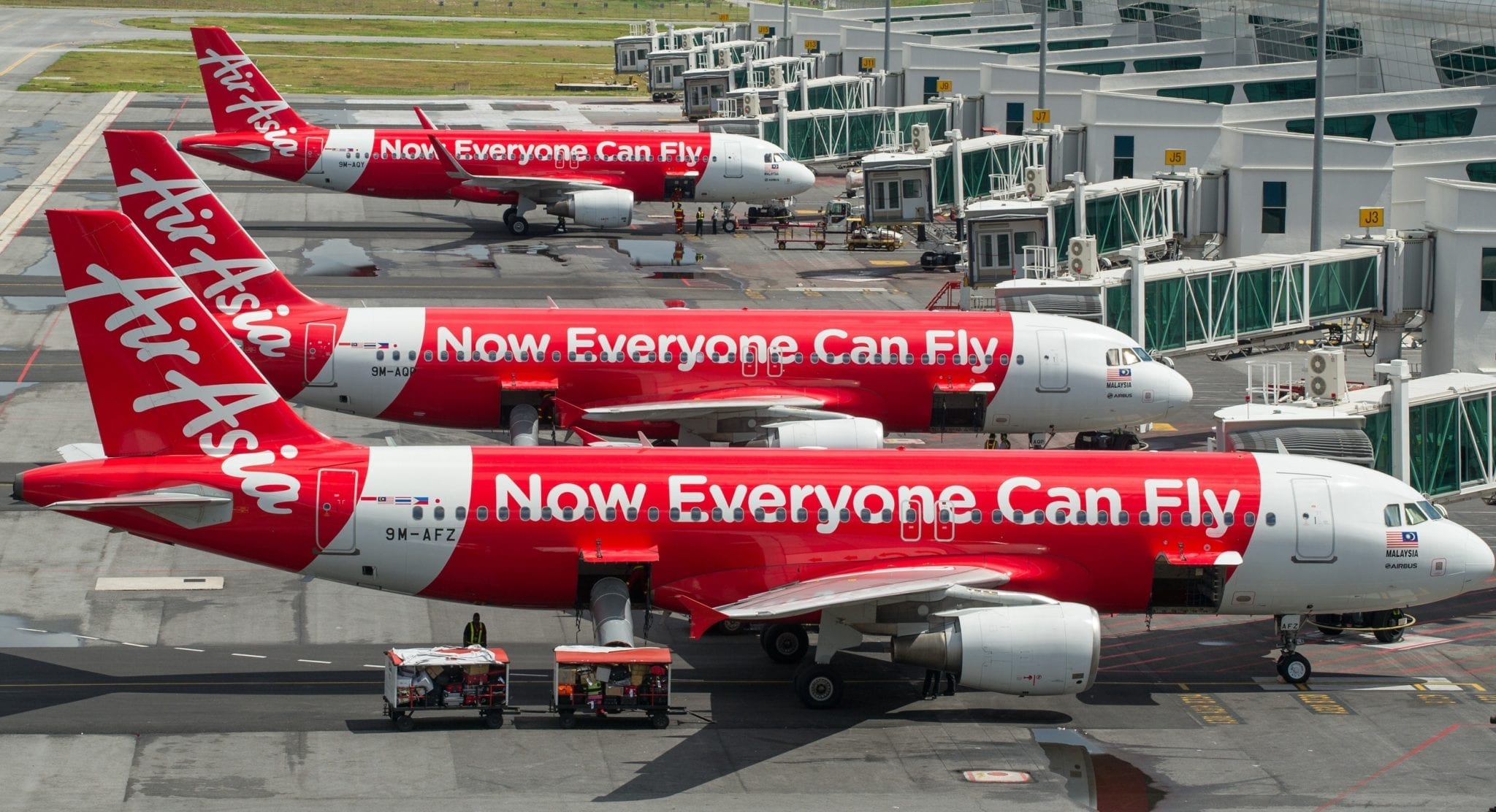
    “Currently the traveling trend continues to increase especially in the youth market, hence demand to open unique routes is increasing as well,” said AirAsia Indonesia president director Dendy Kurniawan.

    Phuket is one of Thailand’s biggest islands in the southern side and boasts various destinations, such as Phi Phi Island, Big Buddha statue in Chalong and Phuket Old Town. The carrier is currently offering promotional fares from Rp 583,000 (US$40.35) one way that can be booked until May 26 for a travel period between July 2 and Oct. 25.

    Other direct flights served by AirAsia from Thailand to Indonesia are Jakarta-Bangkok, Medan-Bangkok and Denpasar-Bangkok.

  • Thai AirAsia parent Q1 operating profit halves

    Thai AirAsia parent Q1 operating profit halves

    Revenue for the quarter ended 31 March was flat at Bt11.6 billion, but expenses rose 10% to Bt10.5 billion. Net profit fell 50% to Bt497million. The company says that fuel costs rose during the quarter, as did airport and MRO costs. Despite this, the carrier’s CASK was flat compared with a year ago at Bt1.53 due to a 10% increase in ASKs and a longer average stage length.

    RPKs grew 9%, while load factor was flat at 91%. The carrier’s average fare for the first quarter was Bt1554, down 7%.b Cash and cash equivalents were Bt4.1 billion on 31 March, down from Bt5.97 billion a year earlier.

    In its outlook, the carrier notes that international trade frictions could hurt the global economy and affect exchange rates.

    “As the company has revenues and expenses in various different currencies such as passenger fares, repair, and maintenance as well as aircraft rental, the company has adopted the practice of natural hedging by matching cash expenses and revenues in the same currency as practically possible,” it says.

    It believes that global crude prices could fall in the second half of the year, but has hedged 52% of its 2019 fuel conception at cost of $80 per barrel.

    It adds that Thailand’s tourism industry will remain strong in 2019. It plans to add new routes later this year from Bangkok Don Mueang to new Vietnam destinations such as Can Tho and Nha Trang, as well as the addition of a Chiang Mai-Da Nang service.

    It plans two Cambodia services, Bangkok Don Mueang-Sihanoukville, and Phuket-Phnom Penh. In addition, it will add a Bangkok Don Mueang-Ahmedabad service.

    “This diversified strategy tends to minimize the risk of dependence on the major customer base, enhancing the company and Thai AirAsia’s sustainable revenue growth in the future and maintain its leading low-fare airline in Thailand,” it says.“In 2019, Thai AirAsiamaintains a target of 23.15 million passengers, with a solid load factor at 86%, and plans to acquire more energy efficient aircraft during the year to bring its fleet to 63 aircraft.”

  • Cebu Pacific’s income jumped 138% to P3.4b in first quarter

    Cebu Pacific’s income jumped 138% to P3.4b in first quarter

    Cebu Air, the operator of low-cost carriers Cebu Pacific and Cebgo, said net income jumped 138.4 percent in the first quarter from a year ago, on the back of strong passenger and cargo revenues. The airline unit of the Gokongwei Group said it posted a net income of P3.4 billion from January to March, up from P1.4 billion it earned in the same period last year. Revenues increased 16 percent in the three-month period to P21.17 billion from P18.26 billion it generated a year earlier.

    Passenger revenues increased 14.6 percent to P15.67 billion from P13.67 billion. The increase was attributed to the 8.5-percent growth in passenger volume to 5.289 million from 4.876 million last year as the group added bigger A321 aircraft to its fleet. The average fare went up 5.7 percent to P2,965 in the first quarter from P2,805 a year ago, contributing to the higher revenues. Cargo revenues grew 12.7 percent to P1.44 billion from P1.279 billion following the increase in both yield and volume of cargo transported in 2019. Operating expenses went up 8.4 percent to P17.34 billion from P15.997 billion a year ago.

    Cebu Air said the increase was driven by expanded operations, growth in seat capacity from the acquisition of new aircraft and the weakening of the Philippine peso against the US dollar. The peso depreciated to 52.36 per US dollar in the first quarter from an average of 51.49 a dollar last year. Flying operations expenses increased 3.8 percent to P7.173 billion from P6.910 billion.  “This was mainly accounted for by the increase in pilot training costs,” CEB said. Fuel expenses also went up as the fuel volume increased by 7.9 percent in the quarter.  The MOPS price of fuel slightly went down to $76.50 per barrel in the first quarter from $79.99 a barrel in the same period last year.

  • AirAsia India Desire Jet Airways’ Boeing 737s

    AirAsia India Desire Jet Airways’ Boeing 737s

    A joint venture of Tata group and Malaysian Air Asia, AirAsia India is planning to induct some of the Jet Airways’ Boeing 737s that have now been repossessed by lessors. The move comes at the time when full-service Vistara is also planning to induct some of Jet’s Boeing 737s in its fleet.

    AirAsia India Pvt Ltd’s (AAIPL) flying license has listed Airbus fleet for its operations. The low-cost carrier (LCC) has applied for operating Boeing aircraft and the ex-Jet B737s to aviation regulator Directorate General of Civil Aviation (DGCA), according to a ToI report.

    It is to be noted that currently, AAIPL has 20 Airbus A320s and may also add five more of these planes. It is looking at ex-Jet B737s as well.  The suspension of operations by Jet Airways has suddenly freed up slots at India’s busiest airports- Delhi, Mumbai, and Bengaluru. The government has linked a temporary granting of these slots to other airlines’ to add to the capacity and to help to control the fares. The domestic market shares of AAIPL was 5.9 percent and that of Vistara was 4.2 percent in March 2019.

    This summer, AAIPL will complete its five years and become eligible to fly abroad. Full-service Vistara has already got government’s nod to fly abroad. Vistara was the first private carrier to get permission for overseas flights under the amended rules. In 2016, the government amended the 5/20 rule, which required an airline to complete fives years of operations and has 20 planes in its fleet, to fly abroad to 0/20.

    Worth mentioning here is that Jet Airways had a significant number of flights to the Gulf and Southeast Asia, and bilateral to both these places had been exhausted. If in the coming weeks and months, Jet Airways does not revive then its rights for international flights would also be distributed to other airlines.

    Air India was also looking at ex-Jet B777s and AI Express at B737s, but so far they have not taken these planes.

    In a circular dated April 25, Pawan Hans management stated to its employees that the company is not in a position to disburse employees’ salaries for the April month due to the uncomfortable financial position in Pawan Hans.

  • KDDI, Terra Drone launch drone asset inspection service

    KDDI, Terra Drone launch drone asset inspection service

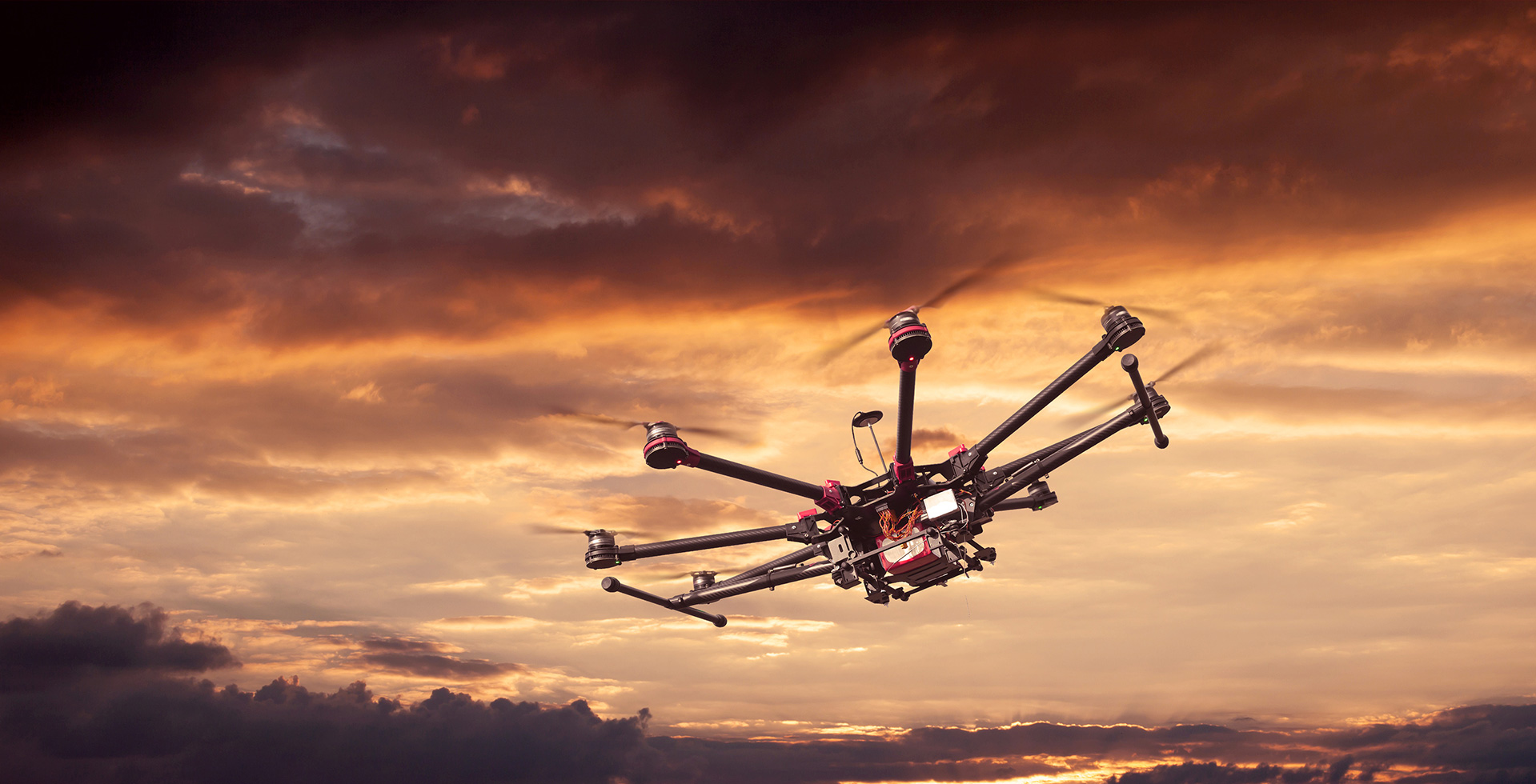
    Japan’s KDDI and industrial drone solutions provider Terra Drone have jointly launched a new drone inspection services for industrial infrastructure.

    The jointly developed solution involves using a drone to generate a 3D, high resolution model of heavy industrial assets such as wind turbines, telecom and transmission steel towers, smokestacks, and bridges.

    The drone will use the model to determine which components should be inspected, allowing the drone to shoot the inspection points from optimal angles and range designated by the Terra Inspection software.

    It uses mobile networks to transmit data back to inspection crews and to allow operators to remotely plan flight paths based on weather databases and maps.

    The solution also has potential applications in areas beyond asset inspection, such as large area surveillance, land surveying or precision farming.

    KDDI and Terra Drone jointly developed the underlying Smart Drone platform, and have developed a number of solutions based on the platform since 2016.

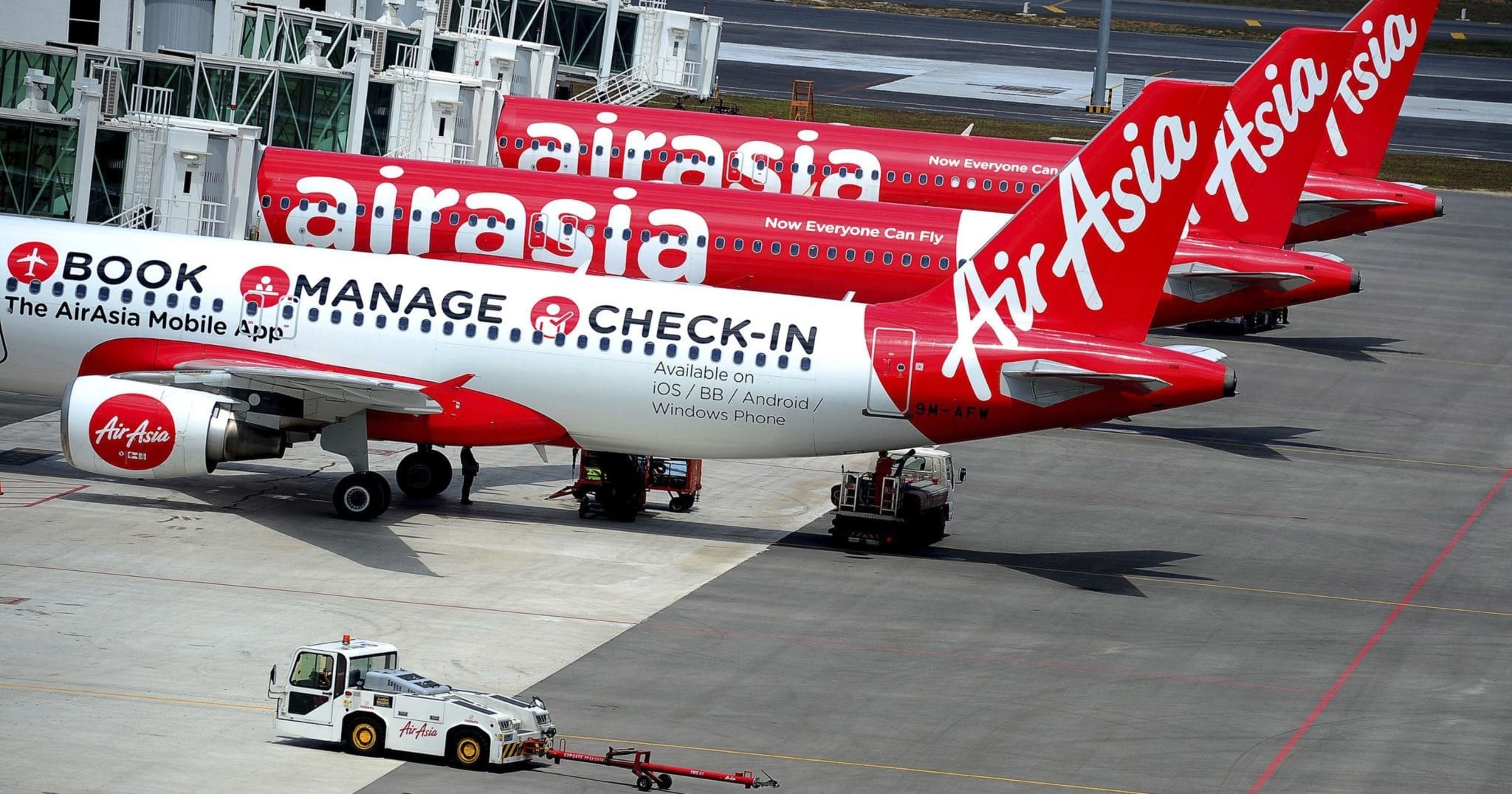
  • AirAsia’s facial-recognition boarding system can now be activated on your smartphone

    AirAsia’s facial-recognition boarding system can now be activated on your smartphone

    Travelling can be stressful and AirAsia wants to make your boarding experience seamless with its new FACES feature. This is a facial recognition system that uses your face to replace your boarding pass.

    According to AirAsia Group CEO, Tan Sri Tony Fernandes, you can now register your face on the official AirAsia app. To register, just go to your profile and then tap on “My FACES”. You will be asked to record a short video of your face and submit a copy of your passport. Before you can start using FACES, you’ll need to do a one-time verification with their ground staff. Once that’s done, you can just walk through their gates without showing your boarding pass.

    At the moment, FACES is only available at Senai Airport in Johor and they hope to roll out this feature to more airports throughout the country. According to AirAsia, the FACES feature can help to speed up the boarding process and it has a success rate of 98%. FACES is available only for adults aged 18 and above. You can learn more from their FAQ.

    Previously, passengers will need to register their face through a kiosk located around the check-in counter area. With the updated app, you can perform this step anytime with your smartphone.

  • Thai AirAsia to fly to Sihanoukville from July

    Thai AirAsia to fly to Sihanoukville from July

    Low-cost carrier Thai AirAsia, a subsidiary of Malaysia-based AirAsia, will launch a direct flight from Bangkok’s Don Mueang International Airport to Cambodia’s Sihanoukville in July. The coastal town will become Thai AirAsia’s third destination in Cambodia after Siem Reap and Phnom Penh.

    “The new route is expected to serve the millions of foreign travellers who use Thailand as a hub, while for Thai travellers, Sihanoukville offers an affordable beach and cultural getaway,” Thai AirAsia CEO Santisuk Klongchaiya was quoted as saying in the Bangkok Post on Monday

    Norinda Khek, communications and public relations director at Cambodia Airports, confirmed the new flight, and said it demonstrates the efficiency of Cambodia Airports’ route development strategy, which aims to attract airlines by providing them marketing support, among other services.

    Taing Sochet Krisna, director of Preah Sihanouk province’s tourism department, said that the presence of one more airline in Sihanoukville International Airport will help increase the number of tourists to the province.

    He said China tops the list of visitors to the province by nationality, followed by neighboring countries like Malaysia and Vietnam.

    According to data from Cambodia Airports, last year air passenger traffic to the province increased by more than 92 percent, totalling 650,000 visitors.

    According to Mr Norinda, Sihanoukville International Airport has five domestic airlines – Cambodia Angkor Air, Cambodia Airways, Lanmei Airlines, JC Cambodia Airlines, and Sky Angkor Airlines – and four international ones – AirAsia, Ruili Airlines, Sichuan Airlines, and Hainan Airlines.

  • Singapore Airlines Partners With Payments Platform

    Singapore Airlines Partners With Payments Platform

    Singapore Airlines has partnered with an Amsterdam-listed payments provider to optimize its payment processes. Payments platform Adyen will improve the experience of booking tickets online or in-app for Singapore Airlines’ customers. The payment platform also helps its customers improve authorization rates, provide flexibility on fraud risk management and richer data insights.

    «For Singapore Airlines, best-in-class customer service begins with the booking,» said Warren Hayashi, President of Adyen, Asia-Pacific. «At Adyen, we have seen that payments data can be the jet fuel that powers global expansion for airlines.  Payments data remains a valuable resource for companies who seek to understand their customers better and improve revenue,» Hayashi added.

    The partnership will center on Adyen’s solutions to optimize Singapore Airlines’ payments process. This includes the use of Adyen’s direct credit card acquiring capabilities which eliminates the need to run payments across multiple third-party platforms, increasing the airline’s payment authorization rate by leveraging on their solutions.

    Amsterdam-listed Adyen provides a modern end-to-end infrastructure connecting directly to Visa, Mastercard, and consumers’ globally preferred payment methods. It has offices across the world, serving customers such as Facebook, Uber, Spotify, Cathay Pacific, Grab, Klook, Lorna Jane, Freelancer.com, Kogan.com and Showpo.

  • AirAsia fails again in Vietnam partnership bid

    AirAsia fails again in Vietnam partnership bid

    Malaysian budget carrier AirAsia says it will keep trying to crack the Vietnamese market even as analysts warn it has “missed the boat” after its latest failed attempt to set up a joint venture in the country.

    The airline announced on Wednesday that it has terminated an agreement with Thien Minh Group, under which it was to take a 30% stake in an airline company to be launched this year.

    AirAsia has already tried three times to set up a partnership in Vietnam, but AirAsia Group CEO Tony Fernandes is not ready to give up.

    “I am still optimistic about AirAsia being in Vietnam by end of the year,” Fernandes said in a Twitter post the day after the company’s announcement. He hinted in his tweet that the choice of partner was to blame for the failure, saying, “Watch this space. Picking the right one.”

    AirAsia and Thien Minh had agreed in December to set up a joint venture in which the Malaysian company would own a 30% stake, the maximum allowed under Vietnamese law. The company did not give a reason for ending the agreement in its official statement, though local analysts point to the country’s restrictive regulations on foreign aviation players as one possible hurdle.

    A spokesperson for Thien Minh told that the group will release an official statement on the move next week.

    AirAsia already offers international flights connecting to Vietnamese cities, but Fernandes has been trying to set up a partnership in the country since 2005.

    Travel demand in the market of 95 million grew 9% in 2018, according to the local aviation authority, and Fernandes has referred to Vietnam as the missing piece of the puzzle in AirAsia’s plan to tap demand from emerging markets.

    But according to Brendan Sobie of the Sydney-based CAPA Center for Aviation, now may be the time for AirAsia to rethink its approach.

    “After three failed attempts with three different partners, it’s time to let this one go and focus on international expansion using their affiliates from Malaysia, Thailand, Japan, etc.,” Sobie said.

    The Vietnamese market for budget travel, moreover, is already dominated by local players: Vietjet Aviation, which controls nearly half the market, Jetstar Pacific Airlines and Bamboo Airways.

    “The domestic market has become overcrowded and intensely competitive,” Sobie added. “Entering now would be risky and it would be nearly impossible to become a significant domestic competitor. AirAsia unfortunately missed the boat on the Vietnam domestic market.”

    Foreign players, moreover, are forbidden from operating domestic routes in Vietnam, even with a local partner. Licenses, moreover, are awarded on a case-by-case basis, and though newcomer Bamboo Airways received its license relative quickly, the process can take much longer. Vietstar Airlines, established in 2010, is still waiting for a license to begin passenger flights. Local analysts have pointed to these hurdles as one possible reason for AirAsia’s repeated setbacks in the country.

    The airline has a presence in Indonesia, India, Japan, Thailand and Philippines, and thrives on a feeder traffic business model of connecting second-tier cities to capitals, while keeping operating costs low with no-frills service.

    The stock market was little moved by the announcement. AirAsia’s share opened 0.4% higher on Thursday trade before closing at 2.43 ringgit.

    MIDF Research echoed Sobie’s sentiment, saying it is “not imperative” for the group to set up local operations in Vietnam as it can still fly to cities in the country from its regional network.

    The Malaysian investment outfit cited the recently inaugurated Kuala Lumpur-Can Tho route, AirAsia’s sixth route in Vietnam, as an example of the group’s ability to continue expanding regionally without Fernandes’ missing puzzle piece.

    AirAsia’s failed bid to penetrate into Vietnam means Vietjet will continue to dominate the market for now. Vietjet’s share price rose 0.44% on Thursday to close at 114,00 dong, and rose a further 0.79% on Friday.

  • AirAsia India Offers Up To 70% Discount On Flight Tickets

    AirAsia India Offers Up To 70% Discount On Flight Tickets

    AirAsia India is offering up to 70 per cent discount on flights tickets, according to the airline’s official website – airasia.com. Bookings under the sale – valid for travel between October 1 and June 2 – can be made till April 28, 2019.
    AirAsia India’s latest offer is applicable on all destinations, the carrier said on its website. The discount is available on selected fare classes and non-peak periods only. In order to avail AirAsia’s offer on flight tickets, customers need to book flight tickets in advance, according to the airline. How to avail AirAsia’s discount on flight tickets:

    1. Pick the preferred AirAsia flight for departure and arrival.

    2. Select the dates stated in the promo travel period.

    3. Choose the preferred flight.

    4. You would get up to 70 per cent off on base fare or 20 per cent discount on premium flatbed category.

    Value pack and premium flex bundled category, DJ carrier code flights and QZ carried code domestic flights are not included in the offer, the airline noted.

    Meanwhile, rival GoAir is offering domestic flight tickets at a starting all-inclusive price of Rs. 1,375 in a limited-period sale, according to the airline’s official website – goair.in. Bookings under the sale – valid for travel till August 31, 2019 – can be made till April 25, 2019.

    IndiGo, on the other hand, has announced six additional daily direct flights from Delhi. The new flights by IndiGo will be operated to and from Allahabad, Bhopal and Patna, with effect from May 25.

    SpiceJet has also announced the introduction of 24 new flights on its domestic network. The daily direct flights introduced by the airline will be operated to connect Mumbai and Delhi with other cities.

  • AirAsia starts system to eliminate boarding passes for domestic flights

    AirAsia starts system to eliminate boarding passes for domestic flights

    AirAsia Group Bhd has introduced a one-time verification system for passengers via its FACES @AirAsia mobile app which is designed to eliminate the need for boarding passes and passports.

    FACES is a facial recognition boarding system owned and operated by AirAsia, with the purpose of creating a seamless travel process for guests.

    In a tweet today, AirAsia group chief executive officer Tan Sri Tony Fernandes said passengers will only have to register their faces and passports once on its @AirAsia mobile app.

    Once passengers have scanned their faces and passport details on the app, and AirAsia ground staff have verified them, the passengers will be able to travel seamlessly, he said.

    “Then you are ready to never use a boarding pass again and you can walk through our gates for domestic flights,” he said, adding that the facility is currently available in certain airports like Senai.

    “This can be rolled out in all airports if only we had partners who supported us and all our digital initiatives,” he said.

    This facility follows in the footsteps of British Airways’ (BA) biometric boarding gate trials last year in the US which eliminated the need for boarding passes and passports at boarding.

    Last November, BA began testing self-service boarding gates in Los Angeles Airport that did not require customers to produce either their boarding pass or their passport.

    Instead, passengers only need to look into a camera, wait for their biometric data to be checked against their passport, visa or immigration photos and then walk onto the plane once their identities have been verified.

    The trials were initially limited to those flying out of Los Angeles Airport on BA flights to Heathrow, but are now being tested at several other US airports.

    At 2.57pm, AirAsia rose 1.6% or 4 sen to RM2.53, with 4.29 million shares traded.

  • Cebu Pacific receives highest ranking for safety

    Cebu Pacific receives highest ranking for safety

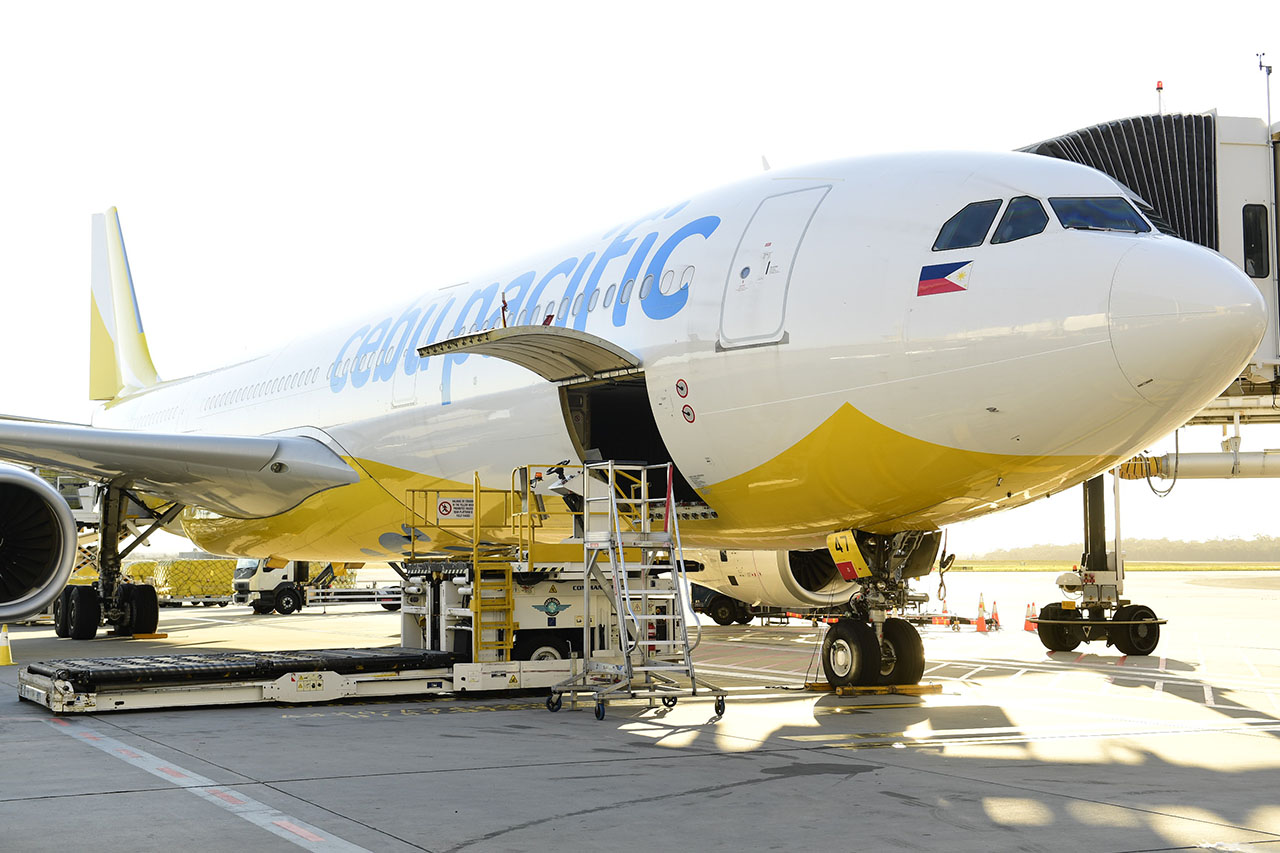
    Cebu Pacific has now achieved the highest ranking for safety with 7-stars from the world’s only safety and product rating agency AirlineRatings.com

    After careful evaluation and feedback from the airline and aviation industry AirlineRatings.com has upgraded its seven-star safety rating system to give more importance to IOSA and this move elevates Cebu Pacific up to 7-stars – the highest ranking.

    IOSA – the International Air Transport Association Operation Safety Audit – was first introduced in 2003 to curb the disturbing trend in airline accidents that could be attributed to simple processes and maintenance programs.

    Since it was introduced airlines that have completed IOSA have up to a four-fold safer safety record than airlines that do not do the audit.

    In 2017, the all accident rate for airlines on the IOSA registry was nearly four times better than that of non-IOSA airlines (0.56 vs. 2.17 accidents per million flights) and it was nearly three times better over the 2012-16 period.

    Of significant importance to Airlineratings.com is that the audit is done every two years and covers over 1060 parameters.

    AirlineRatings.com now awards an airline that has completed IOSA three stars.

    AirlineRatings.com Editor-in-Chief Geoffrey Thomas congratulated Cebu Pacific on this achievement.

    “Cebu Pacific has become a major part of the fabric of life in the Philippines bringing affordable travel to most,” said Thomas.

    “The airline has a very modern fleet and operationally is now up there with the best.”

    “That is great news for the traveling public,” said Thomas.

    The rating agency has reduced the stars allocated for ICAO compliance from two to one.

    The International Civil Aviation Organization (ICAO) was created to promote the safe and orderly development of international civil aviation throughout the world.

    It sets standards and regulations necessary for aviation safety, security, efficiency, and regularity, as well as for aviation environmental protection.

    It has 8 audit parameters that pertain to safety and they are; Legislation, Organization, Licensing, Operations, Airworthiness, Accident Investigation, Air Navigation Service and Aerodromes.

    If the country meets between 6 and 8 of the audits one star is awarded to the airline. Five secures 1/2 star. However, if any of the criteria are below the average by less than 5 percent it is considered a pass. If the country only meets up to four criteria no star is given.

    The other main criteria are; Is the airline on the European Union (EU) Blacklist; has it a fatality free record for the past 10 years and is the airline FAA (USA) endorsed?

    Cebu Pacific commenced services in March 1996, initially only domestic operations but launched international operations in November 2001.

    It now flies to 64 tourist/business destinations within Asia and operates 67 mainly Airbus aircraft

    Cebu was the first local airline to introduce e-ticketing, prepaid excess baggage and seat selection in the Philippines.

  • Cebu Pacific Expands Horizons to Australia

    Cebu Pacific Expands Horizons to Australia

    Australian cities such as Perth and Cairns, as well as destinations in Japan and India, are on the radar for Philippines budget carrier Cebu Pacific as it expands its fleet of Airbus A321neos. Cebu, which already flies direct to Sydney and Melbourne from Manila, is stepping up its re-fleeting program and took delivery of the first of 32 A321neos at the end of January.

    It expects at least five more of the longer-range, fuel-efficient planes during 2019 to support its expansion plans.

    Cebu is known for packing seats into its bigger Airbus A330s and has followed that strategy with the smaller plane.

    The budget carrier has opted for the Airbus Cabin Flex fuselage modifications to give the A321neo 236 ergonomically-designed Recaro seats, slightly below the 244-seat Airbus maximum.

    It expects and Pratt & Whitney  GTF-powered planes to achieve a 20 percent savings in fuel costs as well as other advantages such as a significantly reduced noise footprint and lower maintenance requirements.

    The January delivery brought the total size of its fleet to 72 aircraft, including 43 Airbus A320s and A321s, eight A330s and 20 ATR turboprops.

    While the airline also has mid- and long-term plans for widebody aircraft, its primary focus is currently on the neos.  It is looking to grow its fleet to 83 aircraft in 2022, with 27 of those neos.

    “This year, we’re taking in 12 new aircraft, (the) bulk of it will be the A321neo,’’ Cebu vice president Lance Gokongwei told AirlineRatings.

    “We are continuously studying new routes and destinations, especially with the A321neo that has Northern Japan, India, and other cities in Australia like Perth and Cairns within its capabilities, but plans are not concrete for now.

    “While the A321neo will give us the capability to possibly service a direct route from the Philippines to Perth, we will make announcements on new routes and destinations in due time.”

    Cebu is the Philippines’ biggest carrier by passengers carried and claims a roughly 50 percent market share in terms of domestic travel and cargo.

    Competitor Philippine Airlines (PAL) is also expanding and received a boost in January when Japan’s All Nippon Airways announced it would invest $US95 million to a 9.5 percent stake in the Filipino carrier. PAL is already using the A321neo to service Brisbane.

    However, Cebu is unfazed by the deal and Gokongwei says it is good for the Philippines aviation industry.

    Gokongwei said the two had been partners for many years, including on code-sharing flights, and the investment was something Cebu had factored into its strategy.

    The low-cost carrier was also looking at tapping opportunities in Japan after establishing an office there in 2018.

    “As for the Philippines, we firmly believe that despite the massive growth in Philippine aviation over the past 20 years, there is still much room for expansion,” Gokongwei said.

    “Less than 50 percent of the Philippine population have traveled via air, as compared with Malaysia or Singapore.

    “People here are used to taking the bus and the boat–whereas air travel can be exponentially convenient and not as expensive as it used to be.”

    The airline executive sais there was still “much room”’ to develop Clark International Airport, the former US air base, as a secondary domestic hub.

    “There is also strong demand for inbound flights from North Asia into Cebu, which we have turned into our beach hub as we fly to key island destinations from there, ‘ he added.

    A key to Cebu’s low-cost model is the ability to offer fares that are up to 40 percent lower than those of its competitors, partly through its investment in new and more efficient aircraft and technology.

    But it isn’t all smooth sailing: net income for the airline’s first nine months of 2018 fell 36 percent to 2.78 billion pesos as it grappled with higher fuel costs and a weakening currency.

    “Despite challenges brought on by volatile fuel prices and the foreign exchange of the Philippine Peso, Cebu Pacific has managed to keep sound fundamentals,’’ Gokongwei said.

    “Revenues have been growing by 12 percent annually for the past eight years and we have maintained healthy operating margins.”