Tag: flying

  • Vietjet Recognised as One of “Vietnam’s 50 Best Performing Companies in 2018”

    Vietjet Recognised as One of “Vietnam’s 50 Best Performing Companies in 2018”

    Vietjet was recognised as one of the leading companies in “Vietnam’s 50 Best Performing Companies 2018”. Held in Ho Chi Minh City on 27 June 2019, the award ceremony celebrated the leading companies listed on Vietnam’s stock market for their significant contribution to the economy.

    The annual event was conducted by Nhip Cau Dau Tu Magazine (Investment Bridge Magazine) in partnership with Thien Viet Securities, with expert economic and business consultants from Harvard Business School. The awards take reference from world ranking charts such as Bloomberg Businessweek, Fortune and Forbes to recognise and award listed companies for their performance and business results between 2016 and 2018. Success is based on Revenue Growth Rate, Return on Equity (ROE) and Earnings per Share (EPS).

    Vietjet’s SR-CAGR (Compounded Annual Growth Rate) and ROE were at 39.24 per cent and 59.7 per cent, respectively. Market capitalisation reached 2.68 billion USD, making Vietjet one of the largest capitalised enterprises on the Vietnam Stock Market. Since its listing, Vietjet has been recognized as a representative for successful Vietnamese enterprises.

    The top 50 companies this year have a total market capitalisation of 98 billion USD, with 17 companies exceeding 1 billion USD. Enterprises in the top 50 also generated a total of 1,200,000 billion VND (approximately 51 billion USD) and 127,000 billion VND (approximately 5.5 billion USD) in profits, an increase of 52 per cent and 47 per cent compared to the same period in previous years. In the context of an unsustainable global economy due to political reasons, the performance of Vietnamese enterprises in 2018 showed the potential for strong development and sustainability from leading Vietnamese companies.

    Hundreds of influential business leaders, financial institutions, macroeconomic executives, prestigious domestic and foreign investors attended the award ceremony and also participated in talks concerning the Macroeconomic forecasts for 2019 to 2020, amongst other international and local business topics.

  • Thai AirAsia X begins new service to Brisbane

    Thai AirAsia X begins new service to Brisbane

    Thai AirAsia X has started its newest service from Bangkok to Brisbane, with the first arrival touching down at 11:46 am local time on Wednesday. This marks the first AirAsia service to Brisbane Airport. The aircraft received a water salute on arrival, courtesy of the airport’s fire and emergency service.

    The route is operated by Thai AirAsia X under flight number XJ310 (Bangkok to Brisbane) and XJ311 (Brisbane to Bangkok); duration of the flight is approximately nine hours and 20 minutes. Before this connection, the only non-stop service between Brisbane and Bangkok was operated by Thai Airways using the Boeing 777-200. The Malaysian AirAsia X serves Gold Coast Airport, which is located 90 kilometres (56 miles) south of Brisbane.

    We are delighted to have a new home in Queensland, adding Brisbane to our Queensland ports after we commenced operating flights from the Gold Coast in 2007. This direct service between Bangkok and Brisbane strengthens our connections into Australia and adds to our extensive network of more than 140 destinations worldwide.Nadda Buranasiri, AirAsia X CEO
    Asia is a key market for Queensland’s tourism industry and this new service will bring more than 235,000 inbound seats to Brisbane over the next three years, providing a $156 million boost to the state’s economy and supporting 660 jobs.Kate Jones, Minister for Tourism Industry Development

    Thai AirAsia X is a sister airline of AirAsia’s long haul carrier AirAsia X. The Thai airline is based at Bangkok Don Mueang Airport. Together with AirAsia X and Indonesia AirAsia X, it operates a fleet of 36 Airbus A330-300 with up to 100 of the new generation A330-900neo on order. Thai AirAsia X will soon receive its first A330neo and become the Asian launch-customer of the aircraft type. The airplane, which is already due for delivery, was on display at Paris Air Show 2019.

  • AirAsia to move domestic flights to Kertajati airport starting June 30

    AirAsia to move domestic flights to Kertajati airport starting June 30

    Low-cost carrier AirAsia is to move its domestic flight operations from Husein Sastranegara International Airport in Bandung to Kertajati International Airport in Majalengka starting June 30.

    Majalengka is a 2.5- to 3-hour drive from Bandung, West Java.

    Meanwhile, AirAsia continues to offer international flights at Husein Sastranegara airport.

    Following this decision, flights to and from Bali are to land or depart at Kertajati airport. Hence, passengers who made Bali-Bandung bookings from June 30 onwards are advised to check their emails for new flight itineraries and to reprint their revised boarding passes.

    For those who are uncomfortable with having to change their travel plans, AirAsia announced in a statement that it is offering passengers a one-time chance until June 30 to change their flight date 30 calendar days in advance of the original scheduled flight date. There would be no additional cost but changing flights is subject to seat availability.

    The carrier is also accepting requests for full refunds for the value of passengers’ bookings at support.airasia.com.

    Information regarding Kertajati airport’s location and transportation options is available at bijb.co.id/akses-bandara.

  • AirAsia announces five new domestic routes to Lombok, Labuan Bajo, Kertajati

    AirAsia announces five new domestic routes to Lombok, Labuan Bajo, Kertajati

    Low-cost carrier AirAsia launched five new domestic routes on Monday as it stated its “commitment to continue to support tourism and the economy by providing affordable flights”.

    Among the new services that will be operational on Aug. 1 are Jakarta-Lombok (11 times a week), Bali-Lombok (seven times a week), Yogyakarta’s Kulon Progo-Lombok (three times a week), Bali-Labuan Bajo (seven times a week) and Surabaya-West Java’s Kertajati (three times a week).

    Special promos are available for bookings made through airasia.com or the airline’s mobile app until June 30 for trips between Aug. 1 to Oct. 26, including for the Jakarta-Lombok (starting from Rp 635,000 [US$44.88]); Bali-Lombok (Rp 243,000) and Surabaya-Kertajati (Rp 626,000) routes. A free 15-kilogram baggage allowance is available for all the carrier’s domestic flights.

    “Since AirAsia’s newest hub in Lombok was inaugurated in early May and with the addition of our 25th Airbus A320 fleet, we are now ready to connect more and more of the country’s best destinations to support tourism and the local economy,” said AirAsia Indonesia managing director Dendy Kurniawan in a statement.

    AirAsia’s current domestic routes are Jakarta-Bali, Jakarta-Yogyakarta, Jakarta-Surabaya, Bali-Yogyakarta, Bali-Surabaya, Bali-Surakarta, Yogyakarta-Medan and Bandung-Bali.

  • Cebu Pacific Began Manila-Shenzhen flights on July 1

    Cebu Pacific Began Manila-Shenzhen flights on July 1

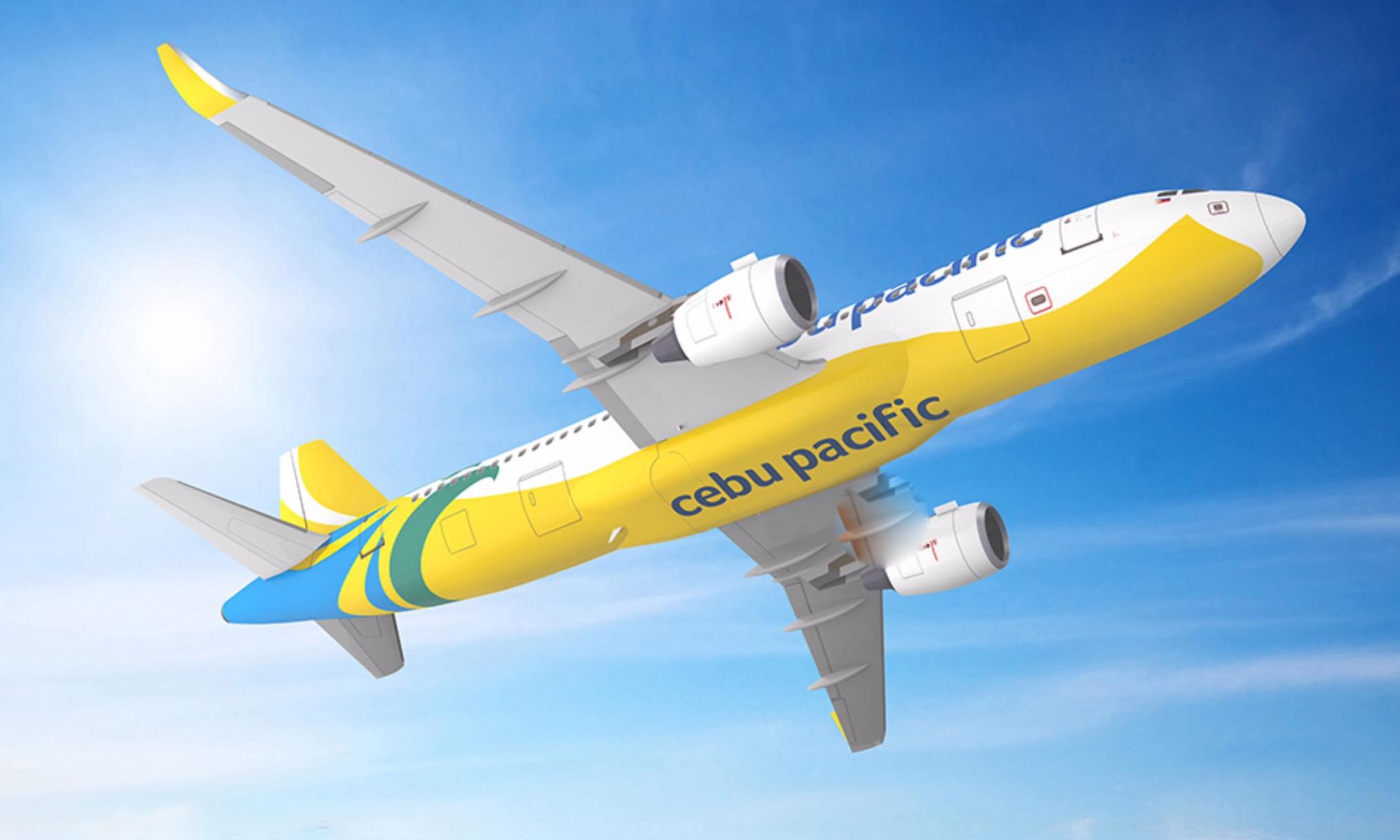
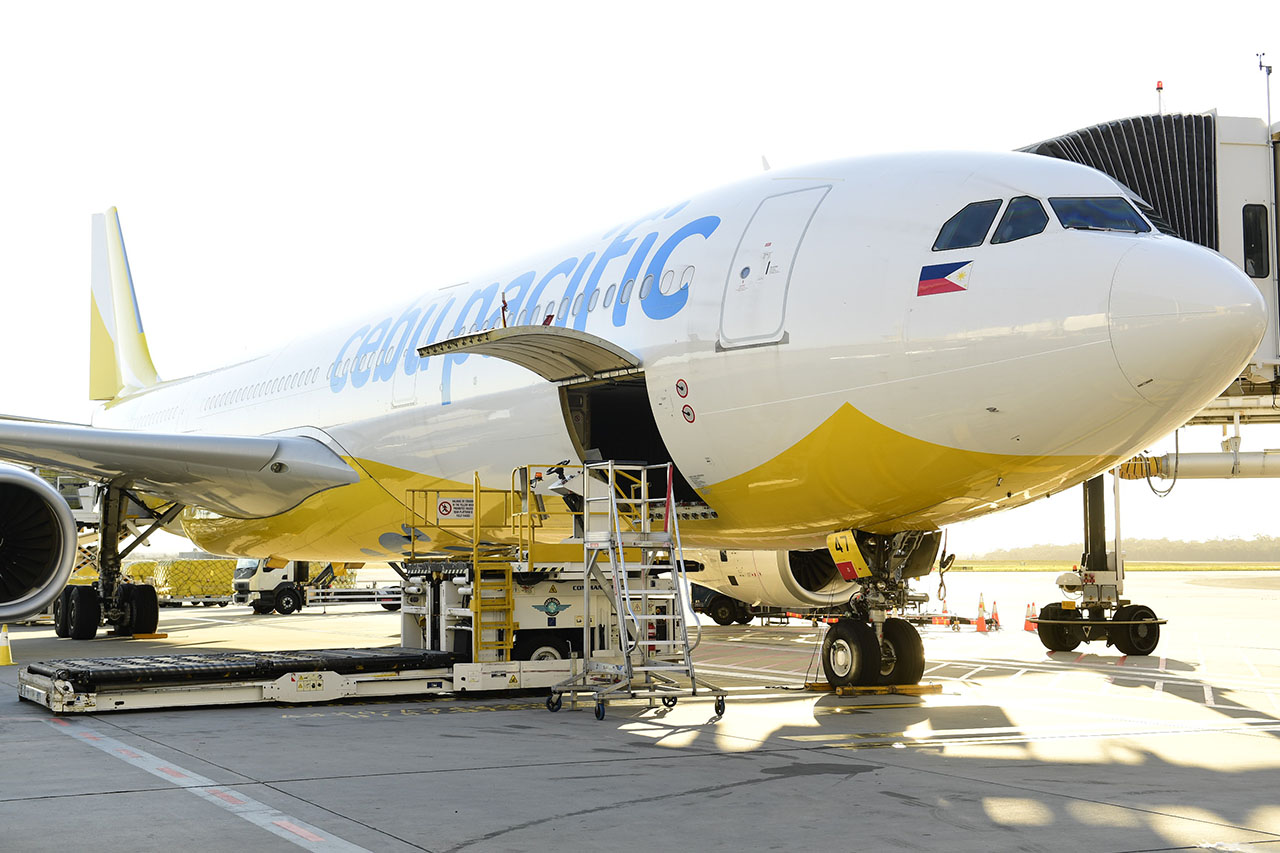
    Cebu Pacific will launch direct flights from Manila to the Chinese city of Shenzhen in July, citing “increasing demand for leisure and business travel.”

    In a statement on Monday, June 10, the budget carrier announced that its Manila-Shenzhen route will have flights 4 times a week – every Monday, Wednesday, Friday, and Saturday – beginning July 1.

    “At only two hours and 40 minutes’ flying time, the evening departure of the flights will enable travelers to make full use of business hours, both in Manila and in Shenzhen,” Cebu Pacific said.

    The airline is holding a seat sale for the new route from Monday to Tuesday, June 11, with a base fare of as low as P1. The travel period is from July 1 to October 26 this year.

    Cebu Pacific said Shenzhen is its 5th destination in mainland China, and its 27th international destination.

    “We want to provide our travelers with a viable option to reach some of the most crucial commercial centers in the world. Our new direct service between Manila and Shenzhen will enable faster movement of people and products,” said Cebu Pacific vice president for marketing and distribution Candice Iyog.

    Cebu Pacific and its subsidiary Cebgo currently fly to 37 domestic and 26 international destinations, with over 107 routes spanning Asia, Australia, the Middle East, and the United States.

    The airline had enforced dozens of flight cancellations in April and May, however, citing “an unprecedented level of disruption” to its operations.

    President Rodrigo Duterte conducted a “surprise inspection” at the Ninoy Aquino International Airport Terminal 2 on Monday, and promised to find a solution to flight cancellations and delays within a month.

  • AirAsia India announces new route

    AirAsia India announces new route

    AirAsia India is on an expansion spree, it plans to add its first route to Chennai, from Kolkata. AirAsia India will now connect Kolkata and Chennai with one daily flight with effect from 1 June 2019. The launch fare for the new route between Kolkata and Chennai is ₹3,299.

    “Kolkata is a key market for AirAsia India as we currently operate 18 flights to 11 different destinations. The addition of this new route will strengthen up our connectivity in the east,” Sanjay Kumar, COO, AirAsia India, said.

    According to AirAsia’s release, the flight i541 will depart from Kolkata at 3. 30 pm and will reach Chennai at 5.55 pm. The return flight i542 will take off from Chennai at 6.25 pm and will reach Kolkata at 8.55 pm.

    High air fares and capacity constraints slowed India’s domestic air passenger traffic growth rate in March. As per the data of the Directorate General of Civil Aviation (DGCA), air passenger traffic growth rate in March rose a mere 0.14% to 115.96 lakh from 115.80 lakh reported for the corresponding month of the previous fiscal. According to the data, GoAir led the industry with 95% punctuality rate (on-time performance) at the four major airports of Bengaluru, New Delhi, Hyderabad and Mumbai. It was followed by Vistara (91.9%), AirAsia India (91.9%) and IndiGo (89.5%).

    Air Asia India, which started operations in June 2014, is a joint venture between Tata and AirAsia Berhad. It currently operates 164 flights a day, covering 19 destinations and carrying over 25,000 passengers.

  • King Power Thailand Acquires More Monopolis

    King Power Thailand Acquires More Monopolis

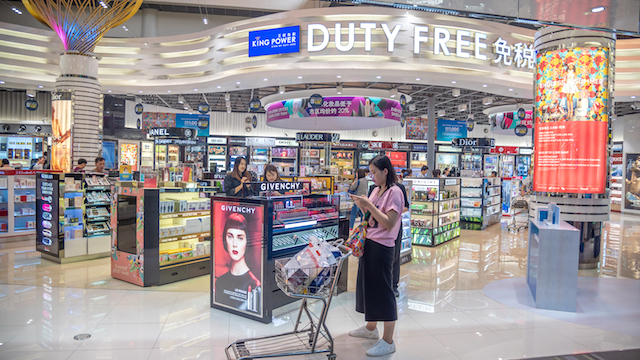
    King Power Thailand has won extended exclusive rights to operate at three additional Thai airports for a further 10 years.

    The firm won tenders for Phuket, Chiang Mai and Hat Yai airports, just a week following a win at the country’s main international airport at Suvarnabhumi near Bangkok.

    The contracts were subject to some criticism from observers such as the Thai Retailers Association, who were hoping to see Airports of Thailand bring greater competition to the US$2.1 billion duty-free retail sector. The airport operator responded to criticism in saying King Power had submitted the best proposal above close rivals Lotte Group and Dufry.

    In short, King Power bought the rights, the cost of which will inevitably be passed on to travellers. Rival companies have called for a “more opaque” tender process.

    The tenders reaffirm King Power’s status as effectively the only duty-free store provider at major airports in Thailand.

  • Cebu Pacific to expand its hubs in Clark, Cebu

    Cebu Pacific to expand its hubs in Clark, Cebu

    Cebu Pacific said it is eyeing to expand its hubs in Clark and Cebu as it continues to boost its fleet with a target of 83 aircraft by end-2022.

    Lance Y. Gokongwei, president of Cebu Pacific operator Cebu Air, Inc., said the budget carrier will be adding “a lot of frequency” in its hubs in Cebu and Clark.

    “In Clark, we’re going to try to connect the dots so that a lot of North Asia will be able to fly into the south without having to connect through Manila… I think in the next two to three years, you’ll see a lot of flights into Japan, (South) Korea and China from Clark,” he told BusinessWorld on the sidelines of the JG Summit Holdings, Inc. stockholders’ meeting last week.

    For Cebu, Mr. Gokongwei said they will ramp up the frequencies of its existing routes, which currently connect the city to both Japan and South Korea. Cebu is a popular destination for Japanese and Korean tourists.

    “The (Airbus A321neos), we put them into Manila. Then we pull out the (Airbus A320s) and put them to Clark or to Cebu,” he said.

    The carrier is currently on fleet expansion mode and expects the delivery of 12 new aircraft this year, namely six Airbus A321neos (new engine option), five A320neos and one ATR 72-600.

    Mr. Gokongwei said in the long term, what Cebu Pacific wants is to make its Clark operations as big as its Manila operations. “We have to complete the Bacolods, the Iloilos, the Taclobans, the CDOs. Whatever we have in Manila, we’ll replicate in Clark,” he said, but noted it may take about 15 years from now.

    Cebu Pacific said its hubs in Clark and Cebu have already seen rapid growth since the start of the year, both in terms of new routes and frequency of flights.

    For the Clark hub, the carrier already increased its capacity to and from Caticlan by 231% after shifting to use the bigger Airbus A320 starting March 31 from the 78-seater ATR 72-600.

    It also noted it will be opening daily from its Clark hub going to and from Iloilo, Bacolod and Narita by Aug. 9, and daily flights to and from Puerto Princesa by Oct. 9.

    For its Cebu hub, the airline noted it already added frequency to its flights going to Cagayan de Oro, Dumaguete, Siargao, Iloilo, Caticlan, Ozamiz and Zamboanga by an average of 63% since April 15.

    “Flights between Manila and Cebu had likewise increased 24%. The increase in flights from its Cebu hub is on top of its six-times weekly Cebu-Shanghai and Shanghai-Cebu routes which began on April 15, 2019,” it added.

    Cebu Pacific currently has flights from Clark to Cebu, Caticlan, Tagbilaran, Davao, Singapore, Macau and Hong Kong.

    In its Cebu hub, the carrier flies to and from Bacolod, Caticlan, Butuan, Cagayan de Oro, Calbayog, Camiguin, Clark, Davao, Dumaguete, General Santos, Iloilo, Kalibo, Legazpi, Ozamis, Pagadian, Puerto Princesa, Siargao, Surigao, Tacloban, Zamboanga, Hong Kong, Macau, Tokyo (Narita), Singapore and Incheon.

    Listed Cebu Air posted a net income of P3.43 billion in the first quarter, up 138.4% from the same period last year due to a growth in passenger volume and average fares

  • AirAsia transitioning to asset-light business model

    AirAsia transitioning to asset-light business model

    AirAsia is moving from the traditional model of owning aircraft to become an asset-light airline. The company plans to fully shift to the new model by completely withdrawing from aircraft ownership, a move that would bring the obvious benefit of lowering its financial liabilities.

    During AirAsia’s conference call with analysts last Wednesday, its management said it is targeting to sell another 19 aircraft this year.

    AirAsia is also focusing on its “digitalization” agenda, management added.

    The analyst said AirAsia would be looking to secure a deal similar to what it achieved last year when it went into sale and leaseback agreements that helped it raise a lot of funds.

    AirAsia’s management expects to raise around RM1.5bil from the sale and leaseback of its remaining 19 aircraft.

    Last year, the airline group sold 79 aircraft and 14 aircraft engines to US private investment firm Castlelake LP in a deal worth RM4.38bil.

    Following the success of the sale, AirAsia had last week announced a bumper dividend of 90 sen a share, which is worth more than RM3bil in total payout.

    For shareholders of AirAsia, this strategy has worked out well. AirAsia began its aggressive sale and leaseback programme and dishing out dividends around 2017.

    Here’s an interesting fact: AirAsia shareholders who bought the company shares on Jan 2, 2017 would have paid RM1.78 per unit. Since then, that’s exactly how much the airline has paid back in dividends, giving back those investors their entire cost of buying those shares.

    “AirAsia is a different company now. It is transitioning into an asset-light model, focusing its services through its platform and on-the-plane experience as well as its mobile wallet,” an analyst said.

    Going forward, though, not all analysts have a positive view on the airline’s earnings growth prospects.

    Going by Bloomberg data, analysts have a varied target price on AirAsia’s shares, ranging from RM1.56 to RM5.20.

    For the first quarter ended March 31, AirAsia posted a 92% drop in net profit to RM96.09mil compared with RM1.14bil recorded last year, when it recorded extraordinary gains. Its shares closed at RM2.88 last Friday.

    CIMB Research analyst Raymond Yap expects AirAsia’s future earnings to be under pressure, stemming from rising operating costs and higher depreciation as well as interest expenses due to the Malaysian Financial Reporting Standards 16.

    He added that other risks included higher fuel prices and a weaker ringgit against the US dollar.

    “The poor results will likely shock the market and cause analysts to slash their earnings forecasts, although the share price may be supported in the next two months by the 90 sen special dividend per share,” he said in a report.

    Yap has recommended investors to sell their positions in AirAsia prior to the dividend ex-date on June 30.

    “We recommend investors to take advantage of any share price upside post-announcement of the 90 sen special dividend to sell into strength, and to sell their AirAsia holdings prior to the dividend ex-date on June 30, 2019, to avoid the rush out of the door,” he said.

    Although AirAsia’s management has highlighted that it is targeting to continue with special dividend payments to shareholders for every two years, Yap believed the group is unlikely to declare additional special dividends in the near future beyond the 90 sen per share it had announced.

    “Continued losses at AirAsia India and Indonesia AirAsia may require the group to provide further equity injection or continuous working capital support,” he said.

    A different view is held by Nomura Research analyst Ahmad Maghfur Usman, who has the highest target price of RM5.20 for AirAsia shares. He expects AirAsia’s core earnings in financial year 2019 (FY19) to double to RM1.37bil compared with RM656mil last year.

    “We remain optimistic on the earnings outlook on the back of lower fuel costs, coupled with the turnaround from its Asean affiliates, while we expect losses from India to narrow on improved scalability as passenger volumes increase,” he said in a research note.

    For this year, AirAsia is targeting to add 18 aircraft including additional 11 for AirAsia India.

    In terms of its digital business, AirAsia is targeting to roll out remittance and lending products and expand its BigPay offerings to other Asean countries this year.
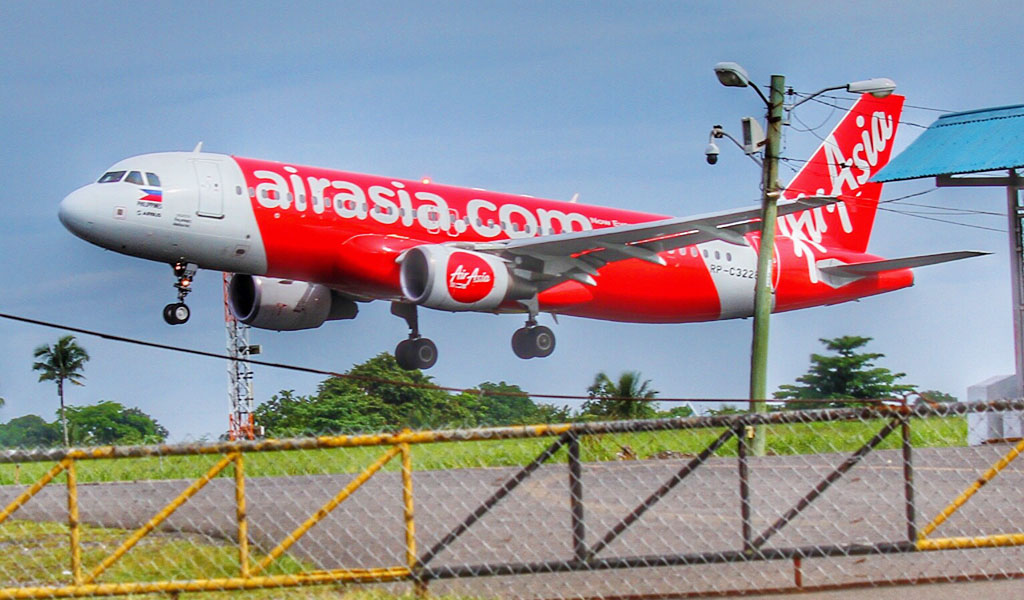
  • Expedia, Booking.com warn AirAsia of turbulence in online travel plan

    Expedia, Booking.com warn AirAsia of turbulence in online travel plan

    Online travel giants Expedia and Booking.com are warning that budget airline pioneer, AirAsia Group, risks being destabilized by ambitious plans to become the “Amazon of travel”.

    AirAsia, which already offers limited travel plans on its website, plans to expand the online service to include booking flights with rival airlines and ecommerce. As profits tumble in the face of rising fuel costs and intensifying competition, CEO Tony Fernandes is seeking alternative sources of revenue and earlier this year told the Nikkei Asian Review he intended to invest 100 million Malaysian ringgit ($24.6 million) a year to become a technology-led company.

    The carrier’s future competitors in the wider online travel sector dismissed the threat posed by the company which brought low cost flight to Asia.

    Booking.com’s head of China, Marsha Ma, suggested the online travel giants would rally their vast networks of flights, hotels and services in the fight against any attempts by AirAsia to take market share. “The online travel agency business, especially accommodation, is a pretty heavy business model in terms of its supply chain management,” said Ma. “It takes years… We have offices at 190 locations and [they] have built up our supply chain capability, with width and depth.”

    “We will keep fighting on that,” the Booking.com executive said, speaking at an event held in Singapore last week by Skift, an U.S.-based travel industry information provider.

    Expedia, once a partner of AirAsia’s existing travel platform, indicated the carrier might not have the necessary skills to succeed. “What makes you great to run an airline” is not the same as being a great online travel agency, said Greg Schulze, head of commercial strategy & services at Expedia. Worse, the carrier risked being distracted from selling its own flights, which could exacerbate its current troubles, he suggested. “I am happy to see [AirAsia] negotiating with other airlines.”

    However, Aireen Omar, AirAsia’s deputy CEO for technology, was confident AirAsia could manage the risks. It was “ambitious, but I think it’s very doable,” Omar said.

    The aviation business model was changing, Omar said. “The key essence for us is no longer the aircraft but data.” AirAsia transported close to 100 million passengers this year alone in Southeast Asia, and was seeing six to eight million visitors come to its website every month. “A lot of new business opportunity is around there,” she said. This included enhancing its digital travel platform with itinerary suggestions, hotels or shopping, using technologies such as artificial intelligence to improve the offering.

    When asked if becoming the Amazon of travel is overly ambitious, Aireen Omar, AirAsia’s deputy CEO for technology and digital, said it’s “ambitious, but I think it’s very doable.” (Photo by Eri Sugiura)

    “I think online travel agencies are very cautious,” Omar said. She insisted that the company already has a “big platform” for AirAsia.com, the carrier’s BigPay, a mobile wallet which was launched in Malaysia last year tracking consumers’ credit and debit card payments, and combining this with its own loyalty program. “It is an opportunity for [other airlines] to have an access of the network and the data we have,” she added.

    AirAsia entered the flight and hotel package business in 2015 through a joint venture with Expedia. However last August it announced it would sell its 25% stake to Expedia for $60 million. This freed the carrier to build its own accommodation and other inventories. The airline in 2017 acquired 50% in travel tours and attractions provider startup Vidi, in a deal worth $2.6 million.

    Omar said the company’s data would be uploaded in the cloud by the end of the year, in preparation for the launch of its new service.

    AirAsia’s rush to build an enriched travel platform can be explained by headwinds the company faces in its core business. The carrier’s net income slipped to 96.1 million ringgit, a 92%-drop in the three months through March from a year earlier, as it was hit by high fuel costs and lower average fares.

    While the company remains profitable in Malaysia, where it is based, its operations in Indonesia, Thailand and elsewhere are either losing money or earning less.

  • AirAsia to Expand E-Commerce Beyond Selling Plane Tickets

    AirAsia to Expand E-Commerce Beyond Selling Plane Tickets

    AirAsia Group, Southeast Asia’s largest budget carrier, wants to sell more than cheap flight tickets. AirAsia is talking to potential partners to build an e-commerce app that it wants to see overtake the size of its airline business, Group Deputy Chief Executive Aireen Omar said in an interview. The carrier, which is seen getting about 1 billion ringgit ($240 million) revenue a year from its AirAsia.com website, expects to earn 20 times more as it expands into an app that will offer lifestyle goods and services.

    “This will be bigger than the airline itself,” Aireen said at her office at the Kuala Lumpur International Airport. “There’s a lot you can do in just one app and that’s what we are trying to do with our travel and lifestyle app.”

    The budget airline, which carries 100 million passengers annually, is bolstering its digital capability to tap a regional e-commerce market that’s set to increase threefold to $240 billion by 2025, CEO and Founder Tony Fernandes said last month. Premium carriers Singapore Airlines Ltd. and Cathay Pacific Airways Ltd. are already turning to onboard duty-free sales to boost revenue, while AirAsia’s app will also offer everything from hotel bookings to beauty products and dinner vouchers.

    AirAsia, which announced a special dividend of 90 sen a share Wednesday, climbed 8% as of 4:14 p.m. in Kuala Lumpur. The shares rose as much as 16% earlier, the steepest gain since 2004.

    The digital business is likely to be spun off in the near future, Aireen said, without giving details.

    Fernandes has slowly but surely prepared the company to focus on this digital drive. AirAsia has sold aircraft parked in leasing companies and disposed a stake in its ground-handling operations. He also restructured the company to have an investment holding group as its publicly listed entity and separated the Malaysian airline business.

    The moves come as the budget carrier grapples with rising risks to its airline business, from the closing of holiday destination Boracay island and natural disasters in Indonesia last year, as well as Malaysia’s clampdown on price surges during high season.

    Meanwhile, Brent has gained almost 30% this year, increasing costs for airlines from Singapore Air to Deutsche Lufthansa AG, which posted lower first-quarter profit partly due to higher oil prices. AirAsia’s net income slipped 92% in the three months through March from a year earlier, it said in a filing on Wednesday.

    The company realized about three years ago that it’s rich with consumer data that a lot of people would want access to, Aireen said. It plans to use the data to market goods and services in a targeted way and provide Internet connection on all its planes to sell products to passengers during the flight.

    The new app will eventually consolidate its current AirAsia BIG Loyalty program, which already partners with vendors from Nike Inc. to Sephora to give special offers and discounts.

  • CAE signs new deal with AirAsia in the Philippines

    CAE signs new deal with AirAsia in the Philippines

    CAE has signed a new five-year training agreement for AirAsia’s A320 pilots in the Philippines, extending the use of the CAE Rise training system to a third AirAsia affiliate.

    Through the new agreement, announced at the International Air Transport Association (IATA) Annual General Meeting (AGM), CAE will continue to provide initial training for the airline’s pilots and will soon undertake recurrent training at CAE Clark – Philippine Academy for Aviation Training (PAAT) in the Philippines, starting in July 2019.

    “AirAsia has embarked on a mission to digitise every aspect of their business and by implementing the CAE Rise™ training system they are better able to train and develop their pilots using real-time insights alongside a new level of training data analytics,” said Nick Leontidis, CAE’s Group president, Civil Aviation Training Solutions. “Just recently AirAsia extended the use of the CAE Rise™ training system on the Airbus A330 platform and it’s an honor to see them extend this training system on the Airbus A320 platform with a third airline affiliate.”

    Earlier this year CAE announced the signing of a five-year training agreement for AirAsia’s long-haul pilots, extending the use of the CAE Rise training system to AirAsia’s long-haul affiliate, AirAsia X on the Airbus A330 platform.

  • AirAsia’s new biggest shareholder is holding firm of party-list rep

    AirAsia’s new biggest shareholder is holding firm of party-list rep

    AirAsia Inc on Monday said F&S Holdings Inc, owned by 1-PACMAN party-list Rep. Michael “Mikee” Romero, is now the biggest shareholder of the budget airline’s Philippine arm after acquiring an additional 28.8 percent stake, which raised the holding firm’s ownership to 44.5 percent.

    Prior to the acquisition, Romero’s group owned 15.7 percent shares. Thirteen percent and 15.8 percent of shares were acquired from Ambassador Fred Yao and Maan Hontiveros, Romero’s wife Sheila Romero said in a press conference.

    “Rep. Romero said Air Asia Inc will continue to scale new heights for the multi-awarded Philippines AirAsia,” the carrier said in a statement.

    Businessman Antonio “Tonyboy” Cojuangco’s TNR Holdings has 15.7 percent shares, while the remaining 40 percent remain with AirAsia Berhad founders Tony Fernandes and his partner Kamarudin Menardum.

    Romero said he is bullish about AirAsia’s prospects this year as airlines have been booking 90 percent of seats recently.

    He said AirAsia is recapitalizing and restructuring its equities and is aiming to have an initial public offering of around $200 million worth of shares later this year.

    The company is also aiming to add 50 planes within the next 10 years and add more routes as it competes in the budget air travel market.

    “In fact we want to lower the prices and add more routes and flights,” Romero said in an interview with ANC’s Business Nightly.

  • India needs 10k pilots by 2030 says AirAsia

    India needs 10k pilots by 2030 says AirAsia

    Despite the current slump in the domestic aviation market, India will require up to 10,000 new pilots by 2030. Acknowledging this, AirAsia India on Tuesday launched the country’s first cadet-pilot program, ready to send its first batch of 15 cadets to New Zealand for flight training.

    By passenger volumes, India was ranked second globally among the fastest growing domestic markets for aviation. This would only mean the requirement for pilots will spike in the future, even as the Kingfisher and Jet Airways pilots are being quickly absorbed by other airlines.  To get the cadet-pilot project going, AirAsia India has partnered with New Zealand Academy and Harrison Omniview Consulting. As part of the 18-24 month course, selected candidates will be trained at the currently under-utilized Oamaru airport in New Zealand’s Waitaki district.

    The first batch of the cadets will come out in 2021, informs AirAsia India’s Head of Operations, Capt Manish Uppal. Cadets earn their second officer rank and commercial pilot license after 500 hours of flying before graduating to first officer, senior first officer, and captain, in charge of the entire aircraft and crew.

    The first batch of the cadets will come out in 2021, informs AirAsia India’s Head of Operations, Capt Manish Uppal. Cadets earn their second officer rank and commercial pilot license after 500 hours of flying before graduating to first officer, senior first officer and captain, in charge of the entire aircraft and crew.  Headquartered in Bengaluru, AirAsia India currently has a fleet of 21 Airbus-A320 aircraft covering 19 destinations across the country. The airline had commenced operations in India on June 12th.

    Uppal informs 11% of the airline’s crew are women. Most of the batch passing out from the cadet-pilot program are expected to be absorbed by the airline.

  • AirAsia aims international flights by October

    AirAsia aims international flights by October

    AirAsia India aims to start international operations in by October this year, its chief operating officer said Monday. The joint venture carrier between Tata Sons and Malaysian low fare airline AirAsia Berhad is looking at short haul destinations in Sri Lanka, Thailand and Kuala Lumpur airline recently received its 21st plane and aims to take the fleet size to 40 in a year, Kumar added. It operates 154 daily flights.

    Earlier this year the airline presented a plan to its board to deploy 40% of its fleet overseas in five years. The government had been investigating the airline for alleged irregular lobbying for international rights. Kumar didn’t comment on the probe but indicated its plans for starting flights by October were firm.

    AirAsia India last month got a boost from its parents by getting a fund infusion of Rs 500 crore for its expansion. That followed an overhaul of its top management, getting IndiGo veteran Kumar as COO and former Tata Steel chief Sunil Bhaskaran as CEO.