Tag: fuel

  • Fuel prices increase at pumps in Cambodia

    Fuel prices increase at pumps in Cambodia

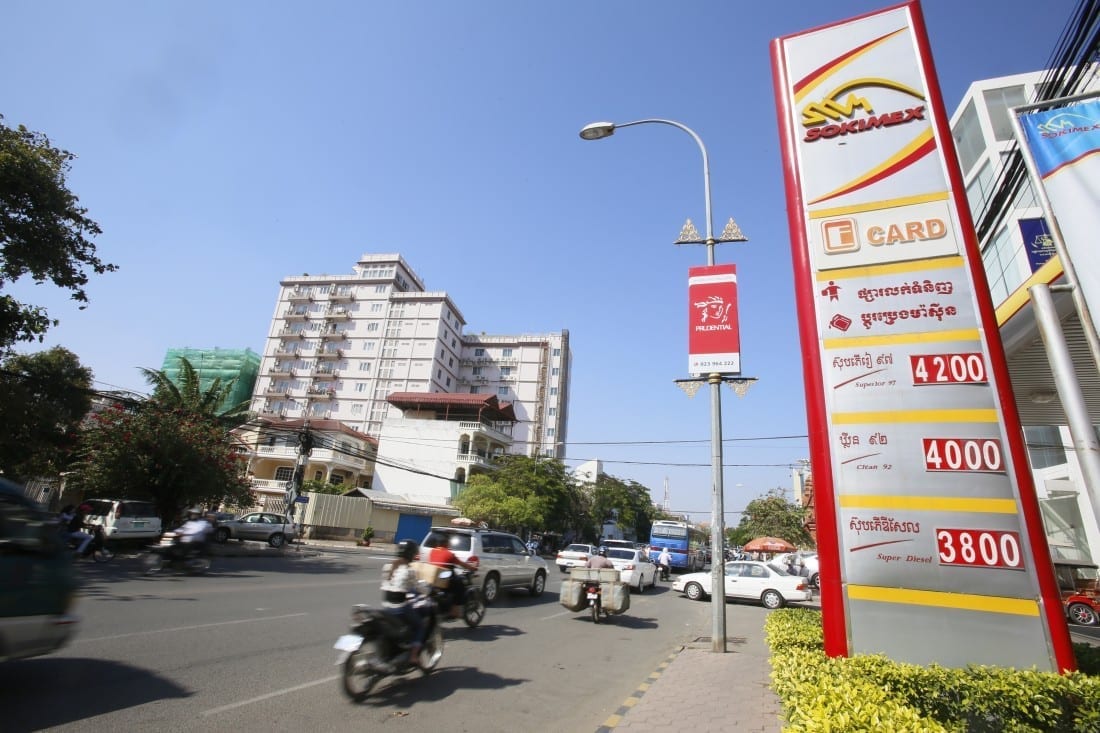
    Road users can expect to pay up to 500 riel ($0.12) more per liter of fuel due to the increase in global crude oil prices after the government last March pegged local prices to that of the international market, a Commerce Ministry official said yesterday.

    From today until January 21, drivers can expect to pay 3,850 riel ($0.95) per liter for Gasoline 95, up 500 riel ($0.12), 3,750 riel ($0.93) per liter for Gasoline 92, up 450 riel ($0.11), and 3,450 riel ($0.85) per liter for diesel, up 450 riel ($0.11).

    “Please understand that the mechanism is just to prevent gas prices from increasing higher than that of the global gas price or when global gas prices go down, all local retail gas stations in Cambodia are also compelled to bring down the prices,” Commerce Ministry spokesperson Soeng Sophary said.

    “This formula is not intended to keep gas prices in Cambodia low even when global gas prices are on the rise.

    “We just want to prevent retailers from increasing their prices beyond that of global prices. We will follow the global market price,” she explained.

    Gas prices have been steadily increasing since November last year.

    The government last March announced that it would be standardizing retail gas prices in Cambodia by pegging them to world oil prices in the wake of the plunging global crude oil price the year before.

    The Commerce Ministry was tasked with releasing updated prices to all retail stations every 10 days, on the first, 11th and 21st of each month.

    Ms. Sophary attempted to quell dissatisfaction over the increase in prices by explaining that the new mechanism of calculating prices made Cambodia susceptible to world oil prices, which fluctuate according to global markets.

    “We are easily affected if there is any issues going on within those larger economies,” she said. “We cannot ask to lower gas prices when the global economic system is always changing since we have to follow the global situation.

    “The price could go down after US President-elect Donald Trump takes office later this month or it could increase if there are any issues in the EU or if there is ongoing terrorism in Turkey,” she said, adding that Cambodia would only be able to experience consistently low gas prices if it could produce its own refined product.

    PTT (Cambodia) deputy managing director Bin Many Mialia told yesterday that he understood the price hike given the new pricing mechanism, but remained optimistic as given the uncertainty of the global political climate, world oil prices could see a reduction next month.

    “The price for gas in Cambodia goes up and down since we are solely, 100 percent dependent on international gas prices. We cannot adjust the price, increase it or lower it, we cannot predict what the gas price will be. It’s up to the international market price,” Mr. Many Mialia said.

    “Now we see the trend of the oil price being high, but we will wait and see next month whether it continues to increase or if it will fall. All the countries don’t know what the US policy will be like or what the regional situation will be,” he added.

    According to a report from the Cambodia Import-Export Inspection and Fraud Repression Directorate-General, oil imports to Cambodia increased by one percent in the first 11 months of 2016, while the value of oil imported dropped by about 28 percent.

    The report showed that from January to November 2016, Cambodia imported 1.5 million tons of oil, compared with 1.49 million during the same period in 2015.

    Gas prices decreased by 16 percent, while diesel and petroleum prices dropped 19 percent and 28 percent respectively.

    The value of the oil imported throughout those 11 months last year stood at $615 million compared with $858 million the year before.

  • BMW recalling 154,472 vehicles over fuel pumps

    BMW recalling 154,472 vehicles over fuel pumps

    BMW is recalling 154,472 vehicles registered in the United States and Canada for a fuel pump problem that could cause stalling, according to a filing with U.S. safety regulators and BMW.

    BMW told regulators that no injuries have been reported. Since 2014, the German-based company has conducted safety recall campaigns in China, Japan and South Korea for the same issue, according to a filing posted on Friday by the U.S. National Highway Traffic Safety Administration.

    Of the vehicles recalled in North America, 88 percent are registered in the United States.

    BMW is recalling certain vehicles in the United States and Canada for model years 2007-2012. Among them in the United States are the X5 3.0si, X5 4.8i, X5 M, X5 xDrive30i, X5 xDrive35i, X5 xDrive48i and X5 xDrive50i, 2008-2011 X6 x Drive35i, X6 xDrive50i and X6 M, 2010-2011 X6 ActiveHybrid, according to the filing.

    Also the 535i xDrive Gran Turismo, 535i Gran Turismo, 550i xDrive Gran Turismo and 550i Gran Turismo, 2011-2012 528i, 535i, 535i xDrive, 550i and 550i xDrive and 2012 535i ActiveHybrid, 640i Convertible, 650i Convertible, 650i xDrive Convertible, 650i Coupe and 650i Coupe xDrive vehicles.

    BMW will notify owners and dealers to replace a fuel pump module free of charge beginning in early December. BMW owners can call BMW customer service for details.

  • Ford to recall 91,000 cars worldwide to fix fuel-pump issue

    Ford to recall 91,000 cars worldwide to fix fuel-pump issue

    Ford Motors said on Wednesday it was recalling about 91,000 vehicles worldwide to replace faulty fuel-pump parts that could potentially cause a car to stall without warning.

    Ford said it would replace fuel-pump control modules in about 88,151 vehicles, including certain of its 2013-15 model year Ford Taurus sedans, Ford Flex crossover utility vehicles, Lincoln MKS sedans, Lincoln MKT SUVs and Ford Police Interceptor sedans. (ford.to/2bOOxjg)

    The company also said it would recall about 2,472 Ford Transit vans to replace fuel-injection pumps in certain models manufactured in the year 2015-16.

    The carmaker said it was additionally recalling 23,150 Ford Escape SUVs of 2017 model year to update power-window software.

    Ford said is was not aware of any accidents or injuries associated with the issues.

  • Pertamina Reports Net Profit rp23,8 Trillion Six Months

    Pertamina Reports Net Profit rp23,8 Trillion Six Months

    PT Pertamina reported US$1.83 billion (Rp23.8 trillion) in net profit in the first half of the year, or an increase of 221 percent from the same period last year.

    Chief Executive of the state-owned energy company Dwi Soetjipto attributed the increase in profit to improved performance of its business units and efficiency in operation.

    “We are grateful that efficiency and increase in performance in the upstream and downstream operations have resulted in an increase in net profit to US$1.83 billion,” Dwi said.

    He said in the first half of the year, the company was still confronted with declining prices of oil in the world market.

    The condition served a big blow to oil companies in the world though the impact was less damaging on Pertamina, he said.

    The prices, however, began to pick up in the following three months, he added.

    Pertaminas Finance Director Arief Budiman said in the first half of 2016 the company recorded US$17.19 billion in income, down 21 percent from US$21.79 billion in the same period last year.

    Its operating income rose 110 percent from US$1.56 billion in the first six months of 2015 to US$3.28 billion in the same period in 2016.

    “We are strong in cash flow with balance reaching US$5 billion. Therefore, we are strong enough to carry out corporate action when necessary,” he said.

    He said the company produced 640,000 barrels of oil equivalent per day consisting of 305,000 barrels of crude oil and 1,938 mmscfd of gas.

    Investment in a number of upstream projects have been implemented such as in the 1×55 MW geothermal power project of PLTP Ulubelu 3, and 2×55 MW PLTP Lumut Balai now 45 percent completed .

    The company also continued to develop infrastructure both for gas transport and processing and marketing.

    Among gas pipe projects such as Arun-Belawan-KlM-KEK, Muara Karang-Muara Tawar, Gresik-Semarang, and Porong-Grati gas pipes have been more than 80 percent completed.

    Development of processing infrastructure is being accelerated such as Refinery Development Masterplan Program (RDMP) of Kilang Balikpapan, which is now in the final phase of “Basic Engineering Design”, and RDMP of the Cilacap refinery now in the phase of “Front End Engineering Design”.

    Meanwhile, a number of marketing infrastructure projects have been in the final phase of development such as Pulau Sambu and Tanjung Uban oil fuel terminals, procurement of oil fuel and crude oil tankers of the General Purposes (GP) and Medium Range (MR) types with delivery expected this year.

  • Five million more households to use gas for fuel

    Five million more households to use gas for fuel

    The government hopes to built gas pipe networks for 5 million household consumers in the next 10 years at a cost of Rp70 trillion.

    Utilization of gas as household fuel is more efficient, said Energy and Mineral Resources Minister Sudirman Said, when commissioning the ground breaking ceremony to mark gas network projects here on Monday.

    In five years or by 2019 networks of gas pipes are expected to be already installed for 1.3 million households with an investment of Rp18.2 trillion.

    The projects would be financed with funds from the state budget, state-owned energy company PT Pertamina and state owned gas company Perusahaan Gas Negara (PGN).

    With 1.3 million households using gas for fuel , the country is estimated to save Rp936 billion a year, the minister said.

    Most households and commercial consumers in urban areas in the country use liquefied petroleum gas (LPG), which is relatively expensive.

    Based on the availability of gas and infrastructure of transmission pipelines in 38 cities , gas could be distributed to around 7.9 million households with a cost of Rp111.3 trillion, Sudirman said.

    So far the government already built gas pipe networks serving 204,766 households in a number of cities in Indonesia including pipes built by Pertamina and PGN.

  • Pertamina to launch new oil fuel products Turbo

    Pertamina to launch new oil fuel products Turbo

    Pertamina will soon launch a new oil fuel product Turbo with Research Octane Number (RON) 98 to expand the market of its non subsidized oil fuels.

    General Manager of Pertaminas southern Sumatra Regional Marketing Operation Herman M. Zaini said the production of Turbo is part of the companys bid for survival amid the shrinking prices of oil now diving to as low as US$35 per barrel.

    “After the success in launching Pertalite Pertamina will soon come up with Pertamax Turbo to give more choices for the consumers of non-subsidized oil fuels, and to reduce the consumption of subsidized oil fuel,” Herman said here on Tuesday.

    He said currently Pertamina is focused more on business in the downstream sector as business in the upstream sector which normally contributes 70 percent to its income, has suffered badly with deficit as a result of oil price fall.

    The decline in business in the upstream sector, however, has positive effect as it forced Pertamina to innovate and turn out new marketable products in the country and abroad, he said.

    Previously Pertamina had only gasoline products of Premium with RON 88, Pertamax RON 92, Pertamax Plus 95, and Pertamax Racing RON 100, but now it also has Pertalite RON 90 and soon there would be Pertamax Turbo, he said.

    “Currently Pertamina exports lubricant oil to 26 countries including Middle east countries. And now Pertamina is seeking contract for supplying oil fuels for fuel filling stations in Myanmar. Tender is being in the process,” he said.

    If Pertamian won the tender, it will build 1,360 public fuel filling stations in cooperation with Myanmar state company Myanmar Petroleum Products Enterprise, he said.

  • IOC bids for fuel marketing and retail rights in Myanmar

    IOC bids for fuel marketing and retail rights in Myanmar

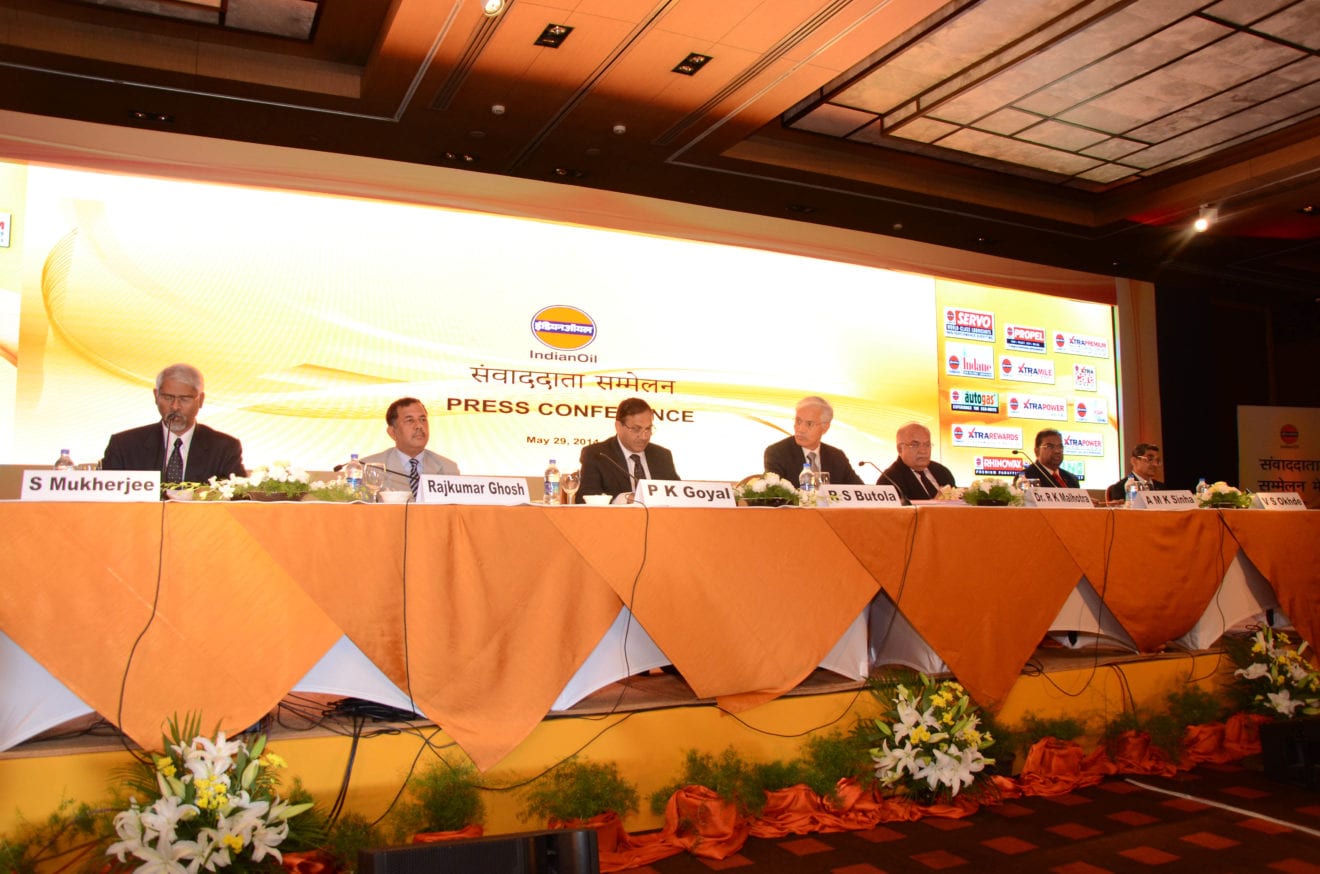
    State-run Indian Oil Corp (IOC) has bid for rights to import, store and distribute petroleum products in Myanmar.

    “We have put in a bid to enter fuel marketing and retail business in Myanmar,” a senior company official said.

    Myanma Petroleum Products Enterprise (MPPE) last year invited companies to form a joint venture for import, storage, distribution and sale of all petroleum products except liquefied petroleum gas (LPG) and liquefied natural gas (LNG).

    A separate tender for cooking gas LPG was floated. IOC had bid for that tender too, the official said.

    MPPE left the fuel distribution business when it was privatised in 2010, but is planning a re-entry into the fast-growing business sector that is marred by widespread dissatisfaction over service standards and fuel quality.

    In 2010, MPPE transferred 216 filling stations to private companies across the country but it still runs 12 pumps which supply fuel to state-owned vehicles.

    It also owns four main fuel terminals and 24 sub-fuel terminals. Around 70 private companies run the country’s 1163 petrol stations, but few have storage facilities or an import licence.

    MPPE now wants to tie up with foreign companies to expand the business and rehabilitate existing facilities. MPPE will hold 51 per cent of equity while the foreign company will hold the rest.

    The joint venture will be for a maximum of 30 years, extendable two 10-year periods.

    The official said IOC wants to use its just commissioned Paradip refinery in Odisha to ship fuel a short distance across the Bay of Bengal to get to Myanmar.

    Being the country’s largest fuel retailer, it also has experience of setting up fuel stations and managing logistics, which would be helpful in the nascent market.

    IOC is among the 11 to have bid for the separate tender to build a new liquefied petroleum gas (LPG) terminal and supply chain business for the distribution and marketing of the cooking and heating fuel.

    Winner of this tender will have to upgrade eight storage containers each with a capacity of 5550 metric tonnes of LPG for Ministry of Energy-owned No 1 Refinery (Thanlyin), and build a wharf with the capacity to load and unload 2000 metric tonnes of LPG.

    This is the first time foreign companies will be allowed to distribute LPG in Myanmar.

    Besides IOC, Singaporean firms Puma Energy Group and BB Energy (Asia) and a consortium of Japan’s Marubeni Corporation and Tokai Holdings has also bid.

  • No price fixing among petrol retailers in Singapore, says competition watchdog

    No price fixing among petrol retailers in Singapore, says competition watchdog

    Local prices mirror global trends.

    There is no evidence to suggest that petrol companies conspire to control oil prices in Singapore, according to a study by the Competition Commission of Singapore (CCS).

    The study showed that local oil retailers base their prices on the Mean of Platts Singapore (MOPS) price, which refers to the cost at which petrol companies purchase the refined wholesale petrol from the refineries.

    The CCS said that listed retail petrol prices was observed to move in tandem with the price of MOPS over a six-year period between 1 January 2010 and 31 January 2016, although the pass-through was neither complete nor immediate.

    The MOPS price also made up less than a third of listed retail petrol prices. Other components of retail prices include operating costs, taxes and duties, land costs, discounts and rebates. The cost of these non-fuel components have generally increased in the past few years, the report noted.

    For the period of June 2014 to January 2016, crude oil price fell by an average of 59 SGD cents, or 67%. Consequently, MOPS price fell by 52 SGD cents or 53%, and the listed price of Octane 95 fell by 35 SGD cents or 15%.

    Including discounts, rebates and levy increase in February 2015, the effective price that consumers paid for Octane 95 was found to have fallen by 45 SGD cents, or -24%.
    This indicates a “relatively high level of pass-through” of the fall in MOPS price to consumers over this period. the report noted.

    “The operating income margin of the petrol companies has also increased, but the increase is smaller relative to the increase in the non-fuel components. There is no evidence to suggest collusion in petrol pricing, even though petrol companies monitor and react to each other’s published prices,” the CCS said.


  • Pertamina Woos Myanmar Retail Fuel Business

    Pertamina Woos Myanmar Retail Fuel Business

    Under the bidding proposal, Pertamina and MPPE would establish a joint venture to sell co-branded oil fuels.

    Pertamina would operate 18 fuel depots and 12 fuel stations across the Mekong country through the joint venture, Ahmad said.

    “We would invest $33 million for the project,” he said, adding that the deal would also open an opportunity for Pertamina to sell fuel to other independent fuel stations across Myanmar.

    Pertamina is also considering an offer from a Cambodia firm to sell fuel in the country. In Cambodia, Pertamina could sell its fuel under Pertamina brands and operate its own fuel station, but it could not have a fuel depot, Ahmad said.

    The state energy company have been trying to expand its downstream business abroad, in particular in the Southeast Asian countries.

    “Our targets is the developing countries because it’s easier to secure permits there compared to the more developed countries,” Ahmad said.

    Rini Soemarno, the State-Owned Enterprise Minister, said earlier that she targeted Pertamina to branch out to at least one of the Mekong countries by 2018.

    Pertamina has Pertamina International Timor, a joint venture with 4-Consortio Timor Progresso, to sell oil fuel, lubricants and liquefied petroleum gas in Timor Leste.

    The state energy company virtually controls Indonesia’s retail oil fuel market, thanks to its vast distribution network across the archipelago. That despite the government has opened the sector to foreign firms like Dutch’s Shell, Malaysia’s Petronas and French’s Total for more than a decade.