Retail News CRM

Tag: fuel

  • Oil rises as traders expect Venezuelan supply disruptions amid U.S. sanctions

    Oil rises as traders expect Venezuelan supply disruptions amid U.S. sanctions

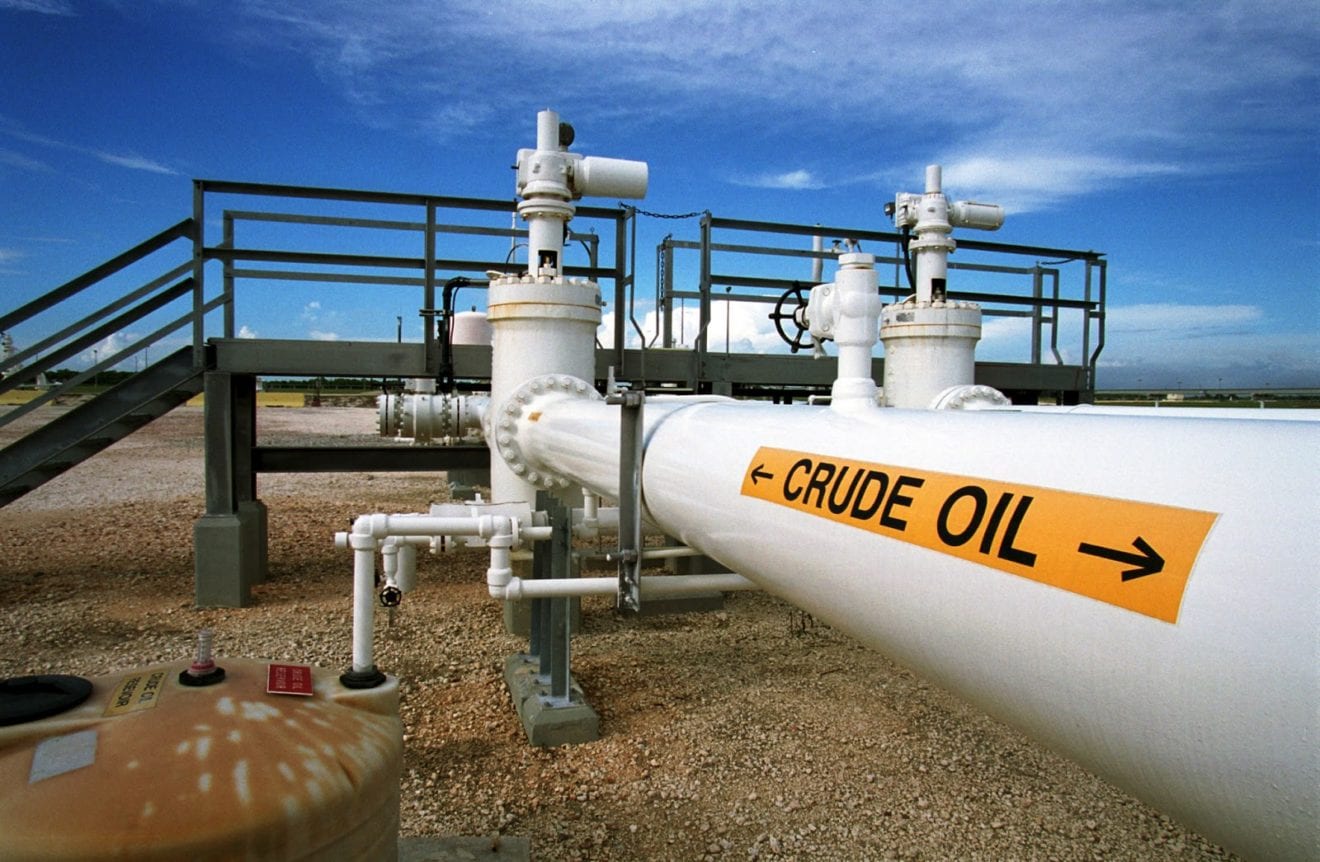
    Oil prices rose on Wednesday as concerns about supply disruptions following U.S. sanctions on Venezuela’s oil industry outweighed downward pressure from a darkening outlook for the global economy. U.S. West Texas Intermediate (WTI) crude futures were at $53.54 per barrel at 0455 GMT, up 23 cents, or 0.4 percent, above their last settlement.

    International Brent crude oil futures rose 37 cents, or 0.6 percent, to $61.69 per barrel.

    The gains followed a 2 percent price jump in the previous session, when markets first digested the U.S. sanctions on Venezuela’s oil exports.

    Washington on Monday announced export sanctions against state-owned oil firm Petroleos de Venezuela SA (PDVSA), limiting transactions between U.S. companies that do business with Venezuela through purchases of crude oil and sales of refined products.

    “The sanctions so far have been mostly disruptive for refiners on the U.S. Gulf Coast, who are being forced to seek alternative heavy crude supplies, and have stepped up purchases from Canada,” said Vandana Hari of Vanda Insights, an energy consultancy.

    She added, however, that Canadian oil exports would be “constrained by pipeline capacity bottlenecks.

    The sanctions aim to freeze sale proceeds from PDVSA’s exports of roughly 500,000 barrels per day (bpd) of crude oil to the United States.

    Although the move pushed up oil prices, markets appeared relatively relaxed as the sanctions only affect Venezuelan supply to the United States.

    “The (Venezuelan) export volumes will not be eliminated from the market, but rather rerouted to other countries,” said Paola Rodriguez-Masiu, an analyst at consultancy Rystad Energy.

    With the United States dropping out as a customer for Venezuelan oil, she added that “China and India … will be able to pick up these oil volumes at great discounts.”

    Despite this, some analysts said that non-U.S. oil trading firms with operations in the United States may still avoid dealing with Venezuelan oil.

    The Schork Report, a daily oil and gas trading publication, said on Wednesday that many “international oil traders … have significant trading operations in the U.S. … At least in the short-term, these traders will undoubtedly quit buying from Venezuela until such a time that they are assured that they are not running afoul of U.S. sanctions.”

    TRADE TALKS

    Other analysts also pointed to economic weakness as countering supply-side efforts to tighten the market such as the voluntary supply restraint by the Organization of the Petroleum Exporting Countries (OPEC).

    “Pulling in the opposite (oil price) direction are heightened concerns about global growth, particularly that of China,” said Ole Hansen, head of commodity strategy at Denmark’s Saxo Bank.

    Global economic growth and fuel consumption are expected to slow this year amid a trade dispute between the United States and China, the world’s two biggest economies.

    Officials from Washington and Beijing are set to launch a new round of trade talks on Wednesday aimed at resolving their disputes amid which both sides have slapped hefty import tariffs on each other’s goods.

  • RAM Malaysia lowers inflation forecast for 2019 to 2%

    RAM Malaysia lowers inflation forecast for 2019 to 2%

    RAM Ratings, which expects inflation to inch up to 0.3% in December 2018 from 0.2% in the previous month, has revised its full-year headline inflation forecast for 2019 to 2.0% from 2.7%. The rating agency said in a statement that inflation in December 2018 is estimated to rise to 0.3% from 0.2% in the preceding month due to dissipation of deflationary pressures from the transport fuel component.

    The price of RON95 petrol fell 3.3% year on year in December, after a 4.5% drop in November.

    On that note, overall inflation is envisaged to come in at 1.0% in 2018.

    As for 2019, RAM Ratings has revised its headline inflation projection downwards to 2.0%, mainly due to changing expectations on global oil prices, which are increasingly pointing to a lower average range of US$60-US$65 (RM248-RM269) per barrel for 2019.

    RAM head of research Kristina Fong said the rating firm’s sensitivity analysis indicates that for every US$5/barrel move in the price of Brent crude, headline inflation potentially changes 0.3 percentage point.

    “The move back to the weekly Automated Pricing Mechanism for pump prices – effective January 2019 – is not expected to exert any significant downward pressure on inflation given the short period it will be in place ahead of the anticipated targeted fuel subsidy mechanism to be implemented in second quarter 2019.

    “Moreover, global oil prices are expected to trend a little higher compared to the start of the year, An escalation in oil (petrol) prices beyond RM2.20/litre will trigger the use of subsidies to maintain this ceiling. This will also contain inflationary pressure,” she added.

    The Department of Statistics released the December inflation data yesterday.

  • BMW Korea fined $13M over emissions

    BMW Korea fined $13M over emissions

    A Seoul court fined BMW Korea 14.5 billion won ($12.9 million) for manipulating documents on emissions to sell some 29,000 vehicles in Korea. The Seoul Central District Court announced Thursday that the local unit of BMW is guilty of violating customs law. The automaker was found guilty of forging emissions test papers from 2011 to obtain certification from the National Institute of Environmental Research under the Environment Ministry that its cars meet local emissions standards. Roughly 29,000 cars were certified this way, according to the court.

    “The automaker has undermined government efforts to improve air quality in Korea,” the court said in a statement. “This also damaged local customers’ trust in BMW.”

    The court also added that BMW Korea took substantial profits over the years due to the manipulation, showing no effort to abide by local laws.

    “The reason for making [carmakers go through] a stringent certification process is because car emissions have substantial impact on air quality,” the court said.

    The Seoul court also found six former and current executives of the automaker involved in the case guilty. Three executives were sentenced to eight to 10 months in jail, with three others given a four to six month suspended sentence with probation.

    On Thursday’s ruling, BMW Korea said in its official statement that the company “will respond following an appropriate legal process after thoroughly reviewing the case,” adding that it cannot give a “detailed answer yet.”

    Last month, the Korean unit of rival German automaker Mercedes-Benz was also found guilty of violating the emissions certification process. The court gave Mercedes a 2.81 billion won fine and handed down an eight-month jail sentence to the executive in charge of emissions certifications. The carmaker was charged for failing to get new certifications after changing some emissions-related parts. Mercedes said it will appeal the ruling.

    In its official statement last month, Mercedes said it was an administrative mistake, adding that it was unintentional.

  • Petronas starts trial runs at crude distillation unit for Rapid

    Petronas starts trial runs at crude distillation unit for Rapid

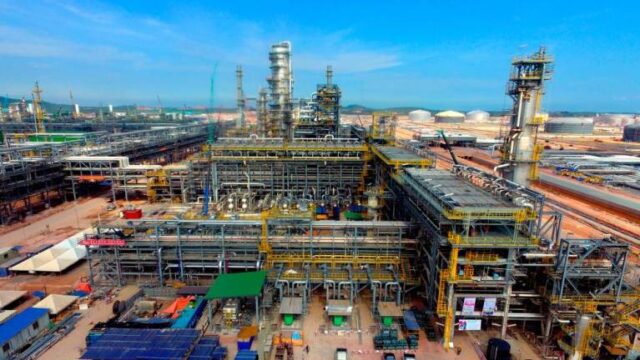
    Malaysian state oil company Petroliam Nasional Bhd (Petronas) started trial runs at the crude distillation unit (CDU) for a joint-venture refinery with Saudi Aramco in Malaysia last week, two sources with knowledge of the matter said this week. The move marks a major milestone for the US$2.7 billion (RM11 billion) project known as Rapid – or Refinery and Petrochemical Integrated Development – in Pengerang, Johor. The test runs put the project on track for commercial operation in 2019.

    The company also received its second cargo of 2 million barrels of Saudi crude last week, according to the sources and data on Refinitiv Eikon.

    Petronas could not be immediately reached for comment.

    Rapid consists of a 300,000-barrel-per-day (bpd) refinery and secondary refining units that will allow the companies to produce refined oil products that meet Euro 5 fuel specifications. The refinery is linked to a petrochemical complex with a capacity of 7.7 million tonnes a year.

    The first crude oil cargo for Rapid was offloaded at Pengerang in September.

    The refinery is one of four new complexes in Asia that represent a combined processing capacity of nearly 1.3 million bpd scheduled to start up from late 2018 to 2019.

    Another of the four complexes, a 400,000 bpd refinery, owned by Hengli Petrochemical in Dalian in northeast China, started trial runs in December.

    These plants will increase Asia’s crude demand while adding to fuel output in the region.

  • Vietnam’s largest oil refinery begins commercial operations

    Vietnam’s largest oil refinery begins commercial operations

    The Nghi Son Refinery began commercial operation Sunday, and is expected to meet about 40 percent of domestic petroleum demand in 2019.

    Speaking at its inauguration, Prime Minister Nguyen Xuan Phuc emphasized the key role of the project.

    The refinery will process 200,000 barrels of crude per day in the first phase, equivalent to 10 million tons a year, double the capacity of Dung Quat, Vietnam’s only other refinery, in the central Quang Ngai Province.

    Situated in the Nghi Son Economic Zone, 200 km south of Hanoi in the central province of Thanh Hoa, Nghi Son is expected to hit 80 percent of capacity next year.

    According to the Thanh Hoa People’s Committee, last June the refinery was already capable of 10 refined petroleum products such as liquefied petroleum gas, gasoline A92, A95, diesel oil, and kerosene.

    As of December the plant has processed around five million tons of crude.

    Nghi Son together with Dung Quat is expected to meet 80-90 percent of domestic petroleum demand, reducing Vietnam’s dependence on imports.

    The $9 billion refinery is 35.1 percent owned by Japan’s Idemitsu Kosan Co, 35.1 percent by Kuwait Petroleum, 25.1 percent by state-run PetroVietnam and 4.7 percent by Mitsui Chemicals Inc.

  • Vietnam’s PVOIL seeks multiple partners

    Vietnam’s PVOIL seeks multiple partners

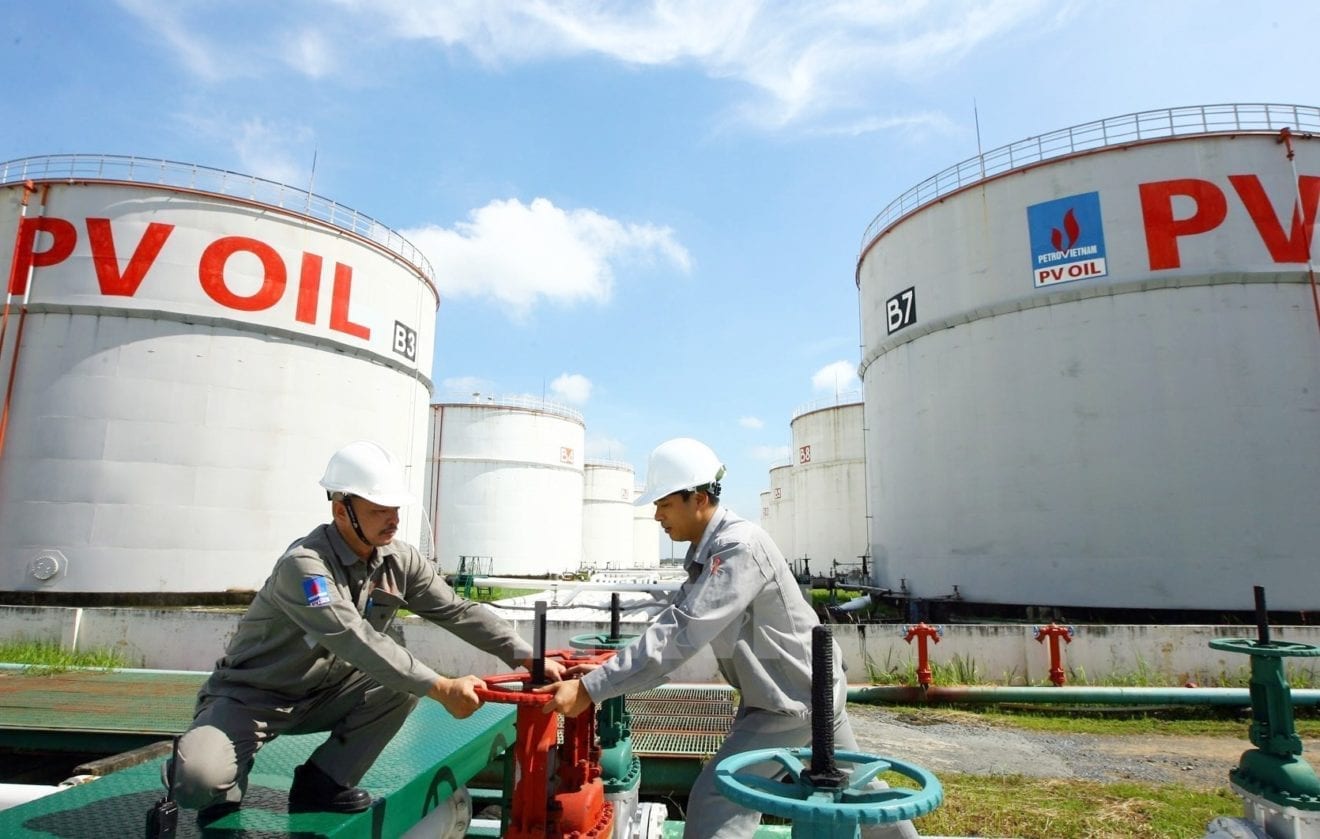
    Vietnam’s second-largest oil retailer, PV Oil, is seeking multiple buyers, instead of a single strategic investor, for a 44.72 percent stake. Although many investors expressed interest in becoming strategic partners with PetroVietnam Oil (PV Oil), including British-Dutch oil company Shell, South Korea’s SK Energy, and Idemitsu, a Japanese petroleum company, complicated administrative procedures have discouraged them, analysts say.

    PV Oil requires a strategic partner to hold the stake for at least 10 years.

    According to a new and revised divestment plan for PV Oil, the company is expected to raise at least $300 million from the divestment, Cao Hoai Duong, CEO of PV Oil, said.

    The bidding is expected to start in 2019.

    Last December, Deputy Prime Minister Vuong Dinh Hue had approved that state-owned PetroVietnam, the parent company of PV Oil, would reduce its ownership in PV Oil to 35.1 percent by selling a 44.72 stake to strategic investors.

    In January this year, VND4.18 trillion ($184 million) was raised through the sale of a 20 percent stake in PV Oil in an initial public offering (IPO).

    Vietnam maintains a 49 percent cap on foreign ownership limit in PV Oil.

    PV Oil runs 540 filling stations on its own and has about 3,000 locations operated by agents, mostly in northern Vietnam, as well as about 120 gas stations in Laos.

    PetroVietnam is one of the three biggest state-owned groups in Vietnam and a major contributor to state coffers.

  • Flood of new passengers to stoke demand for jet fuel in Vietnam

    Flood of new passengers to stoke demand for jet fuel in Vietnam

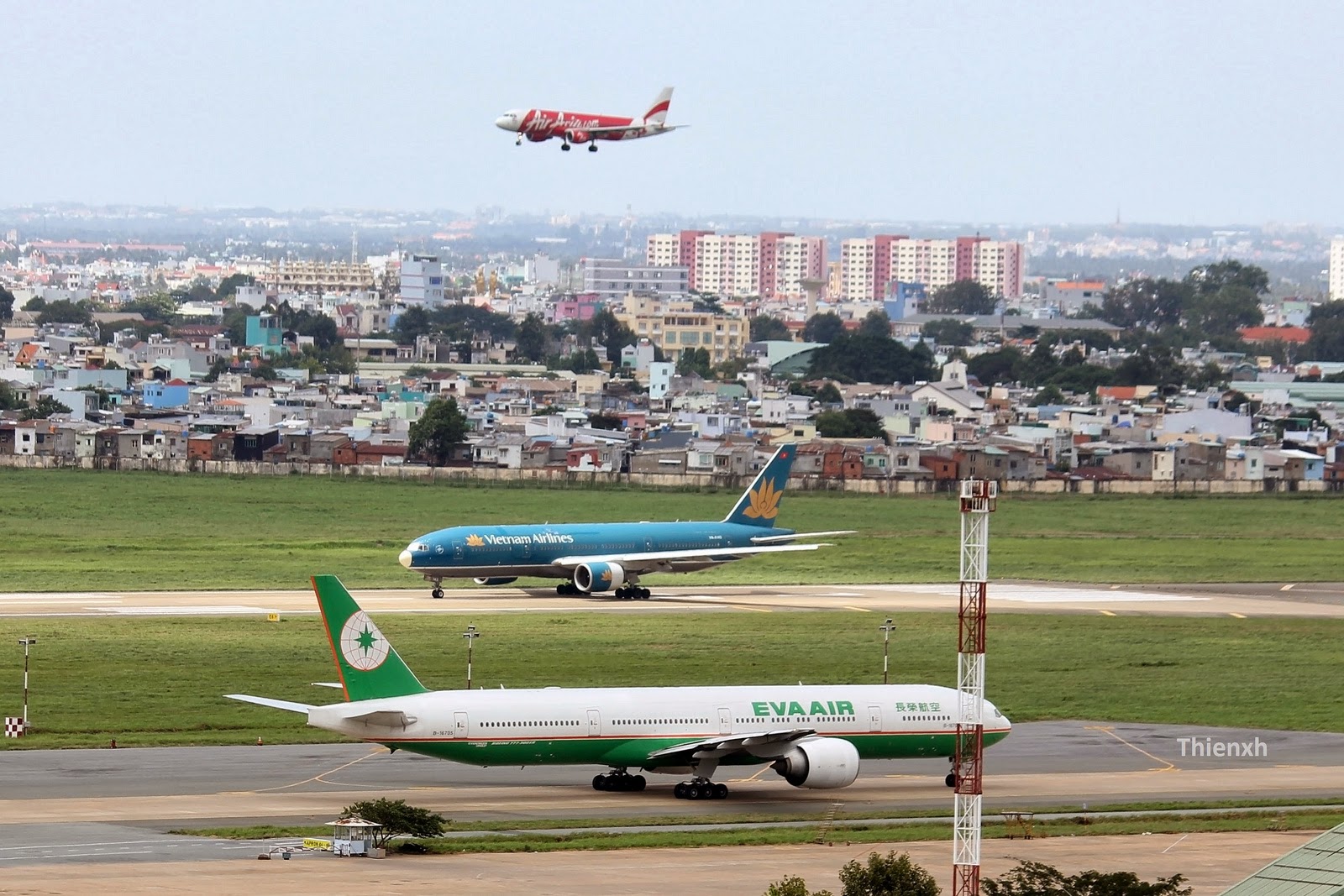
    Vietnam’s jet fuel demand will surge to a record this year as its tourism booms and the country’s airlines are rapidly expanding. The country is on track to have 38 million international passengers and 16 million visitors this year, according to data from CAPA Centre for Aviation. That is up from 18 million passengers and 8 million visitors in 2015, according to the data.

    “Aviation demand in Vietnam is booming… Fuel consumption in Vietnam will reach a record high this year and will keep rising for the years to come,” said Tran Hoai Nam, vice president of Vietjet, Vietnam’s biggest private airline.

    He added Vietnam’s growth in foreign arrivals was the highest in Southeast Asia, rising 8.7 percent annually.

    The surge in traffic has translated into a rush of jet fuel demand in Vietnam. Through November, the country has imported 1.87 million tonnes of the fuel, according to customs data, equal to 14.8 million barrels, and up 18 percent from the same period last year.

    “For 2018, jet fuel demand in Vietnam is estimated to be increased by about 20 to 25 percent in comparison with 2017, mostly due to the increase in consumption of the international flights,” said a Hanoi-based trader at one of country’s jet fuel suppliers, who asked to remain unidentified due to company policy.

    Vietnam currently consumes about 18 million barrels of jet fuel per year, according to data from Petrolimex Aviation.

    By 2035, Vietnam will have 150 million airline passengers per year, nearly four times what it was in 2015, according to a 20-year forecast from the International Air Transport Association (IATA).

    Over the same period, India will have 442 million passengers, 3.6 times what it was in 2015, while China will have 1.3 billion passengers, 2.7 times what it was in 2015, IATA said.

    In November, Vietnam issued an aviation licence to Bamboo Airways, which would be the country’s fifth airline after Vietnam Airlines, Jetstar Pacific Airlines, Vietjet Aviation VJC.HM and Vietnam Air Services Co.

    Bamboo is expected to launch its first flights within weeks. It signed a provisional deal in July to buy 20 of the wide-body 787-9 jets from U.S. manufacturer Boeing and agreed a memorandum of understanding with Europe’s Airbus for up to 24 of the narrow-body A320neo jets in March.

    VietJet, which currently operates 60 Airbus jets, has signed a $6.5 billion (5.2 billion pounds) agreement to buy 50 new jets.

    Vietnam’s jet fuel imports will continue to surge as the country only has two refineries, Dung Quat in the central province of Quang Ngai and Nghi Son in Thanh Hoa Province, near to the capital Hanoi, which only started operations this year.

    “Both Dung Quat and Nghi Son refineries are primarily catered towards the production of gasoline and diesel, and thus, jet fuel yield is relatively low at 5 percent,” said Peter Lee, an analyst at Fitch Solutions Macro Research.

    Nghi Son, once fully operational, will produce about 4.6 million barrels of jet fuel per year, said a source at the refinery. Dung Quat can produce as much as 2.3 million barrels per year, according to the company website.

    “Vietnam will be reliant on imports to meet most of its jet fuel demand going forward,” Lee added.

    Vietnam imports most its jet fuel from refineries in Singapore, Thailand and China, trade data showed.

    Despite the steep growth outlook for Vietnam’s aviation sector, passenger growth might may be uneven as the country grapples with capacity constraints at its airports.

    Vietnam’s biggest airport Tan Son Nhat, serving Ho Chi Minh city in the south, receives about 10 million more passengers per year than it is designed to serve.

    The government is planning a second international airport at Long Thanh, 40 km (24 miles) east of Ho Chi Minh City, that will serve 25 million passengers a year starting in 2025.

  • Higher revenue lifts Petronas’ Q3 net profit to RM14.3 billion

    Higher revenue lifts Petronas’ Q3 net profit to RM14.3 billion

    Petroliam Nasional Bhd’s (Petronas) net profit for the third quarter ended Sept 30, 2018 rose 43% to RM14.3 billion from RM10 billion a year ago due to higher revenue. The group said in a statement today that the higher revenue was partially offset by higher product costs in tandem with higher prices, coupled with increased depreciation and amortisation.

    Earnings before interest, taxation, depreciation and amortisation (ebitda) rose 25% to RM26.9 billion from RM21.5 billion a year ago.

    The state-owned oil company attributed the higher earnings to its continuous execution of business improvement activities, focused on increased operational excellence and supported by higher commodity prices.

    Revenue for the quarter rose 19% year-on-year to RM63.9 billion, mainly driven by higher average realised prices for key products coupled with increased efficiency throughout the group.

    Higher sales were partially offset by the strengthening ringgit and lower sales volume, mainly for liquefied natural gas (LNG). Capital investments for the quarter stood at RM6.7 billion, mainly attributed to upstream projects.

    For the nine months ended Sept 30, 2018, Petronas’ net profit rose 50% year on year to RM41 billion, due mainly to higher revenue, lower net impairment on assets as well as other expenses. These were partially offset by higher product costs in tandem with higher prices coupled with increased depreciation and amortisation as well as tax expenses.

    Revenue for the period rose 12% year-on-year to RM181.1 billion mainly due to the impact of higher average realised prices for key products as well as increased efficiency efforts, largely offset by the effect of the ringgit strengthening against the US dollar.

    Capital investments for the period stood at RM26.5 billion mainly attributed to upstream projects while total assets rose to RM623.1 billion as at end-September, compared with RM599.8 billion as at end-December 2017.

    Shareholders’ equity rose to RM402.1 billion as at end-September from RM389.8 billion as at end-December 2017. The gearing ratio remained at 16.1% while return on average capital employed rose to 12.6% from 9.8% during the same period.

    The Pengerang Integrated Complex achieved 95% progress as at end-September and successfully received its first crude oil cargo at the Pengerang Deepwater Terminal 2. The project is on track to be ready for startup in 2019.

    President and group CEO Tan Sri Wan Zulkiflee Wan Ariffin said Petronas is on track to deliver a strong year-end performance by maintaining focus on driving efficiency efforts across its operations.

    “The recent drop in oil prices demonstrate the volatile and cyclical nature of the industry and we will continue to maintain our prudent outlook amidst this landscape while remaining steadfast in pursuing our growth strategies to ensure the long-term sustainability and progress of the company,” he said.

  • Vietnam’s new oil refineries to quadruple capacity by 2023

    Vietnam’s new oil refineries to quadruple capacity by 2023

    Vietnam’s total oil refining capacity will nearly quadruple by 2023 as two new refineries go on stream, market data provider Fitch Solutions reports. The Dung Quat refinery in the central province of Quang Ngai operated by the state-owned PetroVietnam’s subsidiary Binh Son Refinery Limited (BSR) remains the sole facility now, with a crude oil processing capacity of 148,000 barrels per day (b/d).

    Dung Quat will soon be joined by Nghi Son refinery in the central Thanh Hoa Province. Nghi Son is currently testing at full capacity and is scheduled to start commercial operations this month.

    The $9 billion Nghi Son project is owned by the Nghi Son Refinery and Petrochemical LLC (NSRP), a joint venture between PetroVietnam, Kuwait Petroleum, Japan’s Idemitsu Kosan and Mitsui Chemical. It will have a designed capacity of 200,000 b/d of crude oil.

    Meanwhile, the long-delayed construction of the Long Son refining and petrochemical complex in the southern province of Ba Ria-Vung Tau resumed in February this year, putting it on track to go on stream by the first half of 2023.

    Licensed in 2008 and initially slated to begin operations in 2014, Long Son hit a roadblock due to site clearance issues and disagreements over the development strategy between the project partners.

    This caused Qatar Petroleum to withdraw from the project in 2015. Thailand’s Siam Cement Group (SCG) increased its stake to 71 percent after it bought the 25 percent stake owned by Qatar Petroleum, while PetroVietnam held the remaining 29 percent.

    In May this year SCG agreed to acquire PetroVietnam’s 29 percent. The refinery is expected to cost $5-6 billion. Once completed it will be able to process 200,000 b/d of crude oil and produce 1.6 million tons of olefins annually.

    “The two new refineries would increase competition in the domestic fuel market, which could require refiners to upgrade, cut costs and move up the value chain to win market share,” Fitch Solutions said in a report released Monday.

    This also spells an end to Dung Quat’s status as the country’s sole refiner, which it has enjoyed since 2010.

    New oil refineries to quadruple Vietnam capacity 2023

    Competition from Nghi Son will be stiff as the government has granted a host of incentives to successfully commission its second standalone refinery, including tax concessions, tariff exemption on crude imports from primary feedstock provider Kuwait and an offtake guarantee from PetroVietnam for the first 15 years of operation.

    The Quang Ngai provincial government in early November sought the same incentives for the Dung Quat refinery to ensure “fair competition”.

    BSR is also planning to invest $1.8 billion over the next three years to expand Dung Quat’s capacity by 23,000 b/d and upgrade the quality of its fuels to Euro 5 from the current Euro 2.

    Fitch Solutions said the upgrade would enable Dung Quat to process higher-sulphur crudes, helping reduce its dependence on Vietnamese light, sweet crudes, mostly from the Bach Ho field, which is depleting and thus becoming more expensive.

    Besides the competition between themselves, the refineries also face significant pressure from imports, mostly from South Korea and Southeast Asian countries, which are of higher quality and priced competitively due to free trade agreements, the report noted.

    “Competition is likely to peak in 2024, when tariffs on fuel imports from ASEAN and South Korea are scheduled to be cut to zero. Concerns about mounting competition have also led both Dung Quat and Nghi Son to consider exports to countries like Laos, Cambodia and Indonesia.

    “Vietnam’s improving self-sufficiency in refined fuels would reduce its need for imports, reorienting trade flows from some of its major fuel suppliers to alternative markets.”

    While insufficient to entirely meet domestic demand, this nevertheless would weigh on the market positions of Singapore, Malaysia, South Korea, Thailand and China, which account for nearly 95 percent of Vietnam’s fuel imports, according to Fitch Solutions.

    Malaysia and Thailand have the highest exposure to Vietnam’s fuel market — 11 percent and 16 percent of imports.

    Major international fuel suppliers are also likely to find room for growth in the Vietnamese market increasingly hard to come by as their quality advantage over locally produced fuels dissipates with the ongoing upgrades, the firm added.

  • Korea’s gas prices fall quickly thanks to fuel tax cuts

    Korea’s gas prices fall quickly thanks to fuel tax cuts

    The government fuel tax cut, which was implemented to ease the burden on rising crude oil prices, has turned out to be more effective than initially expected. According to the Ministry of Trade, Industry and Energy on Sunday, the average price of gasoline at gas stations nationwide was 1,575.2 won ($1.40) per liter during the second week of November. This is an 85.2 won, or 5 percent, drop, from the 1,660.4 won average just a week earlier.

    Diesel prices have also dropped to an average 1,419.2 won per liter, down 56.2 won, or 3.8 percent, from the first week of this month, when it was an average 1,475.4 won for the same amount.

    On Saturday, the ministry said the average price of gasoline had further fallen to 1,556.8 won per liter – 133.5 won less than the 1,690.3 won it sold for on Nov. 5, the night before the government’s fuel tax cut went into effect.

    On average, the government cut 15 percent off of all fuel taxes including gasoline and diesel in the hopes of easing the burden created by rising international crude prices. It was the first fuel tax cut adopted in a decade.

    “As the situation [of low-income households and small and medium-sized enterprises] becomes more difficult with rising international crude prices, we have decided to aim for a psychological effect that will help the economy by increasing disposable incomes,” Ko Hyoung-kwon, deputy finance minister said in late October.

    Among gas stations, the government-supported Altteul Gas Station saw the biggest drop in prices – its gasoline costs 135.5 won less than it did on Nov. 5.

    Other major brands including SK, GS, S-Oil and Hyundai Oilbank have cut gasoline prices by 133.3 won.

    By region, Jeju lowered its gasoline prices the most. The island has seen a 169.4 won drop in average price compared to Nov. 5. Daejeon followed, as prices have fallen an average of 149.6 won, while Incheon came in third after seeing a 142 won drop.

    Seoul gas stations on average lowered their prices by 134.9 won while Gyeonggi gas prices fell by 137.2 won per liter.

    Seoul and Gyeonggi account for 39 percent of all fuel sold in the country.

    However, as of Saturday, 173 gas stations around the country – 1.5 percent of the nation’s gas stations – have not taken part in lowering fuel prices. The ministry said that these gas stations failed to deplete all of the gas that they had stockpiled before the Nov. 6 fuel tax cut was implemented.

    The fuel tax cut will be applied for six months.

  • Moody’s downgrades Petronas LNG’s ratings outlook to negative

    Moody’s downgrades Petronas LNG’s ratings outlook to negative

    Moody’s Investors Service has downgraded Petronas LNG Ltd’s (PLL) ratings outlook to “negative” from “stable”, following the same outlook revision for its parent company Petroliam Nasional Bhd’s (Petronas) yesterday. At the same time, the rating agency has affirmed PLL’s A3 foreign and local currency issuer ratings.

    Moody’s said the changes reflects its negative outlook on Petronas’ ratings and its expectation of PLL’s continued strong support from and linkages with its ultimate parent.

    PLL is 100%-owned by Petronas, which is in turn wholly-owned by the government.

    Moody’s said given the negative ratings outlook, a ratings upgrade is unlikely and it will revise PLL’s ratings outlook to stable from negative only if Petronas’ ratings outlook is stabilised.

    It said that PLL’s ratings will be downgraded if: Petronas’ rating is downgraded; there is a decrease in Petronas’ ownership of PLL; there is a reduction in Petronas’ supervision of and operational and financial support to PLL; or there is a material increase in PLL’s risk appetite.

    PLL’s ratings were assigned using a top down approach by evaluating the company’s full ownership by Petronas, its strong operational and financial integration with Petronas, and the willingness and ability of Petronas to extend support to PLL in an event of distress.

    Meanwhile, Moody’s assistant vice president and analyst Rachel Chua said PLL’s A3 ratings are positioned two notches below the A1 ratings of its ultimate parent.

    She noted that PLL enjoys ongoing liquidity support from Petronas and it can draw from Petronas’ umbrella credit facility for liquidity management, adding Petronas has continued to support PLL financially through cash injections of almost $400 million over the past three years.

    “Petronas’ support for PLL extends beyond financial assistance. Petronas also provides PLL with significant management support and oversight, including monthly reporting on risk and governance to a committee chaired by Petronas.

    “PLL also has an integrated treasury function with Petronas, where its cash is held centrally by Petronas and cash flow requirements are shared with its parent,” she added.

  • Petronas has sufficient headroom to absorb one-off exceptional dividend

    Petronas has sufficient headroom to absorb one-off exceptional dividend

    Petroliam Nasional Bhd’s (Petronas) solid balance sheet, sizeable net cash position and ample liquidity provide ample buffer against the payment of one-off dividend to the government that could reach RM30 billion. According to S&P Global Ratings, the financial impact of a one-off dividend of this size is moderate considering Petronas’ cash position and balance sheet quality.

    “The company can finance this dividend, given cash and short-term equivalent of nearly RM180 billion as of June 30, 2018; immaterial reported debt of about RM66.3 billion as of June 30, 2018 and a net cash position of nearly RM114 billion as of June 30, 2018; and solid operating cash flows,” it said in a statement.

    It added that the exceptional dividend of RM30 billion would effectively offset inflows of nearly RM30 billion the company received following the completion of the transaction with Saudi-based oil and gas producer Saudi Aramco in the first quarter of 2018.

    “We project Petronas will remain in a net cash position in 2019 and, depending on the pace of capital spending disbursement, in 2020 as well. This underpins our ‘aa’ stand-alone credit profile on the company.

    “We currently project operating cash flows of at least RM80 billion in 2019 amid higher hydrocarbon prices. These are sufficient to fund capital spending that we forecast at about RM55 billion and regular dividends to the government and minority interest that we estimate at about RM25 billion,” it said.

    The rating agency said the special dividend will not affect Petronas’ solid liquidity as the group’s short-term debt maturities were minimal at about RM11.5 billion as of June 30, 2018, representing less than 10% of its cash balance.

    “We estimate that Petronas’ balance sheet can absorb negative discretionary cash flows of RM40 billion for two years before the headroom under its ‘aa’ stand-alone credit profile starts to reduce. Assuming no change to the company’s investment plan, this implies additional one-off dividends of RM40 billion to RM50 billion, on top of the regular and exceptional dividends in the 2019 budget,” it said.

    It said that the special dividend validates its long-standing credit view that Petronas can be subject to periodic cash calls from the government given its solid financial position, high importance to the national budget and ownership control by the government.

    It added that a sustained period of higher oil prices over the next two to three years will translate into higher dividends from Petronas, and potentially, additional one-off dividends to the state.

    “We cap our issuer credit rating on Petronas (foreign currency A-/Stable/–; local currency A/Stable/–) to that of the sovereign of Malaysia (A-/Stable/A-2; local currency A/Stable/A-1), despite Petronas’ stronger stand-alone credit profile, given this government intervention risk.”

  • AirAsia X names new CEO to take over from Founders

    AirAsia X names new CEO to take over from Founders

    Malaysia’s long-haul budget carrier AirAsia X on Thursday appointed Nadda Buranasiri as its new group chief executive officer to take over from its co-founders. Buranasiri, chief executive of the Thai arm of AirAsia X since 2014, will replace co-CEOs and co-founders Tony Fernandes and Kamarudin Meranun with immediate effect, the company said in a statement. Fernandes and Kamarudin will become non-executive directors.

    In July, Fernandes said AirAsia X was looking to restructure itself into a group holding company along the lines of affiliate AirAsia Group Bhd .

    He had also said AirAsia X would focus on flying to countries where it would dominate routes, such as Japan, Korea, Australia, China and India, and remove what he called peripheral routes where no growth was seen.

    AirAsia X reported a loss for the June quarter, weighed down by higher fuel prices.

  • Go-Jek launches fuel delivery service

    Go-Jek launches fuel delivery service

    Go-Jek, in partnership with Indonesia’s oil major Pertamina, has launched an on-demand fuel-delivery service. Called Go-Pertamina, it brings fuel to users from the nearest Pertamina gas station. The service is available in South and Central Jakarta from 8 a.m. to 8 p.m. daily. It does not serve orders on toll roads, basements, or other enclosed areas. Given that Go-Jek has a large network of drivers who need to top up their fuel regularly, they could become some of Go-Pertamina’s biggest users.

    Go-Pertamina is part of the Indonesian ride-hailer’s Go-Life app, which offers on-demand massages, cleaning, haircare, and more. Go-Jek also recently launched a daily deals marketplace.

    Go-Jek has been expanding regionally. It has launched in Thailand and Vietnam and is set to launch in Singapore within a month. Its expansion into the Philippines, however, has hit a regulatory snag.

    It has raised about US$2.1 billion from investors, even as Grab has claimed to have outpaced Go-Jek in Indonesia’s ride-hailing market.

  • Malaysia’s govt undecided on fuel subsidy plans

    Malaysia’s govt undecided on fuel subsidy plans

    The government, which has promised to stabilise the fuel prices and reintroduce fuel subsidies to targeted groups in its manifesto, has yet to make decision on its fuel subsidy plans.

    “We are still drafting it. We have not come up to a number yet, and whether there is a decrease or increase (in fuel subsidy) we will see when we table it in the parliament,” Minister of Entrepreneur Development Mohd Redzuan Md Yusof said.

    “We are still trying to make estimates to what impact it (the subsidy plans) has to the economy of the country,” he added.

    On Budget 2019, Mohd Redzuan said the government is trying its best to come up with a fair and balanced budget, noting there will be an increase in the development expenditure.