Retail News CRM

Tag: fuel

  • Petrolimex welcomes new director general

    Petrolimex welcomes new director general

    Deputy Director General of Vietnam National Petroleum Group (Petrolimex) Dao Nam Hai will become its director general (DG), starting Mar. 1.

    He replaces Pham Duc Thang who retired in November 2021. Holding two master degrees in law and business administration, Hai, 48, Hai was its deputy DG for four years, and 9-year DG of Petrolimex’s insurance subsidiary, Petrolimex Joint Stock Insurance Company (PJICO).

    Petrolimex has a charter capital of nearly VND13 trillion ($573 billion). In 2021, the group posted net revenue of over VND169 trillion, up 37 percent compared to 2020.

    Its 2021 post-tax profit was VND3.1 trillion, 2.5 times higher year-on-year.

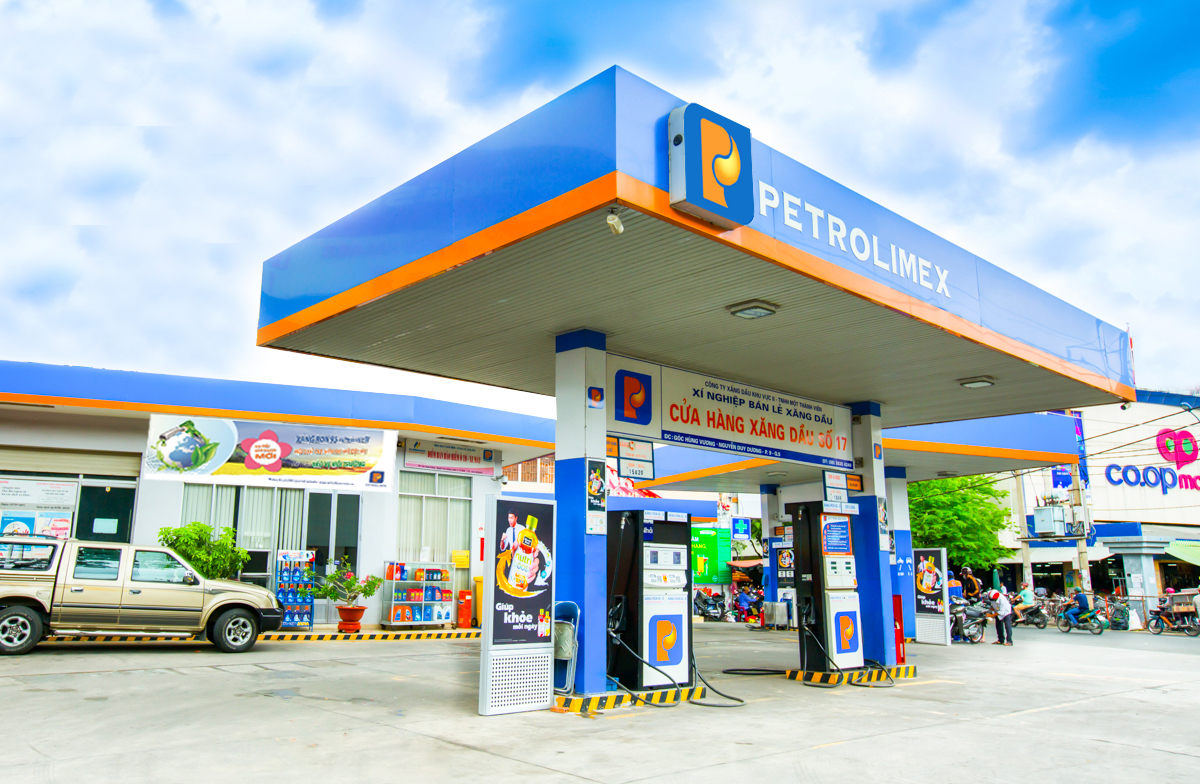
    The state-owned Petrolimex has a nearly 40 percent share in Vietnam’s petroleum market, has 43 subsidiaries, with 5,000 gasoline stations nationwide.

  • Gas shortages in few places in Vietnam

    Gas shortages in few places in Vietnam

    Gasoline shortages have been occurring only in a few southern locations and the country has adequate reserves to fully meet demand, the industry ministry has assured.

    Shortages are only reported by small distributors who want to hold on to their stocks to push prices up, Deputy Minister of Industry and Trade Do Thang Hai said at a meeting Tuesday.

    “We have reserves to ensure supply for 20 days of consumption as regulations require.”

    Major distributors (who account for over 90 percent of market share) have been selling routinely since before the Lunar New Year holidays (January 29-February 6), he said. Many gas stations in An Giang, Dong Nai and Hau Giang provinces closed down in recent days complaining of lack of supply.

    Some also stopped selling because rising prices are forcing them to sell at a loss. They are not allowed to increase retail prices on their own and authorities usually make price changes on the 1st, 11th or 21st of a month. But since February 1 was a holiday, the next price change is not likely until Friday.

    The country’s biggest refinery, Nghi Son in the central province of Thanh Hoa, had to cut down production from 105 percent of capacity to 80 percent last month due to a cash crunch. Vietnam produces around 75 percent of its fuel requirements, with Nghi Son accounting for 35 percent, and imports the rest.

    Phan Thi Thang, deputy chairwoman of the HCMC People’s Committee, said some gas stations in the city too had closed down temporarily due to lack of supply, but reopened, and as of Tuesday only two out of 548 were closed but for other reasons.

    Major distributors in the city have assured they have enough inventory to last 40-60 days, she said.

    The city has ordered all distributors to import more to ensure reserves that would meet at least 30 days of demand, she added.

    Deputy Prime Minister Le Van Thanh has instructed the trade ministry to be more proactive in regulating gas supply to ensure there are no shortages.

  • Fuel distributors seek foreign supply amid refinery production trim

    Fuel distributors seek foreign supply amid refinery production trim

    Vietnamese fuel distributors are negotiating with foreign suppliers to ensure adequate inventory for the holiday after the country’s biggest refinery cease imports due to cash shortage.
    PVOil, the second-biggest fuel distributor in Vietnam behind Petrolimex, has secured a deal with a foreign supplier to import more gasoline amid the expected shortage.

    The supplier gave an acceptable price with reasonable delivery time, said Cao Hoai Duong, company chairman, without revealing details of the supplier and price.

    The fact that Nghi Son Oil Refinery has cut down its production from 105 percent to 80 percent due to insufficient funds is urging fuel distributors to scramble for solutions to have enough inventory for the upcoming nine-day Tet holiday, which begins Saturday.

    “The imports, together with our backup inventory, is enough for PVOil to cover the expected market shortage before, during and after Tet,” Duong said.

    An anonymous director of a central distributor said the company has finally been able to secure a deal with a supplier and will have enough inventory for the holiday.

    A media representative of leading distributor Petrolimex did not say whether it would import more as the company is still receiving the agreed amount of inventory from Nghi Son.

    “In whatever scenario we will strive to ensure there would be sufficient inventory to distribute to the market.”

    Nghi Son said that it had to cut production because state-owned energy giant Petrovietnam has not approved import contracts and therefore it has to cancel two crude oil imports this month.

    Therefore the factory might have to shut down in mid-February.

    However, Petrovietnam stated Wednesday that the factory canceled the two shipments and that it had nothing to do with the approval of import contracts.

    Matters concerning the contracts are part of Nghi Son’s restructuring plan, which is under negotiation, the statement read.

    Nghi Son Oil Refinery has a capacity of 200,000 crude oil barrels a day, or 10 million tons a year, twice that of Vietnam’s other refinery Dung Quat Oil Refinery in Quang Ngai Province.

    State-owned fuel company Petrovietnam has a 25.1 percent stake in the plant, while the rest are owned by three foreign firms: Kuwait Petroleum International (35.1 percent and Japanese companies Idemitsu Kosan (35.1 percent) and Mitsui Chemicals (4.7 percent).

  • Kawasaki To Unveil Three New Electric Motorcycles In 2022

    Kawasaki To Unveil Three New Electric Motorcycles In 2022

    Kawasaki Motors President and CEO Hiroshi Ito have announced that the Japanese brand will introduce not one, but three new electric models in 2022. Addressing the assembled crowd at the EICMA 2021 show in Milan, Italy, Hiroshi Ito laid down a broad outline for Kawasaki’s immediate future plans, including alternative fuels, as well as new products. What is clear from the comments from EICMA 2021 quoted by several sources, is that Kawasaki intends to fully embrace a carbon-neutral society. And what is important is that Kawasaki seems to be almost ready with several new electric models.

    “I would like to share a new commitment with you now. Next year, in 2022, we will show a minimum of three electric vehicles globally. That is a promise,” said Hiroshi Ito, President and CEO, Kawasaki Motors.

    The news seems to be part of Kawasaki’s plans to introduce 10 electric and hybrid motorcycles by 2025. But what is also interesting is Kawasaki’s plans to evaluate other forms of cleaner transportation. In his address, the Kawasaki Motors President and CEO also made mention of the Japanese brand’s commitment to exploring other power sources, including hydrogen, hybrids, and eFuels.

    “In addition to electric vehicles, Kawasaki is looking at all options as we work towards achieving a carbon-neutral society. One example is a hydrogen engine. In Japan, all industries supported by the government are making great efforts to make hydrogen a practical domestic alternative are currently moving forward. The Kawasaki Group is taking on a key role in this project, leading the way in hydrogen production, transport, storage, and use.

    “And just recently, on November 13, Kawasaki Motors decided to take the first steps in developing a hydrogen-powered motorcycle engine with Yamaha. Of course, we will look at the possibilities of other alternative fuels, like biofuel and eFuels,” added Hiroshi Ito.

    The announcement is a clear indication that Kawasaki is serious about cleaner transportation and is leading the development and pursuit of alternative power sources. And it will be interesting to see what the three new electric products will be, but even more interesting will be the development of alternative fuels, including hydrogen power.

  • Global hike pushes Vietnam fuel price to 7-year high

    Global hike pushes Vietnam fuel price to 7-year high

    Fuel prices in Vietnam have surged by over 52 percent to a seven-year high, with global rates shooting up as demand rises in economies reopening.

    The government has hiked fuel prices up by 40.23–52.59 percent this year with the latest increase Tuesday bringing the popular fuel RON 95 to VND24,330 ($1.07) per liter, the highest since September 2014.

    Global prices have also been rising. Brent futures rose 0.5 percent, to settle at $86.40 a barrel Tuesday, while U.S. West Texas Intermediate (WTI) crude ended 1.1 percent higher at $84.65.

    Those were the highest closing prices for both global benchmarks since October 2014.

    A global supply shortage and strong demand in the U.S., the world’s biggest consumer, is said to be the reason behind the increase.

    Gasoline and distillate consumption in the U.S. is back in line with five-year averages after more than a year of depressed demand.

    While China’s red-hot power and coal markets have cooled somewhat after government intervention, energy prices remain elevated worldwide as temperatures fall with the onset of the northern winter.

    Since last month, Vietnam has pushed up fuel prices four times, but the combined increase this year is still lower than that of global rates thanks to the fuel price stabilization fund, the Ministry of Industry and Trade and the Ministry of Finance said in a joint statement Tuesday.

    They noted that global rates have increased 59.08–76.03 percent this year.

    However, the price stabilization fund, set up to offset fluctuations in global fuel prices, is seeing shortages.

    As of Tuesday, state-owned fuel distributor Petrolimex had a negative VND262 billion balance in its stabilization fund. At state-owned PVOil, the negative balance was VND697 billion as of Oct. 11.

    By the end of August, 15 of 35 fuel companies in the country reported a combined negative balance of VND1.47 trillion.

    Together with the remaining sum from the other 20 companies, the total balance of the fund stands at VND600 billion now.

    Experts have said further price hikes in the future can deplete the balance. The fund’s balance had fallen to a negative VND620 billion in mid-2019.

    The high fuel prices have raised concerns of rising inflation.

    Ngo Bich Lam, former head of the General Statistics Office, said that a 10 percent increase in fuel prices will lower GDP by around 0.5 percent and pump up the Consumer Price Index (CPI), which measures inflation, by 0.36 percentage points.

    This shows the strong impact of fuel price fluctuations on the economy, he said.

    Some people have mentioned the possibility of lowering fuel tax to offset the increase. Tax and fees account for over 60 percent of fuel prices.

    At VND4,000 per liter or 16.4 percent of the current price, environmental tax is one of the biggest boosters of fuel prices.

    The Ministry of Industry and Trade and the Ministry of Finance are considering lowering fuel taxes, including environmental tax, to keep domestic prices stabile, Le Viet Nga, deputy head of the domestic markets under the trade ministry, had said at a press briefing last month.

    A fuel distributor in Hanoi who did not want to be named said that the government could lower taxes for biofuel E5 RON 92 by VND1,000 per liter from the current VND3,800.

    This 26 percent discount will reduce the impacts of the price hike on businesses and citizens at a time the economy is only beginning to recover, he said, adding that it would also boost consumption of biofuel, which is cheaper than RON 95.

    Vietnam imported $2.93 billion worth of fuel in the first nine months, up 15.3 percent year-on-year, according to Vietnam Customs.
  • India’s September Diesel Sales Remain Below Pre-COVID Levels

    India’s September Diesel Sales Remain Below Pre-COVID Levels

    India’s diesel consumption slowed in the first half of September from the previous month, staying below pre-COVID levels as a pick-up in monsoon rains hit mobility and demand for fuel from the agriculture sector, preliminary sales data showed.

    Diesel sales by the country’s state fuel retailers came in at 2.1 million tonnes during Sept. 1-15, a decline of about 1.5% from last year and down 6.8% from the same period in 2019, the data showed.

    State retailers Indian Oil Corp, Hindustan Petroleum Corp and Bharat Petroleum Corp Ltd own about 90% of the country’s retail fuel outlets.

    Sales of diesel, which account for about two-fifths of India’s overall refined fuel consumption, are directly linked to industrial activity in Asia’s third-largest economy.

    India’s monsoon rains revived this month after a patchy spell in August. Local diesel sales during September 1-15 was down by about 0.9% from the same period in August, the data showed.

    Improved electricity supplies also contributed to a decline in demand for diesel.

    In contrast, petrol sales stayed above the pre-COVID levels at 1.02 million tonnes as people continued to prefer using personal vehicles over public transport and shared mobility for safety reasons.

    India has not yet fully opened its public transport sector, which mostly use diesel.

  • Oil Settles Up Near 3-Year Highs On Signs Of Demand Growth

    Oil Settles Up Near 3-Year Highs On Signs Of Demand Growth

    Oil prices steadied on Thursday, holding close to their highest in almost three years, supported by drawdowns in U.S. inventories and accelerating German economic activity.

    Prices also drew support from doubts about the future of the 2015 Iran nuclear deal that could end U.S. sanctions on Iranian crude exports.

    Brent settled up 37 cents, or 0.5%, to $75.56 a barrel by 12:28 p.m. EDT (1628 GMT), after earlier rising to $75.78. U.S. crude settled up 22 cent to $73.30 a barrel, after hitting a session high of $73.61 earlier.

    On Wednesday, both benchmarks hit their highest since October 2018.

    Data from Germany showed the largest upward leap in retail conditions since German reunification more than three decades ago, stoking expectations European fuel demand will recover.

    Across the Atlantic, U.S. crude inventories dropped to their lowest since March 2020, official data showed. U.S. gasoline stocks also posted a surprise draw.

    The Organization of the Petroleum Exporting Countries and its allies, a group known as OPEC+ that meets on July 1, have been discussing a further unwinding of last year’s record output cuts from August but no decision has been made, two OPEC+ sources said on Tuesday.

    On Wednesday, Iran said the United States had agreed to remove all sanctions on its oil and shipping but Washington said “nothing is agreed until everything is agreed” in talks to revive the 2015 Iran nuclear deal.

    The end of sanctions and a return of Iranian barrels to the global oil market “could still be months and not weeks away,” said Jim Ritterbusch, president of Ritterbusch and Associates in Galena, Illinois.

    Indian Oil Minister Dharmendra Pradhan on Thursday urged OPEC to phase out crude output cuts as high prices are stoking inflation.

    “Given the good sentiment and robust demand, OPEC+ is likely to find it easy next week to announce a further increase in production, at least for August, without jeopardizing the upswing enjoyed by the oil price,” Commerzbank analysts wrote.

    They said “the currently positive general tenor on the oil market” was driving prices up.

    Brent has gained more than 45% this year on the OPEC+ supply cuts and recovering demand. Some industry executives have talked of crude returning to $100 for the first time since 2014.

  • DHL adds Sustainable Marine Fuel option for full-container load shipment

    DHL adds Sustainable Marine Fuel option for full-container load shipment

    DHL Global Forwarding is introducing another Sustainable Marine Fuel (SMF) service for ocean freight as part of its sustainability strategy.

    In a statement, the air and ocean freight arm of Deutsche Post DHL Group, said they are now extending the carbon reduction option to Full-Container Load (FCL) shipments following the success of the launch of a similar service for Less-than-Container Load (LCL) shipments.

    It said offering the option of using SMF is another step towards cleaner and greener ocean freight, in line with Deutsche Post DHL Group’s Mission 2050 of net-zero emissions logistics.

    “As one of the leading ocean freight forwarders globally, we take a serious commitment in our fight against climate change. With the strong demand for ocean freight in the Asia Pacific, we are in a prime position to offer our customers a new and easier way to reduce their carbon footprint, by choosing sustainable biofuels and decarbonizing their entire ocean freight trade lanes,” said Kelvin Leung, CEO DHL Global Forwarding Asia Pacific.

    He added that the launch of this new service “reinforces” DHL’s push toward a more sustainable supply chain.

    The SMF service is now available for all ocean freight shipments. DHL said the carbon reduction is achieved by DHL Global Forwarding purchasing SMF through partners and matching it with the amount consumed in the FCL shipment.

    It added that through the “book & claim” mechanism, there is no requirement for physical traceability of the fuel through a supply chain, as the environmental attributes of the SMF are separated from and can be purchased independently of physical fuel.

    “With the goal of ‘burn less, burn clean,’ the logistics provider aims to optimize carbon consumption across its network, fleet, and real estate. As part of this, DHL has a GoGreen carrier rating program that allows the freight forwarder to give preference to carriers with strong environmental performance,” DHL said in its statement.

    It said offering a sustainable alternative fuel for ocean freight is also another step within the Group’s sustainability efforts. By 2030, DHL said it wants to invest EUR 7 billion in climate-neutral logistics solutions and cover at least 30% of its fuel requirements with sustainable fuels.

    DHL noted that its customers can easily choose the use of sustainable biofuels via the myDHLi Quote + Book function, which also includes a carbon calculator.

  • Petrolimex reports $44 mln profit

    Petrolimex reports $44 mln profit

    Petrolimex has reported pre-tax profits of over VND1 trillion ($44 million) in the first quarter thanks to the Covid-19 pandemic being contained and rising global oil prices.

    It has made a loss of VND1.7 trillion in the same period last year.

    The management of the country’s top fuel retailer said oil prices had risen 24 percent from last year to over $59 per barrel by the end of March.

    In the same period last year, they had plummeted 66 percent to around $22 per barrel.

    Revenues in the first quarter remained virtually unchanged from a year earlier, at VND38.2 trillion.

    It has targets of VND135.2 trillion in revenues and VND3.3 trillion in pre-tax profits, up 9 percent and 138 percent respectively, for the full year.

  • Honda Vietnam to recall cars over fuel pump issue

    Honda Vietnam to recall cars over fuel pump issue

    Honda Vietnam has announced it would recall 27,640 locally assembled and imported vehicles to resolve a fuel pump malfunction.

    The affected models are City (8,626 units), Civic (3,624 units), CR-V (10,687 units), HR-V (3,630 units), Jazz (630 units) and Accord (442 units) made in 2019. Out of nearly 28,000 defective vehicles, 19,014 were locally assembled, with the rest imported from Thailand. The recall will start this Wednesday.

    Faults related to the fuel pump installed in these vehicles may involve defective impellers. Over time, the pump may crack, deform and prevent the engine from starting or stalling.

    At present, there is no record of safety threats due to the fuel pump error in the Vietnamese market. Vehicle owners are advised to visit authorized dealerships to have their engines checked.

    Replacements will be made when spare parts become available. Spare parts and related services would be completely free of charge. For vehicles imported through non-genuine import dealerships, in case customers request, Honda Vietnam would still provide relevant information.

    Honda was the fourth best-selling auto brand in Vietnam in the first quarter of this year with 6,782 units sold, up 24.7 percent year-on-year.

  • Huge Rise In Coronavirus Cases Hit India’s April Fuel Demand

    Huge Rise In Coronavirus Cases Hit India’s April Fuel Demand

    Indian state refiners’ local fuel sales in April declined due to state-level restrictions aimed at stemming a rampant second wave of coronavirus infections, preliminary data shows. The deadly second wave topped 400,000 new daily cases for the first time on Saturday.

    Authorities reported 401,993 new cases in the previous 24 hours, the highest daily count globally, after 10 consecutive days over 300,000. Deaths from COVID-19 jumped by 3,523, taking the total toll in India to 211,853.

    “Overall fuel demand is down by about 7% from pre-covid level of April 2019,” said A.K. Singh, head of marketing at refiner Bharat Petroleum Corp.

    “We were near pre-covid level in March but new restrictions and covid wave-2 has temporarily reduced demand equivalent to about 10% of March demand for both personal mobility and industrial goods movement,” Singh told Reuters.

    He said the local fuel consumption will ‘start to look up’ in June, by when second wave of coronavirus is expected to weaken.

    Analysts are expecting India’s demand for transportation fuels to witness a sharper slump in May due to more impending restrictions.

    Declining fuel sales will reduce crude intake by refiners. The country’s top refiner Indian Oil Corp is operating refineries at an average 95% capacity.

    State companies – IOC, Hindustan Petroleum Corp and BPCL – own about 90% of India’s retail fuel outlets.

    State retailers’ fuel sales in April declined from their sales in March and April 2019 levels, while posting a sharp rise from the year ago month when there was a nation-wide lockdown.

  • Shell’s 2020 Carbon Emissions Fall On The Back Of Fuel Sales Drop

    Shell’s 2020 Carbon Emissions Fall On The Back Of Fuel Sales Drop

    Royal Dutch Shell, owner of the world’s largest fuel retail network, said on Thursday its total greenhouse gas emissions dropped 16% in 2020 as oil and gas sales fell sharply due to the coronavirus pandemic. Shell said in its annual report that total emissions from its oil wells to forecourt fuel sales fell to 1.38 billion tonnes of carbon dioxide equivalent last year, from 1.65 billion in 2019.

    “One of the major causes of this larger than expected reduction in 2020 was lower demand for energy, especially for oil and gas,” it said.

    Shell said its total greenhouse gas emissions dropped 16% in 2020 as oil and gas sales fell sharply due to the coronavirus pandemic.

    Energy majors’ climate reporting differs in that some emissions data, for example, the data Shell released on Thursday, includes planet-warming gases from the combustion of fuels they produce themselves plus the oil products they sell but are produced by another company. Others, like BP, only cover the former: emissions from the combustion of fuels made from crude oil they produce themselves.

    Net carbon intensity, the main measure the Anglo-Dutch focuses on in its energy transition strategy, dropped last year to 75 grams of CO2 equivalent per megajoules, a 4% reduction from 2019, Shell said. Carbon energy intensity means a company can increase its fossil fuel output while offsetting its carbon emissions or adding renewable energy to its product mix.

    Shell has begun a major overhaul to shift away from oil and gas to low-carbon energy, power trading and retail in order to reduce its greenhouse gas emissions to net-zero by mid-century, including the use of offsets for residual emissions. Shell runs around 46,000 retail fuel stations. Its executives’ pay is linked to its success in reaching its climate targets.

  • With Oil Past Peak, Shell Vows To Eliminate Carbon By 2050

    With Oil Past Peak, Shell Vows To Eliminate Carbon By 2050

    Energy giant Royal Dutch Shell vowed to eliminate net carbon emissions by 2050, raising its ambition from previous targets, as oil output was set to decline from its 2019 peak. The Anglo-Dutch company is in the midst of its largest overhaul yet as it prepares to expand its renewables and low-carbon business in the face of growing investor pressure on the oil and gas sector to battle climate change. Shell last year laid out a plan to reach net-zero by 2050, in line with the Paris climate agreement and European Union ambitions, but it said the goal depended on its customers.

    In a strategy update on Thursday, Shell outlined plans focused on rapid growth of its low-carbon businesses, including biofuels and hydrogen, although spending will stay tilted towards oil and gas in the near future.

    “We will use our established strengths to build on our competitive portfolio as we make the transition,” CEO Ben van Beurden said in a statement. Investors welcomed the upgraded targets.

    “Shell’s net-zero target is industry-leading and comprehensive as it covers all their carbon emissions,” Adam Matthews, Director of Ethics & Engagement for the Church of England Pensions Board, who led investor engagement with Shell, said in a statement.

    Shareholders will be able to vote on Shell’s transition plan at this year’s general meeting, an industry first, Matthews added.

    Shell shares were down 1.1% at 0840 GMT. Its strategy is to continue to rely on its retail business, the world’s largest, aiming to increase the number of sites to 55,000 by 2025 from today’s 46,000 and increase the number of electric vehicle charging points to 500,000 from 60,000 now.

    Shell did not outline any plans to grow its solar and wind power generation capacity, marking a difference from rivals, such as BP and Total, which both aim to boost their ownership of physical wind and solar farms.

    In the near term, Shell will invest at least $5 billion a year in what it calls its growth pillar, dividing the investment roughly equally between its trading and retail business and renewables units. It previously aimed to spend up to $3 billion on renewables and marketing combined.

    Its upstream business, or oil and gas production, will attract a larger share of its budget at $8 billion. It will also spend $4 billion on its liquefied natural gas (LNG) business and up to $5 billion on chemicals and refining.

    Total spending is expected to remain within a range of $19 to $22 billion per year.

    Shell, which said its greenhouse gas emissions peaked in 2018, accelerated its plans to reduce carbon emissions. It aims to reduce its net intensity by between 6% and 8% from 2016 levels by 2023. The target rises to 20% by 2030, 45% by 2035 and 100% by the middle of the century. The company previously said it would reduce its net carbon footprint emission intensity metric by at least 3% by 2022, 30% by 2035 and 65% by 2050 from a 2016 baseline.

    Intensity levels represent emissions per unit of energy produced, technically allowing higher production. Most European energy majors have set some kind of net-zero carbon target by 2050.

    Shell’s ambition differs from BP’s in that it covers the emissions from the end-use of products other companies have produced but which Shell sells to customers.

    Shell’s total carbon emissions, which include its own production as well as sales of products to customers, peaked in 2018 at 1.7 gigatonnes. Shell is the world’s largest oil and gas trader. Oil production is expected to gradually be reduced by 1% to 2% each year from a 2019 peak of around 1.8 million barrels per day, including divestments of oilfields and the natural decline of fields. But it will rely on revenue from its oil and gas division to pay for shareholder returns and the transition. BP aims to reduce its oil output by 40% by 2030.

  • Mitsubishi Vietnam recalls over 9,000 cars to replace fuel pumps

    Mitsubishi Vietnam recalls over 9,000 cars to replace fuel pumps

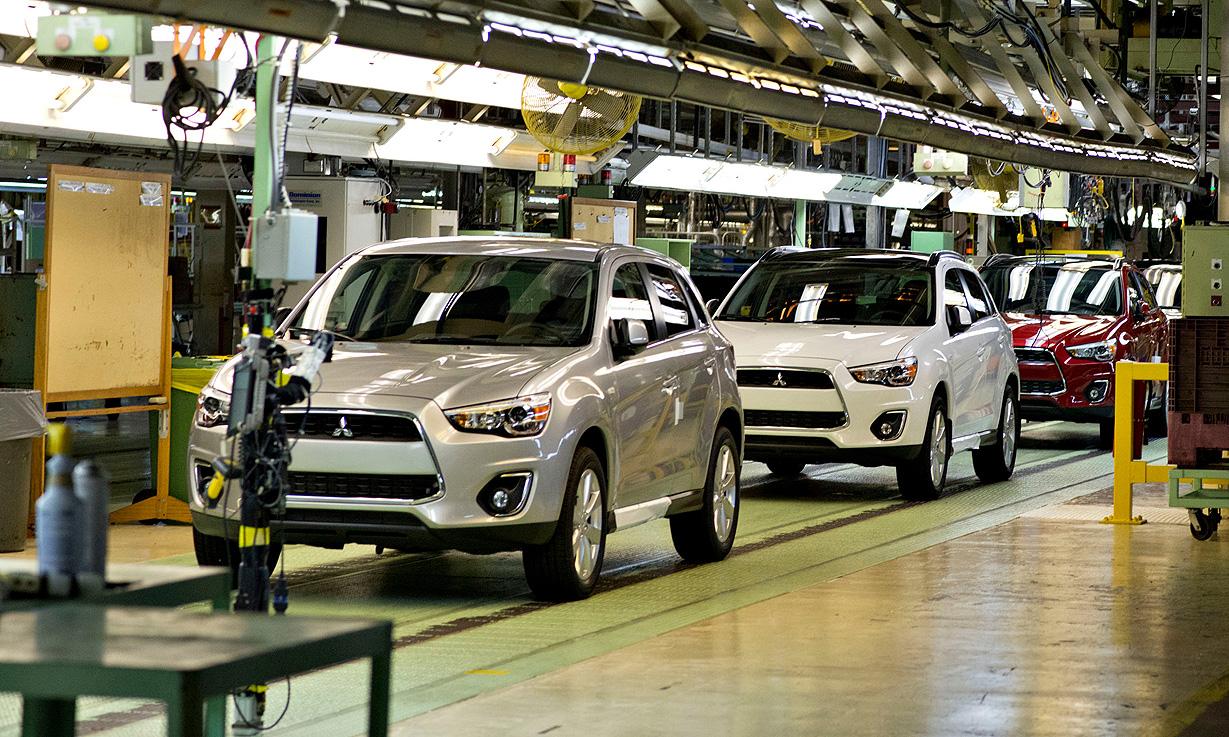
    Mitsubishi Motors Vietnam is recalling 9,066 Outlander and Xpander cars to fix a fuel pump issue that could cause the vehicle to stall.

    They include 5,370 Outlanders manufactured in Vietnam between January 15, 2018, and July 21, 2019, and 3,696 Xpanders imported from Indonesia and assembled between August 21, 2018, and September 20, 2019.

    The company said the inflated impeller inside of the pump “might have caused it to touch the surrounding parts of the pump body and stop the pump from spinning” which could result in “the engine not starting or stalling.”

    Car owners can take their vehicles to an authorized dealership for a free fuel pump replacement which will take around one hour.

    Mitsubishi uses gas pumps supplied by Japanese company Denso, which caused similar problems in many other cars including Toyota and Honda.

    But it said this error would not occur in its other cars.

    According to data from the Vietnam Automobile Manufacturers Association, auto sales fell 8 percent in 2020 to 296,634 units.

  • Petrol, Diesel Prices Hiked For Sixth Consecutive Day

    Petrol, Diesel Prices Hiked For Sixth Consecutive Day

    Domestic fuel rates on Monday were hiked for the sixth consecutive day by the state-owned marketing companies across the metro cities in India leading the prices to touch two-year high. As per the notification from Indian Oil Corporation, petrol and diesel rates were increased by 30 paise and 26 paise in the national capital. Due to firming international oil prices, there has been a continuous revision in fuel prices across the country. In the last sixteen days, the fuel rates have been hiked on fifteen occasions that came into effect from 6 am today.

    Here are the prices of petrol and diesel per litre in the five metros on December 7, 2020:

    City Petrol Diesel
    Delhi ₹ 83.71 ₹ 73.87
    Mumbai ₹ 90.34 ₹ 80.51
    Chennai ₹ 86.51 ₹ 79.21
    Kolkata ₹ 85.19 ₹ 77.44
    Bengaluru ₹ 86.51 ₹ 78.31

    On Sunday, petrol and diesel prices shot past ₹ 90 per litre and ₹ 80 per litre in Mumbai. With a new revision in fuel rates, petrol retails at ₹ 90.34 per litre and ₹ 80.51 per litre. Buyers in the capital city will have to shell out ₹ 83.71 for one litre of petrol and will have to pay ₹ 73.87 per litre for diesel. The fuel prices have seen a cumulative hike of ₹ 2.65 per and ₹ 3.42 per litre, respectively. Petrol and diesel rates remained static since September 22 and October 2, respectively. The OMCs started revising rates of auto fuels from November 20 onwards.

    Petrol price in Kolkata has been increased to ₹ 85.19 per litre, which was ₹ 84.90 per litre on Sunday. Similarly, the cost of diesel also increased by 26 paise from 77.18 to 77.44 rupees per litre. In Chennai, petrol and diesel retailed at ₹ 86.51 per litre and ₹ 79.21 per litre, respectively. The two auto fuels in Bengaluru cost ₹ 86.51 per litre and ₹ 78.31 per litre for petrol and diesel respectively.

    Oil marketing companies (OMCs) have been revising the retail rates of petroleum products since November 20, 2020. The 58-day hiatus in petrol price revision and 48-day status quo on diesel rates were preceded by no change in rates between June 30 and August 15 and an 85-day status quo between March 17 and June 6.