Tag: fuel

  • Vietnam fuel imports doubled in 2022

    Vietnam fuel imports doubled in 2022

    Vietnam’s fuel oil and gasoline imports almost doubled to US$9 billion last year from $4.9 billion in 2021.

    Volumes were 28% up to 8.9 million tons. Diesel accounted for 54% of the volume, gasoline for 19% and jet fuel for 16%.

    South Korea was the biggest supplier, providing 3.2 million tons, followed by Singapore and Malaysia.

    The fuel market saw major turbulence last year with many gas stations across the country shutting down in the second and third quarters as retail prices were too low for them to break even.

    The Ministry of Industry and Trade has instructed distributors to increase supply by 10-15% from last year to 25.9-26.7 million tons this year.

    The country’s largest refinery, Nghi Son, cut production by 25% earlier this month due to a technical issue, but fixed it by January 15 and promised to increase production during the rest of the month to make up.

    It will again have to shut down starting August 25, this time for 55 days, for major maintenance work.

    Some retailers said recently that since authorities did not fix new retail prices on January 21 as scheduled and instead put off the announcement to February 1 they are selling at low commissions and even making losses after global prices shot up during the Tet holidays which lasted from January 20-26.

  • Diesel price falls

    Diesel price falls

    Diesel dropped 2.3% to VND21,630 ($0.92) per liter while gasoline prices remained unchanged Wednesday afternoon.

    Kerosene fell 4.2% to VND21,800 per liter. Mazut decreased by 2.8% to VND13,360 per kilogram.

    Global gasoline and oil prices gained 0.5-6.6% between the last and this adjustment.

    RON95 gasoline dropped 0.53% to over $92 per barrel, while diesel fell nearly 4.3% to $109.71.

    Mazut lost 6.6% to an average of $371.15 per ton.

  • Gasoline prices dip to 18-month low

    Gasoline prices dip to 18-month low

    Gasoline prices plunged to the lowest since June 2021, with RON95 dropping 2.36% to VND20,700 ($0.87) per liter.

    E5 RON92 fell 1.82% to VND19,970. Diesel dropped 0.32% to VND21,600. Gasoline prices have fallen four times in a row since mid-November.

    They are now 37% lower than the previous peak on June 21.

    Vietnam fuel prices are adjusted on the first, 11th and 21st of each month.

    Ho Chi Minh City has proposed that prices are adjusted every three to five days instead of the current 10 to resolve the recent supply issues.

  • Fuel market cannot be regulated by administrative diktats

    Fuel market cannot be regulated by administrative diktats

    The recent fuel shortages happened because retail prices did not follow the market economy principles, and the government cannot mandate prices, Prime Minister Pham Minh Chinh said.

    “Businesses only operate if they gain profits. It is difficult for the government to use administrative measures with them in a market economy.”

    He pointed out that calling on businesses to sacrifice their own interests for the nation could only be done during wartime, and authorities need to be flexible and keep up with the market.

    “When retail prices correctly reflect costs, retailers started to sell again because they see profits.”

    The government has instructed the Ministry of Industry and Trade to amend regulations to ensure demand and supply principles are followed.

    Many localities, including Hanoi and Ho Chi Minh City, reported fuel shortages for weeks in October and early November as gas stations said they were selling at a loss since retail prices were too low.

    The situation has improved in the last three weeks, with long queues no longer seen at filling stations.

    State-owned fuel distributor Petrolimex said it is set to increase supply by 40% to 2,000 cubic meters daily.

  • Gasoline prices drop after 4 consecutive hikes

    Gasoline prices drop after 4 consecutive hikes

    Vietnam’s RON95 gasoline price dropped 0.34% to VND23,780 ($0.96) per liter after rising in the last four adjustments.

    E5 RON92 price fell 0.18% to VND22,670.

    Diesel dropped 0.72% to VND24,800. The Ministry of Finance has acknowledged an updated transportation cost of importing fuel to Vietnam in the Monday adjustment for the second time this month.

    Vietnam’s refined fuel imports in the first 10 months of 2022 rose 22.8% from a year earlier to 7.13 million tonnes, but costs rose 123.8% to $7.37 billion.

  • Low imports cause gasoline shortage

    Low imports cause gasoline shortage

    The current partial shortage of gasoline and oil has been caused by wholesalers not importing sufficient amounts, says said Deputy Minister of Industry and Trade Do Thang Hai.

    Commissions for retailers being cut amidst fluctuating world prices is also a factor, Hai told the press reporters Tuesday. Fuel retailers said they suffer losses after their commissions were adjusted downward and many want to close down.

    Wholesalers were importing gasoline and oil when their global prices surged, sometimes by 57-85% against the same period last year, but they had to sell it at lower prices.

    Currently, Vietnamese authorities adjust fuel retail prices every 10 days based on the average prices of the previous 10 days. However, many people including lawmakers have said this cycle is no longer suitable because it leaves domestic prices outdated compared to global prices, which have been unstable of late.

    Hai said wholesalers have to cover different costs like freight to bring imported gasoline and oil to Vietnam or to transport domestically produced fuels to ports nationwide, but the costs used by the ministry to calculate the base price are smaller than actual costs borne by the wholesalers.

    For these reasons, he said that wholesalers have incurred losses, so they cut back on imports and slashed commissions for retailers.

    Hai said that other reasons for the partial fuel shortage include lower production by two domestic refineries and the absence of some wholesalers.

    The two refineries produced 9.7 million tons of gasoline and oil in the first 10 months, some 170,000 tons lower than the yearly plan, according to the Ministry of Industry and Trade.

    Several wholesalers in the south have had their business licenses revoked for administrative wrongdoings, and some others have had customs clearance of imported fuel suspended for failing to meet customs-related requirements like electronic data connections.

    The Ministry of Finance has agreed to factor in an increase in the transportation cost of importing fuel, enabling a hike in retail prices.

    The costs is VND290-560 (1.2-2.3 cents) higher for a liter of gas and VND160-660 for diesel, and reflected in retail prices from Nov. 11.

    Another solution is increasing national gasoline and oil reserves, Hai said, noting that current reserves were equivalent to just 5-7 days of consumption.

  • CargoAi offers Neste jet fuel to drive SAF takeup

    CargoAi offers Neste jet fuel to drive SAF takeup

    Freight forwarders of all sizes can now play a more significant role in reducing cargo-related carbon emissions with a new tie-up between CargoAi and Neste.

    The cargo booking platform and the leading producer of sustainable aviation fuel (SAF) have announced a partnership that will allow the voluntary purchase of SAF.

    Starting November, CargoAi offers the option to purchase Neste MY Sustainable Aviation Fuel when booking a cargo transport. This can be done during the booking process, that is, either after a booking is confirmed or when the cargo is being tracked.

    During the booking or tracking phase, freight forwarders on cargoAi will be prompted with the CO2 emissions data that their shipment will emit, calculated based on IATA standards. They now have an option to purchase to reduce emissions with the access to buy in smaller quantities.

    “Building on the CO2 Efficiency Score already available in our Cargo2ZERO solution, will further encourage forwarders to enter into discussions with their own clients about what is needed for the industry to move forward towards reaching the industry’s Net Zero targets together,” says Matthieu Petot, CEO of CargoAi.

    “We are also enabling access for smaller freight forwarding companies in 110 countries to purchase SAF in smaller quantities.”

    CargoAi said Neste will ensure specific SAF volumes purchased are delivered and used by partner aircraft operators. The company considers SAF as a ‘key element’ to reach aviation’s ambitious goal of net-zero carbon emissions by 2050.

    “Purchasing SAF remained until now a hard-to-navigate, resource-intensive process and often required purchases of large volumes, which made reducing emissions at the transactional level very difficult,” said Magali Beauregard, Chief Commercial Officer of CargoAi.

    “With the direct purchase of SAF now embedded in the booking execution and tracking flows, we’re taking the next steps to empower climate action by offering our clients straightforward, user-friendly and verifiable means to ensure reduced emissions. We are extremely delighted about this landmark partnership with Neste and confident that this will enable clients of any size to take effective climate action without further delay.”

  • Gasoline wholesalers required to sell reserves amid fuel shortage

    Gasoline wholesalers required to sell reserves amid fuel shortage

    The Ministry of Industry and Trade has requested state-run gasoline and oil wholesalers to sell their commercial reserves to mitigate fuel shortages in some localities.

    Minister of Industry and Trade Nguyen Hong Dien on Wednesday asked PVN, Petrolimex, Mipec, Petimex and Thanh Le General Import-Export Trading Corporation to sell their reserves. Usually, wholesalers are supposed to ensure enough reserves to cover 20 days.

    As of Sept. 30, the state-owned wholesalers’ commercial reserves were over 1.25 million cubic meters of gasoline and oil, equivalent to 74% of Vietnam’s total consumption in one month.

    Relevant state agencies will consider punishing 14 gasoline and oil enterprises, mostly private wholesalers, which have not supplied fuel to distributors and retailers as planned, the minister said.

    Currently, two domestic oil refineries meet 70-80% of the country’s demand for gasoline and oil. However, half of the two refineries’ supplies depend on imported crude oil, he noted.

    “In reality, Vietnam still has to import around 70% of materials for gasoline and oil production and finished products. Local crude oil and finished fuel products account for only 30%,” said the minister.

    The Government on Wednesday asked the Ministry of Industry and Trade, in coordination with the Ministry of Finance, to ensure sufficient supplies of gasoline and oil for production and daily life in all circumstances.

    After retail prices of gasoline and oil increased on Nov. 1, partial fuel shortages have still occurred in Hanoi and Ho Chi Minh City and some other cities and provinces nationwide. The HCMC Department of Industry and Trade said nearly 20% of local gasoline stations faced gasoline shortages.

    Many retailers said the commissions they receive from wholesalers remain very low, while supplies from wholesalers are still insufficient.

  • Indonesia Hikes Fuel Prices To Rein In Ballooning Subsidies

    Indonesia Hikes Fuel Prices To Rein In Ballooning Subsidies

    Indonesia raised subsidized fuel prices by about 30% on Saturday, as the government moves to rein in ballooning subsidies despite a risk of mass protests.

    The price of subsidized gasoline was raised to 10,000 rupiah ($67 U.S. cents) a litre from 7,650 rupiah, while that of subsidized diesel rose to 6,800 rupiah a litre from 5,150 rupiah, energy minister Arifin Tasrif said.

    “I actually wanted domestic fuel prices to remain affordable by providing subsidies, but the budget for subsidies has tripled and will continue to increase,” President Joko Widodo told a news conference.

    “Now the government has to decide in a difficult situation. This is the government’s last option,” said Jokowi, as the president is known.

    Southeast Asia’s largest economy had already jacked up its 2022 energy subsidies to 502 trillion rupiah ($34 billion), triple the original budget, pushed by rising global oil prices and a depreciating rupiah currency.

    If prices were not raised, the budget would have ballooned to 698 trillion rupiah, said Finance Minister Sri Mulyani Indrawati.

    She estimated total energy subsidies would range between 591 trillion and 649 trillion rupiah for this year following the price hike, assuming the average crude price stays between $85 and $100 a barrel the rest of the year.

    High energy subsidies had restrained Indonesia’s inflation, at 4.69% in August, allowing the central bank to delay raising interest rates until last month, well behind regional and global peers.

    Hariyadi Sukamdani, head of the Indonesian Employers Association, said price pressure from the fuel price hike would not be too much, predicting inflation will top 6% at the end of the year.

    “If prices of goods are too expensive, people won’t buy. We can’t raise prices too much,” he said.

    Businesses are using unsubsidised fuels, but the price hike will affect logistics costs, Hariyadi said.

    Still, accelerating inflation could put pressure on Bank Indonesia (BI) to tighten monetary policy more quickly. The bank holds a two-day policy meeting ending on Sept. 22.

    Bank Mandiri economist Faisal Rachman estimated inflation could accelerate to between 6% and 7% and BI could raise the policy rate to 4.25% this year from 3.75% now.

    Faisal forecasts 5% economic growth this year despite the fuel price increase, supported by commodity exports and post-pandemic mobility, adding that the government’s cash distribution could help cushion some of the impact on consumption. The economy grew 5.44% in the April-June quarter.

    The government has allocated an additional 24.17 trillion rupiah for cash handouts to help the poor cope with the policy’s impact, Jokowi said.

    POLITICALLY SENSITIVE

    Fuel prices are politically sensitive in Indonesia, and the changes will have major implications for households and small businesses, as subsidised fuel accounts for more than 80% of state-owned oil giant Pertamina’s sales.

    The last fuel price hike was in 2014, months after Jokowi took office, aiming to free up fiscal space. That sparked protests across the archipelago.

    The opposition Labour Party has arranged a protest involving thousands of workers for Tuesday, chairman Said Iqbal, who also heads a trade union, told Reuters. He called on parliament to pressure the government to cancel the price hike.

    “This will hurt purchasing power,” he said. “Wages have not increased for three years and inflation is bound to rise sharply.”

    Small protests against any price hike, mostly led by students, had erupted in the recent days in several cities.

    After the price hike announcement, Pertamina said it was committed to ensuring adequate fuel supplies nationally. Cars were seen queuing in some stations in the capital Jakarta after the announcement.

    Pertamina, Asia’s biggest gasoline importer, had deferred some of its gasoline deliveries for September ahead of the price hike, due to an expected drop in fuel demand, traders said.

    Decades ago Indonesia was a major oil exporter, becoming a member of the Organization of Petroleum Exporting Countries in the 1960s, but its oil output declined and it turned to net oil importer in the 2000s. Indonesia is still an exporter of gas.
  • Waze helps drivers find the cheapest fuel with Gas Station feature

    Waze helps drivers find the cheapest fuel with Gas Station feature

    Despite fuel prices going up since the beginning of the year, traffic continues to increase in many US cities. Luckily, Waze is here to help you not just avoid as much traffic as possible, but also find the cheapest fuel with the Gas Station feature introduced earlier this year.

    Considering OPEC recently announced a new cap for global oil supply coming into effect soon, Gas Station will probably help many drivers be better prepared for fluctuating gas prices across the US. If you haven’t used Gas Station, you can do that directly from Waze, by simply searching the most affordable gas stations and find the best prices for fuel in your area.

    Just to put that into perspective, here is some relevant traffic data in 10 major cities across the US, which compares traffic from August – October 2022 to the same period one year ago:

    • Nashville traffic increased by 20.8%
    • Charlotte traffic increased by 17.6%
    • Boston traffic increased by 14%
    • Washington DC traffic increased by 10.8%
    • Austin traffic increased by 10.7%
    • New York City traffic increased by 9.7%
    • Dallas traffic increased by 9.3%
    • Houston traffic increased by 9.2%
    • Atlanta traffic increased by 7.8%
    • San Diego traffic increased by 7%

    To take advantage of Gas Station, first choose your preferred gas type (i.e., regular, midgrade, premium and diesel) within settings and the app will find the type of gas that meets your needs. Another important feature offered by Gas Station is the ability to find the best-priced fuel in a certain area.

    The Waze Gas Station feature will also notify users of nearby gas stations, prompting drivers to update the price of gas at specific location so other users of the app can search for the cheapest prices in their area.

    Also, in case you didn’t know, Waze offers real-time gas pricing information, a feature powered by community members sharing gas prices along their drive. It makes it much easier to plan your drive ahead of time, not to mention that your trip will be more affordable.

  • Ministry refuses to lift special consumption tax on gasoline

    Ministry refuses to lift special consumption tax on gasoline

    The Ministry of Finance refused a proposal to exempt special consumption tax on gasoline given the country’s tax rate is at a low level compared to many other countries.

    The Vietnam Chamber of Commerce and Industry has recently proposed that the special consumption tax on gasoline be reduced to provide positive impacts amid global uncertainties.

    The ministry said gasoline is a non-renewable fuel that needs to be used sparingly. Most countries impose the tax for example, in France (0.66 euro per liter), Germany (0.35 euro), South Korea (311 won per liter of absolute tax and 15% tax rate), Singapore (S$.41), China (1.52 yuan), Thailand (up to 6.5 baht), Cambodia (15%) and Laos (16%).

    It said Vietnam’s special consumption tax on gasoline is lower than that of other countries, especially neighboring ones like Laos, Cambodia and China.

    The current special consumption tax on gasoline is 10% with the same rate applied to value-added tax. The Ministry of Finance is proposing that the former tax is cut by half, and the latter by either 20% or 50%.

    RON95 gasoline prices climbed to a peak in June before plunging to the current level of VND21,440 ($0.90) per liter, the lowest in 13 months.

  • Gasoline prices down 8th time in 3 months

    Gasoline prices down 8th time in 3 months

    Vietnam has cut gasoline prices for the eighth time in the last three months, seeking to contain inflation and boost consumption amid global economic woes.

    From 3 p.m. Wednesday, RON95 gasoline prices fell 4.21% to VND22,580 ($0.95) per liter.

    Prices for biofuel E5 RON92 dropped 2.42% to VND21,780.

    This means Vietnam’s gasoline prices have fallen by 31.31% since this year’s peak on June 21.

    Diesel prices dropped 6.82% to VND22,530.

    Vietnamese authorities said they adjusted down prices because global fuel prices have fallen by 3-10% in the last 10 days.

    The Asian Development Bank (ADB) warned Wednesday that Vietnam might face many inflationary risks this year due to rising commodity prices globally.

  • Indonesia Hikes Fuel Prices To Rein In Ballooning Subsidies

    Indonesia Hikes Fuel Prices To Rein In Ballooning Subsidies

    Indonesia raised subsidised fuel prices by about 30% on Saturday, as the government moves to rein in ballooning subsidies despite a risk of mass protests.

    The price of subsidized gasoline was raised to 10,000 rupiah ($67 U.S. cents) a litre from 7,650 rupiah, while that of subsidised diesel rose to 6,800 rupiah a litre from 5,150 rupiah, energy minister Arifin Tasrif said.

    “I actually wanted domestic fuel prices to remain affordable by providing subsidies, but the budget for subsidies has tripled and will continue to increase,” President Joko Widodo told a news conference.

    “Now the government has to decide in a difficult situation. This is the government’s last option,” said Jokowi, as the president is known.

    Southeast Asia’s largest economy had already jacked up its 2022 energy subsidies to 502 trillion rupiah ($34 billion), triple the original budget, pushed by rising global prices of oil and a depreciating rupiah currency.

    If prices were not raised, the budget would have ballooned to 698 trillion rupiah, said Finance Minister Sri Mulyani Indrawati.

    She estimated total energy subsidies would range between 591 trillion and 649 trillion rupiah for this year following the price hike, assuming the average crude price stays between $85 and $100 a barrel the rest of the year.

    High energy subsidies had restrained Indonesia’s inflation, at 4.69% in August, allowing the central bank to delay raising interest rates until last month, well behind regional and global peers.

    Hariyadi Sukamdani, head of the Indonesian Employers Association, said price pressure from the fuel price hike would not be too much, predicting inflation will top 6% at the end of the year.

    “If prices of goods are too expensive, people won’t buy. We can’t raise prices too much,” he said.

    Businesses are using unsubsidised fuels, but the price hike will affect logistics costs, Hariyadi said.

    Still, accelerating inflation could put pressure on Bank Indonesia (BI) to tighten monetary policy more quickly. The bank holds a two-day policy meeting ending on Sept. 22.

    Bank Mandiri economist Faisal Rachman estimated inflation could accelerate to between 6% and 7% and BI could raise the policy rate to 4.25% this year from 3.75% now.

    Faisal forecasts 5% economic growth this year despite the fuel price increase, supported by commodity exports and post-pandemic mobility, adding that the government’s cash distribution could help cushion some of the impact on consumption. The economy grew 5.44% in the April-June quarter.

    The government has allocated an additional 24.17 trillion rupiah for cash handouts to help the poor cope with the policy’s impact, Jokowi said.

    Fuel prices are politically sensitive in Indonesia, and the changes will have major implications for households and small businesses, as subsidised fuel accounts for more than 80% of state-owned oil giant Pertamina’s sales.

    The last fuel price hike was in 2014, months after Jokowi took office, aiming to free up fiscal space. That sparked protests across the archipelago.

    The opposition Labour Party has arranged a protest involving thousands of workers for Tuesday, chairman Said Iqbal, who also heads a trade union, told Reuters. He called on parliament to pressure the government to cancel the price hike.

    “This will hurt purchasing power,” he said. “Wages have not increased for three years and inflation is bound to rise sharply.”

    Small protests against any price hike, mostly led by students, had erupted in the recent days in several cities.

    After the price hike announcement, Pertamina said it was committed to ensuring adequate fuel supplies nationally. Cars were seen queuing in some stations in the capital Jakarta after the announcement.

    Pertamina, Asia’s biggest gasoline importer, had deferred some of its gasoline deliveries for September ahead of the price hike, due to an expected drop in fuel demand, traders said.

    Decades ago Indonesia was a major oil exporter, becoming a member of the Organization of Petroleum Exporting Countries in the 1960s, but its oil output declined and it turned to net oil importer in the 2000s. Indonesia is still an exporter of gas.
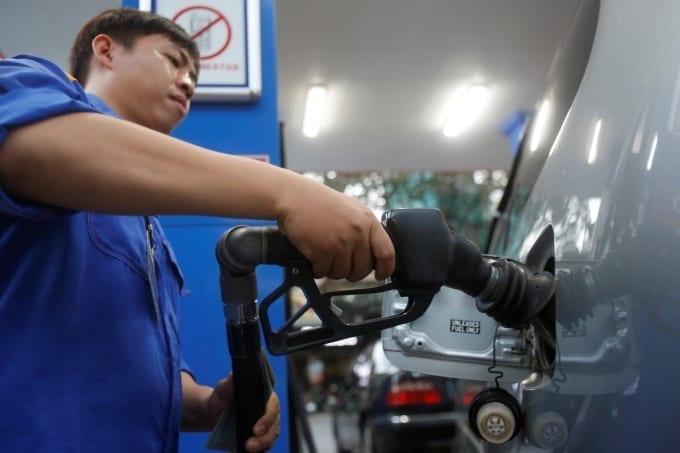
  • Gas stations run out of fuel in southern Vietnam

    Gas stations run out of fuel in southern Vietnam

    Gas stations in several southern localities have run out of supplies of petrol, diesel and other fuels and have stopped doing business.

    In Tinh Bien District, An Giang Province, six gas stations that get their supplies from Ho Chi Minh City-based Dai Dong Duong Petroleum JSC have stopped selling since Monday.

    A Dai Dong Duong representative said that they have not been able to buy fuel from distributors for the last five days.

    He attributed the supply shortage to seven fuel distributors who had their import license revoked for 1-2 months mid-August for violating safety and stockpiling regulations.

    Also, distributors are giving supply priority to companies in their own system on learning that market prices are going up.

    Huynh Van Thanh, owner of the Thanh Loi station in An Giang’s Cho Moi District, said his station had been out of diesel for two days as of Tuesday, but the distributor would not supply the fuel until Sep. 6.

    As for gasoline, his station has not bought enough to meet demand for fear of making losses.

    Thanh said that the station is given a discount of VND210 for each liter of gasoline and is allowed to buy a maximum of 3,000 liters at a time, which means a total profit of VND630,000 ($27).

    Meanwhile, the cost of renting a tank truck is VND900,000, which means the station has lost VND270,000 even before it has started selling. Then there is the cost of electricity and staff salaries. Every day the gas station loses VND1.5-2 million, he said.

    According to the An Giang Market Management Department, as of Monday, 19 petrol stations across the province had closed while 36 had announced they were running out of fuel, accounting for nearly 10% of gas stations in the province.

    The department said the stations were running out of fuel because it was difficult to get them from distributors

    A similar situation has been reported in the Mekong Delta province of Dong Thap.

    Nguyen Huu Dung, director of the province’s Industry-Trade Department, said Tuesday that in the past week, 10 petrol stations have asked to temporarily close for “personal reasons.”

    He said it is possible that they want to stop selling to avoid losses.

    “The department received an application from a station to suspend operation for three months because they were losing VND350 dong for every liter of gasoline,” he added.

    Also in the Mekong Delta, the Market Management Department of An Giang Province said two of 132 stations have halted operations while two others announced they’ve run out of gasoline.

    A representative of the Chau Thanh Petroleum Trading Service Co., Ltd in Tien Giang, which supplies fuel to 114 stations in the province, said it holy has enough in stock to distribute in three days.

    The reserves of this firm were running out and supply from its distributor, the Military Petroleum Company Region 4 based in HCMC was deficient, the rep said.

    In HCMC and neighboring Dong Nai Province, many dealers said that the amount of imported gasoline has dropped as increasing prices of oil and gas are making importers and distributors worry about suffering losses.

    The Vietnam Petroleum Association had proposed Monday that the Ministry of Industry and Trade regulate the price of gasoline on Sep. 1, instead of waiting until Sep. 5, given the strong fluctuations in global fuel prices.

    Nguyen Minh Duc with the legal department of the Vietnam Chamber of Commerce and Industry (VCCI), said the current regulation of waiting for ten days to make changes in gasoline prices does not still cannot allow local businesses to keep pace with price fluctuations in the international market.

    That leads to the situation wherein gas stations run out of stock before each price adjustment, he said.

  • Indonesia To Shift $1.6 Billion Portion Of Fuel Subsidy Budget To Welfare Programmes

    Indonesia To Shift $1.6 Billion Portion Of Fuel Subsidy Budget To Welfare Programmes

    Indonesia will reallocate 24.17 trillion rupiah ($1.62 billion), or nearly 5%, of its fuel subsidy budget to social spending, including cash handouts to 20.65 million households, its finance minister said on Monday.

    The move comes amid reports that the government has been considering raising subsidised fuel prices to manage rising fiscal pressure due to high global energy prices.

    Southeast Asia’s largest economy has already tripled its 2022 energy subsidy allocation from its original budget to 502 trillion rupiah – about 16% of total spending plans, but authorities have said more money could be needed if fuel prices were not increased throughout the year.

    Finance Minister Sri Mulyani Indrawati said the reallocation of spending will be enacted this week and was decided after discussing the fuel subsidy policy with President Joko Widodo.

    “The people will get social assistance in order to increase their purchasing power,” Sri Mulyani told an online news conference, speaking alongside Bank Indonesia Governor Perry Warjiyo.

    She did not take questions and did not mention fuel price hike plans.

    The government would also provide cash handouts to 16 million workers who make less than 3.5 million rupiah per month, she said.

    Regional governments would be instructed to use a portion of their fiscal transfer from the central government to subsidise transportation fares, she added.

    Lawmakers from parliament’s energy committee last week told Reuters the government may raise fuel prices by 30% to 40% and that such a move will add 1.9 percentage points to 2022’s inflation rate.