Tag: fuel

  • Gasoline prices hit six-month low

    Gasoline prices hit six-month low

    Vietnam gasoline prices on Thursday dropped 3.6-3.8% to the lowest since Feb. 11 as global rates kept falling.

    A liter of popular RON 95 gasoline now costs VND24,660 ($1.05), down VND940, while that of biofuel E5 RON 95 costs VND23,720, down VND900.

    Thursday’s was the fifth consecutive downward adjustment made to gasoline prices. Compared to this year’s peak on June 21, prices have fallen by 24.22-24.98%.

    Prices of diesel and kerosine also dropped 4.4-5.2%.

    On the global market, gasoline prices have decreased marginally in the last 10 days, according to data from the Ministry of Industry and Trade and the Ministry of Finance.

    On the global market WTI crude futures slipped toward $91 per barrel Thursday as concerns over supply disruptions eased and markets looked for evidence of improving fuel demand.

  • Vietnam halves import tariff on gasoline to 10%

    Vietnam halves import tariff on gasoline to 10%

    Vietnam halved its Most Favored Nation (MFN) tariff on gasoline to 10% Monday as it seeks to diversify supply.

    The MFN import tariff is a standard rate applied for trade between World Trade Organization (WTO) members unless a separate trade agreement exists.

    But the cut is unlikely to reduce gasoline prices since Vietnam imported over 90% of its fuel from ASEAN member countries and South Korea under free trade agreements (FTAs) at 8% tariff.

    But it will reduce Vietnam’s dependence on those sources and help diversify its supply.

    Taxes account for 19.4-22% of gasoline prices in Vietnam, lower than in many other countries.

    After four downward adjustments in recent days a liter of RON 95 gasoline now costs VND25,600 ($1.09), the lowest since late-February.

  • Gasoline price plunges to 5-month low

    Gasoline price plunges to 5-month low

    Vietnam gasoline prices on Thursday fell to the lowest in five months as global rates decline.

    The Ministry of Finance and Ministry of Industry and Trade adjusted RON95 prices down 12.1 percent to VND26,070 ($1.11) per liter.

    This means RON95 is now 20.7 percent lower than this year’s peak on June 21.

    E5 RON92 gasoline prices dropped 9.8 percent to VND25,070, down 19.9 percent from this year’s peak. The government also brought diesel prices down 7 percent to VND24,850 per liter.

    Global oil prices fell Thursday for a second straight session, as demand concerns outweighed tight global supply after U.S. government data showed tepid gasoline consumption during the peak summer driving season.

    Brent crude futures dropped 33 cents, or 0.3 percent, to $106.59.

  • Fuel price cuts fail to drag prices down

    Fuel price cuts fail to drag prices down

    Gasoline prices may have fallen by 10 percent on Monday, but to many people’s chagrin this has not had a knock-on effect on other prices.

    Three days after fuel prices fell, Hanh, owner of a chicken pho restaurant in Hanoi, has yet to adjust prices downward. A bowl of pho still costs VND40,000-60,000 ($1.71-2.56), up VND5,000-10,000 from June.

    He blamed it on the high costs of other items, especially chicken. “A kilogram of chicken still costs me VND110,000-120,000, and so I cannot lower my prices.”

    In HCMC too, food stalls have yet to cut prices after having raised them earlier to cope with higher fuel and other costs.

    Gasoline prices have only fallen by 10 percent after a 35 per cent hike since mid-April, eateries pointed out, adding they therefore have to wait for further fuel price cuts before reducing their prices.

    Prices of fresh foods at traditional markets are also unchanged. Hoa, a vegetable seller in HCMC’s Binh Thanh District, said prices are unlikely to fall since heavy rains have affected supply.

    A butcher in HCMC’s Go Vap District, also called Hoa, said he could not cut pork prices further since he is already selling at cost.

    “Prices of pig of the hoof will probably increase in the next few days, and so retail pork prices are unlikely to fall. Animal feed costs have risen significantly in the first half of this year.”

    Nguyen, a butcher in a market in Hanoi, said, “Due to bad weather, low demand and higher costs, I suffer losses most of the time.”

    Gasoline only accounts for 20 percent of fresh food prices, while labor input costs are rising, Hoang, a wholesaler in HCMC, said.

    Truong Chi Thien, director of egg producer Vinh Thanh Dat, said the costs of animal feed, labor and packaging have risen by 20-40 percent from last year.

    “Egg prices will only decline if input costs fall.”

    Dinh Trong Thinh, a lecturer at the Academy of Finance, said there would be a lag between changes in gasoline prices and those of other goods.

    Despite two recent cuts, gasoline prices remain at nearly VND30,000 a liter, up 25 percent from last year, and so it is understandable that producers, suppliers and retailers have yet to cut prices, he added.
  • Fuel prices fall to 2-month low

    Fuel prices fall to 2-month low

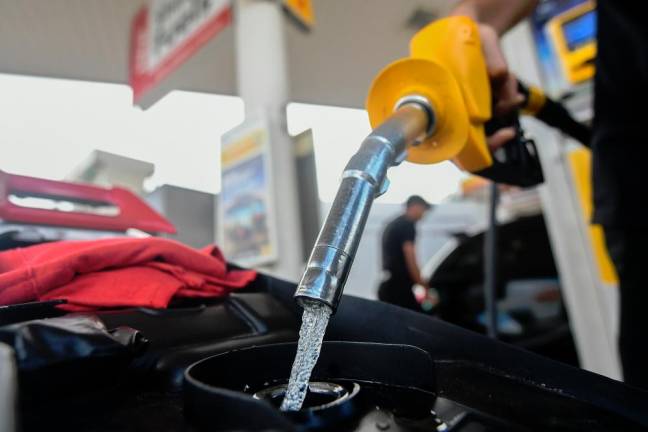
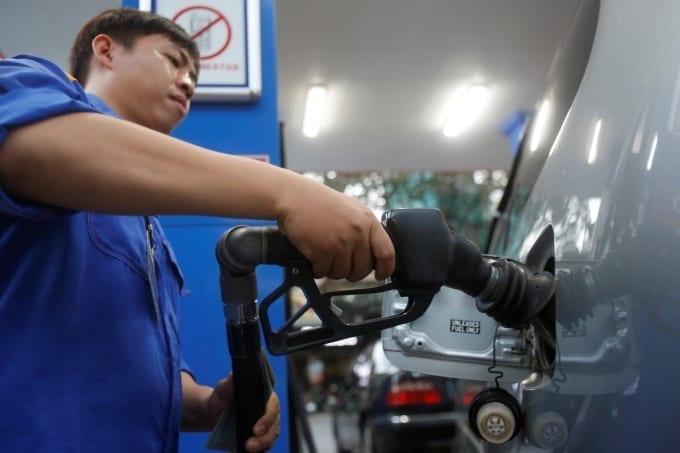
    Gasoline prices fell by 10 percent Monday to their lowest levels in two months after an environment tax cut. The price of the popular RON 95 gasoline was reduced by VND3,090 to VND29,670 a liter, and that of biofuel E5 RON 92 by VND3,110 to VND27,780 (US$1 = VND23,350).

    The prices of other fuels like kerosene and diesel also fell by 4.2-11.4 percent.

    The biggest drop in prices this year pushed them to their lowest levels since May 11.

    Normally, authorities make gasoline price adjustments in the afternoon of the 1st, 11th and 21st of a month, but this time it was adjusted at midnight Sunday following a cut in the environment tax.

    The tax, originally VND4,000 per liter and cut to VND2,000 in April, was brought down to VND1,000 by the Standing Committee of the National Assembly.

    The Ministry of Finance has also proposed cuts to excise and value-added tax on gasoline to bring prices down further. They are expected to be approved in the next session of the National Assembly in October.

    But industry insiders have called for the cuts to be made sooner, saying rising fuel costs have been one of the biggest stumbling blocks to their recovery after Covid-19.

  • Fishermen stranded ashore as fuel costs surge

    Fishermen stranded ashore as fuel costs surge

    Vo Quang Phuc of Quang Nam Province has left his vessels ashore for the last two weeks even though it is the main fishing season now.

    His two vessels typically make 16 trips a year, but this year they have only done four, and all of them resulted in losses, with diesel prices double that of last year.

    The 43-year-old man works as a porter for VND300,000 ($12.84) a day, but he does not get called very often and still has a VND1.7 billion debt on one of his boats.

    He has not received any government support to cope with rising fuel costs, and in his village, only the elders work as fishermen. Most of the younger generation have dumped the vocation for other jobs with more stable income.

    “We fishermen are facing great difficulties.”

    Phuc’s vessels are among 45,800 nationwide, roughly half the country’s fishing fleet, that have stopped operating this year over high fuel costs.

    Diesel costs have nearly doubled year-on-year to around VND30,000 per liter. With fishing vessels consuming about 330 million liters per month, fisherfolk’s incomes have been severely impacted, the Ministry of Labor, Invalids and Social Affairs said in a recent report.

    Hoang Van Minh from the central province of Quang Binh is one of them, docking his fishing vessel for two months now.

    Minh has seen an increase of 30 percent in fuel costs, while the catch is less than previous years, which means he loses money on all of his fishing trips.

    Half of the vessels in his village have stopped operating, and only one in 10 report some profit, he added.

    Minh works as a wood worker for VND300,000 a day.

    His son needs VND1.5 million soon to pay for his tuition and Minh does not know how he can afford that.

    Quang Binh has 1,200 offshore fishing vessels, of which 350 of not being used.

    The number of unused vessels will rise further as fuel costs rise faster than catch prices, said Le Ngoc Linh, head of the province’s seafood department.

    Some fishermen are even selling their vessels to make ends meet.

    Pham Van Suc in Quang Nam sold his offshore vessel recently and bought a smaller boat to transport people in Da Nang City.

    “Many of my customers are fishermen who are now going into the city every day to work as gardeners. They only return to their ships at night to protect them.”

  • VN-Index bounces back after tumble

    VN-Index bounces back after tumble

    Vietnam’s benchmark VN-Index rose 1.47 percent to 1,166.48 points Thursday but with plunging trade.

    The index closed nearly 17 points higher after losing almost 32 points on Wednesday.

    Trading on the Ho Chi Minh Stock Exchange (HoSE) fell by 27.9 percent to VND9.06 trillion ($388 million).

    The VN-30 basket, comprising the 30 largest capped stocks, saw 24 tickers gain.

    BVH of insurance company Bao Viet Holdings and VRE of retail real estate arm Vincom Retail led with a 3.8 percent gain.

    VCB of state-owned lender Vietcombank rose 3.7 percent.

    Other gainers included PNJ of Phu Nhuan Jewelry and VIC of biggest private conglomerate Vingroup, up 3.6 percent and 3.4 percent respectively.

    Four blue chips fell, with GAS of state-owned Petrovietnam Gas losing 1.8 percent, and FPT of IT giant FPT Corporation falling 0.5 percent. Foreign investors were net buyers to the tune of VND487.46 billion ($20.86 million).

    The HNX-Index at the Hanoi Stock Exchange, where mid and small caps list, was down 0.02 percent while the UPCoM-Index at the Unlisted Public Companies Market was up by 0.19 percent.

  • Vietnam approves 2nd environmental tax cut on fuel

    Vietnam approves 2nd environmental tax cut on fuel

    Vietnamese lawmakers have approved the second environmental tax cut on gasoline starting next week to contain surging fuel prices, two months after the first reduction came into effect.

    In an extraordinary meeting Wednesday morning, the Standing Committee of the National Assembly greenlighted an additional 25 percent cut on environmental tax to bring it down to VND1,000 ($0.04) per liter from July 11 until the end of the year.

    The tax was originally VND4,000 per liter and was cut to VND2,000 in April this year.

    Starting next week the environmental tax on diesel will also be cut from VND1,000 per liter to VND500.

    The government initially proposed lawmakers to approve the cut starting Aug. 1, but Vuong Dinh Hue, chairman of the National Assembly, said Wednesday it should come into effect starting next week.

    He added that the government should consider bringing down value-added tax and special consumption tax on fuel to reduce the impact of rising fuel prices on inflation.

    The government estimates that the latest environmental tax break would bring the consumer price index this year down by around 0.15 percentage points.

    RON95 gasoline price has risen 41 percent to VND32,760 this year.

  • Industries hit hard by rising fuel prices

    Industries hit hard by rising fuel prices

    Sao Viet Bus, which operates on the northern route Hanoi – Lao Cai Province, is struggling to survive as the price of fuel, which accounts for 50 percent of costs, keeps rising.

    “If we do not operate regularly, we will lose our slots at bus stations, but the more we operate, the more we lose because of surging costs,” Do Van Bang, CEO of Sao Viet’s parent company, Minh Thanh Phat, said.

    Sao Viet has reducing the number of trips to cut costs.

    Bang said the only way to break even is to increase fares by 15-20 percent, but with competition being intense, the time is not right for it.

    But the company would not be able to absorb the losses for long, he added.

    The company is one of many to lose due to the 39 percent rise in fuel prices since the beginning of this year.

    Nguyen Manh Hung, CEO of transport firm International Logistics, said fuel accounts for 40 percent of costs, and so the increases in their prices has affected the company.

    It is not easy to negotiate price hikes with customers, he said.

    “We are trying to cut all other expenses to survive the fuel price surge.”

    Half of all fishing vessels in Vietnam have stopped going out to sea after diesel prices rose 1.7-fold since the end of last year, the Ministry of Agriculture and Rural Development said in a recent report.

    The cost of operating boats has risen by 35-48 percent, while seafood prices have only gone up marginally, it added.

    The chairman of garment company TNG, Nguyen Van Thoi, said its business has not been majorly affected by the fuel price surge as contracts have already been signed for the rest of the year.

    But it is seeing prices drop as consumer in its export markets are cutting spending due to inflation, he said.

    Huynh Thi My, general secretary of the Vietnam Plastics Association, said plastic companies are also in trouble as they cannot negotiate price hikes with foreign customers.

    Businesses are looking for new markets and suppliers with lower prices, she added.

    Businesses are petitioning for more tax cuts to lower fuel costs.

    The Ministry of Finance should reduce special consumption tax (currently at 10 percent) and value added tax (also 10 percent) on fuel so that businesses face no more burden, Bang of Minh Thanh Phat said.

  • Gasoline price rises 1.5 pct

    Gasoline price rises 1.5 pct

    Vietnam’s RON 95 gasoline price increased by 1.54 percent Tuesday to a new record of VND32,870 ($1.42) per liter, having risen by 41 percent so far this year.

    This was the seventh increase in a row since mid-April of the popular gasoline, which accounts for 70 percent of total fuel consumption in the country.

    RON 92 biofuel also saw its price rising by 0.61 percent to VND32,370 per liter, having increased by 43.5 percent this year.

    Diesel increased by 3.4 percent Tuesday.

    Vietnam’s fuel stabilization fund, set up to contain price surges, is currently negative.

    The government has cut the environmental tax on fuel by half to VND2,000 from April for the rest of the year, and is considering cutting it by another VND1,000.

  • India’s Imports Of Cheap Russian Crude Surge Since Ukraine Invasion

    India’s Imports Of Cheap Russian Crude Surge Since Ukraine Invasion

    India has received 34 million barrels of discounted Russian oil since Moscow invaded Ukraine on Feb. 24, according to Refinitiv Eikon data, more than trebling the value of total imports from Russia, including other products, compared with the same period of 2021. The volumes of India’s seaborne oil imports from Russia exclude CPC Blend oil, which is also exported via Russia’s Black Sea port, but mostly supplied by Kazakhstan’s subsidiaries of western countries as transit volumes.

    India’s oil imports from Russia have been rising since February, as Asia’s third largest economy and the world’s third biggest oil importer, turned to deeply discounted Russian oil, mostly Urals crude, to cut its imports bill.

    The country received more than 24 million barrels of Russian crude this month, up from 7.2 million barrels in April and about 3 million in March, and is set to receive about 28 million barrels in June, according to Refinitiv Eikon oil flows.

    Surging energy imports helped push India’s total goods imports from Russia between Feb. 24 and May 26 to $6.4 billion, compared with $1.99 billion in the same period last year, according to government figures seen by Reuters.

    India’s exports to Russia, however, fell nearly 50% to $377.07 million over that period, as its government is yet to set up a formal payment mechanism.

    As the West responded to the invasion with a barrage of sanctions, India has come under fire for its continued purchases of Russian energy. New Delhi has brushed off the criticism, saying those imports made only a fraction of the country’s overall needs and has said it will keep buying “cheap” Russian oil, arguing a sudden stop would drive up costs for its consumers.

    Russian and Indian energy companies have also been discussing term supply agreements and possible acquisitions of stakes in Russian oil and gas projects.

  • Gasoline pushes May inflation to 2.86 pct

    Gasoline pushes May inflation to 2.86 pct

    A surge in the prices of gasoline, food and some other goods has sent the consumer price index rising by 2.86 percent year-on-year in May.

    Global gasoline prices went up while the rising costs of raw materials and ingredients pushed up food prices, according to the General Statistics Office.

    The monthly rise in prices was 0.38 percent with culture, tourism and entertainment products rising by 0.74 percent as travel demand recovered.

    Inflation in the first five months was 2.25 percent as against 1.29 percent in the same period last year.

    Standard Chartered Bank expects full-year inflation of 4.2 percent in 2022 and 5.5 percent in 2023.

    Several economists have also said it would be difficult to contain inflation below the targeted 4 percent rate due to higher prices, especially of gasoline, caused by war in Ukraine.

    Inflation was 1.8 percent last year, the lowest in six years.

  • Vietnam Airlines eyes airfare cap hike, fuel surcharge

    Vietnam Airlines eyes airfare cap hike, fuel surcharge

    Vietnam Airlines proposed to raise the price cap for domestic travel from April 1 and add a fuel surcharge for local routes.

    The current price cap of air transportation services is no longer suitable, the airline said in its proposal sent to the Ministry of Transportation and the Ministry of Finance on March 14.

    The current maximum fare is VND2.2 million ($96) for routes under 850 kilometers, and VND3.75 million for those above 1.280 kilometers.

    The higher cap would serve to offset costs of rising oil prices and improve service quality, the airline said.

    Its proposal also advocated for a fuel surcharge on domestic routes and full environmental tax exemption for aviation fuel in 2022, which would save the airline more than VND600 billion if approved.

    Previously, the Civil Aviation Authority of Vietnam had repeatedly requested the airfare cap be removed, but to no avail.

    Last year, the national carrier proposed to set price floors between VND560,000 and VND1.4 million for air tickets on domestic routes, but the Ministry of Transportation rejected the idea.

  • Oil Price Benchmarks Fall Below $100, First Time In Weeks

    Oil Price Benchmarks Fall Below $100, First Time In Weeks

    Oil prices tumbled more than 6% on Tuesday to their lowest in almost three weeks, as Russia suggested it would allow a revival of the Iran nuclear deal to go forward and as traders worried growing pandemic lockdowns in China could dent demand. Both Brent and U.S. crude futures benchmarks settled below $100 per barrel for the first time since late February. Since reaching 14-year highs on March 7, Brent has slid nearly $40 and WTI more than $30. Trading has been extremely volatile since Russia invaded Ukraine more than two weeks ago.

    During the session, Brent futures plummeted $6.99, or 6.5%, to settle at $99.91 a barrel. U.S. West Texas Intermediate (WTI) crude fell $6.57, or 6.4%, to settle at $96.44 a barrel. Brent fell as low as $97.44 and WTI hit $93.53, their lowest since Feb. 25.

    On technical charts, both contracts moved the closest to oversold territory since December. They had been in overbought conditions during early March. Brent at one point topped $139 a barrel.

    Russia is the world’s largest exporter of crude and fuels. Numerous buyers have shunned Russian barrels since the invasion, sparking fears of a disruption of millions barrels of daily crude supply. Those fears now look overdone.

    On Tuesday a Ukrainian negotiator said talks with Russia over a ceasefire and withdrawal of Russian troops from Ukraine are ongoing. The ensuing sell-off drove prices lower but many expect volatility to continue.

    “Whilst reports of promising talks are to be welcomed, it is hard to see how either side at this stage would be prepared to make concessions that would be acceptable to any party,” said a research note from Kpler. “In this current situation, it is hard to see how crude oil prices are not being under-priced.”

    Also on Tuesday, Russia said it has written guarantees it can carry out its work as a party to the Iran nuclear deal, suggesting Moscow would allow a revival of the tattered 2015 pact to go ahead.

    The talks to revive the nuclear accord could lead to the lifting of sanctions on Iran’s oil sector and allow Tehran to resume crude exports. They had stalled because of Russian demands.

    In the fallout from Russia’s invasion, which it calls a “special operation,” Western sanctions have failed to deter China and India from buying Russian crude.

    The Organization of the Petroleum Exporting Countries said oil demand in 2022 faced challenges from the invasion and rising inflation as crude prices soar, increasing the likelihood of reductions to its forecast for robust demand this year.

    China saw a steep jump in daily COVID-19 infections, which could slow the current pace of consumption as that nation shifts to lockdowns.

    “It is estimated that a severe lockdown in China could put 0.5 million bpd of oil consumption at risk, which would be further compounded by fuel shortages due to inflated energy prices,” said Louise Dickson, senior oil market analyst for Rystad Energy.

    The U.S. Federal Reserve is widely expected to raise interest rates by 25 basis points on Wednesday for the first time in four years to fight soaring inflation. This could strengthen the U.S. dollar and dampen demand for oil and other commodities priced in greenbacks.

    Preliminary data from the American Petroleum Institute showed U.S. crude inventories rose by 3.8 million barrels for the week ended March 11 while gasoline inventories fell by 3.8 million barrels and distillate stocks rose by 888,000 barrels, according to sources, who spoke on condition of anonymity. [API/S]

    Official U.S. government inventory data is due on Wednesday.

  • Fuel, food push consumer prices up in February

    Fuel, food push consumer prices up in February

    The consumer price index (CPI) was up 1.42 percent year-on-year in February as Tet in early last month pushed up the prices of food, dining, and transportation.

    Gasoline prices surged 5.8 percent from January and transport prices increased by 2.35 percent as travel demand skyrocketed during Tet (the Lunar New Year), according to the General Statistics Office.

    Food and dining, beverages and cigarettes, and culture-entertainment-tourism prices rose 1.54 percent, 0.73 percent, and 0.51 percent, respectively

    Housing and construction material prices also increased due to an increase in prices of inputs such as kerosene, gas, and electricity.

    CPI in the first two months have risen by 1.68 percent year-on-year, said the GSO.

    Inflation in full-year 2021 was 1.84 percent, the lowest rate since 2016, the office said.