Retail News CRM

Tag: fuel

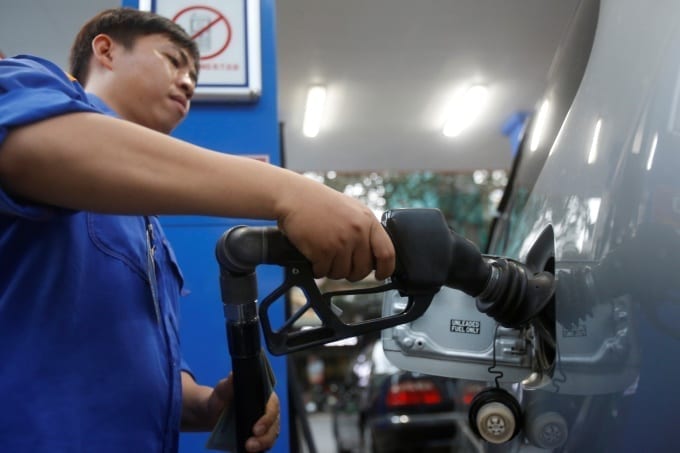
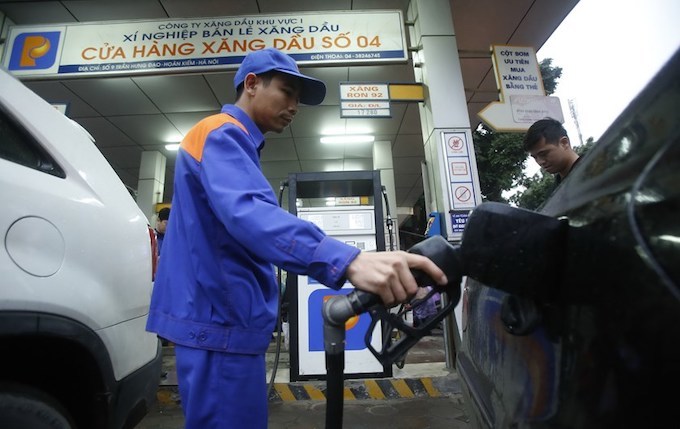
  • Vietnam to increase environment tax on fuel

    Vietnam to increase environment tax on fuel

    The National Assembly’s Standing Committee decided at a meeting Thursday to hike the environment tax on fuel from next year.

    Starting January 1 the tax on petrol will increase from VND3,000 (13 cents) per liter to VND4,000 (17 cents), and on diesel from VND1,500 to VND2,000.

    The tax on kerosene will go up from VND300 to VND1,000, and on fuel oil and lubricants from VND900 (3.9 cents) to VND2,000 (8.6 cents).

    The hike is scheduled for next year so that the government’s goal to keep inflation under 4 percent will be guaranteed.

    Speaking at the meeting, Chairman of the NA Committee on Foreign Affairs Nguyen Van Giau expressed concern that the tax hike would have an inflationary effect.

    But Nguyen Van Hai, Chairman of the NA Budget Finance Committee, said the new rate is still only 39 percent on fuel base price, which is lower than the rate in neighboring countries such as Cambodia where it is 49 percent, China (52 percent) and Laos (56.5 percent).

    The new tax would only increase transport cost by 0.83 percent in the first three months, while power prices would basically be unaffected, he said.

    NA Vice Chairman Phung Quoc Hien said the hike would bring VND15.7 trillion ($676.8 million) each year to the government’s coffers, and this would be used to deal with environmental issues.

    House Chairwoman Nguyen Thi Kim Ngan said that the money must be used to protect the environment.

    “That way, people will see that the money is not spent for other purposes.”

    Fuel prices in Vietnam are still lower than in 120 other economies in the world, according to the Ministry of Finance.

    As Southeast Asia’s fastest-growing economy, Vietnam is facing an air pollution problem. The capital Hanoi enjoyed little more than one month of clean air last year, according to a January report by the Green Innovation and Development Center.

    Fuel is a major source of revenue for Vietnam. Import tariffs from fuel, which are paid by local businesses, now account for around 7 percent of the state’s income, according to the petroleum association.

    Vietnam gained VND42.4 trillion ($1.84 billion) in revenue from environmental protection taxes in 2016, jumping nearly 57 percent from 2015.

    During the same period, spending on environmental protection reached just VND12.3 trillion, accounting for 29 percent of the tax revenue.

  • No fuel tax hike before 2020, minister assures

    No fuel tax hike before 2020, minister assures

    Vietnam won’t increase its fuel tax before 2020, Finance Minister Dinh Tien Dung has directed.

    Dung has ordered a proposal to increase environmental tax on petrol and diesel to be removed from next year’s plan.

    Earlier this year, the ministry had proposed that the environmental tax on petrol and diesel be increased by 33 percent, or VND4,000 (17 cents) per liter for petrol and VND2,000 per liter for diesel.

    The proposed hike, the highest permitted in Vietnam, was met with strong public opposition.

    But the ministry had defended its proposal by saying that the tax can bring VND57.3 trillion ($2.4 billion) each year to state coffers, an annual increase of VND15.7 trillion ($650 million) from current collections.

    Last month, top legislator Nguyen Thi Kim Ngan approved the delay after listening to experts’ say that the tax will affect Vietnam’s goal of containing inflation below four percent this year.

  • Vietnam postpones plans to increase fuel tax

    Vietnam postpones plans to increase fuel tax

    Top legislator Nguyen Thi Kim Ngan on Thursday approved the delay after listening to experts’ concerns that the tax will affect Vietnam’s goal to contain inflation below four percent this year.

    “Although increasing the environmental tax on fuel will bring trillions of Vietnamese dong to the state budget,” there is uncertainty in price changes for the rest of the year,” Ngan said.

    As the trade tension between the U.S. and China has been escalating, and the fact that stormy weather during the second half of the year often increase commodity prices in Vietnam, it would be more appropriate to raise the fuel tax at a later time, said Nguyen Van Giau, chairman of the External Affairs Committee of the National Assembly.

    Giau proposed that the tax be imposed two months after the next Vietnamese Lunar New Year, which will fall on February 2019.

    Earlier this year, Vietnam’s Finance Ministry proposed that the environmental tax on petrol and diesel be increased by 33 percent, or VND4,000 (17 cents) per liter for petrol and VND2,000 per liter for diesel.

    The proposed hike, which is the highest rate permitted in Vietnam, has met with strong public opposition. But the ministry defended its proposal by saying that it was supported by many ministries and departments, and that fuel prices in Vietnam is still lower than in 120 other economies in the world.

    The proposed tax can bring VND57.3 trillion ($2.4 billion) each year to state coffers, an annual increase of VND15.7 trillion ($650 million) from current collections, it said.

    The Standing Committee of the National Assembly will discuss the proposal again in August.

  • Vietnamese concerned as biofuel proposed to replace regular fuel

    Vietnamese concerned as biofuel proposed to replace regular fuel

    People fear that they are being forced to buy a product they are not interested in. A new proposal to replace the most popular gasoline in Vietnam with biofuel is raising concerns among experts and consumers who said it will force them to buy a lesser product.

    The idea of replacing the current 95-octane gasoline A95 with E5 biofuel was proposed by Tran Minh Ha, deputy director of Saigon Petro at a meeting between fuel companies and the Ministry of Industry and Trade on Wednesday.

    E5 is a locally-produced biofuel that the government has been trying to promote for years. Starting from January 1, the government has officially replaced the 92-octane A92 with the ethanol-blended E5, which is a mixture of 95 percent of A92 and 5 percent of ethanol.

    With prospects of A95 being wiped off the market, drivers feel they are being forced to switch to the E5 biofuel, which they don’t want.

    Although studies conducted by Hanoi University of Technology have found that the E5 mixture is good for engines while producing fewer emissions, Vietnamese drivers are still hesitant because they fear that it can cause fire or damage their vehicles’ engine and parts.

    “No policy should compel people to purchase a product. Authorities need to make careful calculations with the public’s preference taken into consideration,” said Ngo Tri Long, former director of Market Research Institute under the Ministry of Finance.

    Although E5 is reportedly used by 42 percent of drivers, the quality of this mixture has not convinced the public, Long said.

    As there is currently only one company producing E100 alcohol in Vietnam, an ingredient of the E5 mixture, there won’t be enough supply to produce biofuel should A95 be taken off the market, he added.

    Local fuel businesses have been trying to promote ethanol fuel by lowering its price. However, the price difference between E5 biofuel and the popular A95 is not substantial enough to attract drivers, according to Tran Ngoc Nam, deputy general director of Vietnam Petroleum Group (Petrolimex).

    In a VnExpress survey of over 13,000 readers, 88 percent said they do not want the familiar A95 to be withdrawn from the market.

    The Ministry of Industry and Trade said on Thursday that they will take the matter into consideration and ask for directions from the government.

    Most countries in the world still offer consumers a choice between ethanol and gasoline. The United States, Brazil and European Union are leading the change in biofuel usage, producing and consuming about 80 percent of the world’s total, according to Bioenergy Australia. Thailand plans to increase its biofuel consumption from 7 percent of total fuel energy use to 25 percent by 2036.

  • Underwater Propeller Repair for Efficient Fuel Consumption

    Underwater Propeller Repair for Efficient Fuel Consumption

    No matter the size or style of your vessel, fuel consumption is always something that ship owners are looking to improve. With today’s fuel costs significantly higher than that of the past, finding any possible measure to lower consumption is always welcomed.

    One of the most important ways to ensure your vessel’s fuel consumption is optimized is to conduct underwater investigations and repairs on the propeller. As the driving force of every ship, the propeller’s condition is directly correlated with the amount of fuel the ship consumes during each voyage.

    The first and most obvious step is to check to the propeller blades for any damage, including dents and scratches that alter the natural rotation. Although they may seem miniscule, even the smallest imperfections on the blades can drastically decrease fuel efficiency, leading to higher costs on every trip you make.

    Smooth Blades for Better Consumption

    If a propeller is discovered to have dents or damage that are inhibiting its movement, a majority of the time it will undergo a smoothing process. The intensive propeller polishing creates smooth and damage-free blades that immediately impact the amount of fuel which is consumed. The added benefit of the process is that it helps maintain the propeller by removing any initially small damage that can grow into a biggest problem in the future.

    By regularly polishing propeller blades, you are not only saving money with the amount of fuel your vessel consumes, but you are also taking preventive measures to ensure you will not need to drydock your ship for more serious problems in the future.

    Propeller Cone Fin Installation

    Another method for saving fuel is adding a cone fin to your propeller, which helps reduce energy loss in its slipstream. By limiting the cavitation on the hull and rudder, this simple yet effective addition can lower fuel consumption by up to 5% immediately.

    The installation process for the cone fins is done completely underwater by the expert team of licensed diving ship technicians, meaning that your vessel will not need to be drydocked or be out of service at any point. The cone is lowered into the water as close as possible to the propeller, then the technicians go to work to install them directly onto the propeller’s vortex hub.

    At Antwerp Underwater Solutions, we offer a wide variety of propeller services that can help you maximize fuel consumption efficiency without having to undergo serious repairs or processes. Our experienced diving engineers are able to complete all the work in a timely manner, while the process is extremely affordable and offers an incredible return on investment due to the massive savings on fuel consumption.

  • Vietnam fuel distributors to shift to ethanol blend this week

    Vietnam fuel distributors to shift to ethanol blend this week

    Vietnam’s biggest fuel distributors said they would complete a shift to an ethanol-blended product by Friday as part of a government program to promote a more eco-friendly fuel.

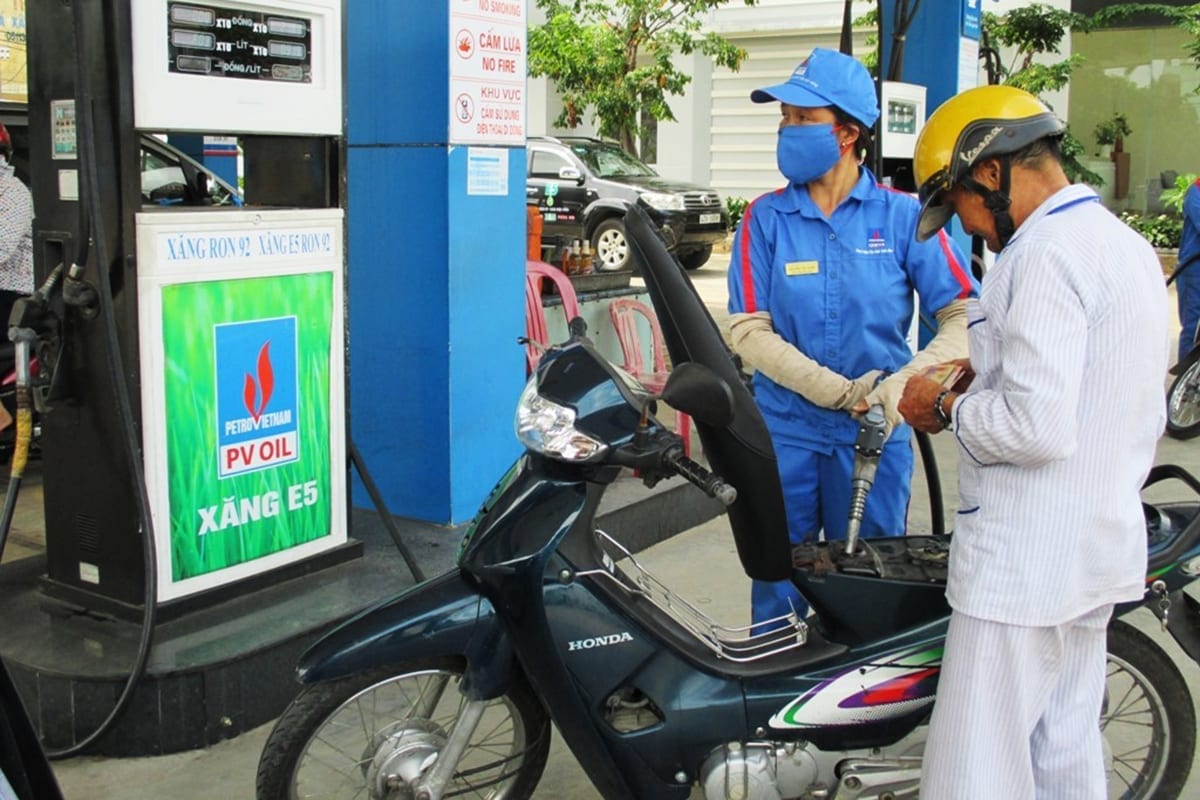
    State-owned PetroVietnam Oil Corp (PV Oil), which sells oil and fuels, will replace RON 92 fuel at all of its fuel stations with E5, a mixture of 95 percent of RON 92 and 5 percent of ethanol, by December 15, its parent firm PetroVietnam said on its website on Monday.

    Top fuel importer and distributor Petrolimex said on its website last week that its 2,400 stations across the country would have shifted to the ethanol-blended fuel by the end of this week.

    Vietnam has been pushing for the E5 mixture as ethanol can be produced from cassava, making it renewable. Several factories have been set up specifically to process cassava into ethanol.

    But critics and drivers argue the mixture could cause fire or damage vehicles’ engines and parts. The government has said the mixture is safe, adding that drivers should use vehicles from a certain year of production, depending on the model, to ensure they are safe.

    Another type of non-ethanol fuel, RON 95, is still on sale, but in smaller volumes.

    Vietnam plans to complete the shift to the E5 mixer across all fuel stations by January 1 next year.

  • Vietnam’s fuel imports may drop as Dung Quat oil refinery tax cut finally felt

    Vietnam’s fuel imports may drop as Dung Quat oil refinery tax cut finally felt

    Lower tax will help boost 2017 Dung Quat output by 20 percent. Vietnam’s fuel imports may drop as the effects of a tax cut on sales of gasoline and diesel fuel from the country’s Dung Quat oil refinery start to be felt as earlier term contracts expire.

    Vietnam’s government allowed Dung Quat’s operator Binh Son Refining and Oil Co, starting on January 1, to lower its tariff on domestic gasoline sales to 10 percent from 20 percent while the tax on other oil products including diesel was lifted, Binh Son Chief Executive Officer Tran Ngoc Nguyen said on Monday.

    The reduction allowed Binh Son to match the current 10 percent tax on gasoline imports from South Korea established under a free-trade agreement (FTA) and the tax-free status for diesel sales from countries in the Association of Southeast Asian countries (ASEAN) under a different FTA.

    “Before January, taxes on Binh Son’s oil products are always … higher than imported products, making our product prices high and they cannot be sold,” Nguyen told.

    The lower taxes are expected to reduce imports of gasoline and diesel into Vietnam, denting overall profit margins for the oil products, four fuel traders told on Monday.

    While the tax reduction was effective from January, local importers had already agreed to long-term fuel contracts with Binh Son in December, meaning they missed the lower taxes, the four traders said.

    The tariff reductions were announced in September but would only apply to contracts signed in 2017, said Nguyen.

    Dung Quat’s full-year production this year is expected to reach 6.1 million tons per year, equivalent to about 122,000 barrels per day (bpd), nearly 20 percent higher than its initial target as a result of the lower taxes, said Nguyen.

    The refinery, currently Vietnam’s only operating refinery, has a total capacity of 6.5 million tons per year.

  • Vietnam to continue fuel import

    Vietnam to continue fuel import

    According to a report issued June 26  by Binh Son Refining and Petrochemical Company (BSR), the operator of the US$3-billion Dung Quat Oil Refinery in Quang Ngai Province, the country is projected to consume 6.5 million tons of gasoline and 8.5 million tons of DO from 2018 to 2022.

    Meanwhile, Dung Quat and another oil refinery, Nghi Son, can supply nearly six million tons of petrol and seven million tons of DO from 2018, representing 92% and 82% of domestic demand respectively.

    The shortfall would be offset by fuel imports from Singapore, Malaysia, Thailand, South Korea and China.

    Nghi Son Oil Refinery in Thanh Hoa Province will be put into operation next year with an annual processing capacity of 10 million tons of crude oil. It is expected to supply 8.8 million tons of fuels, including about 2.3 million tons of petrol and 3.7 million tons of DO, meeting 40% of local needs.

    Condensate processing plants such as PVOIL Phu My, Saigon Petro, Nam Viet Oil and Dong Phuong have a combined annual capacity of 690,000 tons of gasoline.

    Since its debut seven years ago, Dung Quat has sold over 47 million tons of fuels with total revenue amounting to more than US$36 billion and profit reaching over VND13 trillion (US$0.57 billion) by the end of the first quarter of 2017.

    BSR has paid over US$7 billion in taxes to the State.

  • China cuts retail fuel prices

    China cuts retail fuel prices

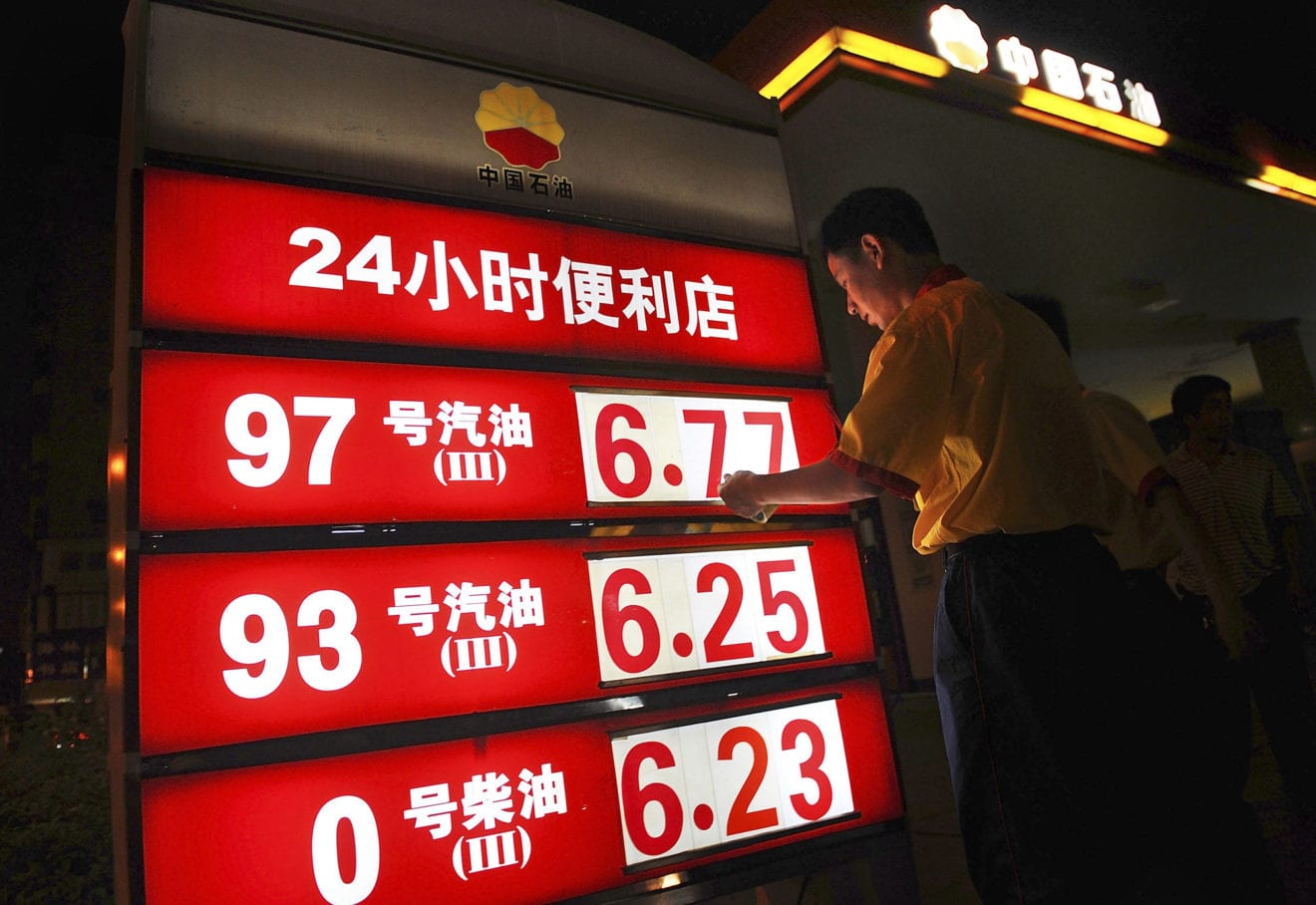
    China will cut the retail prices of both gasoline and diesel for the fifth time this year from Friday following a drop in global oil prices, the country’s top economic planner said Friday.

    Gas prices will decrease by 180 yuan ($26) per ton, while the diesel price will be lowered by 175 yuan per ton, according to the National Development and Reform Commission (NDRC).

    China adjusts domestic retail oil prices when international crude prices change by more than 50 yuan per ton within a 10 working-day period.

    Global crude prices have fallen in recent weeks following expansion of U.S. crude oil output and inventories. The NDRC expected global crude prices to continue to fluctuate, tempered by the effects of falling OPEC output and rising U.S. production.

    The NDRC said it is closely monitoring the current pricing mechanism and will continue improvements based on market changes.

  • AirAsia X’s profit hit by higher fuel expenses

    AirAsia X’s profit hit by higher fuel expenses

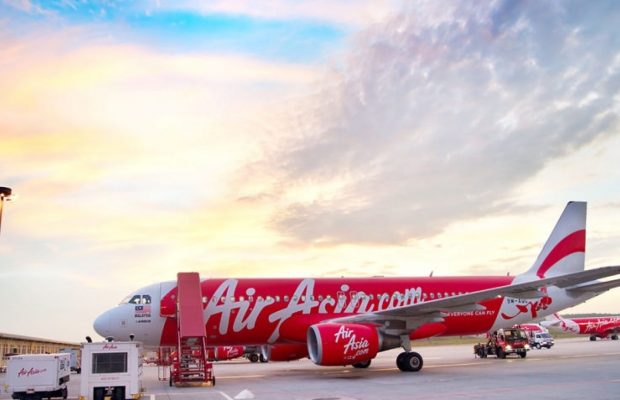
    AirAsia X Bhd’s (AAX) profit for the first quarter (Q1) ended March 31, 2017, was dragged down by higher expenses such as aircraft fuel cost, which ballooned by 55% from a year earlier.

    AAX, whose expenses are mostly denominated in the US dollar, said it posted a 43% year-on-year drop in operating profit to RM60.3mil mainly due to an overall 6% depreciation of the ringgit against the greenback.

    The long-haul, low-cost airline told Bursa Malaysia on Tuesday that net profit fell to RM10.34mil from RM179.49mil previously.

    Aircraft fuel expenses, the single largest operating cost, swelled to RM377.69mil from RM243.06mil a year earlier. Aircraft operating lease costs rose to RM70.82mil from RM45.64mil previously.

    Its profit took a hit despite a healthy growth in passengers carried – up 33% to 1.4 million in Q1 on the back of a higher available seat capacity – that led to a 22% jump in revenue year-on-year to RM1.18bil.

    Load factors were 2 basis points higher at 84% compared with the same quarter in 2016.

    Ancillary revenue per passenger remained constant at RM150 while freight and cargo revenue grew by 5.9% to RM32.8mil in the quarter under review.

    Revenue per available seat kilometer (RASK) was down 6% year-on-year from 15.11 sen to 14.20 sen during the quarter under review.

    AAX said the marginal drop was due to the expected increase in capacity on core existing routes as per its strategy to grow market share and therefore pressuring yields.

    In a press statement, it said Malaysia AirAsia X (MAAX) registered a healthy load factor of 84%, up 2 percentage points (ppts).

    Thailand AirAsia X outperformed despite regulatory constraints by posting US$5.5mil net profit in Q1. It recorded a strong 94% load factor, an increase of 5 ppts from 89% in the same period last year.

    As for Indonesia AirAsia X, the A330s service was still temporarily suspended in Q1 as part of a network restructuring aimed at improving operational efficiencies. However, it has resumed the A330 operations with the introduction of two new routes this month.

    On its prospects, the AirAsia group affiliate said that based on the current forward booking trend, forward loads and average fares were trending better than the previous year.

    However, it added, the relative weakness of the Malaysian ringgit remained a key concern as a large portion of the company’s borrowings and operating costs – including fuel expenses and aircraft operating lease exprnses – are denominated in US dollars.

    “Barring any unforeseen circumstances, including but not limited to terrorist attacks, natural disasters, epidemics, economic downturn, fuel price hike and fluctuation in foreign currencies against the Malaysian ringgit, the company expects its prospects to remain positive,” it said.

    In the press statement, MAAX chief executive officer Benyamin Ismail said: “Moving forward for the rest 2017, AirAsia X will focus on strengthening our market leadership through a number of strategies.

    “We hope to stretch our aircraft utilisation rate further with more incremental frequencies on high yield point-to-point routes and new routes in the second half of 2017. We have also set targets in ensuring the company remains lean through various cost initiatives and maximise the operational synergies between AirAsia and AirAsia X.”

  • Vietnam revives biofuel plan, sets national switch in 2018

    Vietnam revives biofuel plan, sets national switch in 2018

    After years failing to promote ethanol blended fuel, the government makes a big move to give greener products a better chance.

    After more than two years failing to promote a locally-produced biofuel product in major cities, Vietnam has announced an even more ambitious plan: a national switch.

    The trade ministry said in a new report that it will make sure the 92-octane gasoline A92, currently the most popular grade in Vietnam, is phased out and replaced by the greener E5 in 2018, Tuoi Tre (Youth) newspaper reported.

    The ministry has reportedly ordered top fuel companies PV Oil and Petrolimex, both state-owned, to promote the use of E5. Five percent of the product is ethanol synthesized from cassava, hence the name.

    Studies conducted by the Hanoi University of Technology found that E5 is good for engines while producing fewer emissions.

    Vietnam had planned to make Hanoi, Ho Chi Minh City and some large cities switch to the fuel by the end of 2014. But somehow the product never caught on.

    Industry insiders said a national switch could be “impossible.”

    A member of PV Oil said the domestic supply of ethanol is 150,000 tons a year, which is enough to produce around three million tons of E5, while the demand would be more than 7.5 million tons.

    Government sources said two ethanol plants in the southern province of Binh Phuoc and the central province of Quang Ngai will resume operations soon.

    Fuel companies also said a complete switch to E5 also means they will have to invest in blending facilities specifically for the fuel, which could cost a lot of money and time.

    E5 is now less than 2 percent cheaper than A92. Retailers said the government should offer more tax incentives to widen that margin and make E5 more attractive.

    The more expensive 92-octane grade, A95, is favored by owners of newer vehicle models. It is more environmentally friendly than A92.

  • China raises retail fuel prices

    China raises retail fuel prices

    China will raise the retail prices of gasoline and diesel for the second time this year as international oil prices increase, the country’s top economic planner said Tuesday.

    Both gasoline and diesel prices will rise by 50 yuan (7.3 U.S. dollars) per tonne from Wednesday, according to the National Development and Reform Commission (NDRC).

    Oil prices on international markets have risen since the Organization of the Petroleum Exporting Countries (OPEC) delivered more than 90 percent of the output cuts they agreed last year. However, higher output in the United States and other oil producers will lead to oversupply in the short term, according to the NDRC price monitoring center.

    International oil prices will continue to fluctuate between 50 and 60 U.S. dollars per barrel in the first quarter, the center predicted.

    Under the current pricing mechanism, if international crude prices change by more than 50 yuan per tonne and remain at that level for 10 working days, the prices of refined oil products such as gasoline and diesel in China will be adjusted accordingly.

  • BN explains why petrol prices have gone up

    BN explains why petrol prices have gone up

    The price of petrol has gone up because the price of refined petrol has increased, even though crude oil prices have dropped.

    In refuting allegations by the opposition, the Barisan Nasional Strategic Communications Team said today Malaysians used refined petrol, not crude oil.

    It noted that refined petrol prices might differ from crude oil prices due to global supply and demand factors.

    Also, Malaysia uses a managed float system which is dependent on global petrol prices.

    “Knowing that it is a managed float system, it is ridiculous that opposition leaders blame the government when petrol prices increase due to global market price increases but when petrol prices go down, they claim this is due to global prices and give no credit to the government,” said the statement.

    It said MPs Dr Wan Azizah Wan Ismail (PKR) and Tony Pua (DAP) had pointed out that the crude oil price for January had dropped and that the ringgit did not weaken compared with the previous month when criticising the increase in petrol prices.

    “We would like to inform both these Members of Parliament, the other opposition leaders and their propagandists that Malaysians do not pump crude oil into their cars.

    “The majority of Malaysians pump refined petrol in the form of RON95 or refined diesel.”

    The prices of RON95 and RON97 went up by 20 sen to RM2.30 (up 9.5%) and RM2.60 (8.3%) respectively, while diesel went up by 10 sen to RM2.15 (4.9%) today.

    The statement said as part of the move away from inefficient blanket subsidies, where the rich had benefited more than the poor, to more direct targeted assistance, Malaysia had adopted the managed float system from Dec 1, 2014, to determine the price of retail petrol and diesel.

    “Our managed float system uses the average price of the refined product — not crude oil — for the previous month to determine the retail pump price for the next month. Specifically, Malaysia uses the Singapore Means of Platts (MOPS) pricing for petrol and diesel.

    “While global oil prices had increased in recent months due to an agreement to cut production by oil-producing countries — which also benefits Malaysia — the price of refined oil products has increased further due to other reasons.”

    It said a check on the MOPS would show that the average price of motor gasoline 95 unleaded for January had stabilised in a range of US$69 to US$70 per barrel and was materially higher than the average price in December 2016 where the price had steadily increased from US$62 at the beginning of the month to US$68 by December’s end.

    The statement noted that oil refineries in Southeast Asia had enjoyed “higher pricing and margins due to an unusually higher than normal number of refineries around the world shutting down due to fires and major maintenance”.

    This, it said, had reduced supply and increased the refineries’ margins and pricing — hence the higher motor gasoline 95 prices.

    The statement advised Wan Azizah and Pua to “better understand the economics and market reality of petrol prices instead of making baseless statements that are untrue — or worse — designed to intentionally mislead and incite Malaysians.

    “It is like a monthly game that never ends and a game that opposition leaders do not seem to tire of playing.”

    The statement said that while Malaysians had reason to complain that the price of RON95 in February at RM2.30 per litre was higher than what they had enjoyed in the past, Malaysia’s petrol prices were still consistently the cheapest in Southeast Asia (except Brunei) and among the 15 cheapest among 180 countries in the world.

    “This is unusual as Malaysia is not a big producer and exporter of oil when compared with the other countries in the top 15 cheapest retail petrol list.

    “In Asean, our RM2.30 per litre price for February compares favourably to Indonesia (RM2.73), Thailand (RM4.10), the Philippines (RM3.72) and Singapore (RM6.56).

    “Malaysia’s RON95 price was also at RM2.30 per litre in October and November 2014. It is also interesting to note that in 2008, RON92 had reached RM2.62 per litre.”

    The statement noted that while a managed float would mean that Malaysians had to bear with higher petrol prices when global prices increased, this also meant “we had also benefited from a prolonged period of low refined petrol prices over the past two years when it had reached as low as RM1.60 per litre”.

    This, it added, was unlike before 2004 when Malaysians did not benefit from low global oil prices, which had ranged from US$10 to US$20 per barrel compared with US$55 to US$60 per barrel now as Malaysians were taxed 58.62 sen per litre for petrol and 19.64 sen per litre for diesel for decades. These taxes, it noted, were abolished only in the year 2004.
  • China cuts retail fuel prices again

    China cuts retail fuel prices again

    China will cut the retail prices of gasoline and diesel for the first time this year as international oil prices fell, the country’s top economic planner said Wednesday.

    Both gasoline and diesel prices will be reduced by 70 yuan ($10.2) per tonne starting Thursday, according to the National Development and Reform Commission (NDRC).

    Analysts attributed the lower international oil prices to recovery of drilling activity in the United States and a stronger US dollar.

    Under the current pricing mechanism, if international crude oil prices change by more than 50 yuan per tonne and remain at that level for 10 working days, the prices of refined oil products such as gasoline and diesel in China will be adjusted accordingly.

  • PTT Philippines to supply Cebu Pacific’s jet fuel for 2017

    PTT Philippines to supply Cebu Pacific’s jet fuel for 2017

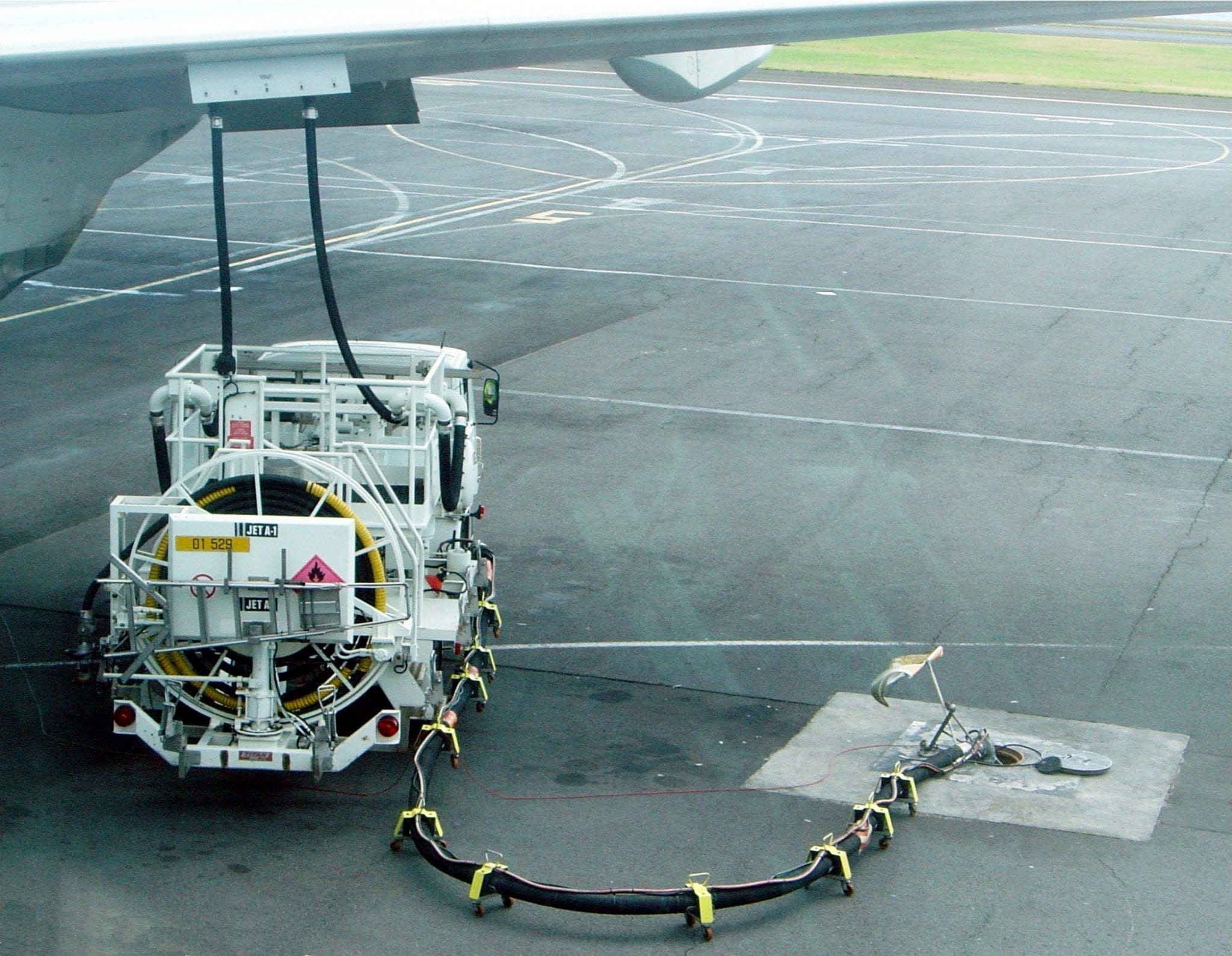
    PTT Philippines has renewed its deal to supply the bulk of Cebu Pacific airline’s fuel requirements this year. The local unit of the Thailand petroleum company will supply 1, 680,000 US barrel (267 million liters) of aviation fuel to Cebu Pacific for 2017.

    “We are always grateful to have partnered with Cebu Air. Our partnership has been growing stronger that is anchored on trust, loyalty, and commitment to providing the best and quality products and services that we could afford them,” PTT Philippines president and CEO Sukanya Seriyothin said.

    Seriyothin and Cebu Pacific president and CEO Lance Gokongwei recently signed the fuel supply contract for 2017.

    PTT Philippines has been supplying Cebu Pac’s jet fuel for over 10 years, and currently accounts for most of the airline’s total jet fuel requirements, particularly flights at the Ninoy Aquino International Airport, the Diosdado Macapagal Airport in Clark, and its Visayas routes.

    The local unit recently hiked its five-year investment plan to P5 billion for the expansion of its retail network to 300 and the Amazon Café brand from 2017 to 2021.

    The Thailand-based oil firm has been in the country for 20 years and is into retail with over 100 service stations across Luzon and Cebu. Its wholesale business also serves the maritime industry.