Tag: Furniture

  • JYSK Vietnam plans up to 20 stores

    JYSK Vietnam plans up to 20 stores

    Furniture retailer JYSK Vietnam has opened the first of 10 to 20 planned stores.

    The announcement comes just a month after the Danish brand opened its first outlets in Singapore, stores-in-stores within larger outlets operated by its local partner Courts.

    It has selected NeatClean as its Vietnamese partner with the first shop scheduled to open today (October 28) and a second on November 27.

    NeatClean JSC chairman Doan Hong Hai, told Vietnamese news media he believes the JYSK brand has a positive future in the country.

    “We will focus on middle-class customers and plan to open 10 to 20 shops in the next five years,” Hai said.

    Despite being Denmark’s largest international retailer, the brand’s Asian presence before it landed in Singapore, was limited to China and Indonesia, where it trades under the JYSK Nordic brand.

    JYSK was founded in 1979 and now has more than 2200 stores in more than 39 countries and annual sales of euro 2.8 billion.

  • IKEA positive on China despite economic slowdown, CEO says

    IKEA positive on China despite economic slowdown, CEO says

    IKEA does not expect a slowdown in demand for its products in its fastest-growing market, China, despite a sluggish economy, and the world’s biggest furniture retailer is sticking to investment plans for the country, its chief executive said.

    A faltering economy has prompted several international retailers to rethink their China strategies, with Britain’s Marks & Spencer saying this week that its expansion drive there could be slower than hoped.

    Sweden’s IKEA Group, which owns most of the IKEA stores worldwide that are best known for their budget self-assembly furniture, is however not reappraising its growth plans for China, Chief Executive Peter Agnefjall said.

    Having opened three stores in China in the fiscal year to Aug. 31, it plans another three this year, and expects to expand at at least the same pace also in the following three, he told Reuters in an interview.

    “We are very, very small still in China,” he said.

    “What we see is that many people in China appreciate the IKEA offer and we are making it more accessible to them through new stores. And the middle class will continue to grow, I’m pretty confident about that, so we have a positive view on China.”

    IKEA entered China in 1998 and has stepped up expansion in recent years, making the country a priority growth market.

    The China business, which still accounts for a small share of group turnover, saw “solid double-digit growth,” above 15 per cent, last year with its 18 stores, with very strong growth also in comparable stores, Agnefjall said.

    An online store in China is however not on the immediate agenda but will open only once the group has in place new e-commerce platforms that are in the works.

    “It all depends on how well we succeed with that,” Agnefjall said.

    ONLINE PLANS

    IKEA’s website had 1.9 billion visitors in the 2014/15 year, up from 1.5 billion the year before. Online sales were however still just a fraction of group turnover, although they exceeded €1-billion for the first time, Agnefjall said.

    Companies across the retail sector have rushed to step up e-commerce in the past few years to keep up with rapidly changing consumer patterns, but IKEA has been taking it slower.

    IKEA certainly aims longer-term to be a full multichannel retailer, Agnefjall said, but will first finish developing the necessary IT-solutions, and work out how to manage the logistics of large-scale online furniture trade.

    “You have to have a reasonable service level. I have respect for doing this with quality rather than with speed, and that’s the way we are driving it,” Agnefjall said.

    IKEA sells online in 13 of its 28 markets, having added no online markets last year, Agnefjall said.

    “We are investing heavily to make all IKEA markets e-commerce markets. The front end is one thing, to make a new web and e-commerce capabilities online. But the big work lies in the underlying distribution flow.”

    IKEA has begun piloting a new web platform in Ireland that it hopes to roll out to all markets in coming years, and is developing an e-commerce platform to connect to it.

    On the distribution side, IKEA is trying out a handful of pickup points and Agnefjall expected several more to open in the coming years.

    “You have to organize the e-commerce in a thorough way in order to create the right conditions for serving your customers in a good way. We are also investing a lot of energy to convert IKEA to a multi-channel retailer.”

    IKEA Group, which runs 328 stores and is controlled by the Stichting INGKA Foundation in the Netherlands, reported on Tuesday an 11 per cent rise in group sales for the fiscal year, with comparable stores accounting for 5 per cent, to a record €31.9-billion ($35.7-billion U.S.).

    Sales rose in nearly all its markets, with China the fastest-growing followed by Russia. Agnefjall said the United States was now roughly neck-and-neck with Germany as IKEA’s single biggest market.

    IKEA is targeting group sales of €50-billion by 2020.

  • Shangpin Home Collection to be listed in China

    Shangpin Home Collection to be listed in China

    The parent of Chinese furniture retailer Shangpin Home Collection has announced plans for an IPO to raise 2.5 billion yuan (US$402 million).

    Guangzhou Shangpin Home Collection Co Ltd will list on the Growth Enterprise Market of Shenzhen Stock Exchange, China’s version of the US Nasdaq exchange.

    Shangpin Home Collection operates 969 stores, 901 of them franchised, the balance self-run.

    The company makes customised furniture which it sells through Shangpin Home Collection stores and online, where it ranks 42nd in China’s top 500 internet retailers.

    The company was founded in 2004. It says it plans to use the funds to upgrade it manufacturing systems, online services and fulfilment centres.

    Last year, Shangpin Home Collection boosted profit by 63 per cent, the vast majority of that growth reportedly coming from its eCommerce business on its own site Homekoo.com and on Tmall and JD.com.

    Physical stores, however, currently still account for the majority of sales.

  • Homelegance China in retailer rollout

    Homelegance China in retailer rollout

    Homelegance China plans to confide in 30 shops a yr because the US model builds its Chinese language model consciousness.

    The corporate opened its first China retailer within the metropolis of Tianjin in Might and by the top of August may have six shops buying and selling in complete. By the top of October it expects to increase to 11 and from then on it plans between 20 and 30 new shops will open yearly.

    Homelegance needs to focus on China’s center class with its assortment of predominantly picket bed room, dwelling, eating and workplace furnishings.

    The inaugural Tianjin retailer is a 30,000 sqft franchise opened in a specialist furnishings shopping center, Pink Star Macalline. It’s operated by Li ShiGuang. Tianjin is the situation of Homelegance’s 260,000 sqft warehouse which can provide shops within the rising community.

    Homelegance will licence shops in China to make sure it has native operators who perceive the native markets it enters.

    “We all know that to develop we should look past our conventional US borders to turn out to be the worldwide chief we all know we might be,” Jamie Collins, government VP of Homelegance USA, advised Furnishings At present.

    “There isn’t any higher place for us to focus our efforts than in China. Past constructing a model in China we all know that our new licensees in China will take pleasure in what our retail companions in North America have already skilled, worthwhile positive factors via the sale of Homelegance merchandise.”

    Collins stated the demand for American designs amongst Chinese language is rising yearly.

    “We’ll current Homelegance as a premier way of life model that represents the perfect of what the Chinese language shopper is on the lookout for.”
  • West Elm Philippines makes debut

    West Elm Philippines makes debut

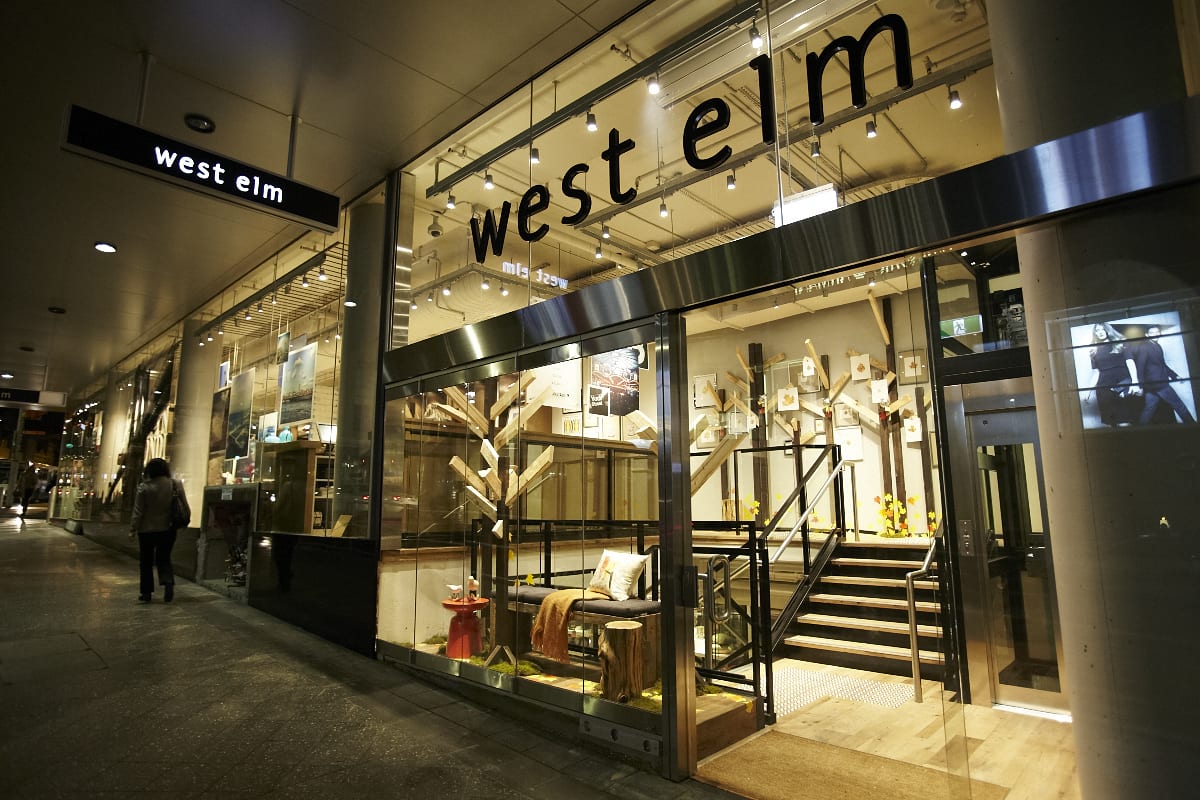
    West Elm Philippines, the furniture chain of Williams Sonoma, has opened its first store in Manila.

    The store, located in the new Estancia Mall at Capitol Commons, Shaw Boulevard, Pasig City. It will compete with Crate & Barrel, which made its Philippines debut last year, and complement another Williams Sonoma brand Pottery Barn.

    While skewed towards complete furniture solutions, West Elm also stocks a comprehensive range of homewares. It positions itself as creating “unique and affordable designs for modern living”.

    One standout feature of West Elm Philippines is that it works with local Filipino producers to stock their products, not just imported goods.

    Among locals to feature in the store are Filipino Capiz Artisans, a co-op of family owned businesses preserving traditional capiz handcrafts, including Capiz Chandelier and Pendant lighting; Filipino Weavers, known for their skilled weaving, braiding, twisting and knits using innovative techniques passed down through generations to create braided storage containers; and Santo Tomas Potters, Pampanga-based creators of hand-thrown, hand-cast and hand-painted ceramics.

    Jim Brett, president of West Elm, said he believes there is “a tremendous appetite for well-designed, finely crafted home goods and furnishings” in the Philippines.

    The 7000 sqft store has opened showcasing the brand’s summer collection which includes furniture, bedding, bathroom accessories, rugs, window textiles and hardware, lighting, decorative accessories, dining, kitchen products, and gifts. It also offers services at Design Lab, where customers can partner with design specialists for complimentary consultations and space planning sessions.

    West Elm currently has 71 retail stores in the US, Canada, Australia and the UK. The Philippines is its first Asia market, and it has an unaffiliated franchisee operating stores in the Middle East.

  • Urban Ladder to hire 1,400 more this year

    Urban Ladder to hire 1,400 more this year

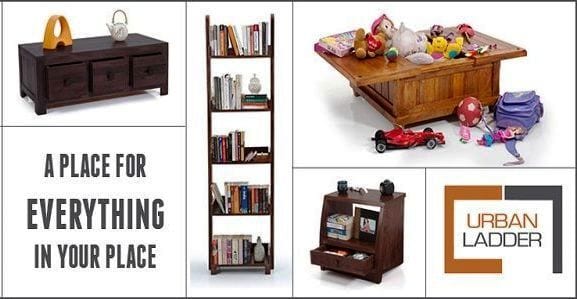
    Online furniture vendor Urban Ladder will add 1,400 employees to its workforce this year to beef up its rapid expansion plan. The Bengaluru-based company’s current headcount is 600 across seven cities. The company is also planning to expand its presence to 25 more cities, including Coimbatore, Mysore, Kolkata and Vizag, by 2015-end and to add more product lines and categories to its existing portfolio.