Tag: Furniture

  • Courts Asia shows negative number after Malaysian woes

    Courts Asia shows negative number after Malaysian woes

    Singaporean electronics and furniture retailer Courts Asia has posted a net loss of SG$3.1 million (US$2.25 million) in its second quarter.

    The result is a reversal of a net profit of $1.5 million (US$1.09 million) during the same period last year.

    Courts Asia said in a statement that Malaysia revenue came under pressure after the introduction of the Consumer Protection (Credit Sale) Regulations 2017 which saw consumer interest rates capped at 15 per cent per annum from January. However, ongoing transformation work with a persistent focus on cost and productivity efficiencies in Malaysia reaped results, with Malaysia’s PBT crossing into positive terrain after two consecutive quarters of loss.”

    Group CEO Terence Donald O’Connor said: “We are encouraged by the early signs of stabilisation in the Malaysia business. We have closed 10 underperforming stores since the start of our financial year in April and continue to review our store network performance. Impairment loss on trade receivables charged to the profit and loss statement has also been on a declining trend from the fourth quarter ended March.”

    The Singapore firm recorded $3.4 million profit before tax after starting out on its store transformation process, up from $3 million last year. It renovated its Ang Mo Kio outlet last month.

  • IKEA to create 10,000 jobs in Maharashtra India over next 3 years

    IKEA to create 10,000 jobs in Maharashtra India over next 3 years

    Swedish furniture giant IKEA is planning to hire 10,000, both direct and indirect, in Maharashtra over the next two to three years, a senior company executive has said. According to a report: The company opened its first store in Hyderabad in August this year and the Navi Mumbai will be the second store in the country.

    “Next year, we are opening the Navi Mumbai store, for which we are planning to recruit 5,000 directly and an equal number will be hired indirectly over the two to three years,” Anna-Carin Mansson, People and Culture Manager, IKEA India said.

    This will include directly hiring 1,000 by mid-next year and 1,500 indirectly for services, including assembly among others, she said adding as per the IKEA policy, 50 percent of this recruitment will be of women at all levels.

    “We believe in equality and providing a balanced, safe and secure work environment for all employees. We are also open for recruiting from the lesbian, gay, bisexual and trans (LGBT) communities,” she further said.

    The world’s largest furniture chain is looking to hire people in e-commerce, sales, logistics, digital and Human Resource’s and mostly they hire locals, she said.

    “With our employee friendly policies, we are expecting to keep the attrition levels very low. We believe in value- based recruitment, where the core values of an individual is considered and not what is said in the CV. We provide equal opportunities to all our co-workers, help them grow and enable them to follow their passion,” she said.

    IKEA has several employee friendly policies, such as day care facilities, parental leave policy, transport policy, competence development, mentoring, pension plan among others.

    “Maharashtra is an important market for us. We have been sourcing from the state for many decades and now we are ready to enter the market in 2019 with our full offer to be able to serve all the customers,” Per Hornell, Market Manager for Maharashtra, IKEA India said.

    IKEA opened its first store in the country in Hyderabad in August, where it employs 1,000 people.

    The company is the first major single brand retailer to get FDI approval and plans to open several stores and multiple touch points across the main cities over the next 10 years .

    IKEA has four land sites in Telangana, Maharashtra, Karnataka and Delhi/NCR, and continues to look for more in other major cities.

    IKEA operates 423 IKEA stores in 50 countries with a sales volume of 38.3 billion euros.

  • LG Electronics launches new design

    LG Electronics launches new design

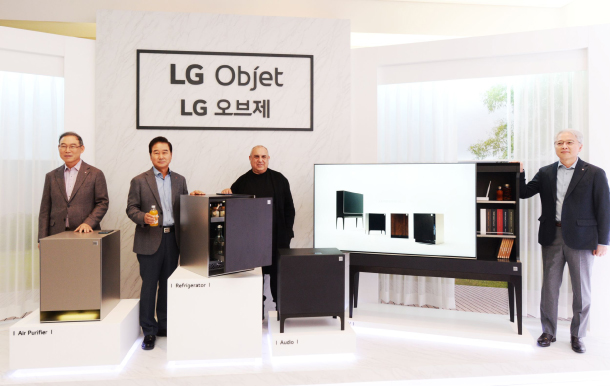
    LG Electronics has introduced a premium brand that combines furniture design with home electronics. The company rolled out four products under the LG Objet name at a press conference held Thursday in Gangnam District, southern Seoul: a mini refrigerator, an air purifier, a speaker and a television.

    “The thing about home electronics is that they are placed mostly in kitchens or living rooms but rarely inside bedrooms,” said Song Dae-hyun, LG’s president for home appliances. “Bedrooms, on the other hand, only have furniture, so in the last few years, we thought about ways to make home electronics coexist in that space.”

    All four items are covered with hard wood.

    Another way in which LG worked to make the appliances look more like furniture was to reduce the size of external features typical to electronic devices, like buttons or small screens. They are simplified or hidden in less visible areas of the product. An exception is the television, with its 65-inch screen, but LG added a furniture-like touch to it by placing a cabinet behind a sliding television screen.

    The fridge and the air purifier won Red Dot and iF design awards. Architect and industrial designer Stefano Giovannoni was involved in the development of the products.

    In terms of function, LG utilized technology to make the devices more appropriate for bedrooms.

    A compressor is a core component in a refrigerator, and it tends to be noisy. LG Objet’s refrigerator utilizes the type of cooling found in wine cellars to make the product quiet.

    For customers using the refrigerator or the air purifier as a bedside table, LG enabled a corner of the top surface to work as a wireless charger for portable devices.

    Song said during the press conference that he believes affluent customers in their 50s and 60s with strong purchasing power will be a source of demand as they look for ways to decorate their private spaces.

    The refrigerator and the air purifier are priced at 1.99 million won ($1,760); the speaker, 1.49 million won; and the television, 9.99 million won. The products were made available for sale at LG Best Shops starting Thursday.

    This is LG’s second high-end home appliances brand after the LG Signature series, introduced in 2016. Apart from sales, the other goal of LG’s premium product expansion is to maintain a leadership in the sector.

  • Here, the Portuguese brand who caught the eye of millennials

    Here, the Portuguese brand who caught the eye of millennials

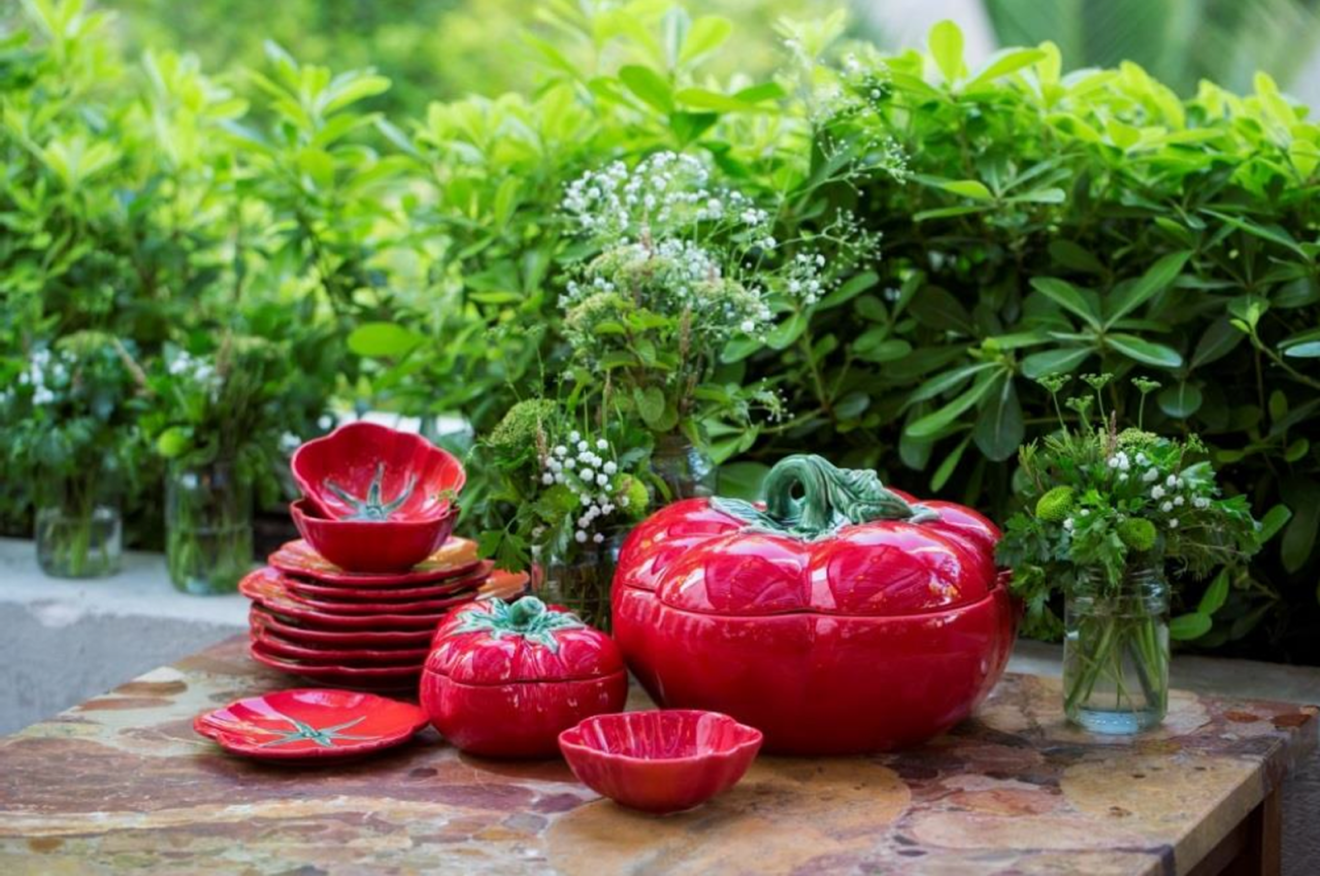
    The world of the 19th-century Portuguese ceramics company Bordallo Pinheiro is whimsical, colourful and eccentric, and its surreal creations are taking over tables and Instagram feeds around the world. How has this 134-year-old brand – stocked in Liberty, SCP, Amara, Couverture and Arket – become a must-have for millennials?

    With the current vogue for macramé wall hangings and velvet sofas and hanging baskets, it seems we are turning to our grandmothers’ homes for inspiration.

    Elsewhere, bold colour fills the high street, from Frida Kahlo to tropical Havana brights. In the age of Brexit and Trump, Scandi-style neutrals don’t cut it; there’s an appetite for something stronger.

    The company’s founder, Raphael Bordallo Pinheiro, was a visionary – a subversive socialist who liked to poke fun at late-19th-century Portuguese society. He was a caricaturist, interior designer, sculptor and publisher of satirical newspapers, with an artist’s disregard for convention. His dream was to elevate everyday tableware to the design standards of porcelain pieces – the preserve of the upper classes.

    His designs are strongly rooted in Portuguese culture, its culinary heritage and natural environment. Raphael wanted vegetables, flowers, insects, fish and animals at the table. He also had a passion for science – “a technical sensibility”, says Elsa Rebelo, Bordallo Pinheiro’s artistic director.

    “He experimented to achieve natural colours and detailed features, such as feathers and leaves. His goal was to create objects that look as real as possible.” The company is opening its first shops outside Portugal this year, in Paris and Madrid. Half the one million pieces it sold last year went to buyers outside Portugal.

    Rebelo works with in-house sculptors to create new moulds from original pieces. “In our archive, we have hundreds that were designed by Raphael and his son Manuel between 1884 and 1910,” she says. “When we’re choosing which to release, we look at the sculptural aspect of a design and also try to reflect the aesthetic tastes of the moment.”

    The company’s way of working hasn’t changed much in the intervening decades. Its factory is on a pine-lined side street on the outskirts of Caldas da Rainha, a city 75km north of Lisbon. The single-storey building feels more like a large artist’s studio than a commercial factory, and products are almost entirely hand made by a 250-strong workforce. Outside the mould-making workshop, racks of animal designs sit on long shelves like a watchful zoo.

    For the vast majority of pieces, workers hand fill the moulds with liquid clay, tipping them gently from side to side, to fill each nook and remove air bubbles. When dry, another team puts the pieces together, delicately fixing a tail to a hissing cat, a claw to a lobster, six slender legs to a wasp: some designs are made up of as many as 25 moulds.

    After a first firing, the pieces are hand glazed or painted by a team of more than 20 artists. A second firing completes the process. For fans of the brand there’s no danger of running out of designs. “We have enough [in the archives] to release new products for another 100 years or more,” Rebelo says.

  • Made-in-Vietnam woodwork conquering international premium markets

    Made-in-Vietnam woodwork conquering international premium markets

    With high quality and reasonable price, made-in-Vietnam woodwork has made its presence felt in luxury interior design projects worldwide.

    Last year, a team of 70 workers from Vietnam of design and construction company AA Corp were sent to the Caribbean to construct the interior of the luxury Park Hyatt St. Kitts resort. The $16 million project included components on interior design, millwork and loose furniture.

    Dubai based airline Emirates, the largest in the Middle East, also used Vietnamese-made woodwork for the interior of their first class cabins.

    “The U.S., Japan, Dubai, Singapore, Myanmar and Laos all have premium constructions with signature material from Vietnam,” said Nguyen Quoc Khanh, chairman of the Handicraft and Wood Industry Association of Ho Chi Minh City (HAWA).

    Premium hotel and resort corporations in the world such as Starwood, Accor, IHG, Marriott, Hilton and Fairmont all want to select Vietnamese businesses to design and construct the interior of their buildings, Khanh said, adding that these companies like made-in-Vietnam wood products because of their high quality and reasonable prices.

    With world class craftsmanship, Vietnamese wood businesses can now offer complete five-star woodwork instead of just selling individual products, said Nguyen Chanh Phuong, CEO of Danh Moc Limited Company, which designs kitchens.

    Approaching the high-end segment of the market is what local businesses have been aiming for for years, Phuong said, adding that with improved customer service and advertising, Vietnam can penetrate even further into the premium market.

    Vietnamese wood companies also need to thrive to achieve better product value instead of running after revenue goals and export targets, said Tran Viet Tien, CEO of Lavanto Home Décor, which manufactures a variety of home products.

    Businesses also need to invest more in automation, human resources and design to reach new heights, Tien said.

    Vietnam is currently world’s top five exporter of wood, behind China, Germany, Italy and Poland. Last year, Vietnam exported $8 billion worth of wood and forest products and the country aims to reach a $9 billion target this year.

  • Koda’s Profit Skyrockets

    Koda’s Profit Skyrockets

    Furniture specialist Koda has reported a near fourfold rise in net profit for its third quarter thanks to growing exports, and increased sales of its Commune brand.

    Revenue for the period grew 22.5 per cent to US$13.4 million, while net profit was $1.2 million.

    Earnings for the first nine months soared 60.4 per cent to $3.6 million, closing in on net profit of 4.05 million for the entire year to the end of June.

    Barring unforeseen circumstances, the group expects its performance to improve.

    “Our third-quarter net profit jumped by more than 260 per cent,” says Koda MD James Koh. “Our China expansion plans have also exceeded my expectations.”

    Commune CEO Joshua Koh says its plan to have 100 stores in China by 2020 is well on track. We are thankful to Enterprise Singapore and the Info-communications Media Development Authority for supporting our growth strategies.”

    Commune has 45 stores in China as well as outlets in Singapore, Malaysia and Australia.

  • Ikea open new store in Hyderabad, mid July

    Ikea open new store in Hyderabad, mid July

    Ikea India says it will launch its first store in Hyderabad in July.

    This follows the Swedish furniture maker opening a “Hej Home” experience centre in the city in November to familiarize locals with brand.

    Covering 400,000sqft in Hi-tech City, the debut store will have more than 7000 products on display, says Ikea Hyderabad store manager John Achillea.

    It is six years since the company was given permission for single-brand retail, and a month ago it announced the appointment of Peter Betzel as its CEO for India. Betzel came in from Germany, its largest market, to look after what the company describes as “one of its most important growth markets”.

    Previously Ikea has announced plans to open 25 stores by 2025. It has also bought land parcels in Bengaluru, Mumbai and New Delhi to build stores, with more land to be acquired in cities such as Ahmedabad, Chennai, Kolkata, Pune and Surat.

  • Ikea Philippines launches at the Mall of Asia

    Ikea Philippines launches at the Mall of Asia

    Ikea Philippines will open its first store next to Mall of Asia in Manila in 2020.

    Inter Ikea Systems announced in February it had appointed Ikea Southeast Asia (Ikano) as Philippine franchisee, the same company that holds the rights to Singapore, Thailand and Malaysia.

    In an exclusive interview with Inside Retail Asia, Ikea Southeast Asia MD Christian Rojkjaer says Ikea chose to open its first Philippine store at SM’s Mall of Asia as it is such an impressive, established centre. “It’s already there and we have no chance to beat it.”

    However, future stores might be integrated with Ikano’s own shopping-centre developments, similar to Bangkok’s Mega Bangna, Kuala Lumpur’s MyTown and the Toppen Tebrau under construction in Johor Bahru, Malaysia.

    “What happens in Malaysia and the Philippines is that we go in and… we must create the best shopping destinations in that country either alone or with somebody else. So we do it shopping centre by shopping centre with the customer in mind. We are not like, ‘It has to be ours’. It has to be the best position for our customers. So let’s see what is going to happen [in the Philippines], but the first one will be with SM.”

    Ikano is one of 10 Ikea franchisees worldwide and the only one owned by members of the founding Kamprad family. It had to pitch for the Philippines franchise, as it did for the Indonesian one (which it lost to Jardine Group’s Dairy Farm International in Hong Kong).

    Southeast Asia is one of the few growth regions in the world for Ikea, where many local markets have developing economies so its customers have lower average incomes than in more developed markets.

    “That has been quite challenging,” Rojkjaer tells Inside Retail Asia. “We want to be for the many in a country, but when we go into the Philippines, for a while it will be for a lot, but not for everybody. Then we will grow our presence and become more for the many, as we say. Of course, not everybody in the Philippines can afford us today, but we will work on that and adapt our range and become better and better to become something for many more people.

    “That will certainly be the same in Vietnam, Myanmar, Laos and Cambodia, too. That said, our range will fit a lot of people in all those countries from day one.”

  • China to have 100 Commune store

    China to have 100 Commune store

    Singapore furniture designer/manufacturer/retailer Koda’s in-house brand Commune plans to open more than 100 outlets in China by 2020.

    Commune’s sales from the market hit nearly S$7 million (US$5.3 million) last year, accounting for 64 per cent of its total revenue. This helped push half-year profit for Koda.

    For its next stage of growth, Commune will partner with International Enterprise (IE) Singapore to adopt an omnichannel strategy for China.

    Within its three years in the market, Commune has opened more than 42 stores across tier-one and -two cities using a dealership model.

    “With the support of IE Singapore, we intend to increase sales and knowledge of our customers through digital marketing and analytics, while ensuring a seamless shopping experience online,” says Commune sales and marketing director Gan Shee Wen.

    Already the company is equipping its stores in China with VR capabilities so in-house designers can turn customers’ floor plans into a VR environment and so provide recommendations on design concepts.

    Its co-operation with IE Singapore involves building a long-term e-commerce strategy and a seamless online and offline brand.

    Commune plans to subsequently implement its omnichannel strategy in Singapore and other markets. IE Singapore is also working with Commune to expand to Indonesia, Taiwan and Thailand by connecting it to mall owners and dealers.

    Spring Singapore has also been supporting Commune in the development of its VR software, customer-service training and mobile training platforms.

    Meanwhile, Koda’s net profit was up 26.2 per cent to US$2.4 million for its half-year to the end of December.

    Commune’s higher profit margins lifted the group’s gross profit margin to 34.7 per cent for the half from 29.1 per cent.

    Overall revenue for the period declined by 4.2 per cent to $24.2 million because of delays in shipments to key export markets in the second quarter. Revenue contributions from Commune in the second quarter partly offset the decline to take total revenue for the quarter to $11.9 million, a difference of 11.8 per cent compared to the same period a year
    earlier. Most of the delayed shipments were cleared in January.

    Koda turned in a net profit of $1 million in the second quarter, down from $1.05 million for the same quarter in 2017.

  • Handmade World brings Hawaii Thai to India

    Handmade World brings Hawaii Thai to India

    Handmade World, a leading name in the handmade outdoor furniture and interior décor in India, has tied up with world’s hi-end handwoven furniture brand, Hawaii Thai, to be the sole dealer and distributor for India market. Having received the India market rights for the lifestyle outdoor furniture brand, Handmade World has started looking for channel partners in key markets like Ahmedabad, Pune, Bengaluru, Ludhiana, Chandigarh, etc.

    Talking about the new development, Adarsh Mishra, Founder of Handmade World said that it was an achievement of sorts for the company that they have been able to persuade the Thailand-based global brand to partner for India market. “They are masters in handwoven outdoor furniture and acknowledged world over for quality. Hawaii Thai is the only brand which offers five-year complete warranty for outdoor furniture, including the fabric and the colour,” he said. Even in outdoor conditions, even the colour of the fabric doesn’t fade, he added.

    When asked about the value that will be bringing to Handmade World’s portfolio in India market, Mishra said, “Hawaii Thai will be a strong partner for us which will drive our outdoor furniture business in India in coming years. It will definitely change the outdoor furniture landscape in India.” The weaving technology they use, the colour combinations they have and offer are far ahead of the competition, he said. “We will now be able to cater to all range and budgets in the market,” he added.

    Started seven years ago as a retail outdoor handcrafted furniture brand, Handmade World later expanded into interior décor as well. “99% of our products are handcrafted by artisans and weavers from different parts of the country. We offer materials and get the work done,” he said. Handmade World offers outdoor furniture to both households and institutional customers like hotels, restaurants, corporate offices, etc.

    When asked about the latest fad in outdoor furniture which is more towards rustic and recycled, which is also Handmade World’s forte, Mishra said that the trend is yet to pick up momentum in India. “We are yet to develop that taste for rusticness compared to the US or Europe. Lot of modern cafes and bars are following the trend, but it is still a very small market,” he said.

  • Bangkok’s second IKEA branch opens

    Bangkok’s second IKEA branch opens

    No more taking the expressway across town to shop for affordable furniture at IKEA. The Swedish furniture and home accessories purveyor is opening its second branch in Bangkok in March 2018 in Bangyai, next to gigantic shopping center, Central Plaza WestGate.

    Encompassing more than 50,000 square meters of showroom and retail space, this branch promises to spoil shoppers with endless choices of sofas, chairs, tables and those pretty little things you don’t actually need but are too cute to resist. IKEA Bangyai is the first retail store in Thailand to receive the LEED Green Building certification. Plus, the canteen will offer menu items that are exclusive to this branch.

  • Inside Alibaba’s Home Store of the future

    Inside Alibaba’s Home Store of the future

    Home Times, a furniture store supported by Alibaba Group technology, has opened for business in the Chinese city of Hangzhou.

    Attracting between 1,500 and 3,000 daily visitors since opening, the furniture store is another example of Alibaba’s  New Retail model. In recent months, Alibaba has expanded that model out to a variety of sectors, following the success with its hyperlocal Hema Supermarkets, which have shown how analytics and technology can transform traditional grocery stores into a seamless online-offline customer experience.

    Over 20,000 items are available for purchase at Home Times, including furniture, kitchenware, home décor, stationery and travel essentials—a majority of which are sourced from merchants already selling through Alibaba’s B2C shopping platform Tmall.

    And a phone in hand is all it takes for seamless shopping. Shoppers scan each item’s QR code with their smartphones to see the product name, price, description, and instantly purchase using Alibaba’s mobile payment service Alipay.

    “We have the hardware and know-how to build New Retail-driven stores, and we work with partners that have access to offline channels and expertise in operating physical storefronts,” said William Chen, who heads the Home Times project at Alibaba’s Cloud Retail division. “We provide the technology and Tmall’s pool of consumer insights.”

    Tmall analyzes the behavior and preferences of users within a five-mile radius of the shop. Products are then handpicked from these users’ top preferred categories and added to store shelves. This system cuts the time required to source products worldwide for traditional retailers down to a single day, while store offerings will change every 10 to 15 days, added Chen.

    Each product has an electronic price tag that can automatically sync prices with the latest seen online, removing the need for staff to manually print and replace the labels.

    Large screen displays on the wall allow customers to see their desired furniture and décor in a virtual home setting. This also indicates that Home Times requires significantly less display space, compared to traditional furniture sellers, since products can be displayed virtually.

    Home Times is set to open two new branches in Hangzhou by the end of 2017, including one at the In77 shopping center in the Hubin business district and another at an undecided location in West Hangzhou. It plans to open 15 to 20 new stores in 2018.

    “We definitely want to open this system to more businesses. Plans to apply our New Retail infrastructure to industries beyond home furnishing are underway,” said Chen.

  • Similar to Ikea, but it’s Alibaba

    Similar to Ikea, but it’s Alibaba

    Alibaba has opened a colourful, all-inclusive home-furnishing flagship store in Hangzhou similar to Ikea, but fully augmented by Alibaba’s e-commerce technology.

    The Home Times store is the Chinese e-commerce giant’s second major offline push into the US$130 billion Chinese home-furnishing market (it launched designer home-product store House Selection in Hangzhou in December).

    Alibaba is reportedly planning to open three more Home Times stores by the end of the year and 15 next year, reports China Money Network.

    More than 20,000 items are available in the store, including furniture, kitchenware and stationery – all the most popular items from Alibaba’s online shopping channels. Each item has an electronic price tag that allows staff members to match the price to the online retail price if necessary. The barcode on each tag also allows customers to check and order the item on Tmall.com if they chose, rather than taking bulky products home by car or mass transit. Tmall.com also shows the products in different colours and formations via a touch screen.

    More than 30 per cent of customers in China buy their furniture in a furniture shop or at malls, while 21 buy online, according to a report by Chinese real-estate portal Fang.com.

  • Thailand’s No.1 Home Furnishings Stores Index Living Mall plans to open across Indonesian

    Thailand’s No.1 Home Furnishings Stores Index Living Mall plans to open across Indonesian

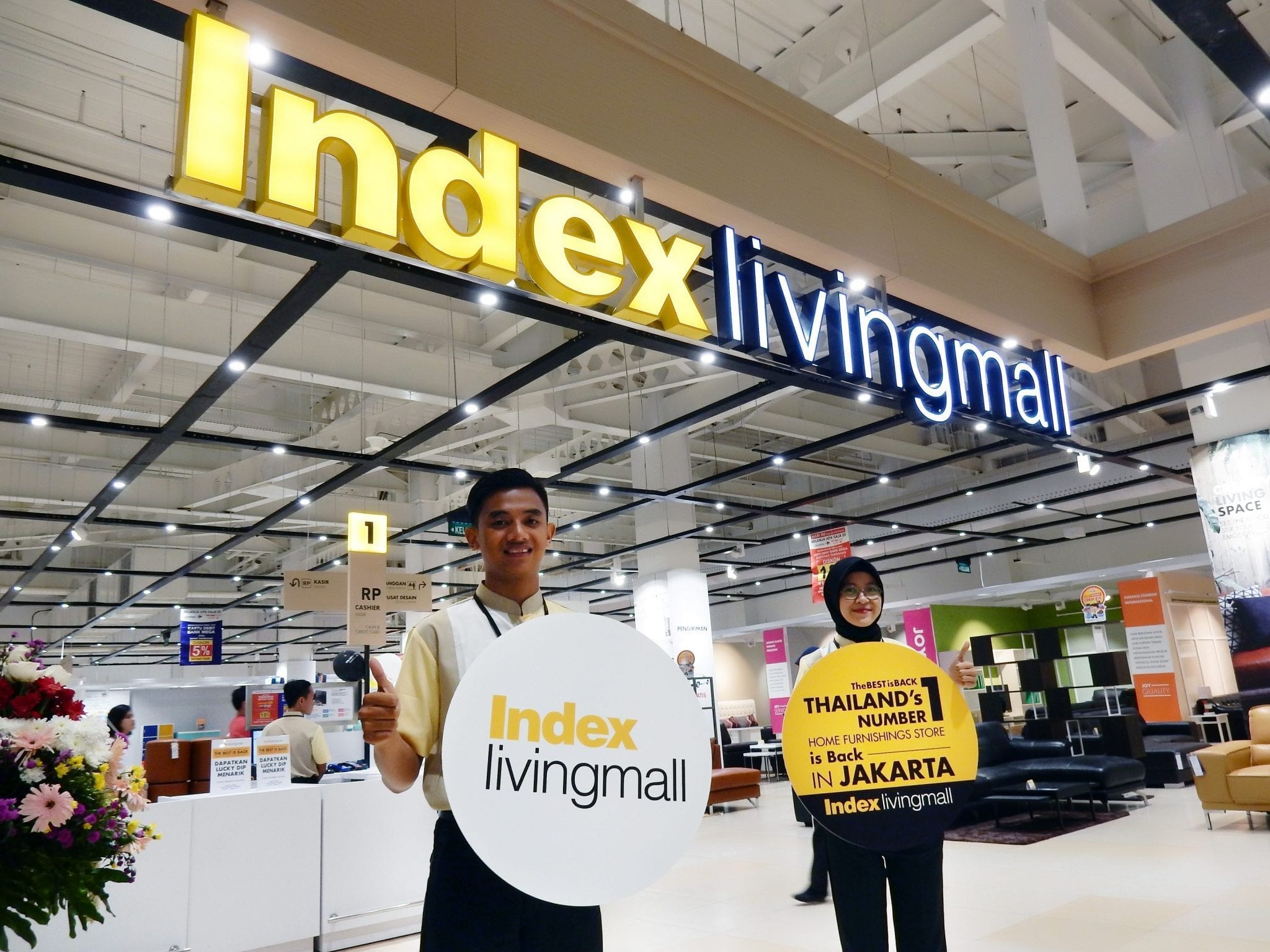
    ‘Index Living Mall’ (ILM), No.1 Home Furnishings Stores and ASEAN retailer with the highest number of branches across the country, self-owned factories, and a world class exporter, has declared the partnership with ‘CT Corp’: Indonesian’s No.1 business group in several business segment, including ‘Mega Group’ finance company, ‘CT Global Resources’, and ‘Trans Corp’ multi-entertainment complex/hotel and Transmart Retail. The first store opened at PT. Retail’s Transmart Carrefour, Cempaka Putih, Jakarta, on 2,500 sq.m. retail space.  The grand opening day was organized on  11th August 2017, under the concept of ‘The Best is Back’. Special sales promotion were offered to customers to celebrate the new branch launch. A further 4 stores shall open between September to December this year, followed by another 5-10 stores each year until 2020 with the goal to become the Top of Mind Home Furnishings Stores in Indonesia. The event has also been honored with H.E. Mr.Pitchayaphant Charnbhumidol, Ambassador of Thailand to Indonesia.

    Mr.Pisith Patamasatayasonthi, President and CEO of Index Living Mall Co.,Ltd revealed that “The trend of home furnishings products market in ASEAN region is expanding well. With key factors such as expansion of markets, income, and customer behavior. We are truly enthusiastic to study the possibility of investment opportunities as well as business strategies in each country, in order to lead us to becoming one of the largest home furnishings and accessories retail chains in ASEAN by 2020.  Recently, we have been able to partner up Index Living Mall with CT Corp which is the largest capital group in Indonesia. This move demonstrates that we are more than ready to expand our business internationally and set to become the leader in home furnishings business. So, right now we have been working hard to open the first Index Living Mall branch in Indonesia under the concept of ‘The Best is Back’ which represents our 6 key strategies and a special sales promotion offered to our new customers.  Moreover, the company plans to expand its additional 4 stores ranging in size from 1,000 sq.m. to 2,000 sq.m. by the end of 2017 and within Transmart Carrefour locations. We can expect to see as many as 5-10 stores next year and annually through 2020.  This clearly demonstrates our confidence in the strength of Index Living Mall in tens terms of brand and product under the 4 Joys concept.

    Mr.Ekaridhi Patamasatayasonthi, Director International Business Development of Index Living Mall Co.,Ltd said “We believe that the home furnishings business in Indonesia has a high potential to go far particularly through our partnership with Transmart Retail. Apart from the slowdown in fashion and IT gadgets, the home furnishings markets has growth potential. The expansion of our new regional market in Indonesia will help increase revenue share from International up to 14% this year from our current level of 8% and will shape Index Living Mall to become a successful regional player.”

    Besides, the potential of CT Corp under the supervision of Mr.Chairul Tanjung, Indonesian tycoon and Transmart Carrefour retail business owners, is one of the key factors that supports Index Living Mall in penetrating into the right market locations, approaching to the right target groups, as well as expanding customer bases. “We strongly hope that our franchise expansion in Indonesian market will build trust of Index Living Mall among our customers here in terms of its high quality, international standard, cutting-edge design and product which has been specially selected of the market in Indonesia” he said.

    Mr.Shafie Shamsuddin, President Director and CEO of PT. Trans Retail Indonesia highlighted that “This strategic partnership is expected to provide added value for Indonesian consumers with more and more sophisticated choices of furniture products at Index Living Mall that are integrated in one area with Transmart Carrefour. Surely this will provide a trend of positive and complementary consumer spending needs between Transmart Carrefour and Index Living Mall as well as we help to provide place and space for local products to partner with us”

    “We have successfully expanded our International Retail Business across Malaysia, Vietnam, Singapore, Cambodia, Laos, Myanmar, Nepal, Maldives, Pakistan, Russia and now Indonesia as well as having strategic partners in place for the export of our products into Japan, Korea, The America, Europe. The International Retail Business represented 8% of total retail sales against Thailand in 2016.” according to Mr.Gerard McGurk, Head of International Business Development of Index Living Mall Co.,Ltd.

    The concept of ‘The Best is Back’ which would represent the 6 Best key strategies. First, The Best Furniture Lifestyle Store, Index Living Mall sells all home furnishings products in best style and best material. Second, The Best Value, the products are worth every sen of the price. There is no need to wait for the sales promotion because Index Living Mall has own factory. Third, The Best Design, the designs are being created by famous designers from all over the world such as Italy, Sweden, Denmark and Germany. Fourth, The Best Quality, every single piece of the products is being well made from the best selection of materials to ensure the best quality for the customers. Fifth, The Best Impression, Index Living Mall customer service is beyond expectation, not just the fast shipping service but also quick installing from our professionals. With 3D designer specialist service through 360 degree perspective within 30 minutes via 3D-Rooms-to-show program. Finally, Sixth, The Best Offers, Index Living Mall offers numerous special deals, promotions and privileges during the grand opening celebration.


     

  • Alexander McQueen opens new store at Elements

    Alexander McQueen opens new store at Elements

    Alexander McQueen shows a world that is both classic and contemporary, familiar and subversive at its new retail store at Elements in Tsim sha Tsui.

    Creative director Sarah Burton partnered with David Collins Studio to design the store, which highlights nude and black colours with accents of aged and polished brass.

    Bookmatched Calacatta Oro marble is used to create a stunning marble feature wall in the shop front while pink onyx frames the collection with bold architectural backdrops.

    A selection of special commissions and mid-century-inspired furniture are curated within the store, including armchairs upholstered in antique blush and black.

    Alexander McQueen stores can also be found at Sogo Department Store in Causeway Bay and Landmark Atrium in Central.