Tag: Furniture

  • Ikea Malaysia opens new store

    Ikea Malaysia opens new store

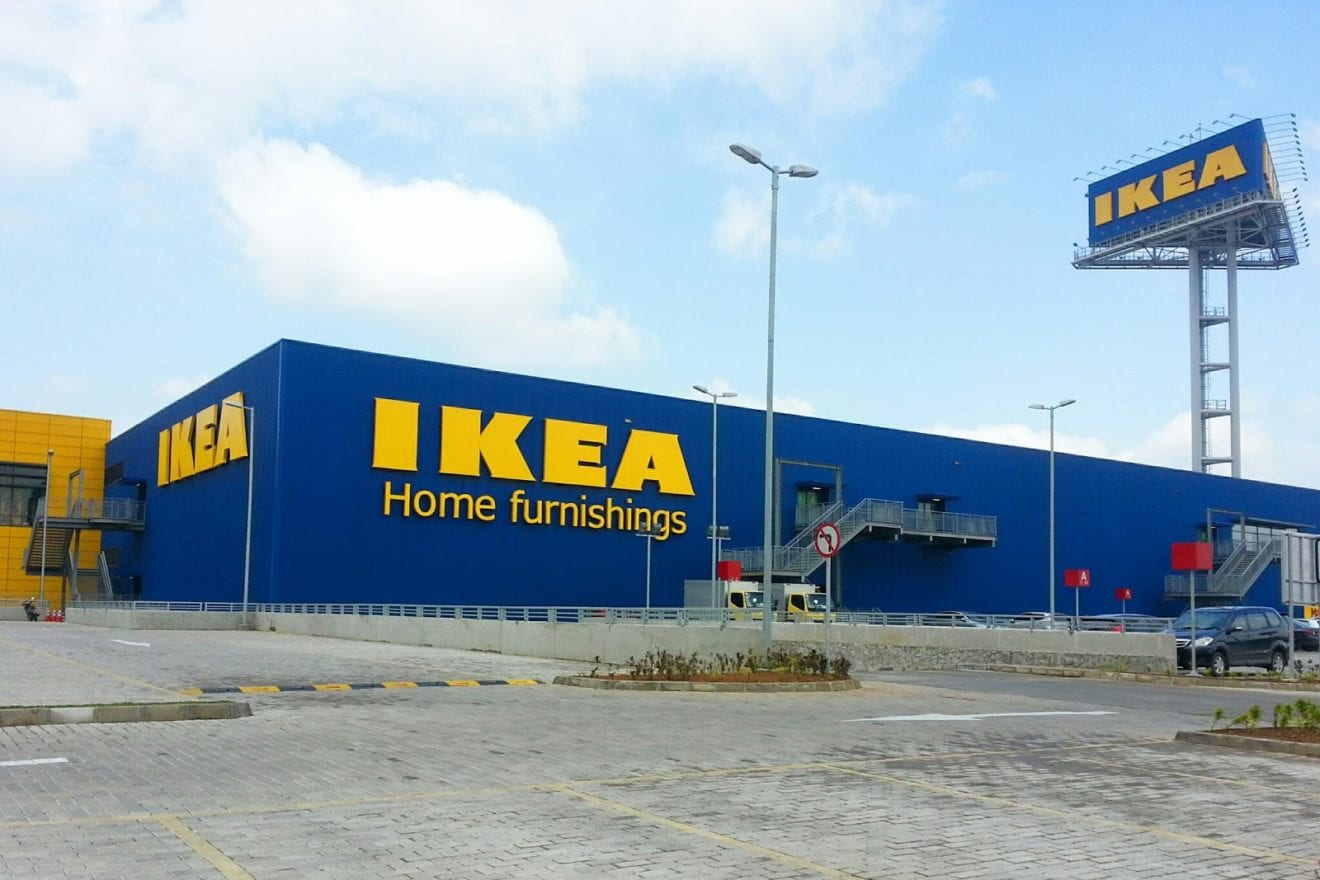
    Ikea Malaysia will next month open its first store in the northern region of Peninsular Malaysia – in Batu Kawan, Penang. Due to open on March 14, the brand’s fourth outlet in the country spans 43,600sqm of retail space and will feature more than 8000 products.

    “The store will also have 49 showrooms, a market, restaurants and a bakery. We expect it will attract about 50,000 visitors per week,” said Ikea Malaysia store manager Arumugam Pathmalingam.

    In advance of the grand opening, the store has already attracted excitement among Penangites, mainly on social media.

  • Furniture maker in Vietnam to meet younger customer taste

    Furniture maker in Vietnam to meet younger customer taste

    Furniture manufacturers are striving to meet the changing tastes of young people, who have begun to value eco-friendliness and aesthetics. Nguyen Chanh Phuong, vice president and general secretary of the Ho Chi Minh City Fine Arts and Wood Processing Association (HAWA), said the furniture segment for small urban houses is abuzz in Vietnam, with its main customers being young adults born between 1980 and 2000.

    Unlike the previous generation, who preferred simple but durable furniture that could last 100 years, young people prefer to buy comprehensive interior packages based on their own aesthetic views, he explained.

    They see furniture as things that serve their needs and not assets to be passed down, and so products only need to last about 10 years, he said, pointing out this was why furniture makers like IKEA have been so successful.

    “There is a lot of opportunity arising from this group of customers alone. I estimate they only account for 15 percent in terms of number of buyers but account for 30-40 percent of spending.”

    Industry insiders said the market is seeing rapid growth in raw materials production, design and manufacture of furniture, and one can now find all types of international “fashionable” wood varieties from Germany, the U.S., France, Japan, Canada, and New Zealand.

    Vietnam’s furniture market was worth $4 billion in 2018, and is expected to grow to $5-7 billion by 2025, according to the Handicraft And Wood Industry Association of HCMC.

    Nguyen Quoc Khanh, HAWA chairman, said not only is the scale growing but also Vietnamese are increasingly demanding higher quality products.

    “I think ‘strong and durable’ is not the Vietnamese style; it was a need at a difficult time. Life is much better now, so people are allowed to express themselves.

    “The only regret is that the market has not yet created the necessary ecosystem for the business of interior design. That is, furniture manufacturers have not been able to work with designers and real estate companies to completely meet users’ needs.”

    Foreign home interior brands and designers are present in force and dominating the increasingly affluent market.

    According to the Vietnam Chamber of Commerce and Industry (VCCI), some 80 percent of luxury woodwork and interior decoration items is imported from Europe, with local players accounting for the rest.

  • India’s WoodenStreet eyes 15 stores by end of 2019

    India’s WoodenStreet eyes 15 stores by end of 2019

    In 2016, WoodenStreet entered the retail market with its first brick-and-mortar experience store in Bangalore. Established in 2015 as an online platform for quality custom furniture, WoodenStreet expanded its reach by opening 2 stores in 2017 and 9 stores in 2018, totalling to 12 experience stores. What’s next? 15 new experience stores by the end of 2019.

    Lokendra Ranawat, CEO, WoodenStreet expressed his aim to bring customization and quality a step closer to everyone’s home. “It’s not just about an online presence”, he elaborates, “but getting down there and interacting with our customers makes buying furniture a more personal experience, as it should be. We want people to not just visualize, but also feel the quality of furniture that we offer. We want them to see the limitless configurations, combinations and customization possibilities that they can actually get for themselves.”

    2018 was a long but fruitful year for WoodenStreet. Mumbai and Jaipur stores have been established in the last quarters of 2017, and the overwhelming response from these two stores, combined with a financial push from US$ 1 million Series A funding from RVCF, hardened the resolve to expand into further cities. Hence came the first stores of Ahmedabad, Hyderabad, Chennai, Pune, Noida, Gurgaon and Indore, with two more stores in Bangalore and Jaipur. This set up a large Omnichannel network, enabling greater penetration into the furniture market with a promise of quality and flexibility.

    “Last year was challenging but fun.”, says Virendra Ranawat, COO of WoodenStreet.com, commenting on the rocking journey. “But this hasn’t stopped us. We want to ensure that 2019 sees the addition of 15 more stores to our ever-growing roster. Which means that by the end of this year, we’ll have 27 brick-and-mortar stores in total.”

    WoodenStreet.com is a custom furniture store, with more than 30 delivery hubs and 12 experience stores spread across India, bringing quality solid wood furniture and the flexibility of customization closer to people and their dream of setting up a home flavoured to their tastes.

  • Ikea services foray boosts loyalty and sales

    Ikea services foray boosts loyalty and sales

    Ikea is turning to services to increase turnover and boost engagement with customers. Moreover, partnering with specialist companies in such areas as delivery and assembly allow it to focus on product design and sales, leaving post-checkout experiences in the hands of specialists, rather than committing its own staff and training resources. An example of the new Ikea services initiative is US odd-jobs app TaskRabbit, which Ikea bought in late 2017. Ikea recommends the service to customers who lack the time or patience to assemble their own kitset furniture products.

    Ikea reports that the number of jobs handled by TaskRabbit staff since it acquired the business had doubled and 10 per cent of the jobs undertaken are now assembling kitset furniture – five times the pre-purchase rate.

    Since the acquisition, TaskRabbit has expanded coverage to all 48 US cities with an Ikea store, launched in Toronto, Canada, and expanded in the UK beyond London.

    In Hong Kong, where few customers own cars, Ikea now offers both a delivery and assembly service with fixed fees according to location. Previously, it partnered with an app-based third party contractor.

    In Australia, Ikea has partnered with Airtasker and in India with UrbanClap, to offer assembly services.

    Reuters describes the Ikea services strategy as “a major strategic shift that it has been forced to adopt to stay in the game as waves of new competitors in an increasingly online world erode its dominance”.

    TaskRabbit’s quick success is prompting Ikea in the US to consider expanding services offered through Ikea, to include such tasks as interior design and furniture repair which would in turn potentially boost sales from stores.

    Jesper Brodin, CEO of Ingka Group, which owns most US Ikea stores, says TaskRabbit’s customer data could also help Ikea come up with new ideas for furniture.

    “As this community grows, it’s not only about fixing one or two things but actually to add professionalism in interior decoration, into ‘life at home’ practicalities,” Brodin said in an interview.

    “TaskRabbit is a super interesting business case because it is scalable, not only geographically but also into services at home.”

    GlobalData Retail MD Neil Saunders says a services foray could help Ikea boost its market penetration in the US, which is currently just 2 per cent. Despite the low market share, the US represents Ikea’s second-largest international market behind Germany, where it enjoys as 12 per cent share. Rivals like Walmart and Wayfair in the US have started offering assembly through TaskRabbit’s rival app Handy.

    Brodin wants TaskRabbit to expand into more countries.

    “We are convinced this is a way to access new customers in our cities. The convenience customer today has so many more choices, and they are used to getting a quick answer.”

  • Courts Asia continues negative trend as Malaysian sales tank

    Courts Asia continues negative trend as Malaysian sales tank

    Group sales fell 6.2 per cent to $175.3 million, largely due to a 22.2 per cent decline in Malaysian sales measured in ringgit with lower consumer demand for goods and services.  Singapore sales, which account for three-quarters of the business’ overall sales, slipped a negligible 0.7 per cent, while the company’s Indonesian woes continued. Although the market accounts for just 3.4 per cent of Courts Asia’s sales, revenue fell 7.3 per cent in local currency. Courts Asia is already taking steps to stem losses in Indonesia, recently announcing the closure of one of its megastores and the downsizing of another.

    Japanese electronics retailer Nojima Corp lodged a takeover bid for Courts Asia last month, conditional only on the formal acceptance by Courts Asia’s majority shareholder  Singapore Retail Group, which has already indicated its acceptance. The Japanese company plans a strategic review of the business and will consider delisting it.

    Meanwhile, Courts Asia says it will continue to endeavour to improve efficiencies in its Malaysian business to improve productivity and return to profit. Twelve underperforming stores have already been closed reducing the network to 54.

  • Consumer’s Guide To Selecting The Perfect Office Chair

    Consumer’s Guide To Selecting The Perfect Office Chair

    If you work in an office environment be it on a full time or part-time basis, then you must be aware of how much time you spend on that office chair. But ironically, most businesses opt to spend a greater percentage of their furniture expense allocations money on an office desk as opposed to a chair. All this while forgetting the vital role played by quality office chairs on the health, general well-being and productivity at work. Therefore, it’s only fair that you purchase an office chair that’s both supportive and comfortable.

    But before deciding on one, here are a few considerations that should keep in mind;

    Don’t Forget To Examine The Fabric

    What’s important in a piece of fabric if you’re not going to wear it? Well, believe it or not, fabric plays a critical role in determining the quality of an office chair. It’s responsible for maintaining the breath-ability of the chair such that it doesn’t get too hot or cold. This can become extremely uncomfortable especially after long hours of sitting on it. Additionally, still on the fabric, ensure that it comes with a quality cushion to protect the person sitting on it from feeling the hard base of the chair.

    How Adjustable Is it?

    The best description of a perfect office chair revolves around its adjust-ability. Take time to check if the chair can be tilted backward for a more relaxed position, adjusted in height depending on the occupant for better use of the desk and the armrest should be adjustable as well. So when sourcing out for an office chair for sale, ensure to look out for such features. In most cases, these office chairs come with dial-controlled features that allow users to adjust with ease. However, there are still others that allow manual control, which is still okay.

    How Flexible Is The Base?

    While the market is mainly filled wheel-based chairs, you should give special considerations when selecting one. There are specific wheels made specifically for carpets, tiles and even wooden floors. Remember the ability to roll freely gives users the flexibility they require to reach out for stuff around the office. While at it, also ensure that the base can swivel freely to allow you access to various parts of the work desk.

    Does It Have Lumbar Support?

    Remember the back is one of the most important parts of the body when it comes to working in an office setting that requires a lot of sitting. Therefore you have to take care of it. Therefore a quality office chair should offer nothing less but good support for the lower back. If possible go for one with an adjustable lumbar to suit the needs of different users. This helps to prevent back strains that can affect the quality of work.

    To Conclude

    Selecting the correct office that’s not only comfortable but also offers solutions and cushion to back issues is vital for productivity in the workplace. All this can be made possible if you pay close attention to the fabric used, examine its flexibility and ensuring it has an adjustable lumbar support.


  • RM25b export target for wood-based products achievable: Malaysian Council

    RM25b export target for wood-based products achievable: Malaysian Council

    The Malaysian Timber Council (MTC) remains optimistic that Malaysia will achieve its RM25 billion export target for wood-based products by 2020 despite a fragile global trade and economy caused by the US-China trade war. “We believe that the RM25 billion target is still achievable notwithstanding the potential headwinds that may come along the way, for instance Brexit, US-China trade war and other regional conflicts,” MTC CEO Richard said.

    “The good part about the timber and wood industry is that a lot of Malaysian businesses are very innovative, and they respond to changes quite quickly, in terms of adjusting to the changing needs and demands and also the challenges of the industry as well as economy,” he added.

    To recap, the Ministry of Plantation Industries and Commodities (MPIC) had in 2017 reduced the wood-based exports target from RM53 billion to RM25 billion due to shortage of raw materials.

    Yu said the RM25 billion target is more “realistic”, noting that the previous RM53 billion target was first formulated prior to the 2008 global financial crisis.

    “The planning and the formulation of the strategy was before that (the financial crisis). At that point of time, even in terms of the exchange rate was pretty favourable to us from ringgit terms perspective.

    “And looking at last year’s numbers, I think to get another incremental of about RM1 billion-RM2 billion for another three years should be quite realistic,” he added.

    The timber industry’s contributed RM23.2 billion to the government coffers in 2017, up 4.8% compared to last year’s figures.

    As at August 2018, the export figures had reached RM14.57 billion, in which the wooden furniture, plywood, sawn timber, fibreboard and builders’ joinery and carpentry are the main revenue generators for the sector.

    However, Yu noted that there is concern raised by the industry players on the potential Chinese products dumping.

    “That will obviously have an effect on our exports. But I believe the Ministry of International Trade and Industry is monitoring this issue closely,” he said.

    At present, Malaysia exports timber and timber-based products in over 160 countries.

    Moving forward, Yu said the country’s commitment in maintaining its forest cover at above 50% will ensure that the timber industry remains sustainable in the long-term.

    The MTC was established in January 1992 to facilitate the local industry players and promote the development and growth of the timber industry.

  • IKEA’s first India store sold more despite lower than anticipated footfall

    IKEA’s first India store sold more despite lower than anticipated footfall

    Swedish home furnishing multinational IKEA’s first India store here witnessed less than expected footfall during last six months but the spending by the buyers was more than what it anticipated, said a top company official on Thursday. IKEA’S Hyderabad store, which opened in August last year, said it was originally looking for 7 million footfall a year but it is now 5 million a year.

    “The ambition was to have more footfall. We imagined higher visitation but the same time we see many positive categories. People are buying more items and they are spending more money. We are selling more pieces. This is good for IKEA because we are volume driven company. They are spending and buying more than we anticipated,” said John Achilles, Hyderabad Store Manager, IKEA India.

    He told reporters that products with a volume of 80,000 square metres were sold but declined to share the numbers in terms of value.

    Terming the people’s response as amazing, Achilles said it was a great learning experience. “We learnt so much about market, so much about customers and about their buying habit.”

    According to Achilles, customers in India were price sensitive. “Low priced items are those selling in much higher volumes. People want great value for money for products both accessories and furniture.”

    Kallas spoon set, priced at Rs 15, the lowest at the store, has been the number one selling item during last six months. “We sold half a million of those in six months. There is no other store in the world that sold this kind of volumes,” he said.

    He said IKEA’s range of products were lowest in many categories in the market. While 95 per cent of the products sold in India were the same available at IKEA stores around the world, about five per cent were specifically meant for India. These products included spoons, “tawa” and other accessories.

    Achilles was talking to reporters on the sidelines of the launch of made in India textile collection, Anglatarar, by by IKEA.

    IKEA opened first store five years after the world’s largest single brand retailer received government approval in 2013 to invest Rs 10,500 crore to open 25 stores in India by 2025. The company last year revised the number of stores to 40 across all formats.

    Achilles said they would open the next store at Mumbai during 2019 while Bengaluru store would come up in next 24 months and this would be followed by New Delhi.

    On sourcing from India by IKEA, he said this had gone up to 19 per cent while it was less than 10 per cent before the launch of first store.

    The sourcing has to go up to 30 per cent in five years as prescribed by the government of India, the official said, adding that they were looking to go beyond 30 with ambition to reach 50 per cent.

    Mia Olsson, Country Communication and Interior Manager, IKEA India, said: “This collection mark the celebration of design aesthetics from both countries.” She termed it as a tribute to India.

    IKEA’s Hyderabad Stores Food Woes Resolved

    After a gap of nearly five months, vegetarian biryani returned to the menu of Swedish home furnishing retailer IKEA here on Thursday.

    In September last year, IKEA’s had stopped selling vegetarian biryani at its store here found a foreign object in a dish.

    “Today is the first day we have started reselling vegetarian biryani,” said John Achillea, Hyderabad Store Manager, IKEA India.

    He said that they were making this dish in house and it is available for Rs 99 like in the past.

    IKEA’s first India, which is completing six months in February, was earlier sourcing prepared veg biryani from Haldiram of Nagpur.

    The Greater Hyderabad Municipal Corporation (GHMC) had fined the IKEA store Rs 11,500 after a customer lodged a complaint that he found a caterpillar in veg biryani served to him at the IKEA restarurant.

    The furnishing giant subsequently removed the veg biryani from its menu and stated that it takes food safety and quality very seriously.

    IKEA opened its first India store here on August 9. It has a 1,000-seater restaurant.

  • French furniture brand Roche Bobois opens showroom in Singapore

    French furniture brand Roche Bobois opens showroom in Singapore

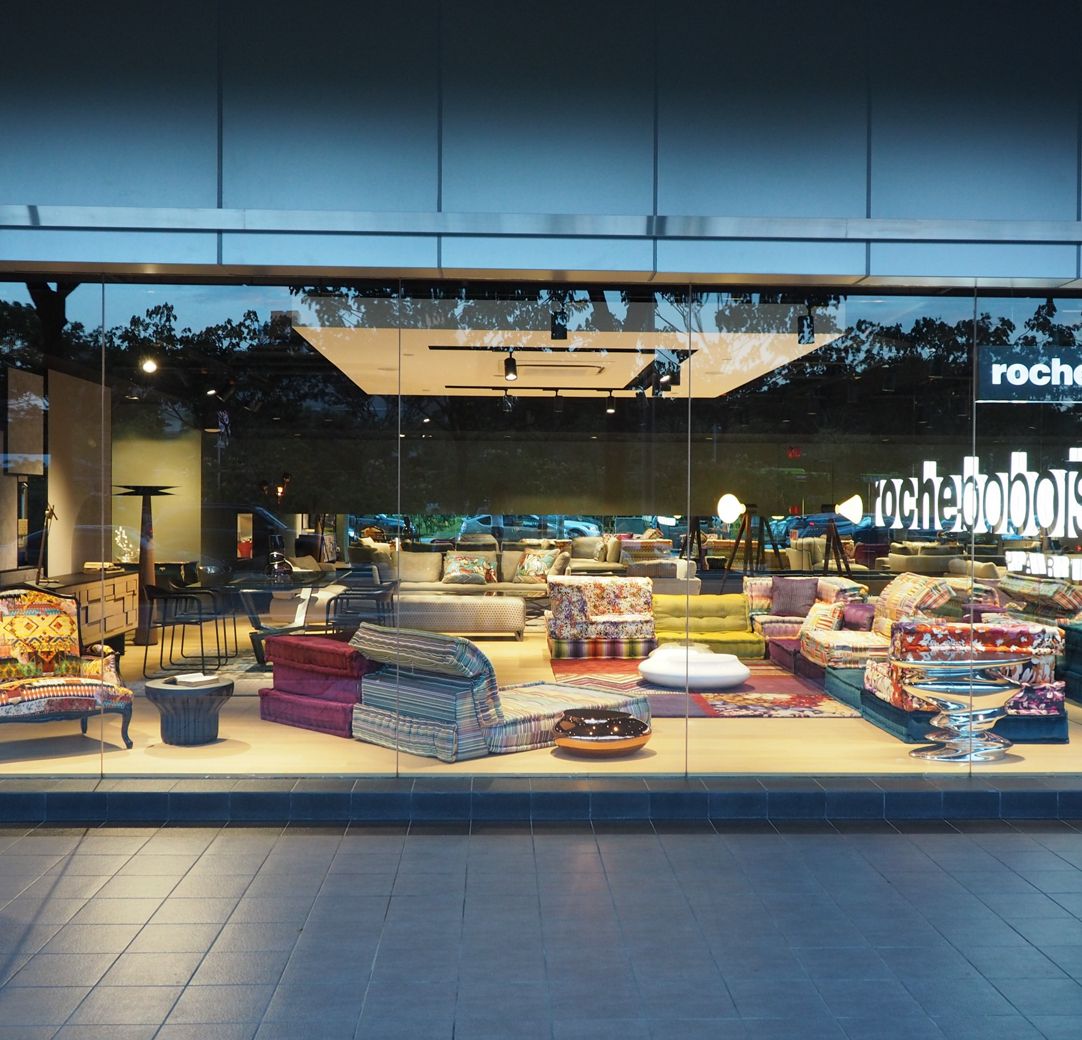
    French high-end furniture brand Roche Bobois has announced the opening of its Singapore showroom with a brand new design concept. The 5300sqft Roche Bobois Singapore showroom is located in the Boon Siew Building on Bukit Timah Road features an expansive floor-to-ceiling window to frame the brand’s collections, designed to resemble a jewel box from a distance.

    “Singapore is a city known for its appreciation of modernity and open-mindedness and these ideals are central to the Roche Bobois brand”, said company CEO Gilles Bonan.

    “This opening demonstrates the brand’s ambitions in Asia; we are already present in China, Hong Kong, South Korea, the Philippines, Japan, Vietnam and India and we intend to increase our presence in this strategic part of the world.”

    Roche Bobois operates more than 265 showrooms in more than 55 countries. After 17 new stores opened in 2017, it continued its growth last year in cities such as Hanoi, Washington, Tokyo and San Diego, with the Roche Bobois Singapore showroom its latest globally.

  • Courts Asia gets buy offer from Japan retailer Nojima

    Courts Asia gets buy offer from Japan retailer Nojima

    Japanese electronics retailer Nojima Corp has launched a conditional takeover bid for Courts Asia. The deal is conditional upon Courts Asia’s majority owner Singapore Retail Group (SRG) agreeing to the deal. Offering 20.5 cents a share for the business, the offer represents a 35 per cent premium over the price shares were trading at before the bid was revealed.

    Nojima is listed on the Tokyo Stock Exchange. Like, Courts Asia, it is an electrical appliance retailer, boasting more than 8000 employees and a market capitalisation of S$1.4 billion. Sales in the year to March 31 last year were $6.1 billion.

    Courts Asia has 80 stores trading in Singapore, Malaysia and Indonesia and besides electronics sells furniture and IT products as well. The company has enjoyed mixed fortunes in recent years, impacted by external factors such as the imposition of GST in Malaysia. It reported a net loss of $3.1 million in its second quarter, a stark contrast to the net profit of $1.5 million during the same period a year earlier. Sales for the three months to September 30 fell 6.4 per cent to $165.1 million.

    Nojima says if it wins control of the company it may carry out a “strategic and operational review” of the business to realise “synergies, economies of scale, cost efficiencies and growth potential”. It will most likely delist the company in Singapore.

  • Ikea to open Vietnam store with US$450 million investment

    Ikea to open Vietnam store with US$450 million investment

    Ikea Vietnam plans to invest US$450 million on a retail centre and warehouse system in Hanoi, according to a government official. Nguyen Duc Chung, chairman of the Hanoi People’s Committee, told a recent conference held by the Ministry of Industry and Trade that the Swedish furniture giant’s local subsidiary is well advanced with plans to launch in the country.

    Once completed, the centre will be Ikea’s main supply hub for its Southeast Asian market.

    “At present, all parties involved are [in] the process of negotiation,” Chung added.
    The centre is expected to boost Ikea’s e-commerce business in the region.

    During an interview in 2017, Torbjorn Loof, chairman and CEO of Inter Ikea Holdings said the company was planning potential expansion in Vietnam “within five years”.

    Ikea is steadily expanding its Southeast Asian footprint, the latest largest store planned in Philippines.

    Founded in 1943, Ikea is the world’s largest furniture retailer with 400 stores in 49 countries all over the world.

    In recent years, Vietnam has been a potential hub for retailers to build warehouses. Last November, Lazada finished a 4000sqm warehouse in Danang.

  • Ikea to open first New Zealand store in Auckland

    Ikea to open first New Zealand store in Auckland

    Ikea will open a store New Zealand in the coming years, opting for the city of Auckland to bow its debut store. The Swedish firm, known for its buy-and-assemble furniture, will open up a pop-up shop in the coming months in the lead up to a fully-fledged flagship store, which would create 400 jobs in the city, according to local media reports With no an exact time frame for the megastore launch, Ikea’s New Zealand manager, Will Edwards, said that Ikea would open a pop-up shop in central Auckland, as a physical store would take a number of years to set up.

    “It does take time to build a truly big blue and yellow iconic Ikea store, it will take a number of years to get the full offer up and running but we don’t want to keep people waiting,” Edwards told media on Friday at a press conference, which also saw the attendance of Ikea’s global chief execute, Jesper Bodin.

    “It makes sense to be in Auckland where many people are living and also commuting in and out of. We’d like to give a piece of Ikea before the full meal comes along,” added Edwards.

    Ikea requires some 300 to 400 employees to run the Auckland store, as well as several hundred more staff to support logistics.

    Bodin said that New Zealand will get the “whole shebang”, with a product range of about 7000 items at least in the warehouse store.

    While price-points weren’t disclosed, Bodin said that “our ambition is always to be affordable for people and competitive with other retailers in New Zealand.”

    Ingka Group, Ikea’s largest franchisee and operator of Ikea stores in 30 markets around the world, was granted exclusive rights to explore options to expand into New Zealand.

    Founded in 1943 in Sweden, Ikea sells furniture and homewares to 1.2 billion customers around the world.

  • Courts Indonesia to close its store soon

    Courts Indonesia to close its store soon

    Courts Asia is to close one of its Indonesian megastores. “The group decided to close the Courts Bumi Serpong Damai (BSD) City Megastore in Tangerang as it is historically not profitable and the group does not want to incur the high rental costs over the remaining lease term,” the retailer said in a statement. Courts Retail Indonesia will also buy the property it currently leases which houses the Kota Harapan Indah (KHI) megastore.

    Both properties were leased from Garwita Sentra Utama. Courts will forfeit a security deposit of Rp14.38 billion (S$1.379 million) and pay a penalty for early termination of the BSD site of Rp 38.7 billion ($3.6 million). The Singapore company will pay Rp97.56 billion (S$9.36 million) to purchase the other site.

    The KHI store has a total gross floor area of 21,800sqm, with about 24 years remaining on the lease.

    Courts said in its statement that the property reorganisation was part of an ongoing review of its store network.

    Having taken ownership of the KHI building, the company can consider options including downsizing its megastore and repurposing the remaining space for other commercial uses.

  • IKEA signs MoU to open store in Noida; create 8,000 jobs

    IKEA signs MoU to open store in Noida; create 8,000 jobs

    Swedish furniture giant, IKEA, has signed MoU with the Uttar Pradesh government for the investment of Rs 5,000 crore to set up an integrated commercial project, including a store, in Noida. The MoU was signed between R K Singh, Principal Secretary, Infrastructure and Industrial Development Department, and David McCausland, Country Property Manager, IKEA.

    An integrated commercial project will be set up by Ikea at Noida, Gautam Budh Nagar. After the establishment, approximately 4,000 direct and 4,000 indirect employment opportunities will be created by this project.

    IKEA said the first store in the state is expected to come up in Noida for which the Swedish company has not yet signed any land deal.

    “The state government will provide all possible help to such investors,” the Uttar Pradesh government said in a statement on Wednesday.

    IKEA had, on September 24, 2015, signed an MoU with the UP government during the previous Akhilesh Yadav regime for launching three stores in Lucknow, Agra and Noida. The deal, however, did not move forward.

  • iStyle opens Fourth Hong Kong @cosme store

    iStyle opens Fourth Hong Kong @cosme store

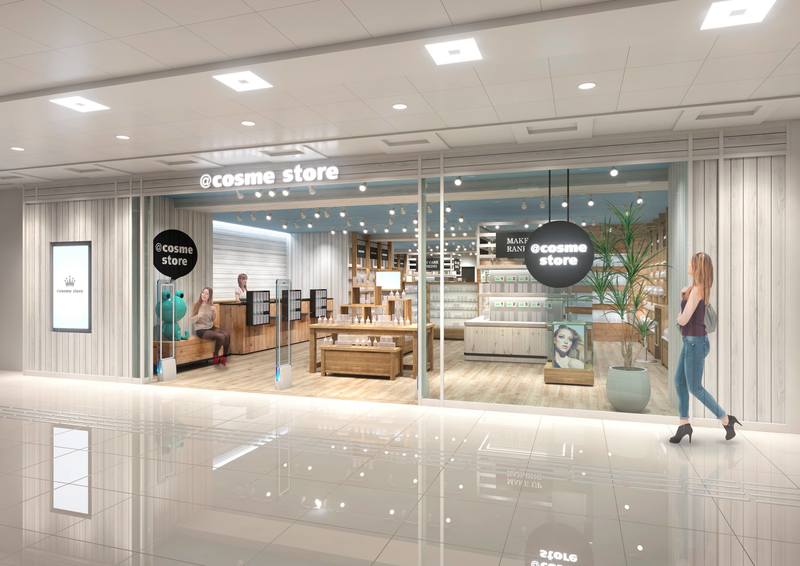
    Tokyo retailer Istyle will open its fourth @Cosme store in Hong Kong this Friday. The new outlet will be launching as a specialty cosmetics store in East Point City mall in Tseung Kwan O, which has recently emerging as a shopping spot across a range of age groups. The first of Istyle’s four stores to predominantly target local markets as opposed to visiting Chinese tourists, it is the brand’s first “community-based store” in Hong Kong.

    The firm intends to increase customer engagement via more interaction with local shoppers.

    @Cosme will offer free testing of almost all products in store and counseling services for skin and makeup, and will be adding new product lines from Homei, Covermark, and Bare Minerals to its range of exclusively Japanese items.