Retail News CRM

Tag: future

  • The We Company Debuts Made by We

    The We Company Debuts Made by We

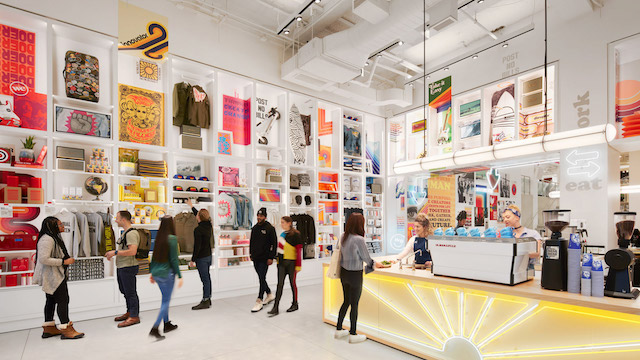
    Co-working firm The We Company (previously WeWork) has opened a retail venture and public workspace in New York. The Made by We retail space, cafe and workplace can be used by anyone without the need for a membership, with workstations and meeting rooms available for rent by the minute. The work space features products made by current WeWork member companies available for sale, from apparel to snacks to audiotech gear. It also houses a Bluestone Lane cafe.

    While headquartered in New York City, The We Company has WeWork shared office spaces in major cities across Mainland China, Japan and India, as well as in Ho Chi Minh City, Singapore, Jakarta, Kuala Lumpur, Manila, Busan, Seoul and Bangkok.

    “Made by We was launched with a vision to connect the We community with the rest of the world, and provide people with the best on-demand workspace, services and products, no membership required”, said company partner Julie Rice.

    “Everything we do at The We Company, from the spaces we curate to the service offerings we provide, is intended to create meaningful human connections.”

    View the gallery below for pictures (7 images) :


  • Vietnam fintech startup raises $1 million from foreign venture capitalists

    Vietnam fintech startup raises $1 million from foreign venture capitalists

    Vietnamese fintech firm Finhay has raised $1 million in seed funding from Singapore’s Insignia Ventures Partners and other foreign investors. “Finhay will use the $1 million investment to expand its user base 10-fold to 100,000,” said founder and director of Finhay Nghiem Xuan Huy. Finhay was established in 2017 with capital of $100,000 as a micro-investment platform targeted at millennials. It allows customers to invest as little as VND50,000 ($2.17) in mutual funds from Finhay’s investment portfolio.

    Huy said the business model is very popular abroad, citing examples such as U.S. micro-investing apps Acorns and Stash.

    The application automatically analyzes the user’s risk appetite and suggests appropriate investment options and provides information to help improve users’ personal financial management.

    It has over 13,000 users and over VND7 billion ($303,590) worth of pooled capital.

    Insignia Ventures Partners, a venture fund which has already invested in popular transport apps Go-Jek and Traveloka of Indonesia, hopes “…[Finhay] will gradually layer on more products and services to become the Amazon of financial services in Vietnam.”

    Finhay also received seed capital from funds in Hong Kong and the U.S.

  • Reliance has true potential to evolve into India’s Amazon or Alibaba

    Reliance has true potential to evolve into India’s Amazon or Alibaba

    A week after Reliance Industries (RIL) reported a 8.82 percent rise in consolidated net profit for its third quarter at Rs 10,251 crore, global financial services firm UBS on Thursday said the Mukesh Ambani-led RIL has the true potential to evolve from an integrated energy company into a consumer giant like Amazon or Alibaba.

    In a comprehensive 100-page report, UBS said RIL can become a market leader in telecom and media, while gaining a significant share in retail/e-commerce.

    “Its success could be built on an ecosystem or bundling strategy, and a home-court advantage, similar to Alibaba’s success in China, beyond explicit or implicit policy support,” noted the report.

    RIL posted a net profit of Rs 9,420 crore in the corresponding quarter of 2017-18. The company’s consolidated revenue from operations during the quarter in consideration at Rs 1,60,299 crore jumped a massive 56.38 per cent over Rs 1,02,500 crore earned in the October-December quarter of FY18.

    According to the UBS report, its China Internet analyst, Jerry Liu, has listed some comparables between Alibaba and Reliance such as pursuing an ecosystem or a bundling strategy in a high-growth fragmented retail sector with lower online penetration and home-turf advantage.

    “Similarly, Eric Sheridan, our US internet analyst, thinks Amazon’s core value proposition to customers is its Prime subscription, which offers free shipping and video and music content,” the report noted.

    “Our assessment of the capital framework, regulations, business positioning and emerging trends in each of its consumer-facing business indicates RIL can lead in telecom and media and gain significant share in retail/ecommerce,” it added.

    The report found another similarity RIL shares with Amazon and Alibaba – an ecosystem strategy.

    “The biggest difference is that the Chinese and American internet platforms do not own telecom networks.

    “But based on the success of Amazon Prime, and similar memberships such as Alibaba’s 88VIP and JD’s Plus in China, we believe bundling of products and services is a tried and true strategy, and this should play to Reliance’s advantage,” the report highlighted.

    Addressing the “Vibrant Gujarat Global Summit 2019” on January 18, Reliance Industries Chairman and Managing Director Mukesh Ambani announced that Reliance would double its investment and employment numbers over the next decade.

    He said Reliance Jio and Reliance Retail would soon launch a new commerce platform for small retailers — a mega mission which will first be launched in Gujarat and then across the country, urging Prime Minister Narendra Modi to lead a fight against ‘data colonisation’.

  • SEA e-commerce market to grow at 23 per cent

    SEA e-commerce market to grow at 23 per cent

    Southeast Asia’s online retail market is expected to reach US$53 billion in the next five years, according to a recent analysis by Forrester Consulting. The report anticipated a compound annual growth rate (CAGR) for the industry of 23 per cent over the period, given the momentum of smartphone penetration and fast-growing economies in the region. Currently the area’s largest online retail market is Indonesia – which took 41 per cent of Southeast Asian online sales last year – followed by the Philippines with its strong base of social media users.

    The report identified fashion as the main driver of growth in Southeast Asia’s online retail market, while consumer electronics retains the greatest market share at 24.2 per cent. Fashion and cosmetics brands launched online are likely to be a more regular marketplace feature in the near future.

  • How to deal with centennials

    How to deal with centennials

    All eyes are on Southeast Asia as the world’s next consumer powerhouse, with its young population and increasing purchasing power. Almost 280 million centennials – those born since 1995, also known as Generation Z, currently call this region home. While the size of this new generation alone makes them attractive prospects for retailers, their distinct behaviours set them apart as the ones to watch to crack Asia’s hyper-competitive retail landscape during the next few decades.

    Born into the digital age and mobile natives, centennials will soon be one of the world’s most demanding consumer groups with high standards and expectations of the online-shopping experience.

    Here’s what we know about the centennials….

    Webrooming vs showrooming

    Almost all centennials in Southeast Asia use the internet as part of their buying journeys, but their route is much more converged than other generations. Latest research commissioned by Dentsu Aegis Network, Here Comes the Centennial reveals that centennials like to use both online and offline channels – 97 per cent browse for products online before purchasing online (‘webrooming’) and 90 per cent look for products in store before buying online (‘showrooming’). Detailed research is a key part of their buying decisions – whether online or offline – to ensure they get the best price, as well as the best quality by going into stores to experience the product. Some 70 per cent browse online to find the best price, while 67 per cent use the internet for checking out product details and specifications and 65 per cent are checking out reviews.

    Smartphones have also created an environment where centennials can browse products wherever they are, whatever they are doing – multi-tasking to the extreme. For example, 52 per cent look at products online while eating, watching TV or hanging out with friends or family, while 38 per cent do so while commuting, and 34 per cent browse products while at school or college.

    Centennials use social-media platforms differently to previous generations, as an important and intimate touchpoint in their purchase and decision-making journey.  Social media applications (47 per cent) such as Facebook and Instagram are the second most popular place for them to shop in, while 49 per cent turn to such platforms for research on their future purchases, rather than asking friends (45 per cent) or family (27 per cent). Even a good reputation with friends and family does not feature highly as a motivator to purchase – just 15 per cent choose this as an option.

    Digital natives

    As digital natives, centennials expect technology to be an integral part of the experience, and are highly optimistic about the use of technology.

    Eighty-two per cent of centennials are excited about futuristic shopping technology such as virtual reality. They demand fast-and-easy experiences that allow them to research and buy products with minimal frustration.

    To this audience, commerce has moved beyond “buying something on a website” to a series of interactions, from enticing them to view a product to providing a personalised purchase experience, to where and when the product should be delivered. In this context, online retailers need to focus on understanding the centennial customer journey, specific to the category being sold. This can be done by incorporating relevant technologies which seamlessly enhance engagement along the path to purchase. For example, the research showed that “Good customer service/reliability” ranks third among qualities of an online store with this audience, with delivering a superior and excellent customer service option using chatbots rather than call centres a more significant differentiator than low prices and free/fast delivery that every other marketplace claims to offer.

    Brand irrelevance

    Brand name and image are no longer a priority of centennials. Only 11 per cent of centennials cite having a prestigious or famous brand as one of their top three attributes when choosing where to shop online. Instead, personalisation and convenience are key, as 76 per cent of respondents are happy to share data with websites, if it makes more relevant recommendations.

    E-commerce payments provide a unique example of this; despite being digital natives, the concept of a cashless society has yet to fully take off for centennials in the six countries surveyed, with 56 per cent of respondents still preferring to pay cash on delivery for their purchases. Whilst preferring digital shopping experiences, the next generation of online shoppers enjoy having a variety of payment methods to choose from, and 43 per cent of centennials will readily abandon their purchases because their preferred payment option is not available.

    This is also accompanied by a shift towards values-based purchasing, with 82 per cent agreeing that they “prefer to buy products from ethical or sustainable brands,” while 70 per cent express a preference for local brands.

    With centennials less responsive to traditional campaign and brand-based purchasing, and increasingly influenced by disparate sources of dynamic information and opinions, retailers can no longer just rely on well-designed stores or brand campaigns to drive sales. Instead, driving a unified brand experience across multiple touchpoints will be key to unlocking the centennial consumer opportunity.

    This year

    So what does this all mean for retail this year and beyond?

    Southeast Asia’s internet economy is expected to exceed US$240 billion by 2025, according to research from Google and Temasek. One in two of centennials surveyed are already spending more than $30 per month online. Nine per cent indicated that they spend more than $100 a month – and as the centennial generation comes of age and joins the workforce, their disposable incomes will increase further.

    This combination of large populations, high connectivity and smartphone penetration rates, and increasing online spending power means the centennial opportunity in Asia is large and growing. We will increasingly see e-commerce technology accelerating this year to help create innovative and memorable brand experiences of the consumer.

    Centennials represent tomorrow’s consumer. They are looking for integrated solutions and a seamless experience that will allow them to purchase anywhere, anytime, and on their own terms. As this new group of consumers become increasingly elusive and multi-channel savvy, retailers need to harness creativity and technology in new ways. Combining new media and technology to deliver innovative and memorable brand experiences is the key to success – and brands are learning quickly in order to tap the huge centennial opportunity here in Asia.

    For example, in Thailand, Cotton USA worked with Vizeum and Isobar to launch the Cotton USA online store through an experiential shopping campaign “Shop the Runway”, partnering e-commerce marketplace 11Street.

    Targeted at the Centennial audience, Shop the Runway was the first real-time online shopping fashion show in Thailand which streamed the live programme on 11Street, while clothes from the catwalk were displayed in real time – within the same page – so viewers could purchase their favourite looks direct from the runway.

    At the heart of the campaign was a unique offline-to-online (O2O) feature within the 11Street mobile application which allowed fashion-show attendees to simultaneously view and shop the runway outfits.

    Shopping coupons were also given to all customers who downloaded and registered their details on the app to further encourage conversions. The campaign drew close to 500,000 campaign visitors, a 13 per cent increase in 11Street app downloads following the campaign, and ultimately boosted Cotton USA sales and brand awareness amongst the target centennial audience.

    Shop the Runway is one example demonstrating how brands can leverage technology and O2O features in innovative ways to reach consumers in today’s competitive e-commerce environment. Combined with a seamless shopping experience, and varied account and purchase options to suit different consumers, moments like these will attract tomorrow’s consumers on their terms, arrest their attention in a hyper-competitive commerce landscape, and allow brands to win in Asia’s digital-led retail landscape.
  • How technology is revolutionising the foodservice industry

    How technology is revolutionising the foodservice industry

    We are at the beginning of the most radical transformation of the foodservice industry. Until now, technological innovations in the industry meant ordering food from an app or paying bill through tablets. But now restaurant owners are upping the ante, taking the game to the next level by experimenting with technology like never before. From introducing interactive smart tables and virtual bars to replacing servers with robots, restaurateurs are revolutionising the foodservice industry in the best way possible to enhance the overall customer experience.

    Interactive Smart Tables

    Mumbai-based Drinx Exchange has introduced electronic tech tables, where customers can interact with an electronic screen on the table they’re dining on. From watching live scores of sports, to receiving personalised offers, tracking their orders, paying their bill, and even singing along with the music in the bar, these tech tables will ensure consumers remain engaged through the time they’re in the restaurant. The screen also keeps giving them live offers that are just right for what they drink.

    The electronic table also splits the bill among the number of diners on the table and the payment can be settled on the table itself by scanning a Paytm QR Code on the screen

    Furthermore, the prices of drinks also fluctuate just like the stock exchange and customers can vote to crash the market price. Apart from this, the table also helps the customers in checking the status of their cab if they book it from Drinx Exchange app.

    According to Founders, Drinx Exchange, Rahul Dingra and Dibyendu Bindal, “The bar aims to ease the experience of ordering and makes it less stressful and more exciting for its millennial customers.”

    Virtual Bar

    The Beer Café has recently introduced ‘URBAR’, a virtual bar which allows patrons to reserve and consume their favourite brands.

    One can explore from a wide selection of alco-beverage, pre-pay and stock them in ‘URBar’. The latest ‘wallet for customer’s drinks’ initiative highlights the brand’s vision to redefine the alco-beverage space through technology differentiation and further strengthen its position as a pioneer.

    The patrons can log in to The Beer Café’s mobile app, and click on the URBar icon, reserve in the form of bottle (for spirits), keg (for draught beer), or case (for bottled beer) and start consuming.

    This not only gives patrons the privilege to buy their favourite brands at a special price but also benefits in the form of one price across the nation. A consumer can choose any portion he/she wishes to consume at any Beer Café outlet spread across 12 cities and save the rest for their next outing. The bottle/ keg purchased stands as a prepaid instrument and stock diminishes as the consumer opts to consume.

    There are multiple convenient ways of recharging the account. Customers can use an ‘online’ mobile wallet to add balance to their brew bucks – which is The Beer Café’s own currency. Or ‘pay at store’ by just walking into the closest The Beer Café outlet and the brew crew will be happy to assist the customers.

    What’s more, it also gives patrons the option to spread the cheer around by gifting customisable amounts of their reserved stock to friends, family and colleagues.

    Rahul Singh, Founder & CEO, The Beer Café says, “At The Beer Café, we believe that social drinking should first and foremost be about the experience. Our focus is to improve customer’s real world experience, their choices of brand and location. With the URBar feature, we are giving the users a chance to experience our differentiated proposition in the virtual realm. It is a delightful addition to the existing feature on The Beer Café mobile app. With this initiative we have raised the bar – quite literally!”

    Futuristic Robot

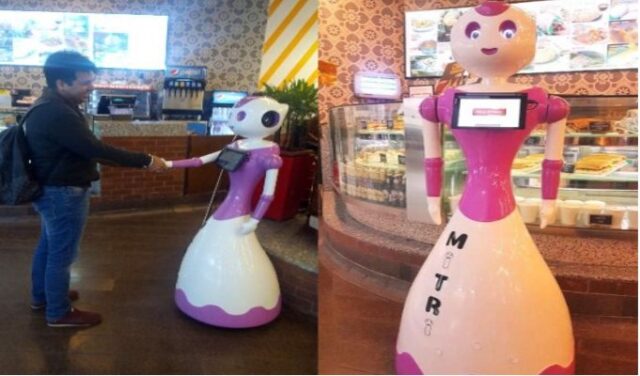
    Travel Food Services (TFS), travel food and retail company, unveils the latest in technology – Mitri, the robot, to make the experience of travellers interactive and fun.

    Mitri will be engaging with customers at TFS’s Dilli Streat outlet at Indira Gandhi International Airport, New Delhi, and is the first ever airport installation in the F&B segment.

    Visitors to the Dilli Streat outlet will be met and greeted by Mitri, who will facilitate activities and engage with them by providing menu detail. It would also be offering food recommendations. Mitri is a testament to Travel Food Service’s commitment of enhancing the travel experience in India, and presents a true example of how technology like Artificial Intelligence can help improve customer satisfaction, and drive productivity and sales.

    Commenting on the latest technology, Gaurav Dewan, COO and Business Head, Travel Food Services said, “We are always on the lookout for latest innovative technologies that can enhance the experience and satisfaction of our customers. We are extremely excited to present Mitri at our Dilli Streat outlet at the Delhi Airport. With Mitri being such an innovative and futuristic concept, and given her success, we are hopeful to bringing her to more outlets across India.”

    Robots Replacing Servers

    At a restaurant in Alibaba Group Holding Ltd’s futuristic ‘FlyZoo’ hotel, tall capsule-shaped robots deliver food that guests have ordered via the FlyZoo app. Meanwhile, at a separate bar, a large robotic arm can mix more than 20 different types of cocktails.

  • Alibaba develops new technology to help the blind shop online

    Alibaba develops new technology to help the blind shop online

    E-commerce giant Alibaba has developed new technology to make it possible for blind and partially sighted people to shop online, according to an article on Alibaba’s news site Alizila. Alibaba plans to launch Smart Touch, an affordable silicone sheet that goes on top of smartphone screens, later this year. The plastic film includes three mini buttons on each side that sensory-enabled. Pressing on each one will trigger a different command, such as “go back”, “return to homepage” and “confirm”.

    Depending on the app, the buttons can lead to different destinations, such as “My Shopping Cart,” “Tmall Global,” and “Tmall Supermarket” in the Taobao app.

    Smart Touch is a joint effort of Alibaba’s Damo Academy and China’s Tsinghua University to improve the smartphone experience for the blind.

    The technology also has an “ear touch” feature, which gives blind and visually impaired users a simple way to listen to text clearly and privately in public, without the need for headphones. It senses when the users is holding the phone to their ear and automatically routes the sound output from the loudspeaker to the earpiece speaker.

    In October last year, Alibaba added Optical Character Recognition (OCR) technology to the pages of its online marketplace Taobao, an artificial intelligence-driven feature that reads text written on images.

    Before adopting OCR, Taobao’s 300,000 daily active users who are blind or have reduced vision would have used screen-reading software that simply announced “image” as it scanned the page. By early December, OCR was being used to read close to 100 million images per day, Alizila reported.

    “Images are becoming ever more important in the shopping experience,” said Wang Yongpan, algorithm specialist who led the OCR upgrade.

    “A typical product page on the site contains about 40 images, and most product specifications and descriptions are often found within images, rather than typed out in plain text.”

    Yongpan said that while Alibaba has been using OCR for many years in various capacities, the technology’s accuracy in reading images has grown exponentially due to advances in machine learning.

    According to Taobao president Jiang Fan, making the platform more inclusive, user-friendly and a home for creativity is part of its larger strategy.

    “If I had to do one thing this year, that would be to make Taobao simpler and bring [us] back to our original purpose,” he said.

    “Alibaba is famously known by its motto, ‘To make it easy to do business anywhere’.”

    The OCR launch was driven by Alibaba’s “Barrier-Free Lab”, which started with a handful of employees in 2011 and has since grown to hundreds of volunteers, ranging from programmers to user-experience designers.

    Now, similar tools can be seen across Alibaba’s ecosystem, expanding from Taobao to B2C e-commerce site Tmall, payments affiliate Alipay, online delivery platform Ele.me, enterprise chat app Dingtalk, navigation firm Amap, music streaming app Xiami and internet browser UC Web, from desktop to mobile.

  • Travel Food Services India introduces the futuristic robot – Mitri

    Travel Food Services India introduces the futuristic robot – Mitri

    Travel Food Services (TFS), India’s leading Travel Food and Retail Company, unveils the latest in technology – Mitri, the Robot, to make the experience of travellers interactive and fun. Mitri will be engaging with customers at TFS’s Dilli Streat outlet at Indira Gandhi International Airport, New Delhi, and is the first ever airport installation in the F&B segment.

    Visitors to the Dilli Streat outlet will be met and greeted by Mitri, who will facilitate activities and engage with them by providing menu detail. It would also be offering food recommendations. Mitri is a testament to Travel Food Service’s commitment of enhancing the travel experience in India, and presents a true example of how technology like Artificial Intelligence can help improve customer satisfaction, and drive productivity and sales.

    Commenting on the latest technology, Gaurav Dewan, COO and Business Head, Travel Food Services said, “We are always on the lookout for latest innovative technologies that can enhance the experience and satisfaction of our customers. We are extremely excited to present Mitri at our Dilli Streat outlet at the Delhi Airport. With Mitri being such an innovative and futuristic concept, and given her success, we are hopeful to bringing her to more outlets across India.”

  • Taoyuanming Shanghai tests automated stores

    Taoyuanming Shanghai tests automated stores

    Swedish-Chinese firm MobyMart is expanding its automated store format in China in collaboration with Shanghai fruit retailer Taoyuanming. Two stores are operating, one in Hefei and one outside Shanghai. While expansion in the region is the firm’s priority this year, its long-term sights are set on Europe and North America. According to brand co-founder Per Cromwell, MobyMart initially opened a corner-store-format mobile vending platform for coffee, which evolved into MobyMart, a mobile platform for “vending everything”.

    “We found a very visionary fruit retailer in the suburbs of Shanghai, Taoyuanming, and basically they had physical stores but they wanted to have unmanned stores,” said Cromwell.

    “We saw that we didn’t actually need to make too many adjustments to our existing system because basically what we had to do was pre-pack all the fruit — we needed to have fixed units and not have people buying by weight … and when we opened it up to the public it was an instant success.”

    The store carries around 50 SKUs at a time.

    Taoyuanming is reportedly so pleased with the results that two more automated stores are scheduled to open early this year, which may be followed by staffless stores if successful.

    The firm’s strategy is to provide a platform to small retailers.

    “If you are for instance a fruit store outside Shanghai and you want to expand from a few stores to 10 stores in your neighbourhood, then you can’t really start buying BingoBoxes because it’s quite complicated and expensive technology,” says Cromwell.

    The MobyMart model relies on customers scanning their product, while cameras and sensors serve as a back-up. This  “very simple technology” allows for opening “a lot of stores at a very low cost,” Cromwell says.

    “It won’t be 100-per-cent staffless because you still need someone circulating the store and making sure everything’s fine and restocked, but one person in one day can operate eight to 10 stores depending on how spread out they are. So you have much more efficiency with the staff you do have.”

    He added that AI and big data will help store operators know what products will be needed at what locations and at what time.

    “If we have a request of some sort, that is something that will also solve the last mile problem,” he said.
    The whole store and system is expected to retail for around US$15,000. MobyMart also has a prototype mobile store with automated driverless vehicle capacity – although its rollout is restricted by legislation around the technology.

  • JD.com has just marked a breakthrough for drone delivery in Southeast Asia

    JD.com has just marked a breakthrough for drone delivery in Southeast Asia

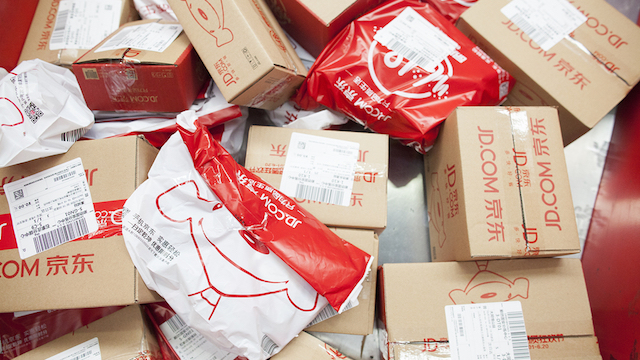
    JD.com announced the completion of Indonesia’s first government approved drone flight – a breakthrough for drone delivery in Southeast Asia. The successful pilot opens the door for future commercial drone use in Indonesia and the Southeast Asia region, subject to further regulatory approvals. Representatives from Indonesia’s Ministry of Transportation, Civil Aviation and Air Navigation were present for the flight. The news was announced during the World Economic Forum Annual Meeting.

    The test flight took place on January 8, 2019, in West Java, Indonesia, where the drone flew from Jagabita Village, Parung Panjang to MIS Nurul Falah Leles Elementary School to deliver backpacks and books to students.


    The items delivered by drone were part of a larger donation of supplies from JD.com to the school. JD has a long history of offering philanthropic support to those in the communities where it operates. The company often taps its technology and nationwide logistics network to provide immediate support for natural disasters such as earthquakes in China.

    JD.com and its JV partner, e-commerce company JD.ID, were early movers in bringing high quality e-commerce to Indonesia. JD.ID, which launched e-commerce operations in 2016, sells 1 million SKUs and serves more than 20 million consumers across the country. Its operations leverage a logistics network consisting of ten warehouses across seven islands, covering 483 cities and 6,500 counties.

    Given the fact that the country is spread out across many islands, the implementation of drones for regular use in e-commerce deliveries, as well as other logistics-related services, will enable citizens in Indonesia to enjoy more efficient and reliable services, and help JD.ID realize its goal of being able to deliver 85% of orders same- or next-day. JD.ID is also committed leveraging its logistics and other resources to support humanitarian efforts like earthquake disaster relief.

    “It is a privilege to have contributed to this important moment in Indonesia’s history,” said Jon Liao, Chief Strategy Officer at JD.com. “We have been using drones for real deliveries in China for over two years now, and have seen the profound impact that the technology can have on people’s lives around the country. We look forward to working closely with WEF and the Indonesian government to realize the full potential of this technology, and provide more convenience to Indonesian citizens.”

    JD.com is a strategic partner of WEF and a partner of WEF’s Centre for the Fourth Industrial Revolution. The C4IR is a global hub for multi-stakeholder cooperation to develop policy frameworks and advance collaborations that accelerate the benefits of science and technology. Leveraging drone technology to deliver supplies to areas in need is a high priority on the C4IR’s agenda. WEF and JD have been working closely together to ensure the success of the pilot in Indonesia.

    “This trial represents the first government approved drone delivery operation in Indonesian history,” said Timothy Reuter, Head of Drones and Tomorrow’s Airspace at the World Economic Forum. “These tests are an opportunity for Indonesia to become a leader in the Southeast Asia region by leveraging drone delivery to improve access to vital medical, humanitarian, and commercial goods in remote areas.”

  • Samsung factories ready to make 5G and foldable phones

    Samsung factories ready to make 5G and foldable phones

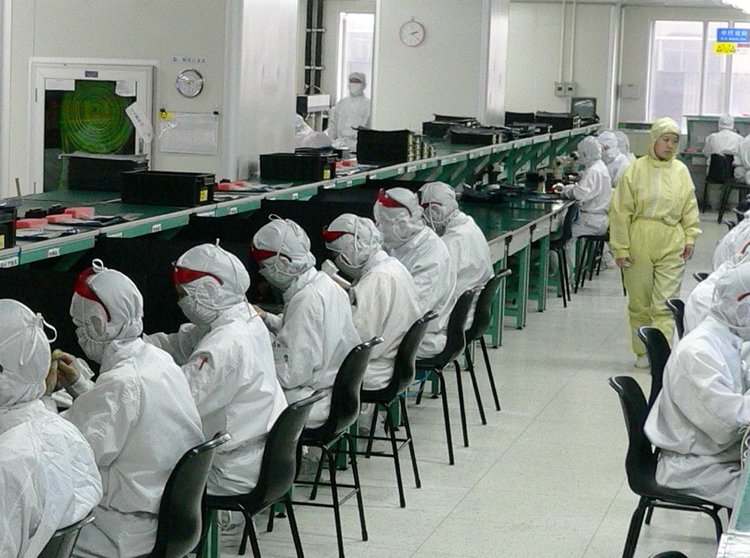
    Samsung Electronics is ready to roll out both 5G and foldable phones, two of most highly-anticipated products from the electronics company. While Samsung has already announced a plan to introduce new Galaxy phones at an unpacking event next month in San Francisco, it is confirmed on Tuesday that Samsung’s global production base in Vietnam has completed preparation to mass-produce 5G phones.

    The 5G phone is tentatively called “Galaxy S10 X.” Two Samsung factories, located in the provinces of Bac Ninh and Thai Nguyen, both north of Hanoi, produce 150 million smartphones a year. The 5G-enabled version of Galaxy S10 produced in Vietnam will be exported globally, starting with the United States. The first one million units of Samsung’s first foldable phone will be produced at the company’s production plant in Gumi, North Gyeongsang.

    The 5G phone “will roll out three to four weeks after the basic Galaxy S10 model hits the market. However, we have finished all preparations to mass produce a 5G phone,” a source from Samsung Electronics said.

    The phone will likely be introduced during the unpacking event on Feb. 20 along with three other versions of Samsung’s 10th-generation Galaxy family: S10, S10+ and S10 light.

    Phones that can connect to the 5G network are expected to bring revolutionary changes in media consumption habits. A 5G phone can download a 1.5 gigabyte movie in under a second.

    Samsung’s first 5G phone is likely to come with a 6.7-inch screen, larger than the 6.1-inch screen of S10 or 6.4-inch screen of S10+.

    The 5G-connected S10 will be powered by the Exynos 9820 chipset.

    Though it is designed for 5G connections, the phone will still be able to connect to 4G LTE as 5G infrastructure development is still underway. Even in Korea, where 5G infrastructure is quickly being built, next-generation connectivity is a work in progress.

    Samsung will first supply 5G phones to five telecom companies, including Verizon, AT&T and Sprint, all in the United States, and SK Telecom and KT in Korea

    Although the 5G phone will be introduced at the unpacking event, the actual launch of the model will come a bit later than the new S10s.

    While basic versions will be released in early March, the actual 5G-capable models will be available at the end of March.

    Samsung has greatly tightened security at its S10 production sites in Vietnam factories after a picture of the Galaxy S10 was leaked online.

    As for the company’s foldable phone, tentatively dubbed the “Galaxy F,” initial production will take place at the Gumi plant. Industry sources project that Samsung is likely to introduce the foldable phone at the unpacking event as well, but will release the phone April at the earliest.

    Federico Casalegno, head of the Samsung Design Innovation Center in North America, said “the foldable phone is a breakthrough in technology innovation,” during a press briefing last week.

    Industry insiders say the main reason for making foldable phones at the local Gumi plant is to prevent technology leaks and better control the initial production volume of the phone.

    “We are not yet ready to mass-produce foldable phones as well in Vietnam,” a spokesperson from Samsung said. “The first one million units of foldable phones and 5G phones to be sold in the Korean market will be produced at the Gumi plant, which is in charge of producing our premium products.”

  • India’s Reliance to take on Walmart and Amazon online

    India’s Reliance to take on Walmart and Amazon online

    South Asia’s richest man Mukesh Ambani is establishing an e-commerce platform to compete with Walmart and Amazon in India. The Reliance Industries chairman will roll out services in Gujarat before extending them nationwide. “Jio and Reliance Retail will launch a unique new commerce platform to empower and enrich our 1.2 million small retailers and shopkeepers in Gujarat,” said Ambani.

    Reliance introduced the 4G Jio network in September 2016, a market disruptor with its free voice calls and cheap data plans. Its move into e-commerce will aggravate an already cut-throat battle between market leader Flipkart, owned by Walmart, and Amazon’s services in the territory.

  • KT, Hyundai Mobis join to develop connected-car tech

    KT, Hyundai Mobis join to develop connected-car tech

    KT said Thursday that it will collaborate with Hyundai Mobis to develop self-driving and connected-car technology.  The two companies agreed to work on real-time navigation technology and vehicle-to-everything technology, which will allow cars to communicate with connected devices. To enable development, the telecommunications company said it will install 5G infrastructure at the Hyundai Mobis test-drive course in Seosan, South Chungcheong.

    The fast 5G network will allow sensors on a Hyundai Mobis self-driving car to send significant amounts of data to servers immediately to allow for accurate real-time traffic navigation. The process takes minutes in existing 4G networks.

    The cooperation comes as the two prepare for the fast-growing connected car market. Industry researcher IHS Markit predicted connected-car sales to reach 72.5 million units by 2023 from 24 million units in 2015.

  • Mercedes EV to launch in Korea

    Mercedes EV to launch in Korea

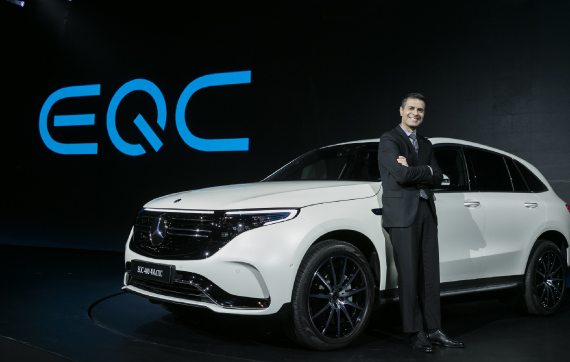
    Mercedes-Benz Korea is setting its sights on the local eco-friendly auto market with the introduction of an all-electric vehicle (EV) along with hybrid offerings this year. The Korean unit of the German brand announced Thursday that it will be introducing 14 new models to the local market this year including the EQC, the first model under its electric EQ brand, as well as four plug-in hybrid EVs at a New Year’s press conference at the Hotel Shilla in central Seoul.

    “2019 will be the year of the EQ,” said Dimitris Psillakis, CEO of Mercedes-Benz Korea. “We will do our utmost to provide the best products and services in the upcoming era of future mobility.”

    The premium electric SUV EQC, unveiled globally last September, is the German automaker’s current flagship EV. The promised hybrid models will range from SUVs to sedans, according to the automaker.

    Along with its entry into the local EV market, the German brand announced that it is also preparing its charging infrastructure.

    Mercedes-Benz Korea said EQC buyers will have access to its combined charging network, which will offer a wide range of charging stations nationwide. EQC drivers will also have access to a one-on-one concierge service that will recommend the nearest charging station to drivers.

    Mercedes-Benz Korea’s push into eco-friendly vehicles comes as it was embroiled in controversy last year regarding its vehicles’ emissions certifications.

    Last month, the automaker said it will appeal a court decision after it was found guilty of violating environmental and customs laws regarding the emissions certification process. The company was fined 2.81 billion won ($2.5 million) and an employee in charge of certifications was handed an eight-month sentence.

    Regarding the legal action, Psillakis promised that the company is following up on the newest regulations.

    “We have a very different changing and toughening regulatory environment around us,” said Psillakis. “We place processes to safeguard so that we can adapt to the new regulations as fast as possible.”

    The company also addressed concerns surrounding recall plans for its vehicles equipped with faulty Takata airbags, saying that it is planning a mass recall in the second quarter of this year of around 30,000 vehicles.

    The German automaker was the best-selling imported brand last year, selling 70,798 vehicles in the country.

    With last year’s sales, the Korean market is the fifth-largest market for the brand after China, the United States, Germany and Britain.

  • Seoul, SKT to add 5G to transport system

    Seoul, SKT to add 5G to transport system

    Sensors on roads will be able to alert cars when people are jaywalking and bus stops will tell buses to slow down in crowded areas when Seoul’s 5G infrastructure is ready, the city’s government and SK Telecom said in a joint statement Thursday. The Seoul Metropolitan Government and SK Telecom have teamed up on an initiative called the Cooperative-Intelligent Transport System, an upgrade of the current transportation system in Seoul. The pilot program will run until the end of 2020 with a budget of roughly 25.4 billion won ($22.6 million).

    Seoul already has a digitized public transportation system with signboards at bus stops telling passengers when the next bus is coming and whether it is crowded, and T-Money cards that enable people to transfer between various means of public transportation with little additional cost. The city aims to use 5G to make that transport system even safer.

    SK Telecom will supply 2,000 5G devices for buses, taxis and traffic signal controllers so they can connect with the 5G network. The mobile carrier said the devices will be co-developed with Samsung Electronics.

    Buses and taxis installed with 5G will constantly share data with bus stops, traffic lights and other traffic infrastructure. SK Telecom and the Seoul government will look for dangerous situations by analyzing the shared data to prevent accidents. As SK Telecom operates the country’s largest navigation app – T Map – the carrier said it will send out warnings through the app to reach the largest number of drivers possible.

    SK Telecom said there are about 30 safety services the 5G-based transportation system can offer.

    Roads installed with 5G sensors can detect jaywalkers, the mobile carrier said. While cars may have difficulty spotting people in the dark or during bad weather, 5G-connected sensors will alert nearby cars and prevent accidents. In 2017, 9,590 accidents were caused by jaywalkers, the largest cause of road accidents for pedestrians, according to data from the Korea Road Traffic Authority.

    The country’s largest telecom company also said 5G connectivity between cars can prevent secondary accidents by sending warning messages to following cars when an accidents occur in areas with poor visibility, such as around a corner or a bend in the road.

    As well as partnering on safety services, Seoul and SK Telecom are also preparing to jointly establish an autonomous driving test-bed in Sangam-dong, western Seoul, by the first half of this year. A self-driving vehicle will run back and forth between Digital Media City Station and buildings in the area. The SK Telecom-operated autonomous vehicle will begin running in the area from June at the earliest.

    “The Cooperative-Intelligent Transport System project is a futuristic business that combines state-of-the-art digital technologies, like 5G, autonomous driving, artificial intelligence (AI) and the cloud,” said Ryu Young-sang, an executive vice president of SK Telecom. “We hope to offer a range of traffic safety data to Seoul citizens using 5G and reduce traffic accidents.”