Retail News CRM

Tag: future

  • India’s Tanishq brings its first Augmented Reality experience for its customers

    India’s Tanishq brings its first Augmented Reality experience for its customers

    From social media filters, to reshape the concept of traditional retail, Augmented Reality (AR) is rapidly growing in popularity because it brings elements of the virtual world, into the reality, thus enhancing the things we see, hear, and feel. AR has made retail engagement all the more experiential, fascinating and personal and it’s often considered to be in the middle of a mixed reality spectrum; between the real world and the virtual world.

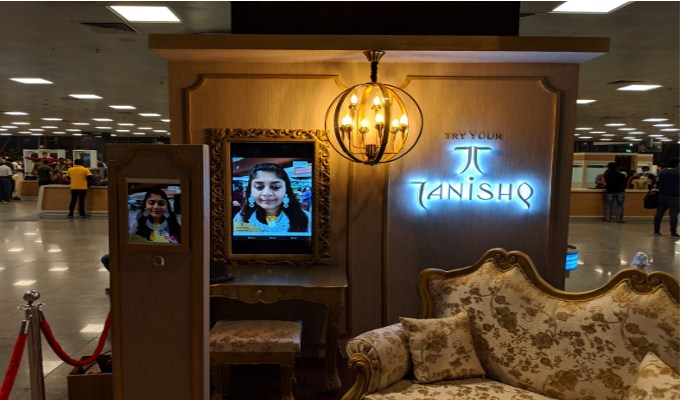
    Tanishq has taken one step further to be more accessible to its customers by launching into the Augmented Reality experience at the Bangalore and Delhi airports. For the first time in India, a jewellery brand is doing an Augmented Reality/ hybrid reality (combination of physical space Augmented Reality) campaign at an airport to engage with a large audience at a completely new level. Tanishq is leaving no stone unturned to keep their customers happy by adopting innovative ways to display their product range.

    With this technological advancement, customers will have the option of ‘Try and Buy’; trying out the jewellery virtually looking at the AR screen. Customers can benefit from this advanced jewellery experience for a month starting from February 06, 2019 at Delhi airport and February 08, 2019 at Bangalore airport.

    Tanishq is implementing MirrAR, an Augmented Reality software platform in collaboration with StyleDotMe, a startup focused in innovative application of Augmented Reality (AR) and Artificial Intelligence (AI) for providing the next generation experience to consumers who are interested in the Gems and Jewellery industry. Using the platform users can virtually try on the jewellery in real time, without actually having to wear them.

    Sharing her thoughts on the launch of AR experience, Deepika Tewari, Associate Vice President, Marketing, Jewellery Division at Titan Company Limited said, “Tanishq has always aimed at providing the best for our customers and this fascinating initiative is one such approach in achieving the objective. Consumers have the option of browsing through multiple jewellery pieces virtually with just one click. The real-time customer experience will definitely strengthen the retail connection between the brand and our esteemed consumers; a transformative step on how India will shop and purchase jewellery in the near future.”

  • LG skips foldables, opts for two screens instead

    LG skips foldables, opts for two screens instead

    LG Electronics launched the V50 ThinQ on the eve of the MWC 2019 in Barcelona on Sunday, presenting its vision of how the much-hyped 5G network can take a mobile device’s multimedia experience to the next level. The V50 ThinQ is the tech giant’s first 5G smartphone, a direct competitor to Samsung Electronics’ Galaxy Fold and Huawei’s Mate X, both of which are equipped with foldable screens.

    Rather than a foldable screen, LG Electronics has opted for a secondary detachable 6.2-inch screen, slightly smaller than the main 6.4-inch screen.

    When the second screen is attached, users can activate multiple apps at the same time. The screen on the left, for example, can have the YouTube app playing a video, while the second screen on the right can be simultaneously used for chatting to friends.

    Held horizontally, the top screen could be displaying a smartphone game, while the screen on the bottom could be used for a virtual joystick to make the game experience more immersive.

    “We believe in multimedia,” said Kim In-kyung, a senior vice president at LG Electronics in charge of 5G and network technology at the unpack event on Sunday in Barcelona.

    “Creating content and broadcasting live are most relevant to our 5G products today.”

    To help the hardware endure the increased data processing derived from 5G connectivity, its CPU, developed by Qualcomm, has been upgraded to the latest Snapdragon 855 and the battery capacity has been increased by 20 percent compared to the predecessor V40.

    LG Electronics also unveiled the G8 ThinQ on Sunday, which is dedicated to the existing 4G network.

    The G8 ThinQ, however, has been upgraded with what’s called “Time of Flight” sensors in the front camera, which are able to read palm veins in a 3-D image. The “Time of Flight” sensors are developed in partnership with German tech firm Infineon.

    Placing the palm in front of the front camera will unlock the phone, while moving the fingers in specific ways will give various orders to the G8 ThinQ such as taking screenshots, activating music apps and controlling the volume.

    Such functions will come in handy when users’ hands are too busy to actually touch the smartphone screen, such as when cooking or driving, according to the electronics company.

    “Installing vein recognition in a mobile device is [a] first,” said David Montanya, a product evangelist from LG Electronics’ mobile communications team at the unpack event. “It [allows the users] to make more intuitive interaction[s] with the smartphone. It anticipates your moves and intentions and reacts accordingly.”

    Montanya also added that palm veins are a safer way to protect the phone compared to other biometric methods such as fingerprints.

    “The probability of two people having the same vein structure is less than one in a billion,” he said.

    While an innovative feature is always a selling point for mobile devices, an experimental one that doesn’t yet work properly is not a good sign.

    The new palm-reading feature required intensive training in order to get the hang of the specific hand gestures needed to activate the sensors.

    A specific timeline for the two new phones’ launch in Korea hasn’t been revealed.

  • JD.com and Rakuten to collaborate on drone delivery

    JD.com and Rakuten to collaborate on drone delivery

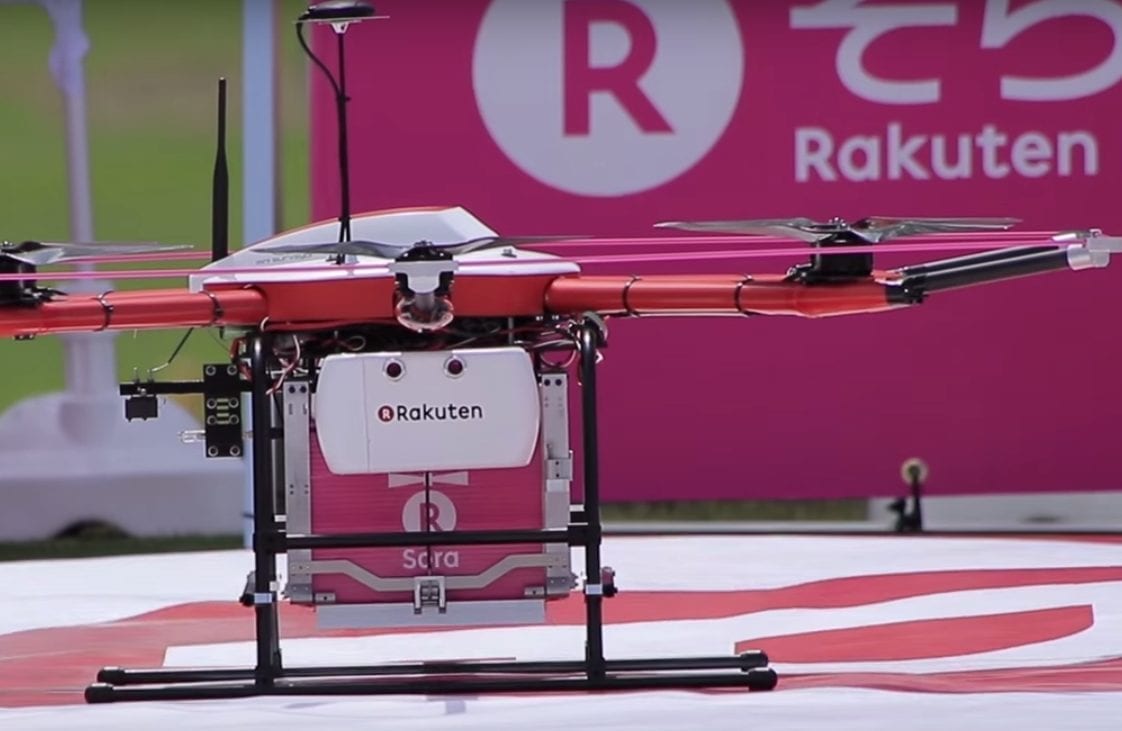
    Chinese online retailer JD and Rakuten, the Japanese e-commerce firm, will collaborate on developing unmanned delivery solutions in Japan. According to a new agreement signed between JD and Rakuten, JD’s drones and autonomous delivery robots will be used in Rakuten’s unmanned delivery services, which the firm launched in 2016. The two companies will collaborate on Rakuten’s lineup of unmanned delivery services to suit a wide range of applications and situations.

    Rakuten has already gained experience through providing delivery services and trials in collaboration with corporate partners and local governments. In 2018, its first delivery trial was conducted using a combination of drones and autonomous delivery robots, a step toward solving the last mile challenge for the logistics sector in Japan.

    “We are delighted to begin this collaboration with JD, which boasts the most cutting-edge proprietary delivery network in China as well as a track record and knowhow in delivery with drones and UGVs,” said Koji Ando, group managing executive officer of Rakuten. “By using JD’s drones and UGVs with the unmanned delivery solutions created by Rakuten, we hope to accelerate innovation in the Japanese logistics sector and contribute to building a society that can offer greater convenience to all citizens.”

    JD began developing its drone program in 2015, and launched the world’s first commercial drone deliveries in 2016 in rural China. It currently operates drones in Jiangsu, Shaanxi and other provinces.

    Since then, JD’s drones have logged more than 400,000 minutes of flight time. In January this year, the company announced the success of Indonesia’s first government-approved drone test flight, opening the door for future commercial drone use in Indonesia and Southeast Asia.

    On the ground in China, its autonomous delivery robots are being used in urban areas in several cities and are becoming frequent sights on a number of university campuses and in office parks. JD has also launched two smart delivery stations in the cities of Changsha and Hohhot, transforming last-mile logistics and further increasing delivery speed for customers.

    “We have been using drones and autonomous delivery robots for real deliveries in China for more than two years,” said Jun Xiao, president of JD-X, JD’s logistics innovation lab. “This is one way we are innovating to make logistics more accessible, reliable and cost-effective.

    “In Japan, there are many opportunities for drones to make deliveries in mountainous areas, remote islands and in emergency situations. As we push the bounds of what our autonomous delivery technology can do, and explore its use in a wide range of applications from e-commerce to humanitarian support, we believe it will continue to bring significant benefit to people around the world.”

  • 5G to change life, drive innovation

    5G to change life, drive innovation

    Korea’s Finance Minister Hong Nam-ki said once the world’s first 5G smartphone is introduced at the end of March and 5G connectivity is in full swing, life will improve significantly.  “Commercialized 5G is a core infrastructure of the fourth industrial revolution as it superconnects everything in real time and transfers massive amounts of data at high speeds,” Finance Minister Hong said during a meeting on innovation-led growth Wednesday. “The 5G smartphone, which is to be launched for the first time in the world in March, and 5G telecommunications services will be used in interactive education and digital health care, which will contribute significantly to the quality of life.”

    He said the government has been working on establishing the foundation for the commercialization of 5G, including distributing the 5G frequency to telecommunication companies in June 2018, expanding R&D investments and even setting a new tax rate – a maximum of 3 percent – for companies building the 5G network.

    “This year, the three telecommunication companies – SK Telecom, KT and LG U+ – are expected to invest more than 3 trillion won [$2.67 billion]” in 5G, Hong said.

    Samsung Electronics is expected to hold an event at the end of March to introduce its first 5G smartphone, dubbed the “Galaxy S10 X.” It will also be celebrating 10 years since the mobile phone manufacturer released its first Galaxy phone.

    In December, the company tested its 5G smartphone as the three Korean mobile telecommunication companies officially switched on 5G-network services for clients in the greater Seoul area and in some of the larger cities in the country.

    Finance Minister Hong said the commercialization of 5G services will spark innovation and convergence in various industries, including manufacturing, logistics, health and medical services, even in disaster prevention and management.

    5G is estimated to have maximum data transmission speeds 20 time faster than 4G.

    According to the government, 5G connectivity will not only increase the access to virtual and augmented reality, including wireless holograms for education or entertainment, but with the help of 5G, autonomous vehicles will roam the streets while traffic control will be managed more efficiently by applying artificial intelligence technologies in real time.

    Smart factories with wireless robots and quality control and delivery by drones will become a reality.

    By 2026, the global 5G equipment and device market is expected to be worth around 344 trillion won, while the telecommunication service market will be worth around 410 trillion won and the 5G-based convergence market about 1,440 trillion won.

    By 2030, the economic effects of 5G will be valued at an estimated 47.8 trillion won in Korea, which is equivalent to 2.5 percent of the country’s economy.

  • Smartwatch market set for a shakeup: Juniper Research

    Smartwatch market set for a shakeup: Juniper Research

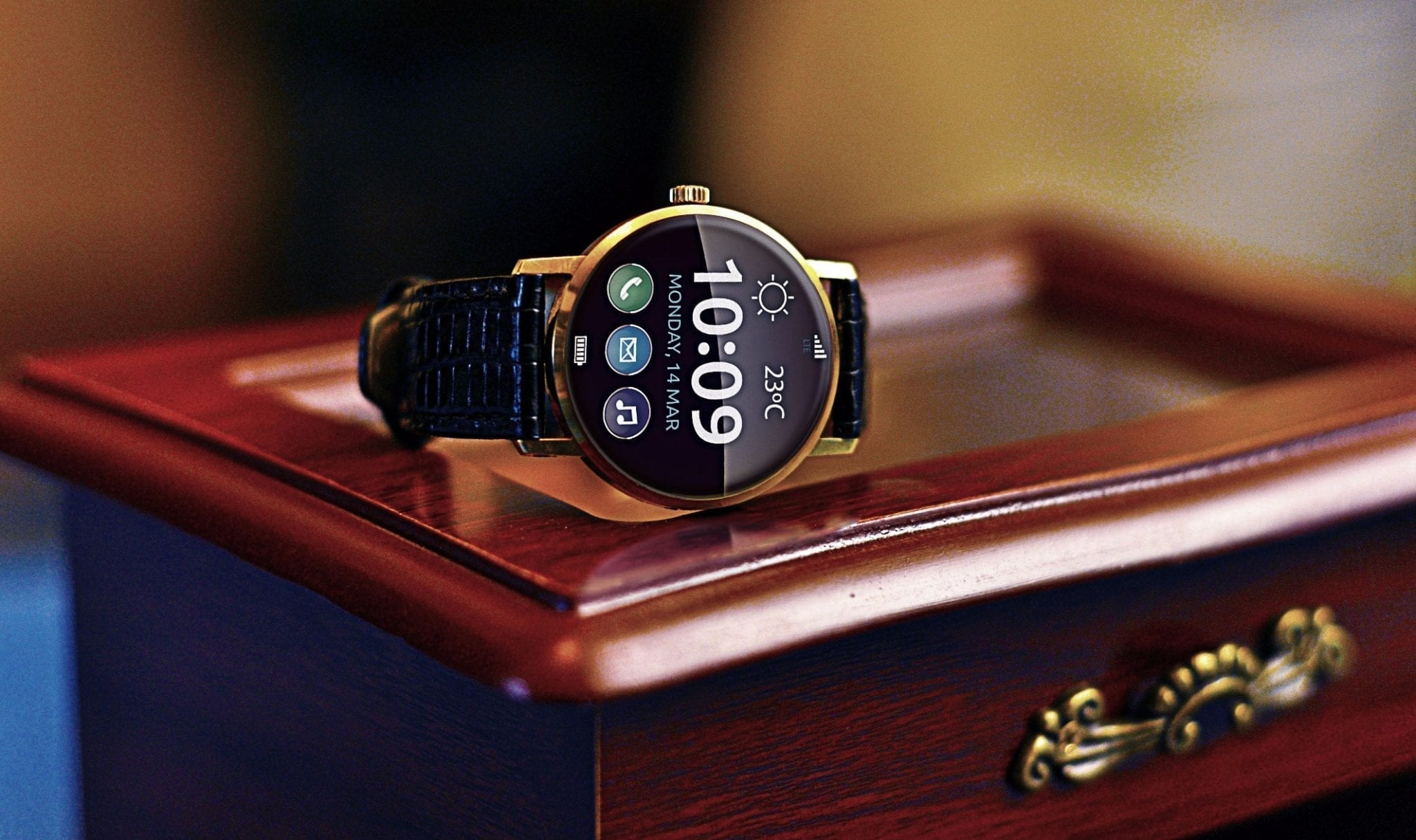
    Big brands are set to lose share in a major shakeup of the smartwatch market. According to Juniper Research, the largest brands in the category now will see their market share fall by 2023 as new niche players gain ground. Four leading brands including Apple, Samsung, Fitbit, and Fossil will see sales decline from an estimated 58 per cent of the market last year to 47 per cent by 2023. The decline is due to the growth of smaller players such as Garmin, Huami and Huawei.

    Smaller players will thrive thanks to strategies tailored for niche markets, their choice of cases or price points, while other brands are releasing premium smartwatches combining the best of fitness, outdoor activity and health features. While Apple will remain the largest single vendor in terms of shipments over the next four years, Huawei will enjoy the fastest growth, at a CAGR of 20 per cent.

    An intensified focus on healthcare integration will also contribute to an increase in smartwatch shipments over the next few years. Juniper forecasts that Apple and Withings will lead this section, followed by Fitbit and Garmin.

    China to become the biggest market

    The rise of smaller players is linked to the rapid expansion of the Chinese market offering lower-priced smartwatches. The Far East and China have now overtaken North America as the largest geographical market, with more than 24 million smartwatches shipped last year, compared to 19.5 million in North America.

    The gap between these two markets will widen by 2023, with the Far East and China trebling its shipments by then.

    Slower hybrid market

    The adoption of hybrid smartwatches will be slower than expected. Last year, hybrid smartwatches represented about 22 per cent of all smartwatch sales. The slower growth is linked to smaller players focusing on digital smartwatches offering more possibilities in terms of apps, connectivity and sensors than hybrid watches, which remain limited in their functionality.

  • LG Electronics to debut dual display phones

    LG Electronics to debut dual display phones

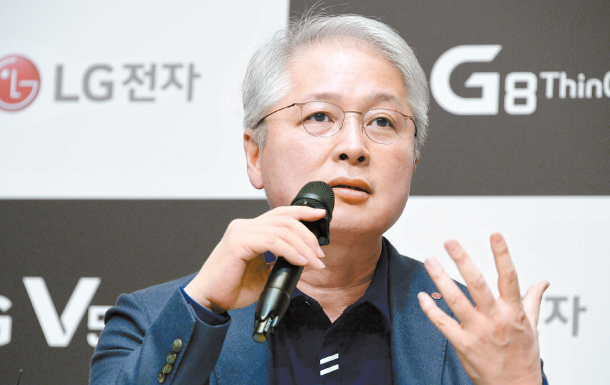
    LG Electronics’ major release of the year will be dual display smartphones, which the company hopes will recover its reputation as consumers flock to next-generation 5G smartphones. “There were internal discussions on releasing foldable phones at the same time but we concluded not to apply the form to early 5G models,” said LG Electronics President Brian Kwon during a press conference at LG Science Park in Magok, western Seoul, Friday.

    The event was the first time since he was appointed to head the smartphone business in November that Kwon shared future strategies for mobile business in front of the local press.

    “Our direction will allow consumers to enjoy 5G network content through dual displays to be showcased at the Mobile World Congress (MWC).”

    “Speaking of displays for early 5G phones, a major question to ask is whether we really need them, is there enough user content that requires such screens? In that perspective, I believe it’s too early to present [foldable phones,]” he added. “In terms of technology, we’re already prepared to make foldable and rollable screens.”

    Changes in form, especially screens, will be a major attraction point at this year’s MWC, the world’s largest trade show for phones. Samsung Electronics and Huawei will be rolling out foldable phones that come with two screens overlapping one another.

    LG’s dual display phone is rumored to come with a separate second screen that can be attached to the back or beside the main screen, although the company did not confirm the details. Its price remains undecided but Kwon said internal discussions were ongoing over whether to set it above or below $1,000.

    The form-factor competition comes in line with the commercialization of 5G networks expected to be realized this year. 5G will transfer data at an extremely high speed, enabling smartphone users to enjoy movies and games at unmatched quality and speed. Phone makers are eyeing the opportunity to win over consumers as they upgrade their phones to models that support 5G.

    LG’s strategy for this generation shift is “two track,” Kwon said Friday. Apart from the dual display phones, the V50 ThinQ 5G and the G8 ThinQ will also be showcased at the MWC. They are the latest models from the company’s high-end V and G lineups. V50 will support 5G networks, while the G8 will remain a premium phone for 4G, or LTE, network users.

    Underlying the two-track strategy is an uncertainty about how fast it will actually take for 5G infrastructure and related services to expand and how many consumers will jump from 4G to 5G.

    “Our plan for the year’s first half is to release the V50 to tackle the 5G market but our direction for the second half will depends on the 5G market,” said Kwon. “If it expands quickly we’ll look into developing a lower priced model that supports the network; if it doesn’t we’ll still have the 4G lineup.”

    LG’s smartphone business has been in the red for 15 consecutive quarters as of last year. Kwon was successfully heading the company’s television business when he was appointed to additionally take charge of the mobile division three months ago.

    “It’s true that industry insiders are hoping the 5G era will push growth of the smartphone market but as there also conservative projections, our goal for the year is not to make a drastic turnaround in the business but to see sales grow and restore our reputation in the smartphone market,” said Kwon.

  • Kerry Logistics expands e-commerce fulfilment through E-Services Group JV

    Kerry Logistics expands e-commerce fulfilment through E-Services Group JV

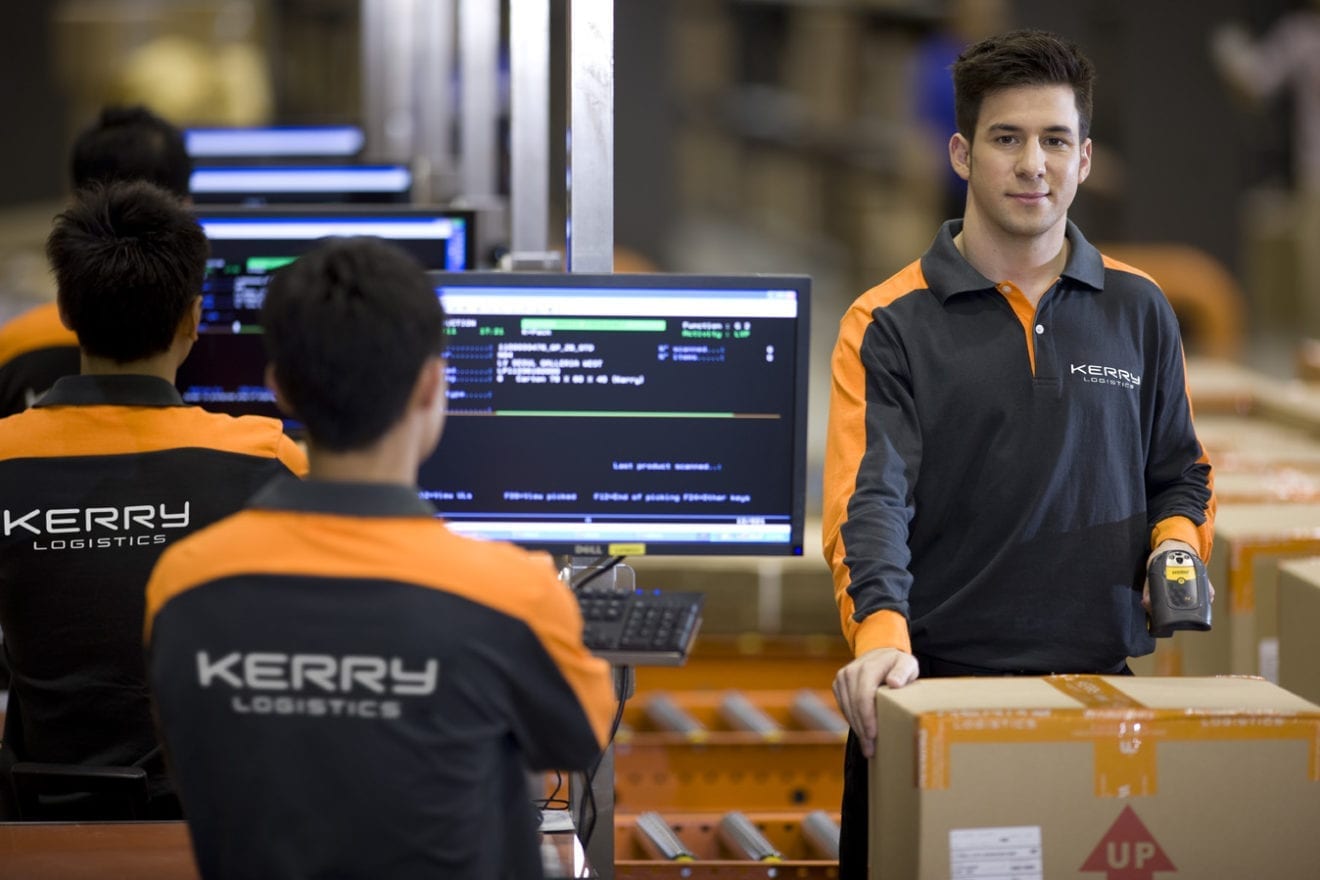
    Hong Kong-based Kerry Logistics is expanding its e-commerce fulfillment capabilities through a joint venture with Asian e-commerce specialist E-Services Group. Their joint venture, Kerry ESG (HK) Company Limited, will combine Kerry Logistics’ global supply chain capabilities with ESG’s technology platform, global marketplace networks, and e-commerce expertise to offer etailers cost-efficient solutions internationally.

    ESG, founded in 2002, claims to be ‘the leading international end-to-end e-commerce company in Asia’, headquartered in Hong Kong, with offices in China, Singapore, and Taiwan. As the strategic partner to over 20+ leading global marketplaces such as Rakuten, JD.id, and Cdiscount, ESG not only enables its 28,000+ etailers to grow their businesses internationally through marketplaces, but also supports them with comprehensive shipping solutions.

    Kerry ESG, set to debut in March 2019, aims to become one of the leaders in global e-commerce fulfillment solutions, enabling etailers to deliver products to customers anywhere in the world quickly and cost-effectively. Through direct integration with leading shopping carts and global marketplaces, etailers using Kerry ESG’s services will be able to seamlessly manage their order fulfillment, inventory, and returns to and from multiple logistics centres through one platform.

    William Ma, Group Managing Director of Kerry Logistics, said: “We are thrilled about the growth opportunities in global e-commerce. With Kerry ESG, we are creating a unique platform with total solutions from upstream marketing to downstream logistics that will capitalise on the booming international marketplace model to facilitate the exports for our international brand customers. Combining forces as industry leaders, Kerry Logistics and ESG are well-positioned to unlock the potential in the market with this new joint venture.”

    Alan Lim, Founder and CEO of ESG, added: “Winning at e-commerce means getting every piece of the puzzle right, and fast, reliable fulfillment is a critical component of success. This partnership gives etailers access to an extensive distribution network to support e-commerce fulfillment in every market and with every online channel. With Kerry Logistics we have found a great partner, whose capabilities complement ours and whose culture and vision matches that of our team. I am excited about how we can grow this business together.”

    Kerry Logistics said it has identified cross-border e-commerce, particularly between Greater China and ASEAN, as a major growth sector which plays to its strengths. The new partnership with ESG, which is the official partner of leading marketplaces including JD.id, Rakuten, and Newegg.com, will play a pivotal role in strengthening the foothold that the two companies have in this area.

    Kerry Logistics has a network covering 53 countries and territories, and is managing 53 million sq ft of land and logistics facilities worldwide.

  • Lifestyle deploys new retail technologies

    Lifestyle deploys new retail technologies

    A part of Dubai-based retail and hospitality conglomerate Landmark Group, Lifestyle has been enhancing its Omnichannel experience for its customers at a very fast pace in the recent years. With 75 stores at present, Lifestyle is now also available online through www.lifestylestores.com where customers can shop from the convenience of their home.

    Offering men’s, women’s and kids’ apparel, footwear, handbags, fashion accessories, beauty products and much more, all under the same roof, the fashion retailer has added features such as ‘Self-Checkout Kiosk’, ‘Mobile POS’, Fitting Room Assistance’, etc., to augment its in-store experience.

    “Lifestyle has always endeavored to provide its customers the best-in-class shopping experience. With technological advancements, the shopping experience has evolved and we, as a progressive retailer, have embraced many of these technological advancements to further enhance the shopping experience we off er our customers,” says Vasanth Kumar, Managing Director, Lifestyle International.

    New Tech-Advancements

    Lifestyle has introduced ‘Self- Checkout Kiosk’ in a few key stores, a facility that allows customers to bill their merchandise and complete the payment transaction in a few simple steps on their own with no or very little intervention from the staff thereby greatly solving the long queue by enabling quicker checkouts. Another initiative to further ease checkouts is the ‘Mobile POS’, which was introduced for billing products such as watches, fragrances or cosmetics.

    Using insights from customer shopping behavior, the retailer has also launched ‘Fitting Room Assistance’ program that allows for size retrieval with the help of technology where the store assistants are alerted on the size and style required in the fitting room. “This initiative has helped in enhancing our conversions and is now being scaled up across key stores,” Kumar says.

    “Several of our initiatives are technological solutions to real customer problems which we discovered through our interaction with customers as well as staff . Using this feedback, we have created simple yet impactful solutions leveraging technology. These have led to positive impact on our overall customer experience and helped increase engagement with the brand,” he further adds.

    At the same time, with features like ‘Click & Collect’ and ‘In-store Endless Aisle’, Lifestyle is offering a true Omnichannel experience to its customers. An Omnichannel initiative, ‘Click & Collect’ allows customers to order online and collect merchandise from a Lifestyle store of their choice. ‘In-store Endless Aisle’ helps customers find missing in-store sizes on the e-commerce channel. Also, the retailer has introduced visual search and enabled voice-based search for its mobile applications which has helped in creating a more personalised and convenient shopping experience. Lifestyle has also implemented the ‘Put-to-Light’ system for effective storing and distribution at its warehouses. It has enabled single view of inventory for its e-commerce portal, www.lifestylestores.com, making the entire inventory across all warehouses accessible to the online customers thereby enhancing the merchandise availability and online conversion.

    “We are continuously evolving our stores with new technologies. To fully enable our customers to enjoy these new introductions, it is important for our sales personnel to understand, communicate and comfortably operate all new innovations. Before implementing any new technology or introducing product innovation, our entire store team goes through an extensive knowledge session, which enables them to understand the product/technology being introduced,” says Kumar.

    Lifestyle regularly tracks consumer satisfaction through NPS (Net Promoter Score) in store, by the virtue of offering, staff interactions, store ambience and consistently deliver an overall delightful shopping experience thereby winning customer trust and loyalty.

  • KITA opens office in Dubai to assist Korean start-ups

    KITA opens office in Dubai to assist Korean start-ups

    The Korea International Trade Association (KITA) said Tuesday it has set up an office in Dubai to help local start-ups advance into the Middle Eastern market. Under an agreement with Dubai Future Foundation, the Korea Office will be set up at Emirates Towers in one of the key cities of the United Arab Emirates (UAE). The office will provide working space for local start-ups and assist entrepreneurs in establishing their businesses in the burgeoning Middle Eastern market, KITA said.

    “It will be a great opportunity for local start-ups as Dubai institutions are pushing forward various projects under the support and attention of the prince of Dubai,” Kim Ki-hyeon, a KITA official, said.

    Dubai Future Foundation was set up with an aim to shape the future of the strategic sectors in cooperation with the government and private sectors.

  • Bigbasket India expands its offerings to include beauty products

    Bigbasket India expands its offerings to include beauty products

    Bigbasket has made its foray into the beauty and cosmetics category. The company is already a leader in FMCG sales, staples, and fruits and vegetables, has about 10 million subscribers, and is clocking over 1 lakh orders per day. With this new category, bigbasket has cemented its place as the one-stop-shop for all customer needs in groceries.

    The vast range of cosmetic products on the beauty store by bigbasket includes eyeliners, kajal, face creams, nail colors, lipsticks, hair colors, perfumes, deodorants, etc. which can be purchased on the website or through the app. Some of the prominent labels featured include Lakme, L’Oreal, Garnier, Elle18, Lotus Herbals, and Maybelline, among others.

    Customers can make choices based on their skin type, preferred brand, benefits, formulation, etc. There are also exciting discounts of about 25 percent to 40 percent on selected brands and products.

    Speaking about this, Seshu Tirumala, National Head, Buying and Merchandising, bigbasket, said, “bigbasket’s customers can now look forward to far larger variety in our offering with our most recent addition of beauty products. The foray into beauty and cosmetics category comes at a time when we are already growing at a frenetic pace in the market. With this category, we aim to transcend our existing customer base and take the venture a notch higher – both in terms of the customer base and revenue. We will be providing the widest range of affordable and regularly used beauty products to our customers.

    With a dominant share in the market space, bigbasket now aims to raise additional investments up to US$ 200 million over the next few months. The FMCG sales overall (food and non-food) contribute to over 50 percent of its business, another 30 percent comes from staples (including 14.5 percent from private labels) and 18 percent is from fruits and vegetables. The Alibaba-backed company expects to break even in the 10 large cities by next June and aims at becoming a billion-dollar company by the next fiscal year. The company has a presence in 25 cities and plans to launch its operations in Kochi soon.

    Recently, bigbasket acquired Pune-based RainCan and Bengaluru-based Morning Cart to deliver milk to 20,000 customers. The service has been launched in 7 cities and is expected to roll out to another three cities among the top 10 metros. The milk delivery business is expected to clock Rs 10 billion by next year.

  • SKT brings 5G workplace to life

    SKT brings 5G workplace to life

    ID cards, laptops and business trips will no longer be necessary, according to SK Telecom, when the 5G network-based smart office environment becomes an industry norm. The mobile carrier showcased its smart office technology test bed in Jongno District, central Seoul, Wednesday. Currently, about 300 SK Telecom employees are working at the space set up roughly a month ago by renting out three floors in the Centropolis building.

    At the entrance to the office, SK Telecom has facial recognition technology manning the security desk. Due to privacy issues, only employees who have agreed to register their biometric information can pass through the gate without an ID card.

    Inside the office, a display panel shows seat reservations. The screen shows all available seats inside the office, similar to the systems seen in university libraries and also shows who is in which seat. When designing the smart office, SK Telecom made it into an open space so employees can freely move around. The display even shows how many toilet cubicles are available for immediate use, although in this case employee names aren’t shown.

    The carrier said it used roughly 2,300 sensors, including on the ceilings, CCTV and even doorknobs in the bathrooms that track relevant data on employees’ work patterns inside the office. The data collected will be used to develop smart office solutions packages for enterprise customers.

    The desks in the office come with desktop computers connected to mobile routers that convert 5G signals into super-fast Wi-Fi. Beside the computer monitor is a docking station for smartphones. The so-called virtual desktop infrastructure enables employees to bring up what they were working on with their personal computers on the desktop computer using the cloud. Unlike simply mirroring a smartphone display, the phones become an authorization medium that allow the computer to verify which work files are downloaded from the cloud.

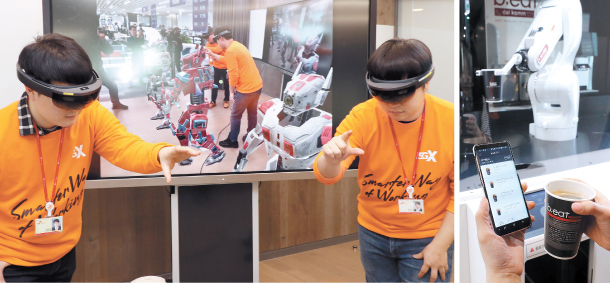
    At one side of the office is a space for so-called telemeetings that could cut down the need for frequent business trips. SK Telecom said it used its “T real telepresence” technology to invite multiple users into a virtual space where participants can have meetings while watching videos or 3-D designs of game characters and buildings together.

    After donning Microsoft’s HoloLens, this reporter was invited to a telemeeting to discuss the design of a game character.

    Within the virtual meeting, attendees were able to see and walk around a moving 3-D game character while interacting with the avatars of other people in the meeting.

    The experience wasn’t perfect – the field of view was small and constantly looking around was necessary in order to follow everything that was going on, but the potential of the technology to greatly reduce the need for business trips was evident.

    Other technologies already being used in the office included a barista robot and artificial intelligence-based autonomous vending machine, which can track employee purchases with camera sensors.

    Would any of these innovations be possible without 5G network?

    According to SK Telecom, yes. But, while all of these technologies are possible on the existing 4G LTE network, the new high-speed network, touted to be 20 times faster when fully commercialized, offers faster and more stable internet connection even when a million devices are connected at once.

    In essence, 5G ensures that all these systems work seamlessly without their huge data usage interrupting networks or slowing down work.

    “Dependency on landline internet will be reduced and high-capacity data will be delivered fast enough for real-time telemeetings with 5G,” said Shin Seung-ho, a manager from SK Telecom’s media lab under ICT center.

  • Blockchain in the business of fashion

    Blockchain in the business of fashion

    Fashion brands are finally beginning to take note of the rising consumer awareness on traceability and sustainability particularly driven by the millenniums. These evolving consumers are deep diving into knowing the history of the apparels before they buy – the story behind each garment and where and how are they manufactured.

    Moreover, mere claims or information is not enough to be trustworthy unless backed by detailed sequence of data on the complete value chain necessitated in wake of some or other global brand getting exposed of unethical sourcing or not being sustainable.

    This is making fashion companies to attempt towards transforming their business models focused on delivering transparency of data – both in backend and frontend by employing the emerging technologies.

    There has been a global buzz around new technologies like Artificial Intelligence, Augmented Reality, Virtual Reality and Blockchain for some time now and the global Fashion industry has also moved in the last few years to adopt some of these in ways it firmly resisted for a long time. However, blockchain applications haven’t really seen much adoption by fashion organisations.

    So, What is Blockchain?

    According to Digital Trends, blockchain is a database that’s validated by a wider community, rather than a central authority. It’s a collection of records that a crowd oversees and maintains, rather than relying on a single entity, like a bank or government, which most likely hosts data on a particular server.

    Each ‘block’ represents a number of transactional records, and the ‘chain’ component links them all together with a hash function. As records are created, they are confirmed by a distributed network of computers and paired up with the previous entry in the chain, thereby creating a chain of blocks, or a blockchain.

    Blockchain is the technology behind digital currencies like Bitcoin and involve cryptography while in a usability sense they are just shared database or digital ledgers that publicly show a record of transactions having happened. Every time a product changes hands, that information on change in custody is recorded by the user in the ledger and entry becomes linked to every other entry (or Block) and every other copy of the ledger is automatically synchronised via internet. The interconnection among all the blocks forms a chain and the complete application becomes the blockchain. The chain of custody on blockchain provides a record of the last party to gain custody of the product. So, blockchain means decentralised structure that provides security and transparency and thus making data trustworthy.

    In broader sense, blockchain is not just technology, its impact goes beyond the industry or the society for creating a fair, safe and more transparent fashion industry.

    Applicability into Fashion Business

    Blockchain applications are not only for tracking virtual payments and financial transactions but have wider applications in securely distributing other product and supply chain information including complete database at SKU level. In other words, blockchains may be understood as indexes of standardised information or in simple sense, these are community generated data maps by brand and product.

    Most promising application of blockchain in fashion industry could be in supply chain and inventory management. What blockchain technology can enable in the fashion business is uniform real-time access to updated product information supplied by brands, a universal pathway for retailers to immediately report back to suppliers on aspects like stock levels and customer feedback, the final consumer details and many more might come along once something like this new basic building block structure is in play. Distributed nature of blockchain technology makes it superior to other tracking technologies as here the records can’t be altered, destroyed or lost.

    Blockchains have merely begun transforming apparel supply chains through technology such as track-and trace and inventory management. But as other technologies like 3D printing and AI continue to advance, the fashion apparel industry may very well see much more dramatic changes in years to come.

    Greater transparency in fashion supply chains will create new incentives for companies to change the way they do business and even how they view themselves as an organisation. If so, adoption of blockchain is only the beginning as the fashion industry may be entering a new era with vastly different forms of production and consumption.

    Advantages of Blockchain in Fashion

    • Nowadays, one of the major trends in the fashion industry is sustainability and circular economy. Today’s consumers believe in fair trade practices and hence increasingly demanding transparency and want to know where the product is coming from not only in food but also in fashion.
    • Blockchain enables fashion companies to securely communicate to the public the complete product story (DNA) for each and every fashion garment. This includes comprehensive details on all stages of product life cycle starting from design inspiration, raw materials, manufacturing and distribution to the stores and also providing visibility of all stakeholders involved in the value chain to create traceability and transparency in true sense.
    • Blockchain applications allow customers to scan the tag and discover the history of every garment and thus help in improving the customer experience.
    • Global companies like Patagonia and Everlane have been successfully betting on sustainability and supply chain transparency as a distinct selling proposition enabling customers to identify their suppliers.
    • Authenticity of branded products can be verified by both retailers and consumers since branded garments pass through the blockchain steps and hence can be tracked. This could help reducing the counterfeiting and diverting out of authentic products. Every time a fashion item moves from one place to other, its tag or code gets scanned thus recording its location with the time stamp. Consumers would be able to scanthe item and trace its journey from raw material stage to their home and would be able to ascertain if the product is real or a counterfeit. Blockchain applications can help provide protection against the counterfeiting.
    • Blockchain applications also can help fashion companies who license their trademarks or designs in tracking the sales and working out the royalty payments. Similarly, it enables design houses to document design process steps and thus having the organic evidence of ownership on the designs.

    Blockchain helps create peer-to-peer and decentralised network that connects all stakeholders in the value chain (design houses, farmers, raw material suppliers, manufacturers, transporters, distributors, retail outlets, banks, consumers and other parties of the complete supply chain). Using decentralised system, all communication between these parties will be direct and will not pass through a specific central entity. Due to its decentralised nature, the blockchain platform will not have any single point of failure and will not rely on any single entity.

    Through this technology, there could be a possibility wherein everyone from the farmer to the textile mill to the garmenting factory can communicate directly with the brand that buys from them. And, even the consumer can interact directly with the brand/design house for co-creation or customisation of the garments, influencing pricing and even co-investing in the concept.

    Given all the advantages, blockchain clearly seems to be the future for fashion, however, to speed up the application, a single and comprehensive blockchain standard adopted by the fashion industry has to come in fast.
  • Grab-Uber deal comes under fresh antitrust scrutiny in Vietnam

    Grab-Uber deal comes under fresh antitrust scrutiny in Vietnam

    Vietnamese authorities are set to further investigate the merger between Grab and Uber last year for possible violation of antitrust regulations. The Competition Council said after a thorough examination of documents and arguments furnished by both parties it has discovered a number of new details related to possible violation of competition laws by ride-hailing platform Grab’s acquisition of Uber’s business operations last March.

    It has returned the case dossiers to the Ministry of Industry and Trade’s competition and consumer protection department for further investigation. The investigation is expected to go on until April this year.

    Last year Singapore-based Grab acquired Uber in Southeast Asia in return for a 27.5 percent stake.

    Vietnam’s Competition Law requires any merger or acquisition that results in a company gaining a 30 percent market share to be reported to competition authorities.

    If a company gains a 50 percent market share from the deal, it can only be carried out with express permission from the authorities.

    The department’s preliminary investigation found Grab’s market share had exceeded 50 percent since the acquisition.

    But Grab insists it had acted legally and that the competition authorities have misinterpreted the scope of relevant markets when calculating the market share.

    Last October the Philippines’s competition watchdog fined the two companies a cumulative 16 million pesos ($296,873) saying they had completed the deal too soon and that the quality of service had dipped.

    Singapore’s competition authority fined them a total of S$13 million ($9.5 million) and announced other measures to address competition concerns arising from the merger.

  • World’s first digital mall launched in India by Digital Mall of Asia

    World’s first digital mall launched in India by Digital Mall of Asia

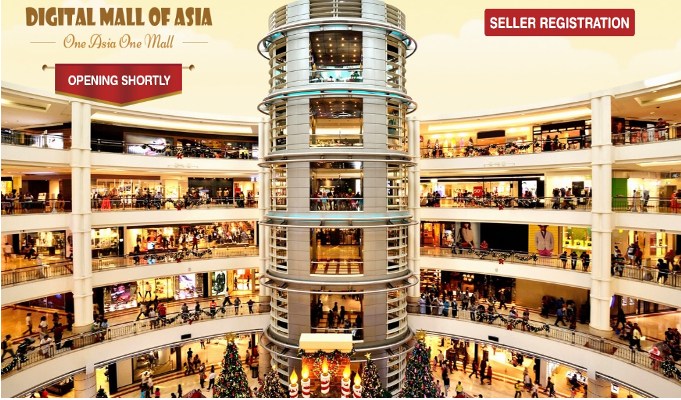
    In a revolutionary development that could potentially redefine the global retail and e-commerce industries, Digital Mall of Asia (DMA), a first-of-its-kind digital e-commerce platform merging the real estate and the digital spaces, has announced the launch of its Noida mall. The launch took place at the company’s registered office in the Film City, Noida, setting an unprecedented example of how online portals and brick-and-mortar retailers can transcend the digital-physical divide to optimize their consumer outreach and revenue generation.

    An initiative by Yokeasia Malls Pvt. Ltd., DMA is a disruptive innovation by an Indian organization recreating the experience of a physical mall in the digital space. In an industry where most of the key names are being run or backed by foreign players, this unique and disruptively innovative initiative by Yokeasia Malls has the potential to put the novelties of Digital India on the world map.

    The Need

    The launch of DMA Noida addresses the challenges that retailers often face and empowers them to maximize their business footprint with innovative digital offerings and an unmatched value proposition. DMA operates on a zero commission model; retailers at DMA don’t have to pay anything apart from the rent, a major revolution in a space where all the major E-commerce players charge somewhere between 5-35 percent of the revenue. Moreover, the organization will provide an immediate settlement of all payments received, ensuring complete transparency and reliability. It is also working towards completely eradicating the issue of the sale of counterfeit or fake merchandise. These unique features, apart from its focus on digital innovation, makes DMA a powerful and pioneering presence in the e-commerce space, both in India and on a global level.

    The Solution

    Going beyond the concept of a typical e-commerce portal, DMA’s Noida mall will have 11 towers with 10 floors each, adding up to a total of more than 5,000 shops and an available inventory currently worth approximately Rs 500 crore. The mall will incorporate visual and sensory elements to offer an immersive, stimulating environment and will have dedicated towers for different categories such as men, women, kids, electronics, home and kitchen, education, financial services, food court, hypermarket, digiplex, and online nightclub. Fundamentally, DMA Noida has all the elements that make up a physical mall, albeit virtually.

    The Value Addition

    By creating a new ‘digital asset’ class providing attractive returns, DMA also envisions to transform the general perception towards the term ‘investment’ while ensuring security, profit, and convenience for investors. The shops in the Noida mall are available for both sale (to investors) and rental (to retailers), whereas the shops in the rest of the 20 cities are available only to rent at present.

    Commenting on the launch and the idea behind, Rishabh Mehra, Managing Director and CEO – Digital Mall of Asia, remarked, “We, at Digital Mall of Asia, are beyond ecstatic to launch our Noida mall and we are certain of its potential to bring about a revolution in the digital and retail space worldwide. This project is aimed at serving many purposes, from an industry-wide transformation to retailer empowerment through our zero-commission model. But most importantly, DMA is our effort against data colonization. I wholeheartedly agree with Mr Mukesh Ambani’s stance on how India’s data must be owned by Indians, and not controlled by global corporations. In this era of data-driven revolution, we hope that DMA’s disruptive innovation sets an example for our contemporaries to follow through and bring the ownership of Indian data back to where it belongs – in our own hands.”

    The launch in Noida also marks DMA’s first step towards a pan-India launch in 20 cities including New Delhi, Mumbai, Bengaluru, Pune, Chandigarh, Jaipur, Lucknow, Coimbatore etc. After a pan-India expansion, DMA plans to expand its operations across the Asian market and has already begun the process of seller registration in China, Japan, South Korea, Malaysia, Thailand, Indonesia, and Singapore.

  • Walmart bets on India despite change in FDI norms

    Walmart bets on India despite change in FDI norms

    American retail giant Walmart and its Indian e-tail major Flipkart are betting big on India despite the revised norms for Foreign Direct Investment (FDI) in e-commerce, the companies said. “Walmart’s and Flipkart’s commitment to India is deep and long term. Despite the recent changes in regulations, we remain optimistic about the country,” the regional Chief Executive Officer of Walmart Asia and Canada Dirk Van den Berghe told IANS in a statement in New Delhi.

    The companies will continue to focus on creating “sustained economic growth and bringing sustainable benefits to India, including employment generation, supporting small businesses and farmers, and growing Indian exports to Walmart’s global markets”, added Berghe, who is also the retail giant’s Executive Vice President.

    Walmart’s assertion on the company’s commitment to India came after American investment bank Morgan Stanley in a report on Monday said the former might exit the country after the new FDI norms in e-commerce came into force on February 1.

    “An exit is likely, not completely out of the question, with the Indian e-commerce market becoming more complicated,” the New York-based financial services firm said in its report titled “Assessing Flipkart Risk to Walmart EPS (earnings per share)”.

    In May last year, Walmart bought 77 percent equity stake in Flipkart for a whopping US$ 16 billion (Rs 1,16,256 crore).

    The revised FDI norms in e-commerce, however, have tightened the noose around the businesses of the country’s leading e-tailers – Walmart-owned Flipkart and Indian arm of American e-commerce giant Amazon.

    The policy revisions, issued by the Ministry of Commerce and Industry on December 26, 2018, barred e-commerce platforms providing a marketplace from exercising control or ownership over the inventory and forbids any company to sell its products exclusively on an e-commerce platforms alone.

    The e-tail companies are now working towards changing the ownership of their inventory, so as to comply with the norms.