Retail News CRM

Tag: gap

  • Gap mulls sale of China business

    Gap mulls sale of China business

    Apparel retailer Gap is weighing options including a potential sale of its China business, citing people with knowledge of the matter.

    The report said the Old Navy parent was working with an adviser to explore its options and has contacted prospective suitors. It added there was a possibility that Gap could also keep the business.

    The company, owner of Banana Republic and Athleta brands, said it does not comment on rumors when contacted by Reuters.

    Gap entered the Chinese market about a decade ago, betting on rising incomes in the world’s second-largest economy to boost its sales. However, it stopped selling Old Navy apparel in the country last year to sharpen its focus on North America.

    Gap’s Asian market accounts for about 5 percent of its overall net sales, according to its latest regulatory filing. The company does not break out country-specific sales.

    Shares of Gap, up 43 percent this year, rose about 1 percent in extended trading after the report.

  • Online investment takes into Gap profits

    Online investment takes into Gap profits

    Gap Inc. said Tuesday that it enjoyed a 61 percent jump in online sales during its fiscal third quarter ended Oct. 31 — offsetting a 20 percent fall in in-store sales due to the ongoing pandemic. The retail giant also said that its Athleta chain’s sales rocketed even as revenues plunged at Banana Republic Global.

    “With our teams focused on sales growth and returning to profitability, we’ve made investments in demand generation that are driving engagement, particularly in this dislocated market as customers are looking to trusted brands to provide easy and safe shopping options,” Gap Inc. Chief Executive Officer Sonia Syngal said in announcing the results.

    Management said results at its flagship Gap Global division included a formidable digital performance that partly offset decreased brick-and-mortar presence and lowers physical traffic trends. But all in, Gap Global’s net sales dropped 14 percent year over year, with comparable sales for the brand falling 5 percent from Q3 2019.

    Banana Republic Global fared even worse, with net sales plunging 34 percent year on year for the quarter. However, management said that was a “slight improvement” from Q2.

    Management said that Banana Republic is continuing to focus on acclimating to shopper preferences and bolstering inventory mix by moving away from the label’s usual workwear selection and into casual fashion in the “current stay-at-home environment.”

    On the plus side, Athleta’s sales jumped 35 percent year on year, with comparable sales rising 37 percent to the highest level in the brand’s history. Sales at the company’s Old Navy Global unit likewise rose 15 percent, with comparable sales up 17 percent.

    “Old Navy continued to experience meaningful acceleration in its online business as strong customer response to product was further bolstered by compelling and relevant digital marketing investment,” management said.

    Gap added that it finished Q3 with $2.6 billion in cash, cash equivalents, and short-term investments — way up from $1.1 billion at Q3 2019’s end. Management added that Gap ended the latest quarter with 3,785 retail locations in 43 nations, including 3,178 company-operated stores.

    As for its overall results, Gap reported 25 cents earnings per diluted share on $3.99 billion in net sales. That fell short of analyst estimates of 32 cents per share in earnings but came out ahead of a $3.82 billion forecast in revenue.

  • Gap closing over 225 stores globally as sales continue to drop

    Gap closing over 225 stores globally as sales continue to drop

    Struggling US apparel retailer Gap Inc has revealed plans to shutter more than 225 stores globally this year with another batch to follow next year.

    The company has reported a second-quarter net loss of $62 million on sales down 18 percent. Sales through physical stores were down by 48 percent, offset by a meteoric 95-per-cent rise on online sales. The company gained more than 3.5 million new customers during the period.

    The company did not give any indication of where in the world its stores would close, or which banners are most affected by the plan, although its namesake Gap network and Banana Republic stores seem to be performing the worst. As at August 1, Gap Inc had 1643 stores trading under those two brands.

    The decline in sales in physical stores during the quarter was caused by enforced temporary closures due to the Covid-19 pandemic, with shops beginning to reopen from May. As of August 1, about 90 percent of its stores globally were trading again.

    Worldwide sales by the Gap brand were down 28 percent and at Banana Republic by 52 percent. Old Navy performed better, down by 5 percent overall, and aided by a 136-per-cent increase online.

    Athleta was the standout, boosted by consumers purchasing more relaxing apparel as they moved to work from home. Sales were up 6 percent overall, and online by 74 percent.

  • Gap closing retail stores in Hong Kong

    Gap closing retail stores in Hong Kong

    Gap has become the latest retail victim of Covid-19 in Hong Kong, shutting its flagship store in Tsim Sha Tsui and at least one other store.

    The US apparel chain follows in the footsteps of fellow American retailer Victoria’s Secret, which abruptly closed its giant Causeway Bay flagship store last week.

    Gap has launched a clearance sale in Tsim Sha Tsui and its Hysan Place store in Causeway Bay, ahead of their closure sometime during the next few weeks. A notice outside the Tsim Sha Tsui store advises customers they will be able to shop at other stores or on the brand’s website.

    A staff member working at the Gap store reportedly leaked to local media that Gap Hong Kong will shut three more of its eight branches next month, including the recently-opened K11 Musea store. The three shops set to continue trading are at Queen’s Avenue in Central, V City in Tuen Mun and Citygate in Tung Chung.

    The US fashion brand was already struggling before the advent of the Covid-19 pandemic. Last year, Gap said it would close 230 stores worldwide within two years. Global sales recently recorded a 43-per-cent drop in the first quarter, worse than rival apparel retailers, in the wake of the pandemic crisis.

  • Gap, Kanye West launch new label Yeezy Gap

    Gap, Kanye West launch new label Yeezy Gap

    US fashion apparel retailer Gap has teamed with rapper Kanye West’s brand Yeezy to launch a range bearing the Yeezy Gap label.

    The partnership marks the circular relationship between the entrepreneur and Gap as Kanye used to work in a Gap store when he was a teenager in Chicago, before his music career took off.

    “We are excited to welcome Kanye back to the Gap family as a creative visionary, building on the aesthetic and success of his Yeezy brand and together defining a next-level retail partnership,” said Mark Breitbard, global head of Gap.

    The company said the new range will offer modern basic designs for men, women and kids with accessible price points. To celebrate the partnership, the Chicago Gap store features a giant message from West together with a logo for Yeezy Gap line.

    The products are scheduled to launch at Gap stores in the first half of next year.

  • Gap the brand flounders on ‘anemic’ range driving parent’s $932 million loss

    Gap the brand flounders on ‘anemic’ range driving parent’s $932 million loss

    Gap – the brand – is floundering internationally, with sales down 50 percent in the first quarter, a rate far worse than other mainstream apparel retailers in the wake of the Covid-19 crisis.

    Gap Inc, its parent, reported a US$932 million net loss for the three months to March on sales down group-wide by 43 percent to $2.11 billion. That decline was worse than its peers Abercrombie & Fitch and Urban Outfitters, and even budget-positioned multi-brand apparel retailer Kohl’s.

    Neil Saunders, MD at GlobalData Retail, said one of the reasons for Gap the brand’s dire performance was a complete failure to transfer lost store sales online.

    “At a time when other retailers were almost doubling their online revenues, Gap’s e-commerce sales dropped by 5 percent,” said Saunders. “We believe that this is indicative of the brand’s lack of traction with customers and its inability to stimulate loyalty. It aptly demonstrates that a fair proportion of sales are driven, not by a burning desire to visit and buy from Gap, but from chance visits to stores and impulse buys often stimulated by excessive discounting. As soon as stores are closed, Gap drops off the radar and consumers have neither the will nor inclination to shop the brand online.”

    Sales at Banana Republic fell by 47 percent globally and by 50 percent in the US, with online sales down modestly. However, Saunders said the dynamics of that are more excusable as Banana Republic is exposed to the smart casualwear sector which is heavily dependent on demand from office workers, who have been stuck at home for many weeks in most western markets.

    In stark contrast, sales by its sportswear brand Athleta, fell by just 8 percent, with store sales down 50 percent and online sales up 49 percent. Old Navy’s global net sales fell 42 percent, with store sales down 60 percent and online sales up 20 percent.

    CEO and president Sonia Synga trumpeted a quick pivot to e-commerce resulting in 40-per-cent growth online in April and 100 percent in May across all of the group’s brands, the first two months of the new quarter. “This online momentum, enabled by new omni-capabilities that have expanded the way customers can shop with us, leaves us well-positioned to fuel our brands going forward,” she said.

    Meanwhile, Saunders said the “heart and soul” of Gap the brand’s problems stem from its “anemic” ranges.

    “These are bland and undifferentiated and do nothing to stimulate consumers. Against a market saturated with alternative apparel destinations, this simply isn’t good enough. Gap has been aware of this problem for eternity but has consistently failed to act, either because it is too inert to do so or because it is unsure of how to correct the problem. In fairness, recent management changes may be the remedy to this, but the crisis has interrupted any progress than might have been made.”

    He said that before the advent of the pandemic, Gap Inc was in a weak position. “It emerges even more withered with quite a lot of holes in its strategy. Solid brands like Athleta provide some hope but are too small to make up for the problems elsewhere. As such, Gap now needs to reinvent and refocus its efforts with an urgency that is unparalleled in its history.”

  • Gap cuts capital spending and hunkers down to survive coronavirus crisis

    Gap cuts capital spending and hunkers down to survive coronavirus crisis

    Apparel retailer Gap Inc has revealed precautionary measures it is taking to bolster its financial flexibility during the coronavirus outbreak.

    The measures include drawing down its US$500 million credit facility, suspending this year’s quarterly dividends, reducing capital expenditure this year by $300 million and reviewing all operating expenses to reduce spending.

    “We entered 2020 in a strong financial position,” said Gap Inc president and CEO Sonia Syngal. “However, in this time of unprecedented disruption to the retail sector, we are proactively taking prudent actions to further strengthen our financial liquidity and flexibility.”

    The company had declared earlier that its first-quarter fiscal year dividend would be delayed until late April depending on the condition of the outbreak, among other factors. Gap will now review its quarterly cash dividend policy as the situation develops.

    The firm’s US North American stores are now closed in compliance with actions to slow the spread of the virus, while the firm continues to trade online.

  • Costs cited as Gap cancels Old Navy spinoff plans

    Costs cited as Gap cancels Old Navy spinoff plans

    Gap has nixed plans to spin off its Old Navy subsidiary, saying that after further investigation the costs involved outweighed the benefits.

    “The plan to separate was rooted in our commitment to value creation from our portfolio of iconic brands,” said Robert Fisher, Gap Inc’s interim president and CEO. “While the objectives of the separation remain relevant, our board of directors has concluded that the cost and complexity of splitting into two companies, combined with softer business performance, limited our ability to create appropriate value from separation.

    “The work we’ve done to prepare for the spin shone a bright light on operational inefficiencies and areas for improvement,” he said.

    Meanwhile, the company is now searching for a new CEO to oversee the full portfolio of brands.

    Neil Fiske, president, and CEO of Gap brand who previously led Billabong before moving to Gap in 2018 has left without explanation. Last November, former long-term CEO Art Peck left Gap on the eve of the announcement of the Old Navy spinoff.

    Meanwhile, four of the company’s senior leaders have taken on additional responsibilities reporting to Fisher. Mark Breitbard, president and CEO at Banana Republic, will now lead Gap Inc’s specialty brands, including Gap, Banana Republic, Athleta, Janie and Jack, Intermix and Hill City; Sonia Syngal, president and CEO at Old Navy, will continue to lead that business; Teri List-Stoll, executive VP and CFO, will lead corporate operations related to finance, supply chain, technology, and real estate; and Julie Gruber, executive VP, global general counsel, corporate secretary and chief compliance officer, will lead corporate administrative functions including legal, corporate facilities and services, human resources and communications, loss prevention, sustainability, government affairs and foundation.

    Fisher said the company had “learned a lot” from the preparations to spin off Old Navy and intends to operate Gap Inc in “a more rigorous and transformational manner” in future in a way that empowers its growth brands, Old Navy and Athleta, and appropriately focuses on profitability for Banana Republic and Gap brand.

    “Our board is focused on supporting this work and appointing new leadership with the appropriate experience necessary to lead a portfolio of retail brands and to support our transformation efforts.”

    Meanwhile, as a result of better-than-anticipated promotional levels during the holiday period, particularly at Old Navy, the company now expects its adjusted the fiscal year 2019 earnings per share to be moderately above its previous guidance of $1.70 – $1.75.

    “We are working aggressively to stabilize and improve business results,” said List-Stoll. “We are committed to sharpen strategic focus, tailored operating strategies and operational discipline and accountability that can strengthen the health and profitability of our brands.”
  • Gap’s outlook is gloomy due to week profits

    Gap’s outlook is gloomy due to week profits

    There is no real surprise from Gap’s third-quarter figures released last week: sales are poor, profit is weak – although marginally better than forecast – and the outlook remains gloomy.

    Given the relative lack of effort from management on resolving the underlying issues plaguing the company, it would be unreasonable to expect a different outcome. However, there is some hope that the recent change in the CEO may result in a more aggressive pace of advancement. (Art Peck stepped down from the role earlier this month after five years in the role and a replacement is being sought).

    The biggest problem within the company is the Gap brand. Here total sales within the US fell by 6.6 percent over the prior year, while global comparable sales fell by 7 percent. As much as Gap remains a sizeable business, it continues to suffer from customer attrition as shoppers defect or reduce the amount they spend at Gap in favor of other retailers. The reason for this is relatively simple: assortments are dull, and every new season Gap churns out more of the same bland product rather than innovating and trying new things. This makes it very easy for consumers to overlook Gap.

    It used to be the case that, in the absence of compelling ranges, Gap could use discounting as a mechanism to drive customer interest and footfall. However, over the past half-year, this has become far less effective. Part of this is down to the fact that discounting has become a lot more prevalent elsewhere in the market, which means shoppers have a lot more choice of stores they can visit to get discounted goods. But part also is down to fatigue with Gap itself: offering 40- or 50-per-cent off may have once been eye-catching, but Gap has educated consumers to expect this to be offered as standard.

    Unfortunately, there is no real remedy to the discounting-drug other than for Gap to rebuild its proposition and give customers new reasons to buy.

    While the Gap story is an old one, Old Navy’s recent slide from grace is a more interesting tale. Previously Old Navy had been motoring along nicely, posting consistently good sales results. However, last quarter US sales shrunk and these quarter sales are flat.

    Admittedly, Old Navy has been lapping tough prior year comparatives, however, we believe there is more to the waning performance. Extensive discounting elsewhere in the market has been unhelpful, especially as it has pulled some more price-sensitive family shoppers away from Old Navy. But the biggest reason for underperformance has been a series of missteps on assortments. Usually, Old Navy can be relied upon to produce good seasonal edits that reflect fashion trends. Over the past two seasons, these have largely been absent, and the range has become tired and relatively bland.

    In a highly competitive environment, this isn’t good enough to drive growth and it leaves Old Navy exposed to players like Target which has been making excellent progress in apparel. Unfortunately, question marks over the future of Old Navy are unhelpful when Gap Inc is looking to spin the business off.

    In a rare turn of events, Banana Republic is the star of the show with a 4.3-per-cent uplift in total sales in the US. Improvements to the quality and some better pieces within the assortment have helped to lift conversion and basket sizes from existing customers. A continued recovery at the brand will be helpful to the group, not least because within the US Banana Republic’s sales are now only a fraction behind those of Gap – so it is able to make a more meaningful contribution to the top line.

    Overall, Gap remains in a very weak position and the spin-off of Old Navy will do nothing to remedy this. The change of management provides the company with an opportunity to shift its mindset. Whether it grasps it remains to be seen.

  • Gap franchising Athleta, Janie and Jack brands in Asia

    Gap franchising Athleta, Janie and Jack brands in Asia

    Gap Inc is planning to roll out stores globally under its Janie and Jack and Athleta banners via a franchise model.

    The US-listed fashion giant already has about 500 franchised Gap, Banana Republic and Old Navy-branded stores operating in 40 markets around the world with local partners, including in Asia. Now it sees an opportunity to boost sales by franchising its fast-growing domestic labels.

    Athleta is a yoga-influenced sportswear brand which is competing with Canadian brand Lululemon. Janie and Jack is a childrenswear label it acquired from fellow US apparel company Gymboree which went into liquidation earlier this year.

    Gap has learned from past experience that the best business model to launch in new overseas markets is through a local partner.

    “We’ve come to realize there is local expertise that frankly, we don’t have,” Roy Hunt, the senior VP of Gap Inc’s global franchise and strategic alliances division, said in an interview. “But we go through a lot of different steps to make sure we have the right partners. … For the most part, we are very selective.”

    The company plans a multi-channel approach to overseas markets when it launches Janie and Jack and Athleta, with brick-and-mortar stores to be supported by websites, also operated by the franchise partners.

    “Given the premium, gift-worthy children’s looks of Janie and Jack and the versatile, sustainable women’s performance apparel of Athleta, we feel the two brands will resonate with customers in new and existing markets internationally,” Hunt said in a statement.

    He believes there is a “huge opportunity” for Gap in markets such as Asia, Europe, and Central America.

    “If you think about it, the primary benefit we have in doing this is that we are not investing our own capital … the partner is investing capital to build out the business,” he said.

  • Gap’s second quarter sales decline reflects ‘a company in retreat’

    Gap’s second quarter sales decline reflects ‘a company in retreat’

    Gap’s second quarter has proven to be mostly a continuation of the first, with negative results across nearly all segments of the business.

    This is hardly surprising as the fundamental trading strategy has not shifted, so there is little reason to expect a different outcome. In this context the CEO’s assertion that Gap is “running towards” the next step in its evolution is rather misleading. In our view, the company tends to move at what can best be described as a glacial pace.

    As usual, the main issues come from the Gap brand where global comparable sales fell by a sharp 7 per cent, a figure made all the worse by the fact that the decline comes off a 5-per-cent dip last year. Within the US, total sales at the Gap brand dropped by 11.4 per cent.

    Some – but by no means all – of this was down to store closures. However, on an underlying basis it is very clear that Gap’s products remain firmly out of fashion with consumers. GlobalData Retail’s research shows shoppers are in retreat from Gap and – worryingly – discounting is becoming an increasingly ineffective tool in drawing them in to stores and online even to browse. Over Gap’s second quarter, some of this may have been down to the generally elevated level of discounting in the apparel market, but we also attribute the complete dearth of newness and inspiration within Gap ranges for the decline in shopper numbers.

    None of this is new. It is an old story that has been told time and again. However, our fear is that instead of bottoming out, the declines at Gap could accelerate if the consumer economy softens. When money is tight it is very easy for consumers to avoid spending at retailers that give them no compelling reason to do so – and Gap fits perfectly into this category.

    Old Navy, which usually comes to the rescue of the group, also had a bad quarter. On a global basis, comparable sales slid by 5 per cent. Within the US, total sales were down by a more modest 1.2 per cent. Most of the blame for the softness could be attributed to market dynamics, which remained poor over most of the second quarter. However, from store visits some of the product missteps from early in the year were not corrected and the assortments going into the summer selling season were less compelling than usual.

    There is scope for Old Navy to make the necessary corrections as it heads into fall, but a bad third quarter will throw up major questions as to whether the brand has lost its once golden touch. This would be a disastrous prospect for Gap as it looks to spin off the business.

    Fortunately, there were some better numbers from Banana Republic, at least within the US where total sales rose by 3.1 per cent. Improvements to quality and some better pieces within the assortment have helped to lift conversion and basket sizes from existing customers. While Banana Republic remains a shadow of its former self, there is reason to believe it is on the road to recovery. That said, we do not think much of the initiative to get into the rental business. For a brand of Banana Republic’s price point and position, we do not see rental as the right solution and believe the company would be better advised to continue focusing on developing compelling products and rebuilding its reputation.

    Away from the big three brands, there are clear signs of progress with Athleta which is growing rapidly thanks to new store openings and good brand traction. This business has good forward potential and over the next few years should make a more meaningful contribution to the company’s growth and bottom line.

    Overall, the high-level view is that Gap is a company in retreat. Its profits and sales are in decline and it doesn’t seem to have many credible plans to reverse that position.

  • Global slump for Gap sales during the First Months this Year

    Global slump for Gap sales during the First Months this Year

    Gap Inc sales have slumped globally and across the whole company with the Gap brand the worst performer, down 10 per cent.

    “This quarter was extremely challenging, and we are not at all satisfied with our results,” said president and CEO Art Peck in a results release. “We are committed to improving our execution and performance this year.”

    Against a first-quarter Gap Inc sales increase of 1 per cent last year, group sales fell 4 per cent in the three months to May 4. Worldwide comp sales for the Gap brand were down 10 per cent (compared with 4 per cent in the same period a year ago), for Banana Republic by 3 per cent (compared with 3 per cent growth last year) and for Old Navy – the star of the group in recent quarters – by 1 per cent (verses positive 3 per cent last year).

    The poor results come as Gap Inc prepares to split its business into two separate entities, both listed: one owning the value-focused Old Navy brand, the other the more premium offer of Gap and Banana Republic.

    Peck said Gap Inc remains confident in its plan to separate the two businesses next year, “and we are focused on setting up both companies for long term value creation and profitable growth”.

    Net Gap Inc sales for the quarter were US$3.7 billion and gross profit was down 6 per cent to $1.34 billion.

    The company ended the quarter with a merchandise inventory worth $2.24 billion – a figure 10 per cent higher than at the same time last year – but attributed that in part to the acquisition of the Janie and Jack business, increased in-transit times and net year-on-year store network growth.

    Gap Inc ended the first quarter with 3849 store locations in 44 countries, of which 3335 were company-operated.

  • Gap spinning off Old Navy business

    Gap spinning off Old Navy business

    Gap plans to spin off and float its Old Navy business, creating two independent publicly traded companies. Old Navy will operate only its own brand, while the as yet unnamed company – dubbed NewCo for now – will own the Gap brand, Athleta, Banana Republic, Intermix and Hill City.

    “It is clear that Old Navy’s business model and customers have increasingly diverged from our specialty brands over time, and each company now requires a different strategy to thrive moving forward,” said Gap’s chairman Robert Fisher in a statement.

    “Recognising that, we determined that pursuing a separation is the most compelling path forward for our brands – creating two separate companies with distinct financial profiles, tailored operating priorities and unique capital allocation strategies, both well positioned to achieve their strategic goals and create significant value for our customers, employees and shareholders.”

    NewCo will launch with about $9 billion in annual revenue and a strong balance sheet.

    Old Navy, a value-focused brand which is currently one of the fastest-growing apparel labels in the US, will have annual revenue of about $8 billion.

    In a statement, Gap said separating Old Navy would allow it to capitalise on its scale, broad customer awareness and unique positioning to extend its category leadership and deliver profitable growth as an independent company.

    “Through this separation, Old Navy will have the flexibility, focus and control needed to increase customer access by further applying its strategic real estate strategy, evolving its omni-channel model and expanding its product categories to continue to successfully resonate with value-focused customers. Old Navy will be well positioned to invest in capabilities and initiatives that will continue to grow its market share.”

    After the split, Gap Inc’s current president and CEO Art Peck will hold the same position with NewCo.

    Sonia Syngal, current president and CEO of Old Navy, will continue to lead the brand as a standalone company.

  • Luxury brands open stores in Ambience Mall India

    Luxury brands open stores in Ambience Mall India

    Ambience Mall, Gurgaon, with some of the biggest food and fashion brands such as H&M, Gap, Zara, Marks & Spencers, Kiko Milano, Luxe Bridge, Iconic, Da Milano, Jack & Jones, Cover Story, Ritu Kumar etc, is the perfect destination for shoppers of all age groups. To augment its standing as the numero uno, two more luxury brands Ted Baker and Hackett London have opened their stores in the mall recently.

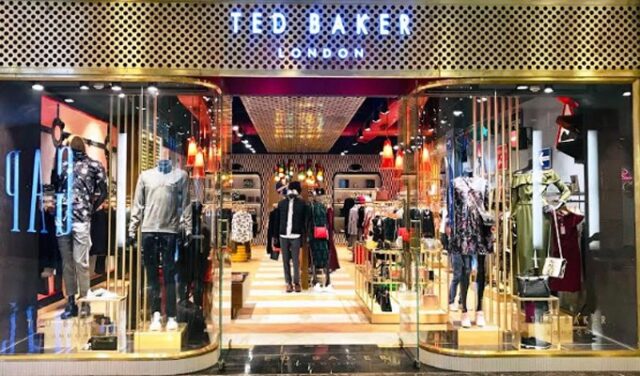
    British clothing and accessories brand Ted Baker known for designer apparel and signature tailoring opened its latest store at the Ambience Mall, Gurgaon. The store is equipped with glamorous interiors and tons of charm. The brightly-lit store will house their wide range of both menswear and womenswear. Ted Baker is a mainstay for every stylish wardrobe with a collection of bright dresses, tops, menswear, luxe accessories and add-ons.

    Located adjacent to the Ted Baker store, Hackett London is a multi-channel British menswear retailer, specialising in vintage clothing for men. As the official couturier for the British Army Polo team, the Henley Royal Regatta, the BAFTA awards and Aston Martin Racing, Hackett London is steeped in Britain’s rich sartorial heritage. With a wide repertoire of fine casual and formal clothing the store is a niche addition to the malls offering.

    Speaking on the store launch, Arjun Gehlot, Director, Ambience Malls, said, “We are delighted to have some of the best international fashion luxury brands Ted Baker and Hackett London in our mall. This is part of our commitment to offer International and Domestic premium quality brands to our customers under one roof. We will continue to bring best quality brands in the future as well.”

    The Ambience mall with the best offers in shopping, entertainment and culinary offering under its roof is the definitive favorite of shoppers looking for premium international and domestic brands. With an eclectic mix of top international and Indian clothing brands to cater to all age groups, wide array of entertainment options and unique decorative concepts that is constantly refreshed in-tune with changing seasons and festivities, the Ambience Mall, Gurgaon has indeed cemented its place as the perfect destination for shopping enthusiasts and thrill seekers in Delhi-NCR.

  • GAP sales report slumps in Q3

    GAP sales report slumps in Q3

    Gap brand sales fell 7 per cent globally in the last quarter as the US apparel retailer fails to re-engage consumers.

    However Gap Inc increased its overall sales by 6.5 per cent to US$4.09 billion on the back of solid growth in its Old Navy business and a modest 2 per cent improvement of the more upmarket Banana Republic banner. Net income rose to $266 million, up $37 million year on year.

    “Old Navy is doing all of the heavy lifting while the Gap brand languishes,” observed retail analyst Neil Saunders, MD of GlobalData Retail.

    “When it comes to Gap the numbers are particularly bad. Despite protestations from management that improvements to the range and inventory are coming through, we do not buy the story of recovery. Gap’s brand image is still lacklustre and it is not bringing anything new or exciting to the market. Products are still samey and boring and they are still being discounted because Gap is unable to sell them at full price.”

    Saunders said the sales results testify to the deep-seated problems at the Gap brand – especially when they are delivered against the backdrop of a robust consumer economy in which people are spending more on clothing than they have done for many years.

    “Our consumer data still shows that shoppers see Gap as bland and increasingly irrelevant in the apparel space. This is not healthy and it underlines the fact that Gap still has an enormous amount of work to do before it can even start down the road to recovery.”

    In contrast, Old Navy’s fashion edits and the brand’s ability to put out well-curated collections are attracting the attention and spend of family shoppers.

    “The strong economy is giving consumers a little more money to spend and we believe that Old Navy is benefitting from this as consumers buy more treats for themselves and their families. The strength of Old Navy’s brand is evidenced by the fact that all categories and channels have benefitted from growth.”

    Gap Inc will end the year with a net gain of about 70 new stores, including outlets in Canada and Mexico, where the brand continues to perform well.

    Banana Republic turns a corner

    Meanwhile, Banana Republic achieved a 9.2 per cent uplift in US sales due to store openings and a 2 per cent increase in comp sales.

    “The work to re-engineer the brand is paying off,” said Saunders. “Fall and winter collections were stronger than they have been for many years and there is now more cohesion between marketing and assortments. While the recovery remains in its early phases, Banana Republic is moving in the right direction.”

    Overall, said Saunders, despite poor Gap brand sales figures, the business is in a reasonable state. “However, the ongoing issues at the Gap brand are raining on what would otherwise be a sunny parade.”