Tag: gap

  • GAP exit brings ex parent some turning wheel of fortune

    GAP exit brings ex parent some turning wheel of fortune

    Singapore retailer FJ Benjamin has recorded a change of fortune, turning its first annual profit in four years.

    The multi-brand retailer reported a pre-tax profit of S$939,000 for the year to June 30, compared to a loss of $16.5 million the previous year.

    “We are encouraged by our 2018 operating results,” said CEO Nash Benjamin. “With improved consumer sentiment, we witnessed comparable store growth in most of our brands as well as full-year contributions from new stores opened during 2017.”

    He said the company will now focus on growing the business organically with improved merchandise assortments and the implementation of a new Customer Relationship Management system.

    Sales in Singapore and Malaysia last year grew by $16.2 million, however due to the discontinuation of a business overall revenue declined $39.9 million. The company shuttered its Gap and Banana Republic stores in February after opting not to renew the licence.

    Gross profit margin improved four percentage points to 46 per cent due to higher margins from retained brands and the discontinuation of the less profitable labels.

    Nash Benjamin said FJ Benjamin continues to evaluate prospects for introducing new brands into its portfolio.

  • GAP is struggling figure out next strategy

    GAP is struggling figure out next strategy

    At headline level, Gap’s second-quarter results look strong: Total group sales are up by 7.5 per cent, while US sales rose by 9.3 per cent.

    However, these gains are inflated by a change in the way revenue is recognised and when this is accounted for, sales increased by a more subdued 4 per cent. Growth falls still further, to around 3.4 per cent, when currency fluctuations are taken into account. While such adjustments may seem pedantic they are important as they help give a true picture of how Gap is actually trading.

    Regardless of the various financial mechanics, two things stand out from this quarter’s numbers. First, growth has slowed since the prior quarter – even though the consumer economy has strengthened. Second, growth is not evenly balanced across all parts of the business.

    One of the notable areas of weakness is the Gap brand in the US. Here, total sales rose by a very modest 1.2 per cent. While there were some store closures, they were not so numerous as to drag down the growth rate significantly. Moreover, global comparable sales at Gap were down by 5 per cent, off the back of a 1 per cent decline in the prior year. That the Gap brand cannot deliver, even over a period of very robust consumer spending, is evidence that it is still broken. A rising economic tide does float all retail boats, but it cannot float those with holes in them and, in our view, the Gap brand is still a very leaky vessel.

    The main problem is still the range. As much as Gap claims this has improved, there is scant evidence on the ground. The assortment continues to look samey and boring, with little effort being made to create newness or points of interest. This creates two problems. First, it discourages people from visiting and purchasing. Second, it means Gap struggles to charge full price and has to resort to continuous discounting to try and stimulate sales. Neither of these things are healthy.

    In our opinion, management needs to press the Gap brand’s reset button. The brand is adrift and needs a much clearer identity and sense of purpose. This is now an urgent requirement as a lot of other apparel brands – like J Crew, American Eagle, and Abercrombie & Fitch – are all upping their game and producing more consumer-centric collections. While the market is moving forward, Gap is, at best, standing still. This shows in our data, which indicates satisfaction with Gap’s proposition is still declining.

    Old Navy “superstar”

    Fortunately for the group, the superstar Old Navy has come to the rescue. Its results are the direct opposite of its troubled sister brand. Total sales growth accelerated over the prior quarter, rising by a stellar 13.7 per cent, while comparables rose by a solid 5 per cent off the back of a good increase in the prior year. There is definitely evidence that the strong consumer economy aided Old Navy, especially among families who were willing and able to spend more. However, the fact that the division continues to produce nice fashion edits at good price points is key to its success. Furthermore, we are encouraged by upcoming initiatives, such as the addition of plus sizes into the range.

    Even Banana Republic managed to put in a better showing, although with a modest 2 per cent rise in comparables there is clearly more work to do in refining the offer. The jury is still out on whether the current recovery is sustainable.

    Overall, the group has made some progress. However, the deep-seated problems at the Gap brand need to be resolved. And soon.
  • Former Billabong chief bags top job at Gap

    Former Billabong chief bags top job at Gap

    Former Billabong International chief executive Neil Fiske has landed a new job steering the ship for Gap Inc.’s struggling namesake brand.

    After spending almost five years trying to flip the fortunes of Billabong prior to its acquisition by Boardriders earlier this year Fiske will again be responsible for a disrupted retail business.

    As the president and CEO of Gap brand he will be responsible for charting the future of the beleaguered business, which has struggled to gain traction with younger generation shoppers.

    Gap’s global same-store sales fell four per cent in the first quarter, weighing on parent Gap Inc., which also owns the Banana Republic and Old Navy brands.

    In Australia Gap has also been struggling, having been cut by accessories retailer Oroton Group before its collapse last year due to its irrelevance with local customers.

    Gap Inc. president and CEO Art Peck said he believed Fiske was the right leader to strengthen the brand.

    “Neil brings significant retail and apparel experience to Gap Inc. and a track record of transforming and repositioning brands,” said Peck.

    “He is an experienced leader who deeply understands the mechanics of this business, the value of an omnichannel strategy, and the need to build a progressive and relevant brand.”

    Fiske departed Billabong earlier this year in a leadership reshuffle brought on by Boardriders’ acquisition.

    During his time at the business, Fiske, who bills himself as a turnaround specialist, embarked on a revitalisation strategy for the action sports group that involved tightening merchandise disciplines and closing underperforming stores.

    Fiske said in a statement that Gap has made some progress on its turnaround journey already, and that he was excited about the opportunities ahead of the business.

    “The brand has made some important progress and I look forward to working with the team to drive improved performance, operational excellence, great merchandising, and distinctive and powerful marketing,” he said.

    Prior to Billabong Fiske also held roles leading Eddie Bauer and Bath and Body works.

  • H&M and Gap to Probe Violence, Sex Abuse in Asian Factories

    H&M and Gap to Probe Violence, Sex Abuse in Asian Factories

    Fashion giants H&M and Gap vowed on Tuesday (05/06) to investigate reports that Asian garment workers who supply their high-street stores routinely face sex abuse, harassment and violence.

    Based on interviews with some 550 workers in 53 H&M and Gap supplier factories in Bangladesh, Cambodia, India, Indonesia and Sri Lanka, rights groups said women were at “daily risk” of violence and faced retaliation if they reported the attacks.

    The coalition has investigated the factories for several years as efforts mount to push Western brands into improving safety along their supply chains and render them slave-free.

    Clothes stitched by low-paid Asian workers – part of a complex global supply chain – end up on high-priced Western high streets, with some 4,750 H&M stores located in 69 countries and about 3,700 Gap shops operating in about 90 nations.

    Sweden’s H&M — the world’s No. 2 clothes group after Zara owner Inditex — said it would review the findings of the recent report by the civil society groups and unions.

    “We will go through every section of the report and follow up on [a] factory level with our local teams based in each production country,” a company spokesman said in a statement.

    “All forms of abuse or harassment are against everything that H&M group stands for.”

    US retailer Gap said it was “deeply concerned about the troubling allegations raised by this report.”

    “Our global team is currently conducting our due diligence to investigate and address these issues,” a spokeswoman said.

    The charities said they had found widespread sex harassment, verbal and physical abuse – such as slapping – and threats of retaliation when women refused sexual advances from bosses.

    Forced Labor

    A separate report published last month by the coalition of rights groups found similar abuse of women at supplier factories in Asia for US-based Walmart, the world’s largest retailer.

    Walmart said last month that it was reviewing the “concerning” accounts cited in the report.

    The Ethical Trading Initiative (ETI), a group of trade unions, firms and charities of which both Gap and H&M are members, said it expected the retailers to work with the suppliers to ensure that women have swift access to remedy.

    “These allegations are deeply concerning,” said Debbie Coulter of the ETI. “Gender-based violence is unacceptable under any circumstances, and brands need to make sure that women working in their supply chain are protected.”

    Campaigners told the Thomson Reuters Foundation last month that the level of pressure and harassment faced by the workers in the three separate reports was approaching forced labour.

    “Any time you have retaliation against workers, and coercion and control … you are coming close to the line of forced labour,” Jennifer Rosenbaum of Global Labor Justice, a network of worker and migrant organizations, said last month.

    The reports have been published amid meetings hosted by the United Nations’ International Labor Organization to work on the first global convention against workplace harassment after the #MeToo campaign thrust the issue into the spotlight.

  • Old Navy Drives Growth for Gap in First Quarter

    Old Navy Drives Growth for Gap in First Quarter

    The tried-and-true formula of trendy casual wear at a bargain price was the right formula for Old Navy, a division of Gap Inc.

    In its first-quarter earnings report for the period ending May 5, Gap Inc. said that Old Navy’s same-store sales were up 3 percent, but that was still off from the same period last year when Old Navy comps showed a strong 8 percent increase.

    Still having trouble was the San Francisco company’s principal nameplate, Gap. Gap’s same-store sales declined 4 percent in the first quarter compared with the same period last year.

    The Gap stores have been experiencing a lack of depth in some products and inventory overstock, left over from last year. The excess inventory led the company to slice prices to get rid of excess merchandise, said Teri List-Stoll, Gap’s chief financial officer and executive vice president, who was speaking on a May 24 earnings call. “During the quarter, we cleared inventory through sell-offs and cut prices,” she said. “It does set us up for cleaner stores in the second quarter and a better inventory position for the back half of the year.”

    Gap stores have been going through a difficult year. In February, the company fired its Gap brand president, Jeff Kirwan, and replaced him with Brent Hyder, who is the acting Gap brand president.

    In a welcome change, the company’s Banana Republic division saw comp-store sales rise 3 percent compared with last year’s negative 4 percent. Art Peck, Gap’s president and chief executive officer, said the company has been investing in quality yarns and fabrics for its Banana Republic clothing, which has been well received by customers. Items that sold well included sweaters, bottoms and dresses.

    Overall, same-store sales for the company were up 1 percent across the board compared with 2 percent last year.

    Gap Inc. reported that net income for the first quarter totaled $164 million, up from $143 million in the first quarter of 2017. Net sales came in at $3.8 billion, a 10 percent rise over last year.

    At the end of the quarter, Gap Inc. had 3,617 stores in 45 countries, of which 3,171 were company-operated. Gap executives said they continue to invest in stores such as Old Navy and its activewear brand store Athleta while closing less profitable Gap and Banana Republic stores, located mostly in malls.

  • Gap looks to Old Navy to gear up sales numbers

    Gap looks to Old Navy to gear up sales numbers

    Gap is ramping up its roll-out of Old Navy stores as the budget brand drives growth for the embattled US apparel giant.

    Gap Inc says it will open 60 new stores this year in the US, Canada and Mexico – twice the number of new stores it opened last year. It will refurbish a further 150 stores, upgrading fitting rooms, bathrooms and checkout facilities.

    The new focus on Old Navy, revealed last September, comes at the same time about 200 underperforming Banana Republic and Gap-bannered shops will be closed. Over a three-year timeframe, Gap Inc plans to open about 270 new Old Navy and Athleta stores, leaving a net network growth of 70 shops.

    Old Navy sales rose 9 per cent in the last quarter, on top of a 5 per cent rise a year earlier. Gap expects Old navy to reach US$10 billion in annual sales within the next few years, and its athleisure brand Athleta, to reach the $1 billion threshold.

    Analyst Retail Dive observes that while Gap store sales are showing signs of stabilising, lower-priced Old Navy has been hitting a stride that the flagship banner has failed to do for years now”.

    “Old Navy is the jewel in the portfolio,” added Ray Hartjen, director of marketing at RetailNext.

    “Shoppers have shown their preference for value across the board, and off-price retail has been one of the few consistent bright spots for the industry the last several years,” he said. “Moreover, Old Navy repeatedly resonates with its loyal core shopper, season after season, with its merchandise assortment.”

  • Gap watching Old Navy for growth

    Gap watching Old Navy for growth

    Gap is ramping up its roll-out of Old Navy stores as the budget brand drives growth for the embattled US apparel giant.

    Gap Inc says it will open 60 new stores this year in the US, Canada and Mexico – twice the number of new stores it opened last year. It will refurbish a further 150 stores, upgrading fitting rooms, bathrooms and checkout facilities.

    The new focus on Old Navy, revealed last September, comes at the same time about 200 underperforming Banana Republic and Gap-bannered shops will be closed. Over a three-year timeframe, Gap Inc plans to open about 270 new Old Navy and Athleta stores, leaving a net network growth of 70 shops.

    Old Navy sales rose 9 per cent in the last quarter, on top of a 5 per cent rise a year earlier. Gap expects Old navy to reach US$10 billion in annual sales within the next few years, and its athleisure brand Athleta, to reach the $1 billion threshold.

    Analyst Retail Dive observes that while Gap store sales are showing signs of stabilising, lower-priced Old Navy has been hitting a stride that the flagship banner has failed to do for years now”.

    “Old Navy is the jewel in the portfolio,” added Ray Hartjen, director of marketing at RetailNext.

    “Shoppers have shown their preference for value across the board, and off-price retail has been one of the few consistent bright spots for the industry the last several years,” he said. “Moreover, Old Navy repeatedly resonates with its loyal core shopper, season after season, with its merchandise assortment.”

  • New USA tariff plan draws backlash from US retailers

    New USA tariff plan draws backlash from US retailers

    Failing US president Donald Trump is facing widespread backlash from US retailers and brands over his intention to trigger a trade war with China and other nations.

    Just days after announcing tariffs on steel imports against the advice of officials, lawmakers and industry, Trump is now believed to be formulating sweeping tariffs on imported goods from China – a move retail and business groups warn will wipe away gains for the economy from the recent tax cuts.

    “This is not American industries crying wolf,” said Sandy Kennedy, president of the Retail Industry Leaders Association, which organised a letter to Trump, sounding alarm that such tariffs will boost prices of numerous consumer goods, including shoes, apparel and appliances.

    Twenty-four US retailers signed Kennedy’s letter, including Walmart, Target, Best Buy, Abercrombie & Fitch, American Eagle Outfitters, Columbia Sportswear, Costco, Dollar Tree, Gap, JC Penney, Kohl’s, Ikea, Levi Strauss, Sears, VF Corp and Wolverine World Wide.

    A second letter was signed by 82 shoe companies, including Nike, Payless ShoeSource, Under Armour and Shoe Carnival.

    “Adding even more tariffs on top of this heavy burden would mean higher costs for footwear consumers and fewer US jobs,” one of the letters said.

    “Given the price sensitivity of our products, any additional increases in our costs would strike right at the heart of our ability to keep product competitively priced for our consumers.”

    One of the issues worrying retailers and manufacturers is that Trump does not need approval from Congress to implement tariffs. He can impose unilateral tariffs on China citing national security grounds – the same rationale behind the steel tariffs – because a US government investigation had found Chinese had violated intellectual property rules.

    Trump has previously stated he does not fear a trade war because he believes America would win it.

    Widespread media debate about tariffs and the rationale behind them would also distract public attention from numerous controversies surrounding the Trump presidency, including a growing list of women revealing extramarital affairs with him, election tampering and his links to a company under investigation by the FTC for stealing personal details of 50 million Facebook users.

  • Gap CEO & president Jeff Kirwan resigns

    Gap CEO & president Jeff Kirwan resigns

    Gap Inc has announced that Gap brand president/CEO Jeff Kirwan will leave the clothing retail company.

    A search has been launched to find a replacement.

    “As we move into the brand’s next phase of development, Jeff and I agreed it was an appropriate time for a change in leadership,” says Gap Inc CEO Art Peck.

    “Under Jeff’s leadership we made significant progress on the operating model of the brand. We are faster and more responsive than ever before, we radically improved quality and fit, and we centered the brand on the aesthetic our customers love: casual, optimistic and American.

    “We have also seen the results of exceptional marketing and customer engagement reflected in increased traffic, improved sales and the strength of the digital business.

    “While I am pleased with our progress in brand health and product quality, we have not achieved the operational excellence and accelerated profit growth we know is possible at Gap brand.”

    Until a new president is found, the brand will be overseen by executive VP Brent Hyder, who was previously the brand’s COO.

    Gap has been struggling both at home and abroad in recent years. Its Singapore franchisor FJ Benjamin this week announced it was ceding the franchise for both Gap and Banana Republic.

  • Gap, Banana Republic to exit by end of Feb

    Gap, Banana Republic to exit by end of Feb

    Clothing brands Banana Republic and Gap are about to quit Singapore, FJ Benjamin has announced.

    Both outlets have announced their impending departure on their respective Facebook pages.

    FJ Benjamin, which brought both American brands to Singapore, says it will be closing the final two Banana Republic and three Gap stores in Singapore by the end of this month. The company has decided not to renew the franchise, which expires on February 28.

    When the fashion retailer announced the brands’ arrival in Singapore in 2006, it said it planned to open 30 stores – including outlets in Malaysia – by 2010.

    Gap’s stores are at Suntec City, United Square and VivoCity, while the Banana Republic stores are at Paragon and the Shoppes mall at Marina Bay Sands.

  • Gap Malaysia is Closing All Stores Nationwide

    Gap Malaysia is Closing All Stores Nationwide

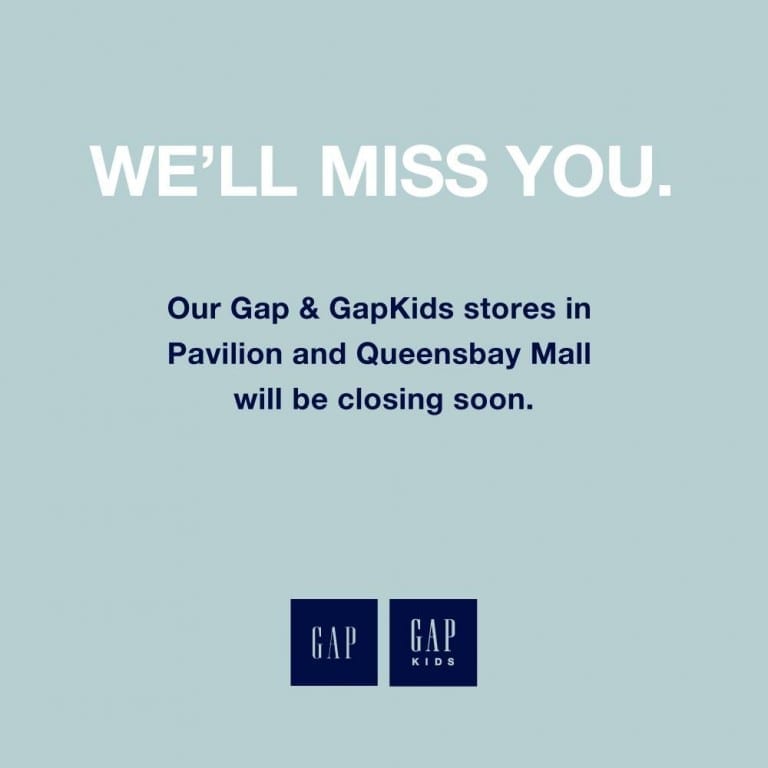
    Gap Malaysia has announced on its Facebook page that it is about to close its store and GapKids in the Gardens Mall, Kuala Lumpur.

    The American clothing retailer first announced it would be shutting down its Queensbay Mall, Penang and Pavilion KL stores in January, and now adds Gardens Mall and 1 Utama as well.

    Its remaining stores are running sales to get rid of stock.

  • H&M Suffers From Online Disruption

    H&M Suffers From Online Disruption

    Shares of the world’s second-largest fashion chain, H&M, have hit its lowest in eight years as the retailer reports plummeting sales at the conclusion of a despondent year.

    In the three months to the end of November 2017, H&M reported a 4 percent drop in sales, and on Friday its shares traded 15 percent lower than its lowest level from back in May 2009.

    Like many high-streets fashion brands H&M is having a difficult year, struggling to cope with the shift to online shopping. The retail giant blamed online shopping as well as “imbalances in parts of the H&M brand’s assortment composition”.

    The company says as a result it would focus more on integrating its online and brick and mortar stores, and re-strategise its physical store footprint by closing more stores and opening fewer.

    “In order to respond even quicker to customers’ fast-changing behaviour the company’s ongoing transformation journey is being accelerated. Among other things, this includes continued integration of the physical and digital stores, and intensifying the optimisation of the H&M brand’s store portfolio – leading to more store closures and fewer openings,” it said in a statement on Friday.

    H&M was one of the first retailers to sell online, but due to slowing its digital stride, it had been quickly overtaken by both pureplays, such as ASOS, and high-street fashion labels such as Zara, Gap and Uniqlo. H&M also had a plan to aggressively grow its physical stores, which clearly now has been reconsidered.

    In a separate note, H&M also announced on Friday that it would start selling its merchandise on China’s Alibaba-owned Tmall e-commerce platform by the second quarter next year. It currently sells its Monki brand on the site, however it’s in negotiations at the moment about selling all of its eight brands on the world’s largest e-commerce platform.

    “We are very happy to be able to make H&M even more accessible in mainland China. Tmall is an important complement to our existing physical and digital stores. We see great potential for substantial future growth and Tmall will be an important part of this,” says Karl-Johan Persson, CEO of the H&M group.

    Controlled by the Pearson family, which still provides the company with a CEO and a chairman, H&M has been under pressure from its minority shareholders, and in February 2018 it will hold its first-ever investor day.

  • Gap results to be saved by Old Navy

    Gap results to be saved by Old Navy

    At headline level, the latest Gap Inc results are not too bad. Overall revenue rose by 1.1 per cent, a respectable increase that is some way above that posted over the last two quarters. Net income also increased by 12.3 per cent compared to the previous year.

    Unfortunately, behind the headline, it is the same old story. Old Navy is driving group performance while the other two leading brands are struggling. Admittedly, the 0.8 per cent US revenue decline at Gap and the 2.6 per cent dip at Banana Republic are better than recent reporting periods, but neither demonstrates a fully-fledged recovery.

    Management has been keen to emphasise the changes that are being made to revitalize the challenged brands. On the ground, there is some evidence of this happening. At Gap, for example, there have been marginal improvements in quality and greater emphasis has been placed on in-demand products like athletic wear. However, the majority of the offer remains samey, as do things like store environments and point of sale material. In our view, Gap has very little newness to communicate and, as such, is still finding it difficult to inspire customers.

    The new marketing campaign, ‘Meet me in the Gap’, is not terrible, but neither is it particularly compelling. As such, while it has helped rather than hindered sales, it has not succeeded at pulling in new shoppers or getting lapsed shoppers to take a fresh look. Given the offer has not shifted very much, perhaps this is just as well.

    In essence, the change at Gap is lacklustre – especially when compared to a brand like Abercrombie & Fitch which has ripped up the rulebook and completely reinvented itself. Gap needs to emulate this bravery and do something radical to put the business back on a sustainable growth trajectory.

    Stuck in a rut

    If Gap has made some progress, Banana Republic still seems stuck in a rut. Despite a change of leadership, the proposition still lacks energy and focus. As such, it is hard to understand who the brand is targeted towards or what needs it is trying to address. Until these things are resolved, Banana Republic will remain on the back foot. To be fair, management always said that the latter part of this year would be about stabilising the brand rather than reinventing it, but this could amount to a tacit admission of not knowing what changes to make or how to make them.

    Fortunately, Gap Inc has been able to rely on Old Navy to push up performance. While sales growth moderated this quarter, the brand remains a popular destination for younger and family shoppers. The new winter and fall collections are compelling, which should benefit sales over the holiday quarter.

    There has been good progress within Gap’s stable of smaller brands like Athleta and Intermix. Both of these concepts have significant potential, with Athleta in particular positioned to grow its market share. Unfortunately, the revenue contribution of these divisions is insufficient to make a material difference to the group’s overall numbers.

    In summary, Gap has become a more stable business and sales declines appear to be starting to bottom out. However, the company has no real sense of direction or ambition for two of its major brands.

  • Gap to shift focus to Old Navy, Athleta

    Gap to shift focus to Old Navy, Athleta

    Gap Inc says it will shift its focus to its growing brands Old Navy and Athleta, and away from Gap and Banana Republic.

    The company said on Wednesday it will close about 200 Gap and Banana Republic stores in the next three years and open about 270 Old Navy and Athleta stores during the same period.

    Low-priced Old Navy has been a bright spot for the clothing retailer, posting rising sales even as they fell at the Gap and Banana Republic.

    The company says Old Navy is on track to surpass US$10 billion (A$13 billion) in sales in the next few years. And Athleta, which sells athletic clothing, is expected to exceed US$1 billion in sales. The company expects to reap about US$500 million in savings over the next three years by better taking advantage of its scale.

    The moves are the latest to reinvent the chain and are being spearheaded by chief executive Art Peck, who took the helm in 2015. The company is facing the same problems as other fashion retailers, as shoppers buy less clothing in general and shop more at off-price chains or buy online when they do. That has resulted in sluggish traffic at the stores.

    But Gap Inc also has long struggled with its own problems, mired in a sales slump as its clothes don’t stand out in an overcrowded landscape.

    Gap has been offering frequent discounts to get shoppers to buy. It’s also been working hard to improve fit – a problem that has long bedevilled the retailer- and it’s been trying to rework its fashions. The company has been cutting its store numbers over the past few years.

    “Over the past two years, we’ve made significant progress evolving how we operate – starting with getting great product into the hands of our customers, more consistently and faster than ever before,” said Peck, president and chief executive officer, Gap Inc.

    “With much of this foundation in place, we’re now shifting our focus to growth. We will leverage our iconic brands and significant scale to deliver growth by shifting to where our customers are shopping – online, value and active.”

    The company said it expects about $500 million in expense savings over the next three years by better leveraging its size and scale, cross-brand synergies and streamlining operations and processes.

  • Gap China goes big on West Nanjing Road

    Gap China goes big on West Nanjing Road

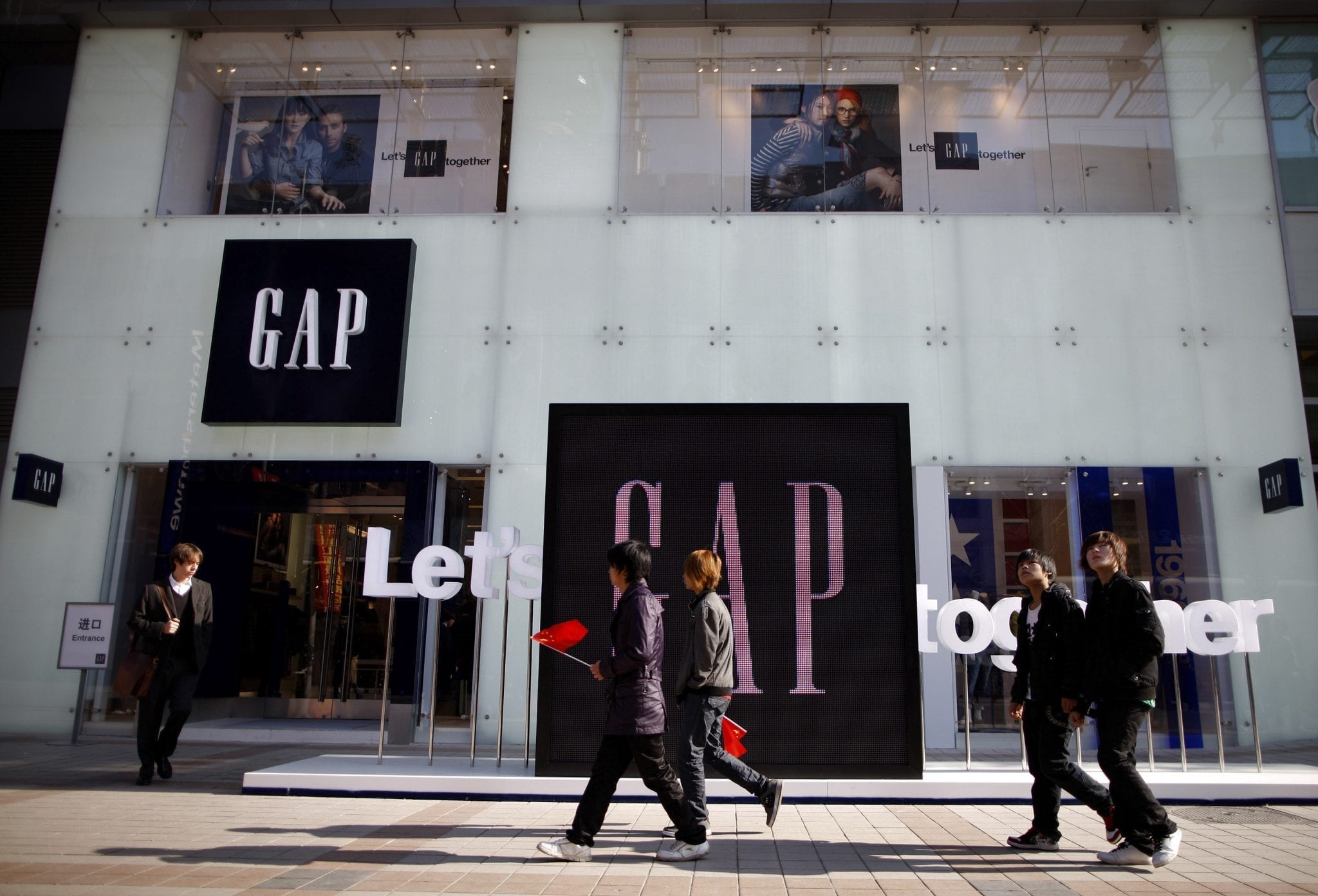
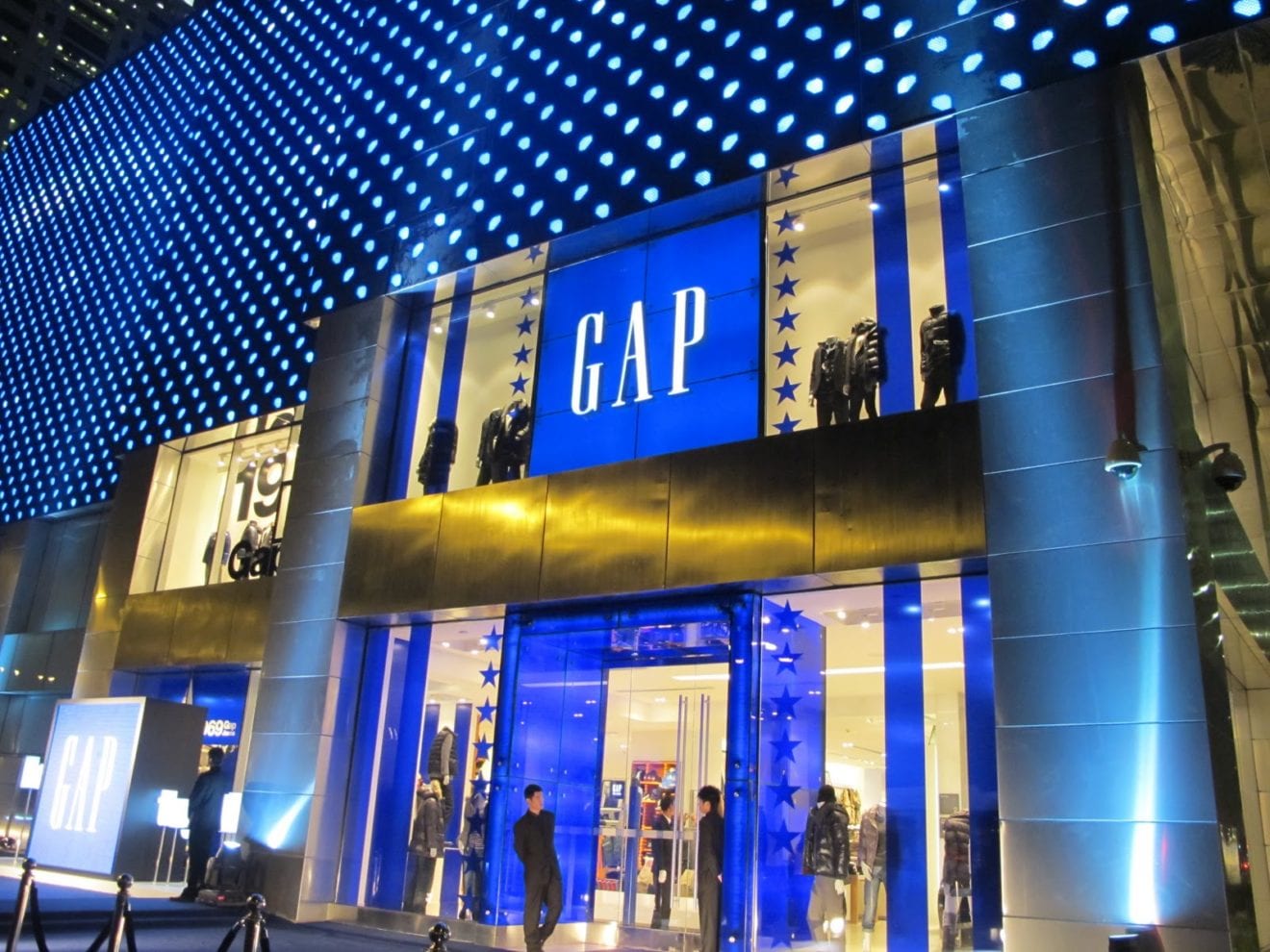
    Gap China has opened a flagship store on Shanghai’s West Nanjing Road, its biggest flagship yet in Greater China.

    Featuring Gap’s full apparel collections and latest store-design elements, the flagship underscores the importance of the China market, says Gap, which will next year move its China retail headquarters team into an office above the store.

    Covering 1908 sqm over two storeys, the flagship showcases a store concept developed jointly by Gap’s local and global store-design teams, drawing inspiration from the brand’s heritage alongside modern elements. It incorporates digital and video elements to offer an immersive and easily navigable shopping experience, says the company.

    “We believe that in-person connections and interaction with consumers in physical stores still matter, and we intend to continuously innovate that experience by integrating digital and other new customer touchpoints,” says Gap Greater China executive VP/GM Abinta Malik.

    “We see China as an important market with ample opportunity for long-term growth and innovation. At a time when this market is embracing an era of ‘new retail’, I am confident our strengths in omni-channel and in-store customer experience position Gap as a trendsetter in China’s apparel retail landscape.”

    First time

    The Shanghai flagship offers Gap’s American-style clothing and accessories for men, women and children, and opens with the latest fall collections. The larger space enables the brand to offer the full expression of GapBody and GapFit for the first time in a store.

    The store also introduces a “Chill” station where customers can recharge their phones and relax, and space for customer events and to showcase special collections and designer collaborations. The children’s and baby floor has a nursing room as well as fun stations.

    For its grand opening the store will offer a special stylist service as well as experience booths for both children and adults. A DJ and children’s band will entertain customers, and featured collaborations include the latest Disney children’s collection featuring Snow White, with a themed set for photos.

    The new store replaces Gap’s previous West Nanjing Road flagship.