Retail News CRM

Tag: GDP

  • Trade war could drag Malaysia’s GDP down to 3.2% this year

    Trade war could drag Malaysia’s GDP down to 3.2% this year

    A full-blown trade war could drag Malaysia’s gross domestic product (GDP) growth to 3.2% this year, from an earlier projection of 4.7%, according to Affin Hwang Investment Bank Bhd head of research and chief economist Alan Tan. Tan said if the trade spat between the US and China were to escalate to a situation where tariffs are fully implemented on all Chinese goods, Malaysia’s GDP growth could be hit closer to 1.5 percentage point.

    “If Malaysia’s GDP is at 5%, the 1.5% will push the GDP growth down to 3.5%,” he told reporters at the press conference in conjunction with the bank’s launch ceremony of its Securities Borrowing and Lending (SBL) facility for retail investors yesterday.

    “Malaysia is an open economy and is still relying on trade. As we know, China today is the major market for Malaysia and if the global trade war were to escalate, we think that the Chinese economy, which has already shown signs of slowing down, may slow even further.

    “Therefore, we are of the view that Malaysia’s exports to China will be slowing down towards the second half of 2019 assuming if the trade war continues to drag on,” he added.

    However, Tan said domestic demand will continue to support the economic growth this year driven by several measures introduced by the government in Budget 2019, supporting the bank’s forecast on the GDP growth at the region of 4.7% this year.

    Additionally, he said that the bank opined that this time around, both US and China will be more willing to negotiate and possibly come out with a trade compromise by end of the first quarter this year, in view of the external uncertainties and weaker business sentiment.

    “Going into 2019, we already seeing signs of slowing down in the US and China. Unlike six months ago, where both economies continue to do relatively well,” he noted.

    Therefore, he said the bank believes that in the second half of 2019, following the resolutions of the global trade war, coupled with the weakening US dollar, interest will come back to the emerging market, including Malaysia.

    However, Tan said the bank expects that the market will remain flat in the first half of 2019 and looking at end-2019 target for the FBM KLCI at 1,810 points.

    On ringgit, he said the local currency is expected to appreciate to RM3.90-RM4.00 level in the second half of 2019, and possibly ending the year at RM3.90 against the US dollar, as the greenback is likely to soften towards the second half of the year.
  • Malaysia’s GDP growth to ease to 4.7% this year: Moody’s

    Malaysia’s GDP growth to ease to 4.7% this year: Moody’s

    Malaysia’s real gross domestic product (GDP) growth is expected to recede to 4.7% in 2019 after averaging at around the 5% mark between 2015 and 2018 on the back of external headwinds, according to Moody’s Investors Service. For 2020, the economy is projected to moderate further to 4.5%. The rating agency foresees external headwinds from trade protectionism to weigh on trade activity, while the review of infrastructure projects and slowdown in public spending will also prove to be a further drag to growth.

    “Nevertheless, economic expansion will still stay stronger than the median average for A-rated sovereigns, even taking moderating growth into account,” it opined.

    Moody’s said Malaysia’s credit profile, which is rated at “A3 Stable” reflects its large and diversified economy with healthy medium-term growth prospects, and relatively high government debt that is partly offset by a favourable debt structure and large domestic savings.

    It pointed out that the govern-ment’s recent fiscal policy choices, particularly in abolishing the goods and services tax, will narrow its revenue base and reduce fiscal flexibility – while its debt burden which is significantly higher than the A-rated median, will remain a credit constraint.

    “However, deep domestic capital markets and high savings provide a stable funding pool for the government’s debt, and partly offset these fiscal weaknesses. A solid institutional framework that includes effective monetary policy supports the country’s credit profile,” Moody’s said.

    It also noted that pervasive corruption will likely to remain a challenge for the government, which will also undermine policy effectiveness.

    Moody’s said that given a stable outlook of the sovereign rating, a change in the rating is unlikely in the near term, but could face upward pressure if the scope for fiscal consolidation increases.

    Conversely, the rating agency said it would consider downgrading the sovereign rating in the event of weakened fiscal prospects, increased debt burden, growing political tensions and diverging views within the government, which could undermine policy effectiveness or impair the government’s ability to adhere to its fiscal consolidation objectives, potentially threatening the stability of capital flows to the country in the process.

  • World Bank sees slower global economic growth of 2.9% this year

    World Bank sees slower global economic growth of 2.9% this year

    The growth of the global economy is expected to slow to 2.9% in 2019 compared with 3% in 2018, the World Bank said on Tuesday, citing elevated trade tensions and international trade moderation. “At the beginning of 2018 the global economy was firing on all cylinders, but it lost speed during the year and the ride could get even bumpier in the year ahead,“ World Bank CEO Kristalina Georgieva said in the semi-annual Global Economic Prospects report.

    The World Bank outlook comes as the United States and China have been engaged in a bitter trade dispute, which has jolted financial markets across the world for months. The two economies have imposed tit-for-tat duties on each other’s goods, although there have been signs of progress.

    Growth in the US is likely to slow to 2.5% this year from 2.9% in 2018, while China is expected to grow at 6.2% in the year compared with 6.5% in 2018, according to the World Bank.

    Emerging market economies are expected to grow at 4.2% this year, with advanced economies expected to grow at 2%, the World Bank said.

  • Vietnam to see slower growth in 2019

    Vietnam to see slower growth in 2019

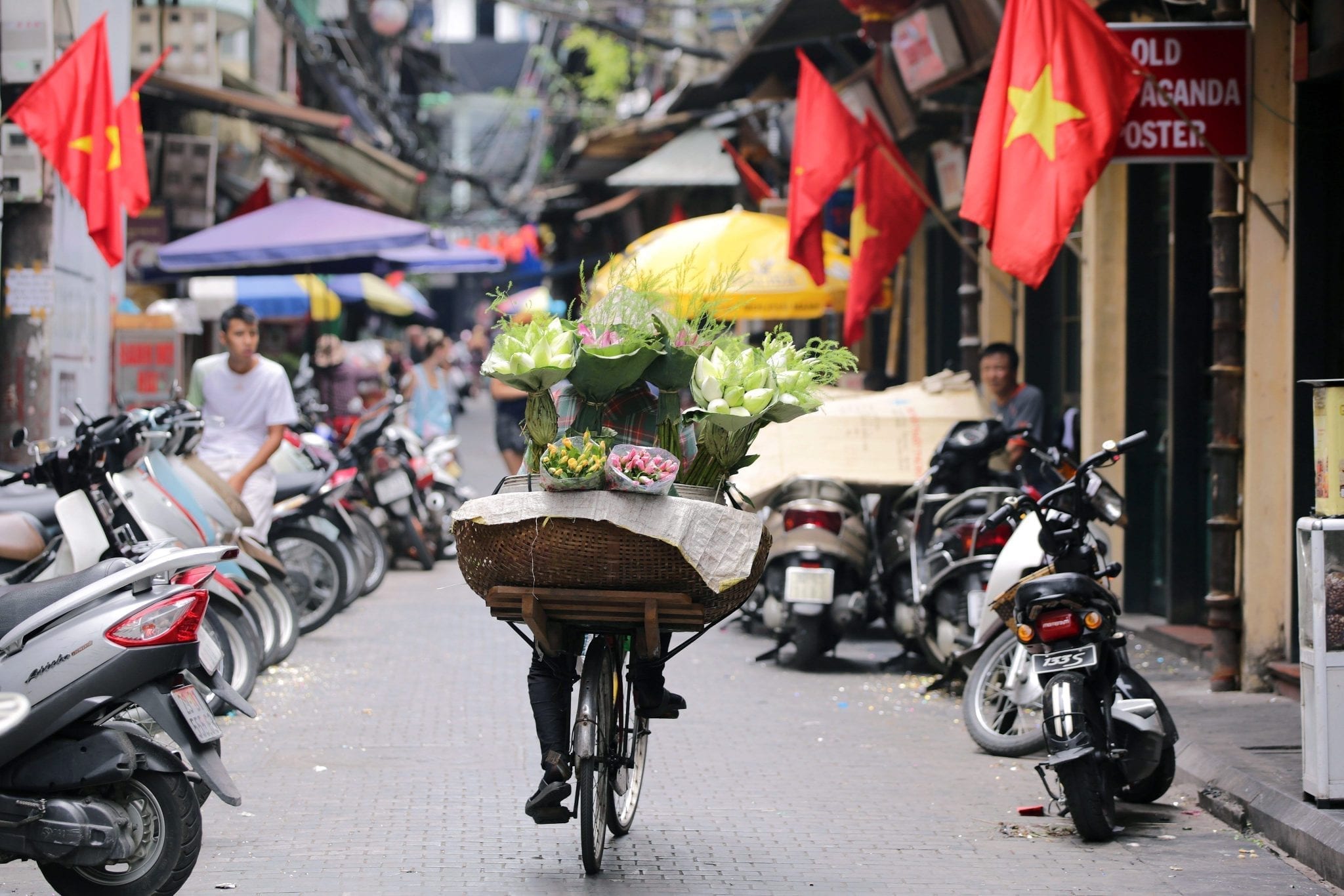
    Vietnam’s economic growth is expected to slow down this year though it will remain a regional outperformer, according to leading global analysts. Fitch Solutions, an arm of Fitch Ratings, said in a report released Wednesday it expects Vietnam’s GDP growth to slow to 6.5 percent in 2019 in line with a wider trend of slowing global growth, but added the country would remain one of the fastest growing economies in Southeast Asia.

    The economy grew by 7.1 percent last year, the fastest rate of expansion in 11 years, according to official data. This was well above the 6.5-6.7 percent target set by the National Assembly.

    “Its increasing openness and reliance on foreign investment suggests that it is unlikely to be spared from the global growth slowdown arising from rising trade protectionism and tighter financial conditions.

    “Although we believe that Vietnam’s manufacturing sector and economy will continue to outperform the region over the coming quarters, growth is likely to face headwinds stemming from rising global trade disruptions and tightening financial conditions, which will negatively impact global economic growth and risk sentiment,” Fitch Solutions stated.

    The World Bank Group in its bi-annual report on Vietnam issued last month said the country’s GDP growth is likely to slow from 6.8 percent in 2018 to 6.6 percent this year as the global economy weakens.

    Weaker global demand for exports and reduced investment and trade flows as the U.S. Federal Reserve raises interest rates are other risks for Vietnam’s economy, Sebastian Eckardt, the World Bank’s lead economist for Vietnam, said.

    The Asian Development Bank (ADB) in a forecast released last month for the East Asia and Pacific region projected Vietnam’s growth at 6.8 percent for 2019, slightly lower than the 6.9 percent it expected for 2018. These rates are the second highest in the forecast behind only India’s.

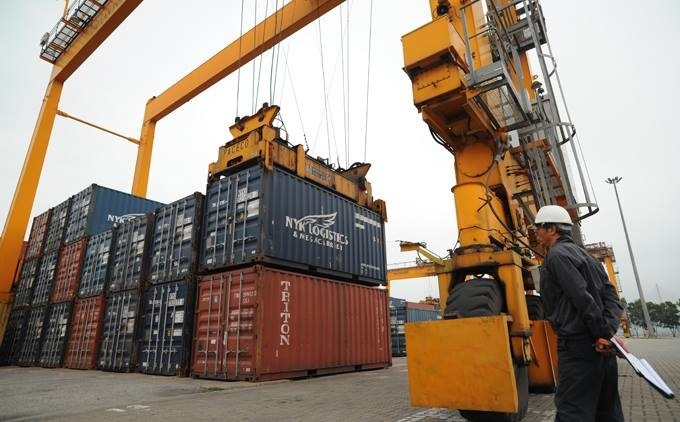
    Disbursed foreign direct investment (FDI) in Vietnam reached a record $19.1 billion in 2018, up 9.1 percent year-on-year. With exports rising by 13.8 percent to $244.72 billion and imports at $237.51 billion, the country achieved its highest ever trade surplus of $7.21 billion last year.

    Fitch Solutions said in 2019 the manufacturing sector would remain a key economic growth driver and outperform the region.

    Vietnam has grown to become a manufacturing powerhouse, particularly in electronics, due to its relatively cheap and large workforce, geographical advantages, attractive tax breaks, stable political environment, and open trade policies.

    The opening up of the Vietnamese economy also came at an opportune time as China began to shift away from lower-end and export-oriented manufacturing to focus on the domestic economy.

    Vietnam’s continued commitment to economic liberalisation will also attract foreign manufacturers seeking to leverage its preferential trade deals.

    The country is a signatory to 10 bilateral and multilateral free trade agreements (FTAs), with six more trade pacts in the offing, including the highly touted Vietnam-EU FTA.

    Fitch Solutions added that trade tensions between China and the US would continue to drive up costs for manufacturers operating in China, pushing companies to outsource to its neighbor Vietnam, which is more competitive in terms of wages.

  • Indonesia Posts Narrowest Budget Deficit in 6 Years in 2018: Finance Minister

    Indonesia Posts Narrowest Budget Deficit in 6 Years in 2018: Finance Minister

    Indonesia posted the smallest fiscal deficit in six years in 2018 and less than initially projected, despite turbulence in its financial markets due to capital outflows, Finance Minister Sri Mulyani Indrawati said in a Facebook post. The estimated budget deficit last year was equal to 1.72 percent of gross domestic product, narrower than both the government’s original plan of 2.19 percent and the latest estimate of 1.83 percent, Sri Mulyani said in a message posted late on New Year’s Eve.

    As a percentage of GDP, that was the smallest since 2012, the former World Bank managing director said.

    The 2018 budget also has a Rp 4.1 trillion ($283 million) surplus in its primary balance, or budget balance before interest payments, which Indrawati said was the first surplus since 2011.

    “We have done our duty to manage government finances well. The year 2018 was not an easy year with fluctuations in the global economy, commodity prices, capital flows and exchange rate,” she said, while also noting higher interest rates at home and globally.

    The rupiah plunged to its weakest in 20 years in 2018 due to capital outflows linked to worries about its twin deficits, US interest rate increases and concerns about the fallout for Asia from the US-China trade war.

    However, inflows towards the end of the year bounced it back and the currency closed the year 6 percent weaker compared with end-2017.

    Sri Mulyani said 2018 income from taxes and other revenue sources grew “high and healthy.” She previously said higher oil prices and a weaker rupiah had resulted in higher government revenues.

    The minister is expected to hold a news conference on budget realization on Wednesday.

  • India eyes $100 billion FDI in next two years

    India eyes $100 billion FDI in next two years

    India will aim to receive $100 billion in foreign direct investments in the next two years and special industrial clusters are being created for countries like Japan, South Korea, China and Russia where their companies can invest and operate, Union minister Suresh Prabhu said. The commerce and industry minister said his ministry has also identified sectors and countries which holds huge potential for investments in India.

    “I have given a target. $100 billion of FDI should come from different sectors into India. It will not happen in one year. We have identified companies, sectors and countries and now we are going for road shows to attract investors,” Prabhu said.

    He said India would remain a top destination for foreign investors in 2019 and the ministry would look at all sectoral issues that may come come in the way to attracting overseas investments.

    “For countries like Japan, South Korea, China and Russia, we are creating industrial clusters where they can invest and operate,” Prabhu said.

    The minister said China has agreed to set up industrial parks in India and the Chinese authorities have been asked to give a list of companies that are willing to set up factories in India.

    Similarly, India would be happy to welcome firms from Europe and the US who want to move out of other countries and set up manufacturing bases in India, Prabhu said.

  • Vietnam GDP growth tops 7 pct, highest in a decade

    Vietnam GDP growth tops 7 pct, highest in a decade

    Vietnam’s GDP growth of 7.08 percent this year retained its status as one of the best performing economies in the world. It was the highest growth the country has experienced since 2008 and compared with the median estimate of 6.9 percent in a survey of 12 economists.

    The scale of the economy at present value is over VND5.53 quadrillion ($237.38 billion), with average GDP per capita at $2,587 per person, a $198 increase over 2017, Nguyen Bich Lam, head of the General Statistics Office, said Thursday afternoon.

    According the office, the agriculture, forestry and fisheries sector grew by 3.76 percent this year, and contributed to 8.7 percent to the country’s GDP. Corresponding figures for industry and construction sectors were 8.85 percent and nearly 49 percent; and that of the service sector, 7.03 percent and approximately 43 percent.

    Lam said that the consumer price index (CPI) in December 2018 fell by 0.25 percent compared to the previous month. On average, CPI in 2018 increased by 3.54 percent, well below the 4 percent target set by the National Assembly.

    Export turnover for the year is estimated at over $244.7 billion, up nearly 14 percent compared to 2017.

    The FDI sector (including crude oil) still accounts for nearly 70 percent of export turnover, at more than $175.5 billion.

    On the other hand, Vietnam imported more than $237.5 billion the whole year, up 11.5 percent over 2017.

    Overall, in 2018 Vietnam achieved a trade surplus of $7.2 billion.

    “The quality of economic growth has improved,” Lam said.

    The GSO director general explained that labor productivity this year saw an increase of nearly 6 percent compared to 2017, at VND102 million (nearly $4,512) per person.

  • Malaysia’s economy likely to grow in Feb to April 2019

    Malaysia’s economy likely to grow in Feb to April 2019

    Malaysia’s economy is likely to grow in February to April 2019, according to the performance of Malaysian Economic Indicators: Leading, Coincident & Lagging Indexes for October 2018 that was released last monday. Chief statistician Malaysia Datuk Seri Dr Mohd Uzir Mahidin said the monthly change of Leading Index (LI) augmented in October 2018, registering a growth of 1.2% to attain 119.3 points from 117.9 points in the previous month, primarily due to the increase of real imports of other basic precious & other non-ferrous metals (0.4%).

    “The annual change of LI showed an improvement from negative 1.7% in September 2018 to negative 0.7% in October 2018. The composite of LI is designed to monitor the economic performance direction in an average of four to six months ahead,” he said in a statement.

    On the same note, he stated that the Coincident Index (CI), which reflects the current economic activity, rose 1.0% in October 2018. Two components that contributed significantly to the increase were volume index of retail trade (0.5%) and real contributions to EPF (0.2%). At the same time, the annual change of CI grew further to 3.9% in October 2018 as against 3.4% in the previous month.

  • Vietnam to top 7 pct growth in 2018 and 2019

    Vietnam to top 7 pct growth in 2018 and 2019

    Vietnam may grow more than 7 percent in 2018, the highest in 10 years, and is likely to maintain the rate next year, experts say. Nguyen Xuan Thanh, director of development, and public policy lecturer at the Fulbright University of Vietnam, said the country’s economy is expected to grow at over 7 percent this year, the highest level since 2007.

    “The major contributor of growth comes from industries that benefit from policies to replace import goods, such as automobile and pharmaceutical production,” he said at a conference organized Thursday by the National Financial Supervisory Commission (NFSC).

    In 2017, Vietnam rode on 20-30 percent growth of phones and electronics, but this year, that sector’s growth slowed down to only 11 percent in the first 11 months of 2018, Thanh explained.

    He also noted that a positive aspect of the growth this year has been that it is no longer dependent on credit. The NFSC estimates credit growth to have slowed significantly to 15 percent this year from 18 percent in 2017.

    “Many experts were concerned that Vietnam’s high growth rate in previous years was linked to credit growth, but there has been strong economic growth this year without high credit growth,” Thanh said.

    Meanwhile, NFSC leaders said Vietnam’s growth may exceed 7 percent in 2018 and remain at between 6.9-7.1 percent in 2019.

    Truong Van Phuoc, acting chairman of the NFSC, said the high growth in 2018 is due to large contributions from the private sector. In addition, trade agreements such as the Comprehensive and Progressive Agreement for Trans-Pacific Partnership (CPTPP) and the EU-Vietnam Free Trade Agreement (EVFTA), which are expected to come into effect in 2019, may also bring positive impacts.

    Vietnam also has the opportunity to attract investment as well as new opportunities from the field of information technology and biotechnology, he added.

    But experts also point out some factors that could affect economic growth next year. Thanh noted that growth this year was not only due to investment and export but also the heavy consumption.

    Any changes to consumption can have immediate effect on economic growth, he said.

    In the first nine months this year, Vietnam’s GDP grew by 6.98 percent, the highest nine-month growth rate since 2011. The economy grew by 6.81 percent last year, the highest rate in a decade.

  • World Bank cuts Malaysia’s 2018 GDP growth forecast again

    World Bank cuts Malaysia’s 2018 GDP growth forecast again

    The World Bank has again revised downward its projection for Malaysia’s 2018 gross domestic product (GDP) growth to 4.7% from 4.9% after taking into account factors such the rigorous rationalisation of expenditure by the government and slowdown in private and public investment. It last cut the country’s GDP growth forecast in October, to 4.9% from 5.4%.

    Malaysia’s third quarter GDP growth moderated to 4.4%, bringing about a nine-month expansion of 4.7%.

    Despite a moderation in growth, the World Bank believes that the Malaysian economy remains resilient and continues to be anchored by private consumption, although it has been cooling down after the reintroduction of the sales and service tax.

    The key drivers for private consumption are stable labour market conditions, cost of living aid and tax refunds payment.

    Private investment in the manufacturing and commodity sectors are also expected to be sustained.

    Speaking at the launch of the World Bank’s Malaysia Economic Monitor on Realising Human Potential Report, World Bank Group economist Shakira Teh Sharifuddin said Malaysia’s economic growth is projected to remain flat at 4.7% in 2019, with external factors such as current trade tensions and increased volatility in the financial and commodity markets expected to weigh on the overall economy.

    In addition to the escalating trade tensions, monetary normalisation in advanced economies, high dependency on oil revenue and high level of public debt are seen as potential risk for the government.

    The percentage of the federal government’s revenue to GDP has seen a steep decline between 2012 and 2018, falling from 21.4% to 16.2%. In 2019, the share of revenue to GDP is expected to be reduced further to 15.1%.

    This, Shakira said, leaves the government with limited space to respond to economic shocks.

    In the near term, the government is expected to rigorously embark on fiscal consolidation measures with expenditure expected to decline to 18.1% of GDP from the 2018 estimate of 20.3%.

    Shakira said that while the introduction of new taxes in the budget is welcomed, the government should relook the incentive mechanisms.

    On another note, the World Bank stressed on the need for Malaysia to accelerate the development of its human capital if it wishes to join the ranks of a high-income nation.

    While Malaysia, which ranked 55th out of 157 countries in the Human Capital Index, fared well in some areas, there is room for improvement in certain areas, noted the report.

    It also states the prevalence of stunting among Malaysian children which affect more than one in five Malaysian children, a key indicator of malnutrition. In the absence of renewed efforts to develop human capital, a child born today in Malaysia will only reach a productivity level of 62%.

    In terms of education, the 12.2 years spent by Malaysians in school only equates to the 9.1 years learning outcome of school goers in the highest performing system.

  • Vietnam eyes $10,000 per capita income by 2035

    Vietnam eyes $10,000 per capita income by 2035

    Vietnam has set target of increasing GDP per capita to $6,500 in 2030, and $10,000, or four times the current value, in 2035. The GDP in those years would then be $670 billion and $1.05 trillion, according to an economic policy framework for the period up to 2035 recently issued by the Ministry of Planning and Investment. This will make Vietnam an upper middle-income country.

    Vietnam has also targeted to reduce its poverty rate to 1 percent and increasing the middle-class rate to 50 percent by 2035.

    The middle and affluent class now is categorized as those earning $714 a month or more, according to the Boston Consulting Group.

    According to the document, encouraging the continued development of the private sector and developing human resources and innovations taking advantage of the Fourth Industrial Revolution would be two of the driving forces for economic growth.

    The country hopes to have two million private businesses that contribute 50 percent of its GDP by 2020 and 60-65 percent by 2030.

    The reforms to achieve these goals will focus on modernizing the economy and developing the private sector, building innovation capacity, improving economic efficiency of urbanization, and building modern institutions and efficient governance.

    Vietnam also aims to ensure its development is environmentally sustainable and equitable, promote social inclusion and enhance its adaptability to climate change.

    Minister of Planning and Investment Nguyen Chi Dung said strong reforms are needed to continue developing and not fall behind the times.

    Speaking to Vietnam’s development partners at a forum on reform and development Wednesday, Prime Minister Nguyen Xuan Phuc said: “We have the aspiration to become a prosperous economy, but we are fully aware that the road will be uneven with many challenges. Those are the challenges from both within the economy and the impacts caused by fluctuations in the global economy.”

    To address these issues he pledged his government would soon speed up administrative reform and establish an economic system that enables all economic entities to have the right to participate in making development plans and policies.

    “Vietnam will focus on building its soft and digital infrastructure to convert the economy into a digital one, reform its recruitment mechanism and focus on training human resources to make use of the fourth industrial revolution as a driving force for growth.”

    According to World Bank Group statistics, Vietnam’s GDP per capita in 2017 is $2,343. The figure for Singapore is $57,714, Malaysia ($9,945), Thailand ($6,594), the Philippines ($2,989) and Myanmar ($1,298).

    Minister Dung estimated that Vietnam’s GDP would grow by 6.57 percent on average in the 2016-2018 period, meeting the National’s Assembly target of 6.5-6.7 percent growth.

    In the first nine months this year, Vietnam’s GDP grew by 6.98 percent, the highest nine-month growth rate since 2011. The economy grew by 6.81 percent last year, the highest rate in a decade.

  • UOB: Malaysia’s GDP to grow at 4.8% for 2018, 2019

    UOB: Malaysia’s GDP to grow at 4.8% for 2018, 2019

    Malaysia’s gross domestic product (GDP) growth is expected to remain stable and expand at 4.8% for the full year of 2018 and 2019. UOB Malaysia’s senior economist, Julia Goh said the 2019 forecast has been revised from the 5% projection made earlier, to 4.8% after taking into account the potential impacts from the US-China trade tensions.

    Goh noted that while Malaysia’s economy is not immune to external headwinds such as the trade tensions between the two economic giants, rising US interest rates and commodity prices—Malaysia could certainly find support from its robust domestic private consumption and investment.

    The ringgit is expected to stand at RM4.22 against the Greenback next year on the back of external factors such as the strength of the dollar, crude oil prices and the direction of the renminbi.

    Inflation rate for 2018 is expected to be 1.2% and 2% in 2019.

    “I think it is actually slightly lower than the government’s official forecast. I think the main support for inflation is we are seeing resilient spending even with the reintroduction of the Sales and Service Tax, we did not see any significant effect on the consumer price index,” she said.

    Key risk for inflation I think (will be) in the second quarter of next year where the government announced that they want to float oil prices,” she added.

  • Malaysia’s Central Bank confident of 4.8% GDP growth in 2018

    Malaysia’s Central Bank confident of 4.8% GDP growth in 2018

    Economists have mixed views on Malaysia’s full-year gross domestic product (GDP) growth despite the central bank’s confidence the economy will expand 4.8% this year. Sunway University Business School’s Professor of Economics Dr Yeah Kim Leng expects GDP growth for 2018 to come in at 4.7% to 4.8% while growth in 2019 could be better than this year if there is sustained global demand.

    “For 2019, GDP (growth) would be closer to 5%. It may exceed that if the global economy holds up, in terms of lessening trade tension and strengthening of China’s economy,” he said.

    However, Inter-Pacific Securities Sdn Bhd head of research Pong Teng Siew said this year’s GDP growth is unlikely to hit 4.8%, as the quarterly expansions have been on the decline.

    “We had 5.4%, 4.5% and 4.4% for the first three quarters (respectively) this year. It would require substantially stronger growth than what we saw in Q3 to hit 4.8% full-year growth,” he said.

    The Malaysian economy grew by 4.4% in the third quarter, Bank Negara Malaysia (BNM) announced on Friday.

    Pong said the final quarter of the year does not have the tail wind that would boost consumption and expects full-year growth to come in at 4.5% to 4.6%.

    “For 2019, it is quite a challenge to forecast due to global growth slowing. We face headwinds from global growth as we are an export dependent economy. Net exports from goods and services are fluctuating,” he added.

    Pong expects GDP growth in 2019 to be similar to 2018’s, due to the unpredictability of global trade.

    Commenting on the economic performance in Q3, Yeah said it was softer than expected, which weighed down on growth momentum.

    “In the third quarter, services (sector) was good, largely due to private consumption. Growth was largely driven by the services and manufacturing sectors. As long as we can sustain the current growth momentum, a lower oil price will not affect GDP growth,” he said.

    On the supply shocks that affected growth in the first nine months, Yeah said the situation is likely to improve as the unscheduled maintenance shutdowns are over, with less disruption and gradual rebound projected.

    Pong, who expected Q3 GDP growth of 4%, said the 4.4% achieved was better than projected in view of the high base of 6.2% a year ago.

    “In Q3, the challenge was the high base in Q3 last year, when we achieved GDP growth of 6.2%. It is difficult to achieve strong year-on-year growth. Many expected Q3 to be strong due to consumption spending following the removal of Goods and Services Tax (GST).

    Retail numbers were stronger than what I expected. Consumption was stronger, therefore services was stronger,” he said.

    He noted that private consumption was stronger at 9% in Q3 (8% in Q2), which is a rare occurrence, while public consumption was also stronger at 5.2% (3.1% in Q2).

    Both Yeah and Pong cautioned that the softening in the plantation sector, especially palm oil prices, could affect smallholders’ income, which would in turn affect consumer spending.

    “If commodity prices fall, it will hit GDP. If CPO (crude palm oil) continues to be weak, it will have a negative impact on consumption. In particular, CPO and rubber. As it is now, commodity prices are weak and are still falling,” said Pong.

    However, Yeah said the impact on consumer spending would not be that large in view of the government’s spending and policies that remain supportive of consumption.

    At a media briefing last Friday, BNM governor Datuk Nor Shamsiah Mohd Yunus said private consumption expanded strongly during the quarter following the zerorisation of GST.

    “On the supply side, the services and manufacturing sectors supported growth, while the mining sector continued to be affected by production shocks.”

    She said growth could have been 0.5 to 0.7 percentage point higher in the absence of commodity shocks, as 17% of the economy (agriculture, mining and quarrying) contracted by 1.3%.

    Nonetheless, Nor Shamsiah believes the economy is on track to register a growth of 4.8% for 2018, supported by private sector activity with gradual recovery in commodity production lending support to growth.

  • Indonesia’s Third-Quarter GDP Growth Slows as Consumer, Export Sectors Struggle

    Indonesia’s Third-Quarter GDP Growth Slows as Consumer, Export Sectors Struggle

    Indonesia’s economic growth slowed in the third quarter, losing momentum from the previous three months and pointing to tougher conditions for Southeast Asia’s biggest economy, which has struggled with capital outflows and weaker exports and household spending.

    Gross domestic product expanded 5.17 percent in the July-September quarter from a year earlier, the Central Statistics Agency (BPS) said on Monday, compared with a 5.15 percent expansion expected in a Reuters poll and the second quarter’s 5.27 percent. The April-June quarter pace was the fastest since late 2013.

    The slowdown was largely due to softer household consumption in the third quarter and a negative contribution from foreign trade.

    Although the expansion was a notch faster than expected, economists warn growth may weaken further.

    “We think growth will tend to be slower in the coming future due to the impact of weakening rupiah,” said Fakhrul Fulvian, a Jakarta-based chief economist of Trimegah Securities. He expects GDP to grow 5.13 percent in 2018 and 5 percent in 2019.

    The rupiah is down around 9 percent this year, making it the second-worst performing currency among emerging Asian markets.

    Though a weaker currency has not stoked inflation, the central bank has raised interest rates five times since May to slow capital outflows in a measure analysts say could dampen domestic demand.

    Alex Holmes, Asia analyst at Capital Economics, said growth will probably stay around 5 percent over the next couple of years.

    “A key drag on growth over the next year is likely to be the export sector,” Holmes said in a note, adding that weaker global growth and subdued commodity prices could hold back export revenues.

    Weaker coal and palm oil prices have been a drag on Indonesia’s exports, with the fall in the local currency unable to offset the hit to revenues from the softer commodity prices.

    The export sector’s contribution to GDP in the third quarter was wiped out by imports. BPS chief Suhariyanto blamed this on declining non-oil and gas commodity prices as well as slower growth in main trading partners like China and Singapore.

    Stronger investment and government spending also failed to mitigate slowing household consumption, which accounts for more than half of Indonesia’s GDP.

    While a trade war between the United States and China is expected to hurt economic growth in the region, most analysts say Indonesia, which is less integrated into global production supply chains than its regional peers, will not be among the worst hit.

    However, the trade war could pressure the Indonesian economy through its financial markets.

    In addition to Bank Indonesia’s rate hikes, the government has delayed infrastructure projects and raised tariffs for a wide range of consumer goods, which could further hurt growth.

    Barclays economist Rahul Bajoria said tighter fiscal policy next year also clouds growth outlook.

    While the government’s official GDP growth target this year is 5.4 percent, Finance Minister Sri Mulyani Indrawati last month told the House of Representatives that 2018 growth was more likely to be 5.14 percent.

    The government projects growth at 5.3 percent for next year.

    Bank Mandiri economist Andry Asmoro said the third-quarter growth figures were unlikely to affect the central bank’s monetary stance.

    “The global challenge is still huge and prioritizing stability over growth remains relevant in the current environment,” he said.

  • Vietnam’s per capita GDP up 17.3 pct in 3 years: PM

    Vietnam’s per capita GDP up 17.3 pct in 3 years: PM

    This year’s estimated per capita GDP of $2,540 marks a $440 increase over 2015, PM Nguyen Xuan Phuc informed the National Assembly Monday. In term of purchasing power parity (PPP), the per capita income in 2018 is estimated at $7,640, and expected to rise annually by six percent to reach $8,580 in 2020, the prime minister said.

    “Many international organizations said that Vietnam has good prospects, and is one of the fastest growing economies in the region and in the world,” Phuc noted.

    Vietnam is likely to achieve GDP growth of 6.7 percent in 2018, he said, adding that despite complex fluctuations in the domestic and global economies, caused in particular by the US-China trade war, as well as financial and currency market risks, Vietnam has managed to pull through 2018 with several positive economic signs.

    GDP growth reached 6.98 percent between January and September, and foreign direct investment inflows into Vietnam this year will likely reach a record $18 billion, Phuc said.

    It is expected that inflation will be kept at below 4 percent for the year, the third year in a row that the government has maintained this level, he added.

    Vietnam is aiming to post economic growth of between 6.6-6.8 percent in 2019, the PM said, adding that the target of keeping inflation below 4 percent will also be applied.

    However, he conceded that there was pressure on Vietnam’s inflation rate due to higher crude and electricity prices as well as costlier education and healthcare services.

    To speed up economic development, the Government plans to push ahead with the state-owned enterprise restructuring plan, Phuc said.

    “We want to restructure public investment more effectively and improve the efficiency of capital use. Furthermore, the privatization and divestment of state-owned enterprises will ensure publicity, transparency and maximization of the State’s interests,” the PM said.

    He emphasized the need for strong development of the private sector and the creation of a favourable and competitive environment that maximizes resources and improves all economic sectors.

    The Government will also focus on public investment, speeding up implementation of projects like the North-South expressway and the Long Thanh International Airport in southern Dong Nai Province, the PM said.