Retail News CRM

Tag: GDP

  • South Korea Q3 GDP slows slightly, but better than forecast

    South Korea Q3 GDP slows slightly, but better than forecast

    The seasonally adjusted reading, down from a 0.8 percent gain in the second quarter, compared with a median 0.6 percent rise tipped in a Reuters survey.

    It also showed that facility investments fell 0.1 percent on-quarter in the July-September period, compared with a 2.8 percent on-quarter expansion three months earlier. On a sequential basis, the real GDP expanded 0.7 percent, slightly slower than the 0.8 percent growth recorded in the prior quarter.

    Despite the beat on both quarterly and year-on-year GDP, the Bank of Korea suggests growth could have been even better, citing troubles atelectronics giant Samsung following the release, then recall, of the Galaxy Note 7, along with industrial action at Hyundai.

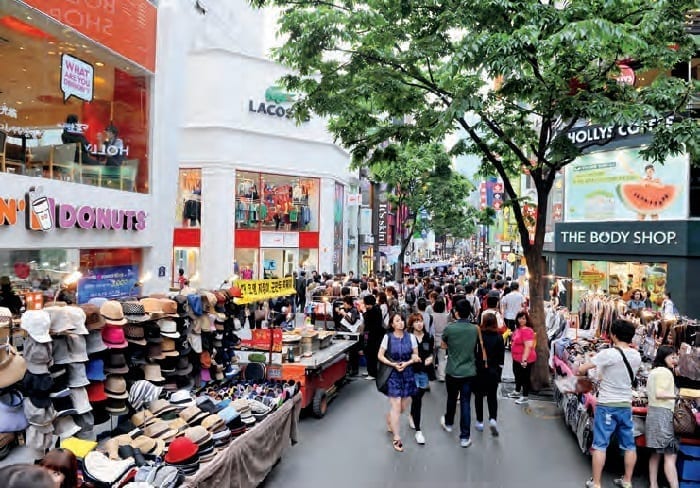
    Services rose 1.0 percent in the September quarter from the previous three-month period, also better than a 0.6 percent gain in the second quarter, most likely thanks to government efforts to launch nationwide retail sale events to pry open wallets. On the other hand, exports grew 0.8 percent with rises in exports of chemical products and semiconductors. Capital investment slipped 0.1 percent, down from 2.8 percent growth in the previous quarter.

    Government consumption grew by 1.4%, in part due to an increase in health insurance benefits.

    It left the year-on-year expansion at 2.7%, down on the 3.3% rate reported in the previous quarter.

    A BOK official remained hopeful about Korea’s outlook, saying it could achieve 2.7 percent annual growth this year, as long as the economy does not contract any further.

    Both Chung and the ministry official agreed that fourth quarter growth would also be affected by Samsung’s decision to discontinue production of its fire-prone Galaxy Note 7 smartphone, although the economic impact from lost manufacturing was almost all reflected in the third quarter.

    Construction rose 4.4 percent sequentially, driven by a growth in building construction. LGERI projects 2.2 percent growth next year.

    “With China and European Union also likely to slow, Korea faces hard external conditions”, he said.
  • Here’s why Singapore can depend on F&B industry for economic growth

    Here’s why Singapore can depend on F&B industry for economic growth

    It contributes $14.4b to the city-state’s GDP.

    The food industry has done more than relieving hunger as it has also made huge impact in the overall economic growth of Singapore, contributing a bulk to the city-state’s GDP.

    According to the Food Industry Asia report by the Oxford Economics, F&B industry contributes an estimated $14.4 billion to GDP and employs nearly 300,000 people.

    The study revealed that overall impact of the food industry is dominated by food distribution.

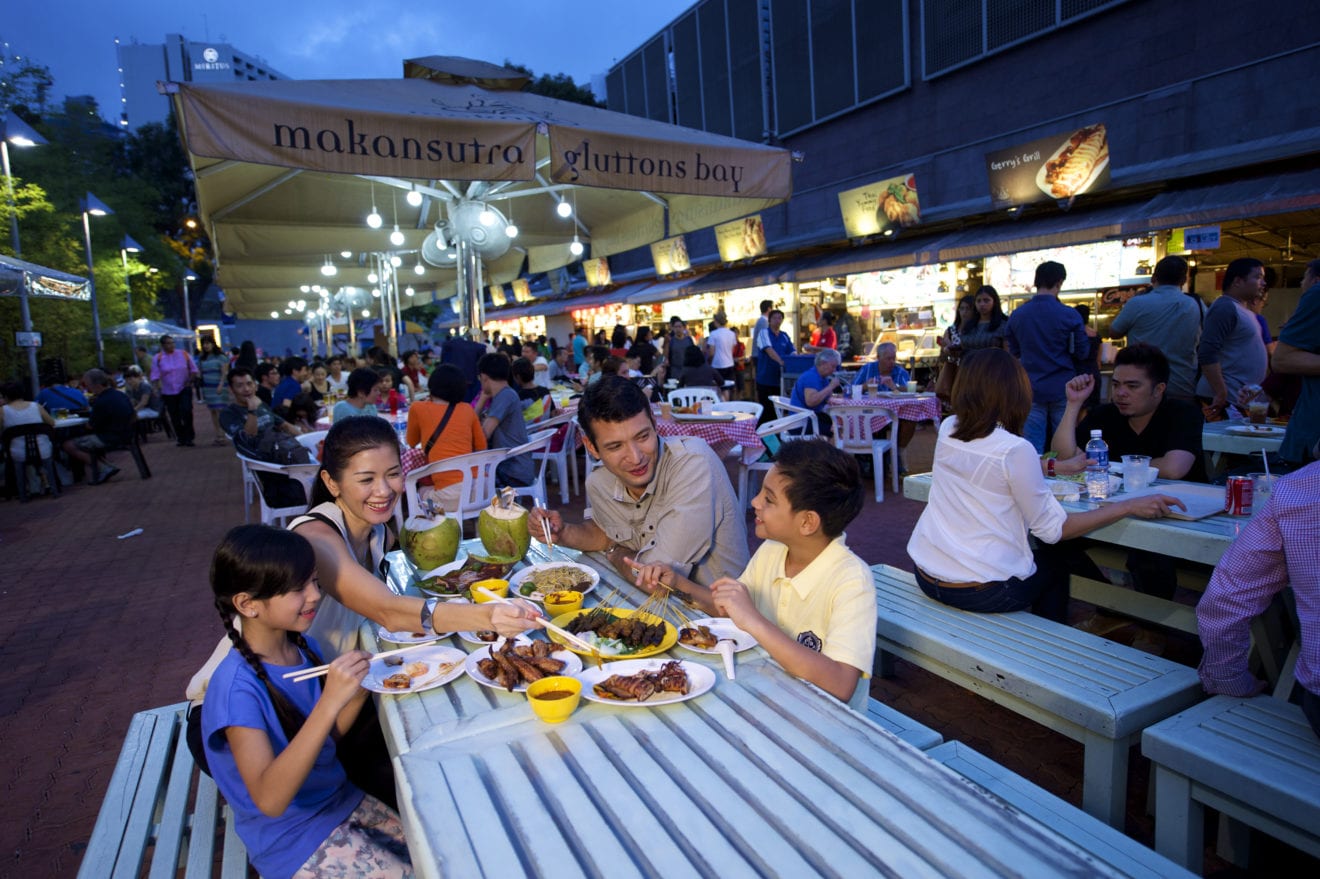
    “The wholesale and retail of food, along with activities linked to Singapore’s 6,700 food service locations (which include restaurants, coffee shops and street hawker stands) account for two-thirds of the food industry’s GDP contribution, and four-fifths of the employment it supports,” the study said.

    Meanwhile, the food manufacturing industry has also made a huge impact on Singapore’s GDP, with its direct support for 38,800 jobs.

    In 2014, the food manufacturing industry earned S$9.8 billion from sales in Singapore.

    More so, food manufacturers’ supply chain spending within Singapore supported $1.6 billion of domestic procurement, $610 million of GDP, 6,100 jobs, $31 million in tax revenues, and S$37 million in Central Provident Fund contributions in the same year.

    “Based on the report’s findings, the food manufacturing industry is equivalent in size to Singapore’s aerospace industry, and larger than industries such as speciality chemicals, petrochemicals, medical technology and land transport engineering,” the study noted.
     

  • Philippine GDP growth surpasses China

    Philippine GDP growth surpasses China

    The Philippines has surpassed China in terms of GDP growth, for the first time in three decades, making the country the best performer in Asia* in Q1 2016.

    From 5 per cent in Q1 2015, Philippine GDP surged by 6.9 per cent in Q1 2016, the highest since the second quarter of 2013, said the National Economic and Development Authority.

    Philippine GDP growth outpaced China’s 6.7 per cent, Vietnam’s 5.5 per cent, Indonesia’s 4.9 per cent, Malaysia’s 4.2 per cent, Thailand’s 3.2 per cent, and Singapore’s 1.8 per cent economic growth in the quarter.

    Luisito Abueg, economics professor from De La Salle University Manila, said many factors contributed to the Philippines’ growth.

    “GDP may have been record high, but we have to account for the increased consumption component due to elections spending. It has been documented that during election periods, consumption increases, and with more created temporary jobs, more income circulates in the market,” said Abueg.

    Abueg said credits should not only go to the Aquino administration. “Some underlying components of growth may have been realized today, but the work of previous administrations are just now bearing fruit – the so called ‘lagged effects’ in economics and statistics.

    “That is why it is important that we should always have continuity: to continue the good, and to correct the bad. Not just to change everything just for the sake of credit-grabbing, which is a usual problem in Philippine politics, affecting economic directions.”

    Recently, Robinsons Retail, Jollibee, 7-Eleven and other retail companies reported profit growth for Q1 2016 citing election-related spending among other factors.

    With the country’s population projected to have reached 102.6 million in the first quarter of 2016, per capita GDP grew by 5.2 per cent from 3.2 per cent in the same quarter of 2015. Per capita household spending grew by 5.3 per cent from last year’s growth of 4.3 per cent, reported the Philippine Statistics Authority.

    The PSA said main growth driver was the services sector, which accelerated to 7.9 per cent from 5.5 per cent, while industry grew 8.7 percent from 5.3 per cent last year.

    On the other hand, the agriculture sector declined by 4.4 per cent, the fourth consecutive quarterly decline, from a growth of 1 per cent in the first quarter of 2015.

  • Hong Kongs economic growth decelerates in Q1, risks to growth remain on downside in near term

    Hong Kongs economic growth decelerates in Q1, risks to growth remain on downside in near term

    Hong Kong registered GDP growth of 0.8% y/y in the first quarter of 2016, lower than consensus forecast. However, in quarter-on-quarter terms, the economic growth shrank 0.4%, as compared with 0.2% growth registered in the fourth quarter of 2015. The first quarter’s report suggests that the Hong Kong economy expanded at its slowest pace since 2012. The country’s trade performance is being quite impacted by the weak global demand. Hong Kong’s imports and exports both contracted sharply.

    Services exports weakened amid the deceleration of tourist arrivals and subdued spending by visitor. Hong Kong’s retail performance has been weighed on by major declines in tourist arrivals along with the relative strength of the HKD. Hong Kong’s retail sales continue to be in contraction for more than a year.

    The volatility in the global financial market has also impacted the country’s economic confidence and has been a drag on domestic demand. Private consumption expenditure grew marginally 1.1% y/y in the first quarter of 2016, as compared with the growth of 2.7% registered in the fourth quarter of 2015. Meanwhile, the property market weakened as transactions eased and prices fell.

    Hong Kong’s investment growth subtracted 2.3 percentage points from the headline GDP growth. It dropped 10.1% y/y, as compared to a contraction of 9.4% y/y in the previous quarter. Even if the relief measures stated in the 2016-2017 budget will give certain support to the economy, the risks to the economic growth continue to be tilted on the downside in the near term, noted HSBC in a research report.

    The economic growth is expected to be helped by the rapid growth in the US and stabilization in the Mainland economy in the coming quarter. The Hong Kong government has retained its growth and inflation forecast for 2016. It projects the economy to expand between 1% and 2%, whereas consumer price inflation is likely to be 2.3% this year.

    “We forecast overall GDP growth to slow to 1.5% in 2016, down from 2.4% in 2015”, added HSBC.

  • China first quarter GDP growth slowest since 2009

    China first quarter GDP growth slowest since 2009

    The pace of China’s economic growth decreased to its lowest since the global financial crisis in the January to March period, official figures show. Gross domestic product expanded 6.7% from the same period a year ago, in line with market expectations but the slowest pace of growth recorded since the first quarter of 2009.

    The world’s second largest economy grew 6.9% last year – its weakest expansion in a quarter century – falling short of Beijing’s target of 7%. But the first quarter number falls within the range of Beijing’s growth target of 6.5% to 7% for 2016.

    Other data for March released by the National Bureau of Statistics suggested that the Chinese economy was stabilising, with industrial output, retail sales and urban fixed-asset investment all beating analyst forecasts.

    Industrial production rose 6.8% from a year earlier following a 5.4% increase in January-February, while retail sales jumped 10.5%. Fixed-asset investment expanded 10.7% in the three months to March period compared to the same period a year ago, beating expectations for a 10.5% rise.

    ‘Robust growth’

    The GDP data comes two days after China’s customs agency said exports increased 11.5% from a year earlier in March, the first positive growth in overseas shipments in nine months. Imports were down a less-than-expected 7.6% following a 13.8% drop in the previous month, while the trade surplus came in at $29.9bn (£21bn; €26.3bn).

    Yuan Banknotes
    China’s central bank says it will target stability in the yuan exchange rateReuters

    Meanwhile, a Chinese deputy central bank governor said the economy had performed robustly in the first quarter but admitted that it faced several headwinds.

    “I’m pretty confident that we are going to have between 6.5% to 7% growth this year,” Yi Gang said. He reiterated that the central bank would target stability in the yuan and not allow the currency to “overshoot” its exchange rate by too much.

  • China on track for a more sustainable economic expansion

    China on track for a more sustainable economic expansion

    Investors world-over fear that China could record another worse-than-expected slowdown this year. Over the past two decades, annual GDP growth in China has averaged around an impressive 10 percent, underpinned mostly by investments, as well as exports. The IMF expects China to account for almost 18 per cent of world economic activity in 2016. Hence a bump in China’s economy can definitely not be ignored. A drop in China’s growth rate from an expansion of more than 10 per cent in 2010 to 6.3 per cent expected this year could directly knock-off about 0.75 percentage points off the global growth rate.

    The recent week’s turmoil in China has hit both stocks and currency markets, sending shock-waves through global financial markets. Stock indexes around the world have seen massive sell-offs, global markets have fallen by 7.1% since January 1st, their worst ever start to a year. The instability brings back to light China’s stock market crash and a surprise Yuan devaluation by Beijing in August 2015 which sparked a global rout, and wiped out trillions of U.S. dollars in value from Chinese equities.

    Some of China’s leading economic indicators, such as its manufacturing index and factory output, are indeed slowing. This is a rational slowdown which would deliver a healthier and more sustainable growth path. The emerging markets and the rest of the world may just have to the deal with the “new normal” of global growth as the Asian giant seeks a slower, but more sustainable, economic expansion.

    Markets will keep focus on China data-deluge, including the GDP, industrial production and retail sales due tomorrow. Expectations are for data to remain weak. Barclays forecasts Q4 GDP growth data to have slowed further to 6.6 % y/y (consensus: 6.9%) from 6.9% in Q3. Industrial production is likely to have moderated, (Barclays: +5.9%y/y; consensus: 6.0%), retail sales (+11%y/y) and fixed asset investment (+10.1%y/y).

    PBoC has strongly signaled a desire for near-term stability by keeping its USD/CNY fixings stable at about 6.56 over the past week. On Monday, the PBoC said they will start implementing RRR to some banks involved in the offshore yuan market, in a move that seemed intended to soak up additional liquidity. The spot market opened at 6.5800 per dollar on Monday and was trading at 6.5792 in early trade, 48 pips below the previous close and 0.31 percent away from the midpoint, which was set at 6.559. The offshore yuan was trading -0.18 percent away from the onshore spot at 6.591 per dollar, firmer than the previous day’s close of 6.6165.


  • China retail sales to increase 10.7 per cent

    China retail sales to increase 10.7 per cent

    China’s retail sales, a key gauge of domestic consumption, is likely to post slower growth this year compared with 2014, commerce ministry said.

    Retail sales may expand around 10.7 per cent in 2015, Shen Danyang, spokesman at the Ministry of Commerce, told a news conference in Beijing today, without giving a reason. Retail sales rose 12 per cent last year.

    In the first 11 months of 2015, retail sales grew 10.6 per cent from a year earlier. In November, retail sales increased by an annual 11.2 per cent — the strongest monthly expansion this year.

    China’s external outlook remains gloomy. Chinese firms said global demand this year was worse than that during 2008-09 financial crisis, as per a recent survey by commerce ministry of more than 6,000 firms in 70 key industries.

    Subdued external demand, rising costs, slowing investment growth and the yuan’s appreciation have all weighed on China’s trade performance this year, Shen said.

    “Feedback from firms showed foreign trade was extremely difficult this year.”

    China’s net exports are likely to contribute around 12.3 per cent to the increase in the country’s GDP this year, he said, citing data from a research unit under his ministry.

    China’s trade remained weak in November with exports falling a worse-than-expected 6.8 per cent from a year earlier and imports tumbling 8.7 per cent.