Retail News CRM

Tag: GDP

  • Vietnam to cut dependancy on crude oil

    Vietnam to cut dependancy on crude oil

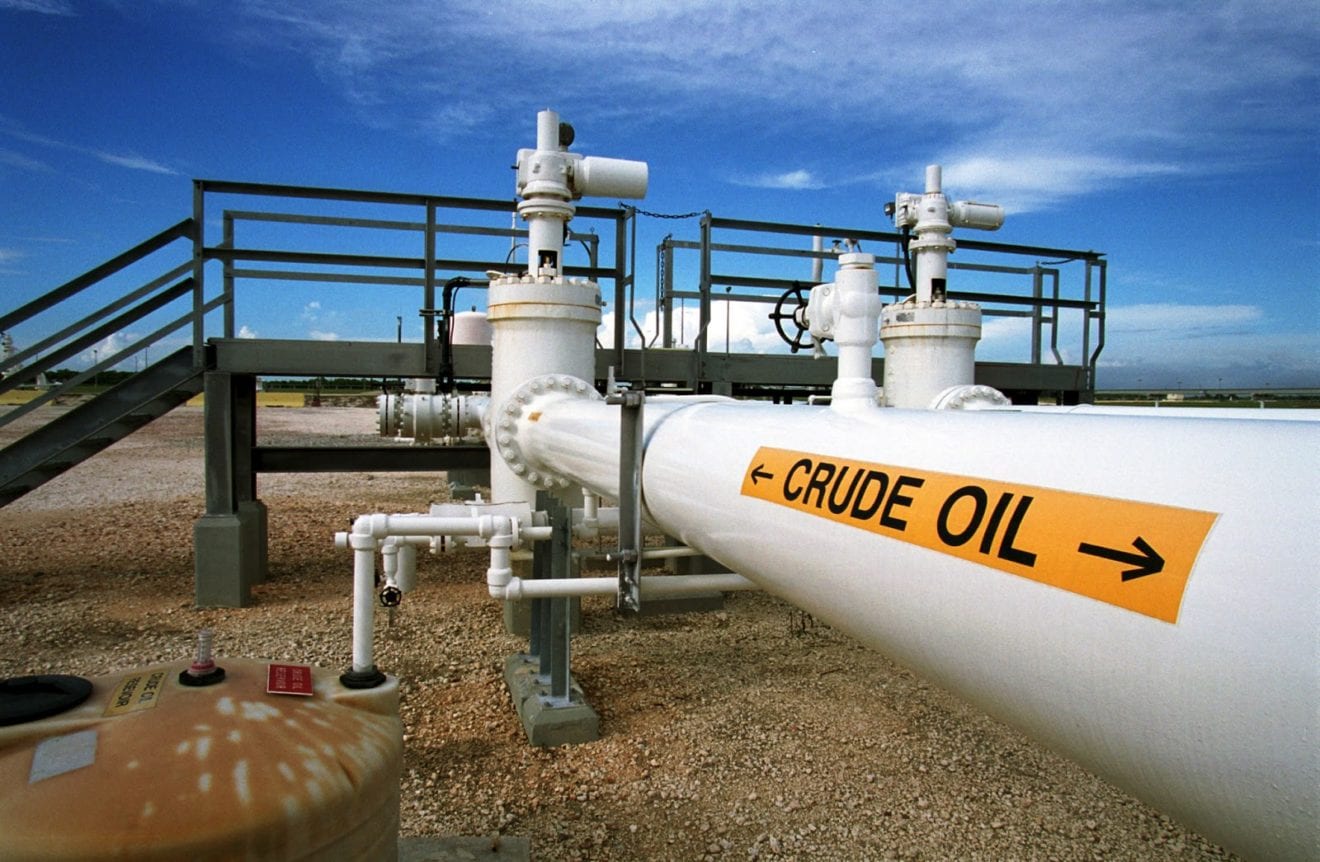
    A prime ministerial advisory body has said the state budget is overly dependent on crude oil, an unsustainable income source. The National Financial Supervisory Commission (NFSC) recently said crude oil is not a sustainable income source, both in the short and long term.

    In the short term, crude oil revenue can be affected by global oil prices and mining output; and the state budget has been significantly impacted by such fluctuations over the years, the NFSC noted.

    In the long run, this source of income is also unsustainable as national reserves are limited, it added.

    Earlier, Deputy Prime Minister Vuong Dinh Hue had said at a meeting of the legislative National Assembly that Vietnam needs to stop relying on crude oil and focus on tourism to ensure its economic growth.

    “It is better to welcome one million tourists than trying to find one million tons of crude oil because tourism is more eco-friendly and safe for the economy,” he’d said.

    Vietnam’s September crude oil exports totaled 375,000 tons, down 21.1 percent year-on-year, according to the General Statistics Office. This brought crude oil exports in the first nine months of this year to 2.97 million tons, down 45.2 percent from a year earlier.

    From early this year to September 15, accumulated budget revenue is estimated to be at VND898.3 trillion ($39.06 billion), of which VND43.5 trillion ($1.89 billion) or about 5 percent comes from crude oil, according to the General Statistics Office.

    Vietnam’s domestic crude oil production reached its peak in 2004 with an output of more than 20 million tons, but has declined to an estimated 14.2 million tons in 2017.

    It is forecast that around 11 million tons will be produced in 2018. Crude oil exports have contributed 0.25 percent to the country’s GDP in recent years.


  • Vietnam’s authority no longer certain about 2020 GDP target

    Vietnam’s authority no longer certain about 2020 GDP target

    Vietnam’s GDP per capita is set to increase this year, but its 2020 target of $3,200-3,500 looks distant. Minister of Planning and Investment Nguyen Chi Dung said at a National Assembly meeting Monday that if Vietnam’s GDP increases by 6.7 percent this year, per capita GDP will reach $2,540, up $155, or 6.1 percent year-on-year, and 1.21 times that of 2015.

    However, the number is still far away from the country’s target of $3,200-3,500 by 2020, he conceded.

    According to World Bank Group statistics, Vietnam’s GDP per capita in 2017 is $2,343. The figure for Singapore is $57,714, Malaysia ($9,945), Thailand ($6,594), the Philippines ($2,989) and Myanmar ($1,298).

    Minister Dung estimated that Vietnam’s GDP would grow by 6.57 percent on average in the 2016-2018 period, meeting the National’s Assembly target of 6.5-6.7 percent growth.

    However, he expressed concerns about the increasing number of businesses that stopped operations in the first nine months of this year.

    While 96,610 new businesses opened, 73,100 closed, up 48 percent year-on-year.

    These figures worried government officials at the meeting. Vu Hong Thanh, Chairman of the National Assembly’s Economic Committee, said that the goal of having one million businesses by 2020 will be “difficult to achieve.”

    Last year Vietnam had over 560,000 active businesses, up 11 percent year-on-year, according to the General Statistics Office.

    But in another meeting last week, Deputy Prime Minster Vuong Dinh Hue said that the goal “is full of challenges, but achievable.”

    Hue said that how strong these businesses are and how much they can contribute to the economy is more important.

    “The government aims to practically improve the business environment by not imposing more conditions,” he said.

    In the first nine months this year, Vietnam’s GDP grew by 6.98 percent, the highest nine-month growth rate since 2011. The economy grew by 6.81 percent last year, the highest rate in a decade.

  • Vietnam urged to cut dependence on crude oil

    Vietnam urged to cut dependence on crude oil

    A prime ministerial advisory body has said the state budget is overly dependent on crude oil, an unsustainable income source. The National Financial Supervisory Commission (NFSC) recently said crude oil is not a sustainable income source, both in the short and long term.

    In the short term, crude oil revenue can be affected by global oil prices and mining output; and the state budget has been significantly impacted by such fluctuations over the years, the NFSC noted.

    In the long run, this source of income is also unsustainable as national reserves are limited, it added.

    Earlier, Deputy Prime Minister Vuong Dinh Hue had said at a meeting of the legislative National Assembly that Vietnam needs to stop relying on crude oil and focus on tourism to ensure its economic growth.

    “It is better to welcome one million tourists than trying to find one million tons of crude oil because tourism is more eco-friendly and safe for the economy,” he’d said.

    Vietnam’s September crude oil exports totaled 375,000 tons, down 21.1 percent year-on-year, according to the General Statistics Office. This brought crude oil exports in the first nine months of this year to 2.97 million tons, down 45.2 percent from a year earlier.

    From early this year to September 15, accumulated budget revenue is estimated to be at VND898.3 trillion ($39.06 billion), of which VND43.5 trillion ($1.89 billion) or about 5 percent comes from crude oil, according to the General Statistics Office.

    Vietnam’s domestic crude oil production reached its peak in 2004 with an output of more than 20 million tons, but has declined to an estimated 14.2 million tons in 2017.

    It is forecast that around 11 million tons will be produced in 2018. Crude oil exports have contributed 0.25 percent to the country’s GDP in recent years.
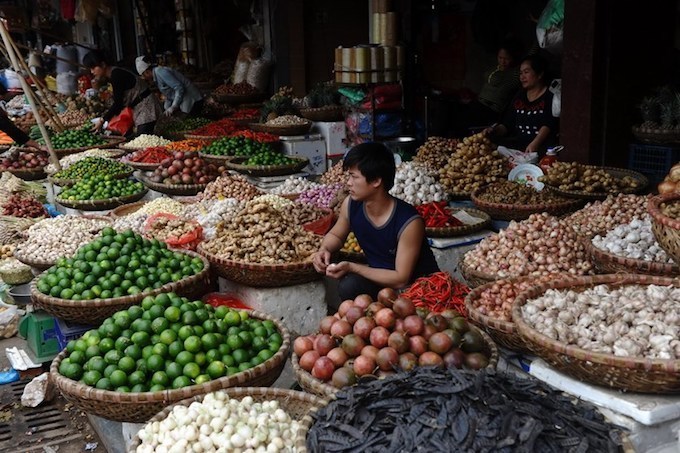
  • Vietnam’s per capita GDP long way away from 2020 target

    Vietnam’s per capita GDP long way away from 2020 target

    Vietnam’s GDP per capita is set to increase this year, but its 2020 target of $3,200-3,500 looks distant. Minister of Planning and Investment Nguyen Chi Dung said at a National Assembly meeting Monday that if Vietnam’s GDP increases by 6.7 percent this year, per capita GDP will reach $2,540, up $155, or 6.1 percent year-on-year, and 1.21 times that of 2015.

    However, the number is still far away from the country’s target of $3,200-3,500 by 2020, he conceded.

    According to World Bank Group statistics, Vietnam’s GDP per capita in 2017 is $2,343. The figure for Singapore is $57,714, Malaysia ($9,945), Thailand ($6,594), the Philippines ($2,989) and Myanmar ($1,298).

    Minister Dung estimated that Vietnam’s GDP would grow by 6.57 percent on average in the 2016-2018 period, meeting the National’s Assembly target of 6.5-6.7 percent growth.

    However, he expressed concerns about the increasing number of businesses that stopped operations in the first nine months of this year.

    While 96,610 new businesses opened, 73,100 closed, up 48 percent year-on-year.

    These figures worried government officials at the meeting. Vu Hong Thanh, Chairman of the National Assembly’s Economic Committee, said that the goal of having one million businesses by 2020 will be “difficult to achieve.”

    Last year Vietnam had over 560,000 active businesses, up 11 percent year-on-year, according to the General Statistics Office.

    But in another meeting last week, Deputy Prime Minster Vuong Dinh Hue said that the goal “is full of challenges, but achievable.”

    Hue said that how strong these businesses are and how much they can contribute to the economy is more important.

    “The government aims to practically improve the business environment by not imposing more conditions,” he said.

    In the first nine months this year, Vietnam’s GDP grew by 6.98 percent, the highest nine-month growth rate since 2011. The economy grew by 6.81 percent last year, the highest rate in a decade.

  • Malaysia’s GDP growth to moderate to 4.9% for 2018

    Malaysia’s GDP growth to moderate to 4.9% for 2018

    Malaysia’s economic growth is expected to ease to 4.9% in 2018, as export growth slows and lower public investment following the cancellation of major infrastructure projects, said World Bank chief economist for the East Asia and Pacific region Sudhir Shetty.

    As a highly open economy, he said Malaysia will continue to face substantial risks relating to uncertainty in the external environment.

    Heightened financial market volatility either triggered by shifting monetary policy expectations in advanced economies could spread across emerging economies, including Malaysia.

    Another key risk relates to the escalation in protectionist tendencies and trade tensions in some major economies that could have an adverse impact on Malaysia, given its high level of integration with global markets.

  • Vietnam 9-month GDP growth highest in 8 years

    Vietnam 9-month GDP growth highest in 8 years

    Vietnam’s GDP grew by 6.98 percent between January and September, the highest nine-month growth rate since 2011.

    Data released by the General Statistics Office (GSO) Friday showed growth in the third quarter was 6.88 percent year-on-year.

    In the year-to-date agriculture and fisheries grew by 3.65 percent, the highest since 2012. Industry and construction grew by 8.89 percent and services by 6.89 percent.

    Between January and September, the country earned $178.9 billion from exports, a year-on-year increase of 15.4 percent, while spent $173.52 billion on imports, up 11.8 percent.

    Exports of 26 items each topped $1 billion. Three of them exceeded the $10-billion mark: electronics-computers-components, machinery-equipment and phones-components.

    Inflation was at 3.57 percent in the first nine months of this year. Vietnam set target to keep inflation below 4 percent for the whole year.

    “Growth in the first nine months showed many positive results. However, there are still many challenges, especially in the background of the China-U.S. trade war,” GSO general director Nguyen Bich Lam said on Friday.

    The escalating trade friction between the U.S. and China poses a threat to countries like Vietnam which exports intermediate goods to China, while weaker global demand will also act as a drag on growth prospects, Reuters quoted Capital Economics as saying Friday.

    The research firm projected Vietnam’s growth rate to slow down from 7 percent this year to 6 percent in 2019 and 2020.

    But the trade spat has not yet affected Vietnam’s exports to the U.S, Lam said. Vietnam could seek opportunities to boost exports and welcome foreign investments, while watching out for risks including transhipment to avoid tax, similar tariffs imposed on Vietnam and global trade contraction, he added.

    In a report issued Wednesday, the Asian Development Bank forecast Vietnam’s GDP to expand by 6.9 percent this year.

    The economy grew by 6.81 percent last year, the highest rate in a decade.

  • Malaysia’s second quarter GDP growth expected to ease to 5.2%

    Malaysia’s second quarter GDP growth expected to ease to 5.2%

    Malaysia’s economic growth pace likely slowed again in the second quarter of 2018, a Reuters poll showed.

    The median of forecasts from 14 economists is for annual growth of 5.2% in April-June. That would be a dip from January-March’s 5.4% and make the latest quarter – during which Malaysia surprisingly got a new government – the third in a row of slowing growth.

    Forecasts for second quarter growth ranged from 4.7-5.6%.

    “Growth likely eased in Q2 and may continue to moderate, with growth drivers shifting more to private consumption than investment,” Standard Chartered said in a research note.

    The bank said growth may have been weighed down by a 6.4% drop in palm oil production from a year earlier and by Prime Minister Tun Dr Mahathir Mohamad’s push to review major infrastructure projects which has spooked investors.

    Since his coalition gained power in a shock May general election, Mahathir has scrapped a broad-based consumption tax and announced plans to potentially scrap multi-billion dollar rail projects with China and Singapore.

    Mahathir, who at 93 is on his second stint as premier, has said that mismanagement by the past administration has caused national debt to balloon to RM1 trillion.

    Ratings firm Moody’s said demand for tech exports has helped Malaysia’s manufacturing and exports in the second quarter, along with higher private spending following a tax holiday that started in early June when the government zero-rated its goods and services tax.

    “The brakes will be applied a little to the upbeat growth engine in the second half as the newly elected government has ended some infrastructure projects,” Moody’s said in a research note on Aug 7.

    Malaysia’s central bank left its key interest rate unchanged at 3.25% in July, at its first policy meeting under new governor Datuk Nor Shamsiah Mohd Yunus.

    The central bank raised its rate by 25 basis points in January, its first hike since July 2014, and the first change since July 2016 when it slashed the rate by 25 basis points.

  • US-China trade war could drag Vietnam GDP down

    US-China trade war could drag Vietnam GDP down

    Vietnam’s GDP could drop slightly as a result of the ongoing US-China trade war, a new report says.

    The report, released Wednesday by the National Center for Socio-Economic Information and Forecast (NCIF), predicts a drop of 0.03 percent this year, 0.09 percent next year and 0.12 percent in 2020 and 2021.

    This equals to a GDP drop of VND1.65 trillion ($71 million) this year and VND5.3 trillion ($228 million) next year. The decline will climax at VND8 trillion ($344 million) in 2021, says the NCIF, which functions under the Ministry of Planning and Investment.

    This drop is “relatively low,” even at the climax in 2021, said Tran Toan Thang, head of NCIF’s Department of World Economic Issues.

    While Vietnam’s exports will also decrease because of the negative impacts of the trade war, there will be negligible impact on foreign direct investment, Thang said.

    He also expressed concern over the new U.S. tax law that lowers its business tax rate from 35 percent to 21 percent, he added.

    The new law might make U.S. businesses reconsider their investment strategies to focus more on their home country instead of expanding in Vietnam, Thang said.

    The tax deduction might also result in some countries creating more incentives to retain U.S. investments. China has recently said it would temporarily give U.S. firms tax exemptions to stop them from withdrawing from the country, Thang noted.

    “This move will lower competitiveness of the investment environment in Vietnam,” he added.

    Tension escalates

    Trade tension between the U.S. and China continues to escalate. A Reuters report cited Beijing saying on Wednesday that it would slap additional tariffs of 25 percenton $16 billion worth of U.S. imports.

    The announcement came after Washington said it would impose 25 percent tariffs on another $16 billion in Chinese goods after imposing tariffs on $34 billion last month.

    So far, China has now either imposed or proposed tariffs on $110 billion of U.S. goods, representing the vast majority of its annual imports of American products.

    Experts have previously cautioned that Vietnam will suffer collateral damage from this trade war.

    When large corporations no longer see the attractiveness of developing countries, their capital will flow back to the big countries, said Pham Sy Thanh, a department head at the Vietnam Institute for Economic and Policy Research (VEPR).

    For this reason, the abundance of labor will no longer be a perk for developing countries like Vietnam, Thanh told VnExpress.

    Local economists are also concerned that the weakened Chinese yuan will result in a rush of low quality Chinese goods to Vietnam, including textiles, garments and wood products.

    This is not just a trade war, but “a war on power, technology and currency policy between the world’s two largest economies,” Tran Tuan Anh, Minister of Industry and Trade said at a government meeting last month.

  • Vietnam’s GDP growth to slow after record performance in Q1

    Vietnam’s GDP growth to slow after record performance in Q1

    Vietnam’s decade high growth in the first quarter is forecast to slow during the rest of the year, a parliamentary meeting heard on Monday.

    The country’s gross domestic product (GDP) grew 7.38 percent in the first three months thanks to strong performance in three key economic sectors, agriculture, industry-construction and processing-manufacturing, said deputy prime minister Truong Hoa Binh at the opening meeting of the 14th National Assembly, the highest legislative body in Vietnam.

    However, the deputy PM pointed out that GDP growth is unlikely to maintain its momentum for the rest of the year and slow down instead due to lack of any breakthrough factors compared to last year.

    In 2017, Vietnam’s economy expanded rapidly due to strong exports driven by South Korea’s electronics giant Samsung and Taiwanese steel firm Formosa.

    The deputy PM expects this year’s main driver of growth to be processing-manufacturing, the most likely sector to see any breakthroughs.

    Growth this year will be undermined by lower mining output, especially crude oil extraction which is forecast to be down by 2 million tons compared to 2017.

    The reduced tax on some items imported from ASEAN countries is also believed to obstruct growth, deputy PM Binh said.

    Vu Hong Thanh, chairman of the Economic Committee of the National Assembly, said high growth achieved in the first quarter has created a big challenge for the rest of the year if Vietnam is to aim for ever higher growth.

    Thanh is also concerned about increasing healthcare, education and food prices, which are forecast to contribute 2-2.5 percentage points to this year’s inflation hike.

    Protectionism and trade tensions between China and the U.S. have also affected Vietnam’s trade activities, Thanh said.

    The committee asked the government to pay greater attention to growth quality, restructure the economy and to continue to closely monitor the situation, keeping adjustments to fuel, service and food prices in mind.

    Vietnam’s annual trade now exceeds 185 percent of GDP, making it the second most trade dependent economy in Southeast Asia, behind Singapore, according to the Asian Development Outlook 2018 report released last month.

    The Ministry of Planning and Investment has forecast country’s economic growth this year to be at 6.7 or 6.8 percent.

  • China’s Q2 GDP growth seen easing to around 6.7 percent

    China’s Q2 GDP growth seen easing to around 6.7 percent

    China’s economy will likely expand around 6.7 per cent in the second quarter this year, the State Information Center (SIC) said in an article in the state-owned China Securities Journal on Saturday.

    The forecast was slightly slower than the 6.8 per cent expansion posted in the first quarter. The SIC is an official think tank affiliated with the National Development and Reform Commission, the country’s top economic planning agency.

    April activity data released earlier this week suggested that the world’s second-largest economy is starting to lose some momentum, as analysts have long predicted, as the government continues a crackdown on riskier types of financing.

    While still expanding at a good clip, retail sales and fixed asset investment grew more modestly than expected while property sales fell for the first time in six months in the face of continued government curbs on speculation and rising mortgage rates.

    The lone bright spot was a rebound in industrial output, though the outlook for exporters is being clouded by trade frictions with the United States.

    The official think tank expects dollar-denominated exports to grow around 8 per cent in the second quarter versus a year earlier and imports to rise about 10 per cent.

    It forecast consumer inflation of around 2 per cent and expected producer price inflation would pick-up to about 3.8 per cent in the second quarter from a year earlier.

    The think tank suggested the government “maintain flexibility in macro economic policy and actively deal with trade frictions between the United States and China … to ensure a steady and healthy development of the country’s broader economy.”

    In the same article, the SIC said it expects China’s industrial output to grow about 6.6 per cent in April-June from a year earlier, with fixed-asset investment growth of around 7.2 per cent and retail sales seen rising about 10 per cent.

    China’s statistics bureau said this week that steady economic growth in April made a good foundation for achieving the full-year growth target.

  • With Fastest Growth in Four Years, Indonesia Enters Trillion Dollar Club

    With Fastest Growth in Four Years, Indonesia Enters Trillion Dollar Club

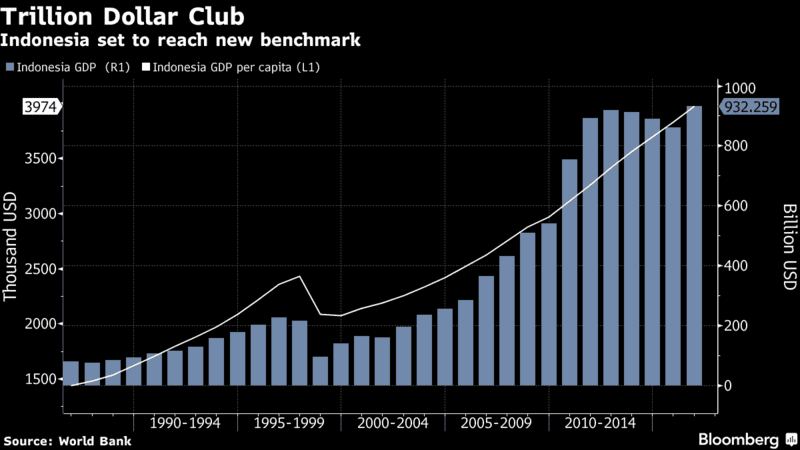
    Indonesia’s full-year gross domestic product growth last year accelerated at the fasted pace in four years, as robust exports and investment growth compensate for weak household consumption, the Central Statistics Agency, or BPS, revealed on Monday (05/02).

    The agency said the economic growth rate was 5.07 percent, the highest since 2014. In 2015, the economy grew only 4.88 percent, while in 2016 at a 5.03 percent rate.

    Indonesia’s nominal gross domestic product was Rp 13,558 trillion, or $1 trillion at the 2017 exchange rate. This places Indonesia in a group of countries with economies above $1 trillion, like Australia, South Korea and India.

    Coordinating Economics Minister Darmin Nasution said he is optimistic this year’s economic growth rate will meet the government’s target of 5.4 percent, as he expects domestic consumption to rise with the upcoming regional elections and the Asian Games in August.

    “[We are] still optimistic … As long as we maintain the investment and exports,” Darmin said.

    Darmin needed to put economic growth in a more positive light, as the 5.2 percent target from the revised 2017 state budget was missed, because consumers withheld spending.

    “The top 20 percent of consumers tended to postpone their spending. There were concerns about politics and aggressive tax policies. Meanwhile, the lowest 40 percent were hit by rising food prices,” said Bhima Yudhistira Adinegara, an economist at the Institute for Development of Economics and Finance (Indef).

    “The key now is in recovering the confidence of the upper class and ensuring timely disbursement of social aid,” Bhima said.

    Gundy Cahyadi, a Singapore-based economist at DBS, said infrastructure projects are expected to continue supporting economic growth in 2018.

    “And if commodity prices are to remain at current levels, we expect investment growth to be more broadly based this year, with possibly positive spillover impact to household consumption,” Gundy said, adding that he expects Indonesian economy to expand by 5.3 percent in 2018.

    In 2017, Indonesia posted a five-year high of $11.84 billion trade surplus, thanks to the recovering global economy and rising commodity prices, with an increase in exports and imports — 9.09 percent and 8.06 percent, respectively.

    Foreign direct investment grew 8.5 percent last year from the previous year.

    “Trade and investments increased, but [household] consumption was still at 4.95 percent. If we want the economy to grow above 6 percent, these three components have to go hand in hand,” BPS head Suhariyanto told reporters.g

  • China’s 2017 GDP growth could reach 6.9%

    China’s 2017 GDP growth could reach 6.9%

    China’s GDP growth for 2017 may stay at 6.9 per cent, thanks to favourable internal and external conditions.

    China’s GDP growth for 2017 may stay at 6.9 per cent, thanks to favourable internal and external conditions despite the cool-off in the real estate sector and ongoing environmental protection measures, economists said.

    Xu Hongcai, an economist with the China Centre for International Economic Exchanges, said China’s year-on-year GDP growth for 2017 could be a higher-than-expected 6.9 per cent.

    The world’s second-largest economy expanded by 6.9 per cent in the first three quarters of 2017, which is above the government’s preset growth target of 6.5 per cent.

    Foreign trade recovered last year, consumption demand remained steady and high-tech sectors became stronger, contributing to the high growth rate, Xu said. Foreign trade rose 14.2 per cent year-on-year in 2017, reversing a two-year declining trend, according to the General Administration of Customs’ latest data.

    Zhu Baoliang, chief economist of the State Information Centre, said the stable GDP can be attributable to the country’s macroeconomic regulation since 2015, which had led to stable infrastructure and real estate investment to bolster growth. He said the supply-side structural reform had reduced production capacities and pushed up industrial goods prices, leading to surging corporate profits.

    Moreover, China had made much headway in economic restructuring, which has given rise to some new products, technologies and sectors. And the improving global economy has boosted China’s export growth, he added.

    Investment bank Goldman Sachs forecast that China’s GDP growth for 2017 could hit 6.8 per cent. “Economically, growth moved higher (than for 2016’s 6.7 per cent), reflecting better external conditions and the fruits of past policy changes,” it said in its latest report.

    The report said China has also managed to make some regulatory achievements to control financial risks. “Broad credit growth slowed from a pace of more than 20 per cent to the low tens on a clampdown on shadow banking activity. In asset markets, policymakers reined in surging house prices, stabilised the currency after a volatile 2015-16, and oversaw a steady equity rally,” the report said.

    The National Bureau of Statistics is scheduled to release the country’s key economic data, including whole year GDP growth, industrial output, fixed asset investment, and retail sales, on Thursday.

    Premier Li Keqiang said last week at the Lancang-Mekong Cooperation Leaders’ Meeting that China’s GDP growth for 2017 is “around 6.9 per cent”. China had maintained the trend of stable and improving growth in 2017, he said. Ning Jizhe, head of the NBS, said at a forum held on Saturday that the Chinese economy “showed sound momentum last year and did better than expected”.

  • Singapore Upgrades 2017 Growth Forecast to as Much as 3.5%

    Singapore Upgrades 2017 Growth Forecast to as Much as 3.5%

    Singapore raised its economic growth forecast for this year to 3 percent to 3.5 percent after third-quarter data beat projections on the back of stronger exports and manufacturing.

    Highlights of GDP Report
    • Gross domestic product rose at a seasonally adjusted, annualized rate of 8.8 percent in the third quarter from the previous three months, higher than an earlier estimate of 6.3 percent
    • Median estimate of nine economists in a Bloomberg survey was for 7.8 percent gain
    • GDP increased 5.2 percent from year earlier, the fastest pace in more than three years, versus median estimate of 5 percent
    • Economy seen expanding 1.5-3.5 percent next yearPrime Minister Lee Hsien Loong

    A healing in global trade this year has helped boost export-reliant economies like Singapore’s, with manufacturing buoyed by demand for electronics goods. Growth has started to broaden out to other industries, such as services, giving economists and the government reason to upgrade their full-year projections. said earlier this week that growth could exceed 3 percent in 2017.

    The trade ministry said on Thursday global growth is expected to improve next year, on the back of a pick-up in the U.S. and some emerging markets.

    “We also see signs that the recovery is broadening,” with business services and retail looking better even though third-quarter growth was “primarily supported by manufacturing,” Loh Khum Yean, permanent secretary at the trade ministry, told reporters.

    Manufacturing surged almost 35 percent in the third quarter from the previous three months, while the services industry, which makes up about two-thirds of economy, grew an annualized 3.2 percent. Construction continued to suffer, contracting for a third quarter by 5.3 percent.

    Southeast Asia Boom

    Growth has been surprisingly strong across Southeast Asia, with third-quarter data from the Philippines and Malaysia last week and Thailand this week exceeding forecasts, providing a more upbeat tone to the region as the U.S. Federal Reserve tightens monetary policy.

    Jacqueline Loh, deputy managing director at Singapore’s central bank, told reporters the monetary policy stance from October remains appropriate and the regulator will continue to monitor developments. The Monetary Authority of Singapore left its policy stance unchanged last month, but gave itself room to tighten if necessary.

    In a separate report, International Enterprise Singapore forecast export growth of 6.5-7 percent for this year, compared with a previous estimate of 5-6 percent, and estimated 0-2 percent expansion next year.

    “The pace of growth of the Singapore economy is expected to moderate in 2018 as compared to 2017, but remain firm,” the trade ministry said.

    — With assistance by Myungshin Cho, and Ailing Tan

  • Mobile contributed 6.2% to Bangladesh GDP in 2015

    Mobile contributed 6.2% to Bangladesh GDP in 2015

    Mobile technologies and services generated 6.2% of the GDP of Bangladesh in 2015, a contribution that amounted to around $13 billion of economic value, according to GSMA Intelligence.

    In the same year, mobile operators and the ecosystem provided employment to more than 760,000 people across Bangladesh, the report further stated. One-third of this was created directly in the ecosystem, while the rest is generated indirectly in other sectors as a result of the demand for production inputs generated by the mobile sector.

    “GSMA Intelligence findings clearly demonstrate the substantial contribution that mobile makes to the Bangladeshi economy,” GSMA head of spectrum Brett Tarnutzer said.

    “By systematically pursuing a policy framework that increases certainty, acknowledges market realities and removes regulatory barriers to investment and innovation, the Bangladeshi government and its citizens stand to achieve so much in the coming years.”

    In terms of public contribution, the mobile ecosystem generated about 10% of the government’s revenue in 2015, valued at $2.42 billion through general taxation, mobile-specific taxes, and spectrum licenses.

    Mobile’s overall impact includes the direct impact of the mobile ecosystem as well as the indirect impact and the increase in productivity brought about by the use of mobile technologies.

    GSMA added that Bangladesh performs close to the regional averages across metrics of mobile market development, despite a lower income than neighboring countries. Bangladesh is above the Asian average in terms of unique subscriber market penetration at 53%, while only slightly below with regard to mobile internet penetration at 33% and 3G at 20% of all mobile connections.

    Thus, it sees the potential for further growth if a supportive policy environment is put in place.

    GSMA Intelligence expects that the economic contribution of the mobile industry in Bangladesh will continue to increase. In value-added terms, it is estimated that the ecosystem will generate $17 billion by 2020. This forecast relies on a favorable macroeconomic environment and on a moderate expansion in demand and supply in the mobile market, as the number of mobile internet users and mobile coverage both increase.

    Employment opportunities are also set to expand from 780,000 jobs in 2016 to 850,000 jobs in 2020, an increase of around nine percent during that period.

    The amount of spectrum, and the terms on which it is made available, fundamentally drive the cost, range, and availability of mobile services. To ensure that this mobile vision becomes a reality, it is imperative that the spectrum is allocated in a way that encourages the rapid deployment of mobile broadband infrastructure, resulting in high quality, affordable mobile services for consumers across Bangladesh,” added Tarnutzer.

  • Why obsessing over GDP is no longer in China’s best interests

    Why obsessing over GDP is no longer in China’s best interests

    China’s leadership has always seen gross domestic product (GDP) numbers as the most important indicator of their ability of govern; thus their whole apparatus does whatever it can, in terms of policies, to make sure a politically acceptable growth rate is achieved.

    With a persistent slowdown, the government has to adjust its target to a maximised but achievable goal. Between 2010 and 2015, the world’s second-largest economy witnessed a steady slowdown, with annual percentage growth rates of 10.5, 9.5, 7.9, 7.8, 7.3 and 6.9, respectively. Averaged annual GDP growth rates between 1989 and 2009 were around 10 per cent.

    Last year, the government set a range of 6.5 per cent to 7 per cent as a growth target, the lowest in decades. As expected, China is on track to meet that 2016 goal after three straight quarters of 6.7 per cent expansion.

    However, such growth was achieved with an expansive fiscal policy, higher government spending, a housing rally, ultra-loose monetary conditions and record bank lending, which have also led to an explosive increase in debt.

    Government spending from January to September 2016 was 12.5 per cent up on the same period a year earlier, while revenues increased by 5.9 per cent. Of the 8.2 per cent overall growth in fixed-asset investment in the period, state firms jumped by 21.1 per cent and private firms rose 2.5 per cent.

    In the previous year, state firms registered a much more moderate 10.9 per cent in fixed-asset investment, year on year, while private investment went up by 10.1 per cent.

    Recent growth has been achieved with the help of record bank lending, which is on pace to top 2015’s record 11.71 trillion yuan (HK$12.2 trillion). Last year, the central bank injected a net 1.5 trillion yuan into money markets through open market operations, many multiples of its net 10 billion yuan injection in 2015.

    The eased monetary policy helped stoke a housing boom that saw prices rise to a historic 12.6 per cent year on year in November and made houses in Chinese cities among the least affordable in the world.

    The state investment-fuelled growth led to alarming combined public and private debt of 260 per cent of GDP by the end of last year, the highest debt-to-GDP ratio in the world. The Bank for International Settlements (BIS) recently warned this was excessive and dangerous. In the first six months of last year, China’s domestic debt ratio rose by an astonishing 28 per cent of GDP.

    Last year the party set a target of 6.5 per cent annual growth for five years through to 2020, in its 13th five-year plan, just to meet the leadership’s promise of doubling the country’s economic size and per capita income from 2010 to 2020, a political symbol of building a “moderately prosperous society”.

    To support such short-term growth, the government had to delay, stall or even hold back some sorely needed reform measures which will help regain long-term growth momentum.

    Realising the challenge of taming asset bubbles, solving rising bad debt and checking unbalanced growth, the leadership recently pledged to shift its focus away from growth towards dealing with risks this year.

    If the leadership makes good on what they claimed – giving market forces a decisive role in the distribution of resources – they should abandon arbitrary growth targets, a remnant a Stalinist command economy.

    China’s economy is going through a critical transition, from manufacturing-oriented and state investment-fuelled expansion to service-centred and consumption-driven growth. What the government should do is push forward reforms that remove the obstacles to such transitions.