Retail News CRM

Tag: global

  • Global Telecom Equipment Revenues Fell 11% in 2024

    Global Telecom Equipment Revenues Fell 11% in 2024

    This indicates the largest annual decline in over 20 years, with a decline of over 20% seen back in 2002. This has led to a total equipment revenue decrease of 14% over the past two years.

    The decline was widespread across telecom segments and was influenced by factors such as excess inventory, a challenging macro environment, and tough 5G comparisons. In the fourth quarter of 2024, growth in North America and Europe, the Middle East, and Africa (EMEA) helped stabilize the market, offsetting weak demand in the Asia Pacific, including China.

    The decline in 2024 varied across the six telecom segments. Optical transport, SP routers, and RAN experienced double-digit contractions, shrinking by 14% collectively. Microwave transport and MCN experienced a more moderate decline in the low single digits, while broadband access revenues remained relatively stable.

    Regional trends in 2024 were mixed. While all five regions—North America, EMEA, Asia Pacific, China, and the Caribbean and Latin America (CALA)—experienced slow growth, the decline was most significant in the broader Asia Pacific region due to challenging conditions in China and other parts of the Asia Pacific.

    Globally, supplier rankings remained mostly unchanged; however, revenue shares shifted slightly. For example, Huawei’s revenue share outside of China increased by 2-to-3 percentage points (PP) in 2024 compared to 2021.

    Market concentration remained stable, with the top eight suppliers making up around 80% of the global market in 2024. Market conditions are expected to stabilize in 2025, although it will still be a challenging year. Analysts predict that global telecom equipment revenues across the six sectors will remain flat.

  • Global tech investors continue to bet on Vietnam

    Global tech investors continue to bet on Vietnam

    Vietnam’s growing capacity to make complex tech products is attracting more foreign investors who are setting up factories.

    Apple supplier BOE Technology Group plans to invest US$400 million to build two factories in Vietnam, Reuters reported recently.

    The report said it is in talks to lease land in the north to put up factories to add to its relatively small plant in the south that supplies mostly television screens to South Korea’s Samsung and LG Electronics.

    BOE is the latest tech company to eye Vietnam as its next manufacturing hub, where already smartphones, laptops and cameras are made by or for multinationals such as Samsung and Apple.

    In the north, where Apple suppliers such as Luxshare and Foxconn already have a presence, BOE will lease 100 hectares to build a $150-million plant for making remote control systems on 20 ha and others for manufacturing displays.

    BOE will invest $250 million in a plant on 50 ha while suppliers will use the remaining 30 ha.

    Everything will be in place by 2025.

    The company plans to make the more sophisticated organic light-emitting diode, or OLED, screens there rather than liquid-crystal displays.

    A recent survey by German logistics firm Container xChange found that 67.3% of respondents believe Vietnam and India will rise as container shipping hubs in 2023.

    They expect the two countries to change the global shipping industry as companies look to expand their network of manufacturing locations, the survey, which polled 2,600 industry professionals in 20 countries, said.

    Their expectations seem to be influenced by the fact that many tech giants established or expanded their presence in Vietnam last year.

    In December Apple was reported to soon begin MacBook production in Vietnam for the first time, while Samsung, which has been making half of its smartphones in Vietnam, opened its biggest research and development center in Southeast Asia in Hanoi.

    American aviation firm Boeing held its first Aerospace Industry Forum in Vietnam in August, seeking local suppliers for its global supply chain.

    U.S. company Synopsys, one of the world’s biggest chip design software makers, is set to invest in and shift its engineer training to Vietnam, while last year South Korea’s Amkor Technology signed a deal to set up a $1.6-billion semiconductor materials manufacturing factory in the northern province of Bac Ninh.

    “Vietnamese workers have been improving in their tech manufacturing capability, and foreign companies such as Samsung have been increasingly recruiting locals from the top local universities,” Do Thi Thuy Huong, a member of the Vietnam Electronics Industries Association’s executive board, said.

    In the last five years Vietnam has expanded its presence in supply chains and is now capable of making complex products, which is why more foreign firms are choosing it as their next manufacturing hub, she told VnExpress International.

    The Politburo, the Communist Party’s highest body, issued a decree in 2019 that sought to improve the quality of foreign projects in the country.

    FDI plays a major role in the Vietnamese economy, accounting for a large share of all investment. FDI disbursement last year rose 13.5% to $22.4 billion.

    In September last year Prime Minister Pham Minh Chinh told a group foreign business executives that Vietnam would create a safe and transparent investment environment and urged them to keep faith and do long-term business in the country.

    The government has always had consistent policies to ensure economic stability, control inflation and maintain reasonable foreign exchange and interest rates, he added.

  • Aldi Australia backs Global Plastics Treaty

    Aldi Australia backs Global Plastics Treaty

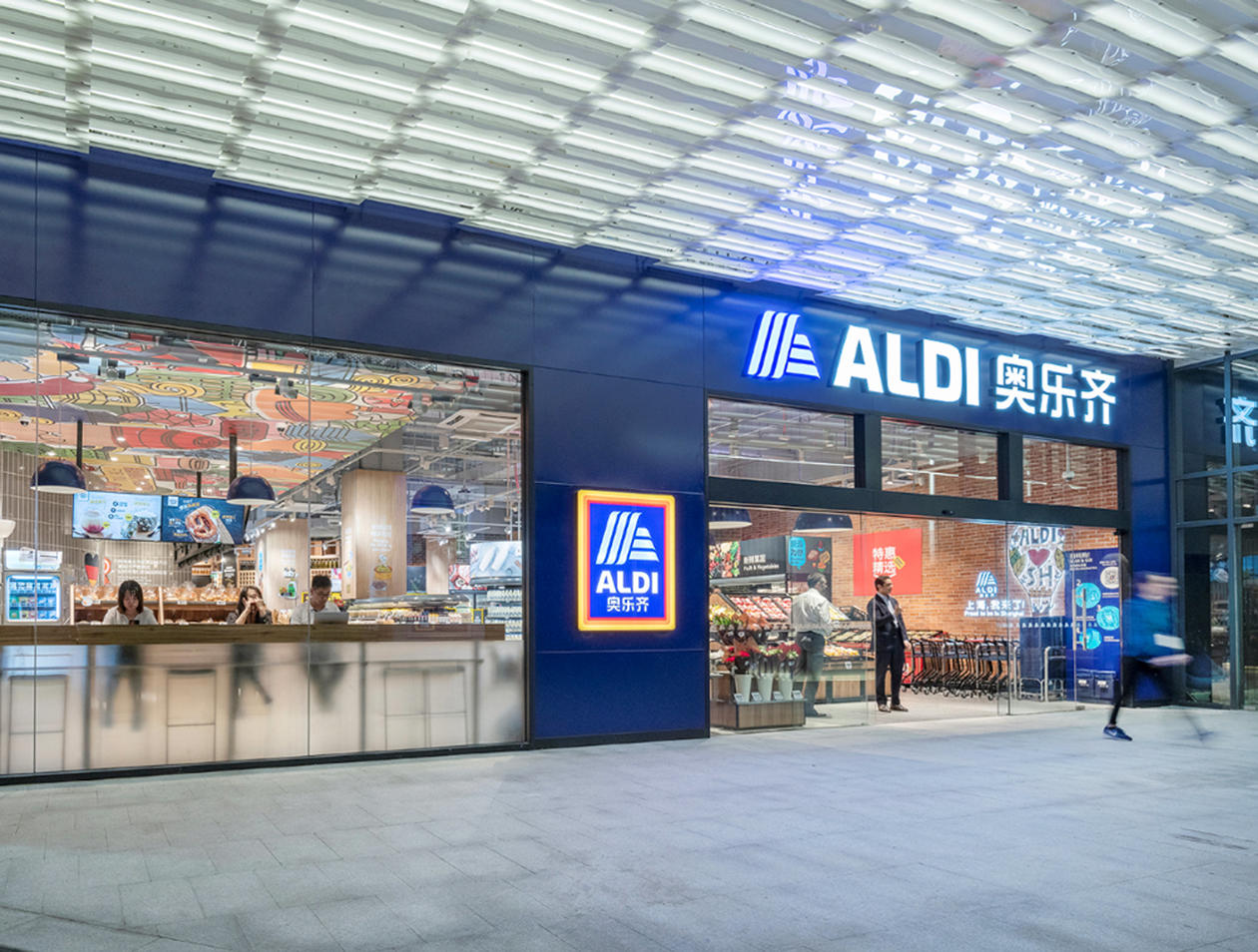
    ALDI Australia has joined over 80 global businesses in endorsing the call for a global plastics treaty to end plastic pollution.

    The Business Coalition for a Global Plastics Treaty, which also includes financial institutions, and non-governmental organizations, is pushing for the development of a legal UN treaty to end plastic pollution, calling for “an ambitious and effective global agreement to accelerate progress towards a circular economy in which plastic never becomes waste or pollution.”

    Aldi joins Ikea, Walmart, and the below companies in the coalition.

    ALDI Australia says this cements its commitment to sustainable business operations.

    “As one of Australia’s largest grocery retailers, we understand the important role we play in reducing our use of plastic and introducing more sustainable packaging within our own supply chains at a local and business level,” said ALDI Australia’s Director Corporate Responsibility, Daniel Baker.

    “The plastics crisis doesn’t stop at our shores or even our oceans. This is a global challenge that needs a cohesive response and having a United Nations treaty with businesses worldwide is essential to help solve this global crisis together.”

  • 5 Things You Should Know about Singapore’s Global Investor Programme

    5 Things You Should Know about Singapore’s Global Investor Programme

    Among numerous efforts that the Singaporean government has made to drive up economic growth in the country, one of the initiatives that’s gotten the most traction is the Global Investor Programme (GIP). The GIP, an official division of Singapore’s Economic Development Board (EDB), is a programme whose goals are (1) to attract promising investors and entrepreneurs from across the globe, and (2) invite them to contribute their talents to Singapore’s world-class economy.

    If it’s been a dream of yours to work in Singapore—and to earn a comfortable life there for your family—find out if you’re eligible for the GIP. Here’s everything you need to know about Singapore’s flagship residency-by-investment programme.

    It Affords You the Chance to Secure Permanent Residency or Citizenship in Singapore

    One of the most appealing incentives of the GIP is that it serves as a way to attain either permanent residency (PR) or citizenship status in Singapore. If you are successful in your application, you’ll be able to earn a Singapore investment visa. This will allow you to work and reside in Singapore in the long term and even secure citizenship for you and your nuclear family two years after you obtain PR status.

    Not only will you be able to do business in Singapore and contribute your investment acumen towards the country’s economic growth, you will also be able to live in a city-state that is consistently lauded for its healthcare system, public infrastructure, and general quality of life. If it’s within reach, this is one of the best avenues to start a prosperous life in Singapore.

    It’s Open to Established Business Owners, Next-Generation Business Owners, Family Office Principals, and Founders of Fast-Growing Businesses

    At a glance, there are four types of investors who are welcome to apply to Singapore’s GIP:

    • An established business owner with rich entrepreneurial experience spanning at least 3 years, and whose annual business turnover is at least SGD 200 million
    • A member of a high-value family business whose immediate family possesses at least 30% of shares, and whose annual turnover for the said business is at least SGD 500 million
    • A founder and one of the largest shareholders of a fast-growing company that’s worth at least SGD 500 million
    • A family office principal with at least 5 years’ worth of experience in entrepreneurship, management, or investment activities and net investable assets of at least SGD 200 million

    Does your investor’s profile match any of these? If it does, look up the additional eligibility requirements from EDB and see if you meet them.

    You Must Be Involved in Certain Industries to Be Qualified for the Programme

    The GIP is a highly selective programme, and one criteria that an applicant must meet is that their business and investment interests must be represented in the GIP’s list of accepted industries. Some examples that reflect Singapore’s biggest economic drivers are the sectors of consumer business, automotive business, logistics and supply chain management, financial services, healthcare and medical technology, electronics, energy, and information communication. Other exciting areas of investment that are eligible under the GIP are aerospace engineering, marine and offshore engineering, nanotechnology, the arts, and sports businesses.

    A full list of eligible industries is available on the EDB’s official website. If you intend to apply for the programme, be sure that your sector is represented.

    You Can Invest in a New Business Entity, a GIP Fund, or a Family Office with SGD 200 Million in AUM

    There are three options for investing your money into the GIP, and they comprise the following:

    • Investing SGD 2.5 million in a brand-new business entity. If you choose this route, you will need to submit a detailed business or investment plan to the EDB complete with financial projections, anticipated expenditures, and employment schemes.
    • Investing in an existing GIP fund that’s based and incorporated in Singapore. The EDB will assess you based on the viability and thoroughness of your investment plans.
    • Investing in a new or existing family office with at least SGD 200 million in assets under management, or AUM. Offshore assets count, but at least SGD 50 million must be transferred to and held in Singapore.

    You Must Be Ready to Make Your Investment within 6 Months of Your Application Approval

    Lastly, if you’ve been approved for entry into Singapore through the GIP, you are required to complete your investment within six months of your application approval. This should be made through your personal bank account, under your sole name, with a Singapore-registered bank that’s based in the country.

    You will also need to take stock of all true copies of your investment documents, like bank statements, credit and debit advisories, a bank reference letter certifying the validity of the transaction, and other additional documents required by the EDB. Be prepared to complete this paper trail so that you are not amiss in your standing with the agency.

    Final Words

    The requirements may be tedious and the field may be quite competitive, but you’ll have an exceptional opportunity to live and invest in Singapore if your GIP application is successful. Contact an authorised representative from the EDB and see how you can get started on the application process!

  • Garment export won’t decline next year

    Garment export won’t decline next year

    Vietnam’s garment and textile exports next year is set to remain the same as this year even in the worst-case scenario where the Covid-19 pandemic prolongs, an association forecasts.

    Vietnam Textile and Apparel Association (VITAS) anticipates export would reach $39 billion next year, the same as this year, if pandemic impacts are major and linger until the end of the year.

    In the more optimistic scenarios that the pandemic is controlled by the second quarter, export could reach $41 billion, and by the first quarter, $43.5 billion, it stated.

    The association made its forecast as export this year expanded 12 percent from last year and 0.3 percent from 2019, indicating a recovery to pre-pandemic level.

    “This could be considered a great effort of Vietnam’s garment industry amid signs of slower global economic growth,” VITAS chairman Vu Duc Giang told a recent meeting.

    Truong Van Cam, deputy chairman of the association, said one positive sign is that major markets like the U.S., E.U. and Japan have reopened.

    Another supporting factor is that Vietnam has changed its Covid-19 fight policy from “zero Covid-19” to living with it, he added.

    In order to achieve the mentioned figures, vaccination is key, Cam said.

    Two doses of a Covid-19 vaccine should be the minimum requirement for staff to return to work, while third dose vaccinations for workers should begin, he urged.

    Fiscal and monetary policies should be more accessible and be effective for two or three years, he added.

    “Garment and textile needs an overall strategy so Vietnamese companies can export products under their own brands,” he said, adding that a plan should be made for development until 2030.

    Vu Thanh Tu Anh, dean of Fulbright School of Public Policy and Management in Ho Chi Minh City, said digital transformation has now become a must for sector survival as the Covid-19 pandemic has forced global corporations to increase the flexibility of their supply chains.

  • Malaysia is 16th most connected logistics country in the world

    Malaysia is 16th most connected logistics country in the world

    Malaysia is now ranked the 16th most connected country, according to the DHL Global Connectedness Index 2020.

    The country is also the second most connected in the East Asia Pacific, behind Singapore which remained as the second most connected nation in the world.

    “Besides ranking countries on their actual level of globalization, we compare actual levels to predictions. based on the country’s size, economic development, and location.

    “And Malaysia is one of our top five outperformers relative to expectations on the index,” said Professor Steven Altman, the lead author of the latest edition of the DHL Global Connectedness Index, in a virtual press conference today.

    Altman is also a senior research scholar at New York University’s Stern School of Business.

    Looking forward, Altman noted that there are some interesting opportunities on the horizon for Malaysia such as the growth of supply chains in Southeast Asia that continues to be quite strong, continued Asean integration efforts as well as opportunities that are forwarded in the Regional Comprehensive Economic Partnership (RCEP).

    Overall, citing the report, Altman said the DHL Global Connectedness Index is set to decline in 2020, but it is unlikely to fall below where it stood during the 2008-2009 global financial crisis, based on the analysis of preliminary data and forecasts.

    According to the report, Malaysia has long been ahead of its peers in terms of the depth of its global connectedness.

    “Like the other top countries, it exceeded expectations on both depth and breadth scores,” the report read, adding that Malaysia has the distinction of being the most populous country with a depth score in the top 25.

    “Its top pillar rank was fourth on the trade pillar in 2019, through a combination of relatively high ranks on both depth and breadth,” the report said, noting that Southeast Asia is a region where countries tend to have unusually high trade depth.

    “Southeast Asian countries benefit from linkages with wider Asian supply chain networks as well as ASEAN policy initiatives promoting regional economic integration,” it said.

    Meanwhile, DHL Express CEO John Pearson described his company’s performance in Malaysia as “extraordinarily strong”, saying the country was as one of DHL Express’ fastest growing countries.

    “Malaysia is certainly in the 20%-30% growth and has been for many months, and that is helped by one new product which is called ‘Durian Express’, which exports the king of fruits abroad,” he said.

    Pearson said this “niche product”, on top of the e-commerce business, drives Malaysia’s growth, adding that the outlook in Malaysia is positive.

  • DHL Global Forwarding connects China-Amsterdam-US-South Korea with dedicated service

    DHL Global Forwarding connects China-Amsterdam-US-South Korea with dedicated service

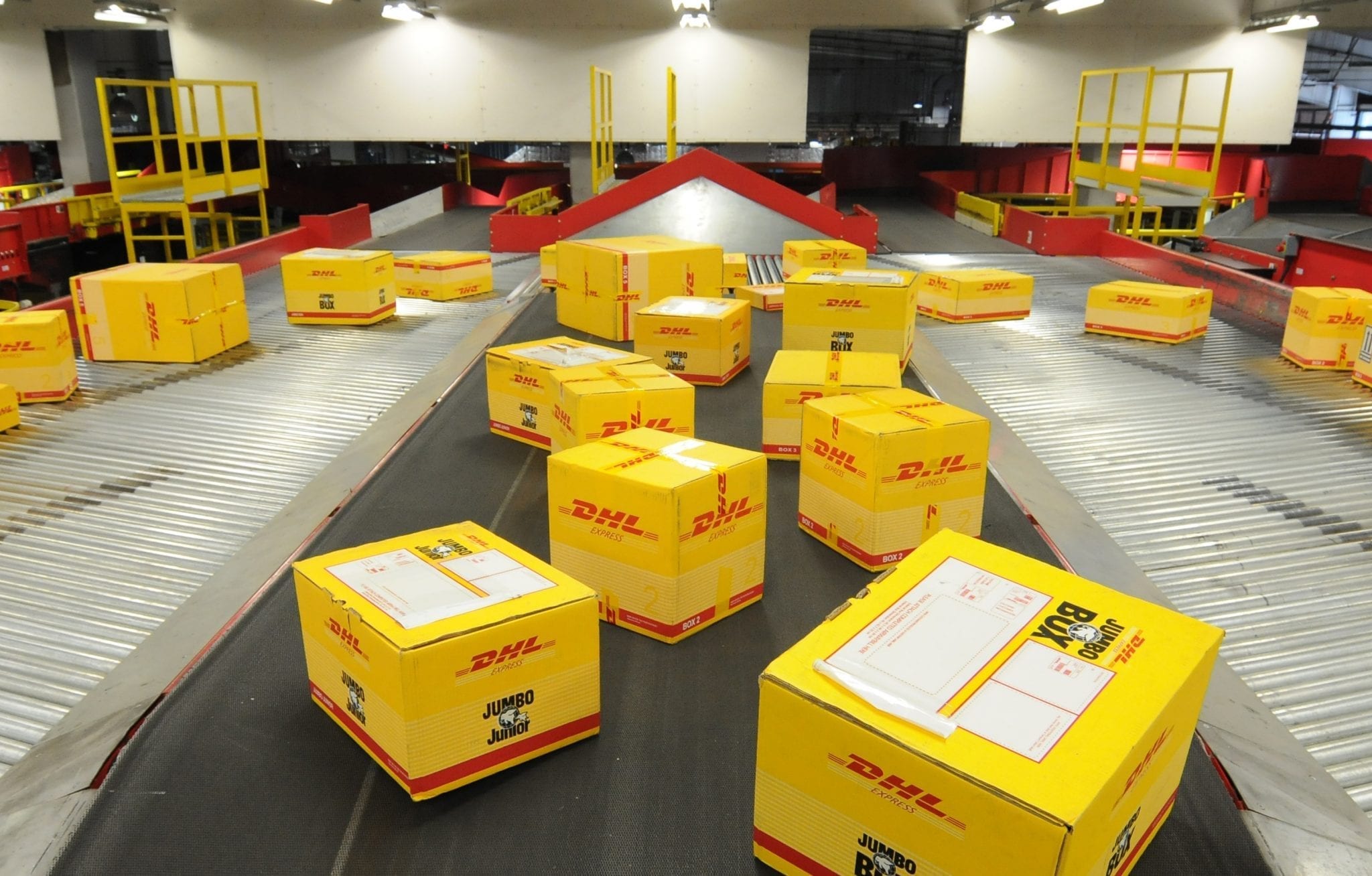
    DHL Global Forwarding has launched an air freight charter connecting Asia Pacific to Europe and the US to meet demand from customers in the technology, manufacturing, and life science and healthcare sectors. Managed by StarBroker, DHL Global Forwarding’s in-house charter team, the twice-weekly charter originates from Chongqing, China, and flies to Amsterdam, Netherlands; Chicago, United States; and Incheon, South Korea before returning to China.

    Thomas Mack, head of global air freight DHL Global Forwarding said, “While some passenger airlines have resumed operations, the situation in the air freight market remains volatile – especially as belly capacity is still tight. DHL Global Forwarding’s top priority is to provide our customers with sufficient and reliable air freight capacity. Not only are the resilient, agile, and reliable supply chains of highest importance for an economic recovery, but also in preparation for the availability of vaccines and other essential medical supplies during the pandemic.”

    South Korea has seen its export of healthcare products rise year-on-year by 26.7 percent in the first half of 2020, with pharmaceutical goods in particular increasing by 52.5 percent. China has exported 28.5 percent more medical devices in the first five months of the year as compared to a year ago. In 2019, China, the Netherlands, and the United States were among the top ten importers and exporters of medical goods.

    “Over the years, DHL has built up its expertise from globally certified facilities and staff to technologies that track shipments in real-time in addition to ensuring the integrity of such products throughout their journey. Getting the much-needed air capacity is the last piece in the value chain puzzle, so to speak, that ensures temperature-sensitive products such as life-saving vaccines reach the communities-in-need,” added Mack.

    In a recently published white paper, DHL together with McKinsey & Company as an analytics partner explores the logistics challenges for vaccines and medical goods during Covid-19. To provide global coverage of Covid-19 vaccines, up to 200,000 pallet shipments and 15 million deliveries in cooling boxes as well as 15,000 flights will be required across the various supply chain set-ups.

    DHL Global Forwarding has a global network of facilities that meet the European Union’s Good Distribution Practice (GDP) guidelines for life science and healthcare supply chains. The leading international provider of air, sea, and road freight services has a suite of temperature-controlled freight solutions such as DHL Air Thermonet and DHL LifeConEx that allows real-time visibility and active monitoring for the movement of goods that could include medicines, supplements, vaccines, medical devices, and diagnostic equipment.

    To meet the growing demand for imports of temperature-controlled and high-technology goods into Australia, DHL Global Forwarding will also launch a new airfreight charter on September 23. Flying four times a week, the charter will consolidate goods from Europe, China and Singapore in Hong Kong before transporting them to Sydney, Australia.

    In April 2020, DHL Global Forwarding tapped on its network of life science and healthcare facilities, temperature-controlled solutions and customs clearance expertise to fly more than 1.3 million Covid-19 test kits from South Korea to Brazil, Ecuador, India, Lithuania, Poland, Russia and Saudi Arabia. The freight forwarder also launched a dedicated 100-ton weekly air freight service for organizations and governments shipping health and medical-related items and other goods from China to the Middle East and Africa.

  • H&M Foundation opens Global Change Award for innovation

    H&M Foundation opens Global Change Award for innovation

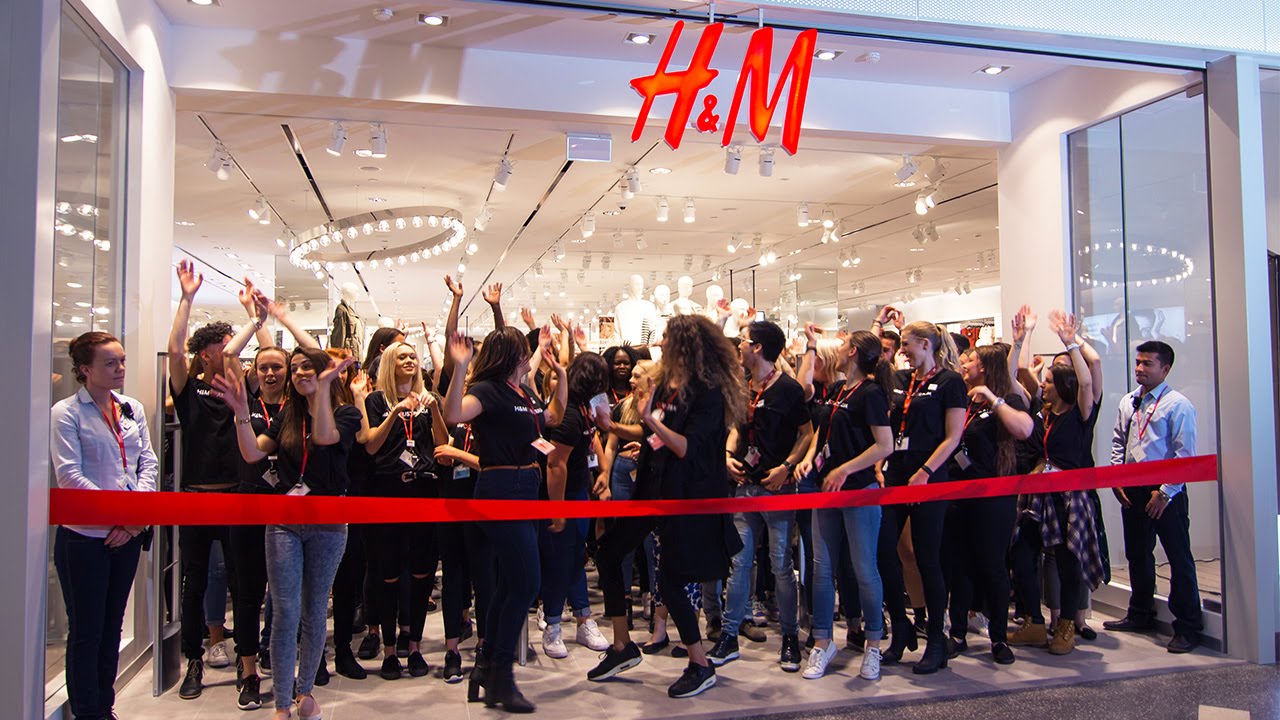
    Non-profit H&M Foundation has opened the fifth round of its innovation challenge Global Change Award.

    The award is an attempt to move the needle in a space where global consumption of textiles and shoes are on track to increase by 65 percent on 2015 levels by 2030. Organizers believe that creativity and innovation can flip the numbers in the planet’s favor and help enable great transformations in the fashion industry.

    The Global Change Award was initiated in 2015 by the H&M Foundation in collaboration with Accenture and KTH Royal Institute of Technology. It has received more than 14,000 entries from 182 countries. Named the Nobel Prize of fashion, it aims to reduce fashion’s impact on the planet and our living conditions by helping groundbreaking ideas move from tissue-sketch to market.

    Several of the previous winners have on-going co-operations and pilot projects with the industry, and some are already on the market.

    “In its fifth year, the Global Change Award has proven a great gateway for innovators to enter the fashion industry and transform it from the inside,” said H&M Foundation board member and H & M Hennes & Mauritz AB CEO Karl-Johan Persson.

    “We’ve seen previous winners move from sketching table to market – but more importantly, inspiring a new generation of creatives, scientists and entrepreneurs to reduce the planetary impact of the fashion industry through innovation. The next big idea that will change the game can come from anyone anywhere. So, if you have an idea you believe in this is the place to go.”

    Perhaps more important than the €1 million grant, the five winners will embark on a one-year Innovation Accelerator Program taking them to Stockholm, New York, and Hong Kong. In the accelerator, H&M Foundation, Accenture and the KTH Royal Institute of Technology support the winners in taking their ideas to the next level, with guidance on how to scale up quickly and maximize their impact on the industry.

    “This year, we are especially looking for innovations that make it easier for us as consumers to act more sustainably, ideas that use technology and data that make the fashion industry smarter and solutions that facilitate design with a circular intention,” said H&M Foundation innovation lead Erik Bang.

    To win, the innovation should have the potential to make fashion circular and to scale. Other criteria are a novelty, that the idea is economically sustainable, and that the innovation team is committed to making a difference. H&M Foundation initiated the challenge to find innovations that allow major change for the entire industry, and the winner can collaborate with whoever they want. Neither the non-profit H&M Foundation nor H&M Group takes any equity or intellectual property rights in the innovations.

    Submission deadline is October 16, and the five winners are crowned at the Grand Award Ceremony in Stockholm City Hall in April 2020.

    The H&M Foundation was set up by Persson and his family as an independent organization. While it bears the H&M name it is not part of H&M.

  • Audi Recalls 1644 e-Tron SUVs Globally

    Audi Recalls 1644 e-Tron SUVs Globally

    Audi has recalled the e-Tron electric SUV, it’s first in the history, for a water leakage that could result in fie. The company is taking the recall very seriously and said that the recall is voluntary and affects approximately 540 e-tron vehicles in the US that have been delivered to customers and 1,644 in total. The recall is in response to a potentially faulty seal that may allow moisture to enter the battery compartment which could lead to a short circuit or in extreme cases to a fire. No incidents have been reported globally yet, but Audi is taking precautions to make sure that the problem is fixed. The recall repair is expected to become available in August 2019.

    Customers are being contacted directly to inform them of the recall and the company’s dealer network will get the issue resolved. Audi e-tron vehicles unaffected by the recall remain available for delivery and the company’s reservation system remains open to receive customer reservations.

    The e-Tron is not the only electric car that has faced this issue, in fact even the Jaguar too has had to recall the I-Pace to rectify a fault with the regenerative brake system. While the India launch will happen in the second half of 2019, we wait to see what it’ll be priced at as also how the country takes to the first luxury electric car in the country.

  • HMD Global expands enterprise recommended portfolio

    HMD Global expands enterprise recommended portfolio

    HMD Global, licensee for the Nokia smartphone brand, has received Android Enterprise Recommended certification to three new devices in its portfolio.

    The three new devices include the Nokia 9 PureView, the recently announced smartphone with a five-camera array, as well as the Nokia 4.2 and 3.2 devices.

    HMD Global now has 14 Nokia branded devices that have received Android Enterprise Recommended Certification – more than any other smartphone brand.

    More than 50 organizations worldwide – including SAP, contacting and manufacturing company Ineco and industrial design company Mukava – have already deployed devices within this portfolio.

    Google’s Android Enterprise Recommended certification program requires devices to meet an elevated set of hardware, software, security update, user experience and other specifications. It is designed to act as a benchmark for the user experience in a variety of enterprise use cases.

    HMD Global said its recent market research found that 98% of enterprises within the European companies covered by the study use the Android Enterprise Recommended program to influence their choice of devices.

  • Spotify is going after couples with Duo plan

    Spotify is going after couples with Duo plan

    Spotify and Apple are engaged in a fierce battle over the domination of the thriving global music streaming market, with many other companies, including Google, Amazon, Pandora, Tidal, and Deezer fighting for scraps and trying to find ways to differentiate themselves in order to rise through the ranks. But at the end of the day, all of these services offer essentially the same features and capabilities with extremely similar pricing structures.

    One great way to stand out is to join forces with other tech giants on sweet bundle deals, either temporarily or indefinitely, thus providing more value than the competition for the user’s money. Or you can simply expand your plans to include something rivals haven’t thought of just yet. Enter Spotify Premium Duo, a new service tier currently available only in Colombia, Chile, Denmark, Ireland, and Poland, according to The Verge, which is likely to spread the love around the world soon if these regional “tests” are deemed successful.

    As the name suggests, Premium Duo mainly targets couples that want to save a few bucks compared to both the prices of two individual subscriptions and a family plan. A single Spotify Premium user can get an account at $9.99 a month in the US right now, while Premium for Family costs $14.99, allowing up to six people to stream music without limits, ads, or interruptions.

    Naturally, Spotify Premium Duo sits between the two globally available options, at a €12.49 monthly fee in Ireland that’s likely to equate to $12.49 stateside if this ever becomes a worldwide thing. Like family plans, Duo licenses will allow users on a shared account to keep their playlists separate, as well as get recommendations tailored to their individual tastes.

    Then again, if you’re one of those couples that likes to do everything together, a new Duo Mix playlist will be regularly updated with music you can both enjoy. Just keep in mind the Spotify Premium Duo plan requires two users to share a home address before gaining access, which the service will verify. That shouldn’t come as a big surprise, as Spotify doesn’t like family plan members to live at different addresses either.

  • Viettel sole Vietnamese brand in global 500 listing

    Viettel sole Vietnamese brand in global 500 listing

    Military-run telecom giant Viettel is the only Vietnamese firm in the list of 500 most valuable brands in the world. Valued at $4.32 billion, Viettel’s brand was ranked 478th on the list of 500 most valuable brands in the world for 2019, Brand Finance, a leading global brand valuation consultant, announced at the ongoing World Economic Forum in Davos, Switzerland.

    This is the first time a Vietnamese brand has been named in this list.

    Accordingly, Viettel’s brand value in 2019 has increased 35.8 percent year over 2018. The telecom giant’s high brand valuation was largely due to its presence and contribution in 10 foreign markets, suggesting the company was internationally competitive.

    2018 was a successful year for Viettel in  foreign telecommunication sectors, with service revenue growing by 20 percent, mobile subscribers base growing by 70 percent and net cash flow from international operations by $240 million, 3 percent higher compared to 2017.

    Brand Finance’s Global 500 list ranks the most valuable brands in the world covering all business fields including telecommunications, technology, automotive, oil and gas. Some big names in the list include Amazon, Apple, Google, Mercedes-Benz, Shell and Telstra.

    “Every year Brand Finance conducts an assessment of about 5,000 global brands across 40 different areas on various criteria such as revenue, brand strength, and financial health,” said David Haigh, CEO of Brand Finance.

    Out of a total 5,000 global businesses surveyed, there were 500 Southeast Asian businesses, of which only 8 brands made it to the Global 500 list. The listed brands were in three categories: telecommunications, oil and gas, banking.

  • Global smart transportation market expected to reach US$237,701 million by 2022

    Global smart transportation market expected to reach US$237,701 million by 2022

    According to a new report published by Allied Market Research, titled, Smart Transportation Market by Solution and Service: Global Opportunity Analysis and Industry Forecast, 2014-2022,” the global smart transportation market was valued at US$63,667 million in 2015, and is expected to reach US$237,701 million by 2022, growing at a CAGR of 18.6 percent from 2016 to 2022. Cloud services segment is anticipated to dominate the market during the forecast period. Europe was the dominant region, accounting for approximately 33 percent share of the smart transportation market revenue in 2015.

    Rise in number of vehicles results in high traffic congestion, leading to the requirement of smart transportation network to ease traffic congestion, enhance the safety, sustainability, and efficiency of transportation network. In addition, most consumers are now demanding smart transportation options that can easily navigate the roads with the least possible scope of congestion. The increasing government support and investments towards development of smart cities provides a major boost to the market. For instance, the Government of India aims to develop 100 smart cities by using smart technology to improve the efficiency of services and meet the residents’ needs. However, the need for high capital investment, owing to the complete restoration of the existing transport system, restrains the market growth.

    “Smart transportation system is a necessity, owing to the rising demand for efficient transportation networks worldwide. These systems have witnessed the highest growth in cloud services segment, due to the advancement in technology and increased demand for storage, access, and management of data remotely. In addition, parking management systems are expected to increase their market share at a notable rate. Asia-Pacific and Brazil possess enormous opportunities for the players operating in the smart transportation systems market.” states Sheetanshu Upadhyay, research analyst at Allied Market Research.

    The solutions segment is divided into hybrid ticketing management system, parking management & guidance system, integrated supervision system, and traffic management system. In 2015, traffic management system accounted for the largest revenue, owing to rapid urbanization and the emerging concept of smart cities and smart traffic. However, the parking management system market is anticipated to witness the highest growth, with a CAGR of 18.8 percent from 2016 to 2022.

    The service segment is further divided into business, professional, and cloud services. In 2015, cloud services generated the largest revenue, owing to rapid increase in demand for cloud services smart transportation system. However, this segment is anticipated to witness the highest growth over the forecast period, with a CAGR of around of 18.8 percent  from 2016 – 2022.

    Europe held the largest market share in 2015, and is anticipated to maintain its dominance throughout the forecast period. This is due to increase in demand for smart transportation and concern of users towards the environment. Additionally, investments in emerging smart cities would create growth opportunities for the smart transportation market in the region.

  • Australian E-Commerce Looks to China for Global Growth

    Australian E-Commerce Looks to China for Global Growth

    Chemist Warehouse is geared up to target its online Chinese consumer market this weekend, by supporting the Melbourne Chinese New Year 2017 Festival with a Tai Chi Masterclass Series in Southbank, to celebrate the Year of the Rooster.

    In 2015, the pharmacy chain announced its plans to directly target the burgeoning demand for Australian complementary medicines in China, via its e-commerce website hosted on online retail giant Alibaba’s Tmall platform, projecting $88 million in sales in 2016 via the offering. in China.

    A part of Alibaba Group, Tmall Global is an e-commerce platform developed for international sellers to access Chinese consumers. China’s online shoppers interested in products from a specific country can go to an online country pavilion and access the country that way.

    The strong demand for high quality Australian products in China was one of the factors which drove Swisse and Blackmores to be one of the highest performing Australian brands during Alibaba’s 11.11 Singles Day last year, China’s largest e-commerce shopping event.

    The Pharmacy Guild of Australia, along with other Australian health and wellbeing suppliers, have been asked to attend China’s inaugural Health Product Expo in Qingdao in March this year, which is expected to attract over 60,000 visitors, 7,000 of which are industry buyers.

    Through online shopping, Australian products have found a lucrative channel into the economic powerhouse of China.

    Woolworths set up shop on Tmall Global a year ago, aiming to tap burgeoning Chinese consumer demand for Australian food and grocery products.

    Australia’s largest supermarket retailer engaged with Chinese e-commerce company eCargo Holdings, to build and manage a Woolworths store front the Tmall platform, selling rougly 80 products including Woolworths’ Select and Woolworths Gold milk powder, Swisse vitamins and Devondale milk powder.

    In April last year, one of our largest cosmetics online retailers Adore Beauty, backed by Woolworths (who have 25 percent stake in the company), announced its expansion into the Chinese market by selling its beauty products through Tmall.

    Adore Beauty’s Tmall offering features 50 products, including six popular Australian brands that are currently not available in China, namely Lanolips, Alpha-H, ELEVEN, asap, evo and Skinstitut.

    As off last year, cross border e-commerce in China now favours cosmetic imports, with the tax rate, if the purchase is above 100 yuan, now set at 32.9 percent, compared to 50 percent previously.

    Kate Morris, founder of Adore Beauty says the Chinese market is an exciting and huge prospect for the company, especially in light of China’s demand for our high quality Australian products.

    On a broader perspective, the company recently told us that 2017’s growth strategy is to expand its footprint globally, with China being an important part of that vision.

    Adore Beauty now offers thousands of products to more than 150 countries and territories via its Borderfree e-commerce platform.

    Which Australian products are most popular in China?

    According to Startrack, the most popular Australian product categories in the Chinese market are supplements, dairy, honey, food, skincare and cosmetics, maternity and baby products.

    Why sell to China?

    “China’s middle class is booming. And they want to buy Australian products. Aussie produce is considered clean, green, authentic – Australian retailers are already meeting this growing demand,” says Startrack. 

    According to the e-commerce and parcel delivery company, here are the six most important factors why China is such a great economic powerhouse for our e-commerce industry:

    • China’s middle class is booming
    • Chinese incomes are rising
    • Chinese consumers are shopping more than ever before
    • And most importantly, they want to buy Australian products

    Wine is another up and coming e-commerce market fro Australia to coin in on, in the Chinese market. According to a new report that came out yesterday from the Australian wine industry, our local wine exports are seeing major gains in the Asian market due to changes in our free trade agreement with China.

    If we go back three years, this time, Australia was losing major market share in the global wine industry, mainly to New Zealand and Chile. The reason being, these countries had a free trade agreement with China, but Australia did not.

    Things have changed, and with that has come rapid revolution of the Australian wine market. In 2016 the value of our wine market grew by 7 percent to $2.2 billion, driven by big increases in bottled wine. Exports to China grew by 19 percent to $ 875 million, which overtook the US as our most important wine export market.

    Online wine retailer Vinomofo looks set take advantage of this, with plans to launch into the Chinese market by 2018, which will follow its US launch planned for 2017.

    Following the success of their launch in New Zealand six month ago, the company launched in Singapore last month, which it says will help set it up for its big US expansion, and then China.

    “We’ll start in English, but we will then localise the content. We’ll have plenty of leanings from our Singapore launch, and learning how to operate in a different country. As a startup launching in a different country, we’re always aware that we have to assume that we’re pretty dumb and we have to learn hard about all these things,” Andre Eikmeier, Vinomofo’s co-founder and joint chief executive, told us at the Singapore launch.

  • How Asia-Pacific is driving global online retail

    How Asia-Pacific is driving global online retail

    The world’s largest and most populous continent, Asia is made up of 48 countries and spans 44,579,000 square kilometres. With a widely diverse population of 5.096 billion people, the continent’s rich historical background offers a wealth of opportunities to explore, from the untouched steppes of Central Asia to the bustling economic centres of China and Japan. Iconic sights such as the Taj Mahal and the Temples of Angkor Wat may draw tourists from around the world, but strong economic growth and up-and-coming markets are providing new footholds for businesses and investors alike.

    The key e-commerce markets in the Asia region are China, India, Indonesia, Japan, Malaysia, Philippines, Singapore, South Korea, Thailand and Vietnam. Together, these countries represent 86 percent of all e-commerce turnover in the Asia Pacific region, a figure which rises to 90 percent when Oceanic countries such as Australia and New Zealand are excluded.

    E-commerce in Asia is flourishing – with $770 billion in transactions annually, the Asia-Pacific region leads the world. An expanding middle class, growing Internet penetration and improving infrastructure means the region will continue to drive global online retail over the next five years.

    Access to financial services is a key stimulus for e-commerce. A lack of banking infrastructure in many countries in the region is exacerbated by barriers caused by geographical and physical access to banking services. Increased Internet penetration will aid in removing these barriers, but with some areas having an account penetration of as low as 2 percent, many countries will continue to rely on cash as the main method of payment for some time to come.

    While, on average, 51 percent of the region’s population has access to an account with a financial institution, the extremely low income level of a significant proportion of the population results in a high overall percentage of unbanked people. In spite of its growing middle class, China’s traditional rural economy and vast territory results in the country accounting for more than 12 percent of the world’s unbanked population.

    The expanding middle class is making a significant contribution to the growth of e-commerce across the Asia region. This group is expected to reach 1.7 billion by the year 2020, with China, India and Indonesia experiencing the greatest growth. With the increase in the number of options that e-commerce brings, consumers are also showing marked personal preferences. This, in turn, is leading to increased competition, with traditional retailers moving to having an online presence (either individually, or by using an online marketplace), and local businesses experiencing pressure from regional and global brands which want a share of the growing sector’s profits. Again, China is a leading force in both the regional and global economy.

    Technology, naturally, is a major factor in changing economic patterns, with internet penetration playing a significant role. Notably, in spite of having the highest B2C e-commerce sales of any region in 2014, Asia has the lowest penetration of all regions globally (although Japan, Singapore and South Korea fall into the global top ten). As infrastructure becomes more ubiquitous, e-commerce will continue to experience high growth as a result; countries with a low penetration rate, such as India, with only 18 percent, are expected to drive future growth.

    The young are traditionally the first to embrace new methods of doing anything, and it is no different in Asia. Millennials are the most active group online, and use social media as their preferred form of communication – Facebook has more than 270 million active daily users in Asia alone. This familiarity with the online environment results in a willingness to embrace cashless payment methods, and this group exhibits different patterns of consumer behaviour to other demographics.

    The use of online payments varies throughout the region according to how developed the local market is. The more mature the market, the more likely it is that consumers in the country will use cards in order to pay for online purchases: for instance, in Japan and South Korea, 63 percent and 83 percent of online purchases respectively are paid by card. In contrast, emerging markets such as India and Malaysia continue to prefer cash based payment methods.

    In China, E-wallets are the most popular form of payment online, being used for 48 percent of transactions. Whereas, in Indonesia, e-wallets and other forms of payment are the least preferred methods, making up 5 percent and 3 percent of transactions respectively. There, bank transfer is used in 39 percent of e-commerce transactions, with card-based purchases accounting for 29 percent.

    The trend, though, we are seeing overall is that cash based payments are increasingly being displaced by electronic payment methods throughout the region.